Product Information
Extra Information
Product Information
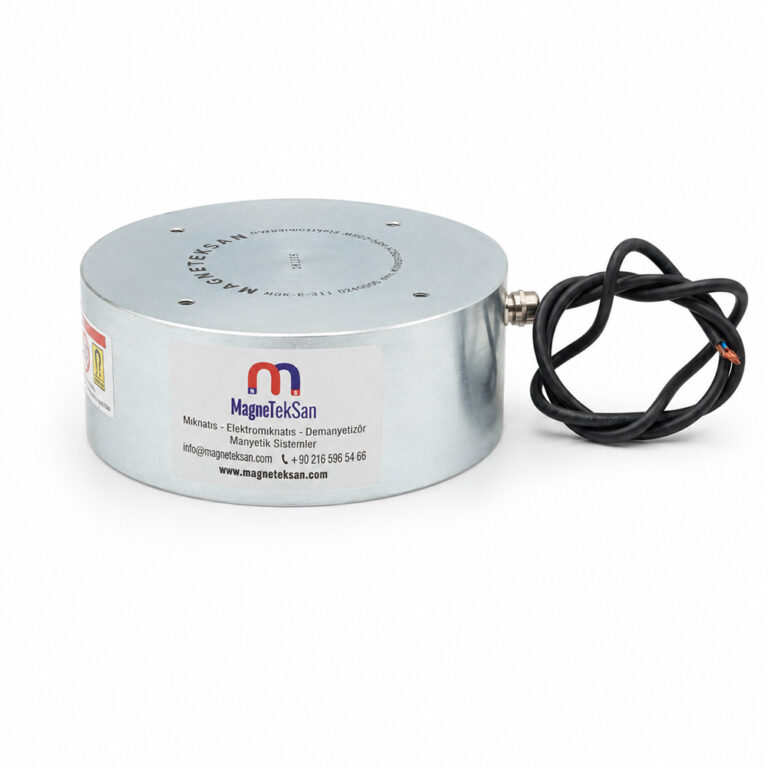
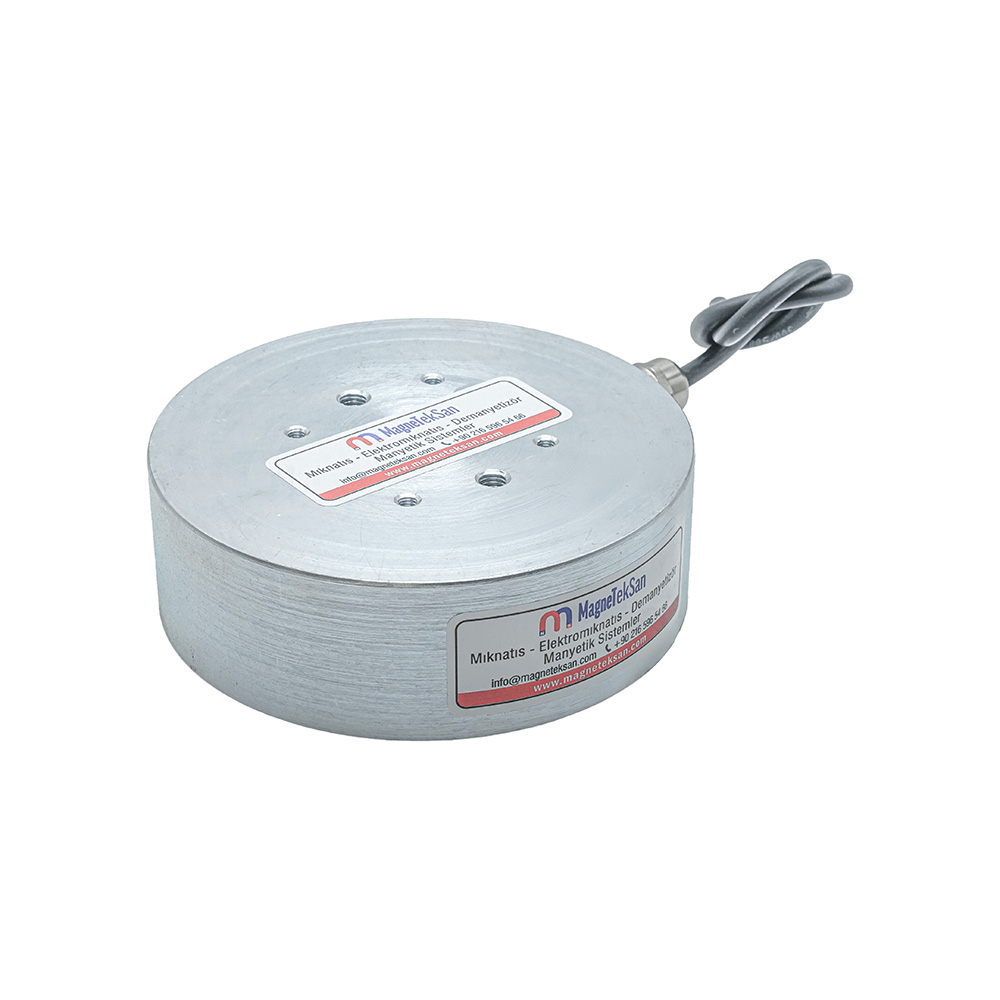
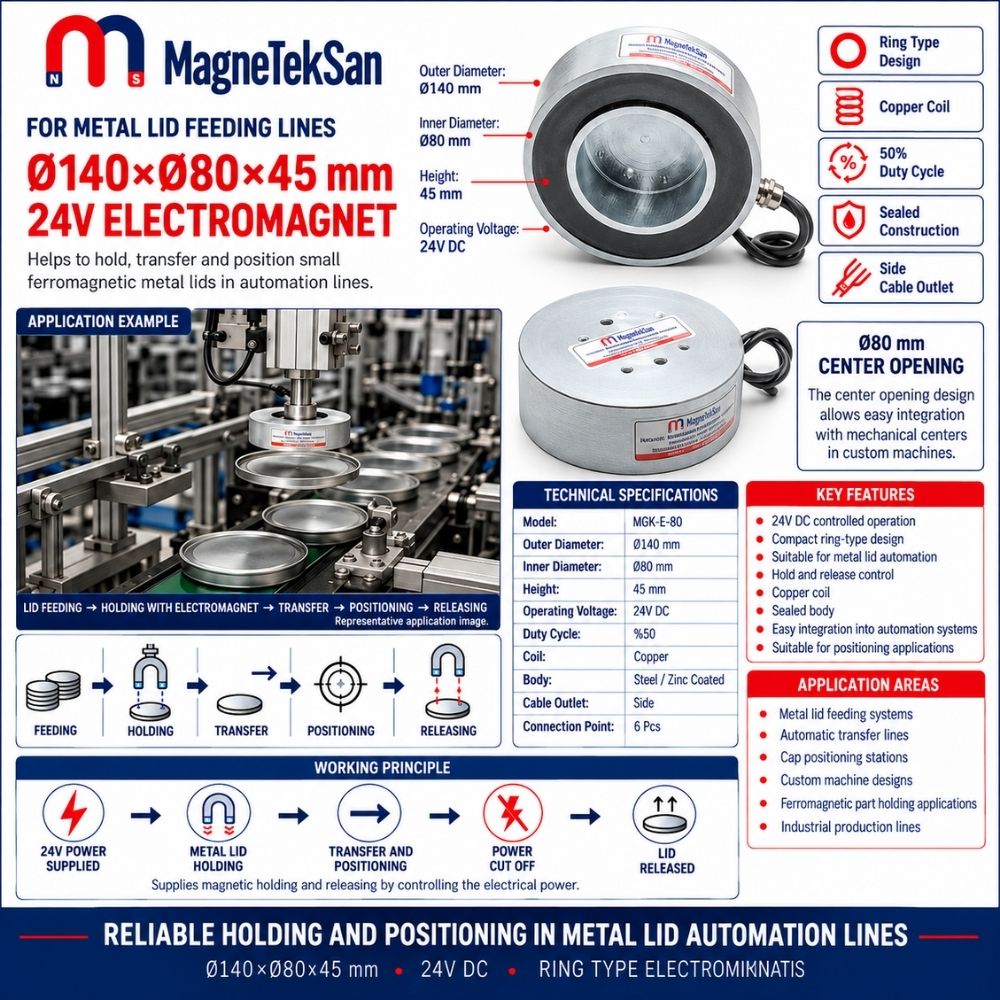
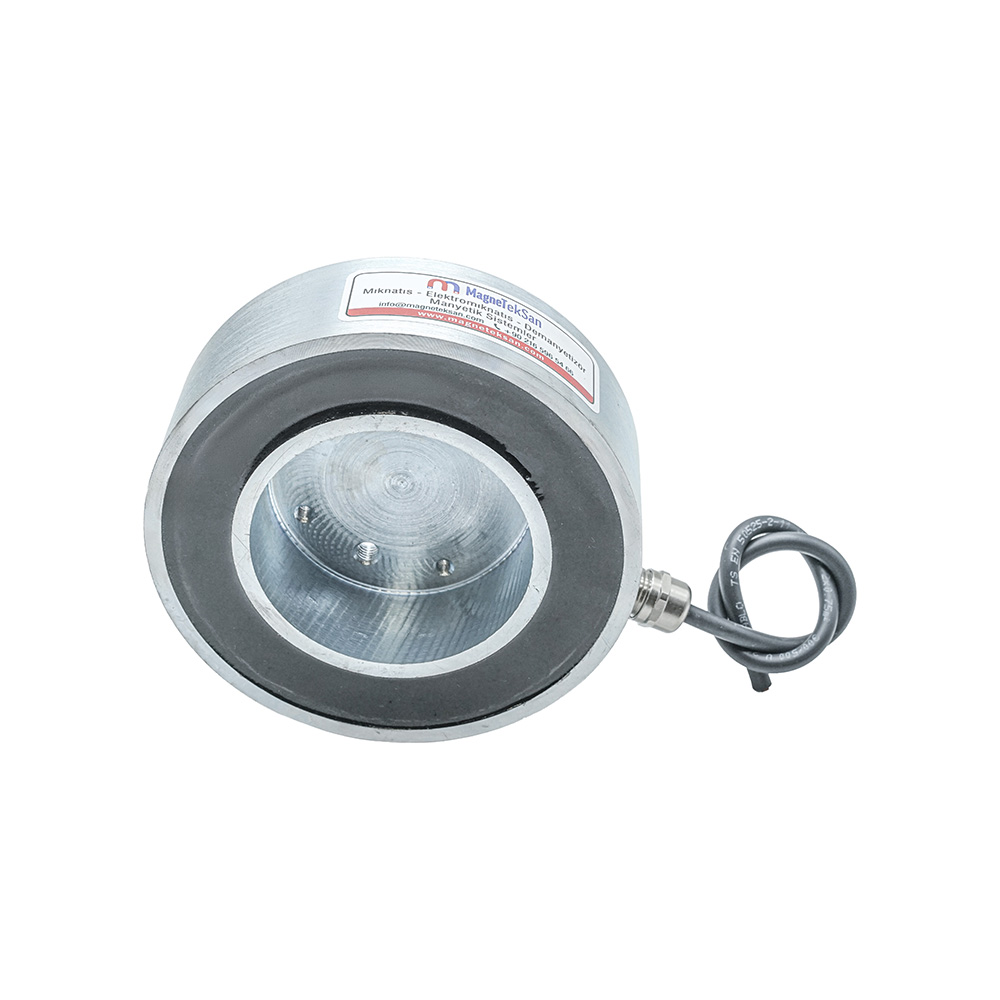
The MGK-E-80 is a 24V DC ring electromagnet with Ø140 mm outer diameter, Ø80 mm central opening and 45 mm height, developed for controlled handling and positioning of ferromagnetic metal lids in automated production lines. When energised, its copper coil generates a magnetic field to hold suitable steel components; when power is switched off, the magnetic holding effect largely disappears to allow release. The zinc-plated steel body, resin-insulated coil, side cable outlet and six mounting points support integration into custom machinery, subject to the specified 50% duty cycle.
| Technical Specification | Description |
|---|---|
| Product Type | Ring-type holding electromagnet |
| Model | MGK-E-80 |
| Outer Diameter | Ø140 mm |
| Inner Diameter | Ø80 mm |
| Height | 45 mm |
| Overall Dimensions | Ø140xØ80×45 mm |
| Operating Voltage | 24V DC |
| Duty Cycle | 50% at 24V DC |
| Coil Material | Copper |
| Body Material | Steel |
| Surface Finish | Zinc plating |
| Coil Insulation | Resin |
| Construction | Sealed |
| Cable Outlet | Side |
| Mounting Points | 6 |
| Main Application | Metal lid holding, transfer and positioning |
Extra Information
1. Ø140xØ80×45 mm Ring Electromagnet for Metal Lid Handling
The MGK-E-80 ring electromagnet is designed for industrial automation applications requiring electrically controlled holding, transfer and positioning of suitable ferromagnetic metal components.
Its dimensions are Ø140 mm outer diameter, Ø80 mm inner diameter and 45 mm height. The central opening distinguishes this design from conventional solid-disc electromagnets.
The product is particularly relevant to steel lid feeding and positioning systems, where components must be picked up, transferred and released repeatedly.
Its suitability for a specific production line should be evaluated using the actual workpiece, machine geometry and operating cycle.
2. Electromagnets in Metal Lid Production Lines
Metal lid manufacturing and packaging systems often require components to move between several processing stations.
Depending on the production arrangement, lids may need to be collected from a feeding unit, transferred to a press, positioned for assembly or delivered to an inspection station.
An electromagnet can provide a controllable holding method when the lid material has suitable ferromagnetic properties.
The magnetic holding function can be coordinated with the mechanical movements of an automated production machine.
3. Ring-Type Electromagnet Design
The MGK-E-80 features a ring-shaped body rather than a solid circular construction.
Its Ø80 mm central opening can provide space for mechanical components associated with the machine’s positioning or guiding arrangement.
Potential integration options include centring mechanisms, guiding elements and specially designed mounting structures.
The actual use of the central opening must be determined by the mechanical design of the application.
4. Outer Diameter of Ø140 mm
The electromagnet has an outer diameter of Ø140 mm.
This dimension is important when determining the space required for installation and the relationship between the electromagnet and the workpiece.
However, the outer diameter alone does not determine the magnetic holding force.
The workpiece material, contact geometry, surface condition and operating voltage must also be considered.
5. Ø80 mm Central Opening
The Ø80 mm central opening is one of the defining features of the MGK-E-80.
It may allow mechanical centring components or other suitable elements to be positioned within the ring-shaped structure.
This can offer design flexibility in automation systems handling circular steel components.
Any component installed through or near the opening must be compatible with the electromagnet’s mechanical and magnetic operating requirements.
6. Compact 45 mm Height
The electromagnet has a height of 45 mm.
This dimension can be useful when evaluating integration into machines with restricted installation space.
The overall dimensions should be considered together with the cable routing and mounting arrangement.
Adequate clearance must also be provided for workpiece movement and maintenance access.
7. 24V DC Operating Voltage
The MGK-E-80 is designed for operation at 24V DC.
When the copper coil is energised, an electromagnetic field is generated within the magnetic circuit.
This field allows the electromagnet to attract and hold suitable ferromagnetic workpieces.
The electrical supply and control system must be designed for the product’s specified operating conditions.
8. Electrically Controlled Holding and Release
The main advantage of an electromagnet is that its magnetic holding function can be controlled electrically.
When 24V DC is applied, the electromagnet can hold a suitable ferromagnetic component against its effective contact surface.
When the electrical supply is disconnected, the electromagnetic field largely disappears, allowing the workpiece to be released under suitable mechanical conditions.
Residual magnetism, contact conditions and workpiece geometry should be considered when reliable release is essential.
9. 50% Duty Cycle at 24V DC
The MGK-E-80 has a specified duty cycle of 50% when operated at 24V DC.
Duty cycle describes the proportion of an operating cycle during which the coil is energised.
For example, an automation sequence may include holding, transferring, releasing and waiting stages.
The energised and de-energised periods must be planned according to the specified duty cycle. The 50% rating must not be interpreted as permission for continuous operation at 24V DC.
10. Understanding Coil Heating
Electrical current passing through the copper coil generates heat.
The resulting temperature depends on the applied voltage, energised duration, ambient conditions and thermal characteristics of the installation.
Exceeding the specified operating duty cycle can increase the risk of excessive heating.
The electromagnet should therefore be operated within its intended electrical and thermal conditions.
11. Copper Coil Construction
The MGK-E-80 uses a copper coil to generate its electromagnetic field.
Copper is widely used in industrial electromagnetic coils because of its electrical conductivity.
When supplied with direct current, the coil produces the magnetic excitation required for the holding function.
The coil must be protected against unsuitable electrical supply conditions and operation beyond the specified duty cycle.
12. Steel Body Construction
The electromagnet features a steel body.
Steel forms part of the magnetic circuit and helps direct magnetic flux towards the effective holding region.
The body also provides the mechanical structure required for installation within the machine.
Its suitability for a particular application depends on the complete mechanical design, including the workpiece interface and mounting arrangement.
13. Zinc-Plated Surface Finish
The steel body has a zinc-plated surface finish.
Zinc plating provides a protective surface treatment for the steel components.
The suitability of this finish for a particular operating environment should be evaluated according to exposure conditions and maintenance requirements.
A zinc-plated finish does not, by itself, establish a specific corrosion-resistance classification.
14. Resin-Insulated Coil
The MGK-E-80 features a resin-insulated coil and sealed construction.
Resin insulation helps protect the internal electrical components of the electromagnet.
This construction can be beneficial in industrial environments where the coil requires protection from external influences.
However, no specific IP protection rating should be assumed unless that rating has been separately verified.
15. Side Cable Outlet
The electrical cable exits from the side of the electromagnet.
This arrangement may simplify integration where the rear or central regions are required for mechanical installation.
In moving automation equipment, cable routing must prevent pinching, excessive bending and abrasion.
Appropriate cable support should be incorporated into the machine design.
16. Six Mechanical Mounting Points
The electromagnet includes six mounting points.
These allow the unit to be attached to a suitable machine structure or specially designed holding assembly.
The mounting arrangement should maintain proper alignment between the electromagnet and the workpiece.
Mechanical fasteners and supports must be selected according to the actual loads and operating conditions.
17. Holding Ferromagnetic Metal Lids
The electromagnet is intended for metal lids that exhibit suitable ferromagnetic properties.
Steel-based lids and certain ferromagnetic metal packaging components may be suitable for magnetic handling.
The ability to hold a particular lid depends on its material, thickness, shape and contact with the magnetic surface.
Testing with actual lid samples is recommended before finalising the automation design.
18. Can the Electromagnet Hold Aluminium Lids?
Aluminium is not ferromagnetic.
A conventional holding electromagnet therefore cannot be expected to grip an aluminium lid in the same way as a suitable steel lid.
The same general limitation applies to copper and brass components.
When selecting a handling system, the magnetic properties of the actual workpiece must be confirmed.
19. Factors Affecting Magnetic Holding Force
The holding performance of an electromagnet is influenced by more than its physical dimensions.
Important factors include the workpiece material, thickness, geometry, available contact area and applied voltage.
Air gaps, coatings, paint, rust and surface contamination can also reduce the effective holding force.
For applications involving moving or suspended loads, the required holding performance and safety provisions must be validated under realistic operating conditions.
20. Importance of the Workpiece Contact Surface
Magnetic holding performance is generally improved when the workpiece makes close, appropriate contact with the electromagnet’s active surface.
Curved lids, embossed profiles, protrusions or thick coatings can create gaps between the electromagnet and the workpiece.
These gaps may substantially reduce the available magnetic attraction.
Consequently, two lids made from similar steel materials may exhibit different holding behaviour because of their geometry.
21. Can the Electromagnet Pick Up One Lid at a Time?
Single-lid picking depends on the complete feeding and handling arrangement.
Relevant factors include lid thickness, stacking configuration, spacing between lids, operating voltage and the geometry of the contact surface.
The electromagnet alone does not guarantee that only one lid will be collected during every cycle.
Applications requiring reliable single-piece handling should be tested using the actual lids and feeding mechanism.
22. Metal Lid Feeding Automation
The MGK-E-80 can be considered for integration into automated lid feeding equipment.
A typical process may involve presenting a lid, energising the electromagnet, lifting or transferring the component, positioning it and switching off the electrical supply.
The mechanical system must coordinate these actions with the required production sequence.
The suitability of the electromagnet should be confirmed against the expected cycle time and 50% duty cycle.
23. Transfer and Positioning Applications
The ring electromagnet can be used as an electrically controlled holding element in suitable transfer and positioning machinery.
Potential applications include moving steel lids between processing stations or placing ferromagnetic components into a defined position.
The central opening may offer additional options for integrating mechanical centring arrangements.
Precise positioning performance depends on the complete machine design, not solely on the magnetic holding element.
24. Electromagnets Compared with Permanent Magnets
Permanent magnets generate a magnetic field without electrical power.
Electromagnets generate their principal holding field when their coils are energised.
For automation systems requiring repeated electrical control of the holding function, an electromagnet can offer practical advantages.
However, electromagnets require a suitable power supply and must be operated within their specified electrical and thermal limits.
25. Electromagnets Compared with Vacuum Grippers
Vacuum grippers use pressure differences to hold suitable workpieces.
Electromagnets use magnetic attraction to hold compatible ferromagnetic materials.
Vacuum handling depends on factors such as surface sealing and the vacuum system, while electromagnetic handling depends on magnetic material properties and contact conditions.
The most suitable method should be selected according to lid material, geometry, production speed and the required handling sequence.
26. Other Potential Industrial Applications
Although the main application is metal lid automation, the MGK-E-80 may also be considered for other suitable ferromagnetic components.
Examples include circular steel blanks, steel discs, pressed steel parts and selected small ferromagnetic machine components.
Each application requires evaluation of the actual workpiece and handling arrangement.
The electromagnet should not be assumed suitable for a load solely because that load contains steel.
27. Selecting the Correct Electromagnet
Electromagnet selection should begin with the requirements of the actual production process.
Relevant information includes workpiece dimensions, mass, material grade, thickness, surface profile, coating and available contact area.
The machine’s operating cycle, energised holding time, mounting arrangement and electrical supply must also be evaluated.
For repetitive industrial applications, testing with representative workpieces is recommended before final approval.
28. Magneteksan Custom Electromagnet Solutions
Magneteksan develops custom electromagnetic solutions for industrial automation, controlled holding and material handling applications.
The MGK-E-80 combines a ring-shaped Ø140xØ80×45 mm design with 24V DC operation, a 50% duty cycle, a copper coil and a zinc-plated steel body.
Its Ø80 mm central opening, six mounting points and side cable outlet provide options for integration into specially designed machinery.
Depending on the application, custom electromagnet designs may be considered with alternative dimensions, operating voltages, mounting arrangements or cable configurations.
For technical evaluation or a quotation, contact Magneteksan with details of the workpiece, required holding operation and production cycle.