Product Information
Extra Information
Product Information
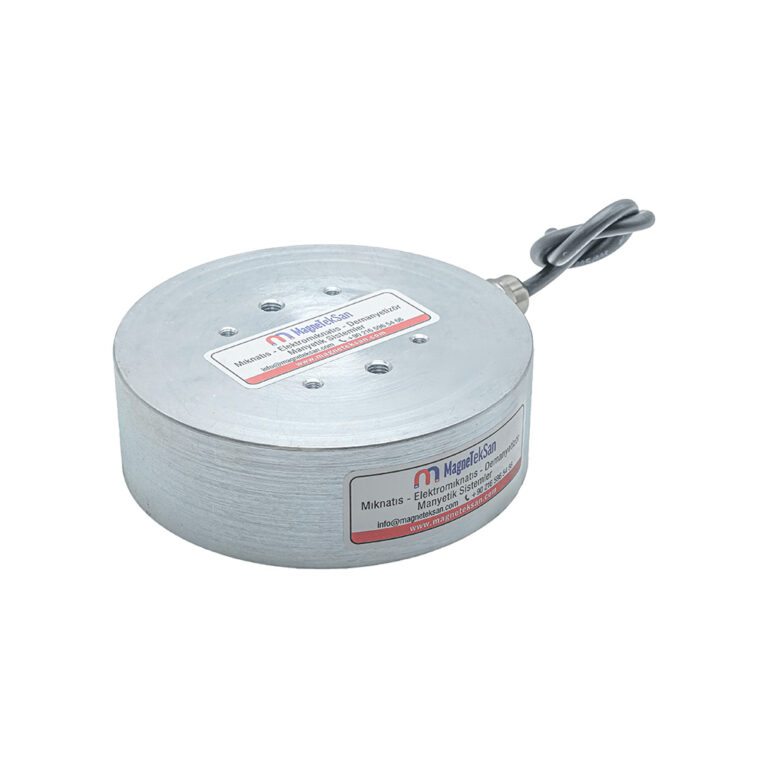
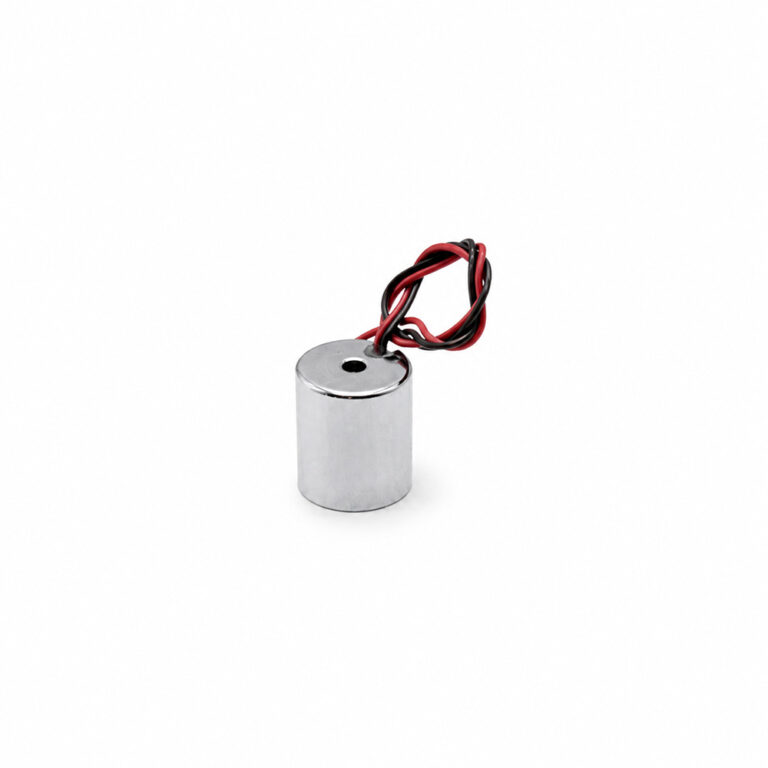
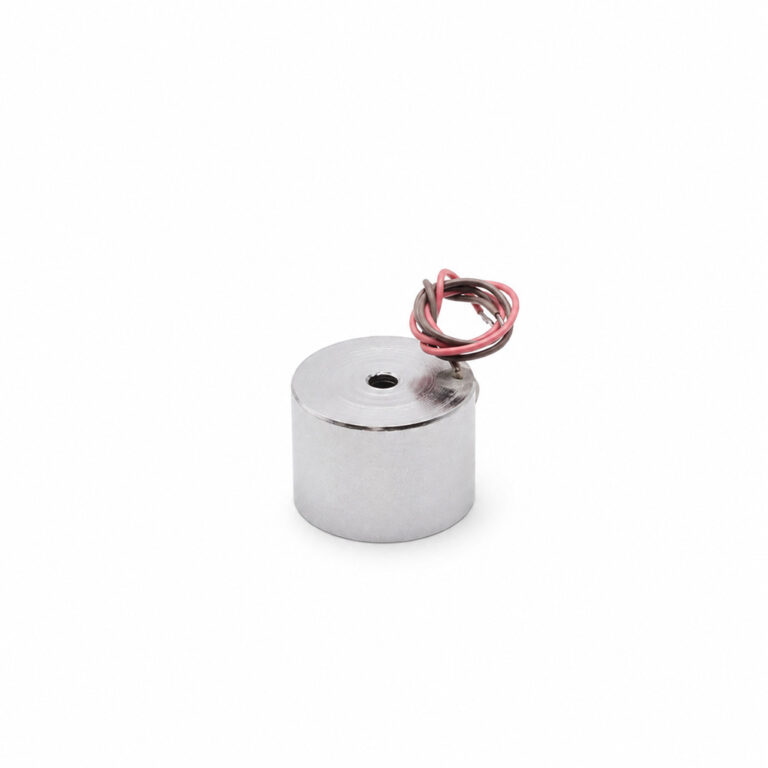
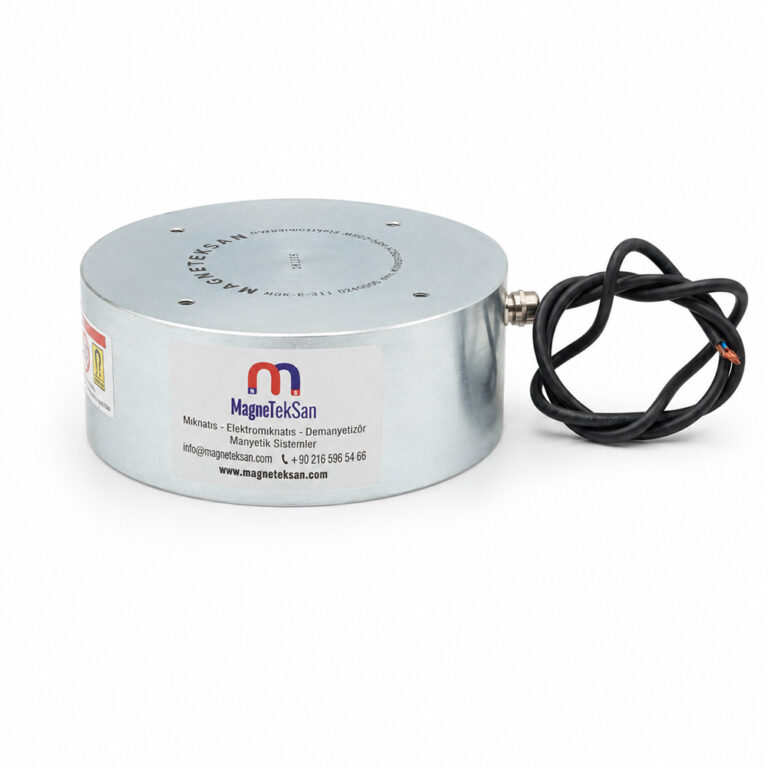
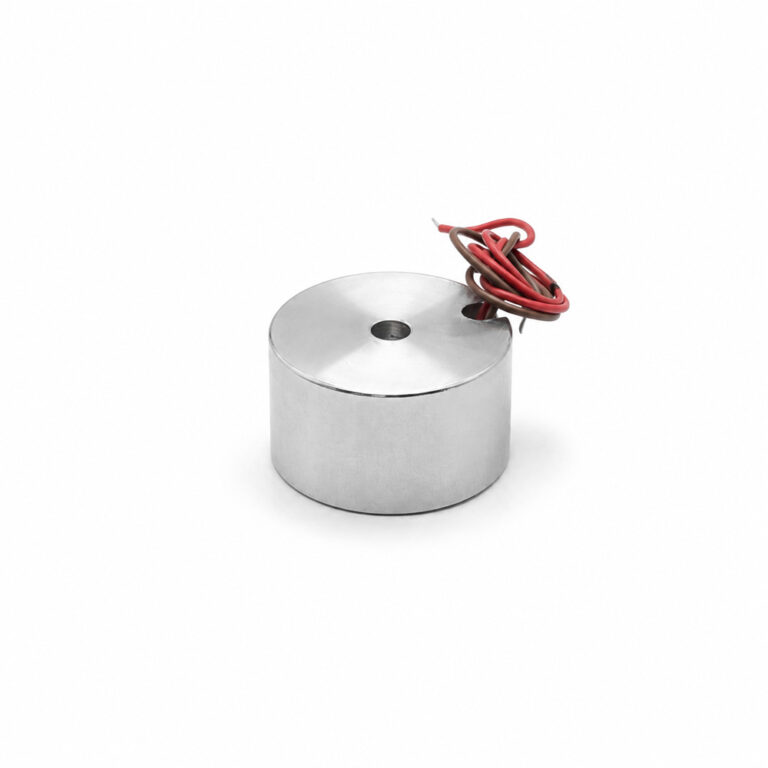
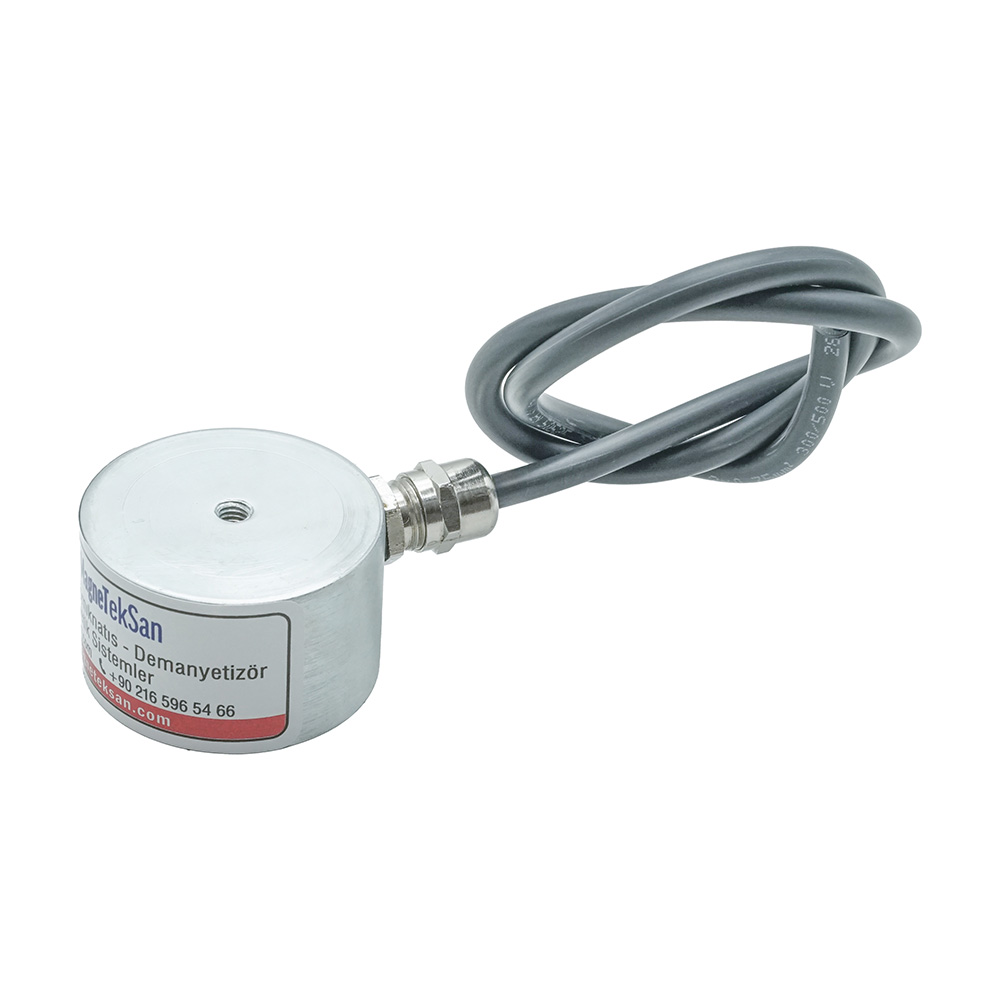
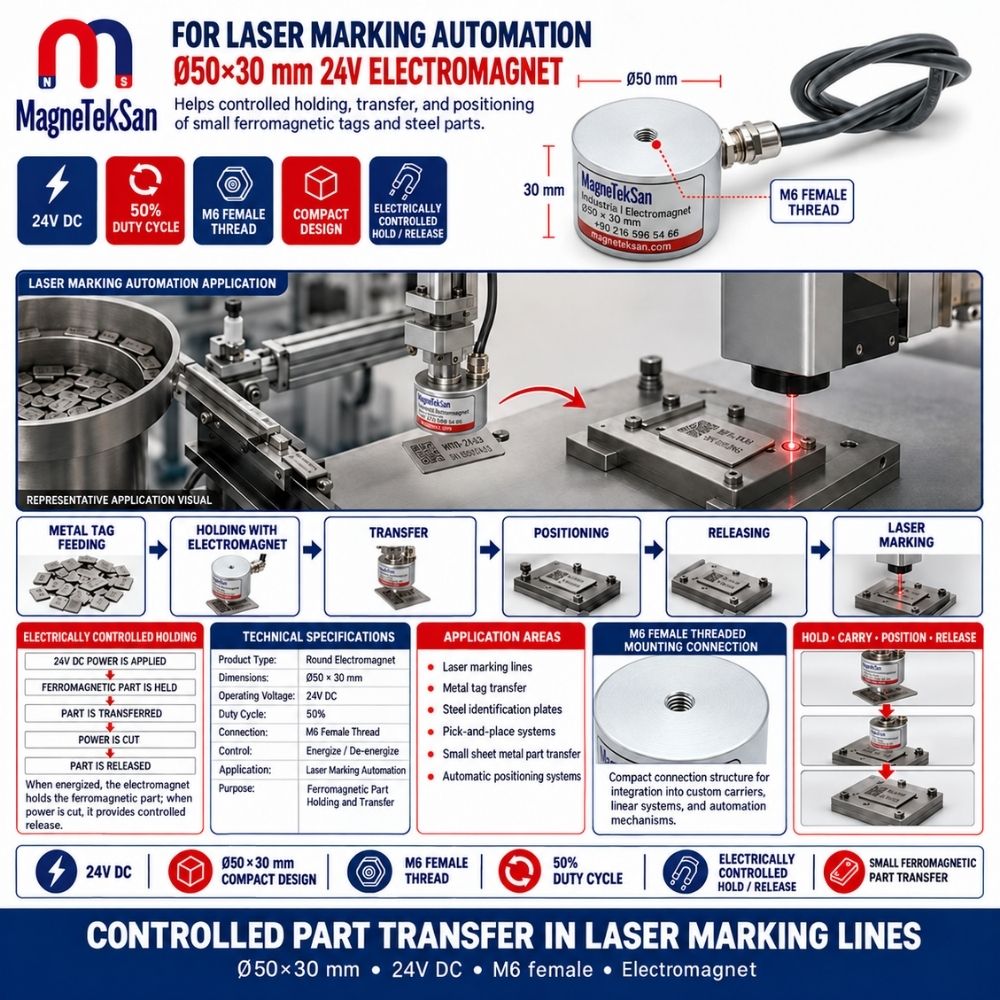
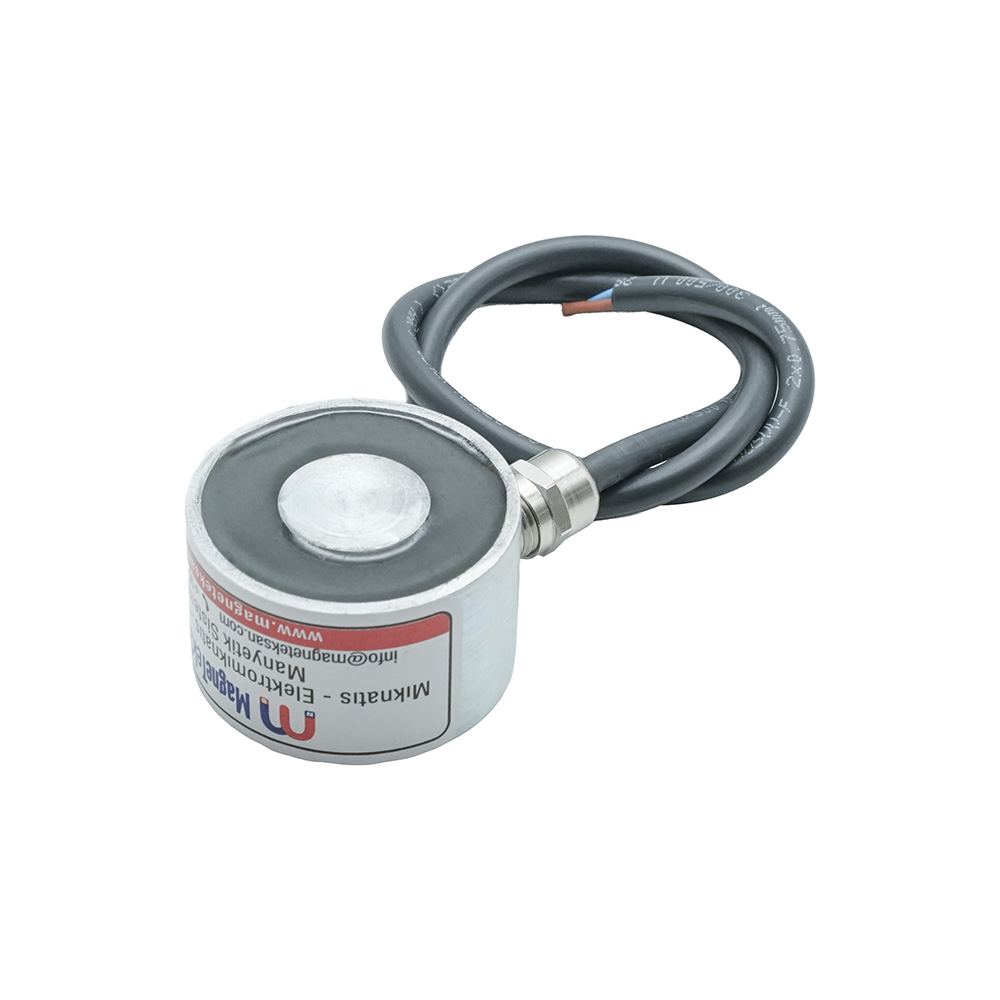
The Ø50×30 mm 24V DC electromagnet is designed for controlled holding, positioning and transfer of small ferromagnetic steel labels and components in laser marking automation systems. Its compact round body and M6 female threaded mounting allow integration with suitable pick-and-place mechanisms, linear actuators and custom machine fixtures. Operating with a 50% duty cycle at 24V DC, the electromagnet provides electrically controlled attraction and release for intermittent production cycles.
| Technical Specification | Description |
|---|---|
| Product Type | Compact Round Electromagnet |
| Electromagnet Diameter | Ø50 mm |
| Body Height | 30 mm |
| Overall Dimensions | Ø50×30 mm |
| Operating Voltage | 24V DC |
| Duty Cycle | 50% at 24V DC |
| Mounting Connection | M6 Female Thread |
| Control Method | Electrical ON/OFF |
| Operating Principle | Electromagnetic Attraction |
| Primary Application | Laser Marking Automation |
| Suitable Workpieces | Ferromagnetic Labels and Small Steel Parts |
| Automation Integration | Pick-and-Place Systems |
| Holding Function | Electrically Controlled Magnetic Holding |
| Release Method | Disconnecting Electrical Power |
| Recommended Operation | Intermittent Duty |
| Main Function | Ferromagnetic Part Holding and Transfer |
Extra Information
1. Ø50×30 mm Electromagnet for Laser Marking Automation
The Ø50×30 mm 24V DC electromagnet is designed for controlled handling of small ferromagnetic components in industrial laser marking and coding systems.
Its compact cylindrical body allows the electromagnet to be incorporated into automated feeding, positioning and transfer mechanisms where installation space is limited.
The electromagnet can be used to pick up suitable steel labels, move them toward a marking fixture and release them at the required position.
2. Why Are Electromagnets Used in Laser Marking Lines?
Industrial laser marking requires accurate presentation of workpieces to the marking station. Components may need to be collected from a feeder, transported to a fixture and positioned before marking begins.
Electromagnets provide an electrically controlled method of holding suitable ferromagnetic parts during these operations.
By integrating the electromagnet with a mechanical transfer system, manufacturers can automate repetitive workpiece handling tasks.
3. Compact Ø50 mm Diameter and 30 mm Body Height
The electromagnet has an external diameter of Ø50 mm and a body height of 30 mm.
These dimensions make it suitable for consideration in compact machine assemblies, short-stroke handling mechanisms and automated workstations with restricted installation space.
The mounting arrangement and available clearance should be verified against the machine design before installation.
4. 24V DC Operating Voltage
This electromagnet operates at a nominal supply voltage of 24V DC.
When the coil is energized, it generates a magnetic field that attracts suitable ferromagnetic materials toward its working surface.
The electrical supply and switching components must be selected according to the electromagnet’s actual electrical requirements.
The 24V DC rating should not be confused with a continuous-duty rating.
5. Understanding the 50% Duty Cycle
The electromagnet is specified for a 50% duty cycle at 24V DC.
This means the operating sequence must include appropriate energized and de-energized periods rather than treating the product as continuously energized equipment.
For example, an automated cycle may consist of holding, transferring, releasing and waiting.
The permitted operating pattern must account for the duty rating, thermal conditions and applicable manufacturer instructions.
6. Can the Electromagnet Remain Energized Continuously?
Continuous energization at 24V DC should not be assumed to be suitable for this model.
Its specified 50% duty cycle requires the control system to manage energized and resting periods appropriately.
In laser marking automation, the coil can be energized during the required holding and transfer phases and switched off after the workpiece has been released.
Applications requiring continuous magnetic holding should be evaluated separately.
7. M6 Female Threaded Mounting Connection
The electromagnet includes an M6 female threaded mounting connection.
This connection can be used to integrate the unit with compatible mounting brackets, transfer arms, linear motion mechanisms and specially designed automation fixtures.
Correct thread engagement, mechanical alignment and fastening arrangements are important for reliable installation.
The mounting connection should not be used as the sole basis for determining allowable mechanical loading.
8. How Does the Electromagnet Work?
An electromagnet generates a magnetic field when electrical current passes through its internal coil.
When a suitable ferromagnetic component approaches the active holding surface, magnetic attraction can develop between the electromagnet and the workpiece.
The magnetic holding effect is maintained while the coil is energized within its operating limits.
After electrical power is disconnected, the magnetic field decreases, allowing the component to be released. Residual magnetism or mechanical adhesion may affect the release behavior in some applications.
9. Electrically Controlled Holding and Release
The principal advantage of an electromagnet in automated handling is its electrically controlled operating principle.
The control sequence can be organized as follows:
Power ON → Hold the workpiece → Transfer → Position → Power OFF → Release.
This operating method is particularly useful in repetitive production processes where components must be moved between defined locations.
The final positioning accuracy depends on the complete mechanical system rather than the electromagnet alone.
10. Handling Steel Identification Labels
Steel identification labels are commonly used for component identification, traceability and industrial marking applications.
Where the label material has suitable ferromagnetic properties, the electromagnet can be used to lift or transfer it within an automated feeding system.
The label thickness, geometry, surface condition and contact area influence the actual holding performance.
Tests with representative production samples are recommended before finalizing the handling mechanism.
11. Handling Small Ferromagnetic Components
In addition to identification labels, the electromagnet can be considered for handling small steel plates, washers, discs, stamped components and similar ferromagnetic parts.
The suitability of each component depends on its material, dimensions, weight and available contact surface.
The electromagnet should be selected for the actual handling requirements rather than assuming a universal holding capacity.
12. Pick-and-Place Automation Applications
Pick-and-place systems transfer components from a pickup position to a target location.
The Ø50×30 mm electromagnet can serve as the magnetic holding element of a compatible pick-and-place mechanism.
It may be integrated with linear actuators, pneumatic axes, servo-driven mechanisms or custom transfer assemblies.
The complete system must provide appropriate positioning, movement control and release timing.
13. Integration with Linear Motion Systems
Linear motion systems are frequently used in compact automated production equipment.
With a suitable M6 mounting adapter, the electromagnet can be attached to a moving carriage or transfer mechanism.
The actuator moves the electromagnet between the pickup and placement positions, while the electrical control system manages the magnetic holding state.
The design should account for workpiece mass, acceleration, movement direction and mechanical clearances.
14. Integration with Pneumatic Handling Systems
Pneumatic cylinders can provide repetitive linear movements in automated component handling.
A properly designed mounting bracket can connect the electromagnet to a compatible pneumatic mechanism.
During operation, the electromagnet may hold a ferromagnetic workpiece while the pneumatic system moves it toward the marking fixture.
The mechanical design and control sequence should prevent unintended movement or release of the workpiece.
15. PLC-Controlled Electromagnet Operation
The electromagnet can be switched through a suitably rated electrical control circuit integrated with a programmable logic controller.
A typical sequence may include a pickup command, magnetic activation, transfer movement, positioning confirmation and magnetic deactivation.
The PLC output should not be connected directly to the coil unless its electrical ratings and protection requirements permit this arrangement.
An appropriate switching device and inductive-load protection should be selected by the electrical designer.
16. Positioning Components Before Laser Marking
Correct workpiece positioning is important when marking serial numbers, identification codes, QR codes or DataMatrix codes.
The electromagnet can transport a suitable ferromagnetic component toward the marking fixture and release it at the intended location.
However, magnetic attraction alone does not guarantee precise centering or angular alignment.
Mechanical guides, locating pins or dedicated fixtures may be required to achieve the necessary positioning repeatability.
17. Automated Feeding of Metal Labels
In automated label production, steel labels may be supplied from magazines, trays or other feeding systems.
An electromagnet can be incorporated into the feeding mechanism to collect a suitable label and transfer it to the next station.
When labels are stacked, magnetic attraction may affect more than one layer.
Reliable single-piece feeding therefore depends on label thickness, stack arrangement, pickup distance and the design of the feeding mechanism.
18. Can the Electromagnet Pick Up One Label at a Time?
Single-label pickup cannot be guaranteed solely from the electromagnet’s dimensions or operating voltage.
Thin stacked steel labels may attract one another or respond simultaneously to the magnetic field.
The outcome depends on the magnetic properties of the labels, their thickness, the distance between layers and the pickup geometry.
Where individual label separation is required, the feeding mechanism should be tested using actual production components.
19. Which Materials Can Be Held Magnetically?
The electromagnet is intended for suitable ferromagnetic materials, including many iron and carbon steel components.
Magnetic holding performance varies with material composition, thickness, geometry and the magnetic circuit formed at the contact surface.
Not every metallic workpiece is suitable for electromagnetic holding.
Material compatibility should be established before the equipment is integrated into an automated process.
20. Can It Hold Aluminium or Copper Components?
Aluminium, copper and brass do not respond to a conventional holding electromagnet in the same way as iron or magnetic carbon steel.
Consequently, the product should not be selected for these materials without a separate, technically validated handling solution.
The fact that a component is metallic does not automatically mean it can be held by an electromagnet.
For non-ferromagnetic workpieces, alternative gripping technologies may be more appropriate.
21. Can It Hold Stainless Steel Labels?
The magnetic behavior of stainless steel depends on its grade, structure and manufacturing history.
Some stainless steels exhibit substantial magnetic attraction, while others provide a weak response.
Therefore, the suitability of stainless steel labels cannot be established from the material description alone.
A representative sample should be tested under realistic operating conditions before the electromagnet is selected.
22. What Affects the Magnetic Holding Force?
The actual holding force depends on several interacting factors.
These include the workpiece material, thickness, contact area, surface flatness, air gap, coating thickness, geometry and applied voltage.
Workpiece movement, acceleration and the direction of loading are also important in automated handling applications.
A specific lifting or holding capacity should not be assumed without appropriate performance data and application testing.
23. Why Is the Air Gap Important?
The air gap is the effective separation between the electromagnet’s working surface and the ferromagnetic workpiece.
Paint, plastic coatings, surface curvature, contamination and mechanical spacing can increase this separation.
As the air gap increases, magnetic attraction may decrease significantly.
For reliable handling, the contact arrangement should be designed to minimize unnecessary separation while accommodating the actual workpiece geometry.
24. Electromagnet vs. Vacuum Gripper
Electromagnets and vacuum grippers operate according to different physical principles.
An electromagnet uses magnetic attraction and is intended for suitable ferromagnetic components. It does not require a vacuum generation system.
A vacuum gripper relies on pressure differences and may be suitable for nonmagnetic materials when the surface and sealing conditions permit.
For small steel identification labels, an electromagnet can be considered as an alternative to vacuum-based handling.
The final choice should reflect the workpiece material and production requirements.
25. Electromagnet vs. Permanent Magnet
A permanent magnet continuously produces a magnetic field without electrical power.
Releasing a workpiece from a permanent magnetic holding system may require a mechanical separation mechanism or another specialized arrangement.
An electromagnet allows its magnetic field to be controlled through electrical energization.
This makes it useful in automation cycles requiring repeated pickup, transfer and release operations.
The release characteristics should nevertheless be verified under actual working conditions.
26. Applications After Laser Marking
The electromagnet can also be considered for suitable transfer operations after laser marking.
For example, a marked steel label may be collected from a fixture and moved to a quality inspection, sorting or packaging station.
A possible production sequence is:
Laser Marking → Magnetic Pickup → Transfer → Inspection / Packaging.
The electromagnet performs the handling function; it does not generate the laser marking itself.
27. How to Select the Correct Electromagnet
Selecting an electromagnet requires more than matching its physical dimensions.
Important considerations include workpiece material, weight, thickness, contact geometry, available installation space, operating voltage, required holding time and production cycle duration.
The 50% duty cycle of this model must be considered when planning the energized and resting periods.
For repetitive industrial applications, testing with representative workpieces helps determine whether the electromagnet and the proposed handling system are suitable.
28. Magneteksan – Electromagnet Solutions for Laser Marking Automation
Magneteksan develops electromagnetic holding and handling solutions for industrial automation, laser marking, component transfer and specialized machinery.
The Ø50×30 mm 24V DC electromagnet with M6 female threaded mounting offers a compact option for controlled handling of suitable ferromagnetic steel labels and small components.
Its electrically controlled holding and release function can be integrated into custom pick-and-place systems, provided that the mechanical design, electrical control and 50% duty cycle are properly considered.
Magneteksan can also evaluate application-specific electromagnetic solutions according to workpiece dimensions, material properties, mounting requirements and production cycle conditions.
Contact Magneteksan for technical consultation or a customized quotation for your laser marking automation project.