Product Information
Extra Information
Product Information
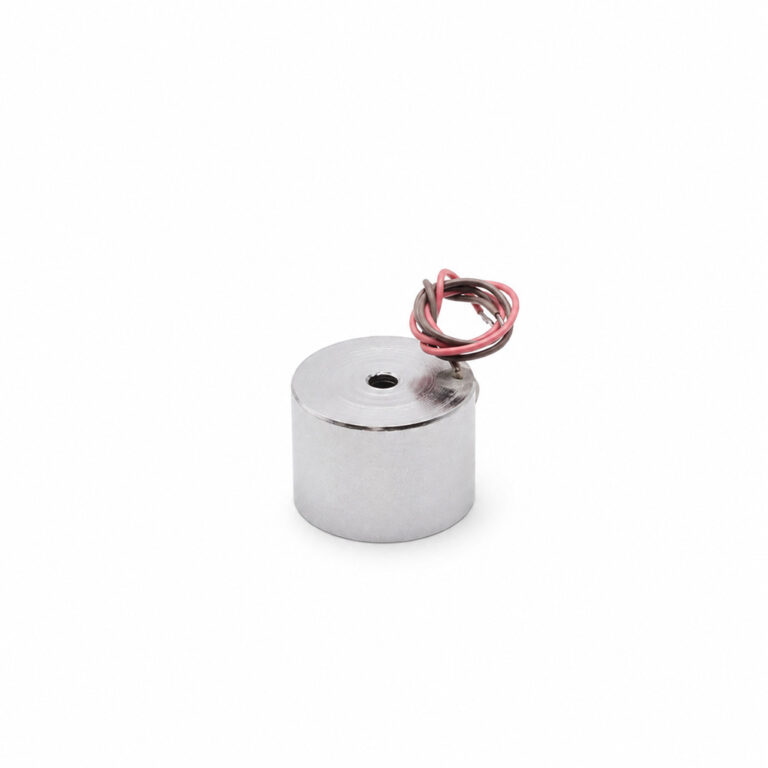
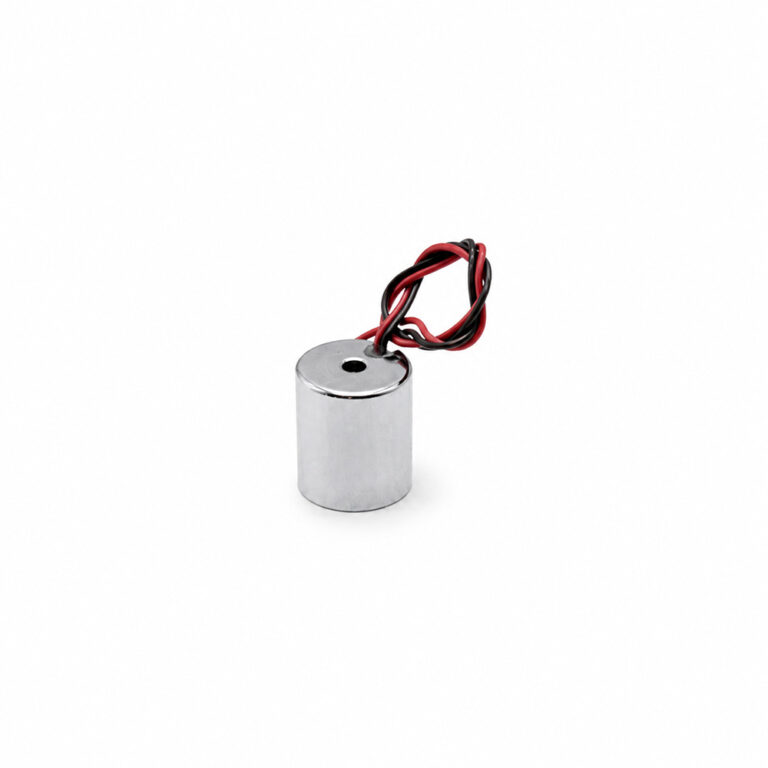
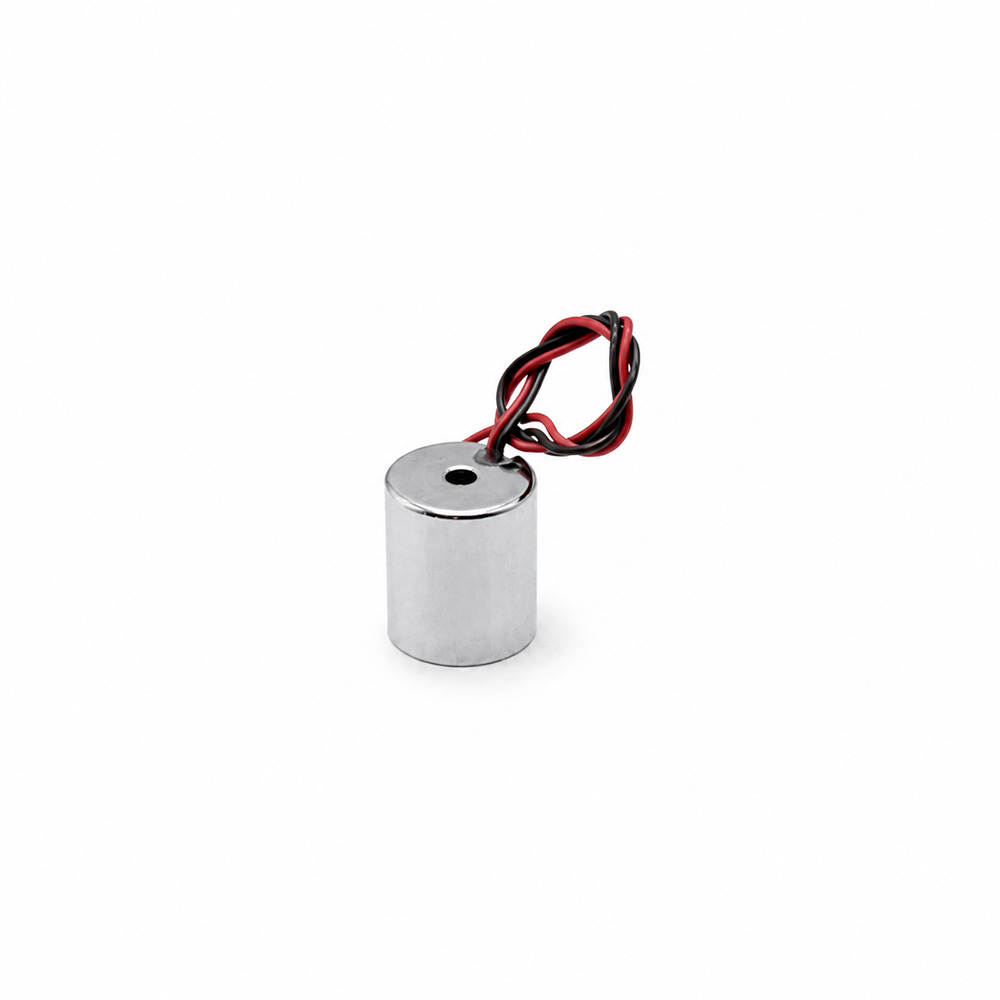
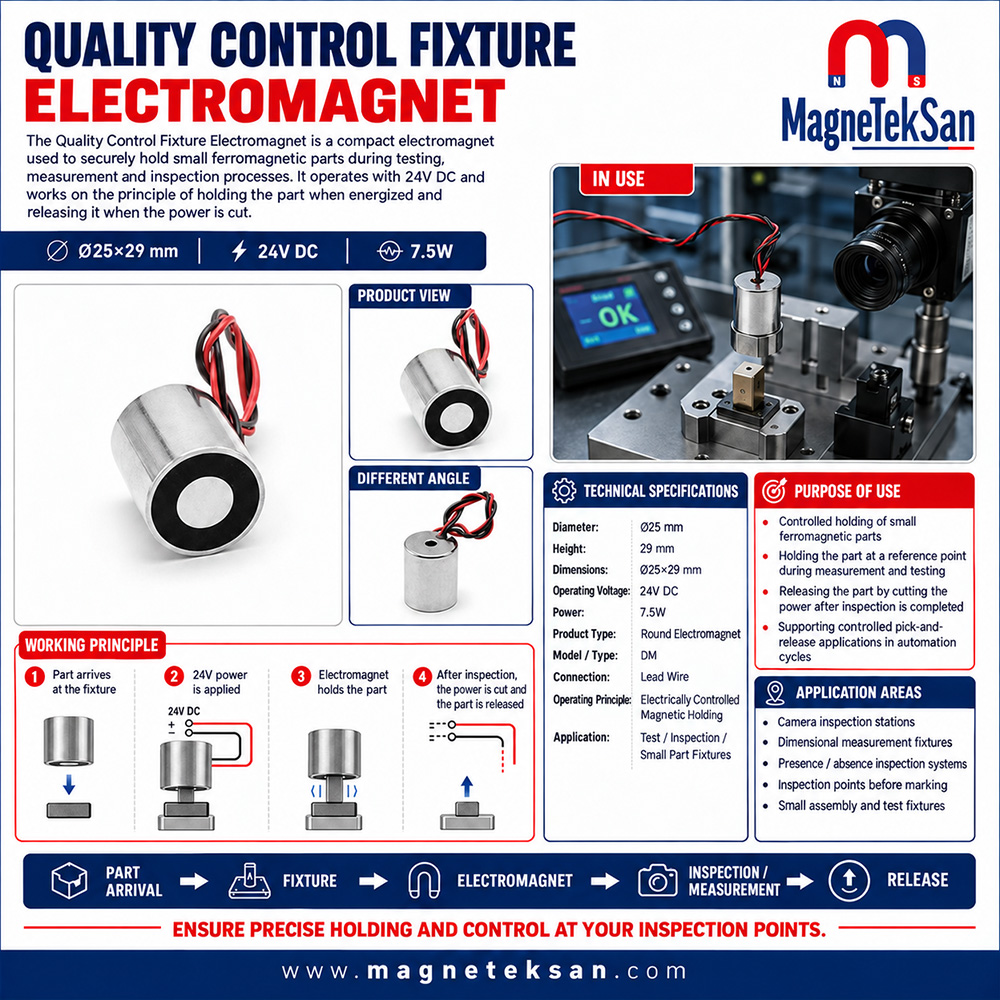
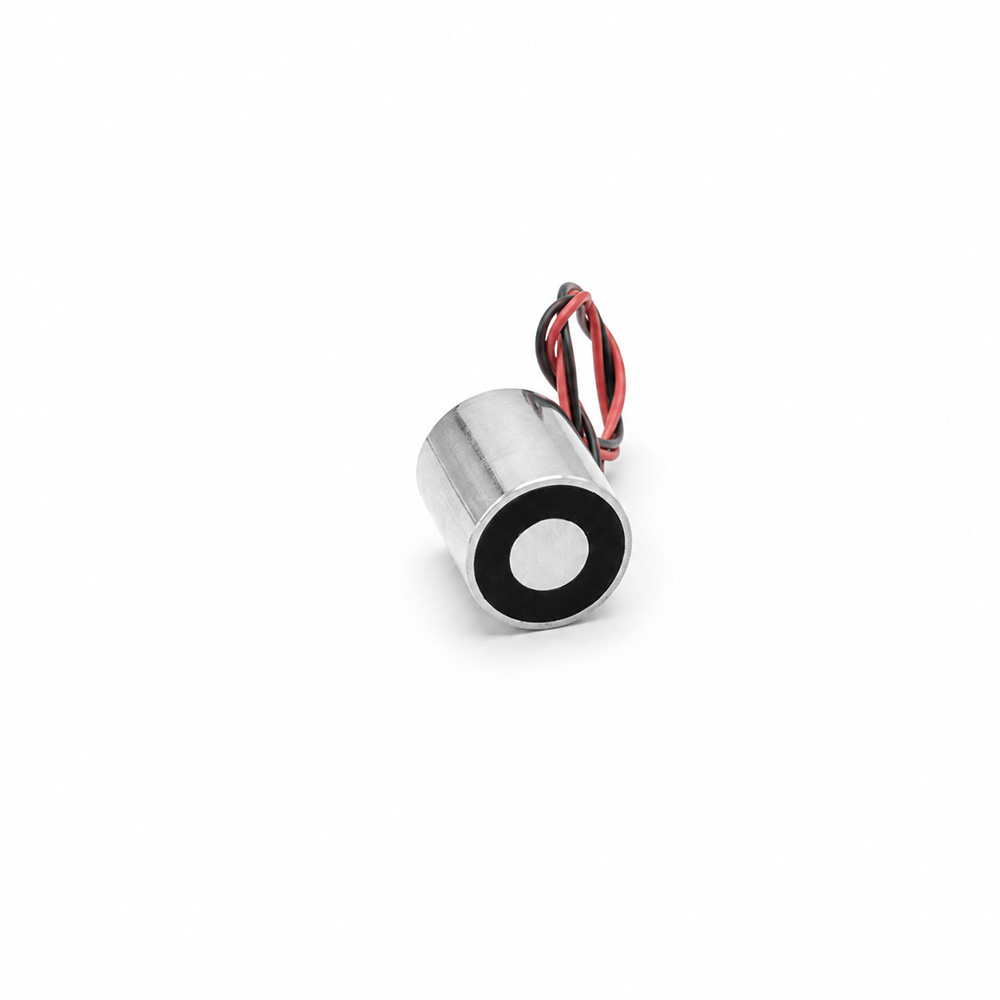
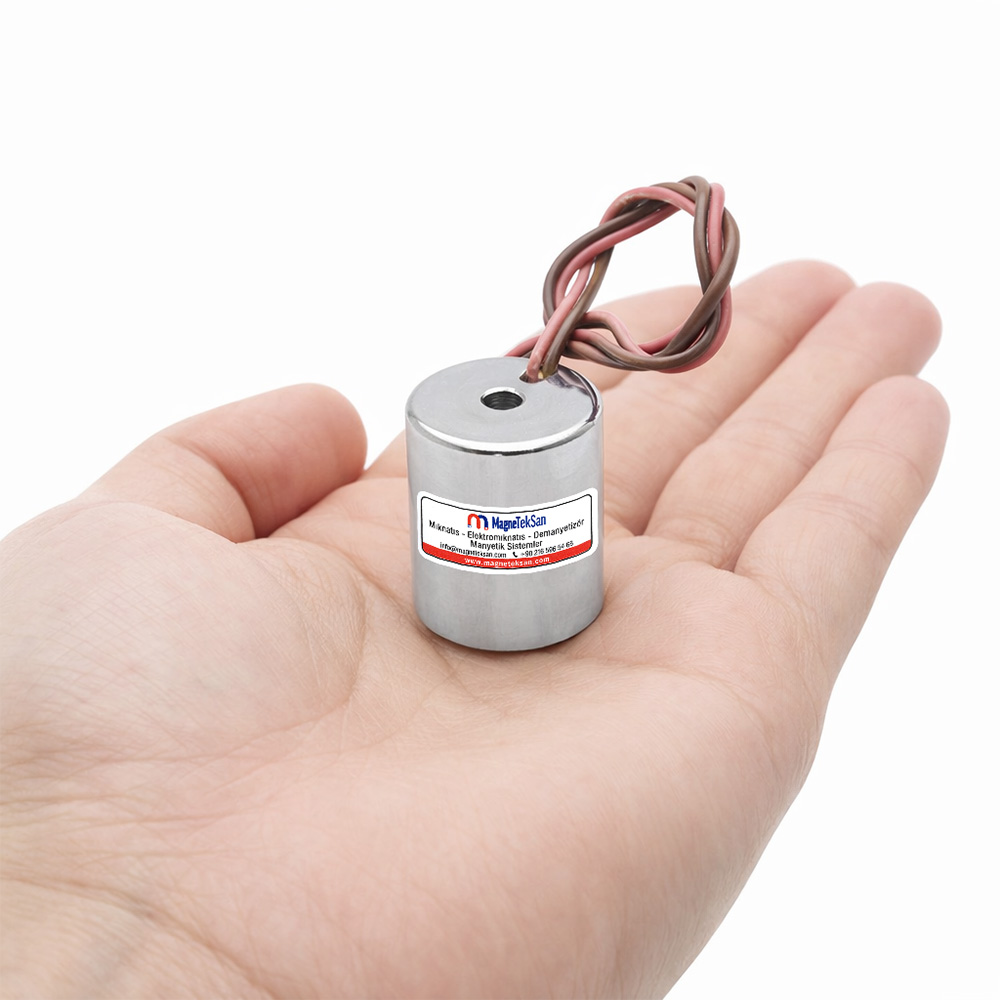
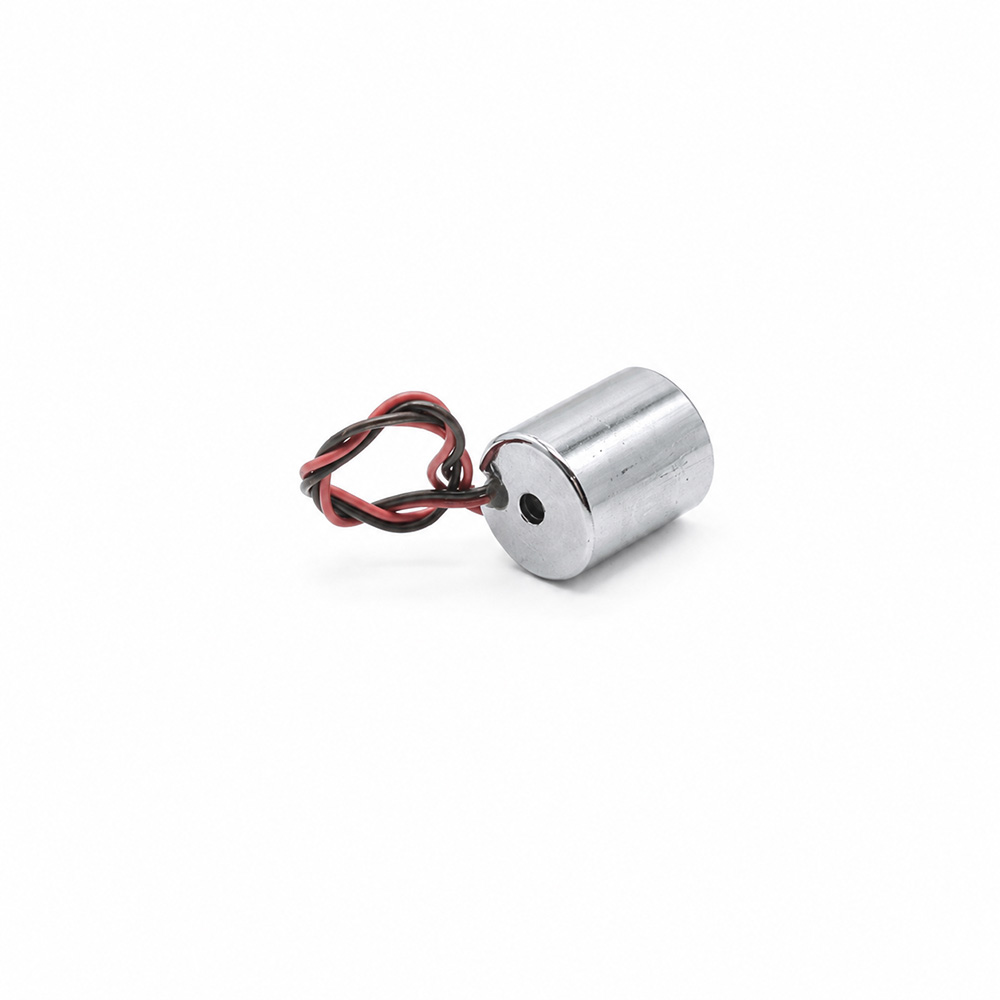
The quality control fixture electromagnet is a compact, electrically controlled magnetic holding device designed to help secure small ferromagnetic components in a defined position during dimensional measurement, camera inspection, sensor testing and automated quality control operations. Featuring a cylindrical Ø25×29 mm body, 24V DC operating voltage, 7.5W electrical power and a wired connection, this DM-type electromagnet can be integrated into suitable inspection fixtures to provide controlled magnetic holding and release during automated operating cycles.
Technical Specifications
| Technical Feature | Specification |
|---|---|
| Product Type | Compact Round Holding Electromagnet |
| Primary Application | Quality Control / Test Fixture |
| Diameter | Ø25 mm |
| Height | 29 mm |
| Dimensions | Ø25×29 mm |
| Operating Voltage | 24V DC |
| Electrical Power | 7.5W |
| Model / Type | DM |
| Electrical Connection | Wired |
| Operating Principle | Energised Magnetic Holding |
| Control Method | Electrical ON / OFF |
| Target Material | Ferromagnetic Metal Components |
| Applications | Measurement, Inspection, Fixtures, Small-Scale Automation |
Extra Information
What Is a Quality Control Fixture Electromagnet?
A quality control fixture electromagnet is an electrically controlled magnetic holding device used to position and temporarily secure suitable ferromagnetic components during inspection, measurement and testing operations.
Unlike a permanent magnet, an electromagnet produces its principal holding field when electrical power is supplied to its coil.
The Magneteksan model is designed for compact fixture applications and has the following specifications:
- Diameter: Ø25 mm
- Height: 29 mm
- Operating Voltage: 24V DC
- Electrical Power: 7.5W
- Model / Type: DM
- Electrical Connection: Wired
- Operating Principle: Electrically controlled magnetic holding
Its compact cylindrical body makes it suitable for consideration in restricted inspection stations, small automated fixtures and precision component positioning applications.
The primary purpose of this electromagnet is to help keep a suitable metal component in a defined position during an operation and allow its release when the magnetic holding field is switched off.
Why Are Electromagnets Used in Quality Control Fixtures?
Quality control systems frequently require components to remain in a consistent position while measurements or inspections are performed.
In industrial production, small metal components may need to undergo:
- Camera inspection
- Dimensional measurement
- Surface examination
- Sensor-based testing
- Presence and absence detection
- Position verification
- Pre-assembly inspection
- Marking or identification processes
Movement during inspection can affect measurement consistency, image alignment and repeatability.
An electrically controlled electromagnet can help maintain the position of a suitable ferromagnetic component during the inspection cycle.
Once the operation is completed, electrical power can be removed to allow the component to be released.
This makes the electromagnet a useful fixture component in automated systems that require repeated holding and release operations.
How Does the Ø25×29 mm Electromagnet Work?
The electromagnet operates using a coil that generates a magnetic field when supplied with 24V DC.
When energised, the magnetic field can attract a suitable ferromagnetic component positioned near the active holding surface.
When the electrical supply is switched off, the main electromagnetic holding field disappears, allowing the component to be released under suitable conditions.
Typical operating sequence:
- A component enters the inspection fixture.
- A sensor or control system confirms the component position.
- The electromagnet receives 24V DC power.
- The ferromagnetic component is held against the fixture.
- The inspection or measurement operation is performed.
- The control system switches off the electrical supply.
- The component is released or removed.
Example automation cycle:
Component Arrives → 24V DC ON → Magnetic Holding → Inspection → 24V DC OFF → Component Release
Actual release behaviour can be affected by residual magnetism, surface contact, component weight and fixture geometry.
What Are the Advantages of the Ø25×29 mm Compact Dimensions?
The electromagnet has a cylindrical body measuring 25 mm in diameter and 29 mm in height.
These compact dimensions make it possible to evaluate the device for installation where larger industrial electromagnets would be impractical.
Potential applications include:
- Small inspection fixtures
- Compact testing machines
- Desktop automation systems
- Sensor inspection stations
- Precision assembly equipment
- Restricted machine compartments
- Special-purpose industrial fixtures
A small holding electromagnet can be integrated into a fixture without requiring the space normally associated with larger magnetic lifting equipment.
However, the dimensions alone do not establish the available holding force.
Actual holding performance must be verified under the intended operating conditions.
Why Does the Electromagnet Operate at 24V DC?
The product is designed for a 24V DC electrical supply.
This voltage is widely used in industrial automation and machine control systems.
A suitable 24V DC electrical arrangement can allow the electromagnet to be controlled through:
- PLC-controlled switching circuits
- Industrial relays
- Appropriate transistor or MOSFET drivers
- Dedicated control boards
- Automated machine controllers
The electromagnet can therefore be incorporated into inspection sequences controlled by sensors, timers and programmable logic.
The switching device must be selected according to the coil current and electrical characteristics.
Protection against inductive voltage transients must also be considered.
What Does the 7.5W Electrical Power Rating Mean?
The specified electrical power of this electromagnet is 7.5W.
This value describes its rated electrical power consumption at the specified operating conditions.
Using the nominal voltage and power rating, the approximate steady-state current can be calculated:
Current = Power / Voltage
7.5W / 24V = 0.3125A
Therefore, the calculated nominal current is approximately 0.31A, assuming the stated power corresponds to operation at 24V DC.
This is an electrical calculation, not an independently verified current measurement.
The actual current may vary with coil temperature, winding resistance and operating conditions.
Importantly, 7.5W is not the magnetic holding force.
The holding capacity cannot be reliably expressed in kilograms using the electrical power rating alone.
How Much Weight Can the Ø25×29 mm Electromagnet Hold?
A verified holding force has not been specified for this model.
The actual magnetic holding force depends on several factors:
- Material of the component
- Thickness of the metal
- Contact surface area
- Surface flatness
- Air gap
- Paint or protective coatings
- Operating voltage
- Magnetic circuit geometry
- Component orientation
A thick, flat ferromagnetic steel component in direct contact with the holding surface may behave differently from a thin, curved or coated component.
For reliable fixture design, holding performance should be tested using the actual component and operating conditions.
This model should not be presented as a certified lifting electromagnet without appropriate testing and documentation.
Which Metal Components Can This Electromagnet Hold?
The electromagnet can be evaluated for holding small components made from materials with suitable ferromagnetic properties.
Potential examples include:
- Small steel plates
- Sheet metal components
- Steel discs
- Steel washers
- Ferromagnetic clips
- Small stamped metal parts
- Iron-based machine components
- Suitable steel fasteners
The ability to hold a particular component depends on its material, geometry, surface condition and contact with the electromagnet.
Testing with a representative production sample is recommended before integrating the electromagnet into a quality control fixture.
Can This Electromagnet Hold Aluminium Components?
No, not in the same way as ferromagnetic steel or iron.
A conventional DC holding electromagnet does not provide the same static magnetic attraction to aluminium as it does to suitable ferromagnetic materials.
The same general limitation applies to:
- Copper
- Brass
- Other non-ferromagnetic metals
A component being metallic does not automatically mean that it can be held by this electromagnet.
The material must have suitable magnetic properties.
If non-ferromagnetic components must be secured, alternative mechanical, vacuum or other fixture technologies should be evaluated.
Can It Hold Stainless Steel Components?
The magnetic response of stainless steel depends on its metallurgical grade and condition.
Some stainless steel grades are strongly magnetic, while others exhibit relatively weak magnetic attraction.
For example, ferritic and martensitic stainless steels generally have different magnetic behaviour from common austenitic grades.
Cold working can also influence the magnetic response of certain stainless steels.
Therefore, the suitability of this electromagnet for stainless steel components should be verified using the actual material and part geometry.
It is not appropriate to assume that every stainless steel component can be held securely.
What Is the Difference Between an Electromagnet and a Permanent Magnet?
The main difference is the ability to control the magnetic holding field electrically.
| Permanent Magnet | Electromagnet |
|---|---|
| Produces a magnetic field without electrical power | Produces its principal holding field when energised |
| Does not require electrical power for magnetic attraction | Requires electrical power for operation |
| May require mechanical separation for release | Can be switched off electrically to facilitate release |
| Suitable for passive magnetic holding | Suitable for automated holding and release |
| Simple magnetic operation | Can be integrated into control sequences |
For inspection processes involving repeated holding and release, an electromagnet may provide a practical advantage.
However, residual magnetism and the mechanical arrangement must be considered when reliable release is required.
Can the Electromagnet Be Controlled by a PLC?
Yes. The Ø25×29 mm electromagnet can be controlled through a suitable PLC-based electrical circuit.
A typical operating sequence might be:
Sensor Detects Component → PLC Sends Command → Electromagnet Energises → Component Is Held → Inspection Completes → Electromagnet Switches Off → Component Is Released
A PLC can coordinate the electromagnet with:
- Photoelectric sensors
- Proximity sensors
- Cameras
- Measurement equipment
- Timers
- Pneumatic actuators
- Automated inspection systems
However, direct connection to a PLC output depends on the electrical rating of that output.
If the output cannot safely switch the electromagnet, an appropriate relay or driver circuit must be used.
Protection against inductive switching transients is also necessary.
Can It Be Used in Camera-Based Quality Inspection Systems?
Yes, provided the fixture and inspection system are appropriately designed.
In camera-based quality inspection, component positioning is often critical to obtaining repeatable images.
A suitable holding fixture can help maintain:
- Consistent component orientation
- Stable positioning during image capture
- Repeatable inspection locations
- Reduced unwanted movement
- Controlled release after inspection
For example, a small ferromagnetic steel component can be placed against a reference surface and held magnetically while a camera examines its visible features.
After inspection, the electromagnet can be switched off to permit removal.
The possible influence of the magnetic field on nearby sensors, measurement devices or other sensitive equipment should be evaluated.
Is the Electromagnet Suitable for Dimensional Measurement Fixtures?
The electromagnet can be considered for fixtures where a small ferromagnetic component must remain in a defined position during measurement.
Potential applications include:
- Dimensional inspection
- Position verification
- Gauge measurement
- Sensor-based measurement
- Automated component checking
The electromagnet can act as one element of the fixture’s holding system.
Mechanical reference surfaces, locating pins and appropriate fixture geometry may still be necessary to establish precise component positioning.
Magnetic attraction alone does not guarantee dimensional accuracy.
The complete fixture should be validated for the required measurement repeatability.
Can It Be Used for Presence and Absence Detection?
Yes. The electromagnet can be incorporated into an automated fixture where a sensor determines whether a component is present.
A possible sequence is:
- The component arrives at the inspection position.
- A sensor detects the component.
- The controller energises the electromagnet.
- The component is held during inspection.
- The inspection result is recorded.
- The controller switches off the electromagnet.
- The component is released.
The electromagnet provides holding functionality, while the sensor performs the detection function.
It should not be described as a presence sensor by itself.
Can It Be Used in Laser Marking or Identification Fixtures?
The electromagnet can be evaluated for holding suitable small ferromagnetic components during marking or identification operations.
Potential applications include:
- Laser marking
- Inkjet marking
- Serial number identification
- Part identification
- Pre-marking positioning
A stable component position may help maintain alignment between the marking equipment and the workpiece.
However, the suitability of the fixture must be assessed in relation to heat, vibration, process forces and electromagnetic interference.
The holding performance should be tested using the actual component and marking conditions.
Can It Be Used in Small Assembly Fixtures?
Yes. The compact electromagnet may be suitable for temporary positioning of small ferromagnetic parts during assembly operations.
For example, it can be considered for holding a small steel component while another component is positioned or inspected.
Potential applications include:
- Small component assembly
- Pre-assembly inspection
- Part orientation
- Temporary component positioning
- Automated assembly stations
The electromagnet should be selected according to the required holding force and the mechanical loads involved.
It should not replace a mechanically secure fixture where significant assembly forces are present unless its suitability has been verified.
Why Is the Air Gap Important for Magnetic Holding?
The distance between the electromagnet’s active surface and the ferromagnetic component has a major influence on holding performance.
As the air gap increases, magnetic attraction can decrease significantly.
An air gap may result from:
- Paint
- Protective coatings
- Plastic films
- Dirt
- Surface roughness
- Curved surfaces
- Uneven contact
- Component deformation
For holding electromagnets, good contact between the active magnetic surface and the workpiece is generally beneficial.
Fixture designers should evaluate the actual surface geometry rather than assuming ideal full-face contact.
Does Surface Contact Affect the Holding Force?
Yes.
The effective contact area between the electromagnet and the component influences the magnetic circuit.
A flat ferromagnetic surface that contacts the active magnetic face properly can provide different holding behaviour from a narrow, curved or irregular surface.
Factors to consider include:
- Contact area
- Component thickness
- Surface flatness
- Coating thickness
- Surface contamination
- Alignment
- Air gap
For applications requiring reliable repeatability, the contact conditions should remain as consistent as possible.
A holding force value measured under ideal laboratory conditions may not represent the performance of an actual production fixture.
What Is the Purpose of the Rear Mounting Hole?
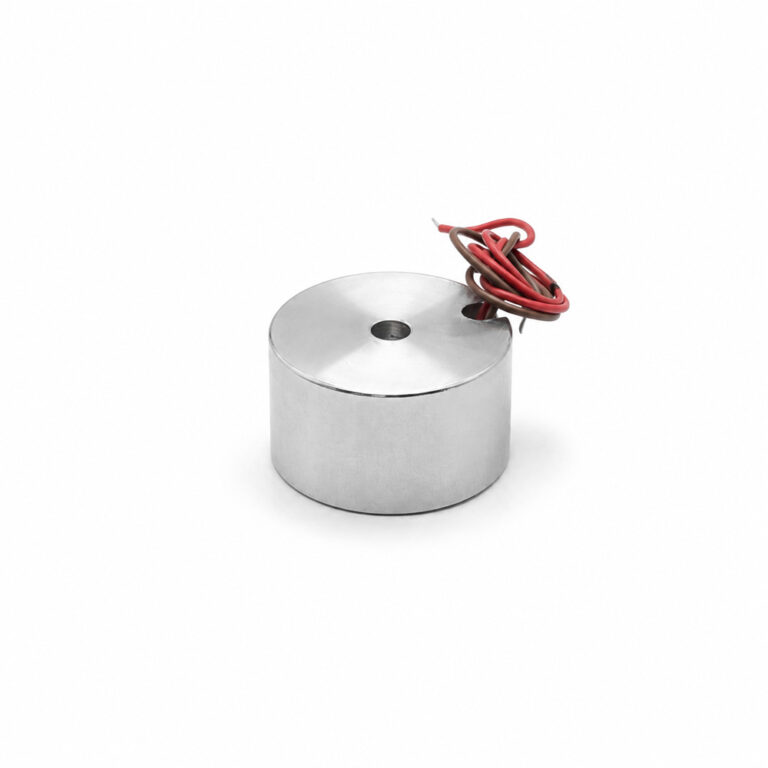
The product image shows a central connection hole on the rear side of the electromagnet.
This feature may be used as part of a suitable mechanical mounting arrangement.
However, the exact thread size and mounting standard have not been specified in the available technical data.
Therefore, an M3, M4, M5 or other thread specification should not be assumed.
Before manufacturing a mounting bracket, the connection dimensions should be confirmed using the product’s technical drawing or a physical measurement.
Correct mechanical installation is important for fixture stability and repeatable operation.
Can Multiple Electromagnets Be Used in One Fixture?
Yes. Multiple compact electromagnets can be integrated into one fixture when supported by an appropriate mechanical and electrical design.
For example, a larger ferromagnetic component may require holding at:
- Two separate locations
- Four reference points
- Different inspection zones
- Multiple fixture stations
Using several electromagnets can allow the holding arrangement to be distributed across the workpiece.
Each electromagnet must be evaluated for its individual contact conditions and holding requirements.
The electrical system must also be designed for the total power consumption and current.
For example, four units rated at 7.5W each would have a combined nominal electrical power of 30W when energised simultaneously.
This calculation does not establish their combined holding force.
Can the Electromagnet Be Used for Lifting or Transporting Components?
The electromagnet can attract suitable ferromagnetic components, but its primary application is temporary holding and positioning in quality control fixtures.
It should not automatically be classified as an industrial lifting electromagnet.
Verified information has not been provided for:
- Rated lifting capacity
- Permissible suspended load
- Safety factor
- Certified lifting performance
Therefore, this product should not be used for safety-critical lifting or suspended-load applications without appropriate engineering verification.
Its intended role is controlled holding of small parts in fixtures and inspection systems.
Can It Be Used as a Safety Lock?
This electromagnet should not be presented as a certified safety locking device.
No verified safety locking standard or safety certification has been specified for this model.
Safety-critical applications may include:
- Machine guarding
- Personnel access doors
- Protective covers
- Load retention
- Emergency restraint systems
Such applications require appropriately designed and validated safety components.
An ordinary holding electromagnet should not be relied upon as the sole protective device for personnel safety.
What Happens When Electrical Power Is Interrupted?
When the 24V DC supply is interrupted, the electromagnet’s principal holding field is removed.
Under suitable conditions, this allows the held component to separate from the magnetic surface.
However, release may be affected by:
- Residual magnetism
- Component geometry
- Surface adhesion
- Mechanical interference
- Fixture orientation
- Gravity
- External forces
This behaviour is especially important in automated systems where the component must be released at a precise stage.
A suitable mechanical or pneumatic release arrangement may be necessary if residual adhesion interferes with reliable operation.
Power-loss behaviour must also be considered during machine safety assessments.
How Does This Product Differ from Other Magneteksan Electromagnets?
Magneteksan offers electromagnets for different industrial applications, including metal handling, automation, robotic systems and component positioning.
The distinguishing configuration of this product is:
Ø25×29 mm + 24V DC + 7.5W + DM Model + Compact Quality Control Fixture Application
Unlike larger electromagnets intended for handling substantial metal components, this model is positioned for compact inspection and test fixtures.
Its small cylindrical body makes it suitable for consideration where space is limited and the primary task is temporary holding of small ferromagnetic parts.
The selection of the correct electromagnet should always be based on the application rather than dimensions or electrical power alone.
Can Compact Electromagnets Be Manufactured in Custom Sizes?
Electromagnets can be designed with different configurations according to the intended industrial application.
Potential customisation parameters include:
- Body diameter
- Body height
- Operating voltage
- Electrical power
- Cable arrangement
- Mechanical mounting connection
- Contact surface geometry
- Holding requirements
- Operating cycle
For custom designs, it is important to evaluate the component material, dimensions, required holding force, contact conditions and energised operating duration.
A compact electromagnet intended for short inspection cycles may have different design requirements from a unit intended to remain continuously energised.
The allowable duty cycle and thermal performance must therefore be established for the specific design.
What Information Is Required for a Custom Electromagnet Quotation?
For technical evaluation and quotation, the following information is recommended:
- Application: Quality control, dimensional inspection, camera inspection, testing or assembly.
- Component Material: Carbon steel, stainless steel or another specified material.
- Component Dimensions: Length, width, thickness and relevant geometry.
- Component Weight: Actual weight of the part to be held.
- Required Holding Force: Holding requirement under the expected operating conditions.
- Contact Surface: Shape, dimensions and surface finish.
- Air Gap: Expected separation between the magnetic surface and the component.
- Operating Voltage: Required DC supply voltage.
- Electrical Power Constraints: Available power and control system limitations.
- Operating Cycle: Holding and release frequency.
- Energised Duration: Required ON time and cooling or OFF time.
- Installation Space: Available diameter, height and surrounding clearance.
- Mounting Method: Required mechanical connection and mounting orientation.
- Control System: PLC, relay, driver or dedicated controller.
- Technical Drawings: Component drawings, fixture layout and installation details.
These details help determine whether the standard Ø25×29 mm, 24V DC, 7.5W model is appropriate or whether a custom electromagnet should be considered.
Magneteksan – Compact Electromagnets for Quality Control and Industrial Automation
Magneteksan designs and manufactures industrial magnetic solutions for automation, inspection, component handling and specialised machinery applications.
The Ø25×29 mm 24V DC 7.5W Quality Control Fixture Electromagnet provides an electrically controlled magnetic holding solution for suitable small ferromagnetic components used in inspection and testing processes.
Its compact cylindrical construction, wired connection and 24V DC operation make it suitable for consideration in automated inspection fixtures, camera-based quality control stations, dimensional measurement systems and small assembly applications.
By integrating magnetic holding into an appropriate fixture design, manufacturers can support repeatable component positioning and controlled release during automated production cycles.
For new equipment or existing fixture upgrades, Magneteksan can evaluate component material, holding requirements, installation dimensions, electrical control and operating conditions to identify an appropriate electromagnet configuration.