Product Information
Extra Information
Product Information
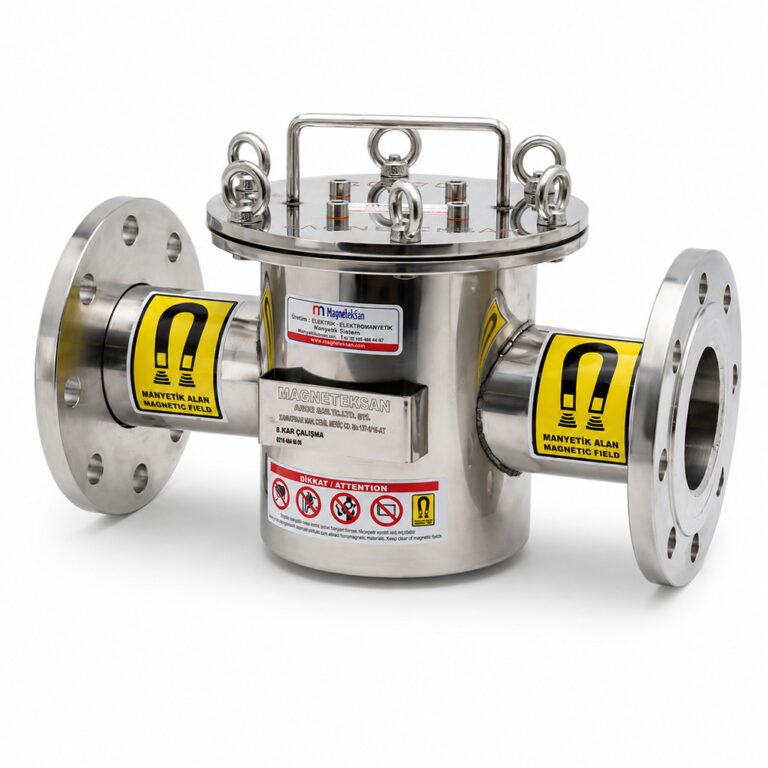
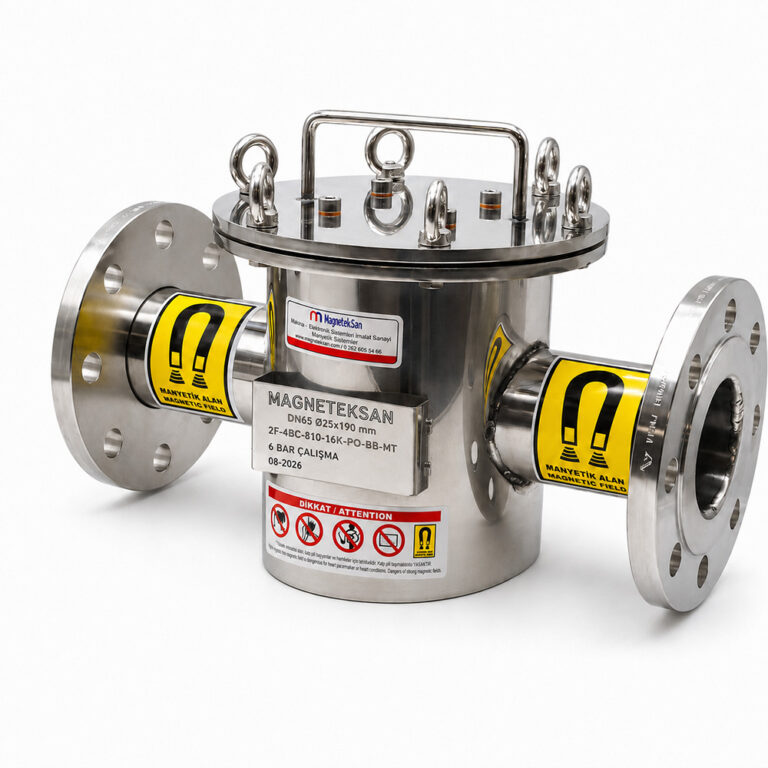
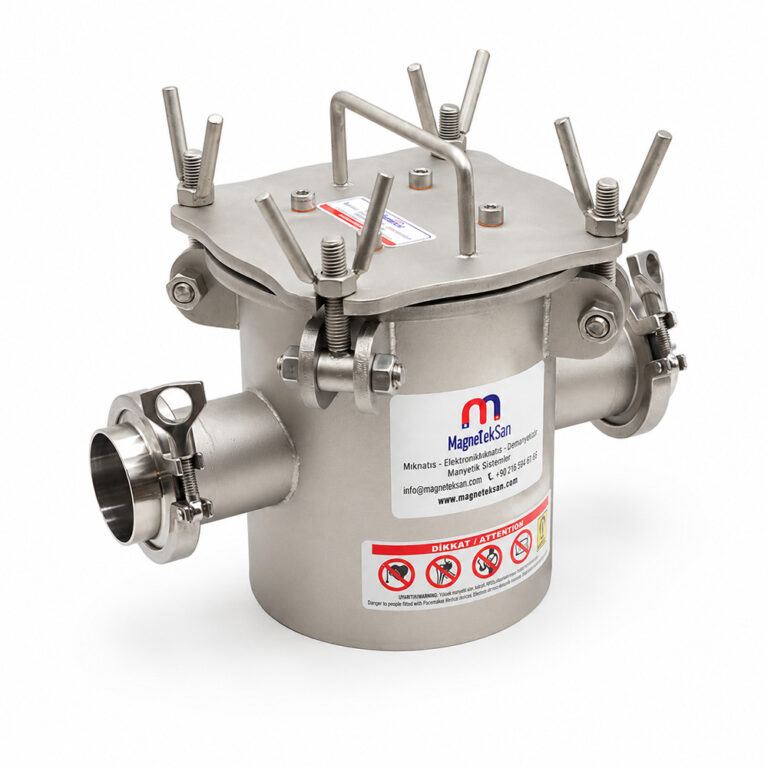
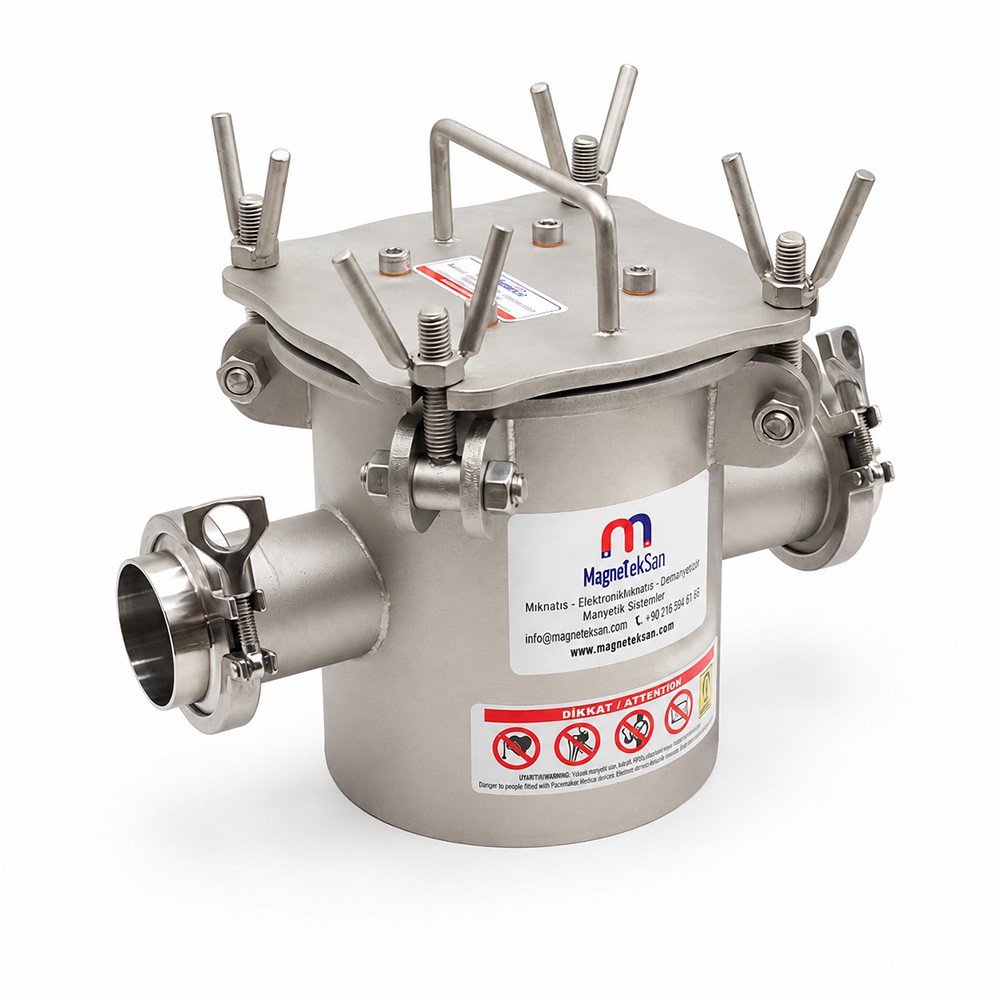
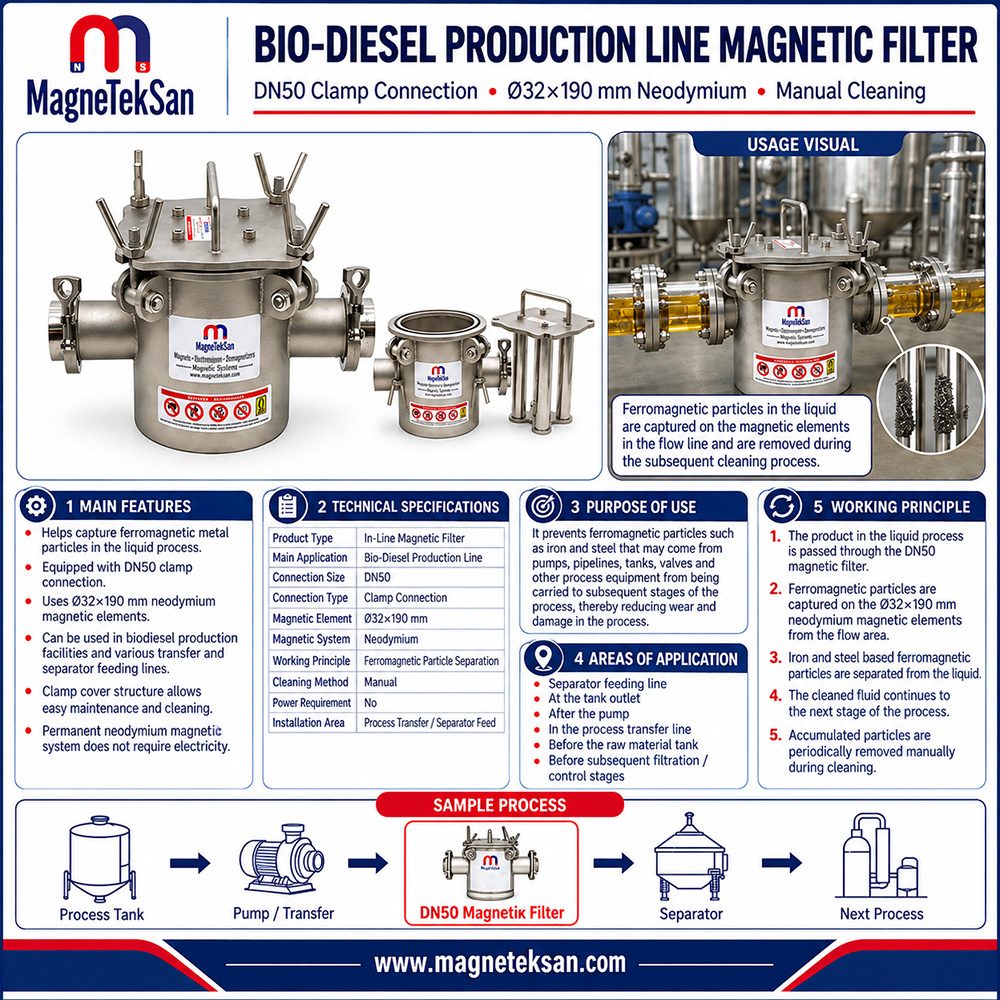
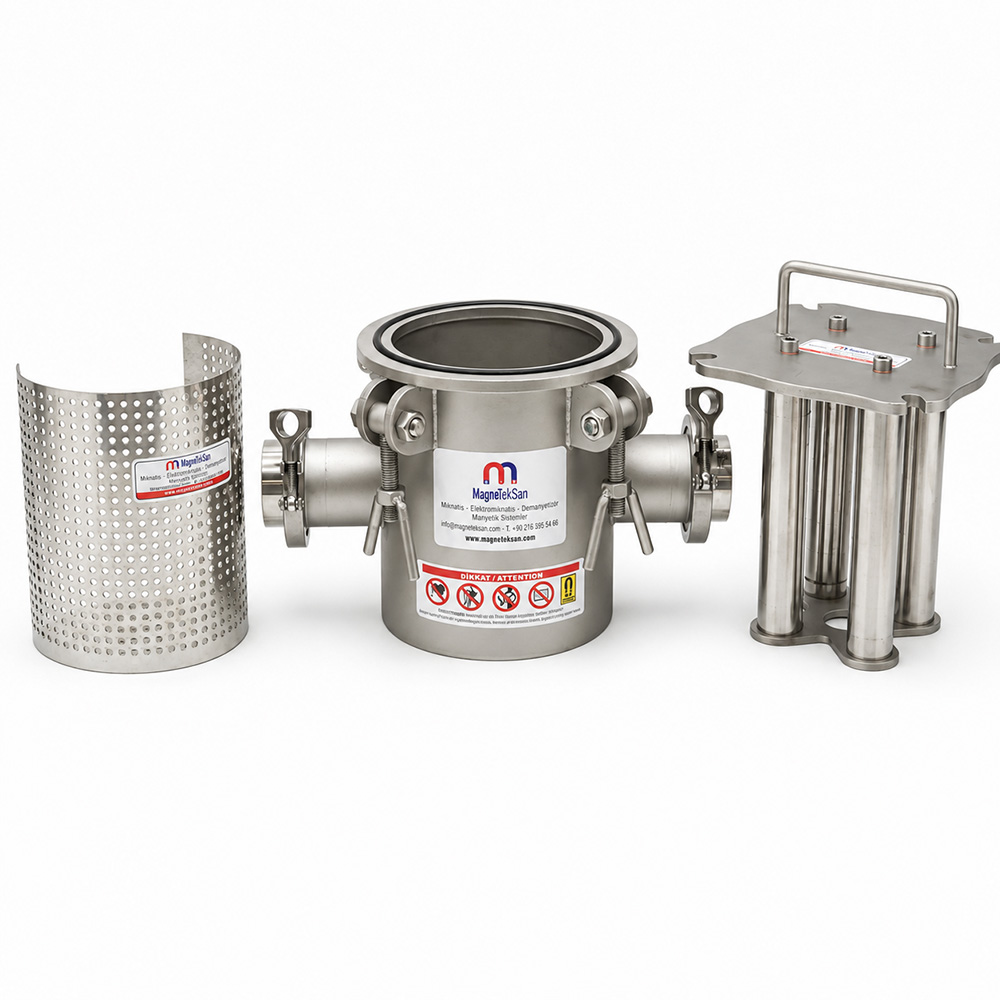
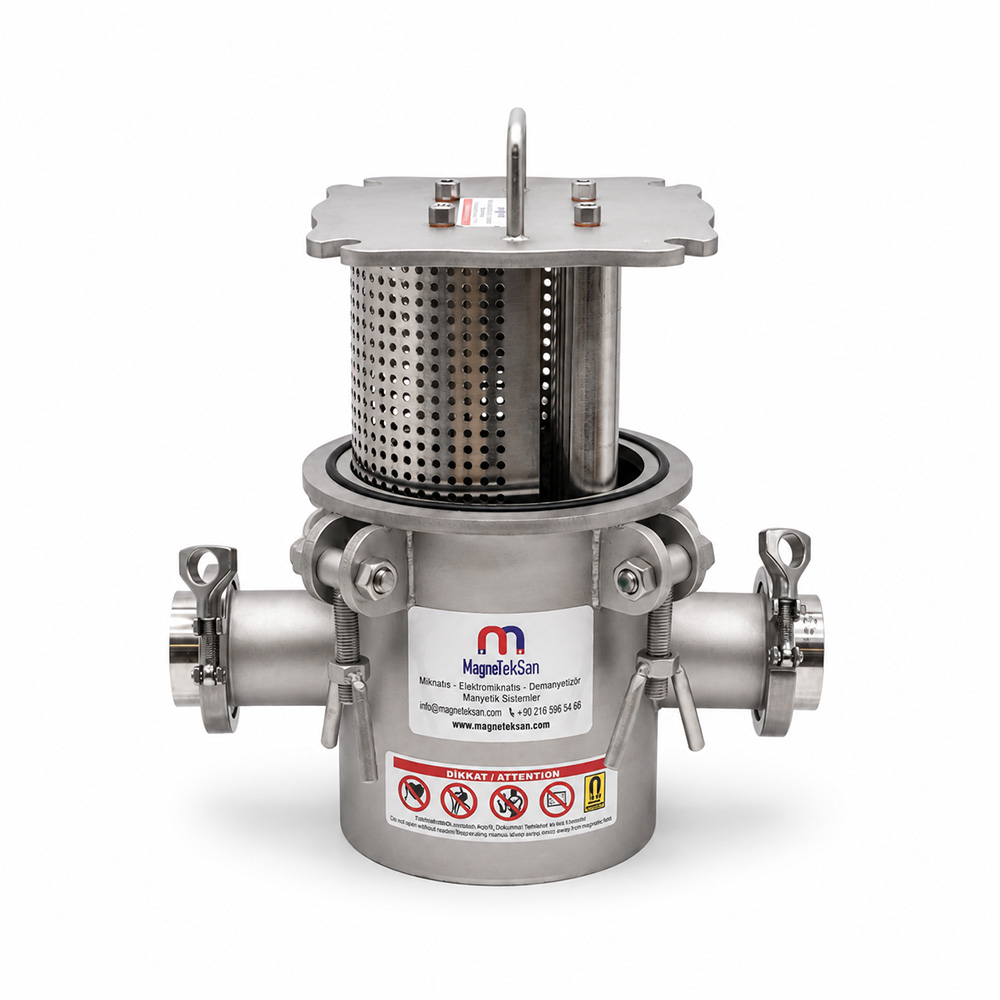
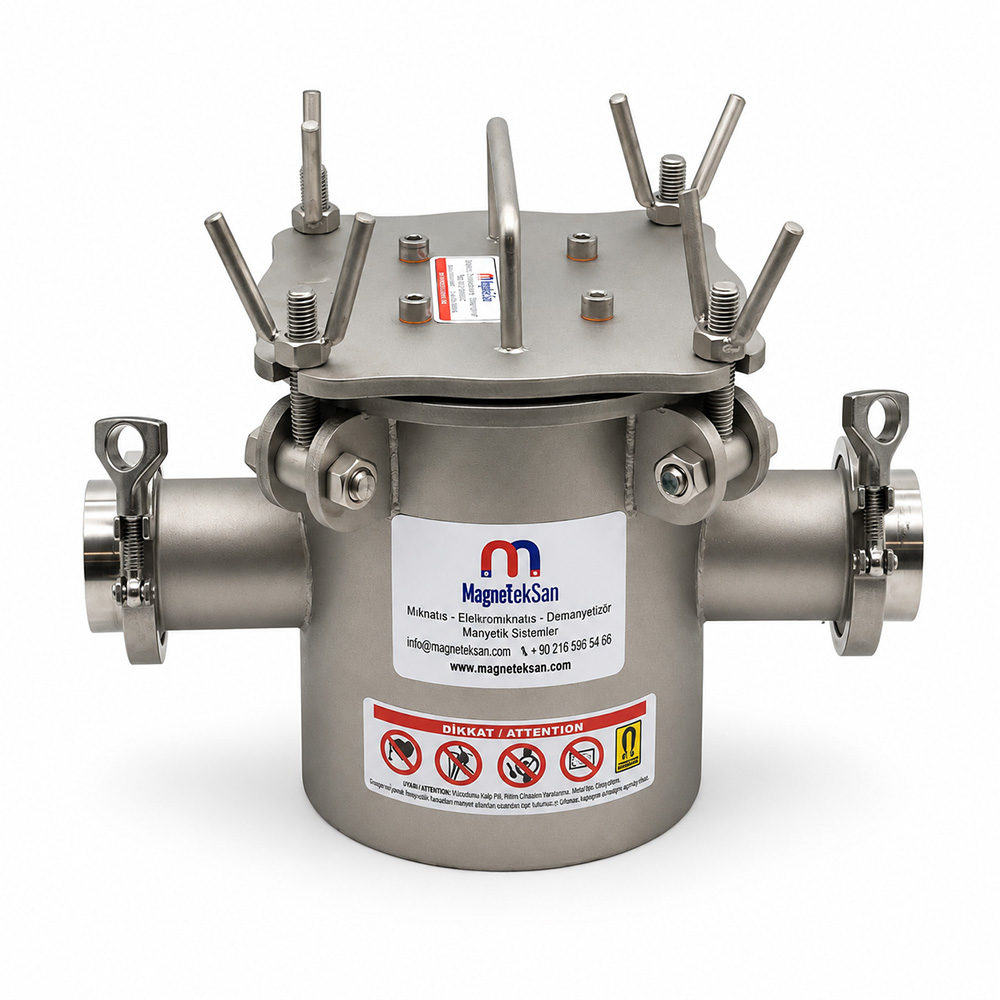
The DN50 biodiesel magnetic filter is an inline magnetic filtration unit designed to help capture ferromagnetic metal contaminants in suitable liquid transfer and separator feed lines during biodiesel production. It features a DN50 clamp-type connection and an Ø32×190 mm neodymium magnetic element, which attracts sufficiently magnetic iron and steel particles as the process liquid passes through the filter. The permanent magnetic system requires no electrical power and allows periodic manual removal of accumulated metal particles.
| Technical Specification | Value |
|---|---|
| Product Type | Neodymium Magnetic Filter |
| Primary Application | Biodiesel Production Line |
| Connection Size | DN50 |
| Connection Type | Clamp-Type Connection |
| Magnetic Element Dimensions | Ø32×190 mm |
| Magnetic System | Neodymium |
| Operating Principle | Ferromagnetic Particle Separation |
| Application Area | Process Transfer / Separator Feed |
| Cleaning Method | Manual |
| Electrical Power Requirement | None |
| Target Contaminants | Iron and Steel-Based Particles |
Extra Information
What Is a Biodiesel Production Line Magnetic Filter?
A biodiesel magnetic filter is an industrial inline filtration device designed to help capture ferromagnetic metal contaminants from liquid streams used in biodiesel production.
The filter targets iron and steel-based particles that may enter the process through pumps, valves, pipework, tanks, separators and other mechanical equipment.
The Magneteksan model features a DN50 clamp-type connection and an Ø32×190 mm neodymium magnetic element.
As the process liquid flows through the filter, sufficiently ferromagnetic particles can be attracted to and retained on the magnetic surface.
The primary purpose of the product is to support ferromagnetic contamination control, not to change the chemical composition of biodiesel.
Why Is Metal Contamination Control Important in Biodiesel Production?
Biodiesel production plants use various mechanical systems to transfer, process and separate liquids.
These systems may include:
- Feed pumps
- Transfer pumps
- Mixers and agitators
- Process pipelines
- Valves
- Storage and intermediate tanks
- Centrifugal separators
Mechanical wear or foreign material entering the system may introduce iron and steel particles into the process stream.
A neodymium magnetic filter can help reduce the movement of suitable ferromagnetic contaminants into subsequent processing stages.
It may also provide an additional inspection point for monitoring metal accumulation in the production line.
Where Can a Magnetic Filter Be Installed in a Biodiesel Production Line?
There is no single installation position suitable for every biodiesel plant.
The appropriate location depends on the process design, liquid properties and equipment arrangement.
Potential installation points include separator feed lines, tank outlets, downstream pump connections and intermediate process transfer lines.
The actual installation point should be selected after reviewing the flow rate, operating pressure, temperature, chemical compatibility and maintenance access.
Can the Magnetic Filter Be Installed Before a Biodiesel Separator?
Yes, a separator feed line is one of the principal applications for this product.
An example process arrangement is:
Intermediate Tank → DN50 Magnetic Filter → Separator
In this configuration, the filter provides an additional ferromagnetic contamination control point before the liquid enters the separator.
It may help reduce the amount of suitable iron and steel particles reaching sensitive downstream equipment.
However, the magnetic filter does not replace the separator’s specified mechanical filtration, operating procedures or maintenance requirements.
Why Use a Magnetic Filter Before a Centrifugal Separator?
Centrifugal separators are process machines that may operate at high rotational speeds.
Reducing unwanted solid contaminants in their feed streams can be an important part of process management.
A neodymium magnetic filter specifically targets ferromagnetic metal particles that might otherwise travel with the liquid.
The filter can therefore be considered as supplementary protection against this particular type of contamination.
Its effectiveness depends on the particle characteristics, flow conditions and magnetic system design.
Can the Filter Be Installed at a Process Tank Outlet?
Yes, the product can be evaluated for installation downstream of a suitable process tank.
Liquid leaving the tank can pass through the magnetic filter before entering the next production stage.
This arrangement may be useful when the objective is to reduce the transfer of ferromagnetic particles from tanks or upstream process equipment.
The selected location must provide suitable piping connections, safe access and adequate hydraulic performance.
Can the Magnetic Filter Be Installed After a Pump?
Yes, installation downstream of a transfer pump may be considered.
Pumps and other mechanical components can generate ferromagnetic wear particles under certain operating conditions.
A magnetic filter positioned downstream may help capture some of these particles before they reach subsequent process equipment.
The installation must be assessed for operating pressure, flow rate, temperature and the properties of the liquid.
Is the Filter Suitable for Biodiesel Process Transfer Lines?
The product is intended for suitable liquid transfer and separator feed applications in biodiesel production.
Its DN50 clamp-type connection can be integrated into compatible piping systems.
Possible process arrangements include:
Process Tank → Magnetic Filter → Separator → Next Process Stage
Alternatively, depending on plant design:
Separator → Magnetic Filter → Intermediate Tank / Final Treatment
The appropriate arrangement should be established through process engineering rather than assuming one universal installation layout.
Can It Be Used with Industrial Centrifugal Separation Systems?
The product can be evaluated for liquid transfer systems associated with industrial separators.
The clamp-type connection may facilitate filter removal for inspection and cleaning where the mating connections are compatible.
Before installation, the following should be confirmed:
- Exact clamp connection standard and dimensions
- Gasket material
- Operating pressure
- Process temperature
- Flow direction
- Liquid compatibility
The DN50 nominal size alone does not establish compatibility with every clamp standard or piping arrangement.
Can the Magnetic Filter Be Used in Glycerol Transfer Lines?
Biodiesel production may generate a separate glycerol-containing phase.
A magnetic filter can be evaluated for ferromagnetic contamination control in such transfer lines, provided that the process conditions and wetted materials are suitable.
Chemical compatibility is especially important.
The actual liquid composition, operating temperature, gasket material and filter body material must be reviewed before confirming suitability.
No universal chemical compatibility guarantee should be assumed without the relevant material specifications.
Is the Filter Suitable for Raw Oil Feed Lines?
It may be considered for suitable raw oil transfer systems used in biodiesel production.
For example, a plant processing vegetable oils or recovered oils may require additional control of ferromagnetic particles originating from transfer equipment.
The magnetic element can help retain suitable iron and steel-based contaminants.
However, the main application of this product remains biodiesel production line magnetic filtration, rather than general-purpose oil filtration.
Can It Be Used in Biodiesel Production from Used Cooking Oil?
Yes, the product may be evaluated for appropriate liquid transfer stages in used cooking oil-based biodiesel production.
Recovered oils can contain different types of unwanted materials.
The neodymium magnetic element specifically targets sufficiently ferromagnetic contaminants, including certain iron and steel particles.
It does not directly remove all other contaminants, such as:
- Food residues
- Sand
- Plastic particles
- Organic solids
- Non-magnetic sediment
Separate mechanical or other filtration systems may be required for these materials.
Does a Biodiesel Magnetic Filter Remove All Contaminants?
No.
The primary function of this product is to help capture ferromagnetic metal particles.
It is not designed to directly remove every impurity present in biodiesel or its intermediate process liquids.
For example, magnetic filtration does not directly separate:
- Water
- Dissolved glycerol
- Catalyst residues
- Soap
- Dissolved chemicals
- Non-magnetic organic contaminants
These substances may require other treatment, separation or purification processes.
The product should therefore be described as a ferromagnetic contamination control device, not as a complete biodiesel purification system.
Does Magnetic Filtration Improve Biodiesel Quality?
A magnetic filter may contribute to contamination control by reducing the presence of suitable ferromagnetic metal particles.
However, it does not directly change the chemical properties of biodiesel.
Final biodiesel quality depends on several process factors, including:
- Feedstock quality
- Reaction conditions
- Catalyst management
- Water content
- Phase separation
- Washing or purification
- Process monitoring
Magnetic filtration should be considered one component of a broader production and contamination control strategy.
Which Metal Particles Can the Neodymium Magnetic Filter Capture?
The magnetic system is intended to attract particles with sufficient ferromagnetic properties.
Examples include:
- Iron particles
- Carbon steel fragments
- Steel machining debris
- Ferromagnetic pump wear particles
- Iron-based particles from pipework
- Fine ferromagnetic metal contaminants
Actual capture performance depends on the magnetic properties of the particles and the operating conditions.
Can the Filter Capture Very Fine Metal Particles?
Fine ferromagnetic particles may be influenced by the neodymium magnetic field.
However, a verified minimum particle capture size has not been specified for this product.
It would therefore be incorrect to claim that the filter captures particles down to a particular micron rating without test evidence.
Factors influencing performance include:
- Magnetic field characteristics
- Particle size
- Particle magnetic properties
- Liquid viscosity
- Flow rate
- Distance from the magnetic surface
Performance should be evaluated against the actual process requirements.
Can the Filter Capture Stainless Steel Particles?
This depends on the stainless steel grade and its magnetic properties.
Some stainless steels are strongly magnetic, while others have much weaker magnetic responses.
Ferromagnetic stainless steel particles may be attracted under suitable conditions.
However, the filter should not be described as capable of capturing every type of stainless steel particle.
Material-specific testing may be required.
Can It Capture Aluminium, Copper or Brass?
Not through conventional ferromagnetic attraction.
Aluminium, copper and brass are not ferromagnetic under normal operating conditions.
Therefore, this magnetic filter is not intended to capture all metal types.
Where non-ferromagnetic metal contamination must also be controlled, other detection or separation methods may be required.
Does the Magnetic Filter Replace a Mechanical Filter?
No.
Magnetic and mechanical filters operate according to different separation principles.
| Filtration System | Main Separation Principle | Typical Target |
|---|---|---|
| Neodymium Magnetic Filter | Magnetic properties | Ferromagnetic metal particles |
| Mechanical Filter | Particle size and filter medium | Particles retained by the selected filtration rating |
A non-magnetic particle may pass through a magnetic filter but be captured by a suitable mechanical filter.
Conversely, magnetic filtration can help collect certain ferromagnetic particles without relying on a conventional mesh opening.
Both technologies can be used together when required by the process.
What Does the DN50 Connection Size Mean?
DN50 indicates the nominal process connection size of the filter.
This product also features a clamp-type connection.
However, DN50 does not independently establish a particular:
- Flow rate in litres per minute
- Capacity in m³/h
- Maximum operating pressure
- Clamp standard
- Exact external connection diameter
The hydraulic capacity and connection compatibility must be confirmed for the specific installation.
What Are the Advantages of the Clamp-Type Connection?
The clamp-type design can facilitate installation, removal and maintenance in compatible process piping systems.
Potential advantages include easier access for:
- Magnetic element cleaning
- Inspection
- Routine maintenance
- Servicing
However, the clamp connection dimensions, mating ferrules and gasket material must match the existing installation.
The exact connection standard should be confirmed before ordering.
Why Is Gasket Material Important in Biodiesel Production?
Biodiesel and the various liquids used during its production can interact differently with elastomer materials.
Gasket compatibility depends on the actual process fluid and operating conditions.
Important factors include:
- Liquid composition
- Chemical concentration
- Operating temperature
- Exposure duration
- Pressure conditions
The gasket material for this specific product has not been identified in the available technical specifications.
Therefore, materials such as NBR, EPDM or FKM should not be assumed without confirmation.
What Is the Function of the Ø32×190 mm Neodymium Magnetic Element?
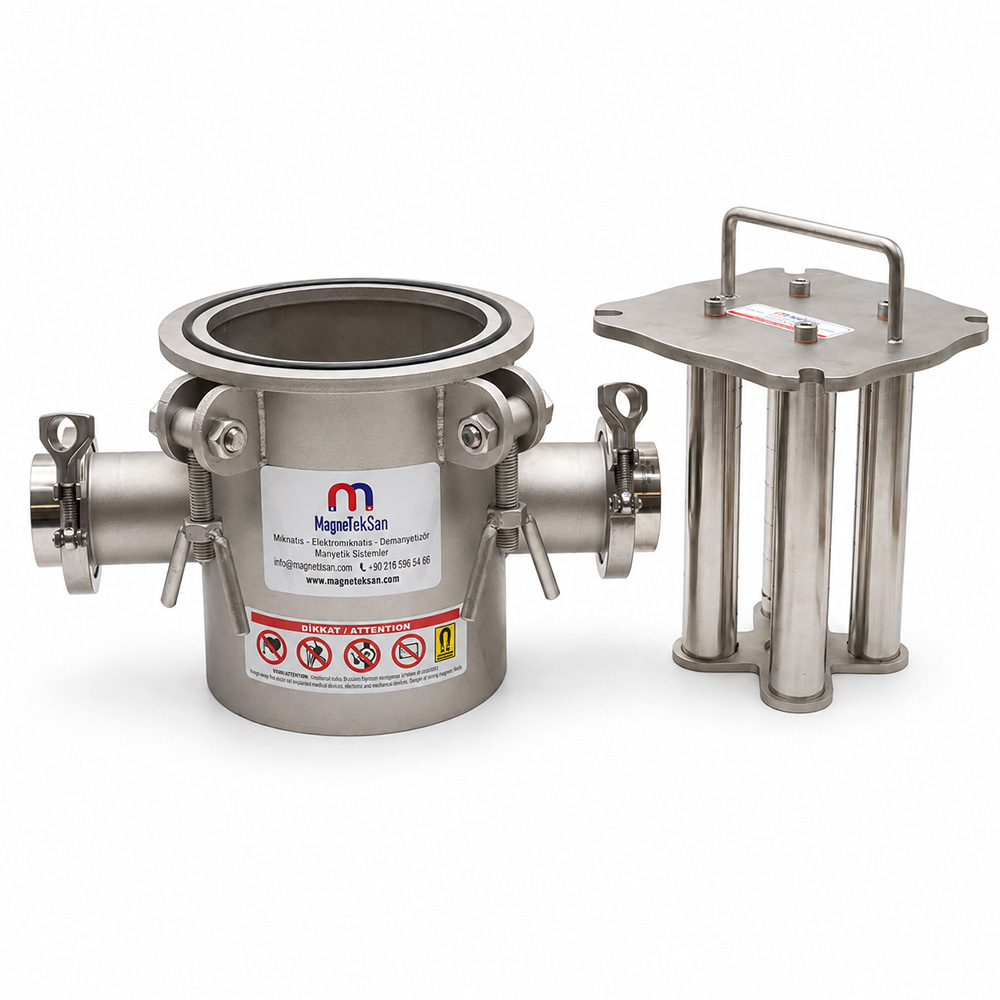
The Ø32×190 mm neodymium magnetic element provides the magnetic working surface used to attract and retain suitable ferromagnetic particles.
As liquid passes through the filter, particles approaching the magnetic element may be influenced by its magnetic field and collected on its surface.
The dimensions of the magnetic element are confirmed, but they do not independently establish:
- Magnetic flux density in Gauss
- Effective attraction distance
- Flow capacity
- Minimum particle capture size
These performance parameters require appropriate technical data or testing.
What Is the Flow Capacity of the DN50 Biodiesel Magnetic Filter?
A verified flow capacity has not been specified for this model.
The actual flow capacity depends on several factors:
- Liquid viscosity
- Process temperature
- Pump capacity
- Connection dimensions
- Internal filter geometry
- Acceptable pressure drop
Therefore, a specific flow rate in m³/h should not be assigned without hydraulic evaluation.
Does Biodiesel Temperature Affect Magnetic Filter Performance?
Yes.
Temperature affects the viscosity of the process liquid and the operating conditions of the magnetic element and sealing materials.
The permissible temperature of a neodymium magnetic system depends on the actual magnet grade and construction.
The available specifications do not identify a verified maximum operating temperature for this model.
The required process temperature should therefore be confirmed before installation.
What Is the Maximum Operating Pressure?
A verified pressure rating has not been specified for this product.
The DN50 nominal size and clamp-type connection do not independently determine the allowable operating pressure.
Pressure suitability depends on the complete assembly, including:
- Filter housing
- Clamp connection
- Gasket
- Welded joints
- Connection geometry
These components must be evaluated together before confirming an operating pressure.
Does the Neodymium Magnetic Filter Require Electricity?
No.
The product uses a permanent neodymium magnetic system.
It does not require electrical power to generate its magnetic field.
No electromagnetic coil, control panel or electrical power supply is required for the magnetic attraction function.
This can simplify integration into suitable biodiesel process lines.
How Is the Magnetic Element Cleaned?
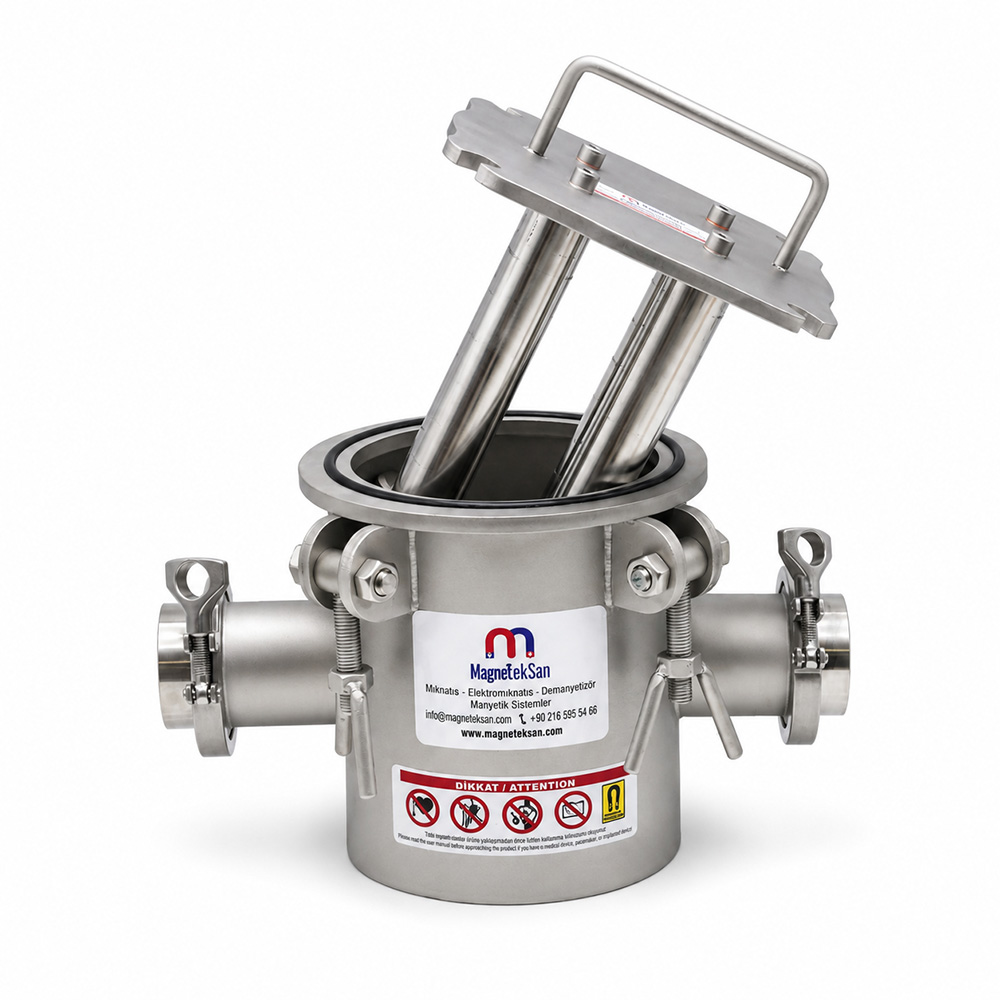
The product is designed for manual cleaning.
Before maintenance, the process must be safely stopped, isolated and depressurised. Any hazardous or hot liquid must be handled according to the plant’s safety procedures.
A general maintenance sequence is:
- Stop the liquid flow and isolate the filter.
- Release process pressure safely.
- Allow the equipment to reach safe handling conditions.
- Open the clamp connection in a controlled manner.
- Access the Ø32×190 mm neodymium magnetic element.
- Remove accumulated ferromagnetic particles.
- Inspect the magnetic surface.
- Check the gasket and connection surfaces.
- Reassemble the filter and carry out the required leak checks before restarting.
The final procedure must follow the plant’s approved maintenance and safety instructions.
How Often Should the Magnetic Filter Be Cleaned?
There is no universal cleaning interval for every biodiesel production line.
Cleaning frequency depends on:
- Volume of processed liquid
- Operating hours
- Ferromagnetic contamination load
- Condition of upstream equipment
- Accumulation on the magnetic element
During initial commissioning, more frequent inspections can help establish a suitable maintenance schedule.
Is Monitoring Metal Accumulation Useful?
Yes.
The quantity and appearance of particles collected on the magnetic element may provide useful maintenance information.
An unexpected increase in ferromagnetic contamination could justify inspection of upstream equipment, such as:
- Pumps
- Valves
- Mixers
- Other mechanical components
However, particle accumulation alone does not provide a definitive diagnosis of equipment failure.
It should be considered alongside other process and maintenance observations.
Can the Magnetic Filter Help Protect a Biodiesel Separator?
When installed in a suitable position, the filter may help reduce the amount of ferromagnetic contamination reaching the separator.
For this reason, the following arrangement may be considered:
Process Tank → DN50 Magnetic Filter → Separator
The filter provides supplementary ferromagnetic particle control.
It does not replace the separator manufacturer’s specified filtration, inspection or maintenance requirements.
How Does This Filter Differ from a Gearbox Oil Magnetic Filter?
The two products may use magnetic separation principles, but their intended applications are different.
A gearbox oil magnetic filter is primarily associated with the control of ferromagnetic wear particles in lubrication systems.
The biodiesel magnetic filter is designed for suitable liquid process and separator feed applications in biodiesel production plants.
The relevant process conditions, liquid properties, installation requirements and material compatibility must therefore be evaluated separately.
How Does It Differ from a Vegetable Oil Magnetic Filter?
A vegetable oil magnetic filter may be intended for oil processing or food-related applications.
This product is specifically positioned for industrial liquid transfer and separator feed systems used in biodiesel production.
Its main purpose is ferromagnetic metal contamination control within a biofuel manufacturing process.
It should not automatically be described as food-grade equipment or certified for food-contact applications.
Can Magneteksan Manufacture Custom Biodiesel Magnetic Filters?
Yes.
Magneteksan can evaluate custom neodymium magnetic filtration solutions for different biodiesel production and separator feed applications.
The design process should consider:
- Actual process liquid
- Nominal connection size
- Connection type and standard
- Required flow rate
- Operating temperature
- Operating pressure
- Chemical composition
- Filter housing material
- Gasket material
- Target ferromagnetic contaminants
- Cleaning and maintenance requirements
These parameters help determine the appropriate filter configuration and installation arrangement.
What Information Is Required for a Custom Biodiesel Magnetic Filter?
For a project-specific magnetic filtration solution, customers should provide the following information:
- Intended application within the biodiesel production process.
- Process liquid and chemical composition.
- Required nominal connection size.
- Exact connection type and standard.
- Flow rate in m³/h or L/min.
- Normal operating pressure.
- Maximum design pressure.
- Normal and maximum operating temperatures.
- Liquid viscosity under operating conditions.
- Required magnetic element dimensions.
- Target ferromagnetic contaminants.
- Preferred filter housing material.
- Required gasket and sealing materials.
- Installation space and maintenance access.
- Required testing, documentation and certifications.
Providing these details supports the technical evaluation of a suitable magnetic filter configuration.
Magneteksan designs and manufactures custom magnetic filtration systems for industrial liquid processing applications. Customers can submit their biodiesel production line requirements for evaluation of suitable neodymium magnetic filters, process connections and maintenance solutions.