Product Information
Extra Information
Product Information
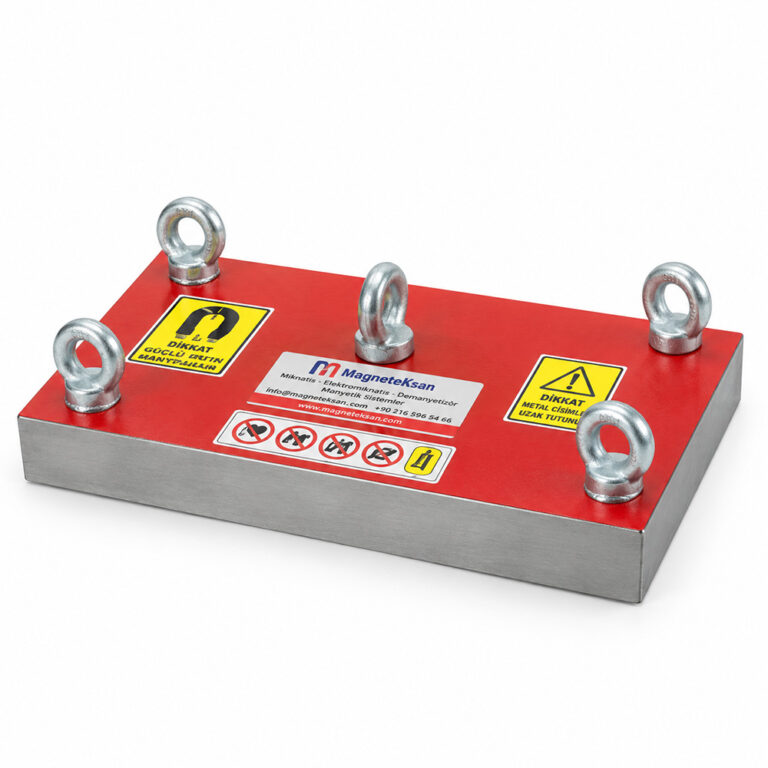
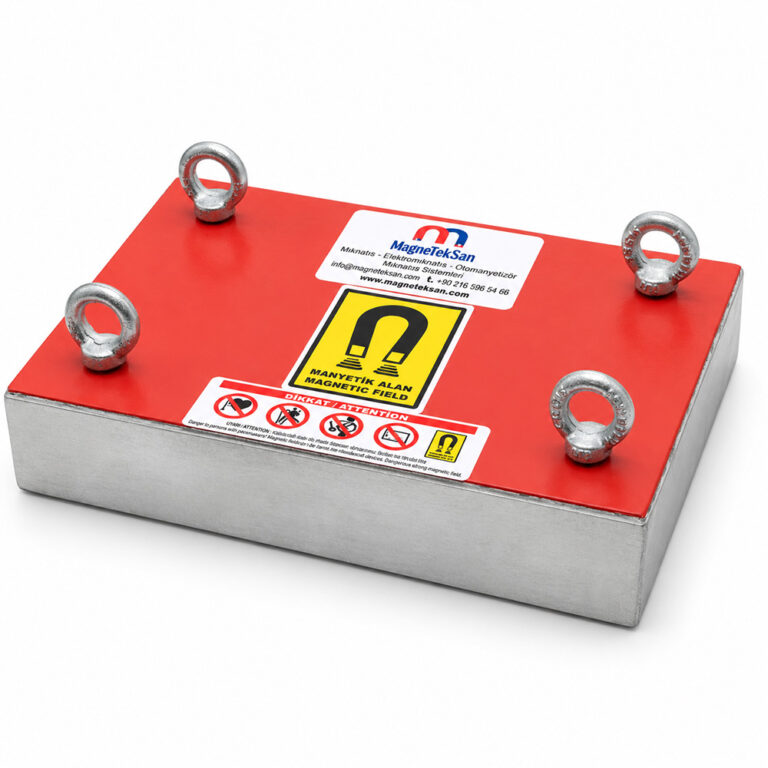
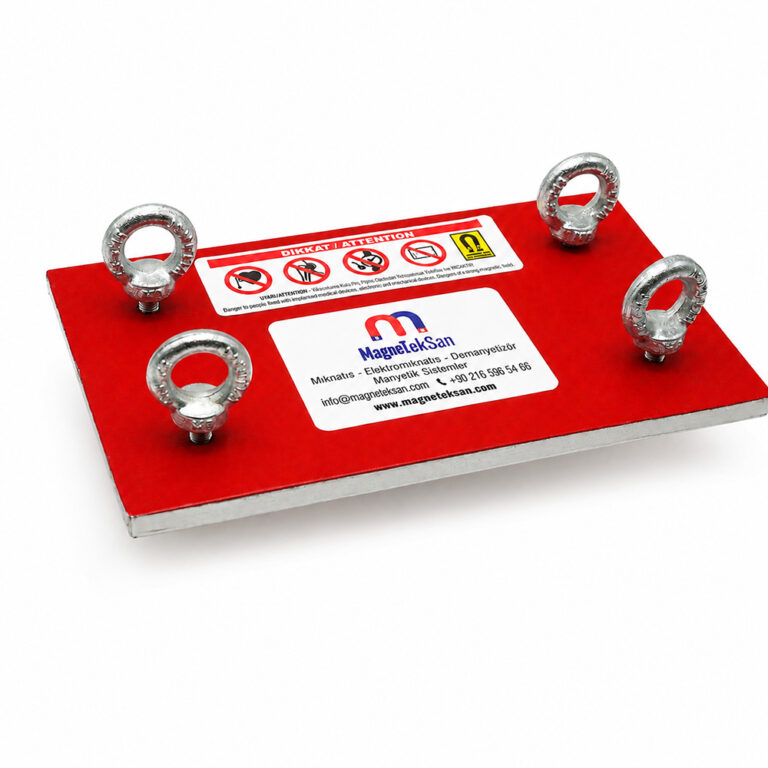
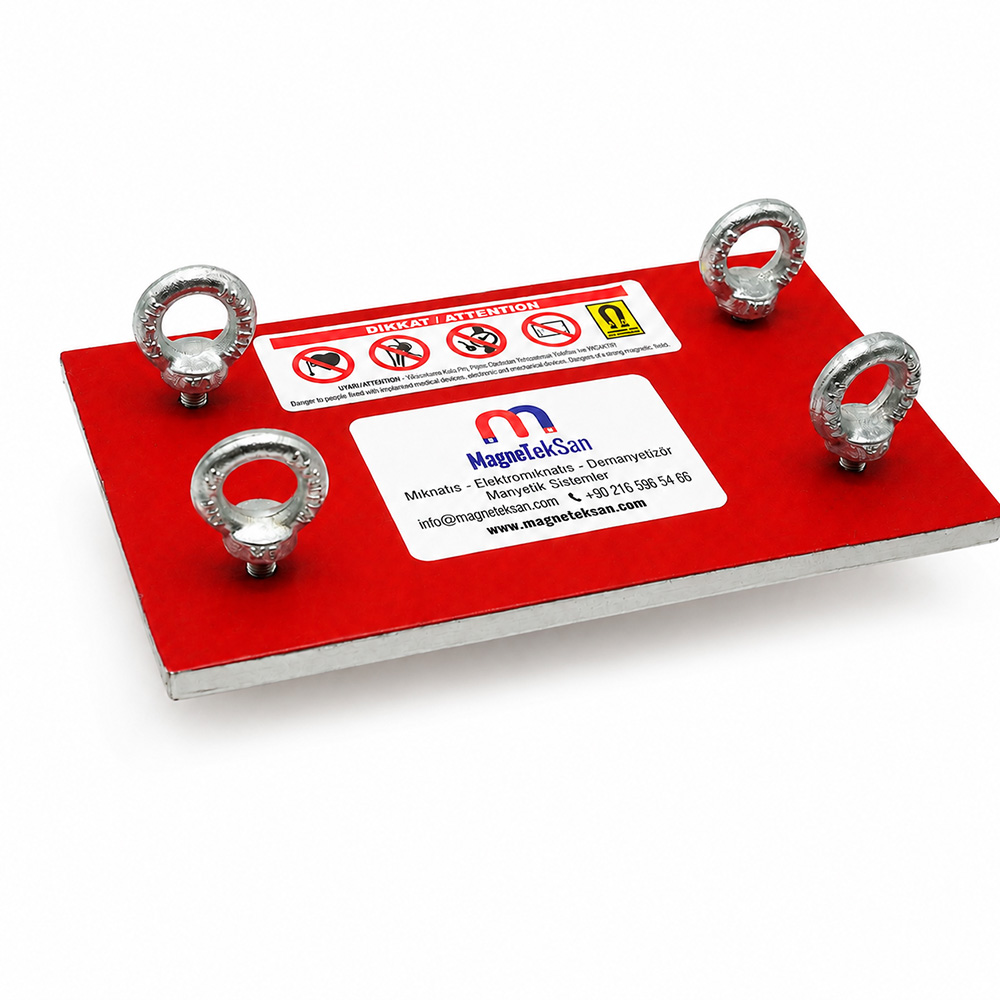
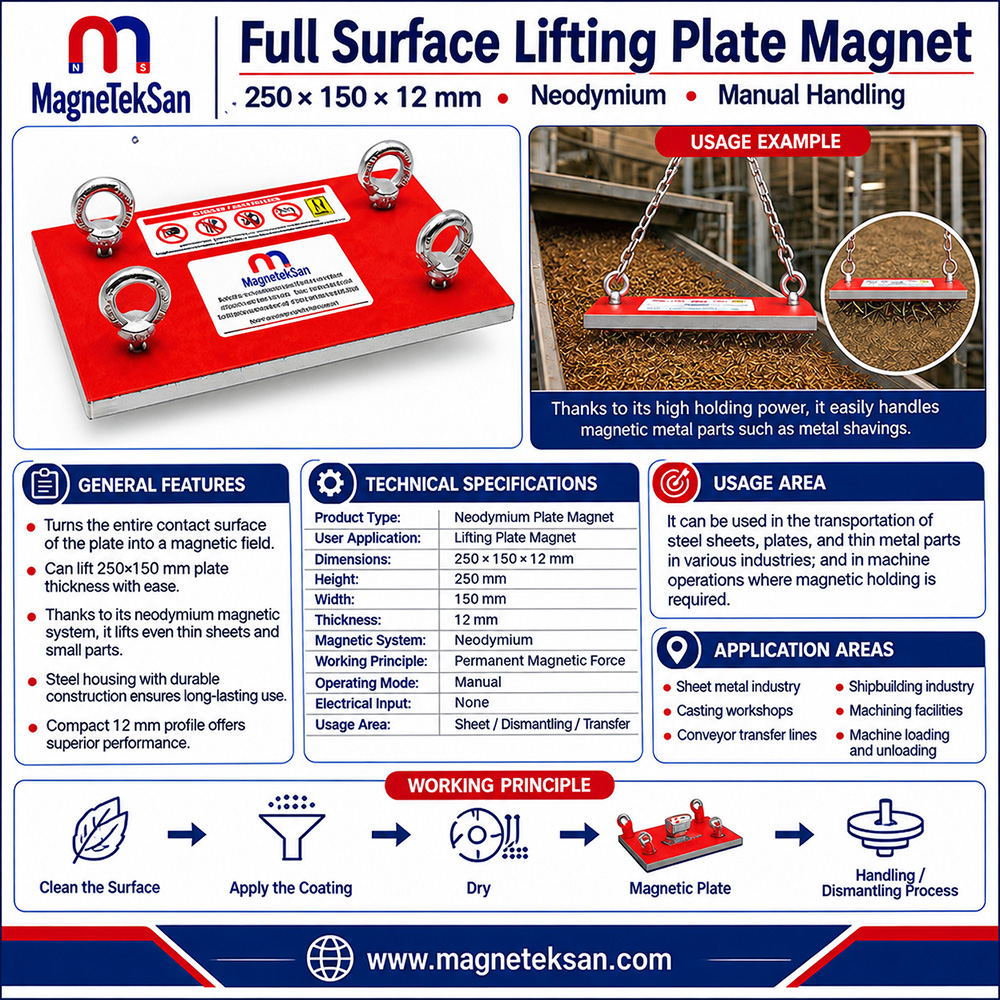
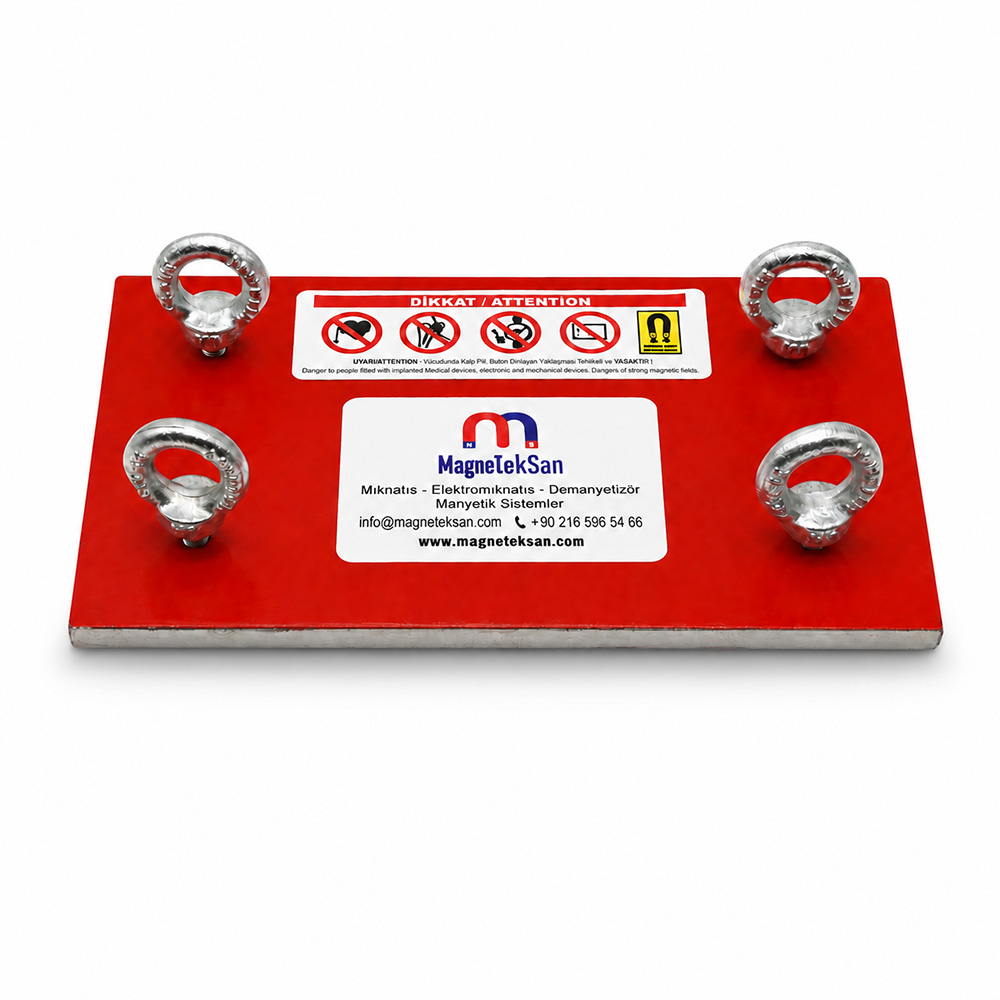
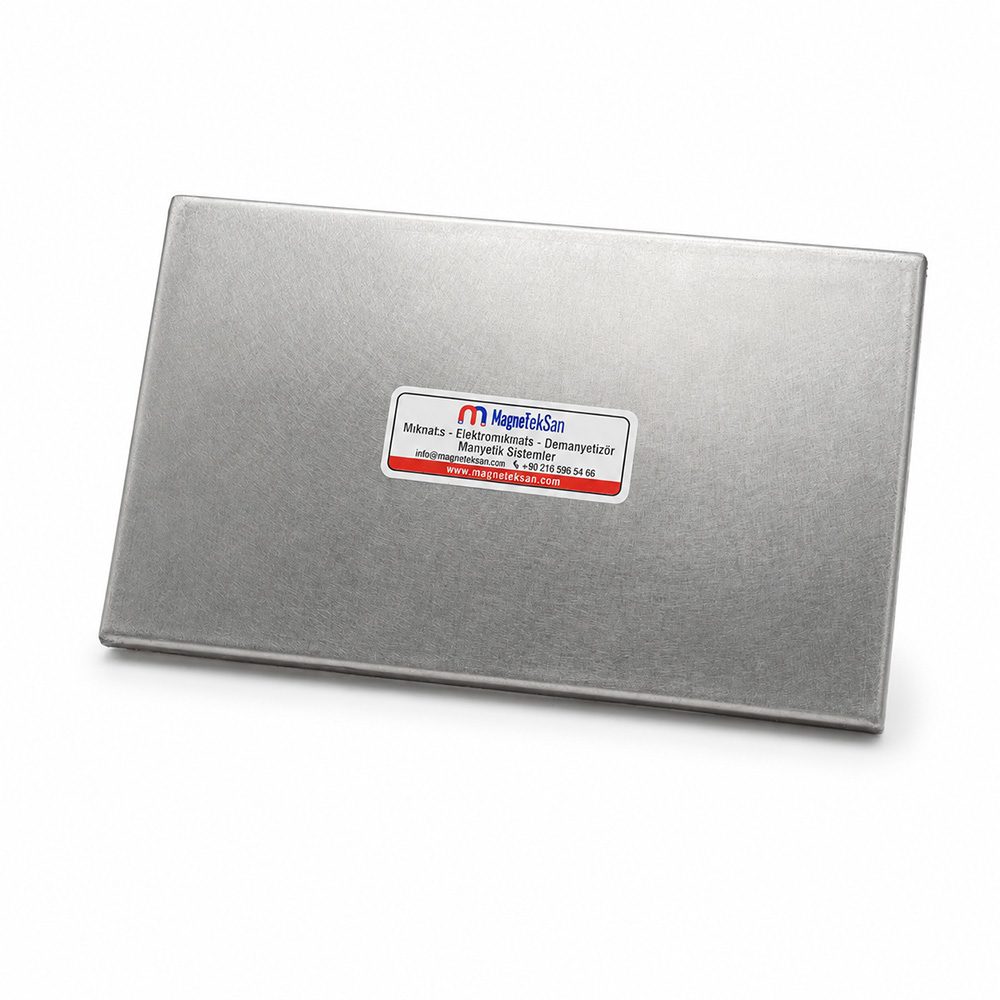
The tobacco plate magnet is a compact magnetic separator designed to help capture ferromagnetic metal contamination in suitable dry tobacco processing, cutting, blending and material transfer operations. Measuring 250x150x12 mm, its permanent neodymium magnetic system can attract iron and steel particles when the material passes sufficiently close to the active magnetic surface. The thin plate design can be evaluated for installation in compatible chutes, discharge points and conveyor transfer areas, with manual cleaning and no electrical power required.
| Technical Feature | Specification |
|---|---|
| Product Type | Neodymium Plate Magnet |
| Main Application | Tobacco Processing Line |
| Overall Dimensions | 250x150x12 mm |
| Length | 250 mm |
| Width | 150 mm |
| Thickness | 12 mm |
| Magnetic System | Neodymium |
| Operating Principle | Permanent Magnetic Separation |
| Electrical Power Required | No |
| Cleaning Method | Manual |
| Installation Area | Chute / Discharge / Transfer Point |
| Target Material | Dry Tobacco Raw Material |
| Target Contaminants | Ferromagnetic Metal Particles |
Extra Information
What Is a Tobacco Processing Line Plate Magnet?
A tobacco plate magnet is a permanent magnetic separator designed to help remove ferromagnetic metal contamination from suitable dry tobacco processing lines.
The 250x150x12 mm Neodymium Plate Magnet can be positioned near the product flow in compatible chutes, discharge areas and conveyor transfer points. Its magnetic surface attracts suitable iron and steel contaminants while the tobacco continues through the production process.
The product is intended for ferromagnetic contamination control, not for attracting or separating the tobacco itself.
Why Is Magnetic Separation Used in Tobacco Processing?
Tobacco raw materials may pass through several mechanical operations, including unloading, storage, conveying, cutting, blending and feeding.
During these operations, unwanted metal fragments may enter the product stream through equipment wear, damaged components or foreign material introduced with the raw material.
A neodymium plate magnet provides an additional control point to help reduce the transfer of suitable ferromagnetic particles into subsequent processing stages.
Where Can the Plate Magnet Be Installed in a Tobacco Processing Line?
Potential installation points include:
- Tobacco transfer chutes
- Material discharge points
- Conveyor transfer areas
- Locations after tobacco cutting machines
- Locations before blending equipment
- Other suitable dry tobacco transfer passages
The final position must be selected according to the actual flow geometry, material depth, product speed and distance from the magnetic surface.
Can the Plate Magnet Be Installed Inside a Tobacco Chute?
Yes. A chute is one of the principal application areas for this compact plate magnet.
The magnet can be positioned on a suitable surface of the chute so that the moving tobacco passes close to the active magnetic area.
The installation should not create an unnecessary obstruction to the tobacco flow.
The chute geometry and mounting arrangement must be assessed before installation.
Can It Be Used at a Tobacco Discharge Point?
Yes.
A discharge point where tobacco moves from one machine to another may provide an opportunity for magnetic separation.
If suitable ferromagnetic contaminants pass sufficiently close to the plate, they may be attracted and retained.
The actual separation performance depends on the position of the plate, the product trajectory and the characteristics of the metal particles.
Can the Magnet Be Installed at a Conveyor Transfer Point?
Yes.
The transfer area between two conveyors may be suitable for magnetic contamination control when the product stream can be brought close to the magnetic surface.
The 250x150x12 mm plate should be assessed against the width and geometry of the actual transfer point.
The product should not automatically be treated as a large suspended overband separator intended to capture metal from a substantial distance above a wide conveyor.
Why Can the Magnet Be Installed After a Tobacco Cutting Machine?
Tobacco cutting machines use mechanical cutting components.
During processing, suitable ferromagnetic fragments may potentially enter the product stream through mechanical wear or other sources.
Installing a magnetic plate at a compatible transfer point after cutting may help reduce the movement of these particles into subsequent blending or conveying equipment.
An example arrangement is:
Tobacco Cutting → Neodymium Plate Magnet → Blending
Can the Plate Magnet Be Installed Before a Tobacco Cutting Machine?
Yes, provided the product flow and installation geometry are suitable.
A possible arrangement is:
Tobacco Raw Material → Magnetic Plate → Cutting Machine
This arrangement creates an additional contamination-control point before the cutting equipment.
Its purpose is to help reduce the passage of suitable ferromagnetic foreign objects into the cutting stage.
What Is the Advantage of the 250×150 mm Plate Size?
The 250 mm length and 150 mm width provide a compact magnetic working area.
This geometry may be suitable for:
- Small and medium-width chutes
- Localized discharge points
- Narrow tobacco transfer passages
- Selected machine-integrated metal control points
The dimensions should be compared with the actual width of the product stream before installation.
Why Is the 12 mm Thickness Important?
The plate is only 12 mm thick, which can be advantageous where installation space is limited.
Potential applications include narrow chutes, confined machine areas and locations where excessive reduction of the product passage is undesirable.
However, the 12 mm thickness does not establish a specific magnetic attraction distance, Gauss rating or separation efficiency.
These parameters require separate technical verification.
Does the Magnet Attract Tobacco?
No.
Dry tobacco leaves and shredded tobacco are not ferromagnetic materials.
The magnetic system is intended to attract suitable iron and steel contaminants mixed with the tobacco.
The basic operating principle is:
Tobacco Flow → Magnetic Plate → Ferromagnetic Metal Retained → Tobacco Continues
Which Metal Contaminants Can the Neodymium Plate Magnet Capture?
Depending on their magnetic properties and the operating conditions, suitable contaminants may include:
- Iron wire fragments
- Steel wire pieces
- Screw fragments
- Steel clips
- Iron filings
- Carbon steel fragments
- Ferromagnetic particles from machine wear
The actual ability to retain a particle depends on its magnetic response, size, shape, weight and distance from the plate.
Can It Capture Very Small Metal Particles?
Fine particles with sufficient ferromagnetic properties may respond to the magnetic field.
However, a verified minimum particle size has not been specified for this product.
It would therefore be incorrect to guarantee capture down to a particular micron rating without suitable testing.
The separation result depends on particle characteristics, tobacco flow speed, product layer depth and magnetic distance.
Can the Plate Magnet Separate Aluminium?
No, not through conventional ferromagnetic attraction.
Aluminium is not ferromagnetic under normal operating conditions.
This neodymium plate magnet is primarily intended to capture suitable iron and steel contamination.
Other technologies may be needed if aluminium contamination must also be detected or separated.
Can It Separate Copper or Brass?
Normally, no.
Copper and brass are not ferromagnetic under ordinary operating conditions and are not the intended target materials for this separator.
Where these metals are a concern, an additional detection or separation system should be considered.
Can It Capture Stainless Steel Particles?
That depends on the stainless steel grade and its metallurgical condition.
Some stainless steels respond noticeably to magnetic fields, while others have much weaker magnetic properties.
It should not be assumed that every stainless steel fragment will be captured.
Testing with the actual contaminant material is recommended when stainless steel separation is an important requirement.
Does a Plate Magnet Replace a Metal Detector?
No.
A magnetic plate physically attracts and retains suitable ferromagnetic particles.
A metal detector, by contrast, electronically detects metal contamination within the capabilities of its detection system.
The two technologies serve different functions and may be used at separate control points within the same production line.
What Is the Difference Between a Plate Magnet, a Metal Detector and a Mechanical Sieve?
| Technology | Operating Principle | Main Function |
|---|---|---|
| Neodymium Plate Magnet | Magnetic attraction | Captures suitable ferromagnetic metal particles |
| Metal Detector | Electronic metal detection | Detects metal contamination within the system’s detection capability |
| Mechanical Sieve | Particle-size separation | Separates particles according to screen opening and material characteristics |
A small steel fragment might pass through a mechanical sieve but still be attracted to a magnetic plate if it enters the effective magnetic field.
Conversely, non-ferromagnetic metal particles may not be captured by the plate magnet.
These technologies can be complementary rather than interchangeable.
How Does the Plate Magnet Work Inside a Chute?
The plate is installed at a suitable location near the moving tobacco.
As the tobacco passes through the chute, ferromagnetic contaminants entering the effective magnetic field may be attracted towards the magnetic surface.
The metal particles remain on the plate while the tobacco continues through the process.
The plate should be positioned so that the product can pass freely and the magnetic surface remains accessible for cleaning.
Why Is the Distance Between the Magnet and the Metal Important?
Magnetic attraction generally decreases as the distance between the magnet and the ferromagnetic object increases.
For a compact plate magnet, it is particularly important to avoid unnecessarily large gaps between the product stream and the magnetic working surface.
The required installation distance depends on:
- The magnetic system
- The target metal particles
- Tobacco layer depth
- Product speed
- Flow geometry
A guaranteed attraction distance has not been established for this model.
Does the Thickness of the Tobacco Layer Affect Separation?
Yes.
If tobacco moves in a thick layer, metal particles located farther away from the magnetic plate may be exposed to a weaker magnetic field.
A controlled product layer can help improve the opportunity for suitable ferromagnetic contaminants to enter the effective separation zone.
The actual layer depth should be considered when selecting the mounting position.
Does Tobacco Flow Speed Affect Magnetic Separation?
Yes.
The speed of the product stream can affect the time a metal particle spends within the magnetic field.
For this reason, separator selection should consider:
- Tobacco flow speed
- Product layer thickness
- Contaminant size and weight
- Distance from the magnet
- Transfer geometry
The plate dimensions alone are not sufficient to predict separation performance.
Can the Magnet Be Used in Shredded Tobacco Processing?
Yes.
Shredded tobacco processing is one of the primary intended applications of this product.
The plate can be evaluated for installation in suitable chutes and transfer points where shredded tobacco passes sufficiently close to the magnetic surface.
The installation must be designed around the actual product flow and machine geometry.
Can It Be Used in Whole-Leaf Tobacco Processing?
Potentially, yes.
However, large or loosely distributed tobacco leaves may form a deep or irregular product layer.
If metal particles remain too far from the magnetic surface, the compact plate may be less effective.
A larger or differently configured magnetic separator may be more appropriate for some whole-leaf tobacco applications.
Can the Magnet Be Installed Before Tobacco Blending?
Yes.
A magnetic control point can be considered before the blending stage.
For example:
Tobacco Cutting → Magnetic Separation → Blending
This arrangement can help reduce the quantity of suitable ferromagnetic contaminants transferred into the blending equipment.
Can the Plate Magnet Be Used Before Tobacco Packaging?
It may be evaluated as an additional metal contamination-control point before packaging if the process layout is suitable.
However, this product’s principal application is in tobacco cutting, processing and transfer operations.
The magnet should not be presented as a complete final-product inspection system or a replacement for any required metal detection process.
Can the Plate Magnet Help Protect Tobacco Processing Equipment?
By helping reduce the transfer of suitable ferromagnetic objects, a plate magnet can provide an additional contamination-control stage before equipment such as:
- Cutting machines
- Blending systems
- Dosing equipment
- Conveying mechanisms
- Other downstream processing machinery
It should not be claimed that magnetic separation prevents all mechanical failures or eliminates every type of metal contamination.
How Is the Neodymium Plate Magnet Cleaned?
This model uses a manual-cleaning system.
A general cleaning procedure includes:
- Stop the tobacco flow and relevant machinery safely.
- Secure the work area according to the facility’s maintenance procedures.
- Access the magnetic plate without exposing personnel to moving machinery.
- Carefully remove accumulated ferromagnetic metal fragments.
- Inspect the magnetic working surface.
- Confirm that the plate and its mounting arrangement are in suitable condition.
- Return the equipment to service according to the approved restart procedure.
Neodymium magnets can strongly attract ferromagnetic tools and objects. Suitable precautions are necessary to prevent trapping or pinching injuries.
How Often Should the Plate Magnet Be Cleaned?
There is no universal cleaning interval.
The frequency depends on:
- Quantity of processed tobacco
- Raw material cleanliness
- Level of ferromagnetic contamination
- Operating hours
- Accumulation on the magnetic surface
Frequent inspections during initial operation can help establish a suitable maintenance schedule for the specific installation.
Why Should Captured Metal Not Be Allowed to Accumulate Excessively?
Accumulated metal can occupy the active magnetic surface and may interfere with the capture of additional contaminants.
For this reason, the plate should be inspected and cleaned before excessive buildup occurs.
The appropriate interval should be based on the actual contamination load and operating conditions.
Does the Plate Magnet Require Electricity?
No.
The product uses a permanent neodymium magnetic system.
It does not require:
- Electrical power for magnetic operation
- Electromagnetic coils
- A magnet power supply
- A magnetic field control unit
The magnetic field is generated by permanent magnets rather than electrical energization.
Is the Plate Magnet Self-Cleaning?
No.
This product is designed for manual cleaning.
Captured ferromagnetic particles must be removed during scheduled maintenance.
Where contamination levels are high or manual cleaning is impractical, a different magnetic separator design may need to be considered.
What Is the Magnetic Strength of the 250x150x12 mm Plate Magnet?
The product uses a permanent neodymium magnetic system, but a verified Gauss value has not been specified.
It is therefore not appropriate to assign a surface Gauss rating or a guaranteed attraction distance without measurement data.
The magnetic field and actual separation performance should be assessed according to the application requirements.
Is the Plate Magnet Suitable for Wet Tobacco Processing?
The main application described for this product is dry tobacco processing.
Suitability for wet or chemically treated materials cannot be assumed from the available specifications.
Such applications require a separate evaluation of the operating conditions, product construction and material compatibility.
What Makes This Plate Magnet Different from Other Magneteksan Plate Magnets?
This model combines four specific characteristics:
- 250x150x12 mm compact dimensions
- Permanent neodymium magnetic system
- Application in tobacco processing and cutting lines
- Installation near suitable chutes and material transfer points
Unlike large suspended separators intended for broader conveyor applications, this product is positioned as a compact solution for localized ferromagnetic contamination control.
Can Magneteksan Manufacture Custom Tobacco Processing Plate Magnets?
Yes.
Magneteksan can evaluate custom neodymium plate magnet designs according to the dimensions and operating requirements of a tobacco processing facility.
Different plate sizes and configurations may be considered for cleaning, cutting, blending and material transfer lines.
The final design should account for the actual product flow, target contaminants, installation space and maintenance requirements.
What Information Is Needed for a Custom Tobacco Plate Magnet?
For technical evaluation of a custom magnetic separator, the following information is recommended:
- Application: Intended use within the tobacco processing line.
- Tobacco Form: Whole leaf, shredded tobacco or another dry tobacco material.
- Process Stage: Cleaning, cutting, blending, transfer or another operation.
- Chute Width: Internal width of the intended installation passage.
- Chute Geometry: Cross-section, inclination and product discharge arrangement.
- Product Layer Depth: Approximate thickness of the moving tobacco layer.
- Material Throughput: Required processing capacity, such as kg/h.
- Flow Speed: Approximate tobacco transfer or conveyor speed.
- Magnetic Distance: Expected gap between the contaminants and magnetic working surface.
- Target Contaminants: Types, dimensions and approximate weights of ferromagnetic objects.
- Operating Temperature: Normal and maximum temperatures at the installation point.
- Available Space: Maximum dimensions permitted for the magnetic separator.
- Mounting Requirements: Installation position, support arrangement and available attachment points.
- Cleaning Requirements: Access for manual cleaning and expected contamination load.
- Testing and Documentation: Required separation tests, inspection records and technical documents.
Providing these details helps determine the appropriate dimensions, magnetic arrangement and installation method.
Magneteksan designs and manufactures customized magnetic separation systems for industrial material processing applications. Customers can submit their tobacco processing line specifications for evaluation of suitable neodymium plate magnets, installation arrangements and ferromagnetic contamination-control solutions.