- Magneteksan
- > Hanger Type Magnetic Plates
- > Glass Recycling Conveyor Suspended Plate Magnet – 400x210x42 mm Neodymium
Glass Recycling Conveyor Suspended Plate Magnet – 400x210x42 mm Neodymium

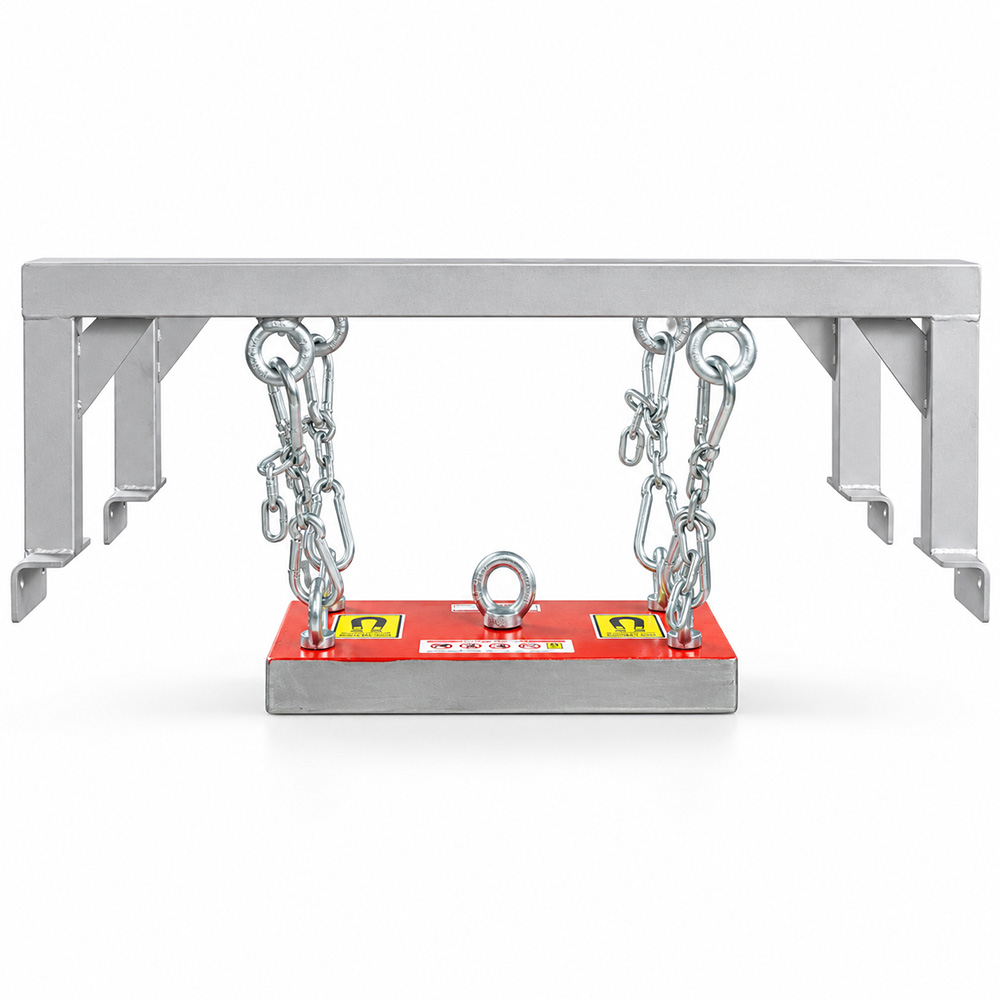
Glass Recycling Conveyor Suspended Plate Magnet – 400x210x42 mm Neodymium
General Features
- Designed for use above conveyors in glass recycling lines.
- Helps separate ferromagnetic metal contamination from broken glass and glass cullet.
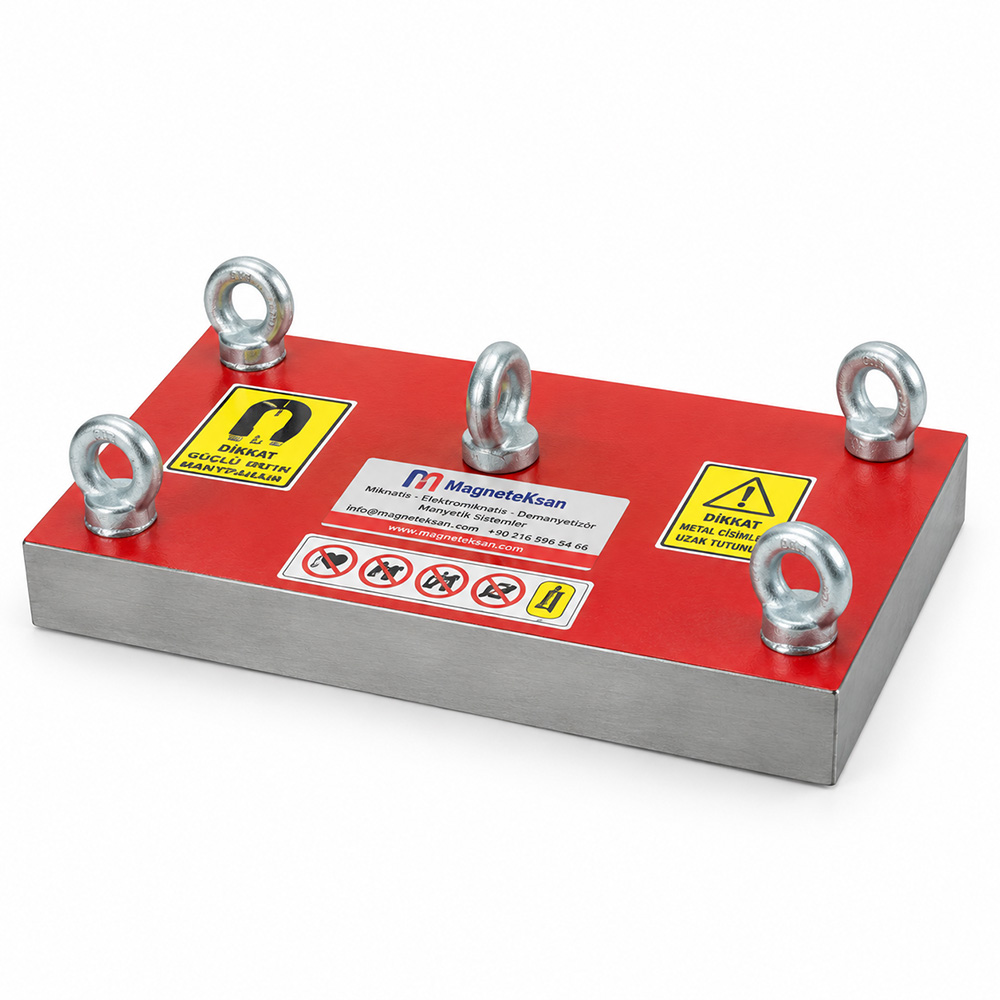
- Uses a 400x210x42 mm neodymium plate magnet.
- M12 connection points are provided on the magnetic plate.
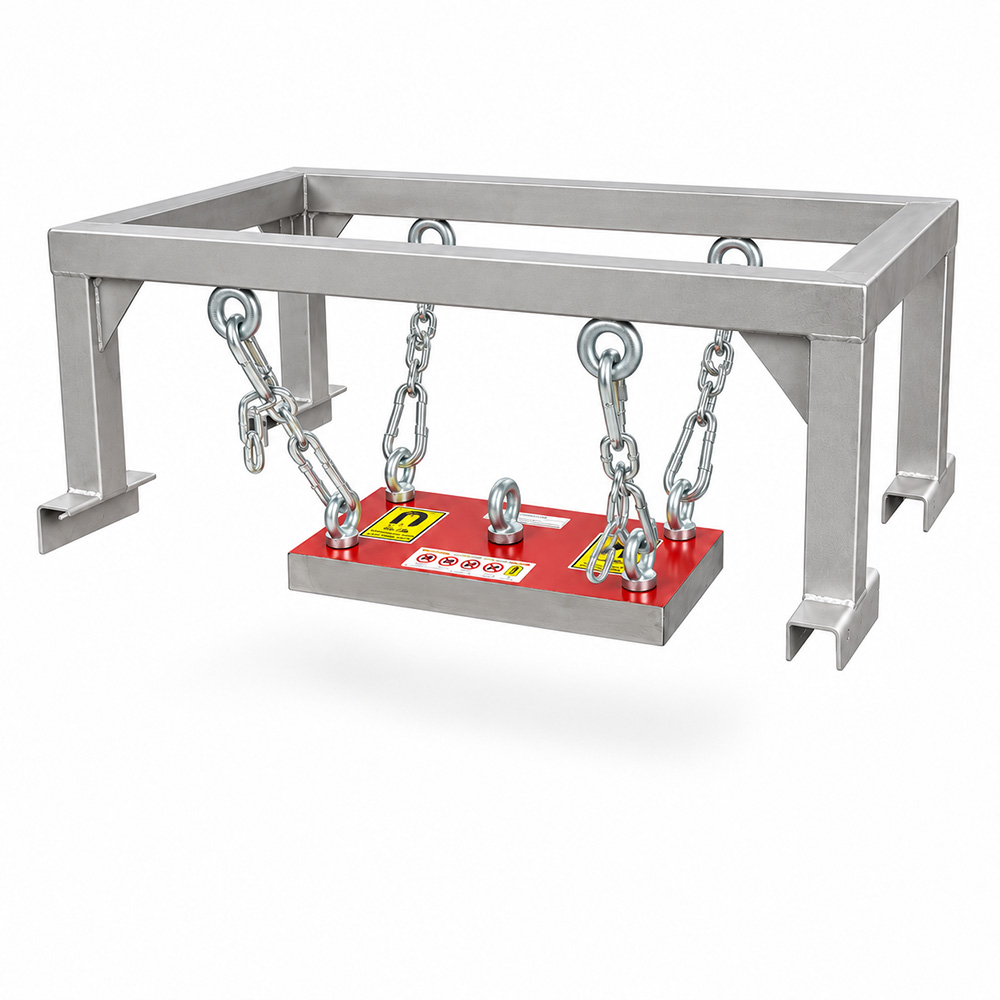
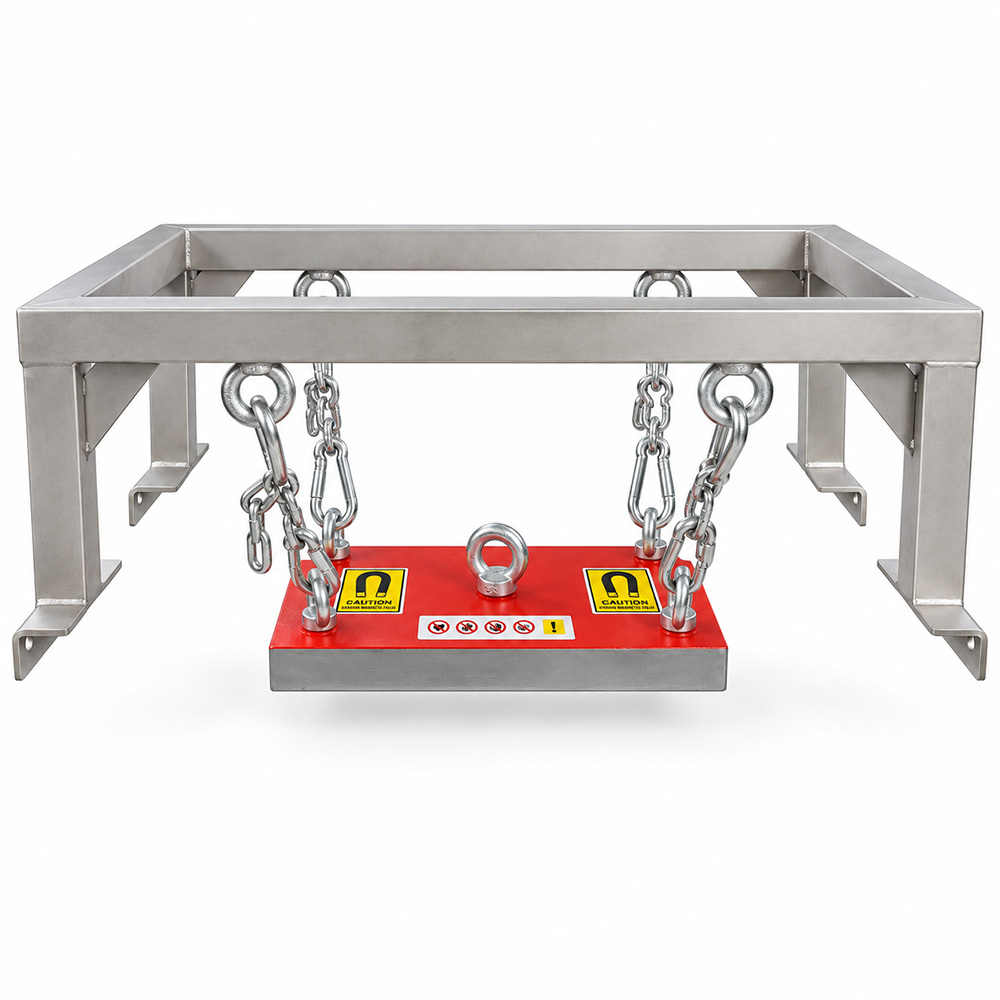
- The plate magnet is suspended from the supporting frame using chains.
- Independent metal frame allows the magnetic system to be positioned above the conveyor.
- Operating height can be adjusted according to the application and process conditions.
- Permanent neodymium magnetic system operates without electricity.
Technical Specifications
- Product Type: Frame-Mounted Suspended Neodymium Plate Magnet
- Main Application: Glass Recycling Conveyor
- Plate Dimensions: 400x210x42 mm
- Magnetic System: Neodymium
- Plate Connection: M12
- Suspension System: Chain-Suspended
- Support System: Metal Frame
- Installation: Above Conveyor / Suspended
- Cleaning: Manual
- Target Material: Ferromagnetic Iron / Steel
- Electricity Required: No
Kategori: Hanger Type Magnetic Plates
Product Information
Extra Information
Product Information
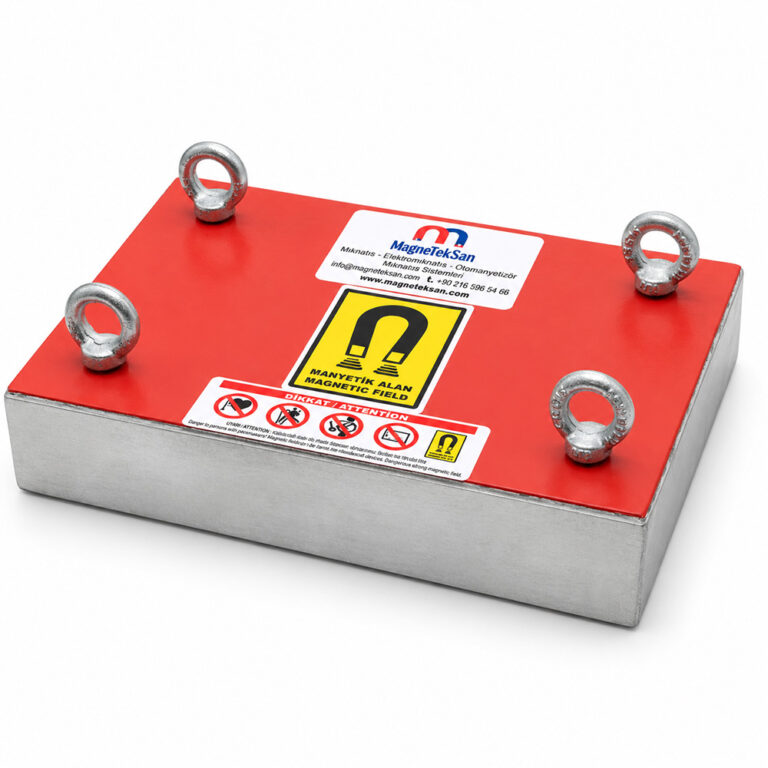
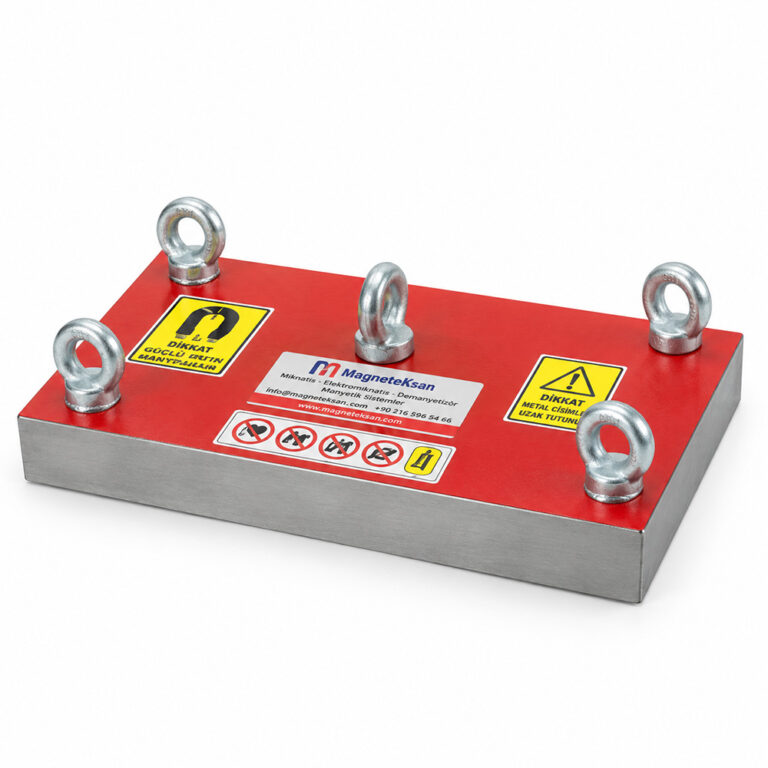
The Glass Recycling Conveyor Suspended Plate Magnet – 400x210x42 mm Neodymium is a frame-mounted magnetic separator designed to help remove ferromagnetic metal contamination from broken glass and cullet moving on recycling conveyors. The neodymium plate magnet is suspended by chains from its supporting frame, allowing its working position above the conveyor to be adjusted according to the process.
| Technical Specification | Value |
|---|---|
| Product Type | Frame-Mounted Suspended Neodymium Plate Magnet |
| Main Application | Glass Recycling Conveyor |
| Plate Dimensions | 400x210x42 mm |
| Magnetic System | Neodymium |
| Plate Connection | M12 |
| Suspension System | Chain-Suspended |
| Support System | Metal Frame |
| Installation | Above Conveyor / Suspended |
| Cleaning | Manual |
| Target Material | Ferromagnetic Iron / Steel Parts |
| Electricity Required | No |
Extra Information
What is a Glass Recycling Suspended Plate Magnet?
A Glass Recycling Suspended Plate Magnet is a permanent magnetic separator designed to help capture ferromagnetic metal contamination from broken glass travelling on a conveyor in a recycling process.
This system consists of:
- a neodymium plate magnet,
- M12 connection points,
- suspension chains,
- suspension components,
- a supporting metal frame.
Together, these components form a complete suspended magnetic system that can be positioned above a glass recycling conveyor.
Where is the Plate Magnet Used in a Glass Recycling Line?
One suitable installation point is above the conveyor after the glass crushing or size-reduction stage.
A typical process can be:
Waste Glass / Glass Packaging
↓
Crushing / Size Reduction
↓
Glass Cullet
↓
Conveyor Belt
↓
Frame-Mounted Suspended Neodymium Plate Magnet
↓
Ferromagnetic Metal Separation
↓
Glass Cullet → Next Separation / Processing Stage
The magnet helps capture suitable ferromagnetic contamination while the non-magnetic glass continues through the process.
Why is a Magnet Used After Glass Crushing?
Waste glass and glass packaging can enter the recycling process together with unwanted metallic components such as:
- steel closure fragments,
- pieces of wire,
- screws,
- nuts and fasteners,
- iron fragments,
- steel contamination.
After crushing, some of these ferromagnetic components can become separated from the glass packaging and exposed within the material stream. Passing the material beneath a magnetic separator provides a suitable point for capturing such contamination.
What is the Advantage of the Supporting Frame?
An important feature of this system is that the plate magnet is supplied with its own supporting frame.
The frame helps:
- support the magnet above the conveyor,
- provide suspension points for the chains,
- position the magnetic separator independently of the conveyor structure.
This can be particularly useful where attaching the magnet directly to the existing conveyor structure is not practical.
The final method used to secure the frame should be determined according to the mechanical requirements of the installation.
What is the Purpose of the Chain Suspension System?
The neodymium plate magnet is suspended from the supporting frame by chains.
The chain suspension allows the position of the magnetic plate relative to the conveyor surface to be adjusted according to application requirements.
When determining the operating height, factors such as the following should be considered:
- material layer thickness,
- target metal size,
- conveyor geometry,
- required mechanical clearance,
- product flow conditions.
What are the M12 Connections Used For?
The plate magnet has M12 connection points for mechanically connecting the plate to the suspension components and chain system.
These mechanical connections should be inspected periodically to ensure that they have not become loose, worn, damaged or deformed during operation.
What Do the 400x210x42 mm Dimensions Refer To?
The dimensions of the magnetic plate are:
400x210x42 mm
These dimensions should be considered when determining:
- the area occupied above the conveyor,
- the required mechanical installation space,
- the position of the supporting frame,
- the suspension geometry,
- the relationship between the plate and the active product flow.
How Does the Neodymium Magnetic System Work?
The product uses a permanent neodymium magnetic system.
The active surface of the plate magnet is positioned facing the material travelling on the conveyor. When a suitable ferromagnetic metal component enters the effective magnetic field, it is attracted towards the magnetic plate and can be retained on its surface.
Does the Plate Magnet Require Electricity?
No.
The magnetic field is generated by permanent neodymium magnets. Therefore, the system does not require:
- electrical power,
- magnetic coils,
- a power supply,
- an electrical control panel
to generate its magnetic field.
Does the Magnet Attract Glass?
No.
Glass is not ferromagnetic. The purpose of the system is not to attract the glass itself.
The glass cullet continues along the conveyor while suitable iron and steel contamination can be attracted towards the magnetic plate.
What Types of Metal Can the Plate Magnet Capture?
Depending on their magnetic properties, size, weight, shape and distance from the magnet, the system can help capture items such as:
- ferrous closure fragments,
- steel fasteners,
- screws,
- nuts,
- wire,
- steel fragments,
- small iron components.
Actual capture performance varies according to the characteristics of the contaminant and the operating conditions.
Does the Magnet Capture Aluminium?
No, not in the same way as iron or carbon steel.
Aluminium is not ferromagnetic and therefore an aluminium closure or aluminium fragment will not be strongly attracted by the neodymium plate magnet.
Other separation technologies may be required where aluminium separation is necessary.
Does the Magnet Capture Copper or Brass?
No.
Copper and brass are not normally ferromagnetic materials, so they are not separated in the same way as iron and carbon steel.
Different separation technologies should be considered when these non-ferrous metals need to be removed.
Does the Magnet Capture Stainless Steel?
It depends on the grade and metallurgical condition of the stainless steel.
Some stainless steel grades can show a clear magnetic response, while others may have very weak magnetic attraction.
For this reason, it should not be assumed that every stainless steel component will be captured. Where stainless steel separation is important, testing with actual samples is recommended.
Does the Plate Magnet Touch the Conveyor Belt?
Under normal operation, no.
The plate magnet is suspended above the conveyor and product stream. Its magnetic working surface faces the material but should not rub against the conveyor belt.
Adequate mechanical clearance must be maintained for safe operation.
Why is Installation Height Important?
Magnetic attraction decreases as the distance between the magnet and the ferromagnetic object increases.
Installing the plate too high above the material may therefore reduce separation performance. On the other hand, positioning it too low can interfere with the product flow or larger pieces of material.
The correct operating height should be determined according to the actual process conditions.
What is the Attraction Distance?
A fixed attraction distance should not be stated for this product without a verified application test.
The effective working distance depends on factors including:
- size of the metal component,
- weight of the metal component,
- material type,
- shape,
- material layer thickness,
- installation height,
- operating geometry.
Therefore, a single fixed centimetre value would not accurately represent every application.
Is Conveyor Belt Width Important?
Yes.
The plate magnet should be positioned according to the actual width of the material stream on the conveyor.
The 400×210 mm working footprint of the plate should therefore be considered together with the conveyor width and the distribution of material across the belt.
Should the Magnet be Installed Lengthwise or Across the Conveyor?
The appropriate orientation depends on:
- conveyor width,
- direction of product flow,
- frame geometry,
- material distribution,
- required magnetic control area.
The main objective is to ensure that the relevant product stream passes through the effective magnetic area beneath the plate.
Does Conveyor Speed Affect Separation Performance?
Yes.
Conveyor speed can influence how long a ferromagnetic metal component remains within the effective magnetic field.
For higher-speed conveyors, actual process conditions should be evaluated before determining the installation configuration.
A specific maximum belt speed should not be claimed without validated application testing.
Does Material Layer Thickness Affect Performance?
Yes.
If a metal component is buried beneath a thick layer of glass cullet, the distance between the contaminant and the magnetic plate increases.
Because magnetic attraction decreases with distance, a thicker material layer can reduce the probability of capturing certain metal components.
Material depth and magnet installation height should therefore be considered together.
Can the Magnet Capture Large Metal Components?
Capture performance depends on the component’s:
- weight,
- dimensions,
- shape,
- distance from the magnet,
- ferromagnetic properties,
- conveyor speed.
A specific maximum metal weight should not be stated without a verified test under representative operating conditions.
How is the Plate Magnet Cleaned?
This model is manually cleaned.
After the conveyor and process have been safely stopped, accumulated ferromagnetic metal should be removed from the magnetic surface manually.
Appropriate care and personal protective equipment should be used because captured contamination may contain sharp metal fragments and the magnetic attraction can be strong.
How Often Should the Magnet be Cleaned?
There is no single cleaning interval suitable for every application.
The cleaning frequency should be determined according to:
- material throughput,
- level of ferromagnetic contamination,
- size of captured metal components,
- operating time,
- rate of metal accumulation on the magnetic surface.
The system should be inspected regularly and cleaned before excessive metal accumulation occurs.
Does Metal Build-Up Affect Performance?
Yes.
Excessive accumulation of metal on the magnetic surface can cover the active working area and increase the effective distance between incoming contamination and the magnet.
Regular inspection and cleaning are therefore important for maintaining effective operation.
Is this a Self-Cleaning Magnetic Separator?
No.
This model is a manual-cleaning suspended plate magnet.
Where contamination levels are very high or continuous cleaning is required, an alternative self-cleaning magnetic separation system may be more appropriate.
Does the System Remove 100% of Metal from Recycled Glass?
No.
The suspended magnetic plate helps reduce ferromagnetic metal contamination, but a 100% separation guarantee should not be assumed.
Depending on the recycling process, additional equipment may also be used, including:
- metal detectors,
- eddy current separators,
- optical sorting systems,
- mechanical classification equipment.
These technologies perform different functions and can be combined within the same recycling line.
Does the Plate Magnet Replace a Metal Detector?
No.
A plate magnet physically attracts and retains suitable ferromagnetic metal components.
A metal detector performs a different function by detecting metal contamination.
The two technologies can therefore be used at different control points within the same glass recycling process.
Can the Frame be Fixed to the Floor?
The system has an independent mechanical supporting frame for the suspended plate magnet.
Depending on the installation, the frame may need to be secured to:
- the floor,
- the conveyor structure,
- another suitable supporting structure.
The final fixing method should be determined according to the actual mechanical conditions and safety requirements of the installation.
Can the Chain Length be Adjusted?
The chain suspension can allow the position of the plate beneath the frame to be adjusted.
When making adjustments, the suspension points should remain balanced so that the magnetic plate stays in the required orientation relative to the conveyor and product stream.
Is it Important for the Plate Magnet to Remain Level?
Yes.
Balanced suspension helps maintain a consistent working distance across the magnetic plate.
If the plate is suspended unevenly, the distance between the magnetic surface and the material stream can vary from one side to the other, potentially affecting separation performance.
What Maintenance is Required?
The following components should be inspected periodically:
- M12 connections,
- eye bolts,
- chains,
- suspension components,
- supporting frame,
- magnetic plate surface.
Loose, worn, damaged or deformed mechanical components should be corrected or replaced before continued operation.
What Should be Done if the Magnetic Surface is Damaged?
The plate should be protected against severe mechanical impact.
If significant:
- impact damage,
- crushing,
- cracking,
- deformation
is observed, the condition and suitability of the magnetic separator should be checked before continued use.
Can it be Used Outdoors?
No specific outdoor-use or IP protection rating is stated for this product.
If the installation is exposed to:
- rain,
- high humidity,
- chemicals,
- corrosive environments,
- other aggressive outdoor conditions,
the application and required protection should be evaluated separately.
What is the Maximum Operating Temperature?
A verified maximum operating temperature is not specified for this particular product.
Therefore, an estimated temperature limit should not be assumed. Where elevated process temperatures are involved, the operating conditions should be evaluated before installation.
What is the Gauss Value?
A verified Gauss measurement is not specified for this particular plate magnet.
The performance of a suspended plate magnet also depends on how the magnetic field behaves at the actual working distance, rather than only on a surface Gauss measurement.
What Grade of Neodymium is Used?
The product is specified as using a neodymium magnetic system.
However, a specific grade such as N35 or N42 is not stated for this model, so a neodymium grade should not be claimed without verification.
Can the Suspended Plate Magnet be Manufactured in Custom Dimensions?
Yes.
Depending on the application, the system can be designed according to the conveyor and process geometry, including:
- plate dimensions,
- suspension points,
- chain configuration,
- supporting frame dimensions,
- operating height.
The final configuration should be selected according to the material flow, target contamination and mechanical requirements of the recycling line.