- Magneteksan
- > Neodymium Pot Magnets
- > Ø130 mm Neodymium Fishing Magnet – M12, 700 kg Max Pull
Ø130 mm Neodymium Fishing Magnet – M12, 700 kg Max Pull
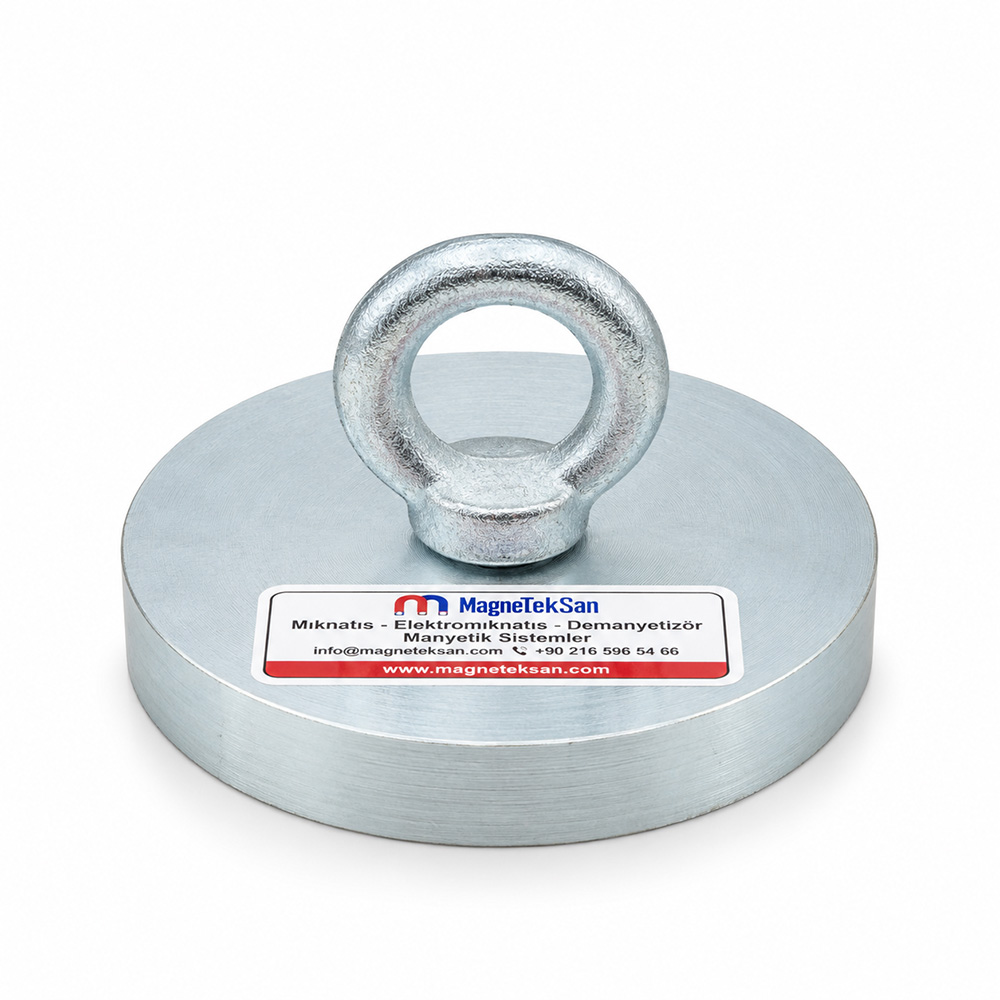
Ø130 mm Neodymium Fishing Magnet – M12, 700 kg Max Pull
General Features
- Designed for magnet fishing and ferrous metal recovery applications.
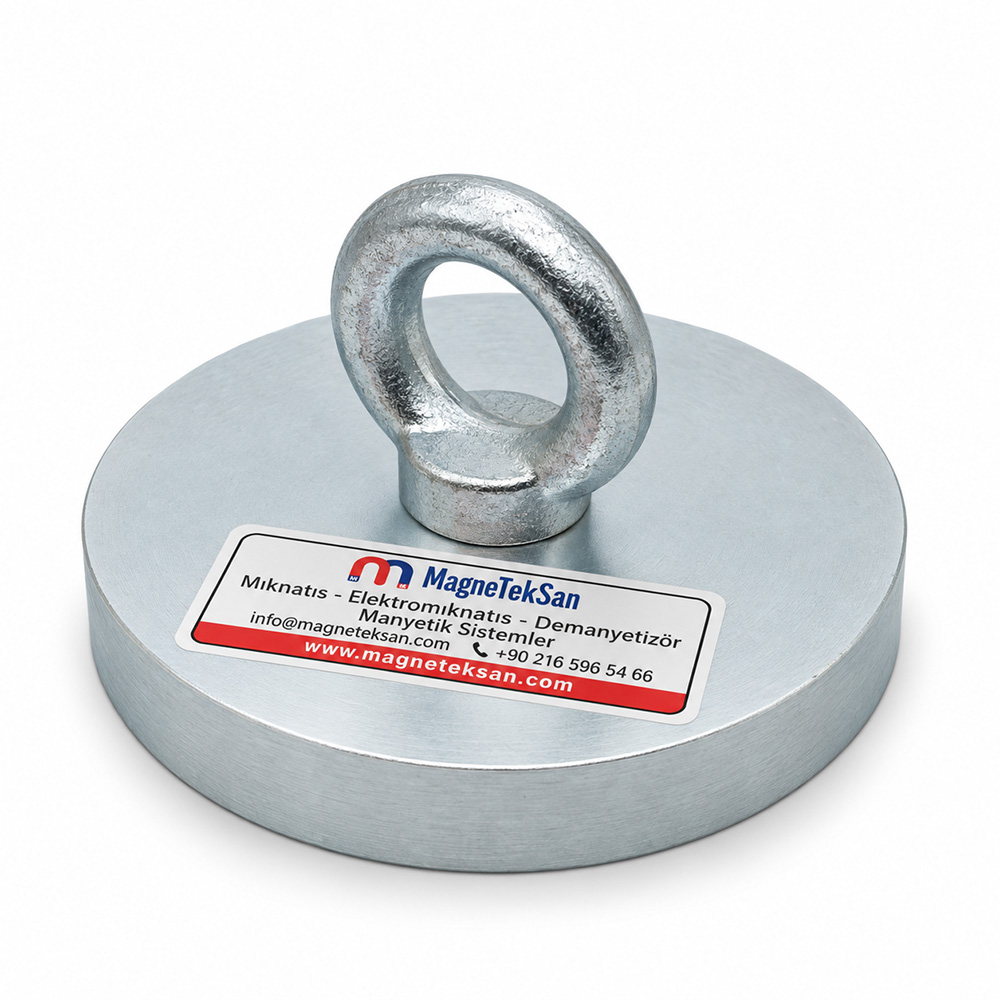
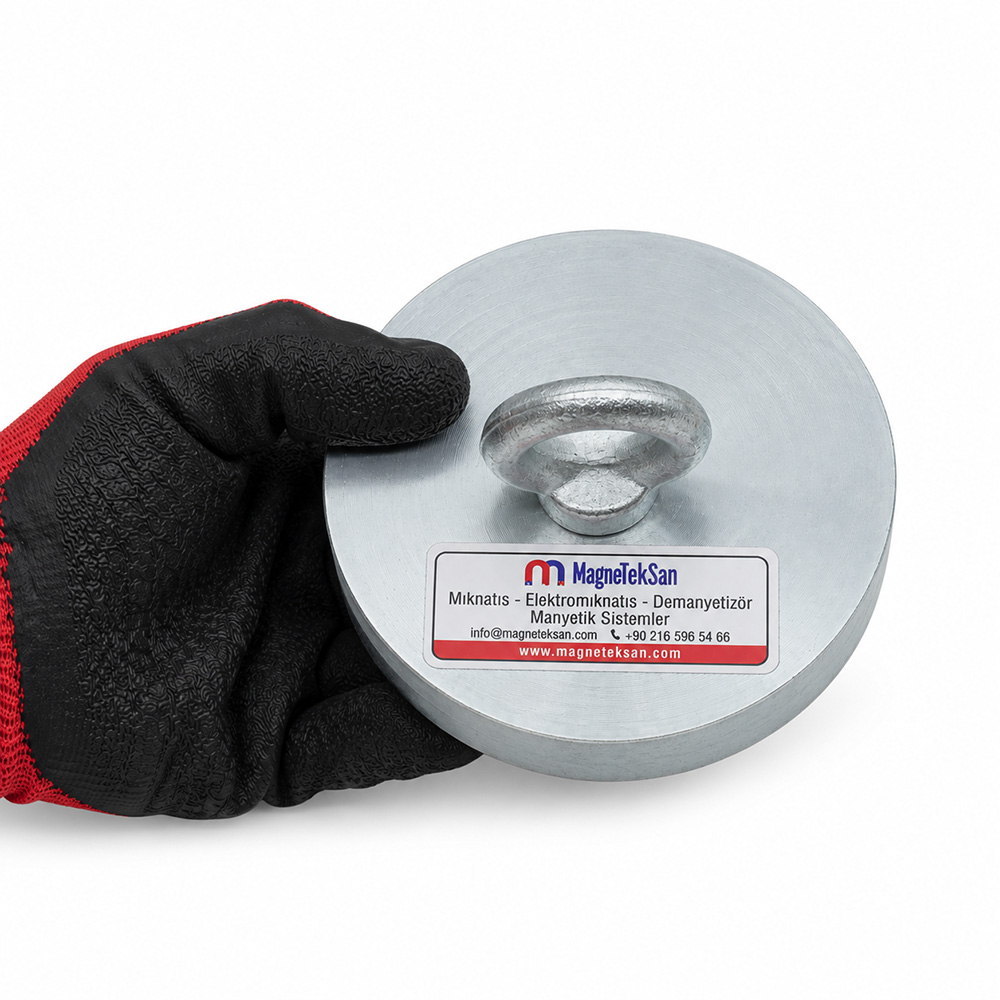
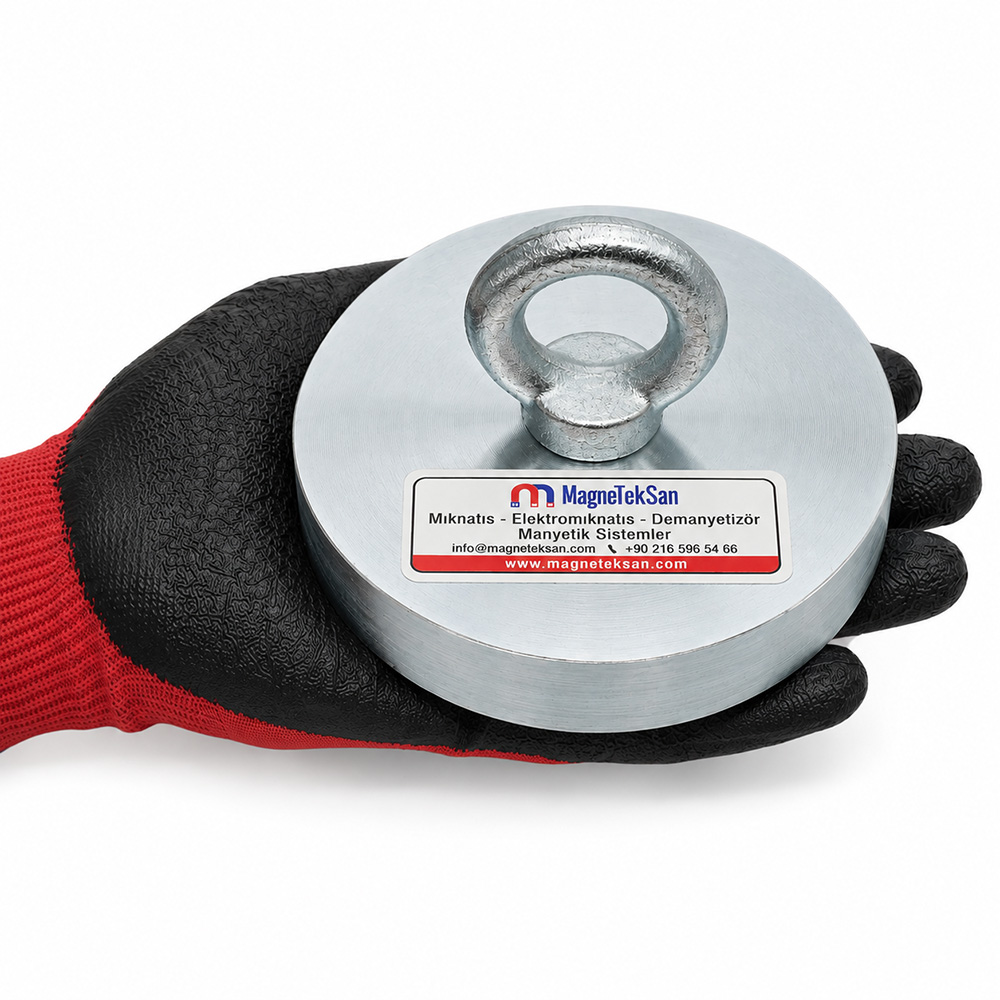
- Ø130×20 mm heavy-duty pot magnet construction.
- Uses a powerful permanent neodymium magnetic system.
- Equipped with an M12 connection.
- Can be connected to a suitable rope using an eye bolt / ring connection.
- Provides up to 700 kg maximum pull under ideal test conditions.
- Suitable for attracting and retrieving ferromagnetic iron and steel objects.
- Permanent magnetic system requires no electricity.
Technical Specifications
- Product Type: Neodymium Fishing / Pot Magnet
- Main Application: Magnet Fishing / Metal Recovery
- Diameter: Ø130 mm
- Thickness: 20 mm
- Connection: M12
- Connection Component: Eye Bolt / Ring
- Magnetic System: Neodymium
- Maximum Pull: 700 kg*
- Target Material: Ferromagnetic Iron / Steel
- Operating Principle: Permanent Magnetic Holding
- Electricity Required: No
Kategori: Neodymium Pot Magnets
Product Information
Extra Information
Product Information
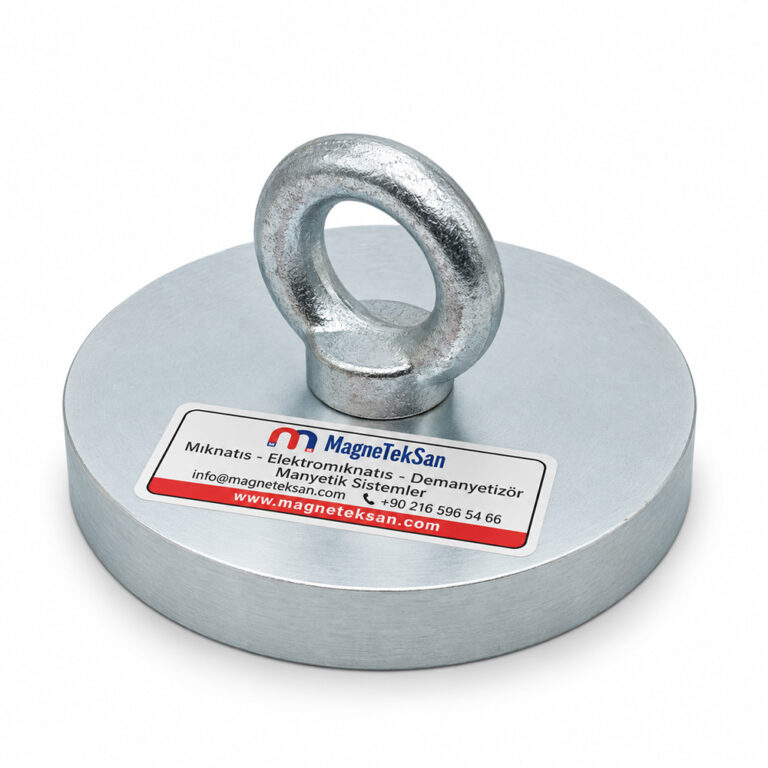
The Ø130 mm Neodymium Fishing Magnet – M12, 700 kg Max Pull is a powerful pot magnet designed for magnet fishing, underwater metal retrieval and ferrous metal recovery. Its Ø130×20 mm body and M12 connection allow it to be attached to a suitable eye bolt and rope, while the permanent neodymium magnetic system provides up to 700 kg maximum pull under ideal conditions.
| Technical Specification | Value |
|---|---|
| Product Type | Neodymium Fishing / Pot Magnet |
| Main Application | Magnet Fishing / Metal Recovery |
| Diameter | Ø130 mm |
| Thickness | 20 mm |
| Connection | M12 |
| Connection Component | Eye Bolt / Ring |
| Magnetic System | Neodymium |
| Maximum Pull | 700 kg* |
| Target Material | Ferromagnetic Iron / Steel |
| Operating Principle | Permanent Magnetic Holding |
| Electricity Required | No |
Extra Information
What is a Ø130 mm Neodymium Fishing Magnet?
The Ø130 mm Neodymium Fishing Magnet is a large permanent pot magnet designed to attract, hold and retrieve ferromagnetic metal objects.
It is particularly suitable for applications commonly known as magnet fishing, where a strong magnet is attached to a rope and lowered into water or other difficult-to-access areas to search for iron and steel objects.
The product has:
- Ø130 mm diameter,
- 20 mm thickness,
- M12 connection,
- eye bolt / ring connection capability,
- neodymium magnetic system,
- up to 700 kg maximum pull under ideal conditions,
- permanent magnetic operation without electricity.
What is Magnet Fishing?
Magnet fishing is the process of attaching a powerful magnet to a suitable rope and using it to search for ferromagnetic metal objects underwater or in difficult-to-access locations.
A typical operating sequence is:
Fishing Magnet Connected to Rope
↓
Magnet Lowered into Water / Working Area
↓
Magnetic Surface Contacts Ferromagnetic Metal
↓
Metal Attaches to the Magnet
↓
Rope is Retrieved in a Controlled Manner
Where Can the Ø130 mm Fishing Magnet Be Used?
Depending on site conditions, it can be used for searching and retrieving ferromagnetic objects from areas such as:
- lakes,
- rivers,
- canals,
- wells,
- harbour areas,
- piers,
- water channels,
- pits,
- shafts,
- difficult-to-access spaces.
The suitability of the application depends on the object, water conditions, access, rope system and surrounding environment. The product page specifically identifies magnet fishing and metal recovery as its primary applications.
What Does the 700 kg Maximum Pull Mean?
The stated 700 kg value represents the maximum magnetic pull obtainable under ideal conditions.
Typical conditions required to approach the maximum value include:
- sufficiently thick ferromagnetic steel,
- a flat and clean steel surface,
- large contact area,
- full contact between the magnetic face and steel,
- perpendicular/direct pull away from the surface.
Therefore, 700 kg does not mean that the magnet can safely lift a 700 kg object in every application.
Is 700 kg the Safe Lifting Capacity?
No.
The maximum magnetic pull value and safe working load are different concepts.
The stated value is based on magnetic attraction under ideal conditions. In real magnet fishing or retrieval applications, the actual holding force may be considerably lower.
The product should therefore not be treated as certified lifting equipment solely on the basis of its magnetic pull rating.
Why Can the Actual Pull Force Be Lower Than 700 kg?
Real-world pull force can be affected by many factors, including:
- metal thickness,
- metal grade,
- contact area,
- surface curvature,
- rust,
- paint,
- dirt,
- corrosion,
- uneven surfaces,
- gaps between the magnet and metal,
- pulling direction,
- movement of the recovered object.
The source product information specifically notes that underwater objects may produce lower forces because of surface shape, rust, paint, contact area, metal thickness and pulling direction.
What Does Ø130×20 mm Mean?
The magnet has:
Diameter: Ø130 mm
Thickness: 20 mm
The large Ø130 mm working surface can provide a broad contact area when it meets a suitable large, flat ferromagnetic object.
Why is the Large Ø130 mm Diameter Important?
A larger magnetic working surface can provide more contact area with suitably shaped ferromagnetic objects.
This can be advantageous when retrieving:
- large steel components,
- steel plates,
- tools,
- machine parts,
- other sufficiently large ferromagnetic objects.
However, diameter alone does not determine the actual holding force. Surface condition, metal thickness and contact geometry remain important.
What is a Neodymium Fishing Magnet?
A neodymium fishing magnet uses a permanent NdFeB-type magnetic system rather than an electromagnet.
Neodymium magnetic systems provide strong magnetic performance in compact dimensions and do not require continuous electrical power to generate their magnetic field.
What is a Pot Magnet?
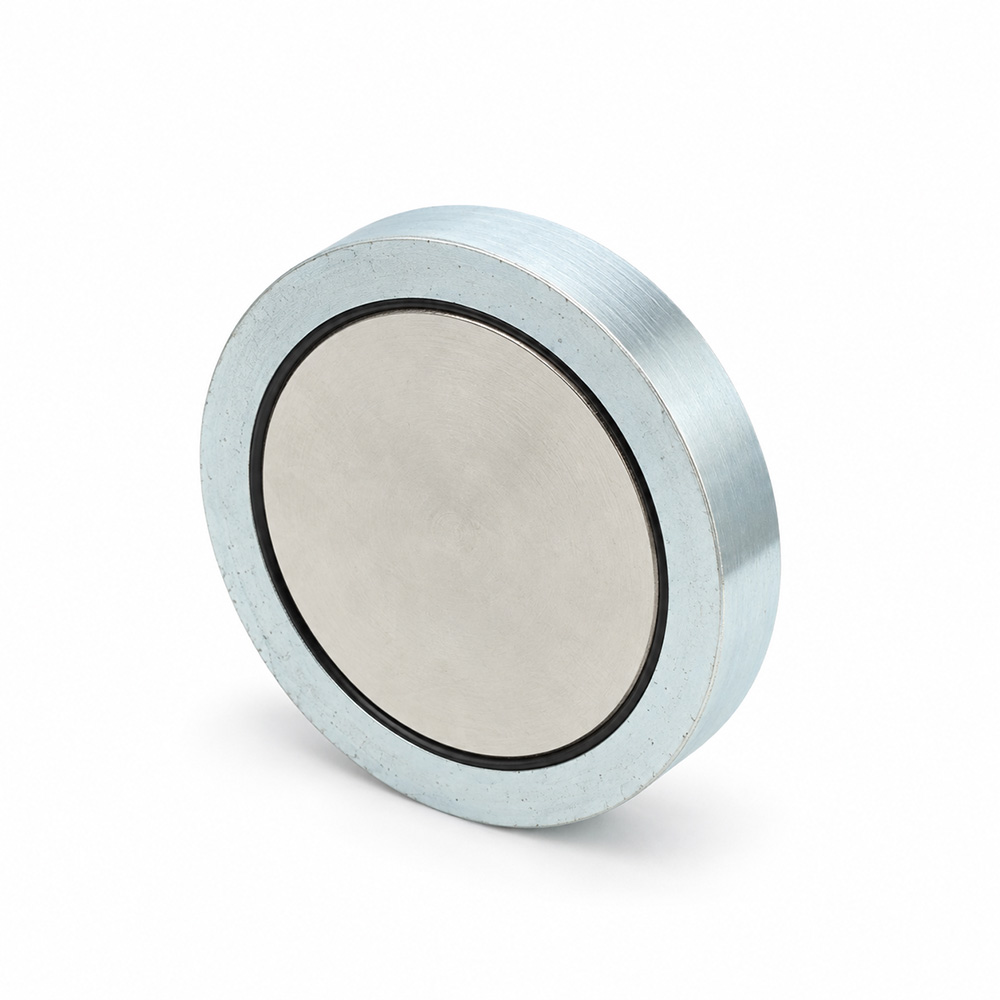
A pot magnet consists of a magnetic element integrated into a metal housing.
The housing helps concentrate the magnetic circuit toward the working face, allowing high holding force when the magnetic surface makes good contact with a suitable ferromagnetic steel surface.
This Ø130 mm model is specified as a neodymium fishing / pot magnet.
What is the M12 Connection Used For?
The product has an M12 connection.
A compatible eye bolt or ring can be connected to this point so that a suitable rope or retrieval system can be attached to the magnet.
Why Should the Eye Bolt Be Tightened Securely?
The eye bolt or ring transfers the pulling force from the rope to the magnet body.
Before use, the connection should be checked to ensure that:
- the thread is correctly engaged,
- the eye bolt is securely tightened,
- there is no visible thread damage,
- the connection has not loosened during previous use.
A loose connection can result in the magnet becoming detached from the retrieval system.
Does the Fishing Magnet Require Electricity?
No.
The product uses a permanent neodymium magnetic system.
It does not require:
- electrical power,
- batteries,
- electromagnetic coils,
- a power supply,
- a control panel
to generate magnetic attraction.
What Types of Metal Can It Attract?
The magnet is designed to attract suitable ferromagnetic materials, particularly:
- iron,
- carbon steel,
- steel tools,
- steel components,
- ferromagnetic machine parts,
- bolts,
- nuts,
- chains,
- suitable ferromagnetic scrap.
Actual attraction depends on the object’s material composition, size, thickness, shape and contact conditions.
Can It Attract Aluminium?
No, not in the same way as ferromagnetic iron or steel.
Aluminium is not ferromagnetic and therefore will not be strongly captured by this permanent fishing magnet.
Can It Attract Copper?
No.
Copper is not ferromagnetic and is not attracted in the same manner as iron or carbon steel.
Can It Attract Brass?
No.
Brass is generally non-ferromagnetic and therefore is not a suitable target material for this fishing magnet.
Can It Attract Stainless Steel?
It depends on the stainless-steel grade and its metallurgical condition.
Some stainless steels can respond strongly to a magnet, while others may show weak or negligible attraction.
If recovery of a specific stainless-steel component is important, the actual material should be tested rather than assuming that all stainless steels will be captured.
Can It Retrieve Rusty Metal?
Potentially, yes.
Rust does not automatically mean that the underlying steel has lost its ferromagnetic properties. However, heavy rust can create an uneven surface or physical gap between the magnet and the steel.
This reduced contact can significantly decrease the actual pull force.
Does Paint Affect Magnetic Pull?
It can.
A paint layer creates additional distance between the active magnetic surface and the underlying ferromagnetic steel.
Thin coatings may have a relatively limited effect, while thick coatings, corrosion layers or other gaps can reduce holding force more significantly.
Why is Full Surface Contact Important?
Pot magnets achieve their highest holding force when the working face makes broad, direct contact with a suitable flat ferromagnetic surface.
If only a small part of the Ø130 mm magnetic face contacts the object, the effective holding force can be substantially lower.
For example, contact with:
- a thin rod,
- a curved pipe,
- an irregular scrap part,
- a heavily corroded object
may produce much less force than contact with a thick, flat steel plate.
Does Metal Thickness Affect Pull Force?
Yes.
A very thin steel object may not provide a sufficient magnetic circuit to achieve the maximum holding force.
The stated 700 kg maximum value should therefore be associated with suitable thick steel and ideal contact conditions rather than every metal object encountered during magnet fishing.
Does Pulling Direction Affect the Force?
Yes.
The maximum magnetic pull is generally associated with a direct pull perpendicular to a suitable steel surface.
Sideways movement introduces shear/sliding conditions, so the force required to slide the magnet across a surface can be considerably different from the direct pull-off force.
Can It Be Used Underwater?
Its intended applications include magnet fishing and metal recovery from water environments.
After use, the magnet, connection components and rope should be inspected and maintained appropriately for the actual environment, particularly after exposure to dirty, contaminated or salt water.
Can It Be Used in Salt Water?
Use in salt water creates a more aggressive corrosion environment than ordinary fresh water.
For repeated salt-water applications, the magnet body, eye bolt, connection surfaces and any exposed areas should be inspected carefully after use. Rinsing, drying and appropriate maintenance can help reduce corrosion-related deterioration.
What Kind of Rope Should Be Used?
The rope should be selected according to the actual application rather than simply matching the magnet’s theoretical maximum magnetic pull.
Important factors include:
- working load,
- breaking strength,
- rope diameter,
- abrasion resistance,
- water resistance,
- knot or connection method,
- condition of the rope.
The complete retrieval system should be selected with an appropriate safety margin.
Can the 700 kg Rating Be Used to Select the Rope?
It should not be used as the only criterion.
The complete system includes:
- magnet,
- M12 connection,
- eye bolt,
- rope,
- knots or connectors,
- retrieval method.
Each component has its own mechanical limitations. The system should therefore be designed according to the actual loads and intended use.
Can It Be Used for Metal Recovery Outside Water?
Yes.
Although the product is primarily intended for magnet fishing and metal recovery, a powerful permanent pot magnet may also be useful for locating or retrieving suitable ferromagnetic objects in difficult-to-access areas.
The suitability of each application should be assessed according to the object’s shape, weight, accessibility and safety requirements.
Can It Be Used as a Certified Lifting Magnet?
The 700 kg maximum magnetic pull rating should not be interpreted as a certified 700 kg lifting capacity.
Applications involving suspended loads require appropriate lifting equipment, safety factors, mechanical design and applicable safety procedures.
What Happens if the Magnet Attaches to a Large Steel Surface?
Because this is a powerful neodymium pot magnet, strong attachment to a large, thick and flat steel surface can make manual removal difficult.
The magnet should therefore be handled carefully around:
- steel tables,
- structural steel,
- machinery,
- vehicles,
- large steel plates.
Avoid allowing the magnetic face to snap uncontrollably onto a steel surface.
Can Strong Magnets Cause Hand Injuries?
Powerful magnets can create pinch and crush hazards when they rapidly attract ferromagnetic objects or another magnet.
Hands and fingers should be kept away from the contact zone when placing or removing the magnet from steel surfaces.
Should the Magnet Be Thrown Into Water?
The magnet and connection system should be used in a controlled manner.
Uncontrolled impact against rocks, concrete, steel structures or other hard surfaces can damage the magnet assembly, connection components or surrounding property.
What Should Be Checked Before Each Use?
Before use, inspect:
- M12 connection,
- eye bolt / ring,
- rope,
- knots and connectors,
- magnet body,
- working surface.
Do not continue using damaged connection components without evaluating or replacing them.
What Should Be Checked After Retrieval?
After retrieving the magnet, inspect the magnetic surface for:
- sharp metal fragments,
- nails,
- wire,
- metal splinters,
- other hazardous debris.
Use appropriate gloves when removing captured metal because sharp ferrous objects may cause cuts or puncture injuries.
How Should the Magnet Be Stored?
The magnet should be stored:
- in a dry location,
- away from sensitive magnetic equipment,
- away from loose ferromagnetic tools and parts,
- where it cannot unexpectedly attach to steel objects,
- where children cannot access it.
A suitable spacer or protective storage arrangement can help prevent accidental attachment to nearby ferromagnetic surfaces.
Can It Be Used for Treasure Hunting?
It can be used to search for ferromagnetic metal objects.
However, it will not directly attract non-ferromagnetic valuables made from materials such as:
- gold,
- silver,
- copper,
- aluminium,
- brass.
Magnet fishing therefore specifically targets objects that contain enough magnetically responsive iron or steel.
What is the Main Advantage of a Permanent Fishing Magnet?
The principal advantage is that magnetic attraction is continuously available without electrical power.
The basic operating principle is simple:
Permanent Neodymium Magnetic System
↓
Magnetic Field at Working Surface
↓
Contact with Ferromagnetic Object
↓
Object is Magnetically Held
↓
Object is Retrieved Using the Rope
Is the 700 kg Pull Guaranteed on Every Object?
No.
The 700 kg value is a maximum value under ideal conditions, not a guaranteed force for every object or environment.
Actual results depend heavily on:
- material type,
- steel thickness,
- surface condition,
- contact area,
- geometry,
- corrosion,
- coatings,
- pull direction.