- Magneteksan
- > Hanger Type Magnetic Plates
- > Neodymium Plate Magnet for Pulse Sorting Conveyor – 760x150x25 mm
Neodymium Plate Magnet for Pulse Sorting Conveyor – 760x150x25 mm
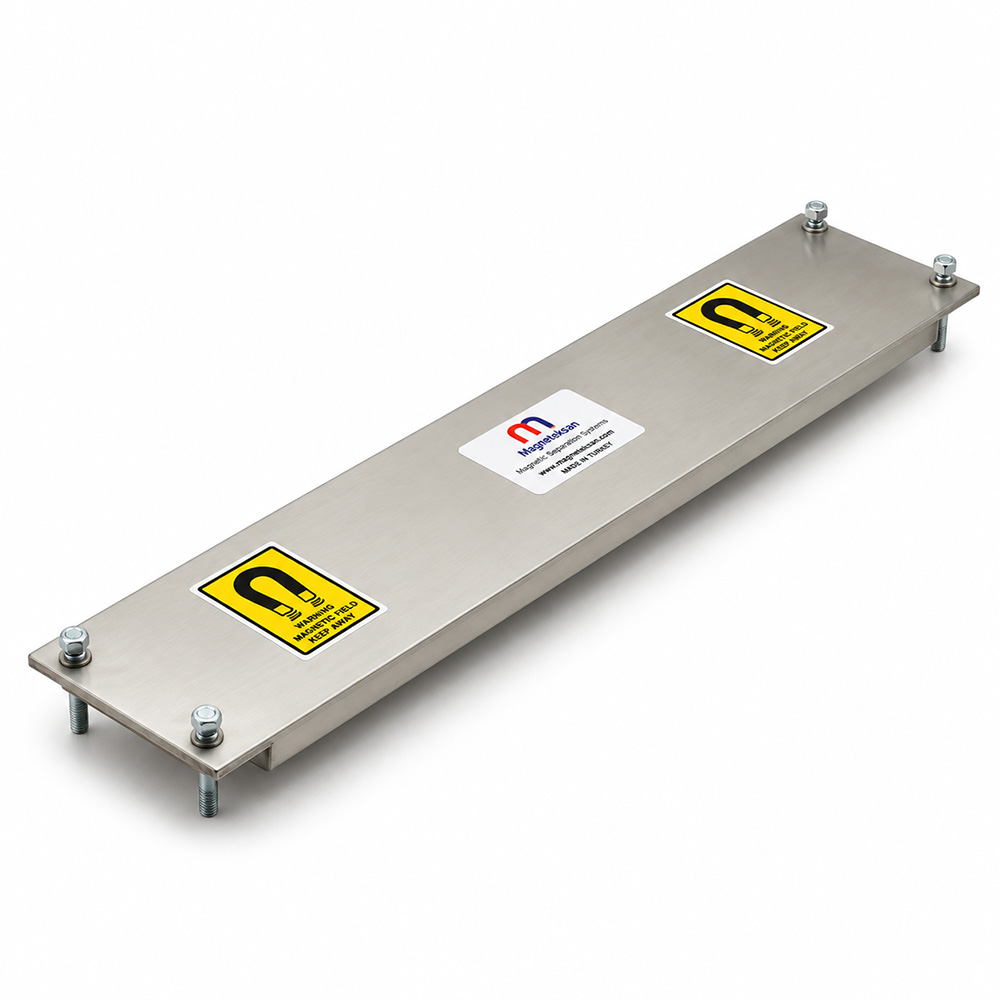
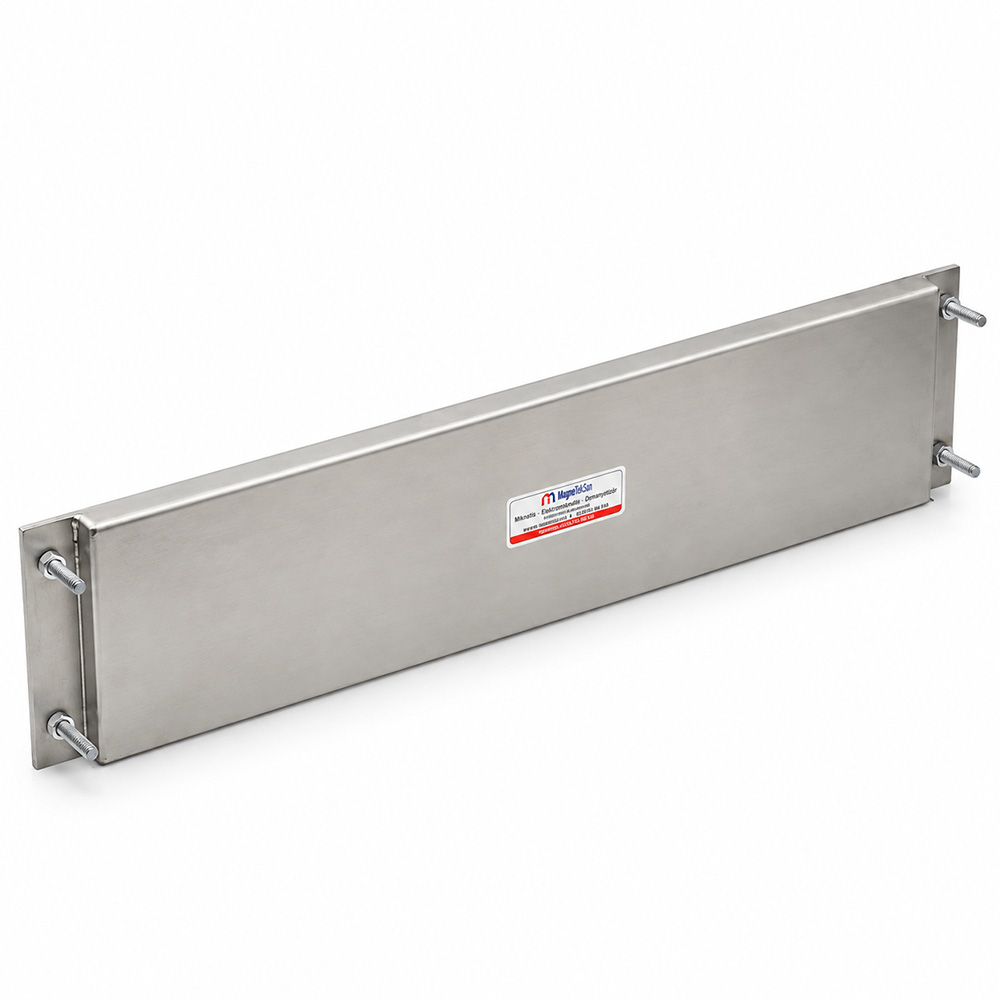
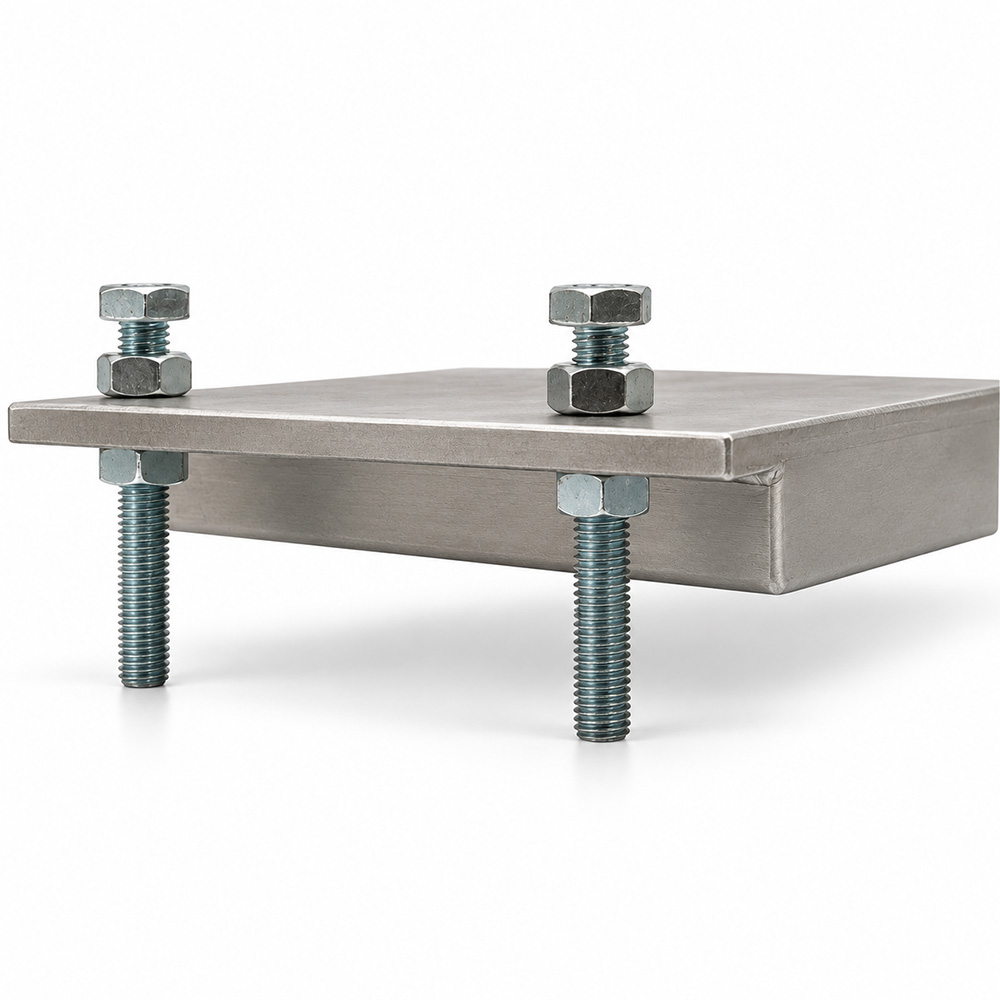
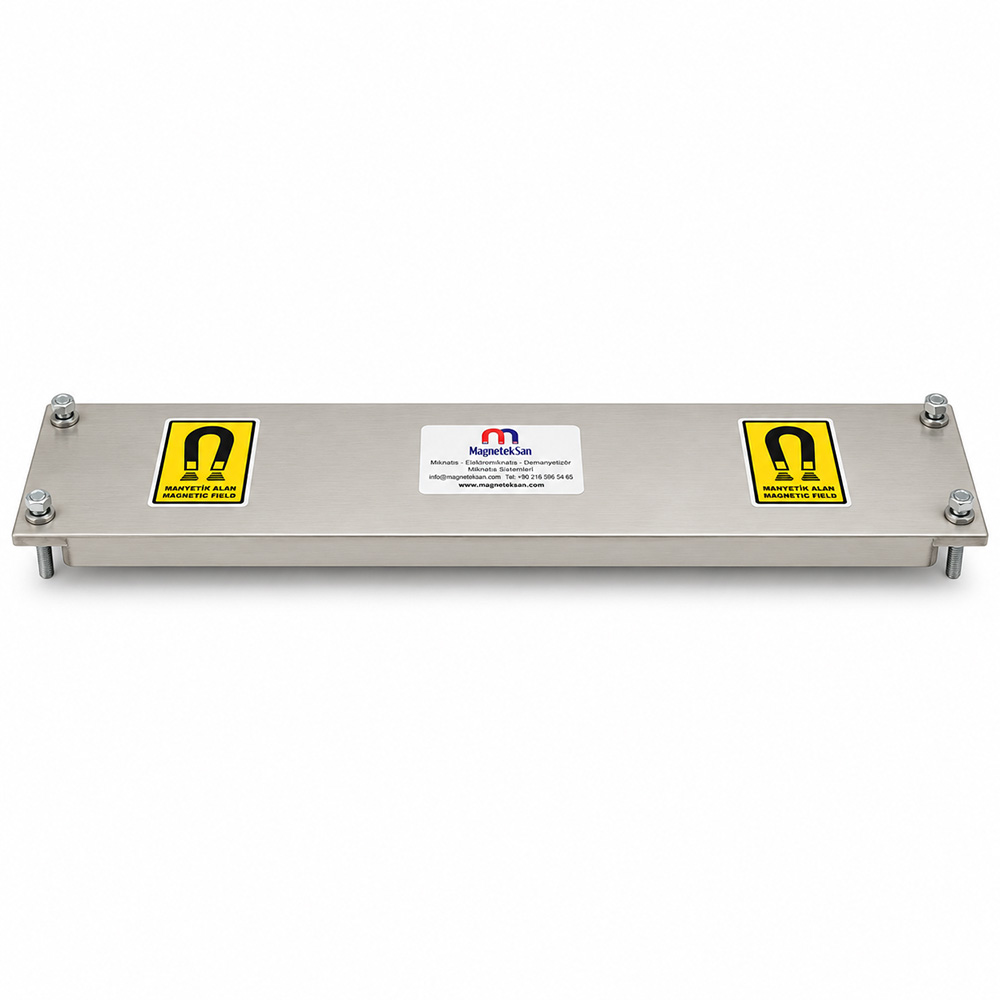
Neodymium Plate Magnet for Pulse Sorting Conveyor – 760x150x25 mm
General Features
- Suitable for pulse sorting and transfer conveyors.
- Plate dimensions: 760x150x25 mm.
- Equipped with N35 neodymium magnets.
- Helps capture ferromagnetic metal contaminants.
- Installed above the conveyor belt.
- Adjustable working height via side mounting points.
- No electricity required for magnetic operation.
- Maximum operating temperature: 80°C.
Technical Specifications
- Product Type: Neodymium Plate Magnet
- Main Application: Pulse Sorting Conveyor
- Dimensions: 760x150x25 mm
- Magnet Grade: N35 Neodymium
- Installation: Above Conveyor
- Working Height: Adjustable
- Target Material: Ferromagnetic Iron / Steel
- Maximum Temperature: 80°C
- Cleaning: Manual
- Electricity Requirement: None
Kategori: Hanger Type Magnetic Plates
Product Information
Extra Information
Product Information
The Neodymium Plate Magnet for Pulse Sorting Conveyor is a 760x150x25 mm N35 neodymium plate magnet designed to help capture ferromagnetic metal contaminants that may be present in lentils, chickpeas, beans and similar dry granular products during sorting or transfer operations. The plate is installed above the conveyor with its magnetic working surface facing the product flow. Its adjustable side mounting structure allows the working height above the belt to be adapted to the product layer and process conditions. As the product continues along the conveyor, iron, suitable steel fragments, wire pieces and other ferromagnetic contaminants can be attracted towards and retained on the magnetic working surface. The permanent N35 neodymium system requires no electrical power to generate the magnetic field and has a maximum operating temperature of 80°C.
| Technical Specification | Value |
|---|---|
| Product Type | Neodymium Plate Magnet |
| Main Application | Pulse Sorting Conveyor |
| Dimensions | 760x150x25 mm |
| Magnet Grade | N35 Neodymium |
| Installation | Above Conveyor |
| Working Height | Adjustable |
| Target Material | Ferromagnetic Iron / Steel |
| Maximum Operating Temperature | 80°C |
| Cleaning | Manual |
| Electricity Requirement | None |
Extra Information
What is a Neodymium Plate Magnet for a Pulse Sorting Conveyor?
A Neodymium Plate Magnet for Pulse Sorting Conveyor is a permanent magnetic separator positioned above a conveyor to help capture ferromagnetic contaminants from the product flow.
This product has:
- 760 mm length
- 150 mm width
- 25 mm thickness
- N35 neodymium magnetic system
Where is it Used?
Its primary application is on conveyors used for sorting, inspecting or transferring pulses and other suitable dry granular food products.
Example Process
Pulse Feeding
↓
Sorting / Inspection Conveyor
↓
760x150x25 mm Neodymium Plate Magnet
↓
Ferromagnetic Metal Capture
↓
Product Flow Continues
↓
Next Process
Which Pulse Products Can it be Used With?
Depending on the process conditions, it may be used on conveyor lines carrying products such as:
- lentils,
- chickpeas,
- dried beans,
- kidney beans,
- peas,
- similar dry granular products.
How Does it Work?
The plate magnet is installed above the conveyor belt with its magnetic working surface facing the material.
As the product passes beneath the plate, sufficiently ferromagnetic contaminants are attracted towards the magnetic surface, while the main product continues along the conveyor.
Does the Product Need to Touch the Magnet?
No.
The plate magnet operates above the product flow and does not need to make direct contact with either the conveyor belt or the normally flowing product.
Is the Working Height Adjustable?
Yes.
The side mounting structure allows the vertical position of the plate above the conveyor to be adjusted during installation.
This helps adapt the system to different:
- product layer heights,
- conveyor geometries,
- process conditions.
Does Positioning the Magnet Closer to the Belt Improve Performance?
In general, magnetic interaction becomes stronger as the distance between the magnetic surface and the target ferromagnetic object decreases.
The magnet should therefore be positioned at a suitable working distance without obstructing normal product flow.
A fixed working distance in centimetres should not be assumed for every application.
Does Product Layer Thickness Affect Performance?
Yes.
If a ferromagnetic contaminant is buried beneath a thick product layer, its distance from the magnetic surface increases.
For this reason, the following parameters should be considered together:
- product layer height,
- conveyor speed,
- plate mounting height.
Which Metals Can it Help Capture?
Suitable ferromagnetic contaminants may include:
- iron fragments,
- steel particles,
- steel wire pieces,
- screws and fasteners,
- ferromagnetic wear particles originating from machinery.
Are Pulses Affected by the Magnet?
No.
Pulses themselves are not ferromagnetic.
The magnetic system is designed to target suitable iron- and steel-based contaminants while the normal product continues along the conveyor.
Does it Capture Aluminium?
No.
Aluminium is not ferromagnetic and is not attracted in the same manner as iron.
Does it Capture Copper or Brass?
No.
Copper and brass are also non-ferromagnetic under normal conditions.
This plate magnet is not intended for separating these metals.
Does it Capture Stainless Steel?
The magnetic response of stainless steel depends on its grade, metallurgical structure and manufacturing condition.
Some stainless steels may respond to a magnet, while others exhibit very little magnetic attraction.
For this reason, capture of all stainless steel contaminants should not be assumed.
What is N35 Neodymium?
The product uses N35 grade neodymium magnets.
N35 identifies the grade of the permanent neodymium magnetic material used in the system.
The magnetic field is generated continuously without electrical power.
Does it Require Electricity?
No.
The permanent N35 neodymium magnetic system does not require:
- an electrical connection,
- a coil,
- a power supply,
- an electrical control panel
to generate its magnetic field.
What is the Maximum Operating Temperature?
The maximum operating temperature is:
80°C
Applications operating above 80°C should be evaluated separately before using the standard magnetic configuration.
Where Do the Captured Metal Particles Accumulate?
Captured ferromagnetic particles collect on the magnetic working surface facing the product.
The surface should therefore be inspected at suitable intervals.
How is it Cleaned?
After the conveyor has been safely stopped, accumulated metal contaminants can be manually removed from the plate surface.
During cleaning, attention should be paid to:
- the strong magnetic field,
- sharp metal fragments,
- moving conveyor equipment.
How Often Should it be Cleaned?
There is no universal fixed cleaning interval.
Cleaning frequency should be determined according to:
- the amount of metal contamination,
- product throughput,
- operating time,
- metal accumulation on the magnetic surface.
Can Excessive Metal Build-Up Reduce Performance?
Yes.
Excessive accumulation of ferromagnetic material on the working surface can interfere with the effective magnetic working area.
Regular inspection and cleaning are therefore important.
In Which Direction Should the Plate be Installed?
The magnetic working surface should face the product travelling on the conveyor.
The final mounting orientation and height should be determined according to the actual conveyor geometry.
What is the Purpose of the Side Mounting Points?
The side mounting points allow the magnetic plate to be fixed to the supporting structure and enable adjustment of its working height.
The final support construction should be designed according to the actual conveyor dimensions.
Does Conveyor Speed Affect Performance?
Yes.
Conveyor speed influences the amount of time a ferromagnetic contaminant spends within the effective magnetic field.
Conveyor speed and working height should therefore be evaluated together.
Does it Have a Fixed Capacity?
No fixed capacity in tonnes per hour should be assigned to the plate magnet alone.
Actual process capacity depends on factors such as:
- belt width,
- conveyor speed,
- product layer thickness,
- bulk density of the product.
Does it Have a Fixed Attraction Distance?
No fixed attraction distance should be specified without application testing.
Magnetic interaction varies according to the contaminant’s:
- size,
- weight,
- shape,
- material,
- distance from the magnet.
Does it Replace a Metal Detector?
No.
A plate magnet helps physically capture suitable ferromagnetic contaminants.
A metal detector operates on a different detection principle and can serve a different function.
Where required by the process, magnetic separation and metal detection systems can be used together.
At Which Points of a Sorting Line Can it be Used?
Depending on the plant layout, it can be considered at stages such as:
- pre-sorting,
- product inspection,
- product transfer,
- conveyor section before packaging.
The most suitable installation point should be selected according to the actual product flow.
Can it be Manufactured in Custom Dimensions?
Yes.
Depending on the project, parameters such as:
- plate length,
- plate width,
- plate thickness,
- connection geometry,
- mounting and working-height arrangement
can be designed specifically for the application.
Similar Products


Latest Products