Product Information
Extra Information
Product Information
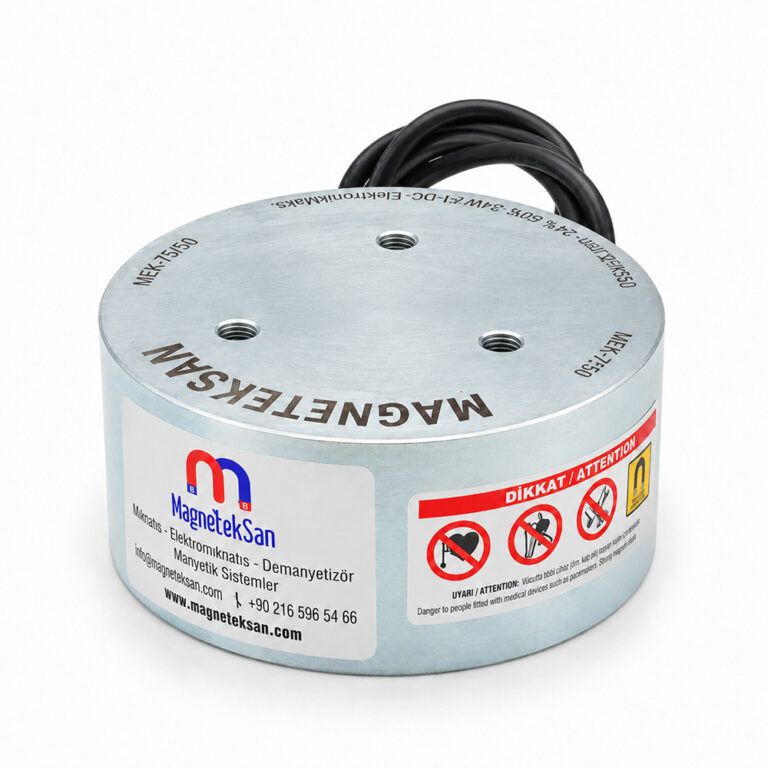
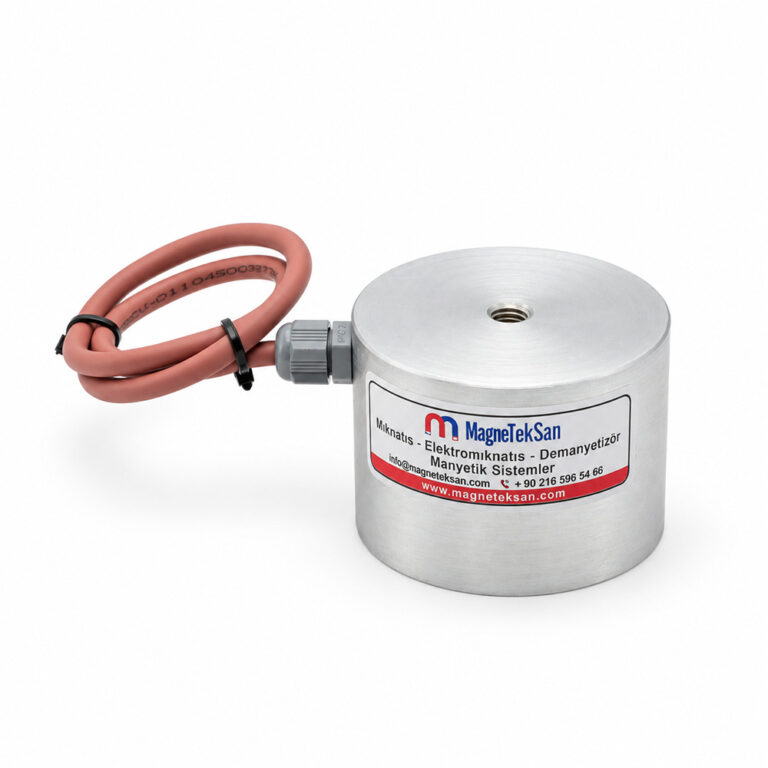
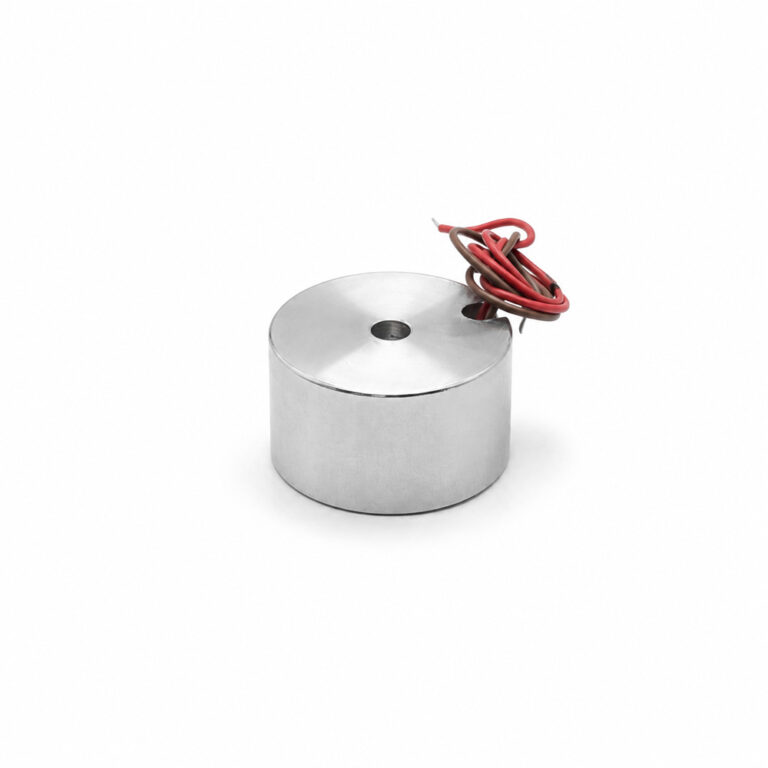
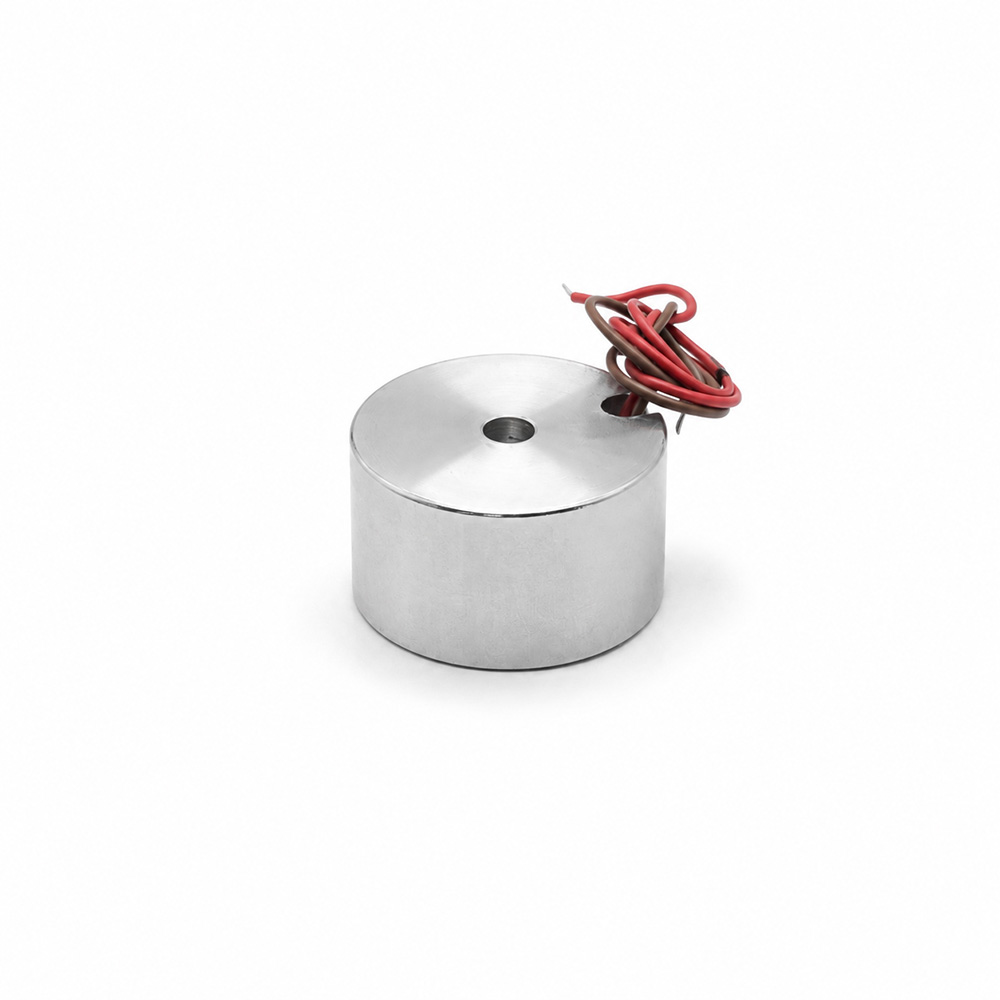
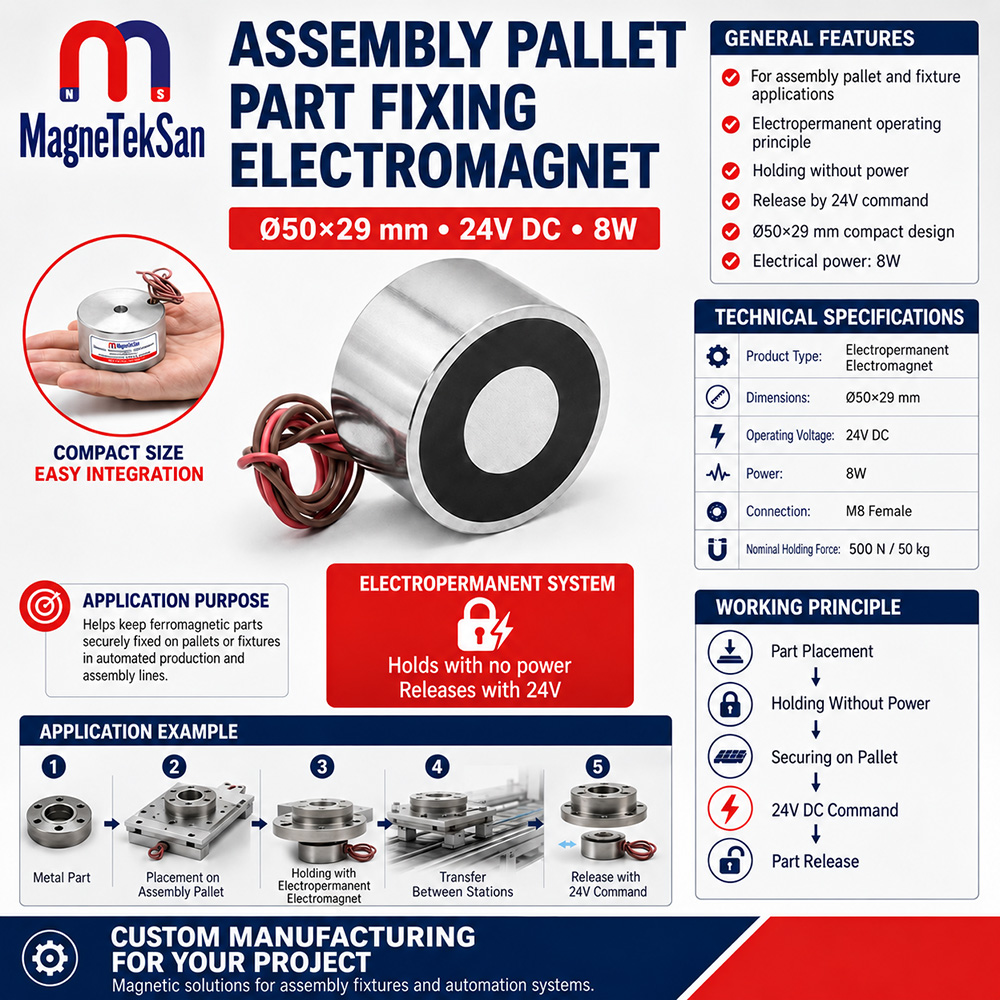
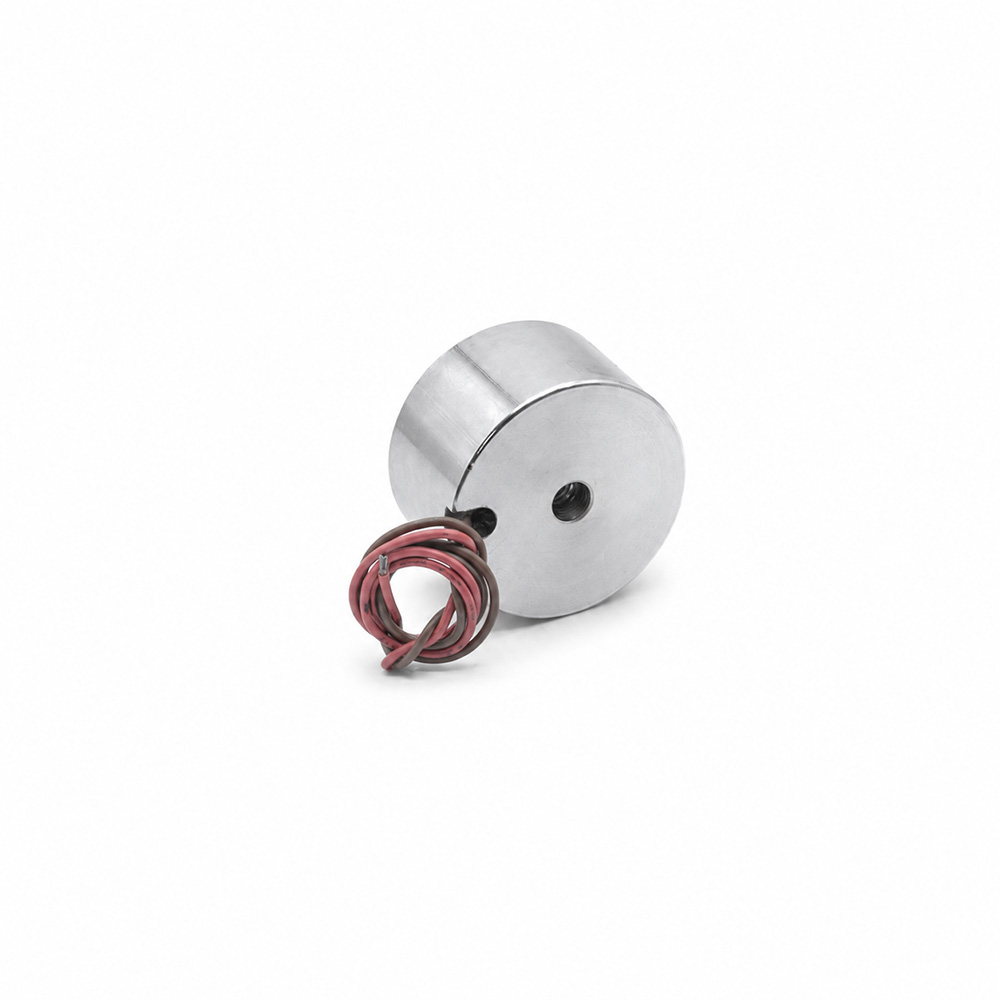
The Ø50×29 mm Electro-Permanent Holding Magnet is designed to hold ferromagnetic workpieces in position on assembly and production pallets. Unlike a conventional electromagnet, it maintains magnetic holding without continuous electrical power and uses a 24V DC electrical command to release the part. Its nominal holding force is 500 N / approximately 50 kgf under ideal contact conditions and should not be interpreted as a 50 kg safe lifting capacity.
| Technical Specification | Value |
|---|---|
| Product Type | Electro-Permanent Holding Magnet |
| Main Application | Part Fixing on Assembly Pallets |
| Diameter | Ø50 mm |
| Height | 29 mm |
| Dimensions | Ø50×29 mm |
| Operating Voltage | 24V DC |
| Electrical Power | 8W |
| Mechanical Connection | M8 Female Thread |
| Nominal Holding Force | 500 N / Approx. 50 kgf |
| Target Material | Ferromagnetic Iron / Steel |
| Operating Principle | Holding Without Power / Electrical Release |
Extra Information
What is an Electro-Permanent Holding Magnet?
An Electro-Permanent Holding Magnet is a magnetic workholding device that combines permanent magnetic holding with electrical control.
This Ø50×29 mm model is designed primarily to hold suitable ferromagnetic workpieces on assembly pallets, production pallets, automation fixtures and similar industrial systems.
Its main operating characteristic is that continuous electrical power is not required to maintain the holding condition.
How does the Electro-Permanent Holding Magnet work?
The basic operating principle of this model is:
No Electrical Power → Workpiece Held
↓
24V DC Electrical Command → Workpiece Released
This differs from a conventional electromagnet that normally requires continuous electrical power to maintain its magnetic field.
The electro-permanent principle can therefore be useful in processes where a component needs to remain fixed on a pallet for an extended period.
What is the main application of this magnet?
The main application is part fixing on assembly and production pallets.
A typical process can be:
Ferromagnetic Workpiece
↓
Workpiece Positioned on Assembly Pallet
↓
Electro-Permanent Magnet Holds the Part
↓
Pallet Moves Through Production Stations
↓
Assembly / Processing Operation
↓
24V DC Release Command
↓
Workpiece Released
This configuration can be integrated into automated production systems where the workpiece must remain in a defined position while the pallet moves through different stations.
Why use magnetic holding on an assembly pallet?
During automated manufacturing, a workpiece may need to:
- remain in a defined position
- resist unwanted movement during processing
- travel between stations in the same reference position
- be released automatically at the required station
For suitable ferromagnetic parts, magnetic holding can be used as an alternative or supplement to mechanical clamps and fixtures.
However, magnetic holding should not automatically be considered a replacement for mechanical fixing in every application.
What are the dimensions?
The magnet has a compact cylindrical construction:
Diameter: Ø50 mm
Height: 29 mm
Overall Size: Ø50×29 mm
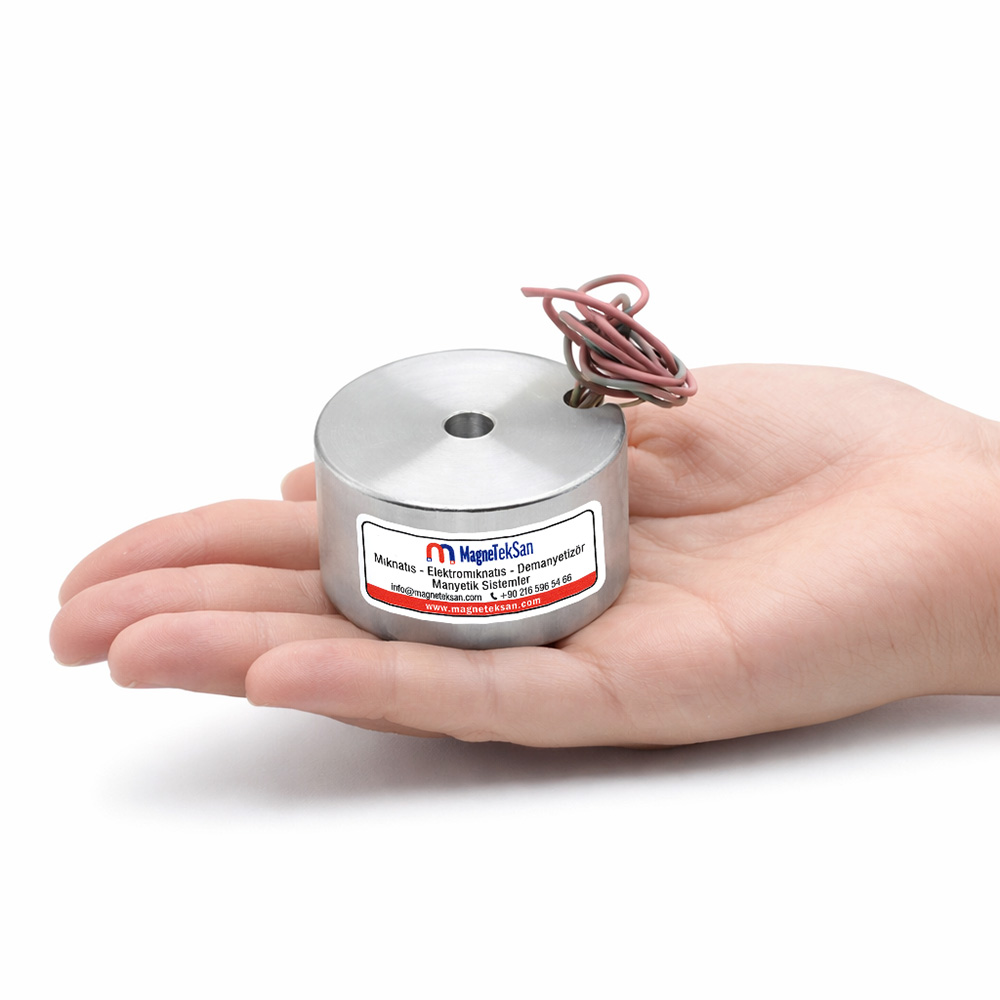
Its compact size allows it to be incorporated into assembly pallets and automation fixtures where installation space is limited.
What is the operating voltage?
The electrical control voltage is:
24V DC
24V DC is commonly used in industrial automation and PLC-controlled machinery.
The correct voltage and suitable electrical control circuit must be used when integrating the magnet into an automation system.
What does the 8W value mean?
8W is the electrical power rating of the product.
It is not the magnetic holding capacity.
Therefore:
8W ≠ 8 kg holding capacity
Electrical power and magnetic holding force are different technical parameters.
Does the magnet require continuous electrical power to hold the part?
No.
This product operates according to an electro-permanent principle and maintains its magnetic holding condition without continuous electrical power.
Electrical control is used to change the magnetic state and release the workpiece.
This is one of the main differences between this product and a conventional DC electromagnet.
What happens if electrical power is lost?
Loss of electrical power alone does not eliminate the normal magnetic holding state of this model.
Because the magnet is designed to hold without continuous power, the ferromagnetic workpiece can remain magnetically held during a power interruption.
However, this should not be treated as a complete machine-safety system. Workpiece weight, acceleration, vibration, orientation, surface condition and other process forces must be considered separately.
How is the workpiece released?
A suitable 24V DC electrical command is applied to release the workpiece.
Depending on the automation system, the control can be implemented through equipment such as:
- PLC
- relay
- control board
- dedicated machine controller
The electrical drive duration and control method should be selected according to the magnet’s operating requirements and the application.
Should 24V DC be applied continuously?
The main operating principle is holding without power and electrical release.
Therefore, continuous 24V DC operation should not be assumed unless the electrical duty cycle has been specifically confirmed for the application.
The release pulse or electrical activation period should be determined according to the product’s operating conditions and automation design.
What is the nominal holding force?
The specified nominal holding force is:
500 N / approximately 50 kgf
This value represents nominal magnetic holding under suitable or ideal contact conditions.
Does 500 N / 50 kg mean the magnet can safely lift 50 kg?
No.
The approximately 50 kgf figure is a nominal magnetic holding value and must not be interpreted as a guaranteed 50 kg safe lifting capacity.
Actual holding performance can be substantially lower depending on the workpiece and operating conditions.
This product is primarily positioned as a part-fixing magnet for assembly pallets, not as an overhead lifting magnet.
What affects the actual holding force?
Actual magnetic holding performance can be affected by:
- workpiece material
- steel grade
- material thickness
- contact area
- surface flatness
- surface coating
- paint
- rust
- contamination
- air gap
- workpiece geometry
- direction of applied force
For critical applications, testing with the actual production part is recommended.
Why is the air gap important?
Magnetic holding force decreases when a gap exists between the magnetic working surface and the workpiece.
An effective air gap can be created by:
- paint
- plastic coating
- rust
- dirt
- metal debris
- uneven surfaces
- curved surfaces
The highest holding performance is generally obtained with clean, flat and direct ferromagnetic metal contact.
Can it be used with thin sheet metal?
Potentially, yes.
Ferromagnetic sheet metal can be attracted by the magnet. However, very thin steel may not provide sufficient material to carry the magnetic flux required to achieve the nominal holding force.
Therefore, applications involving thin sheet metal should be tested with the actual workpiece.
Can it hold round or curved parts?
This depends on the contact geometry.
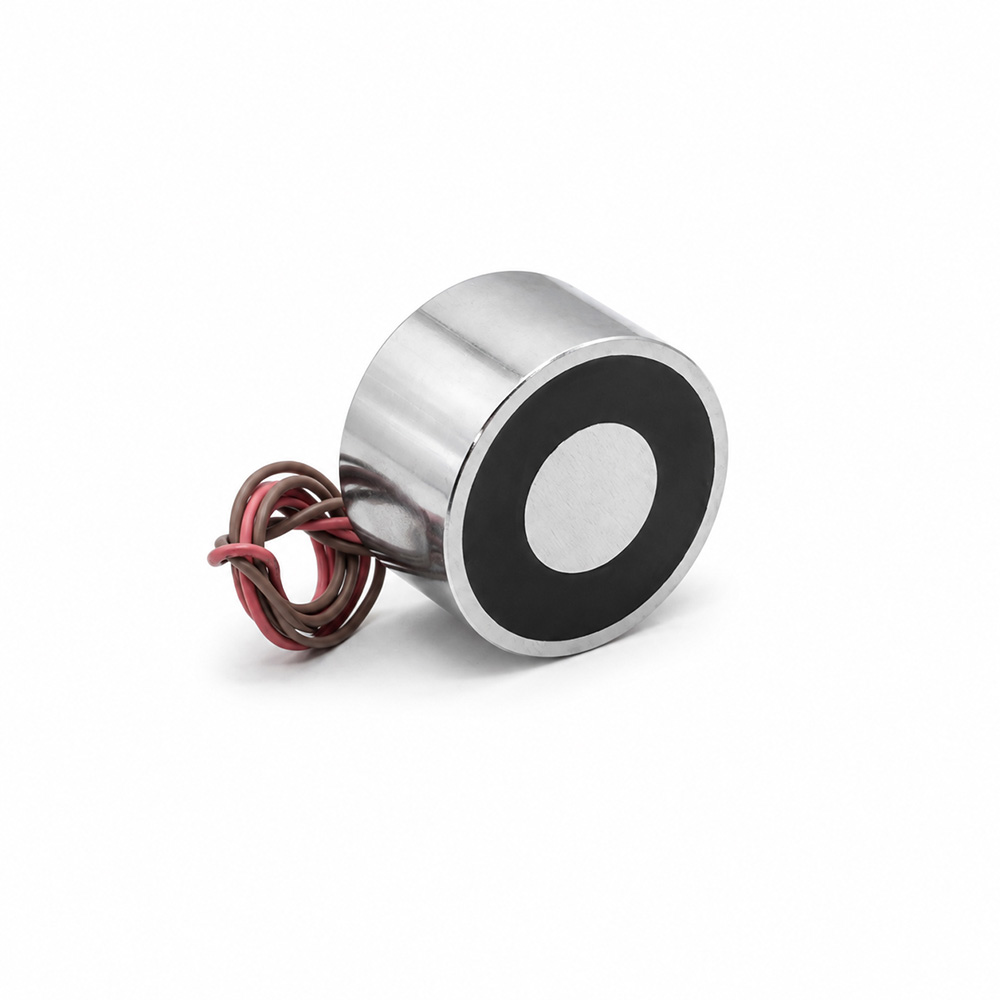
The magnet has a flat magnetic working surface. If a round or curved component contacts only a small portion of this surface, the effective contact area decreases and the holding force can be reduced.
Flat ferromagnetic surfaces with sufficient contact area generally provide better magnetic holding conditions.
Which materials can it hold?
The product is primarily suitable for:
- iron
- low-carbon steel
- compatible ferromagnetic steels
Actual performance depends on the magnetic properties of the material.
Can it hold aluminum?
No.
Aluminum is not ferromagnetic and will not be held by this magnet in the same way as iron or suitable steel.
Can it hold copper or brass?
Normally, no.
Copper and brass are not ferromagnetic under normal conditions and are not suitable target materials for this type of holding magnet.
Can it hold stainless steel?
It depends on the stainless steel grade and metallurgical condition.
Some stainless steels can exhibit significant magnetic response, while some austenitic stainless steels may have very weak magnetic attraction.
Therefore, holding performance should not be assumed for all stainless steel components. Testing with the actual part is recommended.
What is the M8 female thread used for?
The M8 female threaded connection is provided for mechanical mounting of the magnet to an assembly pallet, fixture or machine structure.
The mechanical mounting system must be designed according to the loads generated by the actual application.
Excessive tightening or unsuitable mounting methods that could damage the magnet body should be avoided.
Can it be integrated into an automation system?
Yes.
Its compact Ø50×29 mm body, 24V DC electrical control and M8 female mounting connection make it suitable for integration into appropriate:
- assembly pallets
- automation fixtures
- transfer pallets
- workholding fixtures
- special-purpose machines
- automated production stations
The complete system should be engineered according to the workpiece and process requirements.
Can several magnets be installed on one pallet?
Yes.
Multiple magnets can be used when a larger or longer workpiece needs to be held at several points.
The number and position of magnets should be determined according to:
- workpiece geometry
- workpiece weight
- centre of gravity
- process forces
- required holding behaviour
- pallet movement
Using several magnets does not remove the need for application-specific engineering.
Can it be used on moving pallets?
It can be considered when the application is properly engineered.
A moving pallet can subject the workpiece to additional dynamic forces caused by:
- acceleration
- deceleration
- vibration
- sudden stops
- direction changes
For this reason, a moving pallet system should not be designed solely according to the magnet’s static nominal holding force.
Can it be used vertically?
Vertical applications require additional evaluation.
When a workpiece is held on a vertical surface, the load can act in a sliding direction across the magnet face.
Magnetic pull-off force and resistance to sliding are not the same parameter. Friction, surface condition, dynamic loads and suitable safety factors must therefore be considered.
Can it be used for suspended or overhead lifting?
This product should not be treated as a crane lifting magnet or an overhead load safety device.
Suspended-load and overhead lifting applications require dedicated engineering, appropriate safety factors and suitable mechanical safety systems.
Its primary application is workpiece fixing on assembly and production pallets.
Can it be used in assembly fixtures?
Yes.
The magnet can be used in suitable fixtures where ferromagnetic components need to:
- remain in position
- be held during assembly
- travel between automated stations
- be released electrically when required
For precision positioning, however, the magnet should normally be combined with mechanical reference features.
Does the magnet precisely position the workpiece?
Not by itself.
The magnet provides magnetic holding force, but it is not a precision mechanical locating system.
If accurate positioning is required, it can be combined with:
- locating pins
- stops
- nests
- guides
- mechanical reference surfaces
In this arrangement, the mechanical elements define the precise position while the magnet helps keep the workpiece against those reference points.
Can it replace mechanical clamps?
In some applications, magnetic holding can replace or supplement mechanical clamping.
However, this depends on the workpiece geometry, process forces, required positioning accuracy and safety requirements.
It should not automatically be assumed that the magnet can replace a mechanical clamp in every production process.
What maintenance is required?
Periodic inspection should include:
- magnetic working surface
- electrical cables and connections
- mechanical mounting
- M8 threaded connection
- accumulation of metal particles
- physical damage to the magnet body
Metal chips, dirt and foreign material should not be allowed to accumulate between the magnet and workpiece.
Why should the magnetic contact surface be kept clean?
Foreign material between the magnet and workpiece can reduce the effective contact area and create an air gap.
Examples include:
- metal chips
- dirt
- paint residue
- rust
- other foreign particles
Keeping the contact surface clean helps maintain consistent magnetic holding performance.
Can custom multi-magnet fixtures be designed?
Yes.
For larger or application-specific workpieces, multiple electro-permanent holding magnets can be integrated into a custom pallet or fixture.
The final design should consider:
- workpiece dimensions
- workpiece geometry
- workpiece weight
- contact surfaces
- process movement
- operating orientation
- acceleration and vibration
- automation sequence
- required release behaviour
This allows the magnetic holding arrangement to be adapted to the actual production and assembly process.