
Product Information
Extra Information
Product Information
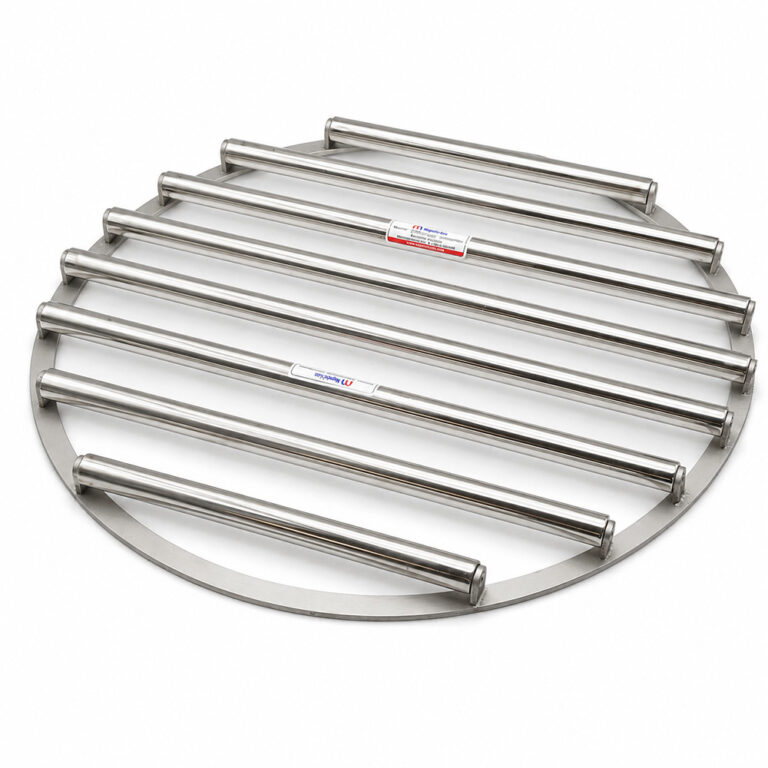
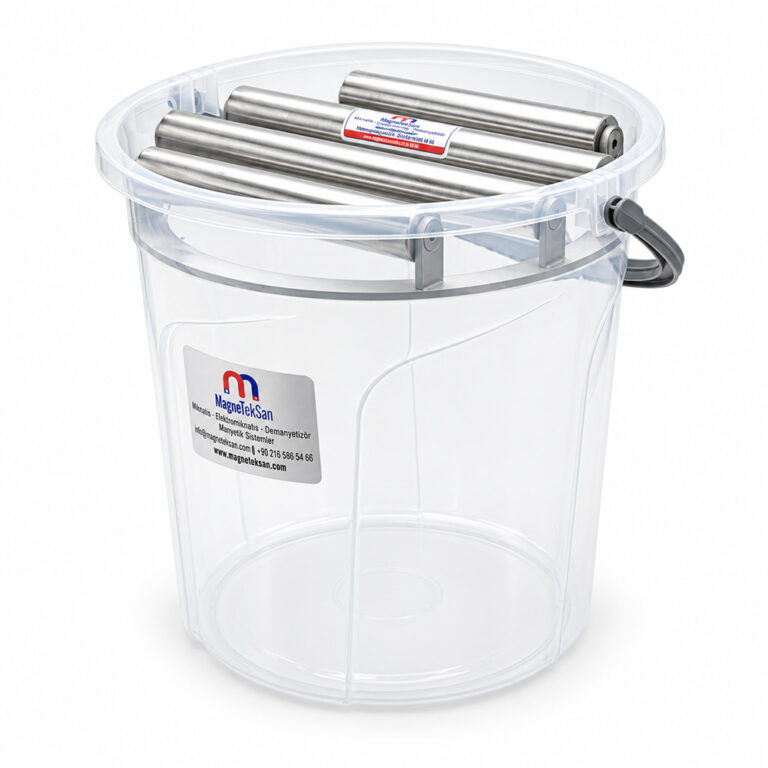
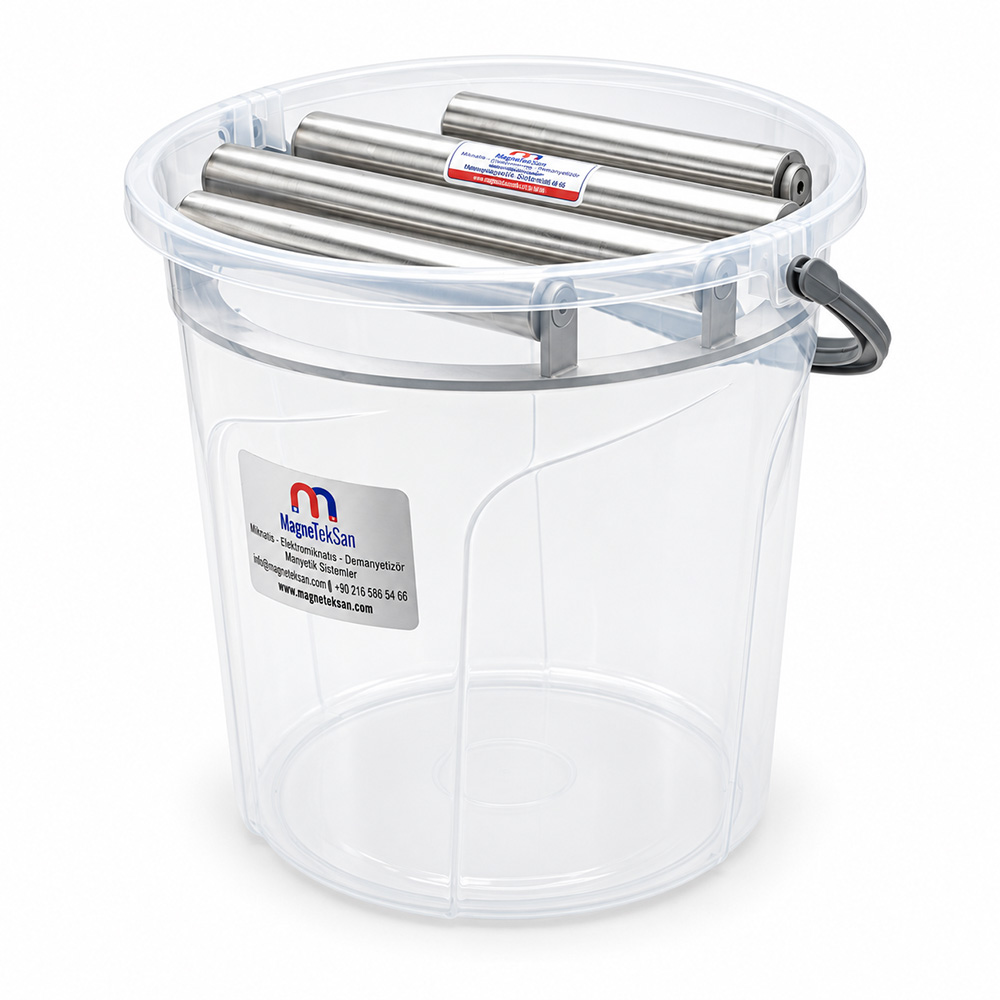
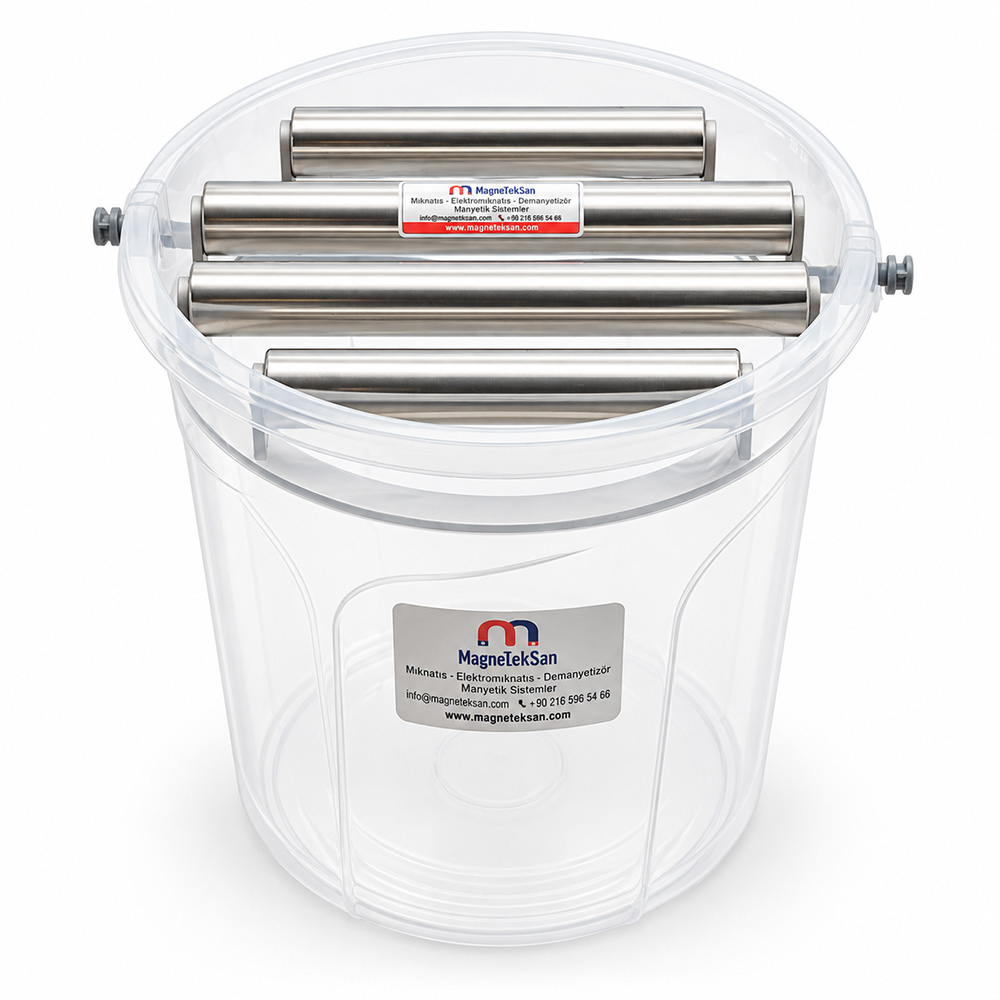
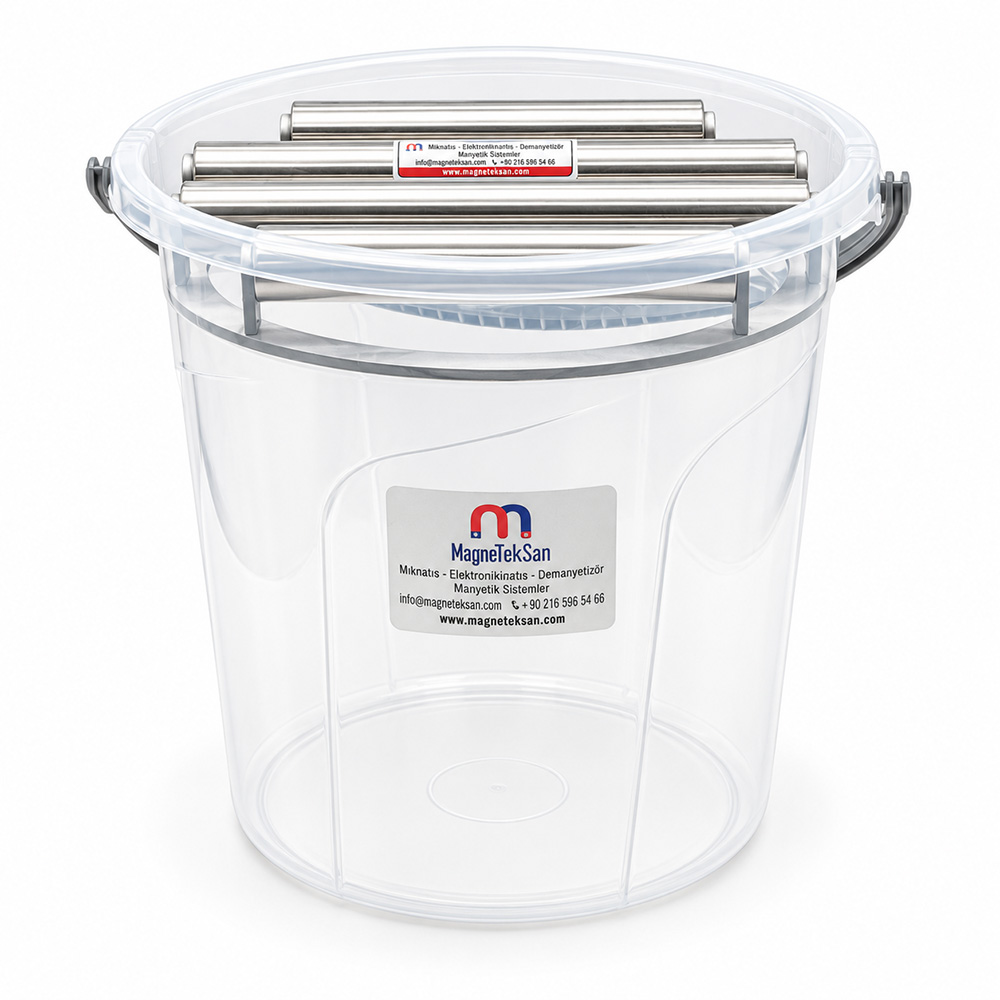
The Bucket Magnetic Grid for Pulses Before Packaging is designed for batch-based magnetic control of chickpeas, lentils, beans, peas and similar dry granular products before weighing or packaging. The Ø300 mm grid contains 4 Ø32 mm N35 neodymium magnetic rods rated at 10,000 Gauss, helping capture suitable ferromagnetic contaminants while the product passes between the rods and collects in the bucket below.
| Technical Specification | Value |
|---|---|
| Product Type | Bucket Neodymium Magnetic Grid |
| Main Application | Magnetic Control of Pulses Before Packaging |
| Model / Type | S88KL |
| Grid Diameter | Ø300 mm |
| Number of Magnetic Rods | 4 |
| Magnetic Rod Diameter | Ø32 mm |
| Neodymium Grade | N35 |
| Magnetic Value | 10,000 Gauss |
| Magnetic Section Material | AISI 304 Stainless Steel |
| Food Contact | Magnetic Section Suitable |
| Maximum Operating Temperature | 80°C |
| Method of Use | Manual / Batch-Based |
| Electricity Required | No |
Extra Information
What is a Bucket Magnetic Grid for Pulses Before Packaging?
The Bucket Magnetic Grid for Pulses Before Packaging is a manual magnetic separation system designed to help remove suitable ferromagnetic metal contamination from dry pulses before the weighing or packaging stage.
Unlike a magnetic grid that must be permanently installed inside a hopper or production line, this system is designed for use together with a bucket. The pulses pass through the magnetic grid and are collected directly in the bucket below.
What is the main purpose of this product?
Its main purpose is to provide an additional magnetic control point immediately before dry pulses proceed to weighing, packaging or another subsequent process.
Typical products include:
- chickpeas,
- lentils,
- dry beans,
- peas,
- similar dry and free-flowing granular food products.
The suitability of a particular product depends on its particle size, flow characteristics and the available clearance between the magnetic rods.
How is the Bucket Magnetic Grid used?
A typical process is:
Cleaned / Classified Pulses
↓
Ø300 mm Bucket Magnetic Grid
↓
4xØ32 mm N35 Neodymium Magnetic Rods
↓
10,000 Gauss Ferromagnetic Metal Control
↓
Product Collected in the Bucket
↓
Weighing / Packaging
The pulses are poured onto the magnetic grid and pass through the spaces between the magnetic rods. Suitable ferromagnetic contaminants are attracted toward the magnetic surfaces while the inspected product falls into the bucket below.
Why is magnetic control used before packaging?
Even after previous cleaning and production stages, small ferromagnetic contaminants can potentially originate from:
- equipment wear,
- maintenance operations,
- fasteners,
- transfer equipment,
- production machinery,
- handling operations.
Using a magnetic grid before packaging provides an additional control point that can help reduce the risk of suitable ferromagnetic contaminants proceeding with the final product.
What is the purpose of the bucket?
The bucket collects the pulses directly after they have passed through the magnetic grid.
This configuration is particularly practical for:
- small and medium batches,
- manual product inspection,
- final magnetic control before packaging,
- separate inspection of individual product batches.
The system can therefore be used as a standalone magnetic control station rather than requiring permanent installation in a production line.
Does the system have to be installed in a continuous production line?
No.
One of the main characteristics of this product is its ability to operate as an independent manual bucket system. It does not necessarily have to be permanently connected to a hopper, chute or pipeline.
This makes it suitable for batch-based inspection and for production areas where a fixed magnetic separator installation is not required.
What does batch-based use mean?
Batch-based operation means that a defined quantity of pulses can be magnetically inspected separately.
For example:
- The pulses are poured onto the magnetic grid.
- The product passes between the magnetic rods.
- Suitable ferromagnetic contaminants are retained on the magnetic surfaces.
- The inspected pulses collect in the bucket.
- The bucket is transferred to the weighing or packaging stage.
- The procedure can then be repeated for the next batch.
This method is particularly useful where products are handled in separate lots rather than in a continuously flowing production line.
What is the function of the 4 Ø32 mm magnetic rods?
The Ø300 mm magnetic grid contains 4 magnetic rods, each with an outside diameter of Ø32 mm.
As pulses pass between the rods, suitable ferromagnetic contaminants entering the effective magnetic field can be attracted toward and retained on the rod surfaces.
The actual capture behavior depends on factors such as the magnetic properties, size and shape of the contaminant, its distance from the magnetic surface and the way the product flows through the grid.
Why are 4 magnetic rods used?
The four-rod arrangement provides magnetic contact areas while maintaining openings through which granular products can pass.
However, the number of rods alone must not be used to specify a fixed processing capacity in kilograms or tons per hour. Actual flow performance depends on factors including:
- particle size,
- product shape,
- moisture,
- flowability,
- feeding rate,
- rod spacing,
- amount of product being introduced at one time.
For applications where flow performance is critical, testing with the actual product is recommended.
What does Ø32 mm magnetic rod mean?
The outside diameter of each magnetic rod is:
Ø32 mm
The complete system contains:
4xØ32 mm magnetic rods
arranged within the Ø300 mm round grid structure.
What is an N35 neodymium magnet?
N35 identifies the grade of the neodymium permanent magnet material used inside the magnetic rods.
Because the system uses permanent neodymium magnets, it can continuously generate a magnetic field without requiring an external electrical power supply.
What does 10,000 Gauss mean?
The specified magnetic value of the magnetic rods is:
10,000 Gauss
This magnetic field helps attract and retain suitable ferromagnetic particles when they pass sufficiently close to the magnetic rod surfaces.
However, 10,000 Gauss does not automatically mean:
- a defined lifting capacity in kilograms,
- a fixed attraction distance,
- a guaranteed minimum particle size,
- 100% removal of all metal contamination.
Magnetic separation performance depends on the actual contaminant and process conditions.
Does 10,000 Gauss guarantee that every iron particle will be captured?
No.
A Gauss value alone cannot guarantee 100% capture.
Actual separation performance can be affected by:
- contaminant size,
- contaminant shape,
- magnetic properties,
- distance from the rod surface,
- product flow speed,
- product depth,
- rod arrangement,
- metal accumulation on the rods.
Therefore, the product should be considered a magnetic control and separation system rather than a guarantee that every possible metal contaminant will be removed.
What types of metal contaminants can it capture?
Suitable ferromagnetic contaminants may include:
- iron particles,
- carbon-steel fragments,
- steel shavings,
- pieces of ferromagnetic wire,
- screw or fastener fragments,
- small ferromagnetic wear particles.
Whether a specific contaminant is captured depends on its magnetic response and the actual process conditions.
Does the magnet attract chickpeas, lentils or beans?
No.
Chickpeas, lentils, beans and similar pulses are not ferromagnetic.
The food product passes between the magnetic rods and falls into the bucket, while suitable iron and ferromagnetic steel contaminants can be attracted toward the magnetic rod surfaces.
Does the magnetic grid capture aluminum?
No, not in the same way as iron or carbon steel.
Aluminum is not ferromagnetic and is not strongly attracted by a standard permanent neodymium magnetic separator.
A different separation or detection technology should be considered when aluminum contamination is a specific concern.
Can it capture copper or brass?
Copper and brass are not normally ferromagnetic.
Therefore, this magnetic grid is not intended to separate copper or brass in the same manner as iron or suitable ferromagnetic steel.
Its primary purpose is the capture of contaminants with sufficient ferromagnetic properties.
Can it capture stainless steel?
It depends on the stainless-steel grade and its metallurgical condition.
Some stainless steels can respond significantly to a magnetic field, while others, particularly certain austenitic stainless steels, may have very low magnetic response.
Therefore, it should not be assumed that every stainless-steel contaminant will be captured. If stainless-steel contamination is a specific concern, testing with a representative sample is recommended.
Why is AISI 304 stainless steel used?
The magnetic grid and magnetic rod structure are manufactured using AISI 304 stainless steel.
AISI 304 is widely used in process equipment because of characteristics such as corrosion resistance, cleanability and suitability for many dry-product applications.
For this product, the published food-contact suitability statement applies specifically to the magnetic section.
Is the complete system suitable for food contact?
The published product specification identifies the magnetic section as suitable for food-contact applications.
However, the exact plastic material grade and food-contact certification of the bucket are not specified. Therefore, the complete bucket-and-grid system should not be described as certified food-grade unless documentation for the bucket is also available.
What material is the bucket made from?
The specific technical grade of the bucket’s plastic material is not currently stated in the published product information.
For this reason, claims about the bucket’s exact polymer grade or food-contact certification should not be made without supporting documentation.
What is the maximum operating temperature?
The specified maximum operating temperature of the magnetic system is:
80°C
Applications above this temperature should be evaluated separately because the standard N35 neodymium magnetic system is specified for a maximum operating temperature of 80°C in this product.
Does the Bucket Magnetic Grid require electricity?
No.
The product uses permanent N35 neodymium magnets and therefore does not require:
- electricity,
- electrical cables,
- a control panel,
- a power supply.
The magnetic field is generated continuously by the permanent magnets.
How is the product used manually?
A typical manual operating procedure is:
- Place the bucket on a flat and stable surface.
- Position the magnetic grid correctly over the bucket.
- Pour the pulses to be inspected onto the grid.
- Allow the product to pass between the 4 Ø32 mm magnetic rods.
- Suitable ferromagnetic particles are retained on the magnetic surfaces.
- The inspected product collects in the bucket.
- Transfer the bucket to the weighing, packaging or next processing stage.
The exact operating method should be adapted to the product and the facility’s own process and hygiene procedures.
Does the product flow directly into the final package?
That is not the primary use of this model.
The intended process is for the pulses to pass through the magnetic grid and collect in the bucket. The inspected product can then be transferred from the bucket to:
- weighing,
- packaging,
- another processing stage.
Therefore, the product should not be presented as a fixed automatic filling system that discharges directly into small retail packages.
Can it be used for chickpeas?
Yes, provided that the product-flow geometry is suitable.
For larger products such as chickpeas, important considerations include:
- clearance between the magnetic rods,
- grain size,
- product shape,
- product flowability,
- feed rate.
Testing with the actual chickpeas is the most reliable way to confirm smooth product passage.
Can it be used for lentils?
Yes.
Dry, free-flowing lentils can be passed through the bucket magnetic grid under suitable process conditions.
The actual feed rate should be adjusted so that the product passes through the magnetic grid without excessive accumulation or bridging.
Can it be used for dry beans?
Yes.
Dry beans can be processed provided that their dimensions and flow characteristics are compatible with the available openings between the magnetic rods.
For applications involving larger bean varieties, testing with the actual product is recommended.
Does this product sieve pulses by particle size?
No.
The term magnetic grid does not mean that this product functions as a conventional mechanical sizing sieve.
Its main purpose is magnetic separation: suitable ferromagnetic contaminants are attracted and retained while the pulses pass through the spaces between the magnetic rods.
It is not designed primarily to classify chickpeas, lentils, beans or other products according to particle size.
What is the processing capacity in kg/h or tons/hour?
A fixed throughput has not been specified for this model.
Actual capacity depends on factors including:
- type of pulse,
- grain size,
- bulk density,
- moisture,
- flowability,
- amount fed at one time,
- rod spacing,
- operator feeding method.
Therefore, a fixed kg/h or ton/hour capacity should not be stated without testing under the actual process conditions.
How are the magnetic rods cleaned?
After magnetic inspection is completed, the surfaces of the magnetic rods should be visually inspected.
Captured metal contaminants should be removed manually and safely from the rod surfaces.
Because captured metal fragments may be sharp, appropriate personal protective equipment should be used during cleaning.
The system should not be cleaned while product is actively being poured through the magnetic grid.
How often should the magnetic grid be cleaned?
There is no single cleaning interval suitable for every application.
Cleaning frequency depends on:
- quantity of product inspected,
- number of batches,
- contamination level,
- size of captured particles,
- rate of metal accumulation.
For batch-based operation, inspecting the magnetic rods after each batch can be a practical quality-control approach.
Does metal accumulation on the rods affect separation performance?
Yes.
If a large amount of ferromagnetic material accumulates on the rod surfaces, part of the active magnetic surface can become covered.
For this reason, regular inspection and cleaning are important for maintaining suitable magnetic separation conditions.
Can captured metal contaminants be recorded for quality control?
Yes.
As part of a packaging-stage quality-control procedure, material captured on the magnetic rods can be:
- visually inspected,
- removed and examined,
- classified where appropriate,
- recorded for process monitoring.
Monitoring the type and amount of captured contamination may also help identify potential sources of metal contamination elsewhere in the production process.
What are the advantages of using a bucket magnetic grid?
The bucket configuration offers several practical advantages:
- no permanent production-line installation is necessarily required,
- individual batches can be inspected separately,
- it can serve as a final magnetic control point before packaging,
- inspected product is collected directly in the bucket,
- no electricity is required,
- magnetic rods can be visually inspected,
- the system can be moved to another working point when required.
These characteristics make the product particularly suitable for manual and batch-based applications.
Can it be used in high-capacity continuous production lines?
This particular model is primarily intended for manual and batch-based operation.
For high-throughput continuous production lines, other magnetic separation configurations may be more appropriate, such as:
- housing-type magnetic separators,
- pipeline magnetic separators,
- larger magnetic grid systems,
- custom gravity-flow magnetic separators.
The most appropriate configuration should be selected according to the product, flow rate and installation conditions.
Can it be used as the final magnetic control point before packaging?
Yes.
The system is specifically suitable for use as an additional final magnetic control point before weighing or packaging, particularly where pulses are processed in individual batches.
Does the magnetic grid replace a metal detector?
No.
A magnetic grid and a metal detector operate according to different principles.
The magnetic grid helps physically capture suitable ferromagnetic contaminants. A metal detector, depending on its design and configuration, is used to detect various types of metallic contamination.
Where required by the process, both technologies can be used as complementary control systems rather than direct substitutes for one another.
What maintenance does the system require?
The following components should be inspected periodically:
- Ø32 mm magnetic rods,
- magnetic surfaces,
- supporting structure,
- welded joints,
- mechanical connections,
- physical condition of the bucket.
Damaged, significantly deformed or deteriorated components should be evaluated before the equipment is returned to service.
Can the Bucket Magnetic Grid be manufactured in custom dimensions?
Yes.
Depending on the application, Magneteksan can evaluate different configurations for:
- grid diameter,
- number of magnetic rods,
- magnetic rod diameter,
- supporting structure,
- bucket or container geometry.
The final design should be selected according to the actual product, particle dimensions, required product passage area and process conditions.