Product Information
Extra Information
Product Information
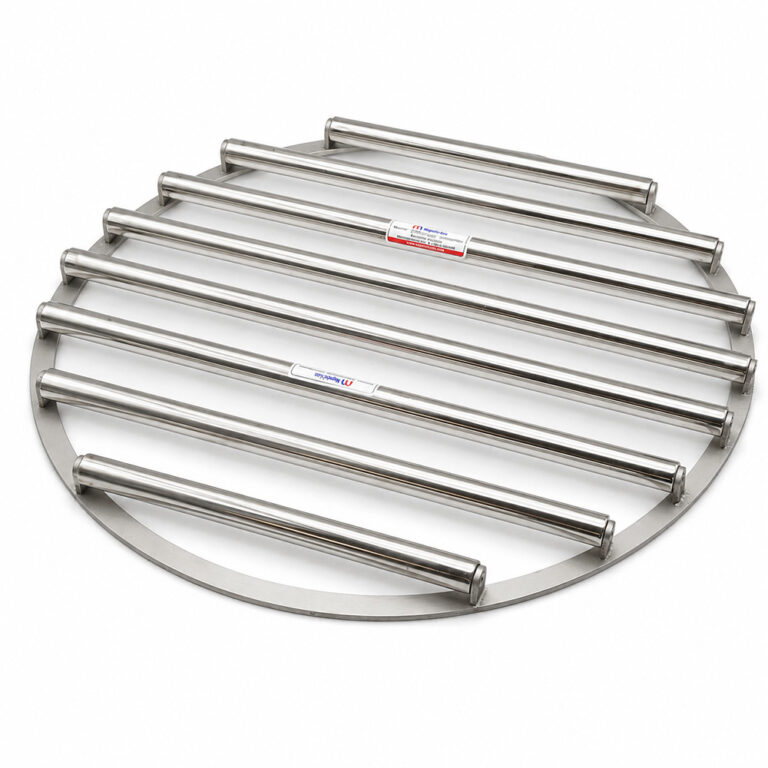
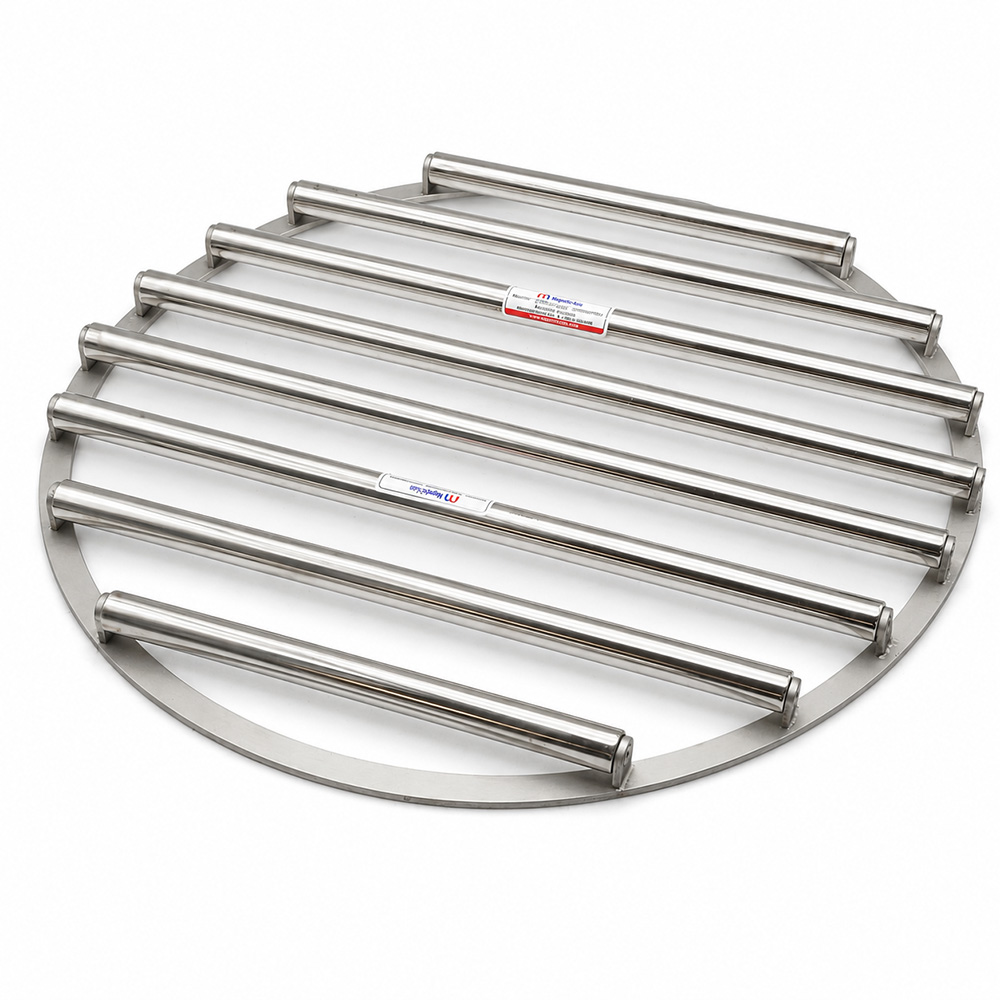
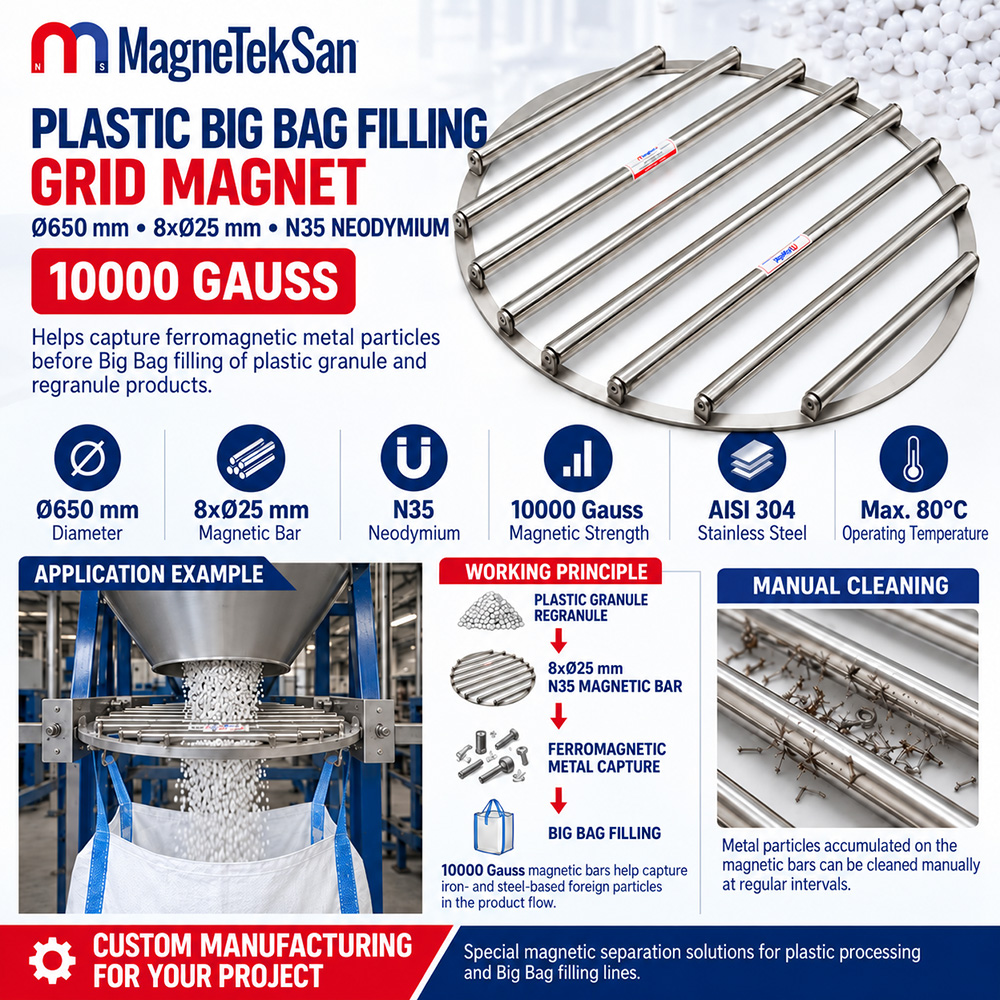
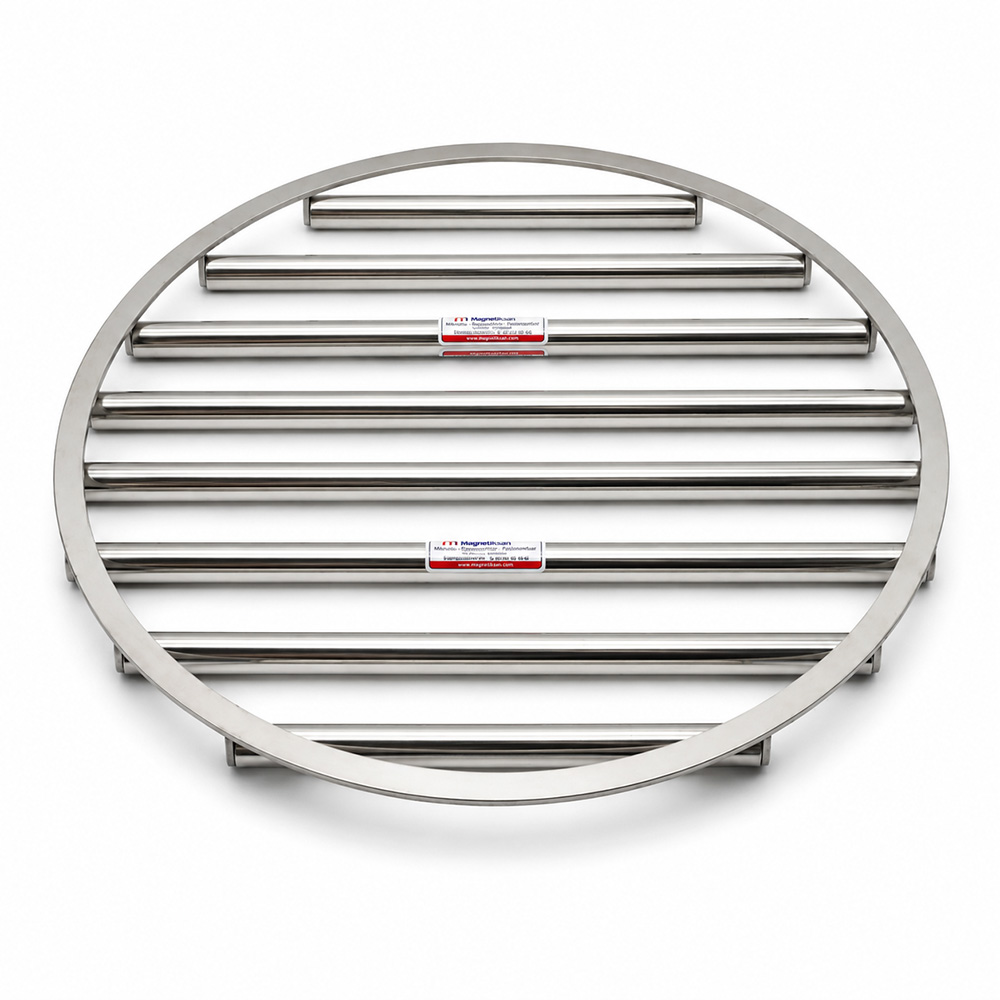
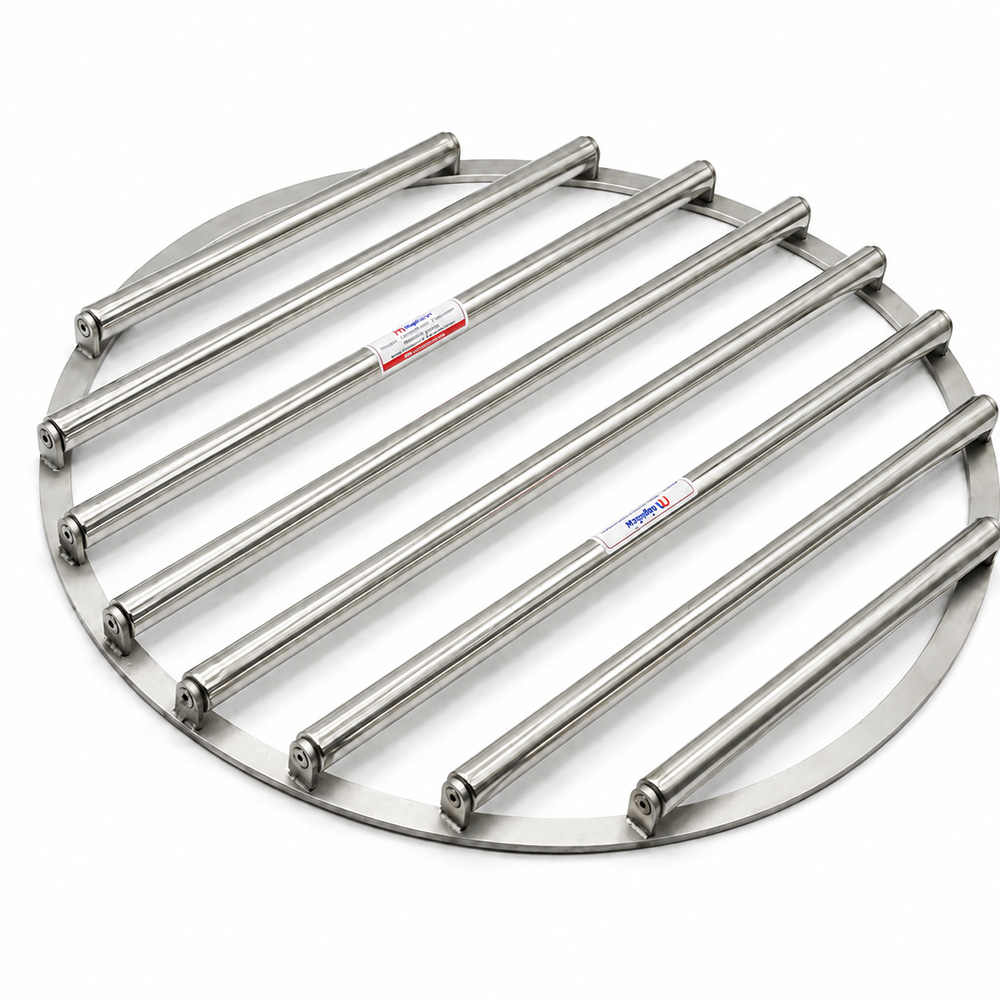
The Ø650 mm Round Grid Magnet is designed to help separate ferromagnetic metal contamination from plastic granules, regranulates and similar free-flowing materials before Big Bag filling. It features 8xØ25 mm N35 neodymium magnetic bars with a specified magnetic field strength of 10000 Gauss, an AISI 304 stainless steel structure and a maximum operating temperature of 80°C.
| Technical Specification | Value |
|---|---|
| Product Type | Round Neodymium Grid Magnet |
| Main Application | Plastic Big Bag Filling Line |
| Outer Diameter | Ø650 mm |
| Number of Magnetic Bars | 8 |
| Magnetic Bar Diameter | Ø25 mm |
| Magnet Grade | N35 Neodymium |
| Magnetic Field Strength | 10000 Gauss |
| Material | AISI 304 Stainless Steel |
| Maximum Operating Temperature | 80°C |
| Installation Point | Big Bag Filling Hopper / Product Transfer Point |
| Cleaning | Manual |
| Target Material | Ferromagnetic Iron / Steel |
| Electrical Power Required | No |
Extra Information
What Is a Round Grid Magnet?
A Round Grid Magnet is an industrial magnetic separation system designed to help capture ferromagnetic metal contamination from products passing through hoppers, chutes, product transfer points or filling systems.
In this model, the Ø650 mm round frame contains 8 magnetic bars with a diameter of Ø25 mm. As the plastic material passes between the magnetic bars, suitable ferromagnetic contaminants can be attracted to and retained on the magnetic surfaces.
Why Is a Grid Magnet Used in a Plastic Big Bag Filling Line?
During the production, conveying, storage and filling of plastic granules or regranulates, unwanted ferromagnetic particles may enter the product stream from processing equipment, wear components, maintenance activities or other parts of the production system.
Installing a grid magnet before Big Bag filling provides an additional magnetic control point before the finished plastic material enters the Big Bag.
Where Is the Magnet Installed in the Process?
The main installation point is the product flow immediately before Big Bag filling.
A typical process can be:
Plastic Granule / Regranulate Production
↓
Finished Product Silo / Hopper
↓
Big Bag Filling Hopper
↓
Ø650 mm Round Grid Magnet
↓
8xØ25 mm N35 Neodymium Magnetic Bars
↓
Ferromagnetic Metal Separation
↓
Big Bag Filling
The exact installation point should be selected according to the actual equipment geometry and product flow.
What Is the Outer Diameter of the Grid Magnet?
The outer diameter is:
Ø650 mm
The round design provides a large product passage area and is intended for installation at a suitable hopper or product transfer point in the Big Bag filling system.
How Many Magnetic Bars Does It Have?
The grid contains:
8 magnetic bars
Each magnetic bar has a diameter of:
Ø25 mm
The bars are arranged across the round frame to help expose the flowing plastic material to the magnetic separation area.
What Type of Magnets Are Used?
The magnetic bars use:
N35 Neodymium Magnets
Neodymium permanent magnets can generate a strong magnetic field without electrical power and are widely used in industrial magnetic separation equipment.
What Is the Magnetic Field Strength?
The specified magnetic field strength is:
10000 Gauss
This magnetic field helps attract suitable ferromagnetic particles when they pass sufficiently close to the magnetic bar surfaces.
Does 10000 Gauss Mean That Every Metal Particle Will Be Captured?
No.
The Gauss value is an important magnetic field parameter, but it does not by itself guarantee that every metal particle passing through the system will be captured.
Actual separation performance depends on factors including:
- magnetic properties of the contaminant
- particle size
- particle geometry
- distance from the magnetic surface
- product flow rate
- product layer thickness
- installation position
- distribution of the product across the magnetic bars
For critical applications, performance should be evaluated under actual process conditions.
What Types of Metal Contamination Can It Capture?
The system is primarily intended for ferromagnetic iron and suitable steel contamination.
Depending on the contaminant properties and process conditions, the magnetic bars may help capture:
- iron particles
- steel fragments
- screw or bolt fragments
- pieces of ferromagnetic wire
- ferromagnetic metal chips
- fine iron contamination
- small ferromagnetic particles originating from production equipment
The actual capture performance depends on the magnetic and physical properties of the contaminant.
Does the Magnet Capture Plastic Granules?
No.
Plastic granules and regranulates are not ferromagnetic. The plastic material passes between the magnetic bars while suitable ferromagnetic contaminants are attracted toward the magnetic surfaces.
The purpose of the magnet is therefore to separate suitable magnetic contamination from the plastic product stream, not to attract the plastic itself.
Can It Capture Aluminum?
No, not through conventional permanent magnetic separation.
Aluminum is not ferromagnetic and therefore should not be considered a target material for this type of grid magnet.
Can It Capture Copper or Brass?
Normally, no.
Copper and brass are not ferromagnetic materials and are not normally captured by conventional permanent magnetic grid separators.
Can It Capture Stainless Steel?
It depends on the stainless steel grade and its metallurgical condition.
Some stainless steels can exhibit a significant magnetic response, while certain austenitic stainless steels may have very low magnetic attraction.
It should therefore not be assumed that every stainless steel particle will be captured. For critical applications, the actual contaminant should be tested.
Why Are 8xØ25 mm Magnetic Bars Used?
The 8 magnetic bars are distributed across the Ø650 mm round frame to create multiple magnetic collection surfaces in the product flow.
As the plastic granules or regranulates pass between the bars, potential ferromagnetic contaminants are brought closer to the magnetic surfaces.
The actual separation efficiency still depends on the product flow characteristics, contaminant properties and installation geometry.
What Does N35 Mean?
N35 identifies the grade of the neodymium magnetic material used in the magnetic system.
N35 is not the same as the Gauss value.
For this product:
Magnet Grade: N35 Neodymium
Specified Magnetic Field Strength: 10000 Gauss
These are separate technical characteristics.
What Is the Grid Magnet Made From?
The grid structure is manufactured from:
AISI 304 Stainless Steel
AISI 304 is widely used in industrial process equipment because of its corrosion resistance, cleanable surface and mechanical durability.
Why Is AISI 304 Stainless Steel Used?
AISI 304 stainless steel offers several useful characteristics for industrial process equipment, including:
- corrosion resistance
- cleanable surfaces
- mechanical durability
- suitability for many industrial environments
The suitability of the complete system should still be assessed according to the processed material, operating environment and cleaning requirements.
What Is the Maximum Operating Temperature?
The specified maximum operating temperature for this model is:
80°C
If the product or surrounding process temperature may exceed 80°C, the operating conditions should be evaluated before using the standard configuration.
Does the Round Grid Magnet Require Electricity?
No.
The system uses permanent N35 neodymium magnets, so electrical power is not required to generate the magnetic field.
It does not require a coil, power supply or electrical control panel for normal magnetic operation.
How Does the Round Grid Magnet Work?
The operating principle is straightforward:
Plastic product enters the filling area
↓
Product reaches the Ø650 mm grid magnet
↓
Material passes between 8xØ25 mm magnetic bars
↓
Suitable ferromagnetic particles are affected by the magnetic field
↓
Particles are retained on the magnetic bar surfaces
↓
Plastic material continues toward the Big Bag
The captured metal contamination is subsequently removed from the magnetic surfaces during cleaning.
Where Can the Grid Magnet Be Installed?
Depending on the design of the production system, the magnet can be positioned at suitable locations such as:
- Big Bag filling hopper
- product hopper
- product discharge point
- gravity-flow section
- suitable product transfer point before Big Bag filling
The primary objective is to ensure that the product passes effectively through the magnetic bar area.
How Is the Grid Magnet Cleaned?
The production system should first be stopped and placed in a safe condition.
Ferromagnetic particles accumulated on the magnetic bar surfaces can then be removed manually according to the plant’s operating and maintenance procedures.
The neodymium magnets remain strongly magnetic even when the production line is stopped, so appropriate handling precautions are required.
How Often Should the Magnetic Bars Be Cleaned?
There is no universal cleaning interval suitable for every application.
The appropriate cleaning frequency depends on factors such as:
- amount of ferromagnetic contamination
- production throughput
- product flow rate
- operating hours
- process conditions
- internal quality requirements
The correct interval should be established through regular inspection under actual operating conditions.
Why Is Regular Cleaning Important?
Accumulated ferromagnetic material can cover part of the effective magnetic surface.
Excessive buildup may make it more difficult for newly arriving contaminants to approach the magnetic surface directly.
For this reason, an appropriate inspection and cleaning schedule should be established for the actual process.
Does Product Flow Rate Affect Magnetic Separation?
Yes.
If the product passes through the magnetic zone too quickly, the available interaction time between a ferromagnetic particle and the magnetic field may decrease.
The flow characteristics of the plastic material should therefore be considered when determining the installation position and magnetic configuration.
Does Distance From the Magnetic Bar Affect Capture Performance?
Yes.
Magnetic field strength decreases with increasing distance from the magnetic surface.
The arrangement of the 8 magnetic bars is therefore important because the product stream should pass through the effective magnetic area and potential contaminants should approach the magnetic surfaces sufficiently closely.
Can It Be Used for Plastic Granules?
Yes.
This product is specifically intended for applications involving plastic materials such as plastic granules and regranulates in Big Bag filling systems.
Can It Be Used for Other Free-Flowing Products?
Potentially, yes.
A round grid magnet can also be considered for other dry, free-flowing materials when ferromagnetic contamination needs to be controlled.
Suitability should be evaluated according to:
- product flowability
- particle size
- bulk density
- moisture level
- bridging or clogging tendency
- operating temperature
- required throughput
- installation geometry
Can It Be Installed Directly Before Big Bag Filling?
Yes.
This is the primary intended application for this model. Installing the magnetic grid at a suitable point immediately before filling can create an additional ferromagnetic metal control stage before the material enters the Big Bag.
Does It Replace All Foreign-Body Detection Systems?
No.
A grid magnet is primarily designed to separate suitable ferromagnetic contamination.
It does not replace systems intended to detect or remove non-ferromagnetic foreign materials. Depending on the process and quality requirements, additional inspection or separation technologies may be necessary.
What Maintenance Is Required?
Periodic inspection should include:
- magnetic bar surfaces
- round supporting frame
- welds and mechanical connections
- accumulation of captured metal
- physical damage to magnetic bars
- installation and support points
- condition of the stainless steel surfaces
Cleaning and inspection intervals should be established according to actual production conditions.
Can the Round Grid Magnet Be Manufactured in Custom Sizes?
Yes.
Depending on the application, the magnetic separator can be customized in terms of:
- outer diameter
- number of magnetic bars
- magnetic bar diameter
- supporting frame geometry
- magnet grade
- magnetic configuration
- stainless steel construction
- operating temperature requirements
- installation dimensions
The final configuration can therefore be adapted to the Big Bag filling equipment and the characteristics of the processed product.