Product Information
Extra Information
Product Information
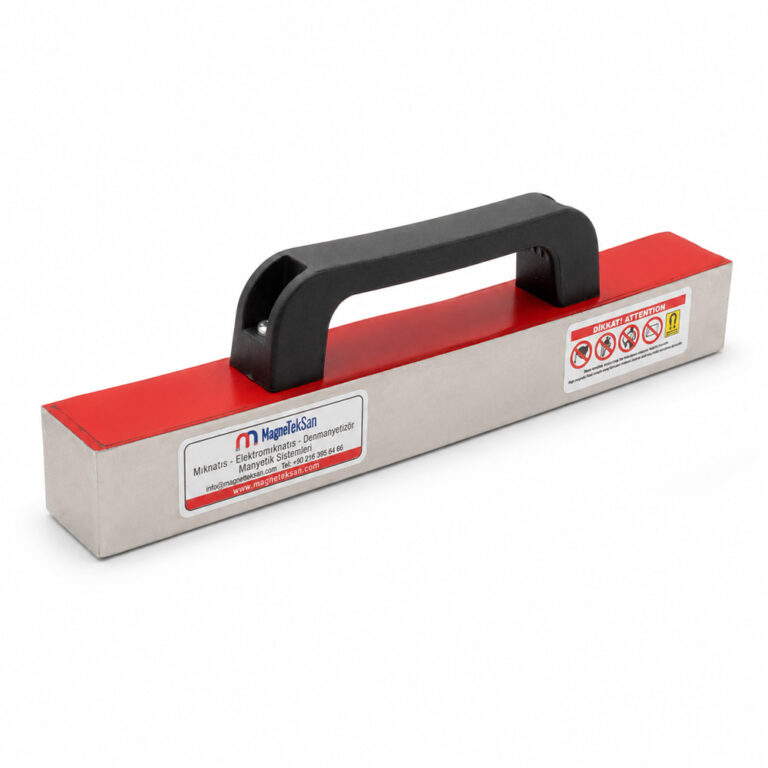
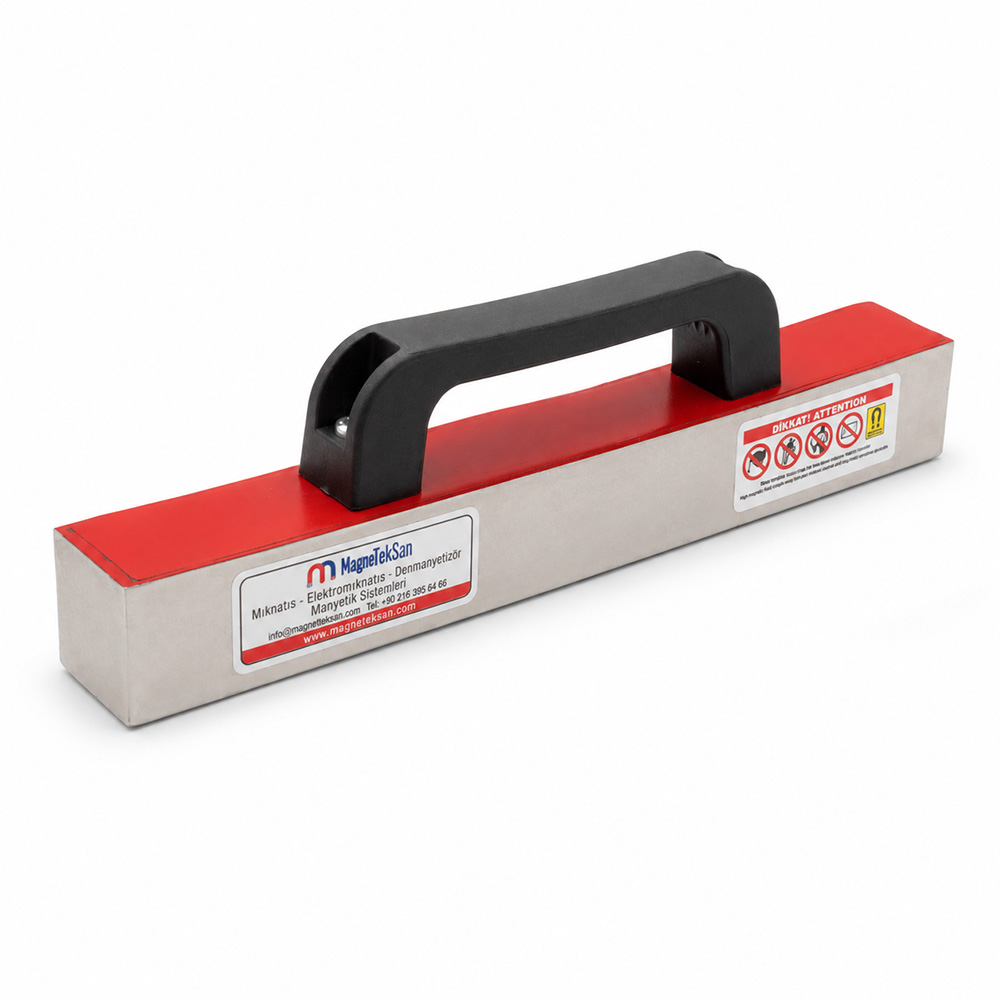
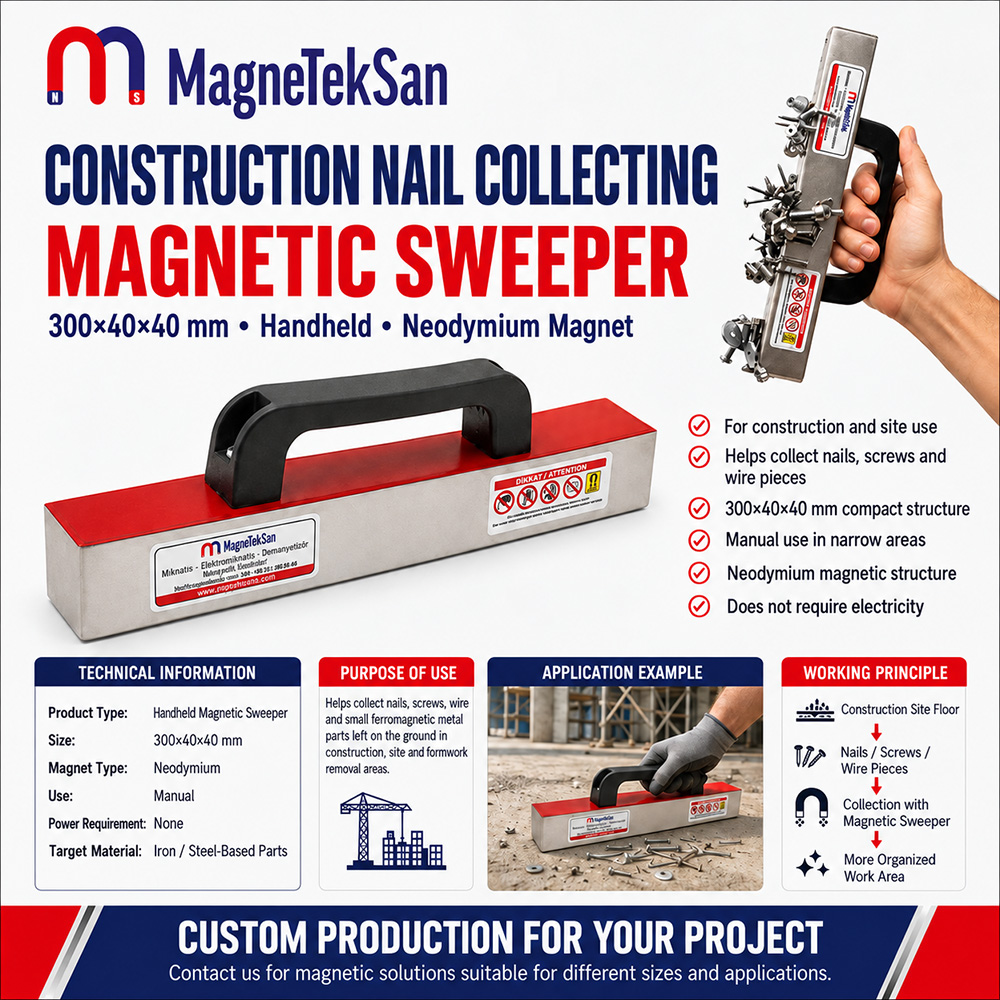
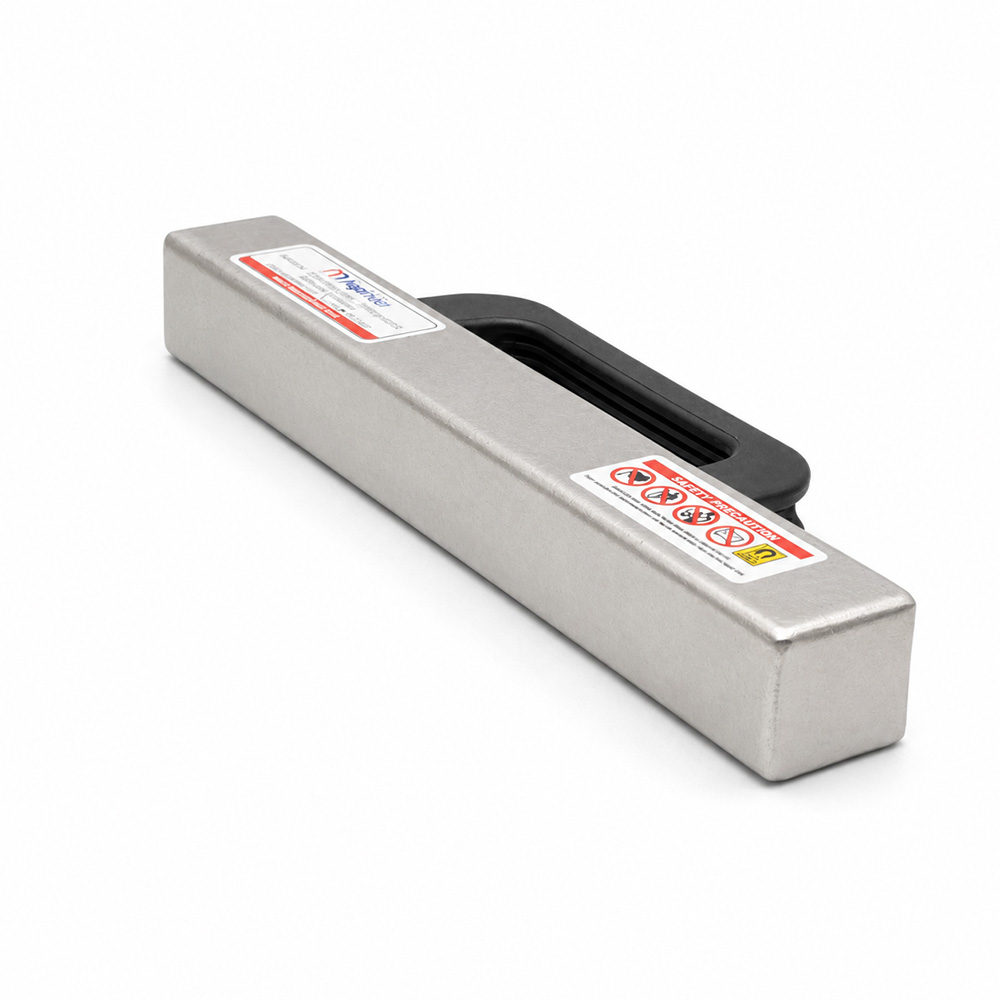
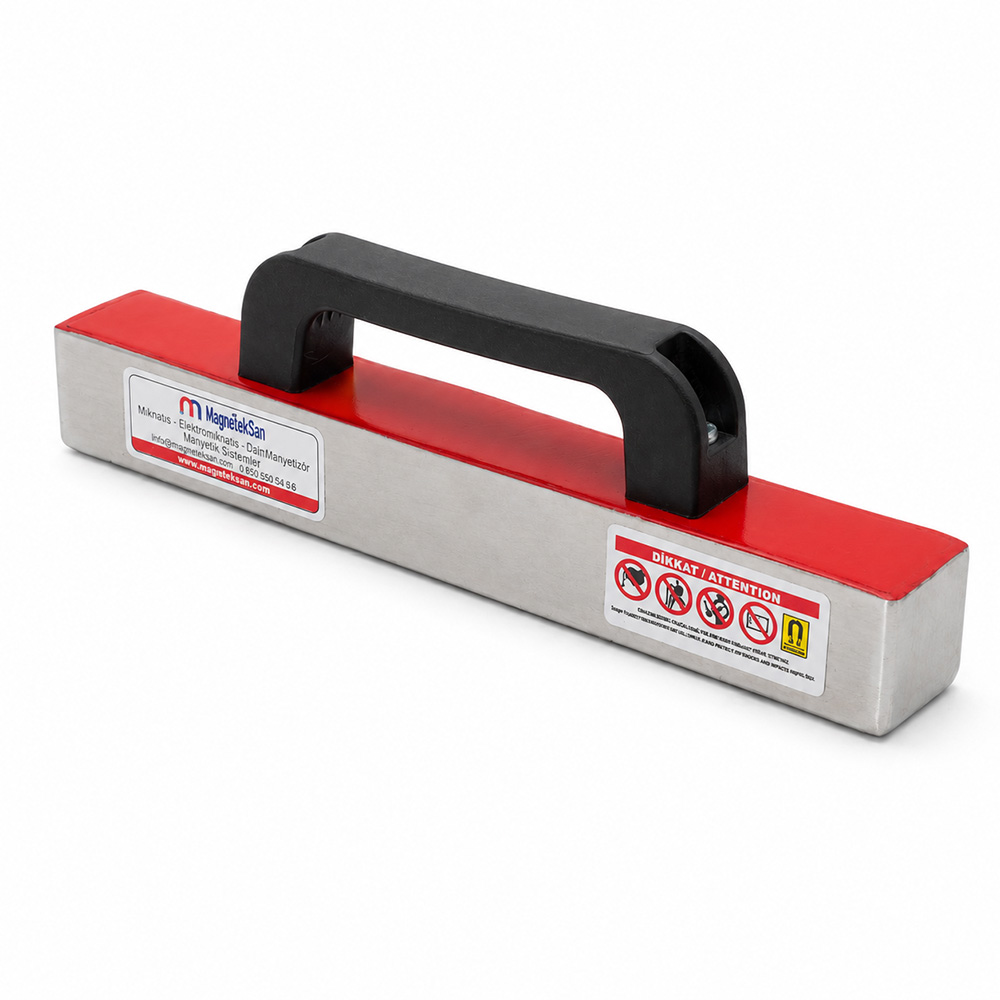
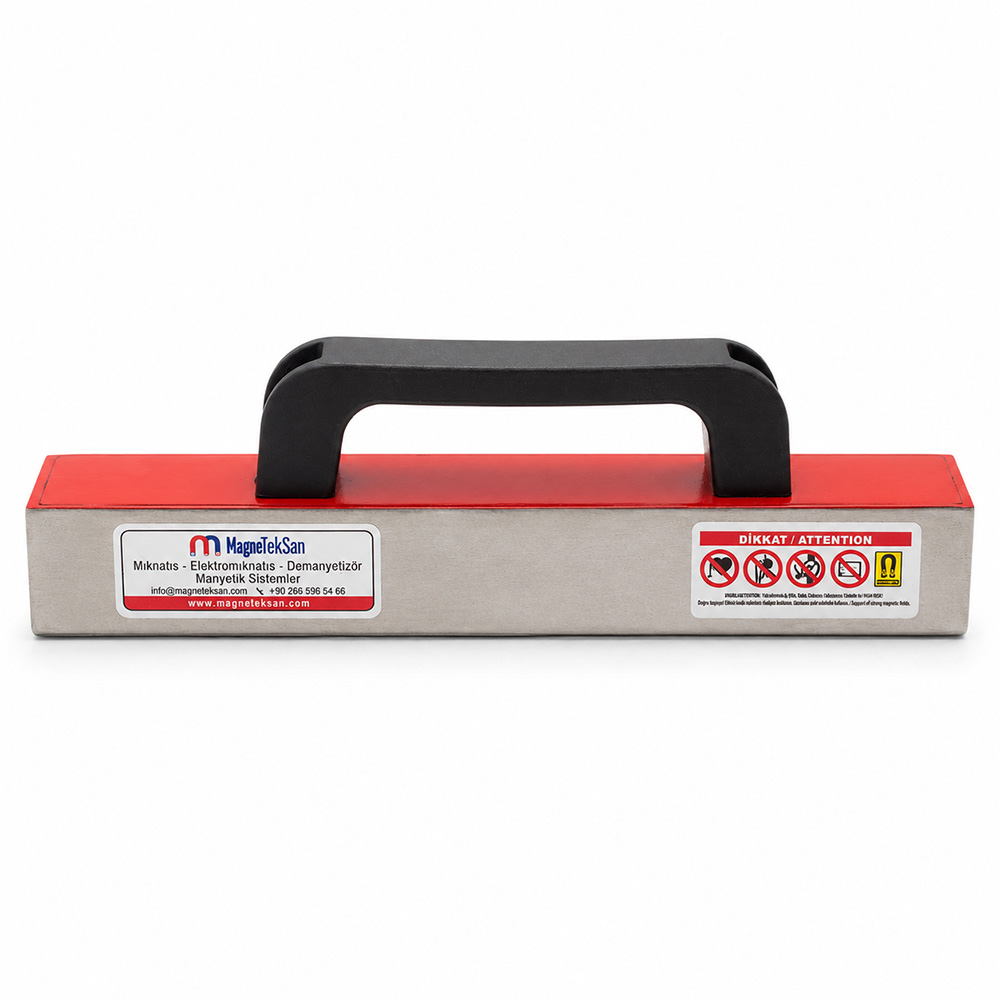
The 300x40x40 mm Neodymium Magnetic Sweeper is a compact handheld tool designed to help collect loose nails, screws, steel wire and other small ferromagnetic metal debris from construction and renovation areas. Its permanent neodymium magnetic system operates without electricity or batteries, making it practical for local cleaning after formwork removal and other site work.
| Technical Specification | Value |
|---|---|
| Product Type | Handheld Magnetic Sweeper |
| Main Application | Construction Site Nail and Metal Collection |
| Dimensions | 300x40x40 mm |
| Magnet Type | Neodymium |
| Operation | Manual |
| Target Material | Ferromagnetic Iron / Steel |
| Typical Collected Parts | Nails, Screws, Steel Wire and Small Steel Parts |
| Electrical Power Required | No |
Extra Information
What is a Construction Nail Collection Magnetic Sweeper?
A Magnetic Sweeper is a manual magnetic tool designed to help collect loose ferromagnetic metal objects from construction sites, workshops and other working areas.
During construction, formwork, renovation, roofing and installation work, small metal parts can remain on floors and other surfaces. Typical examples include nails, screws, nuts, washers, binding-wire offcuts and small iron or steel fragments.
Instead of locating and picking up every suitable metal object individually, the magnetic sweeper allows the operator to bring a permanent magnetic surface close to the working area and collect ferromagnetic debris more conveniently.
What is the main application of this magnetic sweeper?
The main application is the collection of loose nails and other small ferromagnetic metal debris at construction sites.
It can be particularly useful after:
- formwork installation and removal
- renovation work
- carpentry work
- roofing work
- mechanical installation
- construction assembly
- temporary site operations
- general site maintenance
The product is intended as an auxiliary metal-collection tool rather than a replacement for general construction-site cleaning.
Can it be used after concrete formwork removal?
Yes.
One of the main applications of this product is collecting loose nails, screws and binding-wire fragments that remain in the working area after reinforced-concrete formwork has been dismantled.
A typical process is:
Formwork Removal
↓
Loose Nails / Screws / Steel Wire Remain on the Ground
↓
300x40x40 mm Magnetic Sweeper is Used
↓
Ferromagnetic Parts are Magnetically Collected
↓
Collected Metal is Removed to a Suitable Disposal Area
This makes the product useful for local metal control around formwork areas.
What are the dimensions of the magnetic sweeper?
The magnetic body measures:
Length: 300 mm
Width: 40 mm
Height: 40 mm
Its compact dimensions make it particularly suitable for local areas where larger wheeled magnetic sweepers may not be practical.
Is this a handheld magnetic sweeper?
Yes.
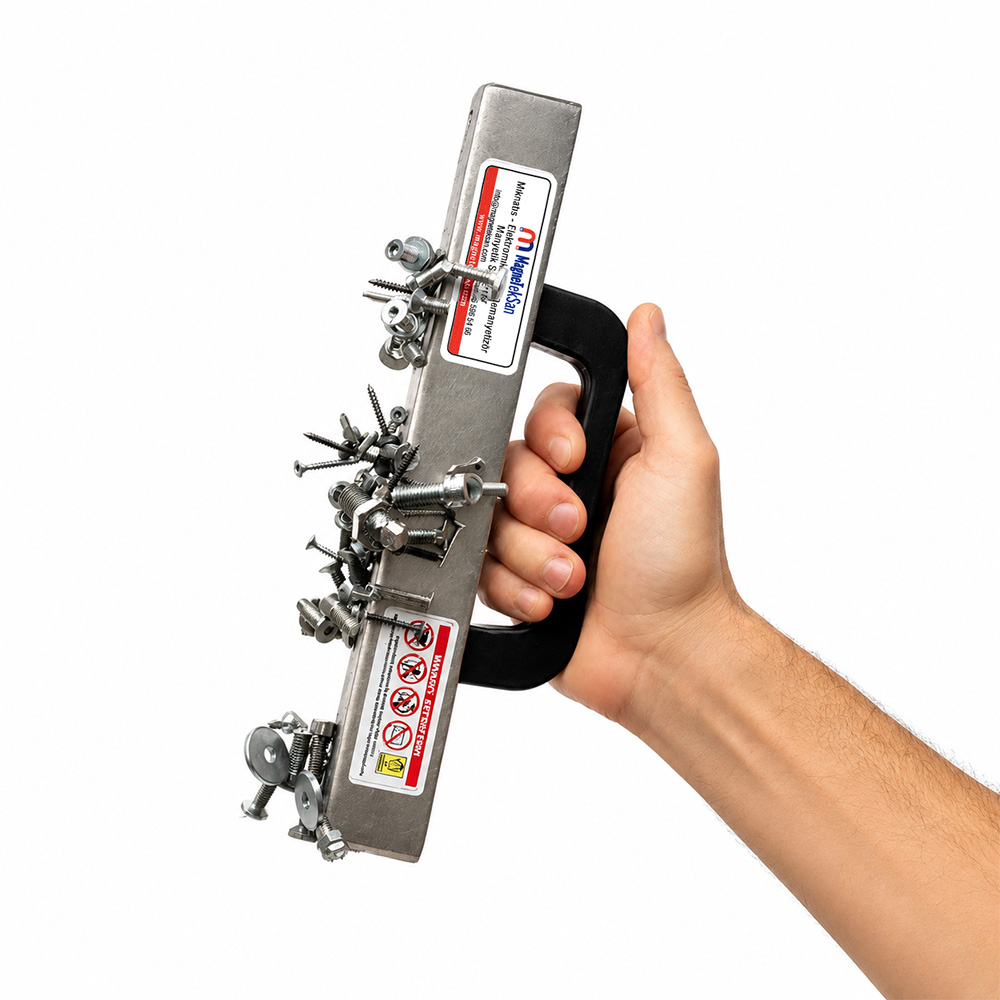
This model is designed for manual handheld operation.
The operator can move the magnetic sweeper directly over or close to areas where nails and other small ferromagnetic objects may be present.
The handheld design also allows specific areas to be checked more precisely than with a large floor-width magnetic sweeper.
Can it be used in narrow areas?
Yes.
The compact 300 mm magnetic body can be useful in locations where larger magnetic sweepers cannot easily operate.
Typical areas may include:
- along walls
- around columns
- beside formwork
- underneath accessible machinery or equipment
- around stored materials
- narrow passage areas
- local construction work zones
Actual accessibility will depend on the physical arrangement of the site.
How does the magnetic sweeper collect nails?
Permanent magnets inside the product generate a magnetic field.
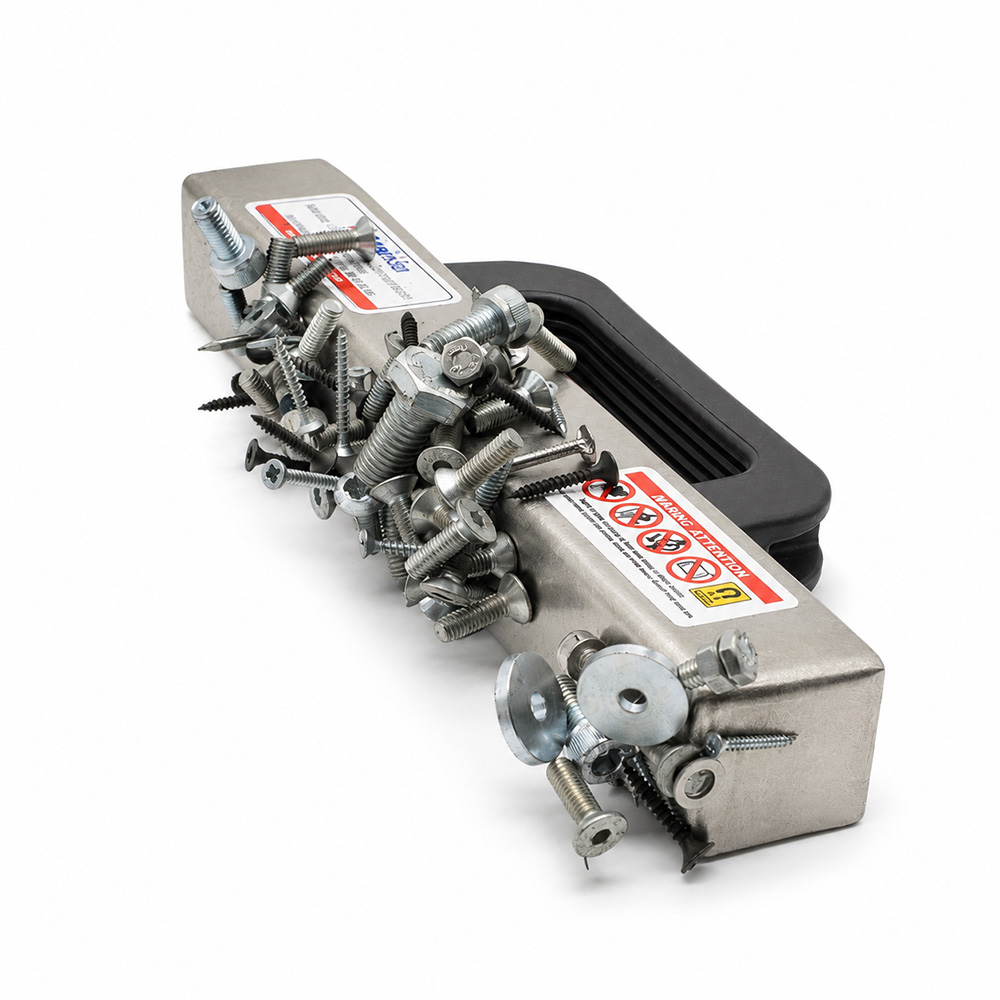
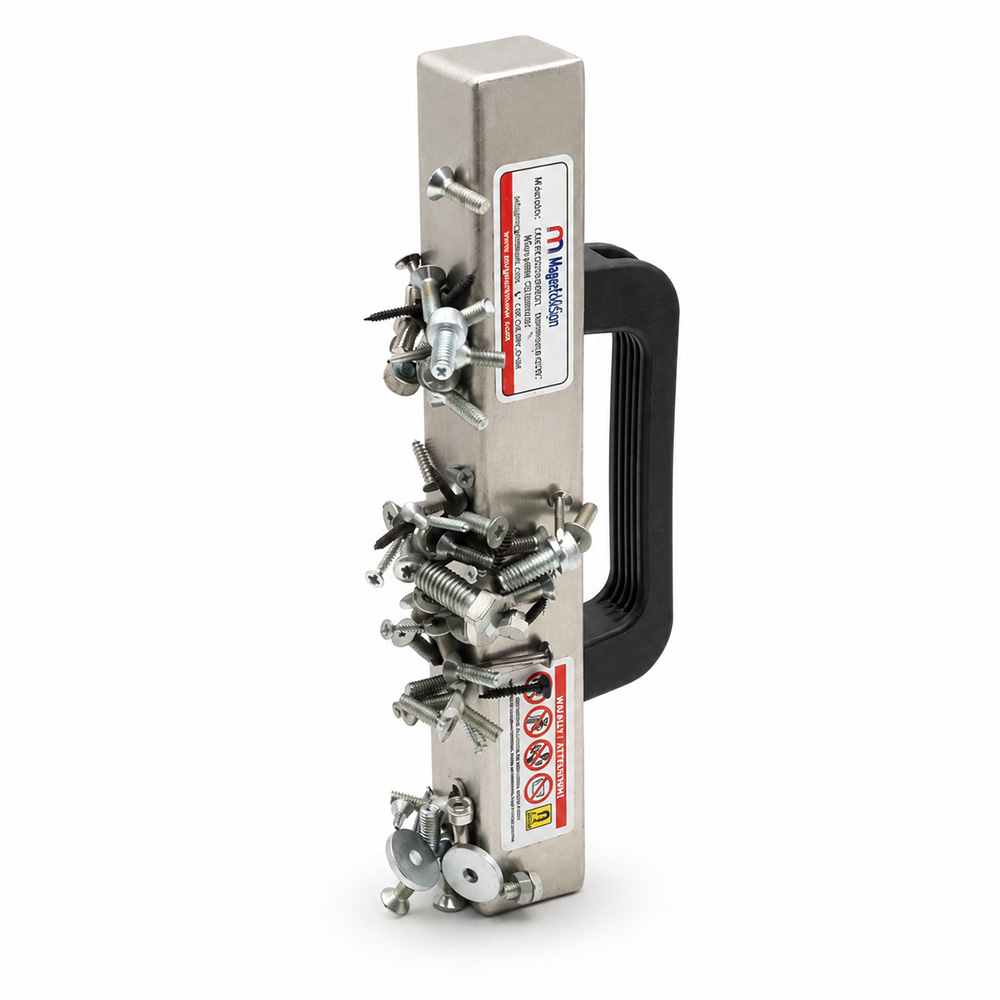
When a suitable ferromagnetic nail or other steel object is brought sufficiently close to the magnetic surface, magnetic attraction causes the object to attach to the sweeper.
The operator can then move the collected metal to an appropriate disposal or collection point.
Does it use neodymium magnets?
Yes.
This 300x40x40 mm magnetic sweeper uses neodymium magnets.
Neodymium provides a compact permanent magnetic system without requiring electrical power for normal operation.
Does the magnetic sweeper require electricity?
No.
The product operates according to the permanent magnet principle.
It does not require:
- mains electricity
- a battery
- an external power supply
- an electromagnetic coil
The magnetic field is continuously present.
How far away can it pick up a nail?
A fixed guaranteed pickup distance should not be assumed.
The effective attraction and pickup distance depend on several factors, including:
- nail size
- amount of ferromagnetic material
- steel type
- part thickness
- part geometry
- orientation of the metal
- distance between the metal and magnetic surface
- material located between the magnet and the metal
The strongest magnetic effect is generally achieved when the ferromagnetic object is close to the magnetic surface.
Can it collect thin nails?
Ferromagnetic thin steel nails can be attracted by the magnetic field.
However, the magnetic response depends on the amount of ferromagnetic material in the part as well as its size, geometry and distance from the magnet.
For this reason, pickup performance should be evaluated under the actual working conditions rather than from nail diameter alone.
Can it collect screws and bolts?
Yes, provided they are made from a suitable ferromagnetic iron or steel material.
The magnetic sweeper can therefore be used for suitable:
- screws
- bolts
- nuts
- washers
- small steel fasteners
Magnetic response varies according to the material grade and geometry of the component.
Can it collect steel binding wire?
Yes, if the binding wire is made from ferromagnetic steel.
Small pieces of cut binding wire can remain around formwork and reinforced-concrete working areas. When these pieces are sufficiently close to the magnetic surface, they can be attracted and collected.
Does it remove nails embedded in wood?
No.
This product is not a nail extraction tool.
Its primary purpose is to collect loose ferromagnetic nails and other metal pieces lying on the floor or another accessible working surface.
A nail mechanically embedded in timber, concrete or another material should be removed with an appropriate mechanical extraction tool.
Can it be used on concrete floors?
Yes.
The magnetic sweeper can be used to collect loose ferromagnetic nails, screws, steel-wire pieces and similar objects from accessible concrete construction floors.
The magnetic body should be brought sufficiently close to the metal for effective attraction.
Can it be used on soil?
Potentially, provided the metal object is sufficiently close to the surface and within the effective magnetic range.
If a nail is buried deeply beneath soil, the additional distance between the magnet and the nail reduces magnetic attraction.
The product should therefore not be treated as a deep underground metal detector.
Can it collect nails from sand or gravel?
Ferromagnetic objects located close to the surface may be attracted.
However, sand, gravel or other material between the magnet and the metal increases the working distance and can reduce pickup performance.
Performance therefore depends strongly on how deeply the metal is buried and the physical conditions of the surface.
Is it a metal detector?
No.
A magnetic sweeper and a metal detector operate according to different principles.
This product physically attracts suitable ferromagnetic metal objects when they enter its effective magnetic field. It is not designed to electronically detect or indicate deeply buried metal.
Does the magnetic sweeper actually sweep dust and dirt?
No.
The term “magnetic sweeper” refers to the magnetic collection of metal debris.
The product does not function like a conventional brush or vacuum cleaner and is not intended to collect:
- dust
- sand
- wood chips
- paper
- plastic
- ordinary non-magnetic construction debris
Its purpose is to attract suitable ferromagnetic metal objects.
Can it collect aluminium?
No.
Aluminium is not ferromagnetic and is not attracted like iron or conventional ferromagnetic steel.
Therefore, this magnetic sweeper is not suitable for collecting aluminium debris by conventional magnetic attraction.
Can it collect copper wire?
No.
Pure copper is not ferromagnetic.
Copper electrical-wire fragments therefore cannot normally be collected with this permanent magnetic sweeper.
Can it collect stainless steel?
It depends on the stainless-steel grade and its metallurgical condition.
Some stainless steels exhibit magnetic properties, while certain austenitic stainless-steel grades may have very weak magnetic response.
For this reason, it should not be assumed that all stainless-steel parts can be collected. If stainless-steel pickup is important, the actual material should be tested.
Can it be used to lift reinforcing bar or heavy steel?
No.
This product is not designed as a lifting magnet for:
- reinforcing bar
- heavy steel profiles
- large steel plates
- heavy scrap
- suspended loads
Its intended application is the collection of relatively small loose ferromagnetic metal debris from working areas.
Why is nail collection important on construction sites?
Loose nails, screws and sharp steel fragments left on a construction site can create unwanted hazards for people, vehicles and equipment.
Such debris can come into contact with:
- footwear
- trolley and equipment wheels
- vehicle tyres
- other site equipment
Regular inspection and collection of loose metal debris can therefore help maintain a cleaner working area.
Can using a magnetic sweeper prevent tyre punctures?
Collecting loose nails and sharp ferromagnetic objects can help reduce the chance of tyres coming into contact with these objects.
However, using a magnetic sweeper should not be interpreted as a guarantee that tyre damage or punctures will be completely prevented.
It is one component of a broader site-cleaning and inspection process.
Is it suitable for roofing work?
It can be useful where loose ferromagnetic nails, screws and similar steel fasteners need to be collected after roofing work.
Whether it is appropriate for a particular roof or working surface depends on access, safe working conditions and the construction of the surface.
Normal working-at-height safety procedures remain essential.
Can it be used in workshops?
Yes.
Although the main application is construction-site nail collection, the product can also be considered for local collection of small ferromagnetic metal debris in suitable:
- workshops
- fabrication areas
- maintenance areas
- warehouses
- assembly areas
- temporary working zones
The surface and operating conditions should be appropriate for manual magnetic collection.
How are collected nails removed from the magnet?
Collected metal parts should be removed from the magnetic surface in a controlled manner.
Because nails, screws and wire fragments may have sharp edges, appropriate hand protection should be used during cleaning.
For versions without a dedicated release mechanism, the collected metal is removed manually.
Does the magnetic field switch off?
No.
This model uses permanent neodymium magnets, so its magnetic field is continuously present.
Care should therefore be taken when the product is stored, transported or used near ferromagnetic tools and steel objects.
What affects the actual pickup performance?
Actual collection performance can vary according to:
- metal type
- ferromagnetic properties
- size of the object
- metal mass
- thickness
- shape and geometry
- orientation of the object
- distance from the magnetic surface
- material between the magnet and object
- movement speed during manual use
For this reason, a single universal pickup distance or pickup weight should not be assumed for every metal object.
Does it collect non-magnetic construction waste?
No.
The magnetic sweeper is not intended to collect non-ferromagnetic materials such as:
- plastic
- wood
- glass
- stone
- concrete fragments
- aluminium
- copper
General construction debris should be removed using appropriate conventional cleaning equipment.
Does it replace normal construction-site cleaning?
No.
The magnetic sweeper is an auxiliary tool specifically intended to help collect suitable ferromagnetic metal debris.
It does not replace general sweeping, vacuuming, waste collection or other construction-site housekeeping procedures.
It is most useful as an additional metal-control step after normal site cleaning.
Does the product require maintenance?
The magnetic surface and body should be inspected periodically.
The operator should check for:
- accumulated metal debris
- physical damage
- contamination on the magnetic surface
- condition of the body
- condition of the handle or holding points
- sharp objects remaining attached after use
Keeping the working surface free from excessive accumulated metal helps maintain practical collection performance.
What safety precautions should be considered?
Neodymium magnets can strongly attract nearby ferromagnetic objects.
Hands and fingers should be kept away from potential pinch points between the magnetic sweeper and larger steel objects.
Sharp collected items such as nails, screws and cut wire should be handled with suitable protective gloves.
The product should also be stored appropriately to prevent unintended attraction to nearby steel tools or equipment.
Can magnetic sweepers be manufactured in different sizes?
Yes.
Depending on the application, magnetic sweeper designs can be evaluated with different:
- working widths
- body dimensions
- magnetic configurations
- handle designs
- manual or wheeled structures
The most suitable configuration depends on the working area, type and quantity of metal debris and the required method of operation.