Product Information
Extra Information
Product Information
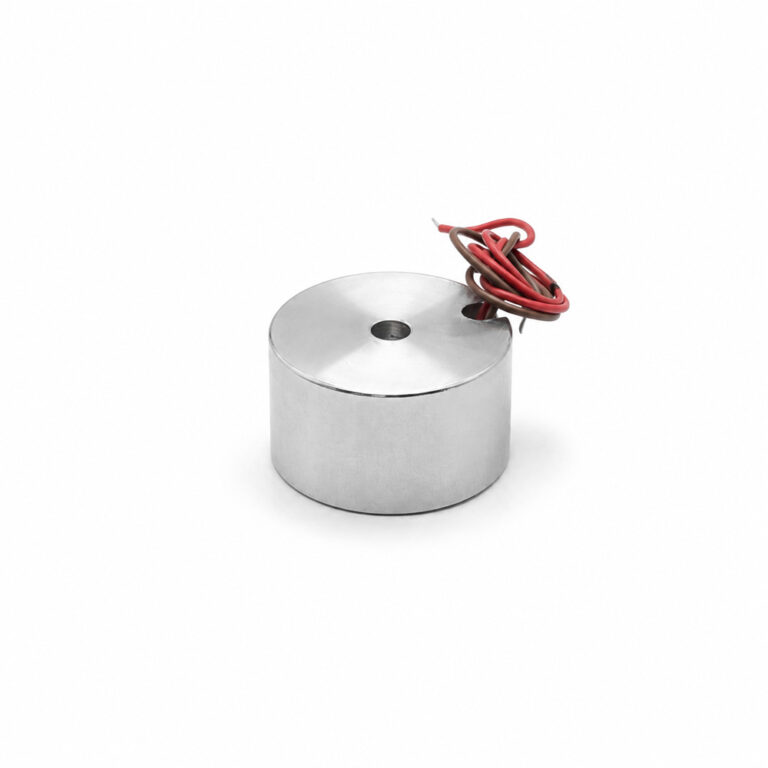
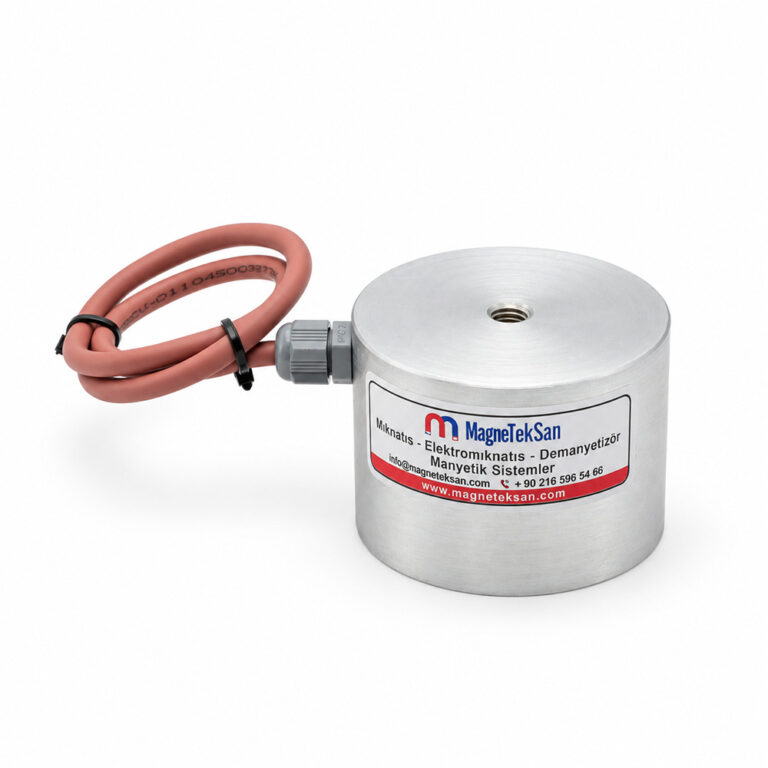
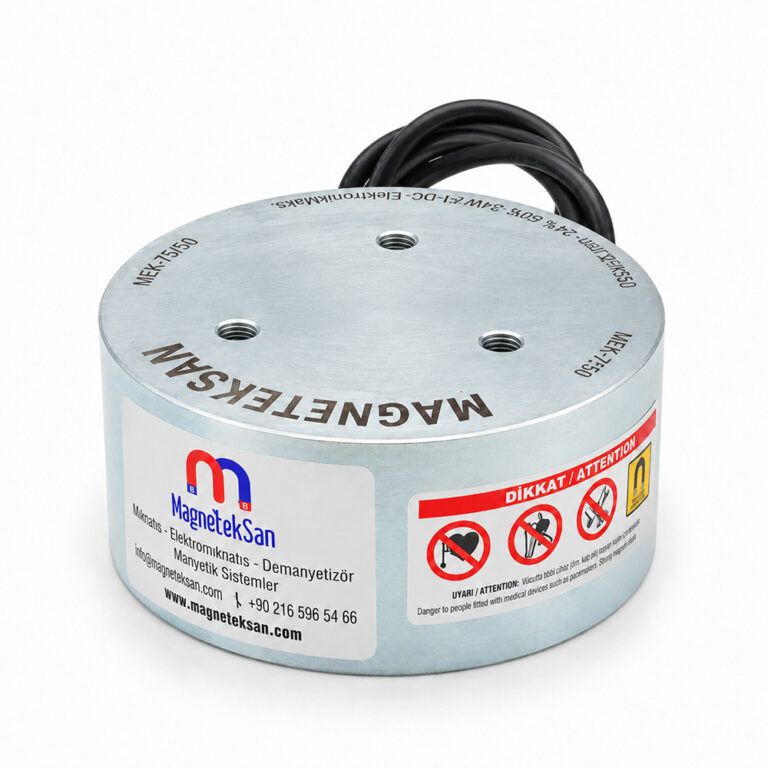
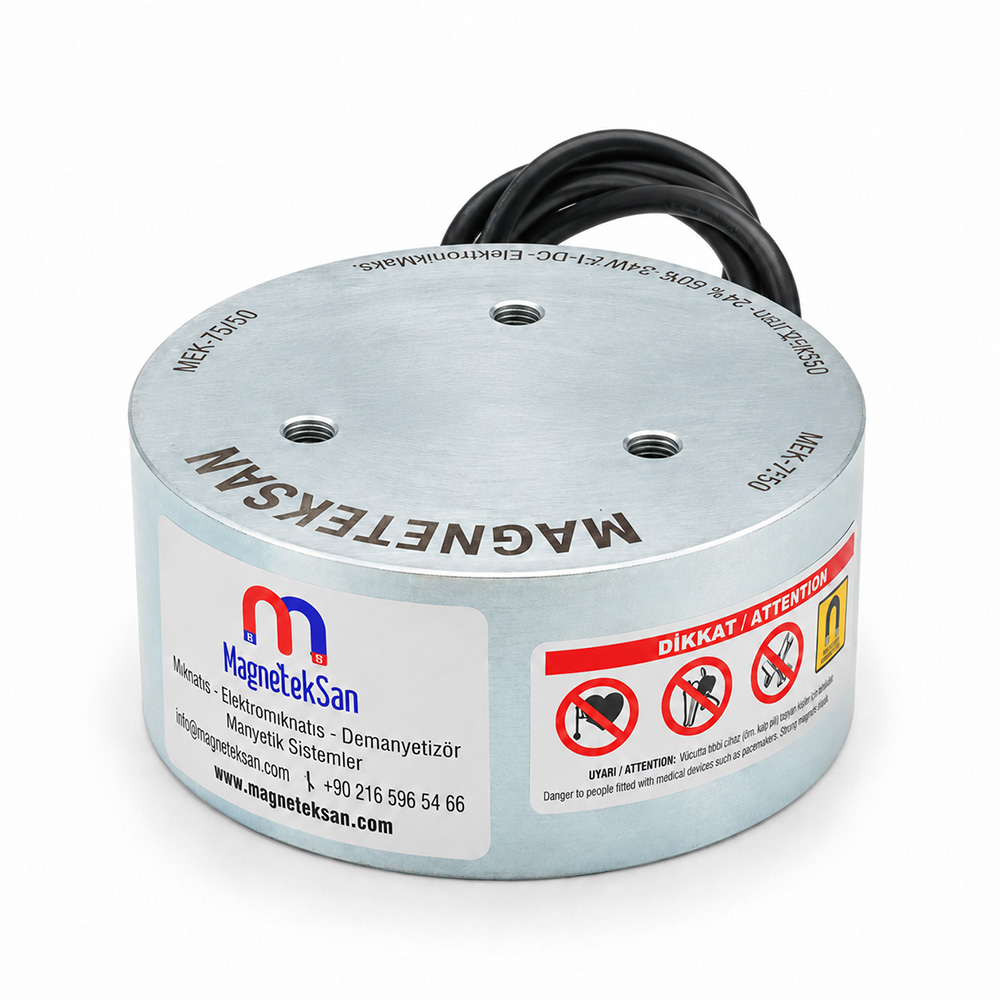
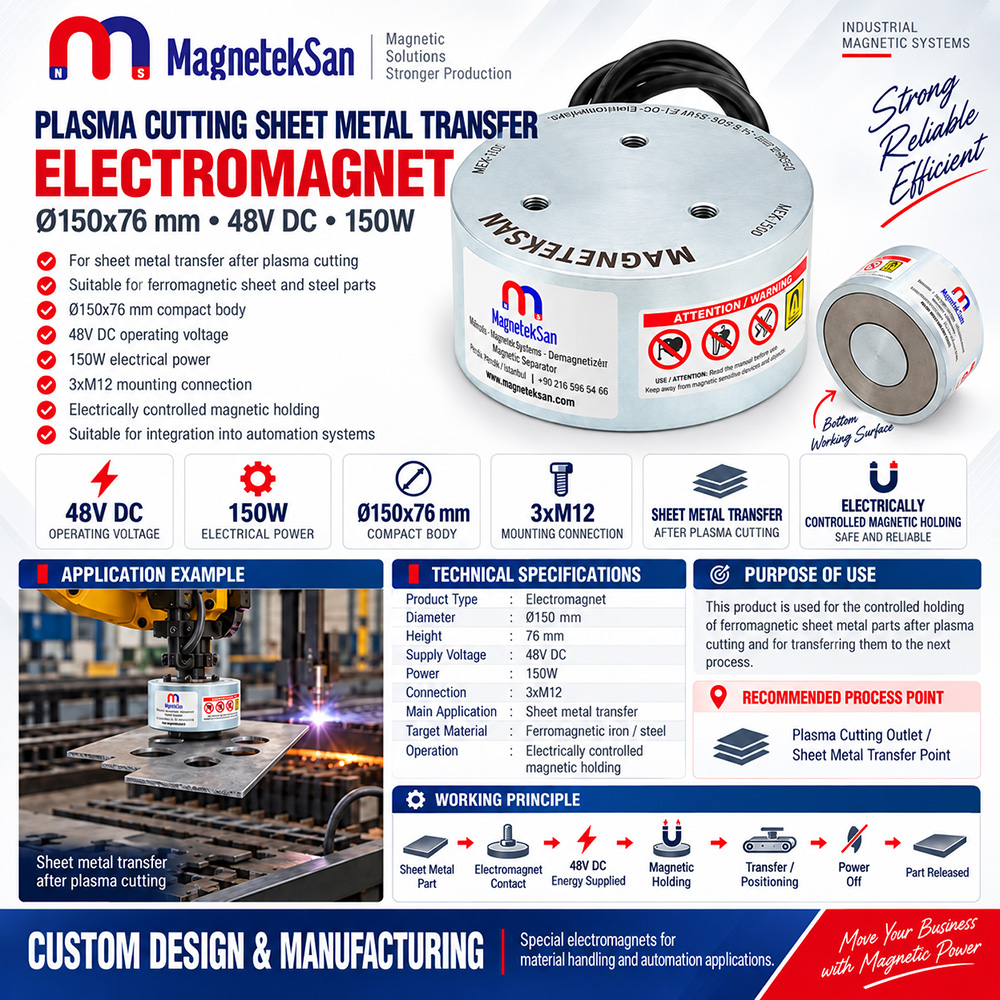
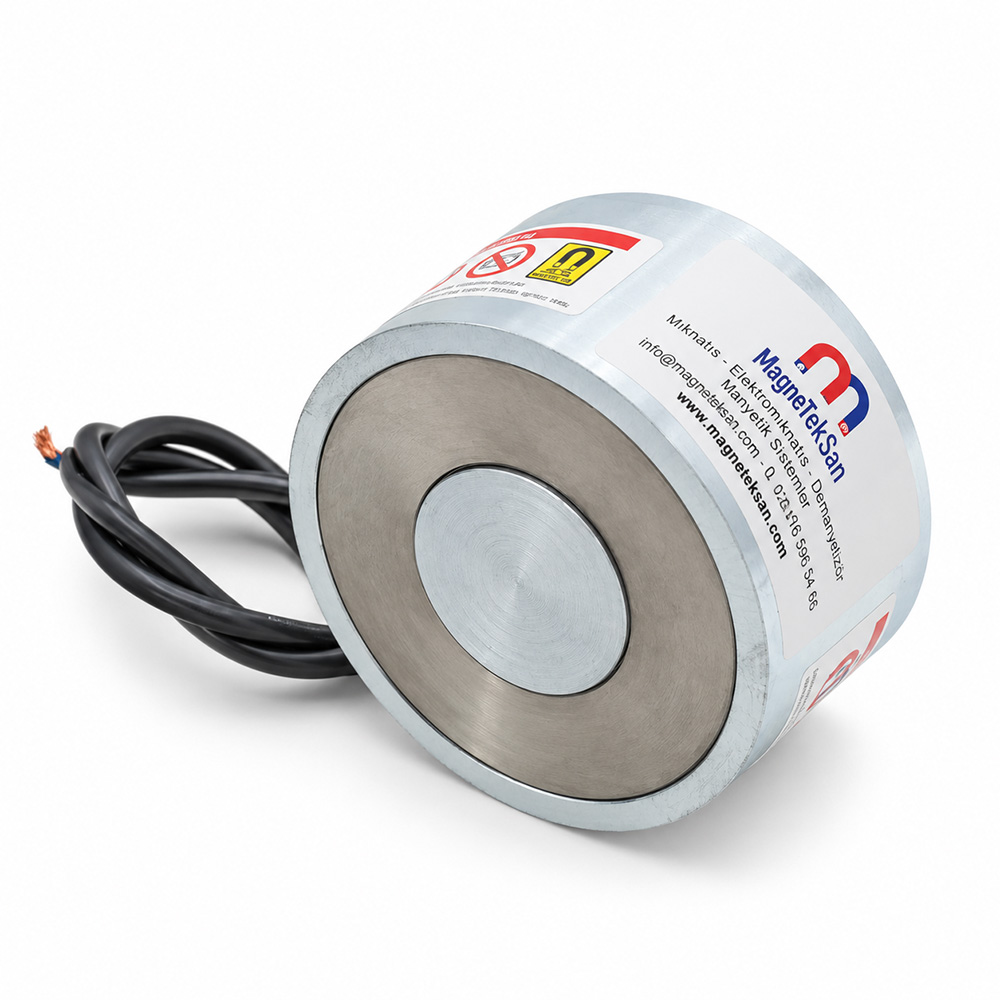
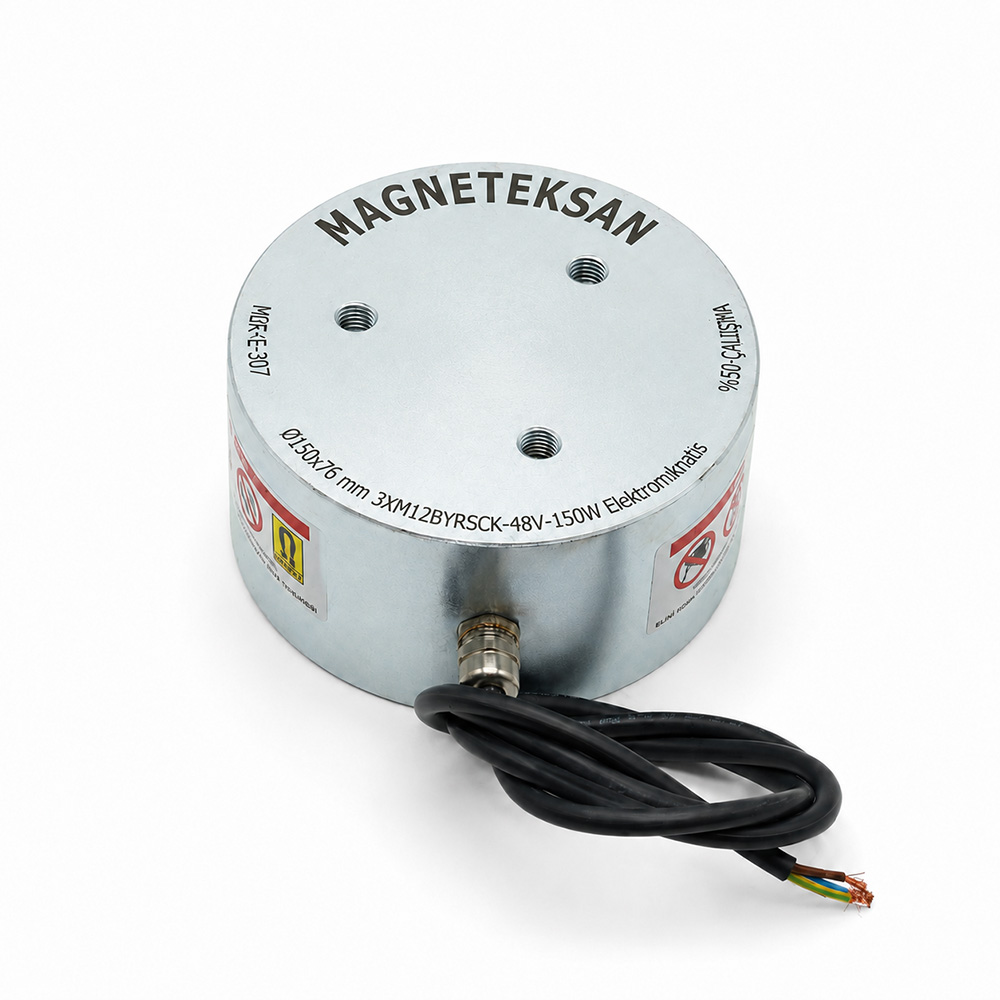
The Plasma Cutting Sheet Metal Part Transfer Electromagnet is a Ø150×76 mm round DC electromagnet designed to assist with picking up ferromagnetic steel parts from a plasma cutting table and transferring them to stacking or subsequent production processes. It operates at 48V DC and 150W, while the 3xM12 female mounting points allow integration with suitable carrier plates, gantry systems and automation equipment.
| Technical Specification | Value |
|---|---|
| Product Type | DC Electromagnet |
| Main Application | Sheet-Metal Part Transfer After Plasma Cutting |
| Diameter | Ø150 mm |
| Height | 76 mm |
| Operating Voltage | 48V DC |
| Electrical Power | 150W |
| Mounting Connection | 3xM12 Female |
| Duty Cycle | 50% |
| Target Material | Ferromagnetic Iron / Steel |
| Operating Principle | Holding When Energized / Release When Power Is Switched Off |
Extra Information
What Is a Plasma Cutting Sheet Metal Part Transfer Electromagnet?
A Plasma Cutting Sheet Metal Part Transfer Electromagnet is an electrically controlled magnetic holding device designed to assist with picking up ferromagnetic steel parts after they have been cut on a plasma cutting machine.
When electrical power is applied, the electromagnet generates a magnetic field and attracts a suitable steel workpiece to its working surface. This allows the part to be picked up, transferred and released as part of a manual, gantry-based, robotic or automated handling process.
Where Is the Electromagnet Used in a Plasma Cutting Process?
Its primary application is after the plasma cutting operation has been completed.
A typical process is:
Steel Sheet
↓
CNC Plasma Cutting
↓
Cut Sheet-Metal Part
↓
Ø150×76 mm Electromagnet
↓
Magnetic Holding with 48V DC
↓
Pick Up from Cutting Table
↓
Transfer / Stacking / Next Production Process
This allows suitable cut steel parts to be removed from the cutting table without relying solely on manual handling.
Why Use an Electromagnet After Plasma Cutting?
After plasma cutting, numerous steel parts with different dimensions and geometries may remain on the cutting table.
When integrated into a suitable handling system, the electromagnet can assist with:
- gripping the cut part
- lifting it from the cutting table
- transferring it to another station
- placing it in a stacking area
- feeding it to the next manufacturing operation
Because the magnetic field is electrically controlled, the workpiece can be held during transfer and released by switching off the power.
How Does the Electromagnet Work?
The operating principle is based on a magnetic field generated by electrical current:
48V DC Power Applied
↓
Magnetic Field Generated
↓
Ferromagnetic Sheet-Metal Part Held
↓
Part Transferred
↓
Electrical Power Switched Off
↓
Magnetic Holding Disappears / Part Released
Depending on the material and magnetic history of the workpiece, a limited amount of residual magnetism may remain after the power is switched off.
What Does 48V DC Mean?
The specified operating voltage is:
48V DC
The electromagnet must therefore be operated using a suitable 48V direct-current power supply and control system.
Incorrect voltage should not be applied to the electromagnet.
What Does 150W Mean?
The specified electrical power is:
150W
This value represents the electrical power of the electromagnet.
It does not mean:
150W = 150 kg lifting capacity
Electrical power and magnetic lifting capacity are different technical parameters. The actual holding performance depends on the workpiece and application conditions.
What Does a 50% Duty Cycle Mean?
According to the technical marking on the product, the duty cycle is:
50%
This means the electromagnet should not automatically be considered suitable for continuous 100% energized operation.
The actual energized and rest periods must be determined according to the operating conditions and cycle time of the application. Since no verified minute-based ON/OFF cycle is specified, a fixed statement such as “5 minutes ON / 5 minutes OFF” should not be assumed.
What Type of Application Is a 50% Duty Cycle Suitable For?
This configuration is particularly suitable for repetitive automation cycles such as:
Grip → Transfer → Release → Wait
For plasma-cut part handling, the electromagnet can be energized while the part is being held and transferred, then de-energized after the workpiece has been released.
The actual cycle must remain within the validated operating conditions of the electromagnet.
What Are the 3xM12 Female Connections Used For?
The rear of the electromagnet contains 3 M12 female mounting connections.
These mounting points allow the electromagnet to be mechanically integrated with suitable:
- carrier plates
- gantry attachments
- robotic handling equipment
- linear-axis systems
- custom fixtures
- automation structures
The mechanical structure must be designed for the actual loads and forces occurring during operation.
Can It Be Used in a Gantry System?
Yes.
With appropriate mechanical and electrical engineering, the electromagnet can be integrated into a gantry or Cartesian handling system.
The carrier structure should be designed according to:
- actual workpiece weight
- workpiece dimensions
- center of gravity
- acceleration
- deceleration
- direction of movement
- dynamic loads
Static magnetic holding force alone should not be used as the only design criterion.
Can It Be Used on a Robot Arm?
It can be evaluated for robotic use with a suitable end effector and carrier plate.
The design should consider:
- robot payload
- electromagnet weight
- workpiece weight
- workpiece center of gravity
- robot acceleration and deceleration
- movement direction
- emergency-stop conditions
The complete robot end effector should therefore be engineered for the actual workpiece and operating cycle.
What Materials Can the Electromagnet Hold?
The electromagnet is primarily intended for suitable ferromagnetic materials such as:
- iron
- carbon steel
- ferromagnetic steel parts
- suitable steel sheet-metal components
Actual holding performance varies according to the magnetic characteristics and geometry of the material.
Can It Hold Aluminum Sheet?
No.
Aluminum is not ferromagnetic and is not held by this electromagnet in the same way as iron or carbon steel.
A different gripping technology should be considered when aluminum parts need to be handled.
Can It Hold Copper or Brass Parts?
No, not in the same way as ferromagnetic steel.
Copper and brass are normally non-ferromagnetic and are therefore not suitable target materials for conventional electromagnetic holding with this product.
Can It Hold Stainless Steel Sheet?
It depends on the stainless-steel grade and its metallurgical condition.
Some stainless steels may respond significantly to a magnetic field, while some austenitic stainless-steel grades can have very low magnetic response.
Therefore, it should not be assumed that every stainless-steel workpiece can be handled successfully. Testing with the actual workpiece is recommended.
Does Sheet Thickness Affect Holding Force?
Yes.
The thickness of the ferromagnetic workpiece can directly affect the formation of the magnetic circuit.
Very thin steel sheets may not provide the same magnetic holding performance as thicker material, even when the external dimensions of the workpiece are similar.
For this reason, actual workpiece testing is important when determining suitability.
Why Is Surface Flatness Important?
The flat working surface of the electromagnet should contact the steel workpiece over as much area as possible.
Holding performance can be reduced by:
- curved surfaces
- burrs
- plasma slag
- paint
- rust
- surface deformation
- dirt or foreign material between the surfaces
These conditions can create an effective air gap between the electromagnet and the steel part.
Does Plasma Cutting Slag Affect Magnetic Holding?
Yes.
Plasma-cut parts may have:
- slag
- burrs
- surface irregularities
- deformation
at or near the contact surface.
These can prevent direct contact between the electromagnet and the steel workpiece, creating an air gap and reducing magnetic holding performance.
Why Is the Air Gap Important?
Magnetic holding force decreases as the distance between the electromagnet’s working surface and the steel workpiece increases.
For maximum effective performance, the contact surface should therefore be as flat, clean and direct as practical.
Even a relatively small air gap can affect magnetic holding performance.
Can It Be Used on Painted Steel?
Potentially, yes.
Paint does not necessarily eliminate magnetic attraction to the ferromagnetic steel underneath.
However, the paint layer creates additional distance between the magnet and the steel surface and can therefore reduce effective holding force.
Testing with the actual painted workpiece is recommended.
Can It Handle Perforated Sheet-Metal Parts?
Potentially, depending on the geometry.
If a significant portion of the electromagnet’s working surface is positioned over:
- holes
- cut-outs
- openings
- empty areas
the effective magnetic contact area is reduced.
The actual workpiece geometry and the position of the electromagnet should therefore be evaluated.
Can It Hold Small Sheet-Metal Parts?
Potentially, yes, provided that the workpiece offers sufficient contact area on the electromagnet’s working surface.
A very small part may cover only a limited portion of the Ø150 mm working face, which can significantly change the magnetic holding behavior.
Actual testing is recommended for small parts.
Can It Handle Large Sheet-Metal Parts?
Yes, but whether a single electromagnet is sufficient depends on factors such as:
- workpiece dimensions
- weight
- thickness
- geometry
- center of gravity
- contact surface
For large or long parts, multiple electromagnets can be distributed across a suitable carrier frame.
Can Multiple Electromagnets Be Used Together?
Yes.
Multiple electromagnets can be installed on the same carrier structure to grip large or long plasma-cut parts at different locations.
The number and positioning of the electromagnets should be designed according to:
- workpiece geometry
- workpiece weight
- sheet thickness
- available contact surfaces
- center of gravity
- handling direction
- acceleration and deceleration
There is no universal fixed number of electromagnets suitable for every workpiece.
Does It Guarantee Picking Only One Sheet-Metal Part?
No.
The primary function of the electromagnet is to hold ferromagnetic material.
If two steel sheets are stacked together or several steel components are positioned very close to each other, the magnetic field may influence more than one piece.
Therefore, this product should not be described as guaranteeing single-sheet or single-part separation.
Can It Be Used for Vertical Handling?
Vertical handling requires application-specific evaluation.
When the workpiece is vertical, the load tends to slide along the electromagnet’s working surface.
Magnetic pull-off force and resistance to sliding are not the same. Surface condition, friction, acceleration and workpiece weight therefore become particularly important.
Vertical handling applications require appropriate engineering and safety assessment.
Can Loads Be Carried Over People?
This electromagnet should not be treated as a standalone safety system for carrying loads over personnel.
Because magnetic holding depends on electrical power, a power failure or control-system fault can cause the electromagnetic holding force to disappear.
Where a dropped workpiece could endanger personnel, appropriate mechanical or other engineered safety measures should be incorporated based on the machine risk assessment.
What Happens When the Electrical Power Is Switched Off?
This product operates according to the standard DC electromagnet principle.
When power is switched off, the electromagnetic field disappears and the workpiece is released.
Depending on the material and magnetic history of the steel part, limited residual magnetism may remain.
Is Reverse Voltage Required to Release the Part?
No verified requirement for a special reverse-voltage or demagnetization cycle is specified for this product.
Therefore, the standard operating description should remain:
Holding when energized / release when power is switched off
A special reverse-voltage release function should not be claimed unless it has been specifically designed and validated for the application.
Can the Electromagnet Remain Continuously Energized?
The technical information specifies a 50% duty cycle.
Therefore, the product should not be assumed to be suitable for continuous 100% energized operation outside its validated operating conditions.
The automation control should be designed around the required operating cycle and the thermal limitations of the electromagnet.
Can It Be Controlled by a PLC?
Yes.
Within a correctly designed 48V DC electrical system, the electromagnet can be controlled using suitable components such as:
- PLC
- relay
- contactor
- appropriate electronic driver
The switching components, power supply, wiring and protective devices must be selected according to the actual voltage, current and operating conditions.
How Should the Electromagnet Be Maintained?
The following components should be inspected periodically:
- magnetic working surface
- electrical cable and connections
- electromagnet body
- 3xM12 mounting points
- carrier structure
- mechanical fasteners
The electromagnet should not be operated with damaged electrical connections or loose mechanical mounting points.
How Should the Working Surface Be Cleaned?
Metal particles, plasma slag and small steel fragments may accumulate on the magnetic working surface.
Cleaning should only be performed when the system is:
De-energized and placed in a safe condition.
The working surface should also be inspected for damage or contamination that could create an unwanted air gap between the magnet and the workpiece.
What Is the Maximum Lifting Capacity in kg?
No verified fixed lifting capacity in kilograms is specified for this product.
Therefore, a fixed value such as:
50 kg, 100 kg or 150 kg
should not be invented from the electrical specifications.
Actual holding performance depends on:
- sheet thickness
- material grade
- contact area
- surface condition
- air gap
- workpiece geometry
- handling orientation
- center of gravity
- acceleration and deceleration
- other dynamic forces
The actual workpiece should be tested under representative operating conditions before the handling system is finalized.
What Is the Gauss Value?
No verified Gauss value is specified for this product.
Therefore, an arbitrary surface Gauss value should not be added to the technical specifications.
For an electromagnet used in handling applications, suitability should not be evaluated solely from a surface Gauss measurement.
What Is the Maximum Operating Temperature?
No verified maximum operating temperature is specified for this product.
Therefore, a specific temperature limit should not be stated without validated technical data.
The specified 50% duty cycle also indicates that thermal operating conditions must be considered when designing the application.
What Is the IP Protection Rating?
No verified IP protection rating is specified for this product.
Therefore, an IP value should not be assumed.
If the electromagnet will be exposed to:
- water
- coolant
- high levels of dust
- outdoor conditions
- other environmental contamination
the actual environmental protection requirements should be evaluated separately.
Can a Custom Plasma Cutting Part Handling System Be Designed?
Yes.
Depending on the application, a custom magnetic handling system can be developed by evaluating parameters such as:
- electromagnet diameter
- body height
- operating voltage
- electrical power
- mounting configuration
- number of electromagnets
- carrier-frame dimensions
- workpiece dimensions
- workpiece weight
- sheet thickness
- center of gravity
- automation cycle
For large or irregular plasma-cut parts, multiple electromagnets can be positioned on a custom carrier structure according to the actual workpiece geometry.