Product Information
Extra Information
Product Information
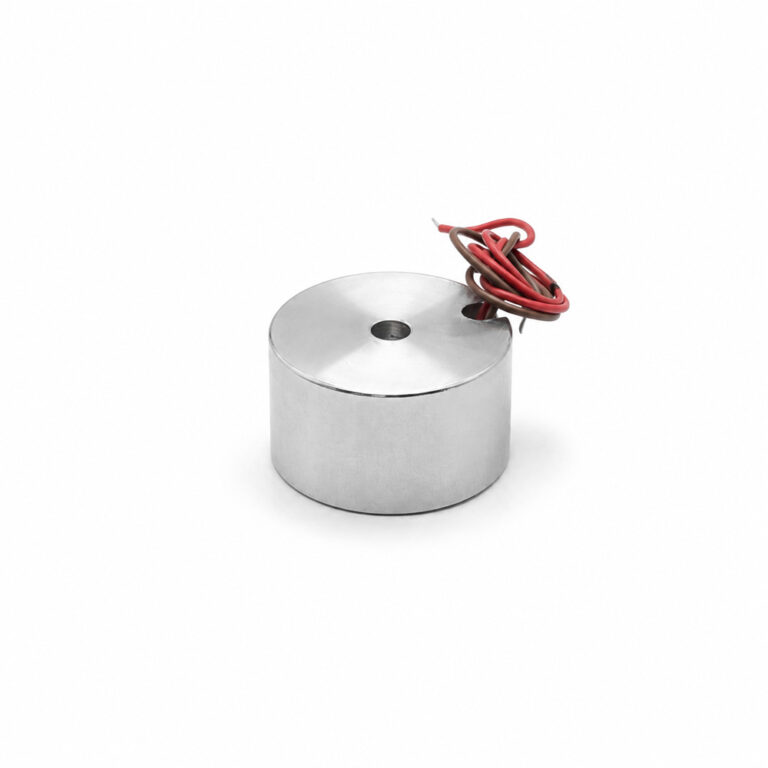
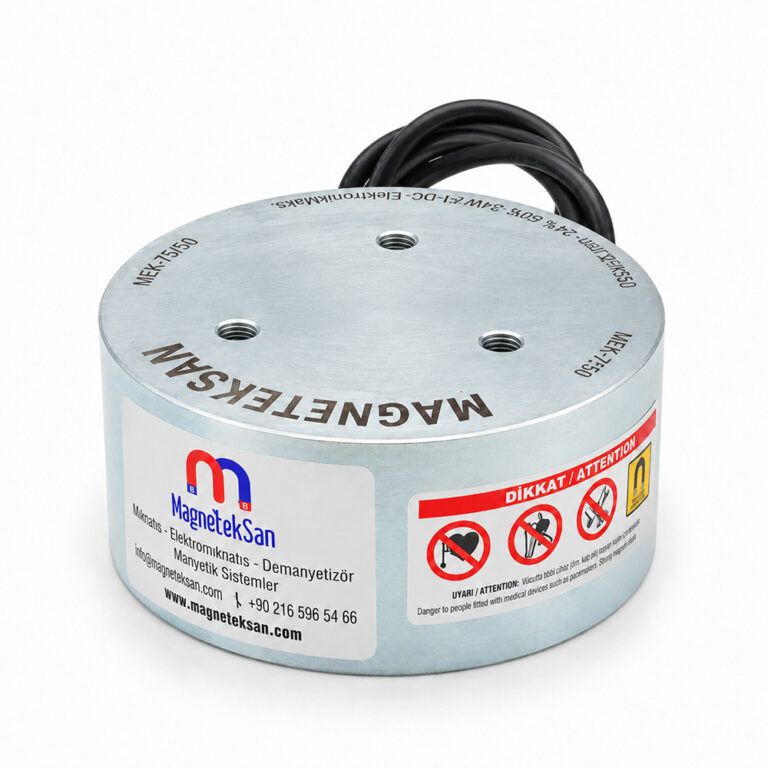
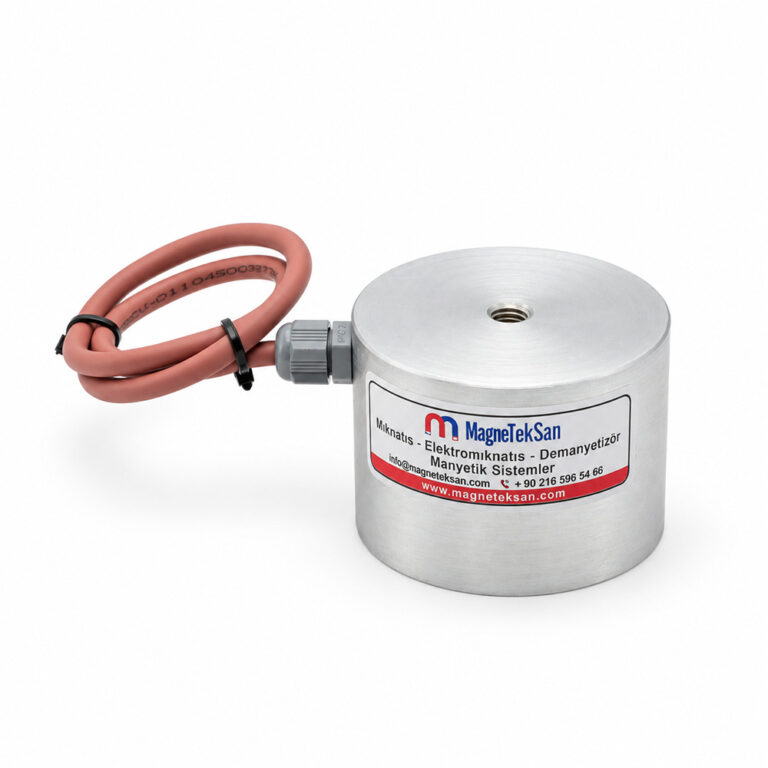
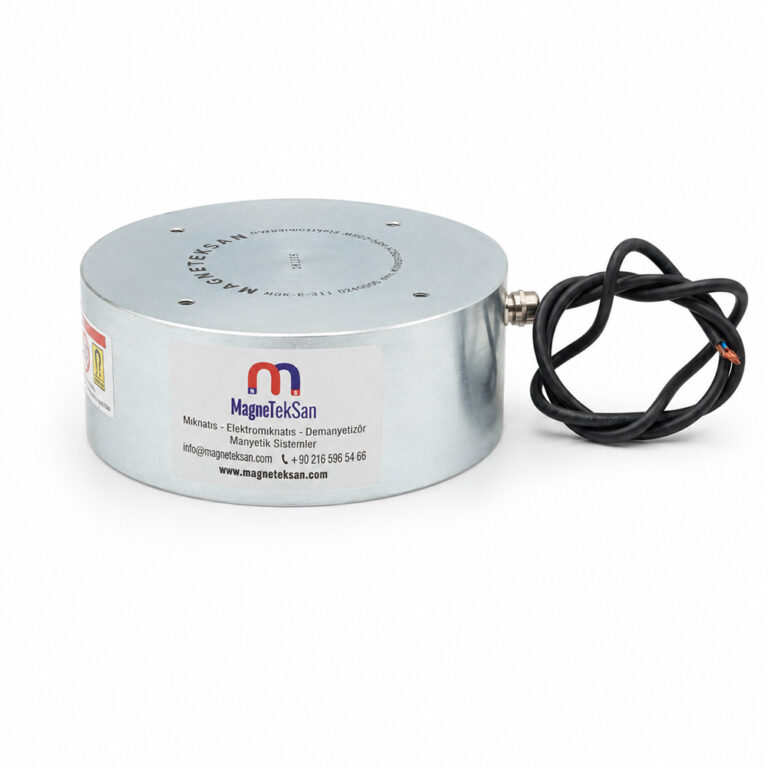
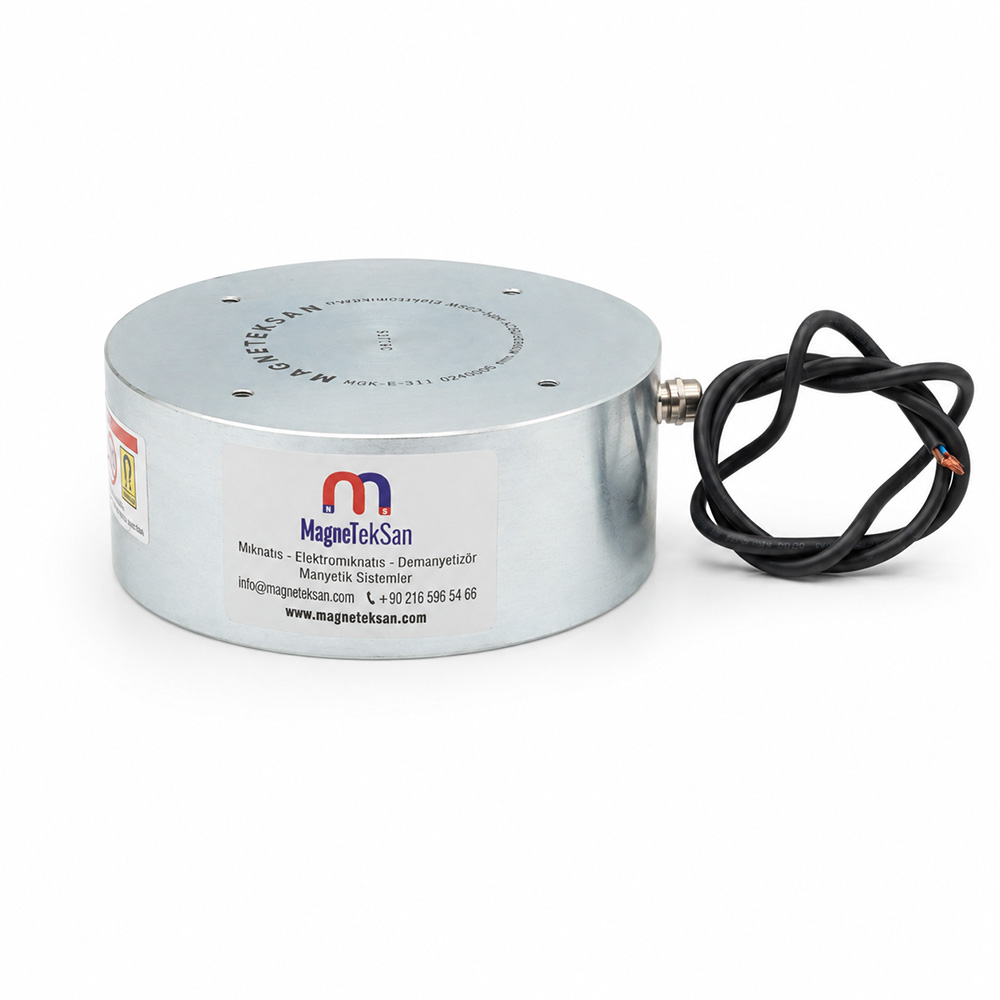
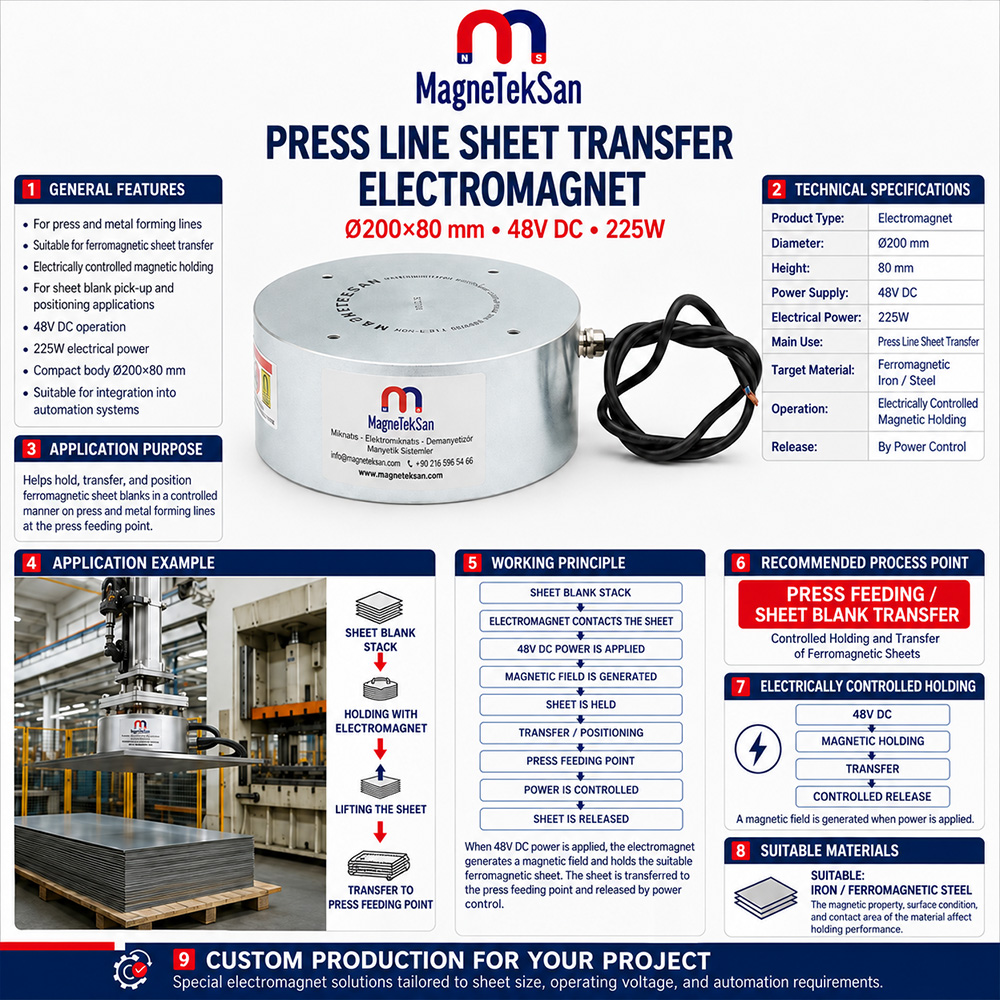
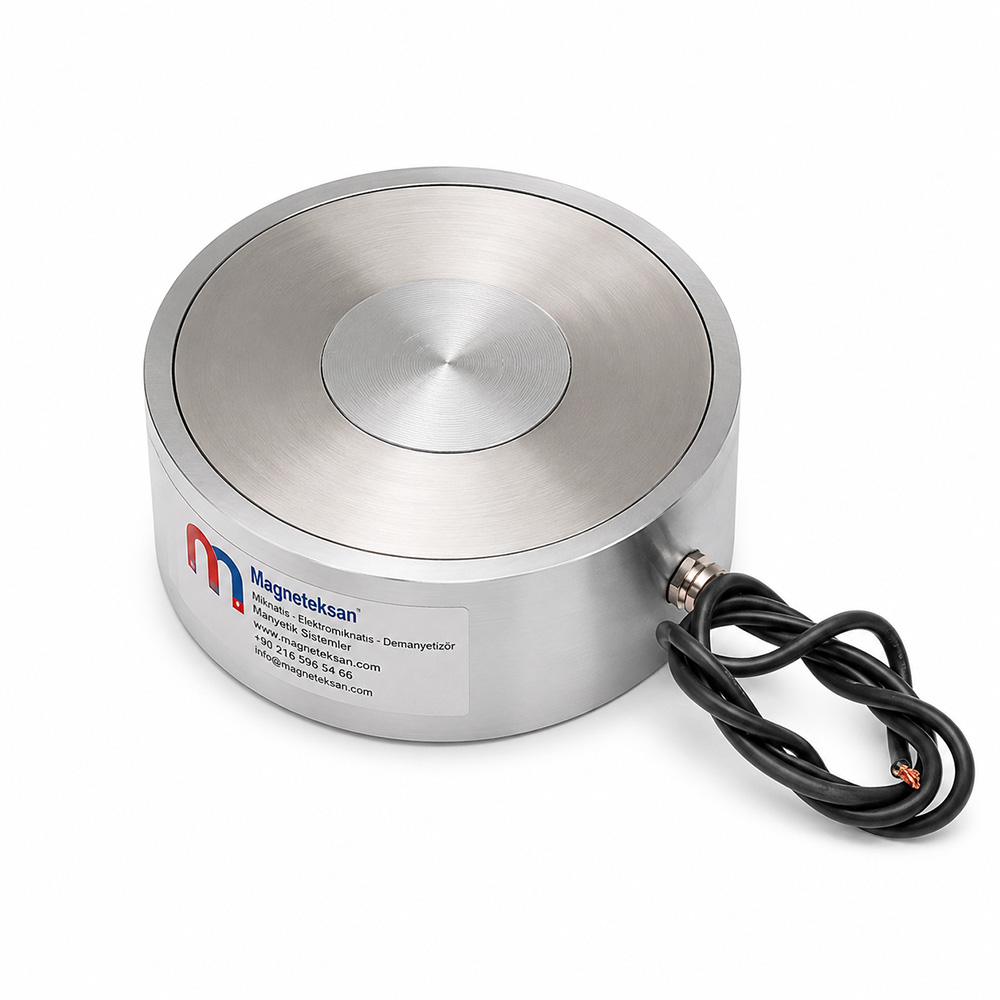
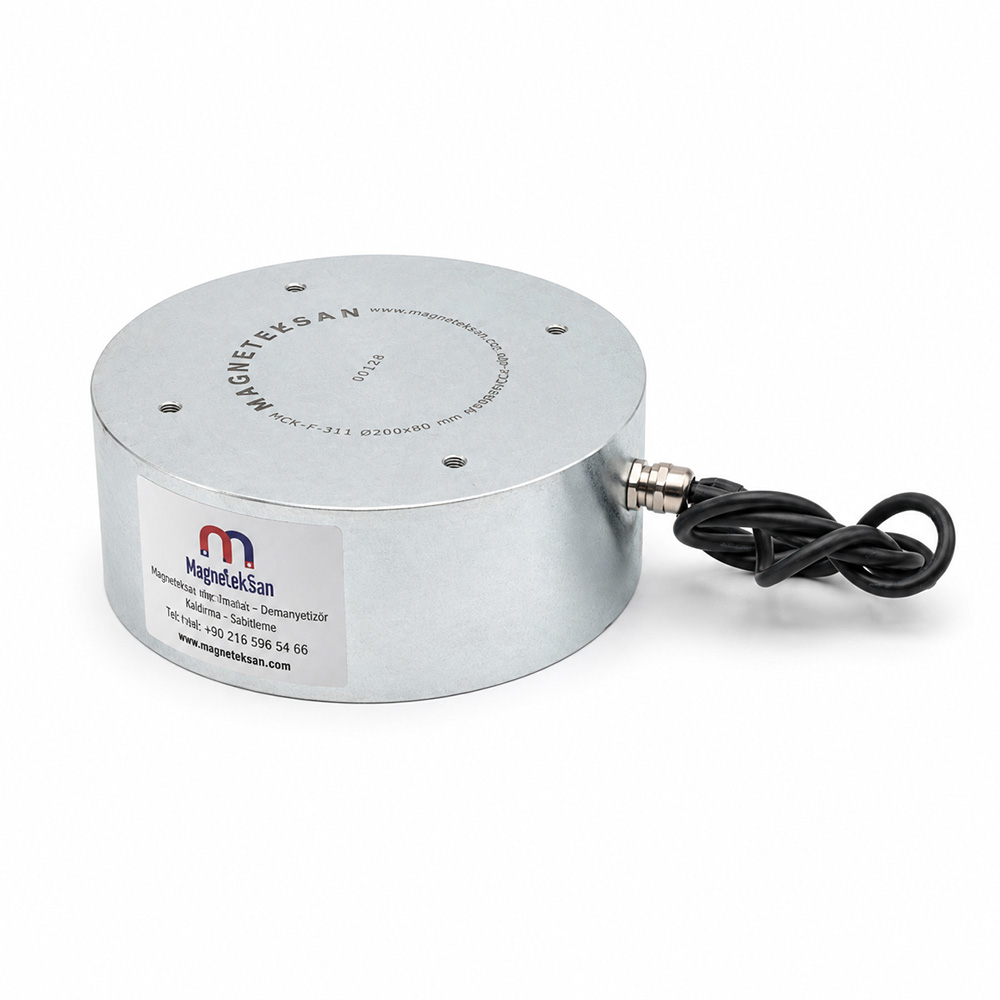
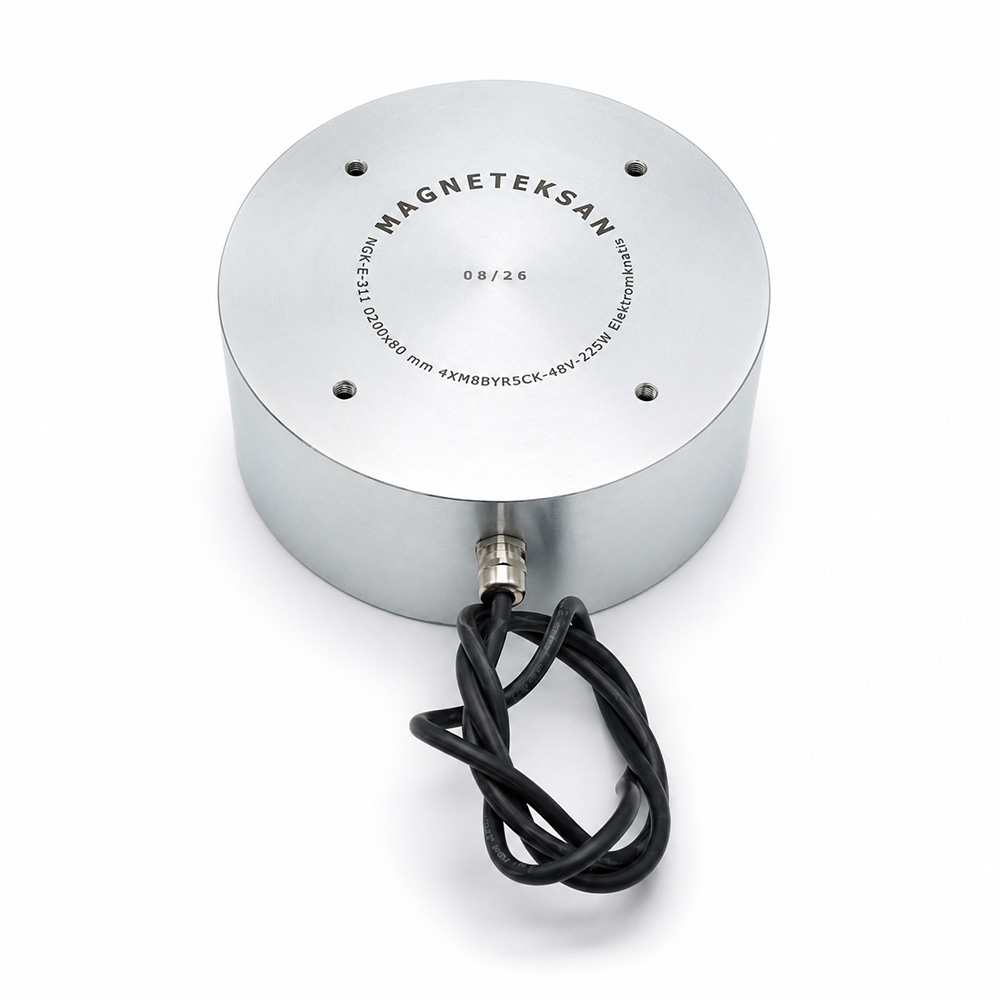
The Ø200×80 mm Press Line Sheet Transfer Electromagnet is an industrial electromagnetic gripper designed for controlled handling, transfer and positioning of ferromagnetic steel sheet blanks in press feeding and metal forming operations. Operating at 48V DC with 225W electrical power, it generates a magnetic field when energized, allowing suitable steel parts to be held and transferred between production stations using a compatible automation or mechanical handling system.
| Technical Specification | Value |
|---|---|
| Product Type | DC Electromagnet |
| Main Application | Press Line Sheet Metal Transfer |
| Diameter | Ø200 mm |
| Height | 80 mm |
| Supply Voltage | 48V DC |
| Electrical Power | 225W |
| Operating Principle | Electromagnetic Holding |
| Target Materials | Ferromagnetic Iron / Steel |
| Application | Sheet Blank Transfer and Press Feeding |
| Control Method | Electrical Power Control |
| Magnetic Activation | When Energized |
Extra Information
What Is a Press Line Sheet Transfer Electromagnet?
A press line sheet transfer electromagnet is an electrically controlled magnetic gripping device used to hold and transfer suitable ferromagnetic steel sheet parts during press feeding and metal forming operations.
This model has a diameter of Ø200 mm, a height of 80 mm, a nominal supply voltage of 48V DC, and an electrical power rating of 225W.
Its primary application is the controlled transfer of steel sheet blanks within industrial production lines, rather than general-purpose heavy lifting.
What Is a Sheet Metal Blank?
A sheet metal blank is a piece of sheet metal cut into a specified shape or size before a subsequent manufacturing operation.
Sheet blanks may be processed through:
-
Stamping
-
Press forming
-
Bending
-
Cutting
-
Punching
-
Deep drawing
-
Other metal forming operations
An electromagnetic gripper can assist with transferring suitable ferromagnetic blanks between these production stages.
Why Are Electromagnets Used in Press Lines?
Press lines frequently require sheet metal parts to be moved from a stack to a feeding station or between forming operations.
Depending on the application, this movement can be performed using mechanical grippers, vacuum systems, robotic equipment or magnetic handling devices.
For suitable ferromagnetic steel parts, an electromagnet provides electrically controlled holding and release, making it a potential gripping solution for automated transfer systems.
Where Can This Electromagnet Be Installed in a Press Line?
Depending on the mechanical design and operating conditions, the electromagnet can be considered for several applications.
Sheet Blank Pickup: Holding a suitable steel blank during removal from a stack.
Press Feeding: Positioning a sheet blank at a press or die feeding point.
Inter-Station Transfer: Moving suitable ferromagnetic parts between production stations.
Part Positioning: Temporarily holding a steel component at a designated location.
The mounting arrangement and gripping performance must be validated for the actual application.
What Is the Typical Operating Process?
A typical press line sheet transfer process can be described as follows:
Sheet Metal Blank Stack ↓ Ø200×80 mm Electromagnet Approaches the Blank ↓ 48V DC Power Is Applied ↓ Suitable Ferromagnetic Blank Is Held ↓ Transfer and Positioning ↓ Press Feeding Station ↓ Electrical Power Is Controlled ↓ Sheet Blank Is Released
This sequence can be integrated into an appropriately designed automated handling system.
How Does the Electromagnet Hold Sheet Metal?
When electrical current passes through the electromagnet coil, a magnetic field is generated.
When a suitable ferromagnetic steel part approaches the working surface, it interacts with this magnetic field and experiences an attractive force.
The actual holding force depends on the magnetic circuit, material properties, contact conditions and working geometry.
Electrical power alone does not determine the available holding force.
What Does 48V DC Mean?
The specified nominal supply voltage is 48 volts direct current.
The electromagnet should therefore be operated with an appropriately designed 48V DC power supply and control circuit.
Correct voltage regulation is important for maintaining the intended electrical operating conditions.
What Does 225W Mean?
The specified electrical power is 225 watts.
This describes the electrical power rating of the electromagnet.
It does not mean that the device can lift a particular weight.
For example, a 225W rating cannot be directly converted into a guaranteed holding capacity in kilograms.
The actual magnetic holding force must be determined through verified technical data or application-specific testing.
What Do the Ø200×80 mm Dimensions Represent?
The dimensions indicate:
Diameter: Ø200 mm Height: 80 mm
The circular body can be considered for integration into compatible mechanical transfer and automation systems.
The mounting arrangement must be determined according to the actual machine design.
How Many Kilograms Can This Electromagnet Hold?
A verified holding force or lifting capacity has not been specified for this model.
The actual holding capability depends on:
-
Steel grade
-
Sheet thickness
-
Sheet dimensions
-
Contact area
-
Surface flatness
-
Surface coatings
-
Air gap
-
Part geometry
-
Supply conditions
-
Direction of the applied load
For this reason, a guaranteed lifting capacity should not be stated without suitable testing.
Can It Handle Thin Steel Sheets?
It may be suitable for thin ferromagnetic steel sheets, depending on the application.
However, sheet thickness affects the magnetic circuit and can significantly influence the available holding force.
Thin sheets may also deform or behave differently during magnetic pickup.
Testing with an actual sheet sample is recommended.
Can It Handle Thick Steel Sheets?
It may be considered for suitable thicker ferromagnetic steel sheets.
However, thickness alone does not establish whether the electromagnet can safely hold a particular part.
The sheet weight, geometry, effective contact area and surface conditions must also be evaluated.
Can It Pick Up Only One Sheet from a Stack?
Single-sheet pickup cannot be guaranteed under all operating conditions.
Several factors can cause more than one sheet to move together, including:
-
Oil between sheets
-
Surface adhesion
-
Magnetic attraction affecting adjacent sheets
-
Sheet thickness
-
Sheet geometry
-
Stack conditions
Where reliable single-sheet feeding is essential, additional equipment may be required.
Examples include sheet separators, magnetic sheet fanners, mechanical separation devices and sensors.
Is a Sheet Separator the Same as a Sheet Transfer Electromagnet?
No.
A sheet transfer electromagnet is intended to hold and move suitable ferromagnetic sheet parts.
A sheet separator is intended to help separate individual sheets from a stack.
Both systems may be used together in a press feeding application when required.
Can This Electromagnet Be Used with a Robotic Arm?
Yes, it can be considered for integration into a robotic handling system if the mechanical, electrical and safety requirements are satisfied.
The integration must account for the robot’s payload capacity, the workpiece weight, the electromagnetic holding force, the mounting arrangement and the operating sequence.
Compatibility with a particular robot model should be confirmed through engineering evaluation.
Can It Be Used in a Linear Transfer System?
Yes, depending on the project.
Potential applications include:
-
Linear transfer mechanisms
-
Gantry systems
-
Pick-and-place equipment
-
Automated press feeding systems
-
Custom sheet metal transfer machines
The electromagnetic gripper must be integrated with a suitable mechanical support and electrical control system.
Can It Replace a Vacuum Gripper?
In some ferromagnetic sheet metal applications, an electromagnet may be considered as an alternative to vacuum gripping.
However, the two technologies operate differently.
Vacuum Gripper: Uses a pressure difference to hold a suitable surface.
Electromagnetic Gripper: Uses magnetic attraction to hold suitable ferromagnetic material.
The preferred method depends on the workpiece material, surface condition, geometry, required cycle time and safety requirements.
Can It Hold Stainless Steel Sheets?
This depends on the stainless steel grade and its metallurgical condition.
Some stainless steel grades exhibit significant magnetic properties, while certain austenitic grades have a very weak magnetic response.
Therefore, the electromagnet should not be assumed to hold all stainless steel sheets.
Testing with the actual stainless steel material is recommended.
Can It Hold Aluminium Sheets?
Not through conventional ferromagnetic attraction.
Aluminium is not ferromagnetic.
This electromagnet is primarily intended for suitable iron, carbon steel and other ferromagnetic steel parts.
Can It Hold Copper or Brass?
Not under conventional electromagnetic holding conditions.
Copper and brass are not ferromagnetic materials and are not attracted in the same way as suitable iron or steel components.
Can It Handle Painted Steel Sheets?
It may be possible to hold suitable ferromagnetic steel sheets with surface coatings.
However, paint and other coatings can introduce additional separation between the magnetic working surface and the steel.
This effective air gap may reduce the holding force.
Testing with the actual coated workpiece is recommended.
Can It Handle Oily Steel Sheets?
Press line steel sheets frequently have lubricated or oily surfaces.
Oil may affect:
-
Surface contact
-
Friction
-
Workpiece movement
-
Release behaviour
-
Overall gripping reliability
For this reason, the actual oily sheet should be tested under representative production conditions.
Does the Steel Surface Need to Be Flat?
Surface flatness is an important factor in electromagnetic gripping.
A flat, suitable contact surface helps reduce the air gap and improves the magnetic circuit.
Curved, uneven or distorted surfaces may reduce the effective contact area and the available holding force.
Why Is the Air Gap Important?
The air gap is the separation between the magnetic working surface and the ferromagnetic workpiece.
As the air gap increases, magnetic holding force can decrease significantly.
An effective air gap may result from:
-
Paint
-
Rust
-
Dirt
-
Surface roughness
-
Sheet curvature
-
Mechanical separation
-
Uneven contact
The actual working distance and surface conditions should be considered during system design.
Can It Hold Rusty Steel Sheets?
Magnetic attraction may still occur if the underlying steel remains ferromagnetic.
However, thick rust, scale and surface irregularities can increase the effective air gap and reduce holding performance.
The actual material should be evaluated before use.
What Happens When Electrical Power Is Switched Off?
The primary magnetic field is generated by current flowing through the electromagnet coil.
When power is removed, the magnetic field decreases substantially.
However, residual magnetism may remain in the magnetic circuit or workpiece.
As a result, the part may not always release completely or instantaneously without an appropriate control strategy.
Does the Electromagnet Release the Sheet Immediately?
Not necessarily under every condition.
Residual magnetism, material characteristics and the electrical control method can influence release behaviour.
Where rapid and repeatable release is required, an appropriate coil control or demagnetisation strategy may need to be considered.
The release performance should be validated during application testing.
What Happens If the Power Supply Fails During Transfer?
This model relies on electrical power to generate its primary holding field.
If the supply fails, the electromagnetic holding force can decrease substantially and the workpiece may be released or fall.
The system must not rely on the electromagnet alone to retain a suspended load during a power failure.
Appropriate mechanical safeguards, control measures and risk assessments are necessary.
Is This an Electropermanent Magnet?
No.
This product is a conventional electrically energised electromagnet.
Its primary holding field depends on electrical current.
An electropermanent magnetic system uses a different magnetic arrangement and can retain a workpiece without continuous electrical power in its holding state.
These two product types should not be treated as interchangeable.
Is This a Crane Lifting Magnet?
No.
The primary intended application is controlled sheet blank handling and transfer within press feeding and metal forming lines.
It should not be marketed as a general-purpose crane magnet or heavy-load lifting magnet without a separate, validated lifting-system design.
What Is the Difference Between This Product and a Heavy Plate Lifting Electromagnet?
Heavy plate lifting systems may be designed primarily for handling large or heavy steel plates in shipyards and heavy industry.
This model is intended for the controlled pickup, transfer and positioning of suitable steel sheet blanks within press production processes.
The primary difference is the intended industrial operation, not simply the dimensions.
Can It Transfer Parts After a Pressing Operation?
Yes, it may be considered for transferring suitable ferromagnetic steel parts after pressing or forming.
The actual part geometry, contact surface, weight and gripping conditions must be evaluated.
Formed parts may require a different magnetic pole arrangement or multiple gripping points.
Can Several Electromagnets Be Used Together?
Yes, depending on the application.
Multiple electromagnets may be considered when a workpiece requires several gripping points.
The design must account for:
-
Number of electromagnets
-
Position of each gripping point
-
Workpiece centre of gravity
-
Weight distribution
-
Transfer direction
-
Electrical control
-
Failure conditions
A suitable engineering assessment is necessary before operation.
Can the Electromagnet Operate Continuously?
A verified continuous-duty rating has not been provided for this product.
Therefore, claims such as 100% duty cycle or 24-hour continuous operation should not be made without manufacturer confirmation.
Coil temperature, energisation duration, cooling conditions and operating frequency must be evaluated for the actual application.
Does the Electromagnet Generate Heat?
Yes.
Electrical power supplied to the coil produces heat during operation.
The resulting temperature depends on the coil design, energisation duration, ambient temperature and heat dissipation conditions.
The permissible operating cycle must be confirmed to prevent excessive coil temperature.
How Is the Holding Force Determined?
The most reliable approach is to test the electromagnet with the actual workpiece under representative operating conditions.
Important test parameters include:
-
Steel grade
-
Sheet thickness
-
Surface flatness
-
Surface coating
-
Actual contact area
-
Air gap
-
Supply voltage
-
Direction of force
-
Workpiece geometry
For automated handling, the system must also account for acceleration, deceleration and other dynamic forces.
Can It Operate at 24V Instead of 48V?
The specified nominal voltage is 48V DC.
Applying a different voltage changes the electrical operating conditions and may alter the available magnetic holding force.
The electromagnet should not be operated at a different voltage without manufacturer approval.
Can a Higher Voltage Be Applied?
Not without a specifically validated driving method.
Applying voltage above the rated value may increase coil current, power dissipation and temperature, potentially damaging the electromagnet.
Any special overexcitation or controlled-drive strategy must be designed and verified for the particular coil.
How Can the Electromagnet Be Controlled?
Depending on the automation design, suitable control equipment may include:
-
DC-rated relays
-
DC contactors
-
Electromagnet drivers
-
PLC-controlled switching circuits
-
Appropriate power-control systems
Switching components must be selected for the coil’s electrical characteristics and the 48V DC supply.
Inductive switching transients must also be managed with a suitable protection strategy.
Can It Be Connected to a PLC?
Yes, through an appropriately designed electrical interface.
A PLC can provide control commands to a suitable DC switching device or electromagnet driver.
The PLC output should not be assumed capable of supplying the electromagnet directly.
The power circuit and control interface must be selected according to the electrical load and automation requirements.
What Safety Precautions Are Required?
The electromagnet must be incorporated into a suitably designed and risk-assessed handling system.
Important considerations include:
-
Preventing access beneath suspended workpieces
-
Managing the consequences of power failure
-
Verifying holding force under actual conditions
-
Protecting against unexpected release
-
Providing appropriate mechanical safeguards
-
Managing electrical and thermal hazards
-
Checking mounting and fastening integrity
-
Following machine safety and maintenance procedures
Personnel must not rely on an energised electromagnet alone as a fail-safe method of supporting a suspended load.
What Maintenance Is Required?
Maintenance requirements depend on the application and operating conditions.
Periodic inspections should consider:
-
Magnetic working surface condition
-
Mechanical mounting
-
Electrical cables and connections
-
Coil temperature during operation
-
Surface contamination
-
Signs of mechanical damage
-
Control and release performance
Inspection intervals should be established according to the machine manufacturer’s maintenance plan and the operating environment.
Can Custom Press Line Electromagnets Be Manufactured?
Yes.
Custom electromagnetic gripping systems can be developed according to project requirements.
Design parameters may include:
-
Electromagnet diameter
-
Body height
-
Operating voltage
-
Electrical power
-
Magnetic pole geometry
-
Mounting configuration
-
Working surface
-
Required holding force
-
Operating cycle
-
Sheet metal dimensions
-
Automation and control requirements
For a custom design, the actual sheet metal sample, production cycle and mechanical transfer conditions should be evaluated together.