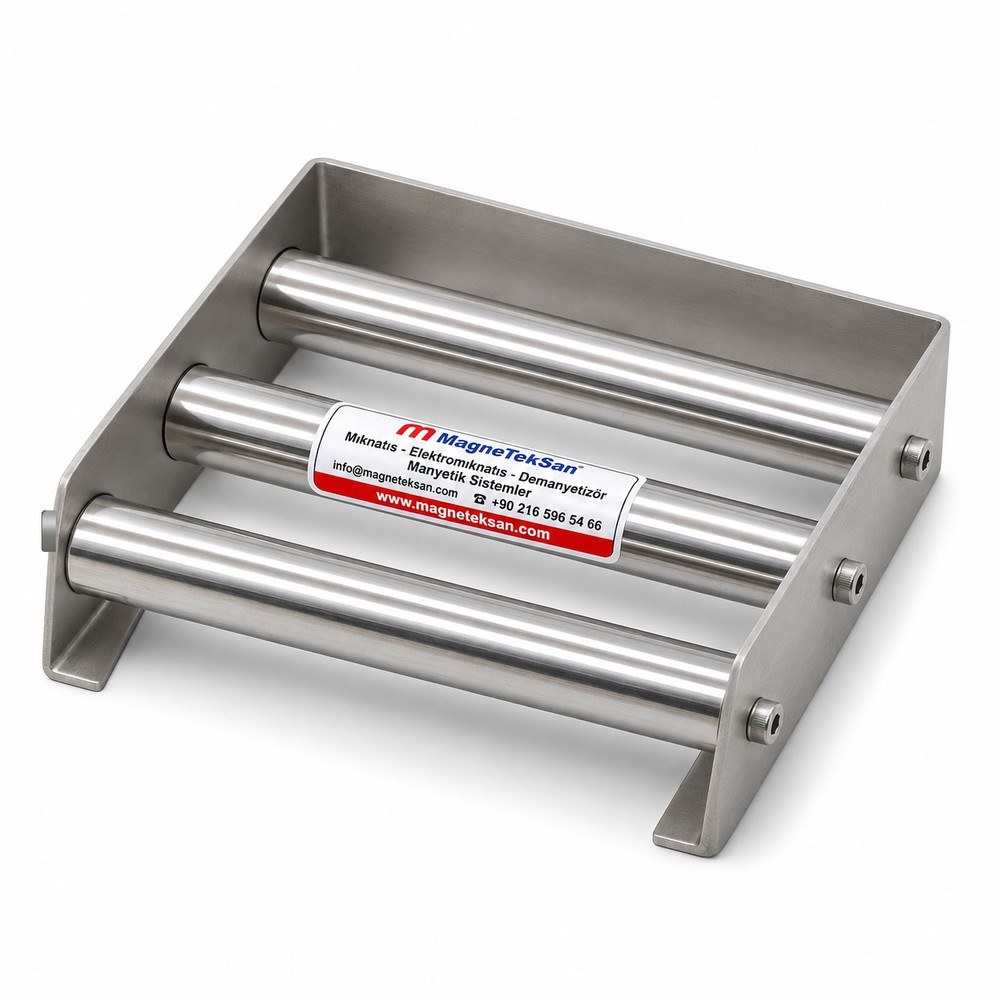
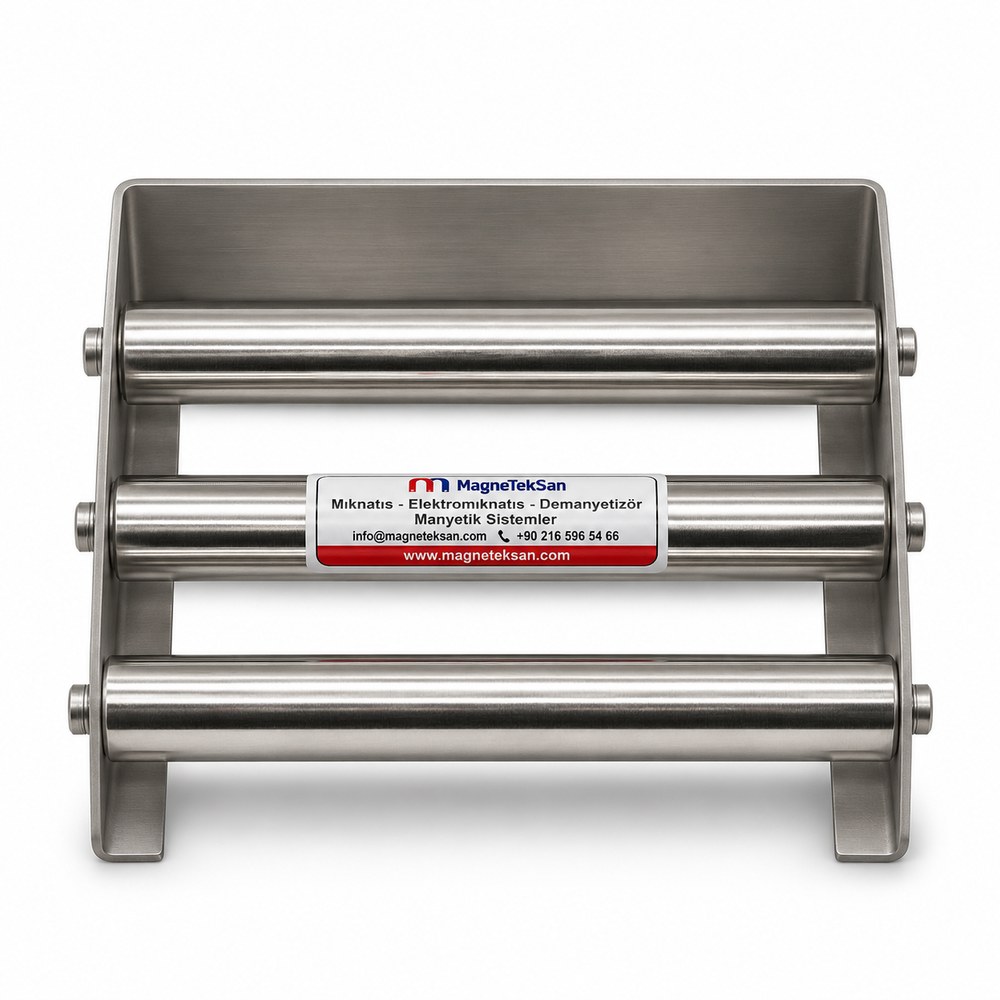
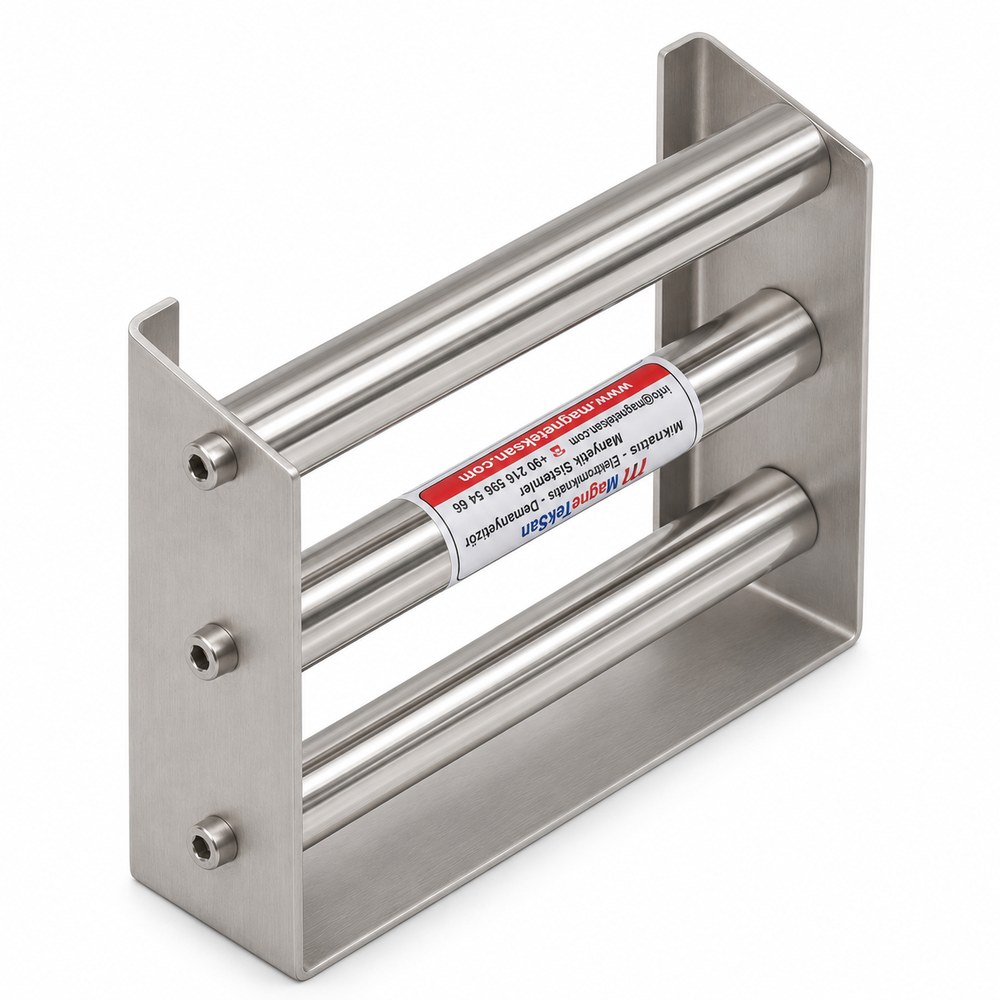
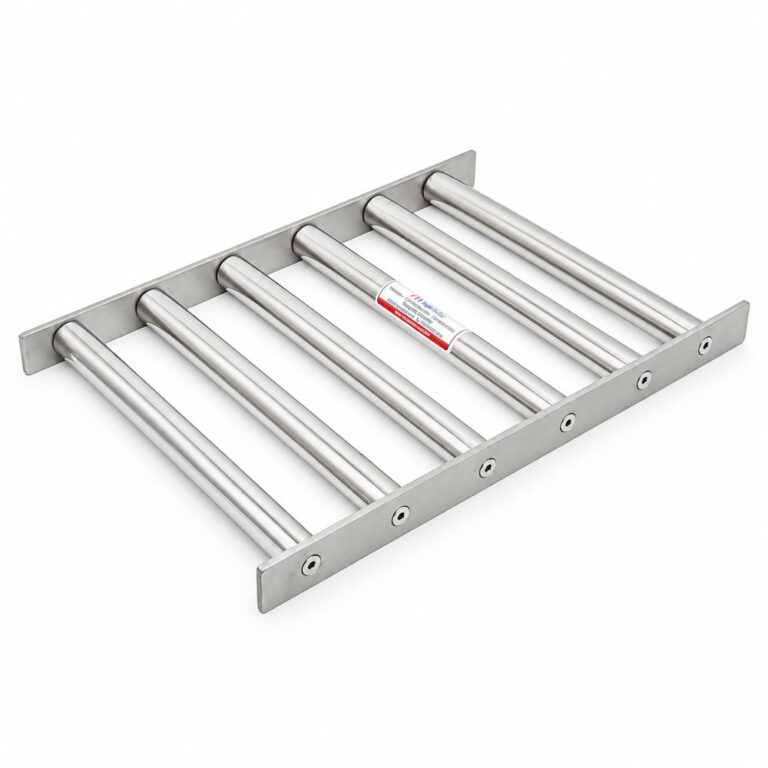
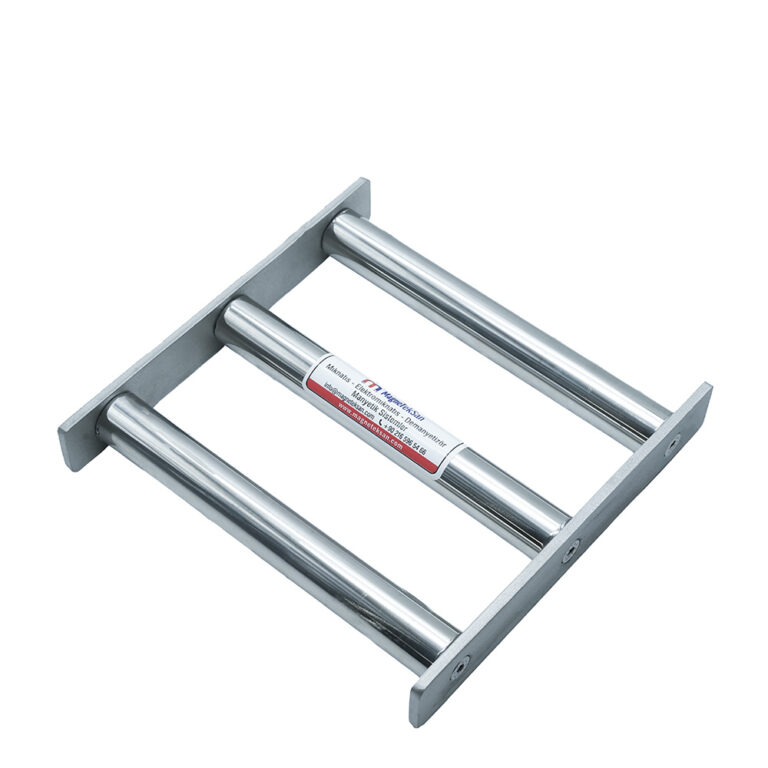
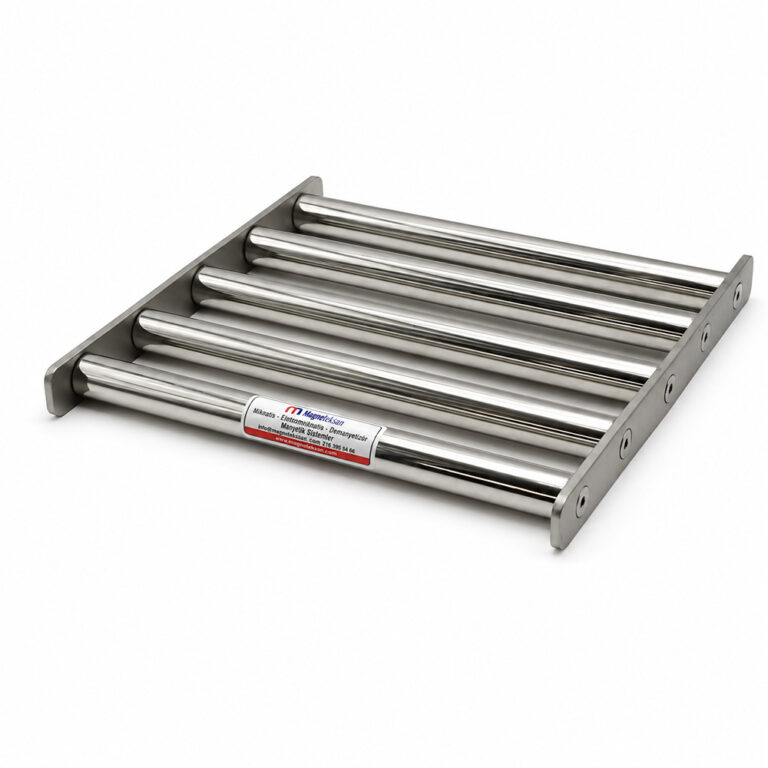
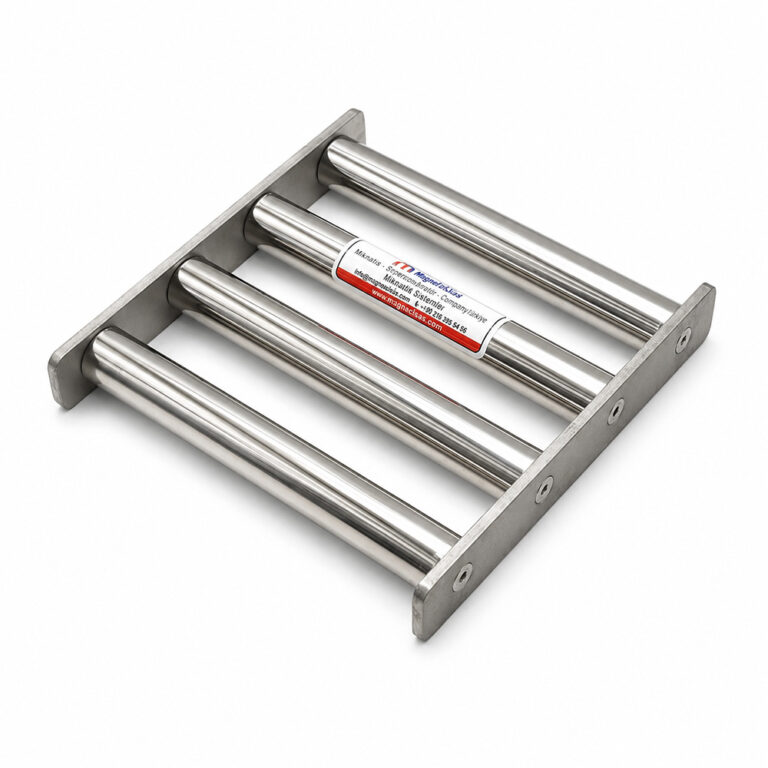
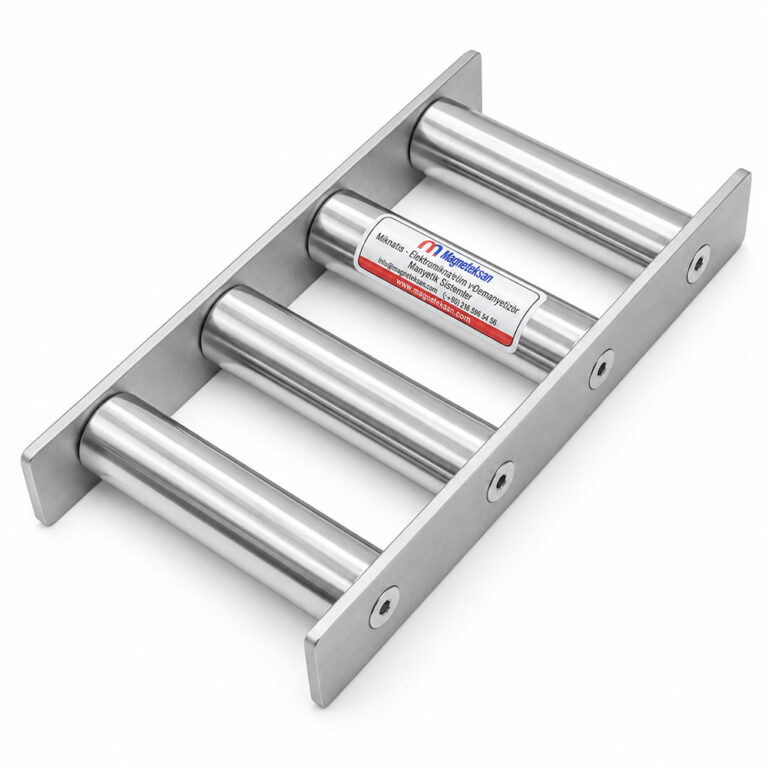
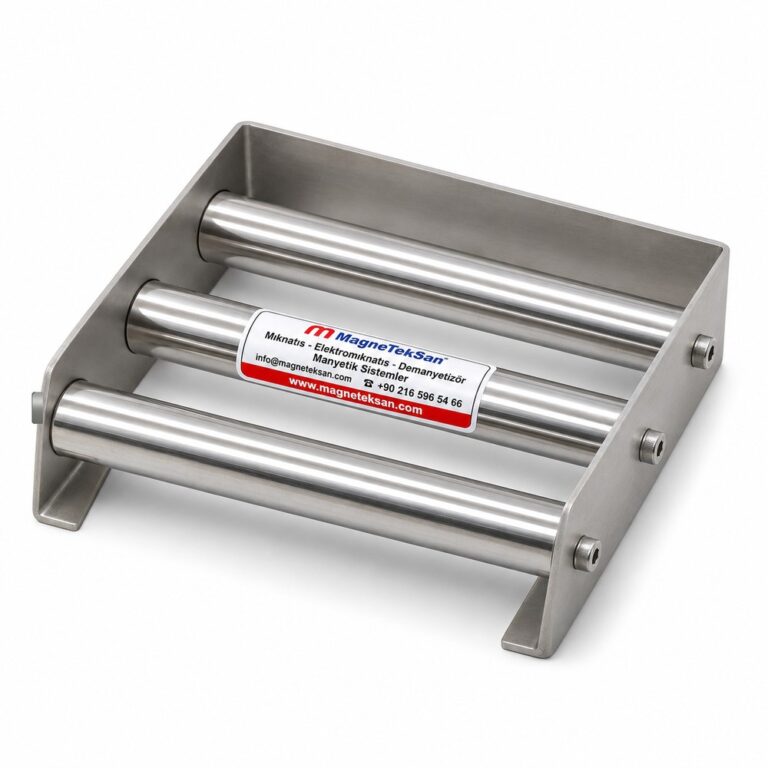
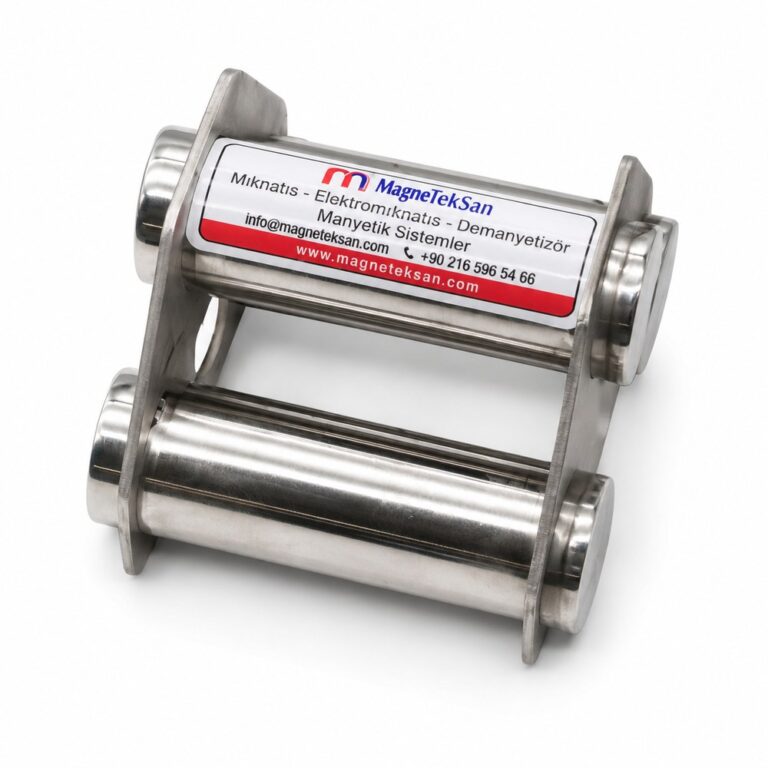
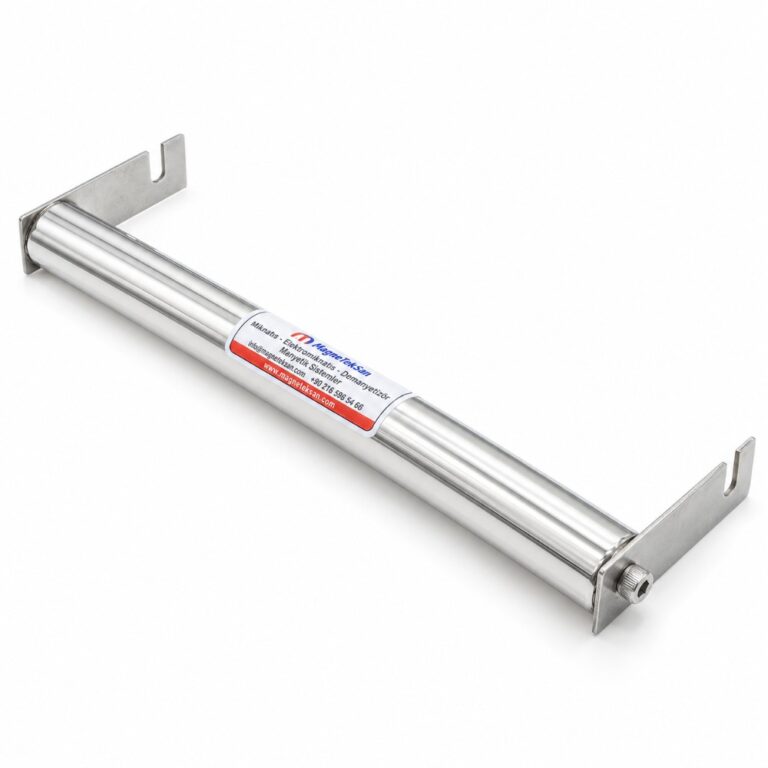
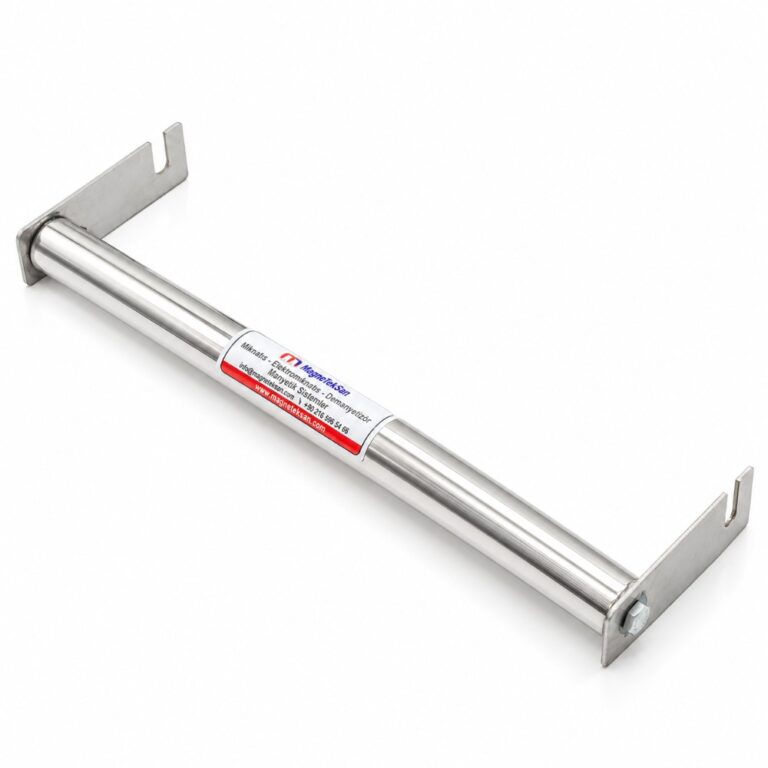
This 180×160 mm grid magnet is used in industrial bakeries to remove iron particles from flour leaving the sifter, before the flour goes into the dough mixer. It has a stainless steel sheet frame bent into a U and three Ø25 mm neodymium rods fitted in parallel between its two side walls. As the flour passes between the rods, wire, screws, nuts and steel fragments are held on the rod surface.
| Specification |
Value |
| Product type |
Rectangular neodymium grid magnet (magnetic grate) |
| Model code |
180×160 mm Ø25×3 S873T-BK-O |
| Size |
180×160 mm |
| Number of rods |
3, parallel |
| Rod diameter |
Ø25 mm |
| Magnetic field |
7,000 Gauss (at the rod surface) |
| Magnet material |
Neodymium (NdFeB) |
| Rod body |
Stainless steel, sealed |
| Frame |
Three-sided stainless steel sheet bent into a U |
| Rod fixing |
Hex socket bolts through the side walls |
| Maximum operating temperature |
80 °C |
| Power supply |
None required (permanent magnet) |
| Application |
Industrial bakery: sifter outlet chute or weigh hopper inlet |
Why Is Flour Sifted in a Bakery, and Where Does Metal Come From?
In an industrial bakery, flour is drawn from the silo or tipped from bags, passed through a sifter, then weighed and fed to the mixer. Sifting breaks up lumps and removes coarse foreign matter, but iron particles small enough to pass through the screen go straight through. Staples and wire from bag tops, fragments from worn conveying equipment and screws or nuts left behind after maintenance can all end up in the flour this way.
These pieces can damage the moving parts of the mixer and the dough divider and create a risk of metal in the product. A magnet at the sifter outlet holds them upstream of the mixer.
Where Is the 180×160 mm Grid Magnet Fitted?
- In the rectangular outlet chute under the sifter
- On the inlet of the weigh hopper that feeds the mixer
The grid magnet rests on its frame inside the chute or hopper opening. As flour flows between the rods, iron particles are pulled onto the rod surface.
Why 3 Rods?
In a 180×160 mm chute, three Ø25 mm rods leave room for the flour to flow freely. A version with more rods can be made on request.
How to Clean It
- Stop the flour feed and lift the grid magnet out by its frame.
- Remove the collected metal and flour build-up from the rods, wearing gloves.
- Wipe the rods with a dry cloth and put the magnet back.
The rods are stainless steel and sealed. If the magnet has been wet-cleaned, dry it fully before refitting, because flour sticks to damp surfaces. Check it at the end of every shift in the first weeks, then set the interval by how much metal builds up.
Limits and Safety
The grid magnet holds ferromagnetic particles such as iron and carbon steel. It does not hold aluminium, brass, glass, stone or plastic, and it does not reliably hold austenitic stainless steel. Non-ferrous metals and stainless steel need a metal detector; glass, stone and plastic are controlled by sieving and other measures. Do not use the product above 80 °C. Neodymium magnets are strong: keep the product away from anyone fitted with a pacemaker or other implanted medical device, and from bank cards and electronic devices, and take care not to trap your fingers when bringing it near steel surfaces.
Other Sizes
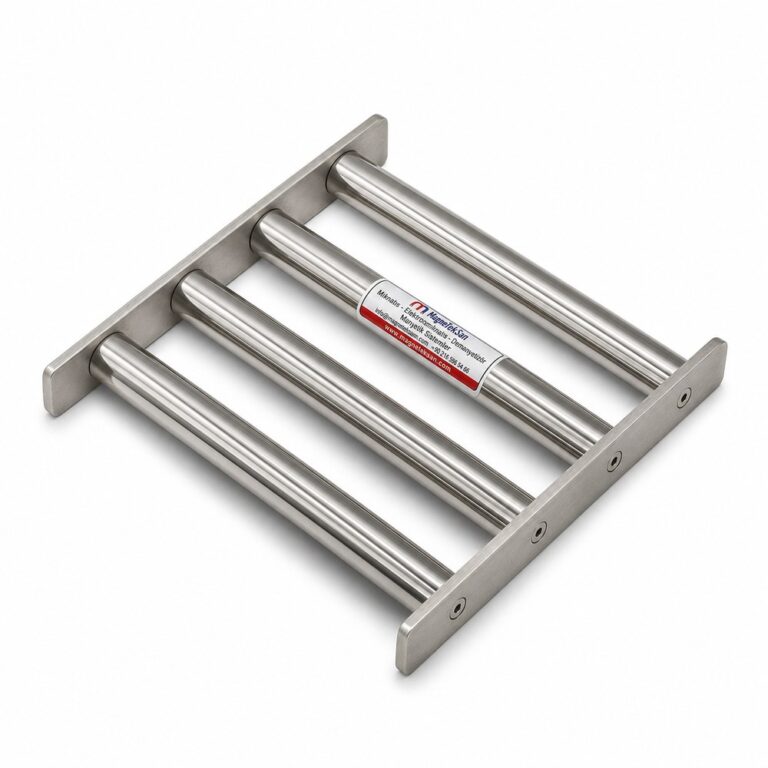
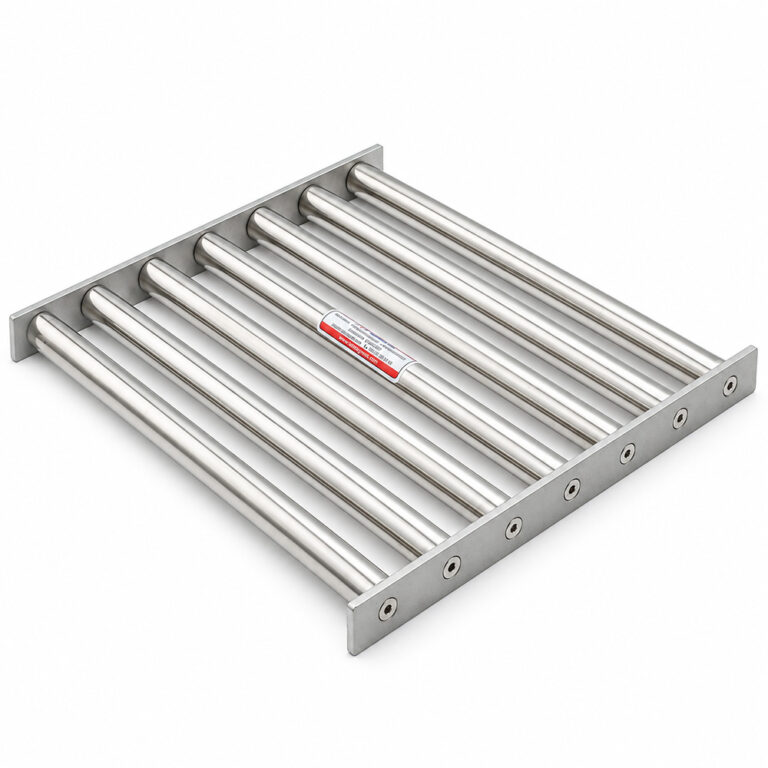
Grid size, number of rods and rod diameter can be made to suit your chute. For other options, see our square and rectangular grid magnets. For sifter outlets and pipelines in flour mills, see our flour sifter outlet magnet and flour blending line drawer magnet. Contact us with the size of your chute for a quotation.
Frequently Asked Questions
Does the grid magnet affect the flour?
No. The magnetic field only attracts ferromagnetic particles such as iron and steel; it has no effect on the flour itself.
I have a metal detector. Do I still need a grid magnet?
Yes. The grid magnet holds metal in the line and protects the mixer, while a metal detector also picks up the non-ferrous metals the magnet cannot hold. Using both together is recommended.
My chute is not 180×160 mm. Can you make another size?
Yes. Send us the inside size of your chute or hopper opening, and we will size the grid and rod count to suit.