- Magneteksan
- > Square - Rectangular Grid Magnets
- > 280×400 mm Neodymium Grid Magnet for Wheat Semolina Production Lines
280×400 mm Neodymium Grid Magnet for Wheat Semolina Production Lines
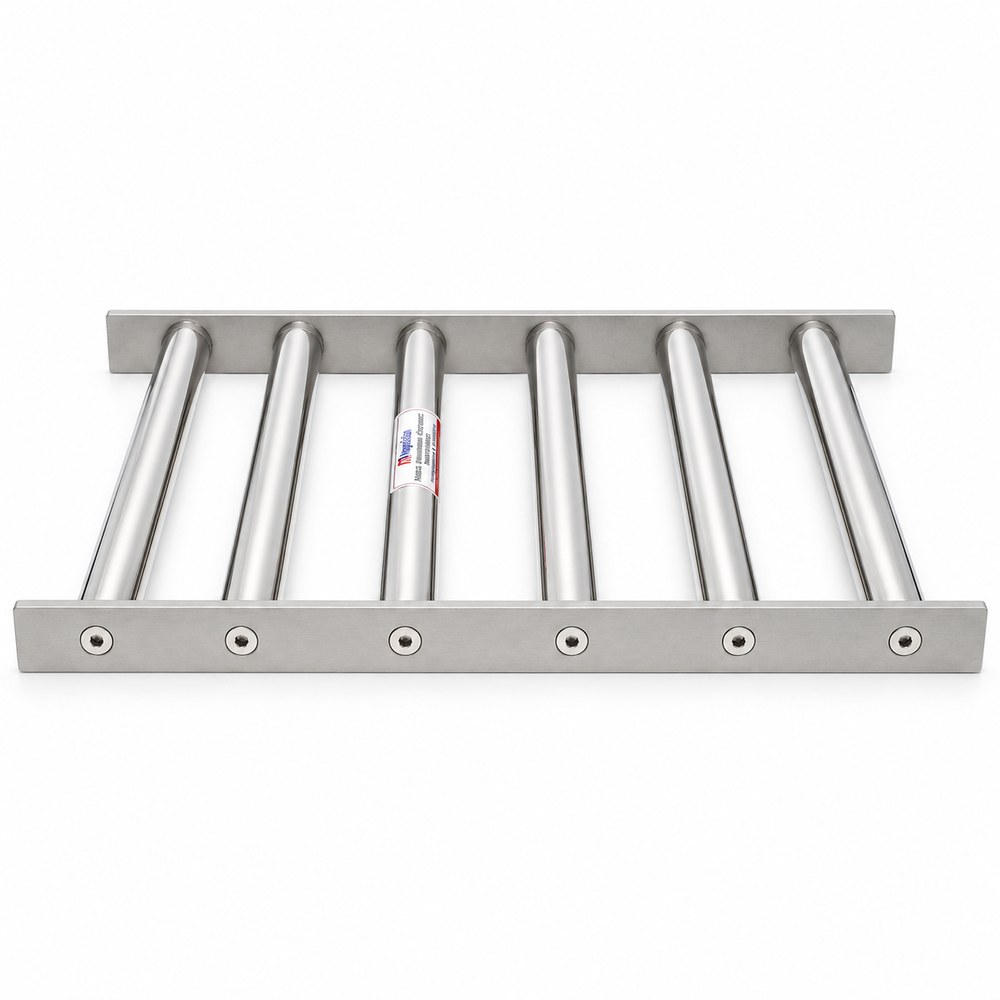
280×400 mm Neodymium Grid Magnet for Wheat Semolina Production Lines
General Features
- Removes ferrous particles from wheat semolina before packing
- Fits into hopper inlets, chute frames and silo outlets
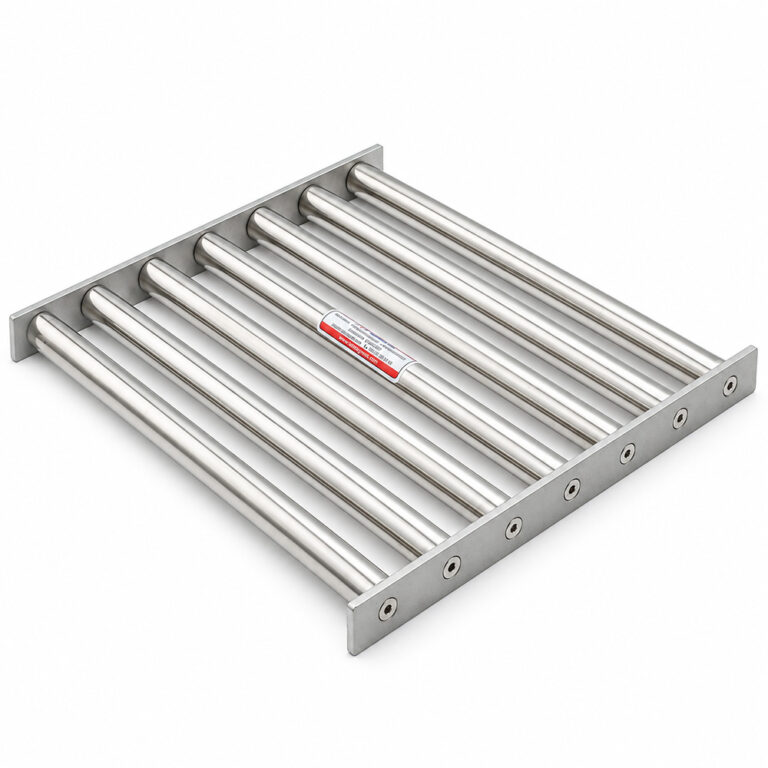
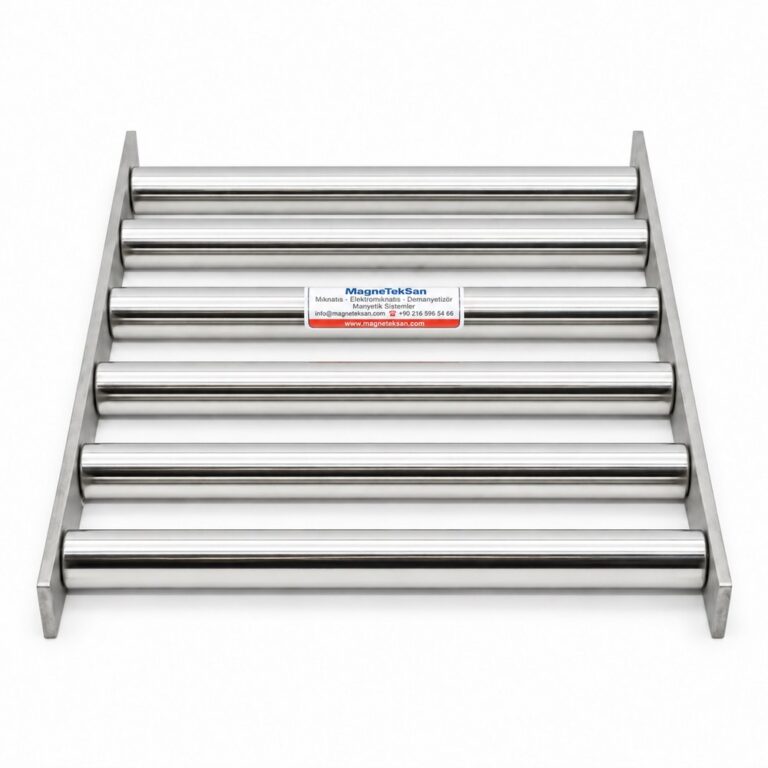
- Six sealed Ø25 mm stainless steel rods
- 7000 Gauss magnetic field measured at the rod surface
- Two drilled stainless steel flat bars form the frame
- Permanent neodymium magnet, no electricity required
- Rods are cleaned by hand without tools
- Made to order in other sizes and Gauss levels
Technical Specifications
- Model code: 280×400 mm Ø25×6 S872T
- Stock code: MGK-EL-337
- Overall dimensions: 280×400 mm
- Number of rods: 6
- Rod diameter: Ø25 mm
- Magnetic field: 7000 Gauss (rod surface)
- Magnet material: Neodymium (NdFeB)
- Housing material: AISI 304 stainless steel
- Rod construction: Sealed
- Frame: Two drilled stainless steel flat bars
- Maximum operating temperature: 80 °C
- Power supply: Not required (permanent magnet)
Kategori: Square - Rectangular Grid Magnets
Product Information
Extra Information
Product Information
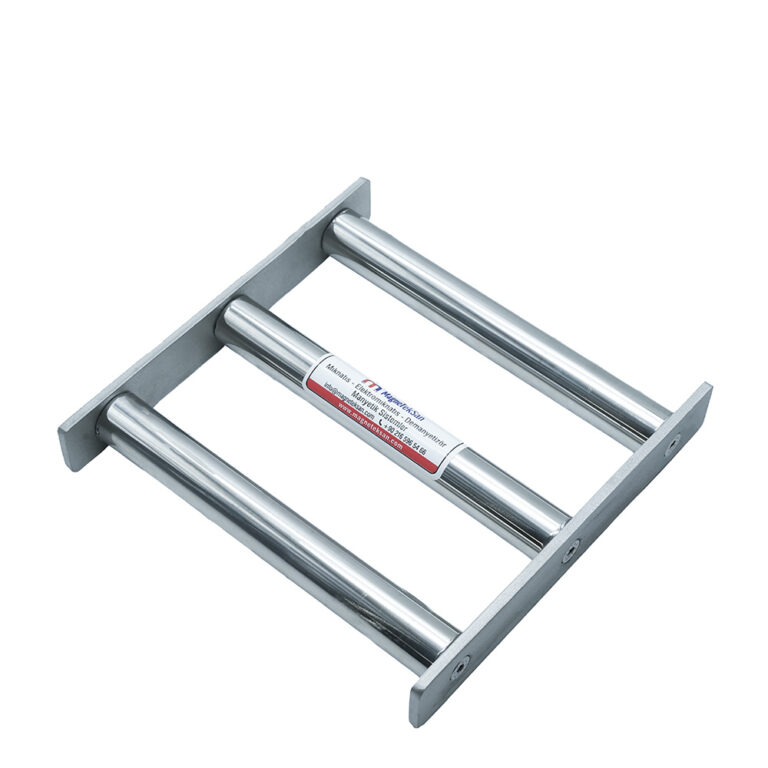
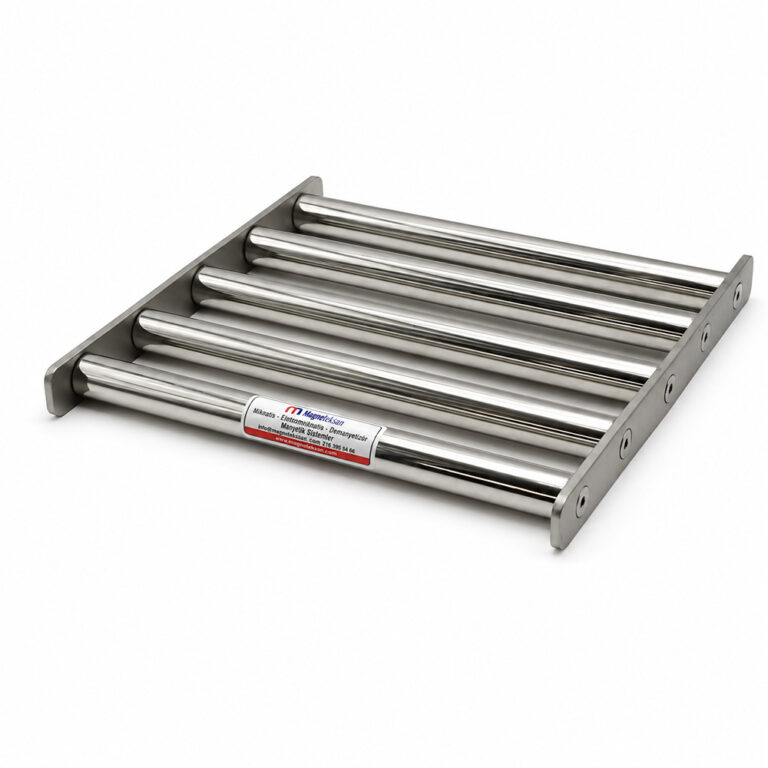
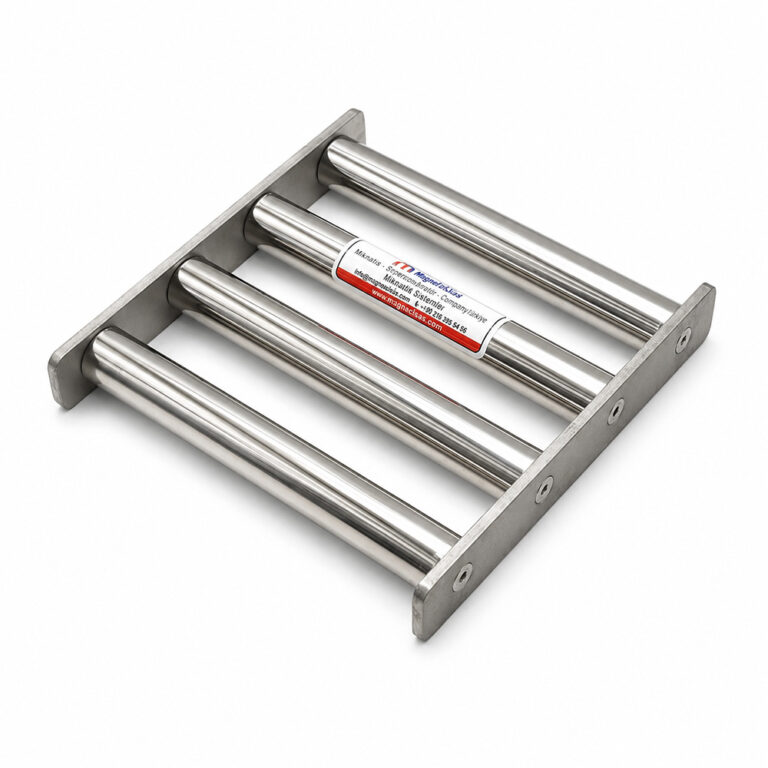
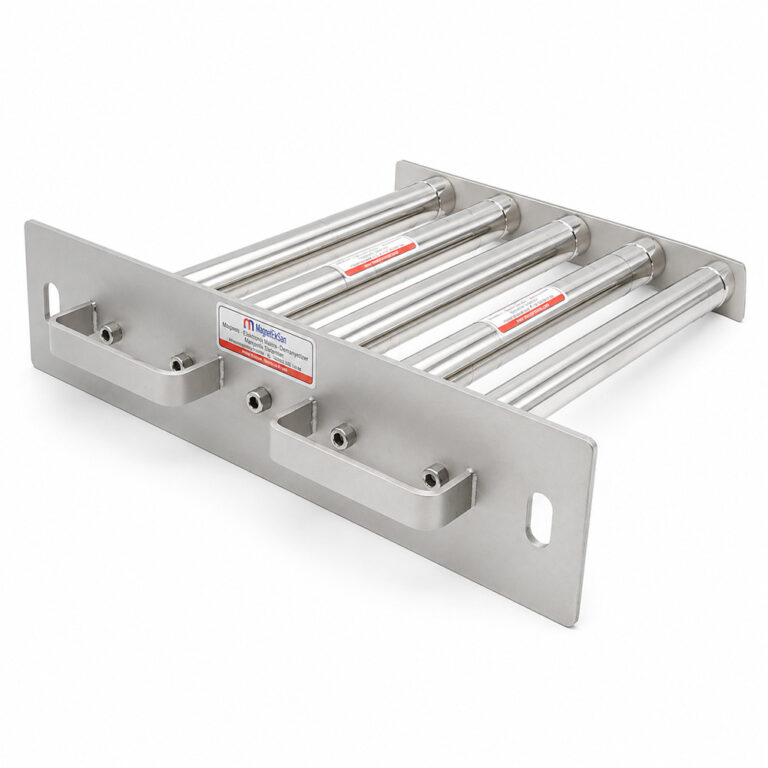
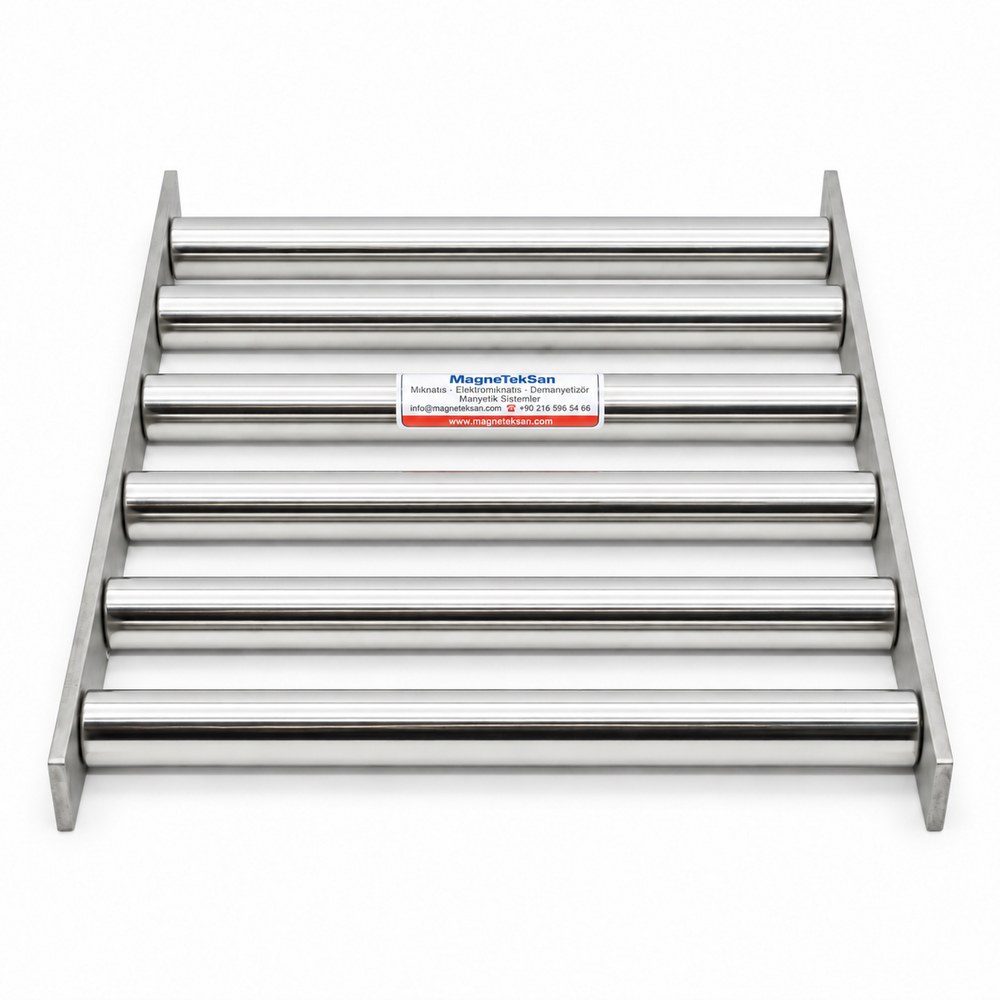
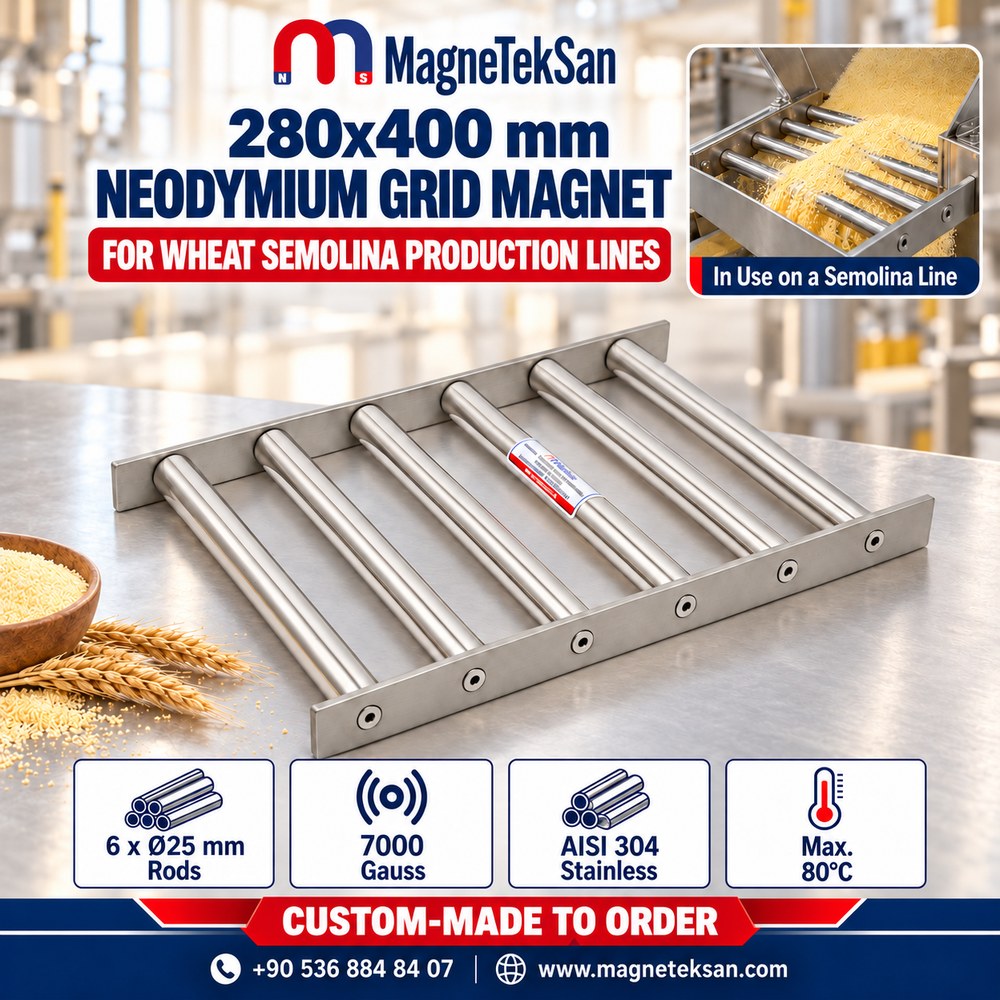
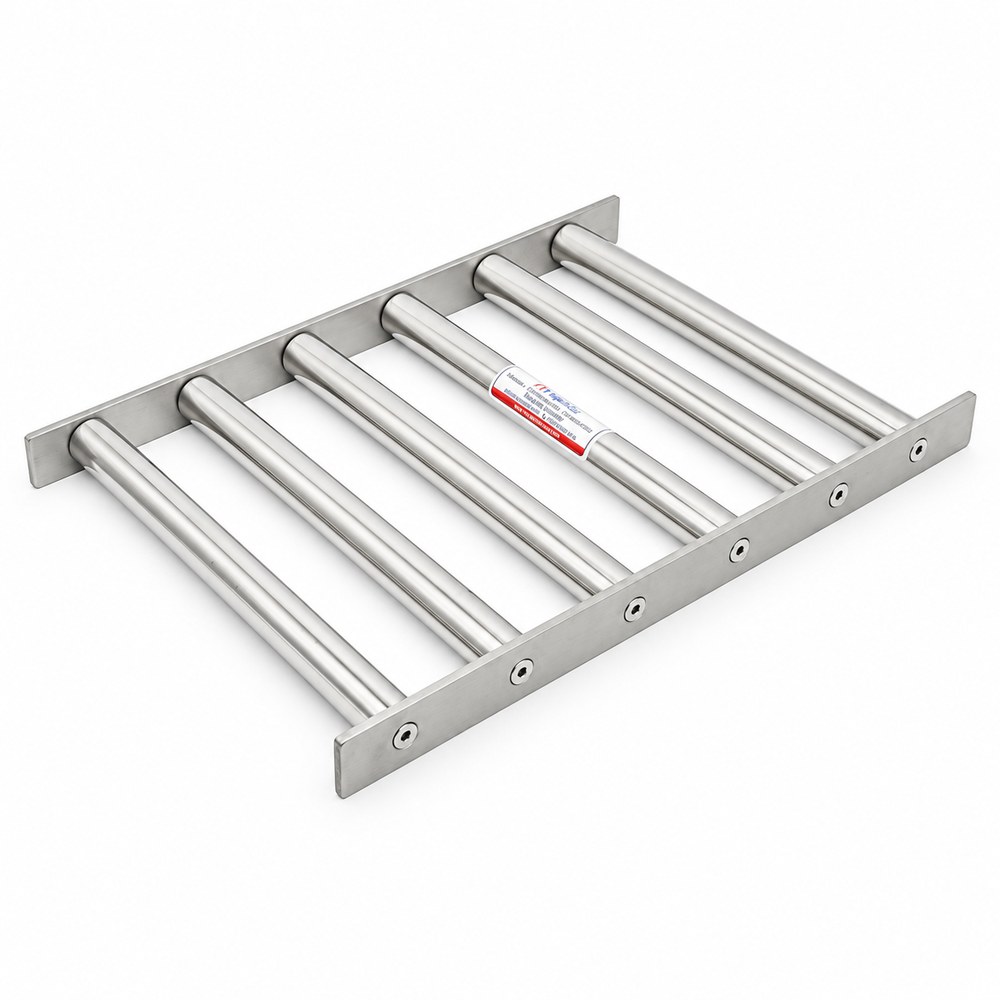
The 280×400 mm neodymium grid magnet is used on wheat semolina production lines to remove iron and steel particles from the product before it is packed. Six sealed Ø25 mm stainless steel rods are held between two drilled flat bars, and the grid sits in the frame of a hopper, chute or silo outlet. As semolina falls between the rods, ferrous particles are held on the rod surfaces.
| Technical Feature | Value |
|---|---|
| Product type | Rectangular neodymium grid magnet |
| Model code | 280×400 mm Ø25×6 S872T |
| Stock code | MGK-EL-337 |
| Overall dimensions | 280×400 mm |
| Number of rods | 6 |
| Rod diameter | Ø25 mm |
| Magnetic field | 7000 Gauss at the rod surface |
| Magnet material | Neodymium (NdFeB) |
| Housing material | AISI 304 stainless steel |
| Rod construction | Sealed |
| Frame | Two drilled stainless steel flat bars |
| Maximum operating temperature | 80 °C |
| Magnet type | Permanent magnet |
| Power supply | Not required |
| Installation | Seated in a hopper, chute or silo outlet frame |
| Application | Wheat semolina production and packing lines |
Extra Information
1. What Is This Grid Magnet?
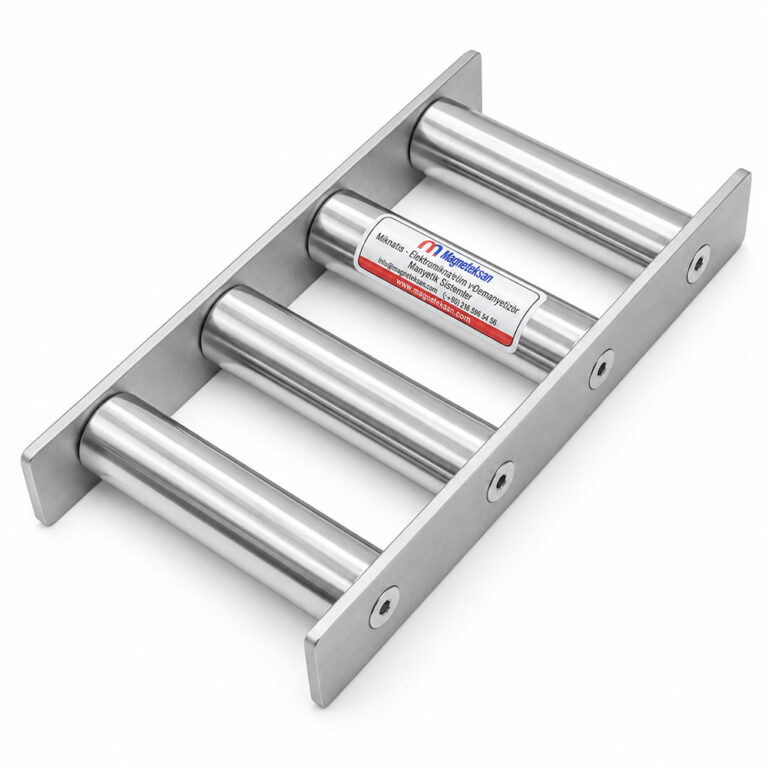
This is a rectangular grid magnet measuring 280×400 mm, built from six Ø25 mm stainless steel rods with neodymium magnets inside. The rods are fixed between two stainless steel flat bars, which form a rigid frame.
It is a passive separator. There are no moving parts and no power connection; the magnets inside the rods do all the work.
The grid is placed across the flow of a dry, free-flowing product. Anything ferrous that touches or passes close to a rod is pulled out of the stream and held there.
This particular unit was built for a wheat semolina line, where it sits ahead of the packing stage as a last magnetic check.
2. Why Semolina Producers Use It
Semolina passes through roller mills, sifters and purifiers, and every one of these machines is made of steel. Over time, small pieces of that steel end up in the product.
A metal detector can find contaminated packs, but it rejects the whole pack. A grid magnet takes the iron out of the product before packing, so less product is wasted.
Retailers and food safety audits expect a documented metal control point. A grid magnet with a known Gauss value is easy to record and check.
The grid needs no adjustment once installed, which suits plants that run long shifts with few operators on the line.
3. Dimensions and Geometry
The overall size of the grid is 280×400 mm. The rods are Ø25 mm, and there are six of them, evenly spaced between the two flat bars.
The frame is open on two sides and closed by the flat bars on the other two. This lets the grid rest on a ledge inside a square or rectangular opening.
The rods run parallel to each other, so product falling from above has to pass through the gaps between them.
If your opening is a different size, the length of the rods, the length of the flat bars and the number of rods can all be changed.
4. Two-Side Flat Bar Frame
The model code ends in 2T, which means the frame is made with flat bars on two sides. This is the standard frame for rectangular grids.
Each rod is fixed to the flat bars with a screw through a drilled hole. The front bar therefore shows six holes, one for each rod.
Because only two sides are closed, the grid is light and easy to lift out for cleaning.
For openings where the grid needs to be held on all four sides, a four-side frame can be made instead.
5. Magnet Material and Housing
The magnetic core of each rod is neodymium iron boron (NdFeB). This is the strongest type of permanent magnet in common industrial use.
The magnets are sealed inside AISI 304 stainless steel tubes. The product touches only the stainless steel, never the magnet itself.
Stainless steel tubes resist moisture and the light washing that food plants use, and they can be wiped clean easily.
The rod ends are closed, so dust and flour cannot get inside the tube.
6. How It Works
Inside each rod, the magnets are arranged so that the field leaves the rod surface and reaches into the gap around it.
When a piece of iron or steel enters this field, it is pulled towards the rod and held against the tube.
The field is strongest at the rod surface and weaker in the middle of the gap between two rods. This is why the grid must cover the whole opening, so that all the product passes close to a rod.
The particles stay on the rod until someone removes them. The grid does not release them back into the flow on its own.
7. Main Areas of Use
The grid was designed for wheat semolina, but it suits any dry, free-flowing powder or granule.
Typical places for it are hopper inlets, silo outlets, chute frames and the feed openings of packing machines.
Flour, bulgur, couscous, rice, sugar, salt and pulses are all handled with grids of this type.
It is also used outside food, for plastic granules, mineral powders and chemical powders, as long as the product flows freely.
8. Which Metals It Captures
The grid captures ferromagnetic metals: iron, carbon steel, tool steel and similar materials.
Broken screen wire, roller mill wear particles, bolts, nuts and staples are all typical finds on a semolina line.
Austenitic stainless steels such as AISI 304 and 316 are not magnetic, or only very weakly magnetic, so most of these parts will not be held. Cold-worked stainless wire can pick up some magnetism and may be partly captured.
Aluminium, brass, copper, plastic and wood are not magnetic at all and pass straight through the grid.
9. Example: Semolina Purifier Outlet
Semolina leaves the purifier as a clean, graded product, but it has already passed through several steel machines.
Placing the grid at the purifier outlet catches roller wear and wire pieces before the product goes to storage.
At this point the product is dry and flows well, so it passes through the rods without bridging.
Iron caught here also tells the miller which machines upstream are wearing.
10. Example: Silo to Packing Chute
Between the semolina silo and the packing machine there is usually a chute or a short hopper.
A grid placed at the top of this chute is the last magnetic check before the product goes into bags.
Bolts and pieces that drop from elevators and screw conveyors after the silo are caught here.
Because this is the final point before packing, many plants treat it as their critical control point for metal.
11. Example: Packing Machine Feed Hopper
Some packing machines have their own small feed hopper above the weigher.
A grid sized to this hopper opening protects the weigher and filling unit from metal pieces.
In this position, the grid is easy to see and easy to reach, so operators can check it during the shift.
Combined with a metal detector after the packing machine, this gives two independent metal controls.
12. Advantages of the Grid Shape
A grid covers the whole cross-section of an opening, so no product can bypass the magnets.
Product falls through the gaps under gravity, so no extra energy or pressure is needed.
The rods present a large magnetic surface in a small depth, which suits openings with little vertical space.
A grid can be lifted out as one piece, which makes cleaning faster than cleaning separate rods.
13. Installation
The grid is placed on a ledge or inside a frame at the opening, with the rods horizontal.
It should sit flat, with no gap between the frame and the walls of the opening.
If the opening has a removable cover or an access door, the grid can be fitted behind it so it is easy to reach for cleaning.
A grid that is mounted at an angle or with gaps at the edges will let some product pass without touching the field.
14. Holding the Grid in Place
In most hoppers, the weight of the grid and a simple ledge are enough to hold it in position.
Where vibration is strong, small stops or clips on the frame stop the grid from moving.
The fixing should allow the grid to be lifted out without tools, so that cleaning is not skipped.
Do not weld or drill the rods themselves; this would damage the seal and the magnets inside.
15. Points to Watch During Installation
Neodymium magnets are very strong. Keep fingers clear when bringing the grid close to steel surfaces.
Keep the grid away from other magnets and loose steel tools while handling it.
People with pacemakers or other implanted medical devices should keep a safe distance from strong magnets.
Keep the grid away from magnetic cards, data storage and sensitive electronics.
16. Surface Protection and Hygiene
The rods and the flat bars are stainless steel, which is the normal choice for food contact areas.
Stainless steel does not need paint or coating, so nothing can flake off into the product.
The surfaces can be wiped dry or cleaned with a damp cloth. The grid should be fully dry before it goes back into the line.
For very wet or corrosive products, AISI 316 rods can be supplied on request.
17. Operating Temperature
The grid is rated for continuous use up to 80 °C.
Above this temperature, the neodymium magnets inside the rods can lose strength permanently.
Semolina leaving the mill and purifiers is well below this limit, so the grid is suitable for the positions described here.
For hot products, such as material leaving a dryer or roaster, a high-temperature version is needed.
18. Factors That Affect Performance
The most important factor is how close the product passes to the rod surface. Thin, even flow gives the best result.
Fast flow and deep product layers reduce the time each particle spends in the magnetic field.
A build-up of captured metal or powder on the rods weakens the field at the surface, which is why regular cleaning matters.
Very fine iron dust is harder to hold than larger pieces; for such cases a 10000 Gauss version can be made.
19. Number of Rods and Layout
This grid has six rods across its width. The number of rods sets the size of the gaps between them.
Smaller gaps bring more product close to a rod but slow the flow; larger gaps let product pass faster but with less contact.
Six rods suit a dry, free-flowing product like semolina in an opening of this size.
For higher capacity or finer contamination, two grids can be stacked with the rods offset, so that product passes through two rows.
20. Use in Flour and Semolina Mills
Flour and semolina mills use grid magnets at several points, from wheat intake to packing.
At intake, the grid protects the cleaning and milling equipment from tramp metal.
After milling, it removes wear particles produced by the mill itself.
Before packing, it gives the final check that food safety audits usually ask for.
21. Protecting Machines and Equipment
Besides keeping metal out of the product, the grid protects machines further down the line.
Weighers, filling augers and bag sealers can be damaged by bolts or hard metal pieces.
Catching these pieces early reduces unplanned stops and repair costs.
It also reduces false rejects and stoppages at the metal detector.
22. Other Applications
The same 280×400 mm grid can be used for other dry foods such as sugar, salt, rice and pulses.
It is also suitable for plastic granules, masterbatch and regrind in the plastics industry.
Ceramic, glass and mineral powder producers use grids of this kind at hopper inlets.
For sticky or damp products, a different design, such as a drawer magnet with self-cleaning rods, may work better.
23. Safety and Limits
The grid removes ferromagnetic metal only. It does not remove stainless steel, aluminium, glass, stones or plastic.
It does not replace a metal detector; the two work best together.
The grid must not be used above 80 °C.
Handle the grid with care; the magnetic force can trap fingers between the rods and nearby steel parts.
24. Energy Requirement
The grid uses permanent neodymium magnets and needs no electricity.
There is no wiring, control panel or power cost.
The magnetic field is always present, including during a power cut.
This also means the grid keeps attracting steel during handling, so care is needed when moving it.
25. Vibration and Mechanical Conditions
Hoppers and chutes on milling lines often vibrate. The stainless steel frame is rigid enough for normal vibration.
If the grid rattles in its frame, add stops or a rubber strip to the ledge to hold it steady.
Do not drop the grid or strike the rods against hard surfaces; impact can crack the magnets inside.
Check the screws that hold the rods to the flat bars from time to time and tighten them if needed.
26. Checking Magnetic Performance
The 7000 Gauss value refers to the magnetic field measured at the rod surface.
Neodymium magnets lose strength very slowly when used below their temperature limit.
Many food plants check grid magnets once a year with a Gaussmeter and keep the result on file for audits.
If the measured value drops noticeably, the rods can be replaced or the grid renewed.
27. Choosing the Right Grid
Start with the inside size of the opening where the grid will sit; the grid should cover it completely.
Then consider the product: its particle size, how freely it flows and its temperature.
Next, think about the type of contamination. Larger pieces are held well at 7000 Gauss; fine dust may need a stronger grid.
Finally, decide on the frame type and the rod material. Grids are made to order, so all of these can be specified.
28. Summary
The 280×400 mm neodymium grid magnet is a simple, passive way to remove iron from wheat semolina before packing.
Six sealed Ø25 mm stainless rods with a 7000 Gauss surface field cover the opening and hold ferrous particles.
It needs no power, has no moving parts and is cleaned by hand in a few minutes.
Used together with a metal detector and regular cleaning, it forms a reliable metal control point on a semolina line.