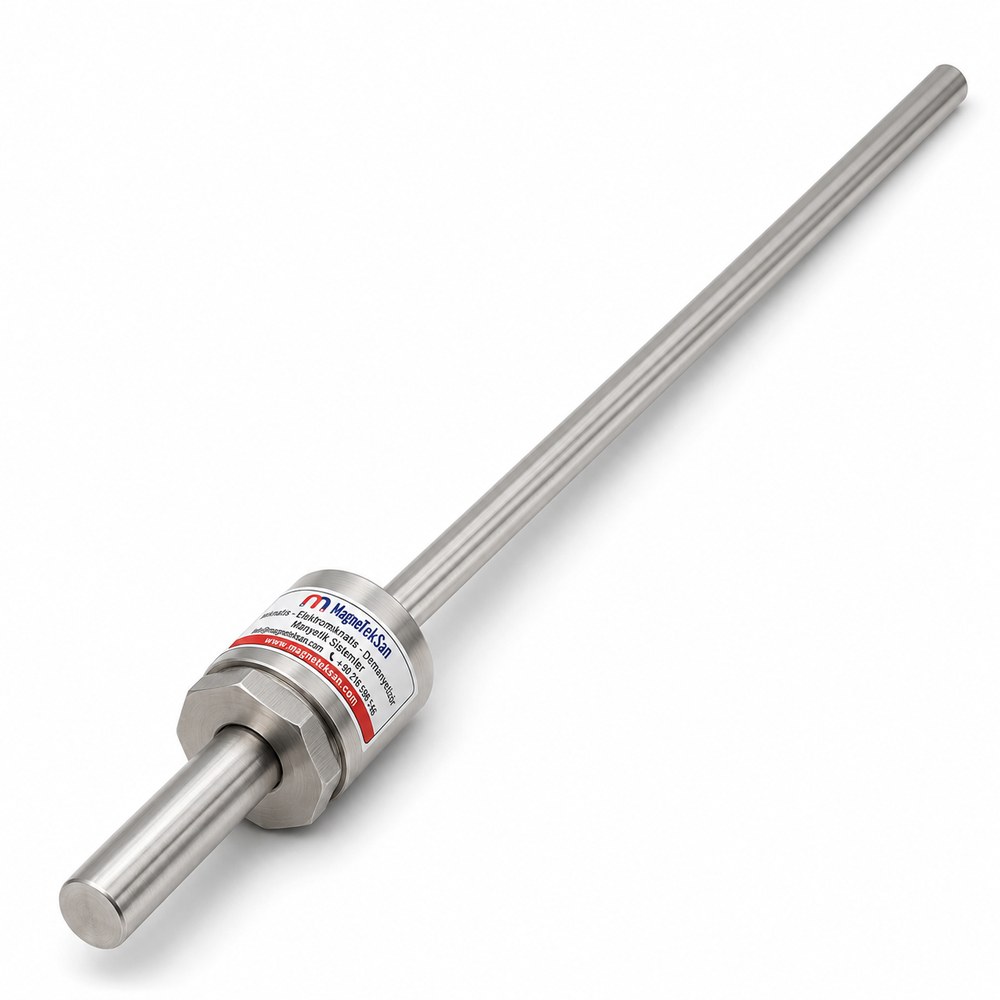
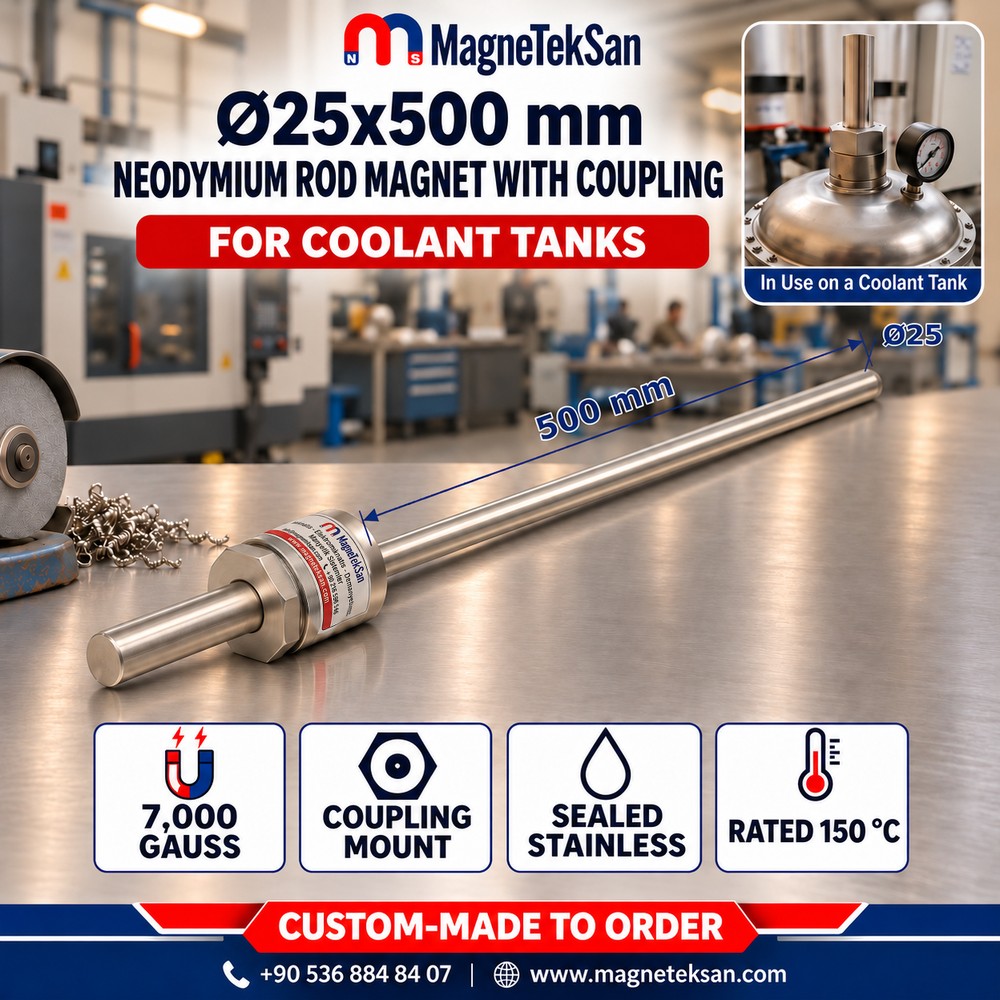
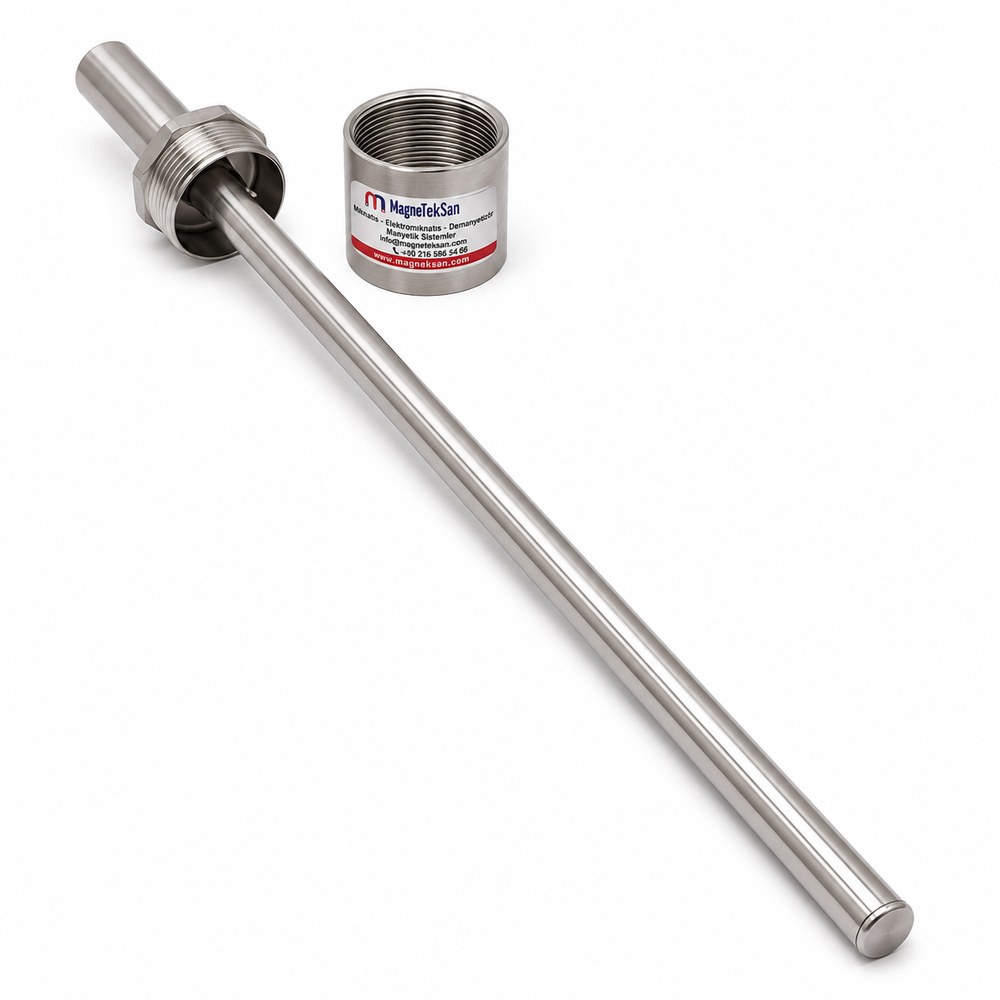
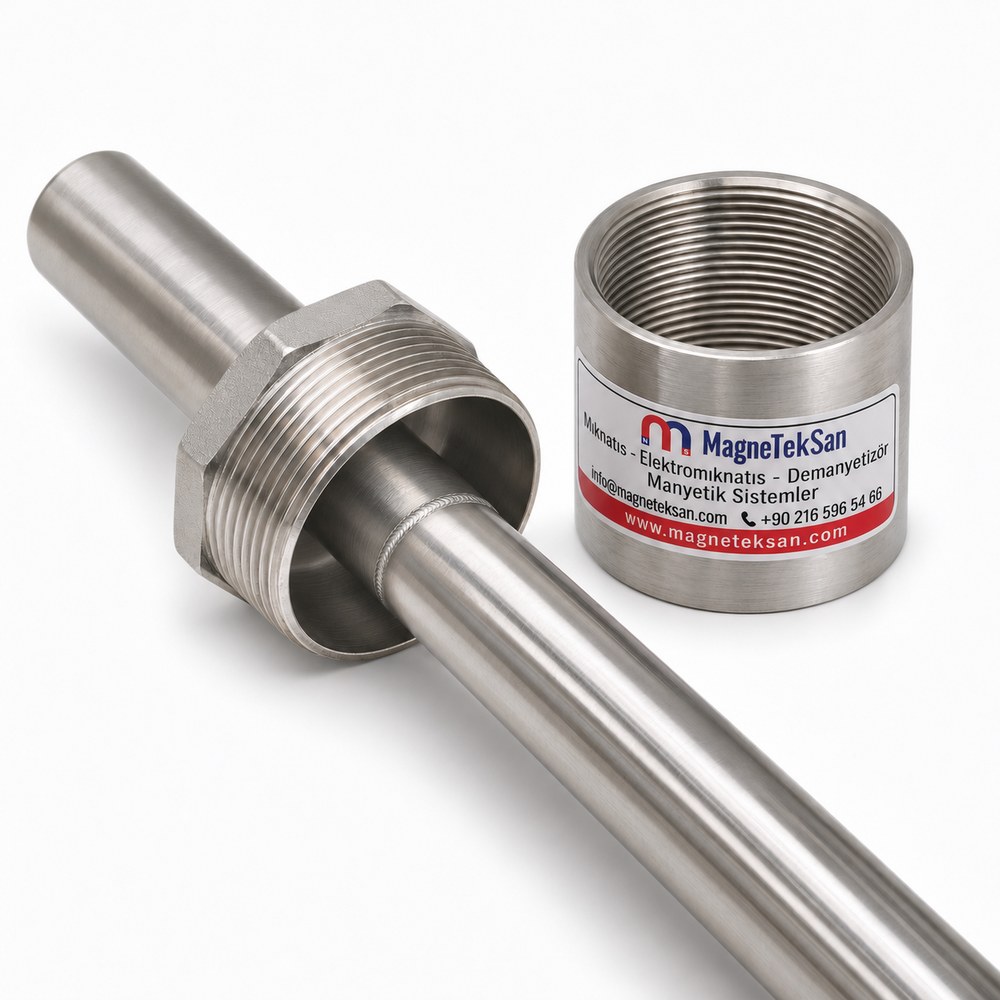
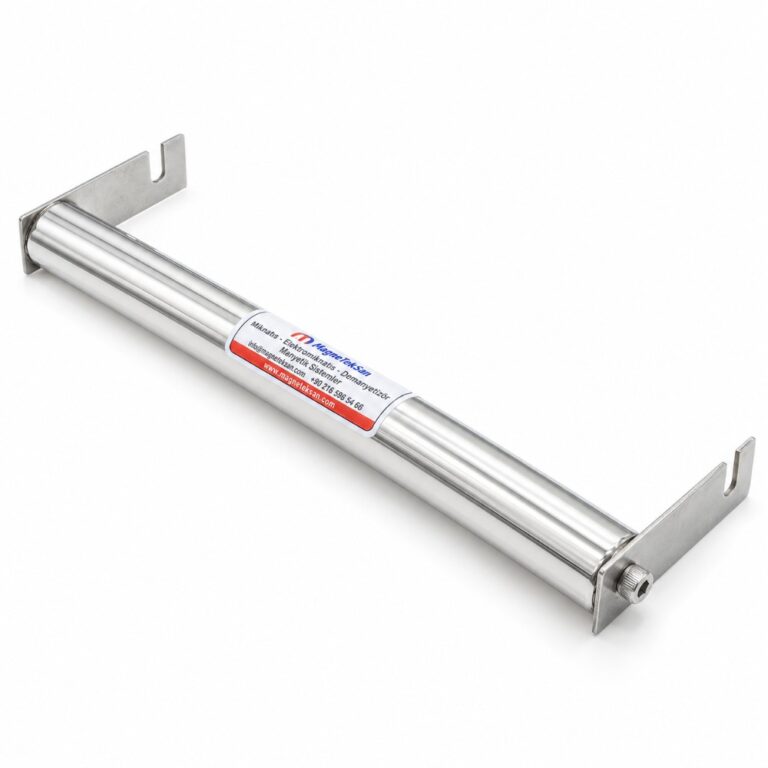
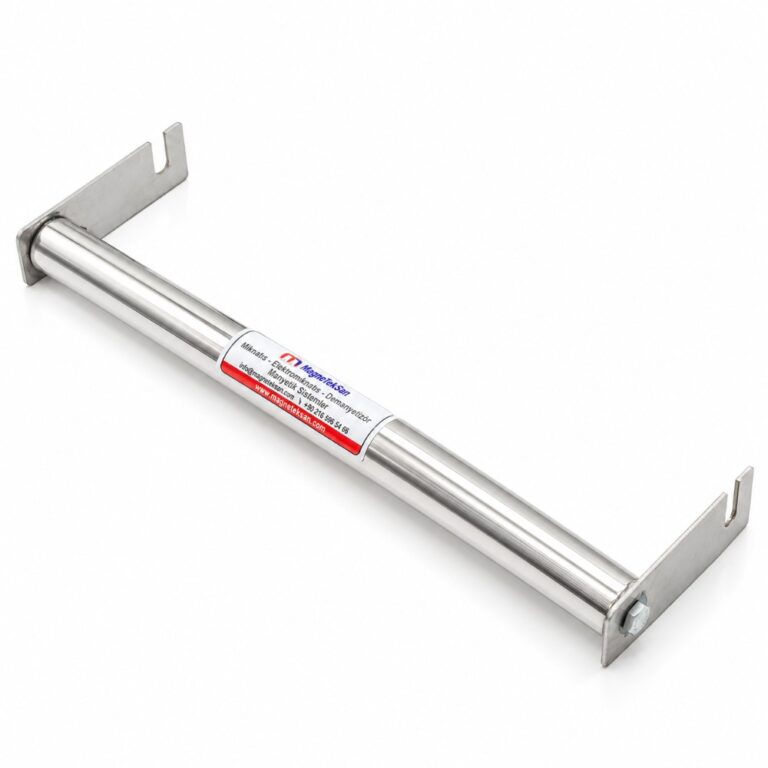
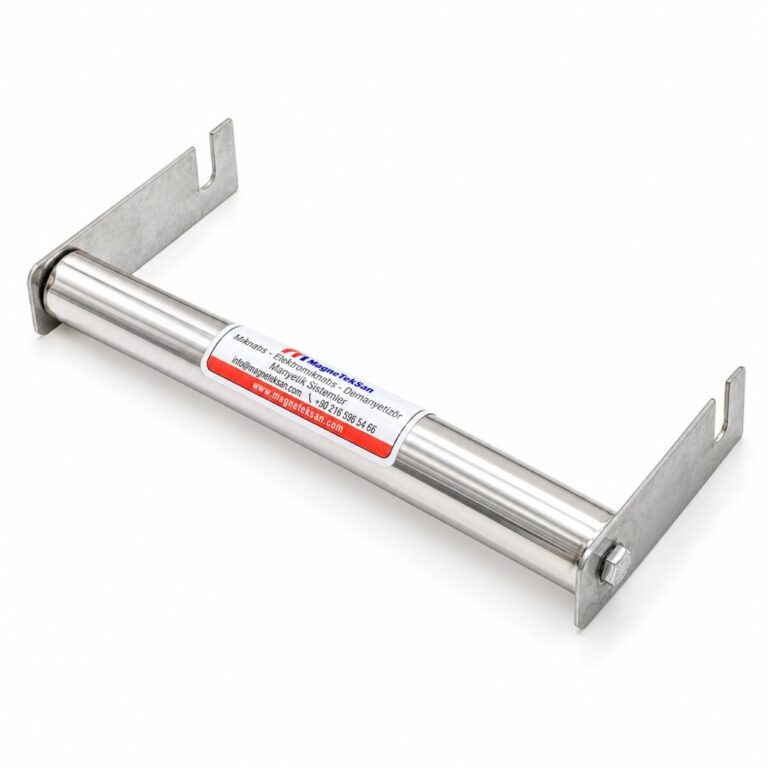
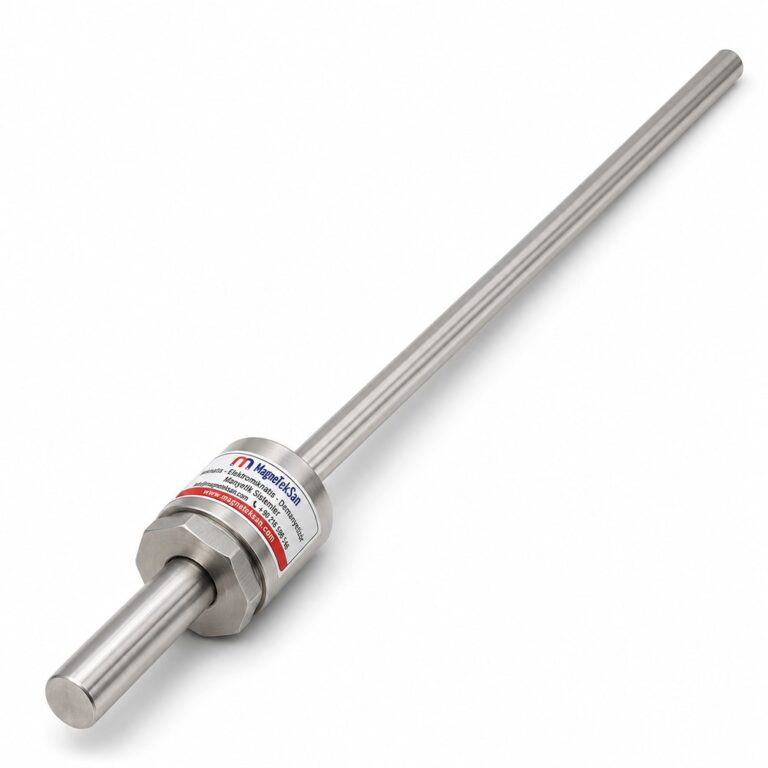
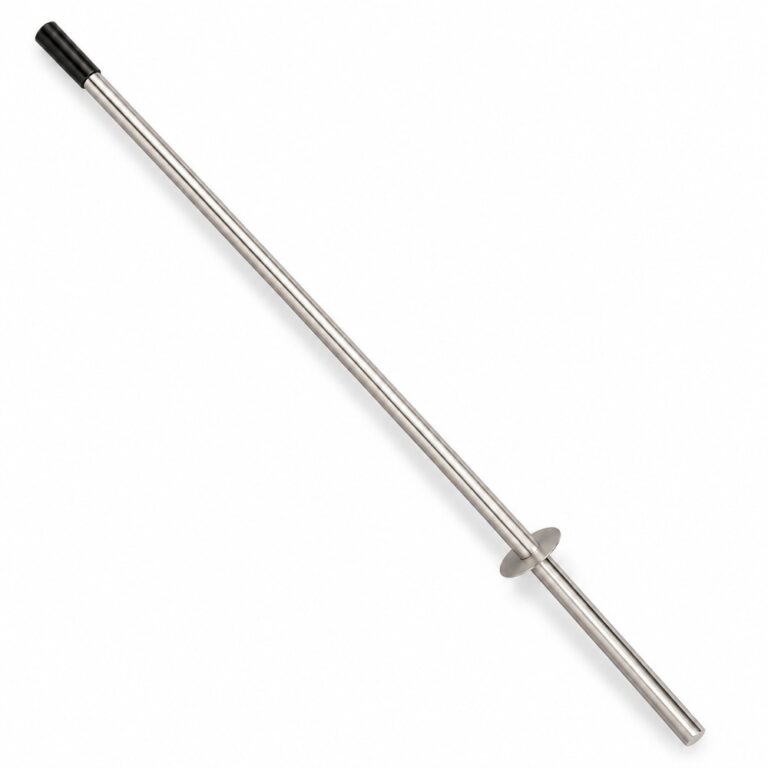
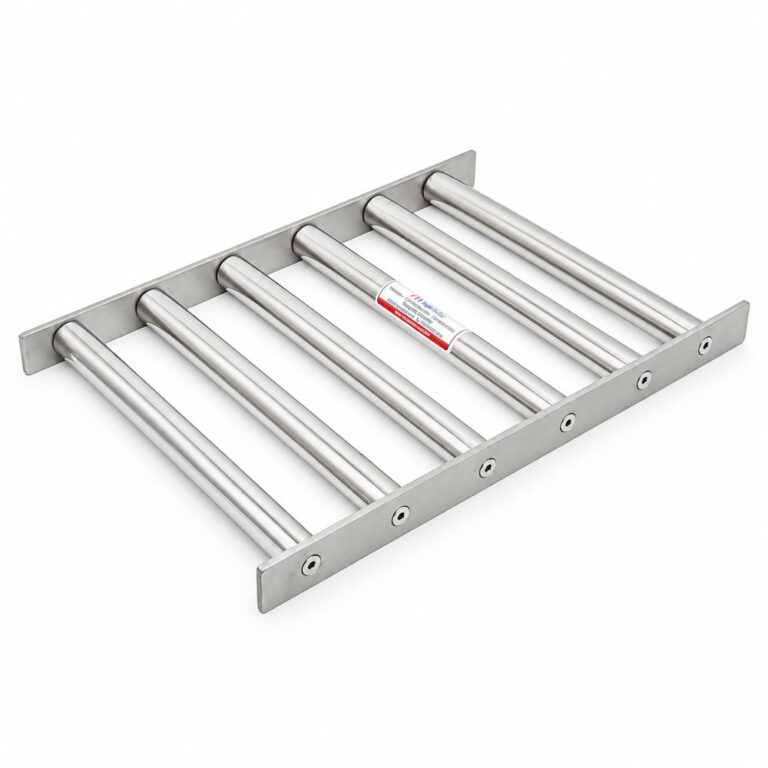
This Ø25×500 mm coolant tank rod magnet, with a hex plug and a matching coupling, is used in the coolant tanks of roll grinding machines to hold the grinding dust and fine steel swarf that circulate in the emulsion. The rod screws into a coupling welded on the tank lid and hangs vertically into the coolant. As dirty coolant returning from the machine flows past the rod, iron particles are held on the tube surface, so the pump draws cleaner fluid.
| Specification |
Value |
| Product type |
Neodymium rod magnet with hex plug and coupling |
| Model code |
Ø25×500 mm TM6S157KTM-O |
| Rod diameter |
Ø25 mm |
| Rod length |
500 mm |
| Surface flux density |
7,000 Gauss |
| Magnet material |
Neodymium iron boron (NdFeB) |
| Tube |
Stainless steel, sealed |
| Connection |
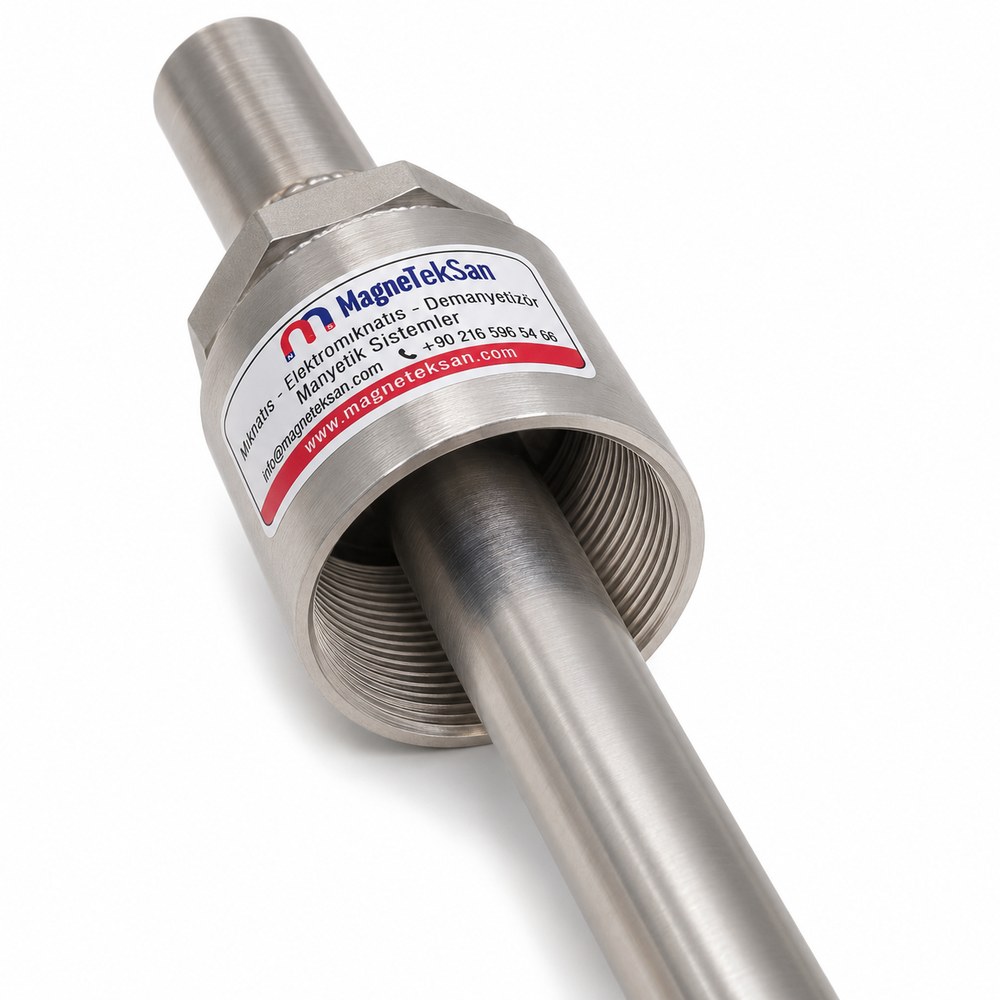
Hex nipple (blind plug) and female coupling |
| Maximum operating temperature |
150 °C |
| Power supply |
None required (permanent magnet) |
| Application |
Coolant (soluble oil emulsion) tanks |
Why Roll Grinding Coolant Gets Dirty
Work rolls and back-up rolls from the rolling mill are reground at regular intervals. During grinding, very fine steel dust comes off the roll surface and abrasive grains break away from the wheel. All of this is carried into the coolant and returns to the tank. A paper band filter or a settling compartment removes most of the dirt, but the finest iron particles that get past the filter keep circulating with the fluid.
Iron dust circulating in the emulsion causes several problems:
- It wears the pump impeller and seals.
- It builds up in nozzles and stops the coolant reaching the roll evenly.
- It can get back between the wheel and the roll and leave scratches and marks on the ground surface.
- It forms sludge at the bottom of the tank, speeds up coolant breakdown and shortens the change interval.
The rod magnet holds the fine iron dust that passes close to it and completes the work of the existing filter.
How to Fit It
- Weld the female coupling supplied with the rod onto the steel tank lid.
- Screw the rod into the coupling. The magnetic part hangs into the coolant and the thick handle stays outside.
For best results, fit the rod in the compartment where dirty coolant returns from the machine, or in the compartment before the pump suction.
How to Clean It
- Stop the machine and unscrew the rod from the coupling.
- Wipe the black deposit off the tube with a cloth or a plastic scraper.
- Clean the thread and screw the rod back in.
There is no need to drain the tank. Check the rod often in the first weeks, then set the cleaning interval by how much deposit builds up.
Technical Details
Neodymium magnets inside the rod give 7,000 Gauss at the tube surface. The outer tube is stainless steel and is sealed, so coolant and water never reach the magnets and they cannot corrode. The rod is suitable for operating temperatures up to 150 °C. It is made to order; diameter, length and connection size can be changed to suit your tank.
Which Machines?
Besides roll grinders, the rod can be used in the coolant and cutting fluid tanks of cylindrical grinders, surface grinders, lathes and CNC machining centres. If you need to clean coolant continuously, see our magnetic liquid separator for coolant. To filter grinding fluid in a pipeline, see our DN50 magnetic filter for grinding fluid.
Limits and Safety
The magnet only holds ferromagnetic particles such as iron and carbon steel. It does not hold abrasive grains from the grinding wheel, aluminium, copper or austenitic stainless steel swarf; keep using your existing filter for these. Stop the machine and the pump before removing the rod. Neodymium magnets are strong: keep the removed rod away from anyone fitted with a pacemaker or other implanted medical device, and from bank cards and electronic devices, and take care not to trap your fingers when bringing it near steel surfaces.
Other Sizes
For other lengths, diameters and connection types, see our rod magnets with special connection or read more about rod magnets. Contact us with your tank dimensions for a quotation.
Frequently Asked Questions
Can I remove my paper band filter?
No. The magnet does not hold abrasive grains. The filter removes coarse and non-magnetic dirt, and the magnet holds the fine iron dust that passes through the filter; the two work together.
Is the coupling supplied with the rod?
Yes. The rod is supplied with a female coupling that matches its thread. The coupling only needs to be welded onto the steel tank lid.
Can coolant get inside the tube?
No. The tube is sealed, so the magnets never come into contact with the fluid.