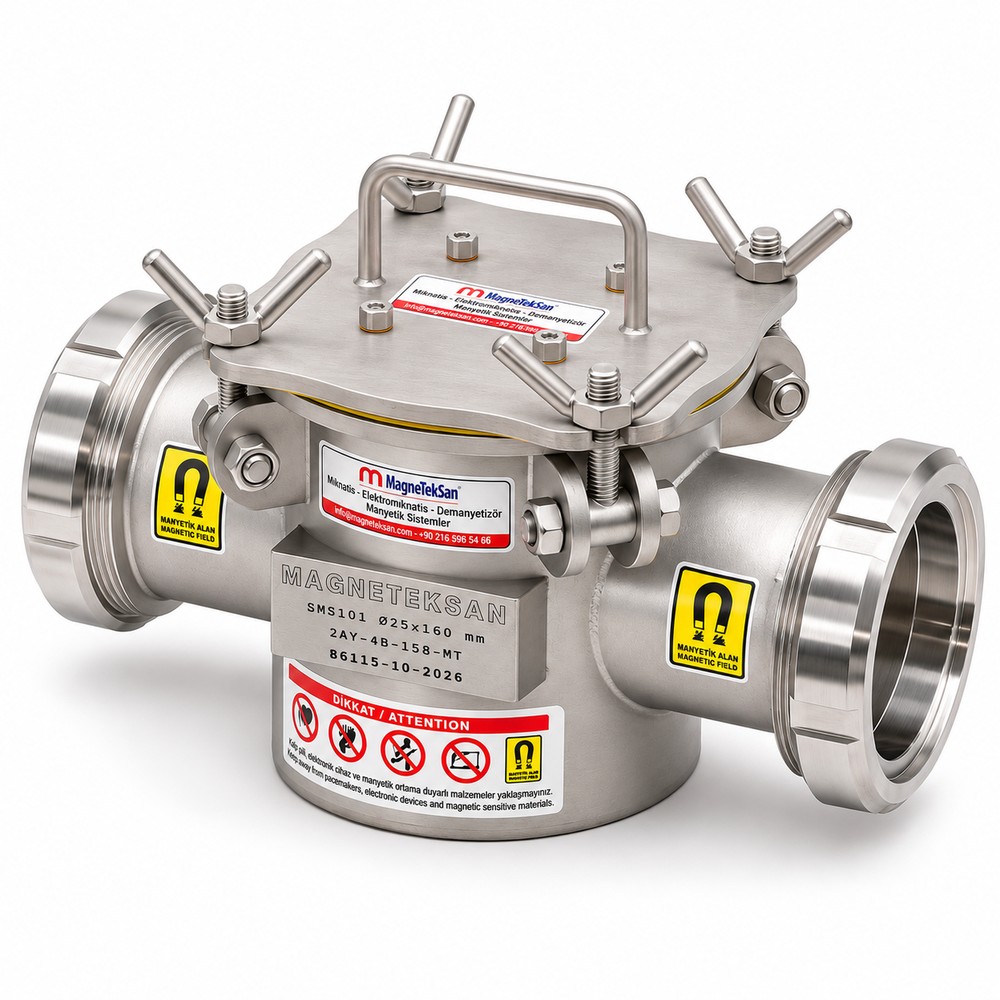
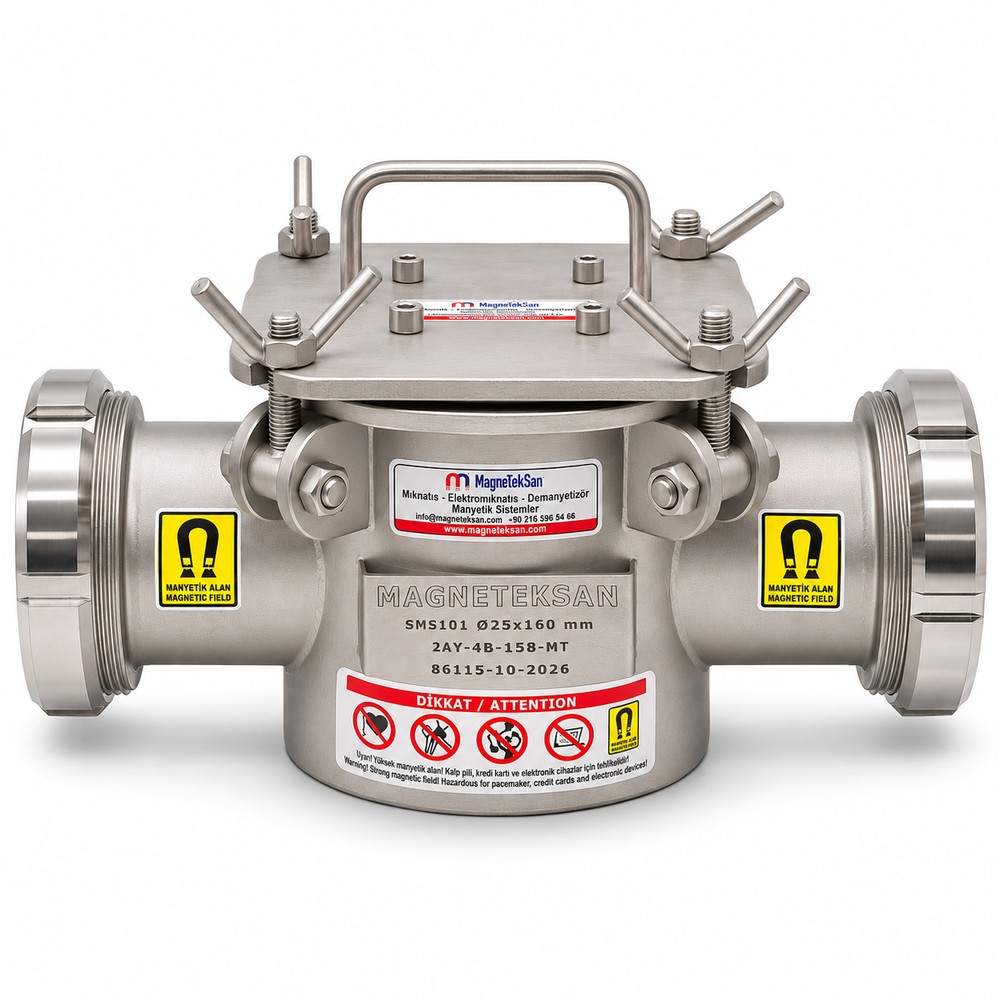
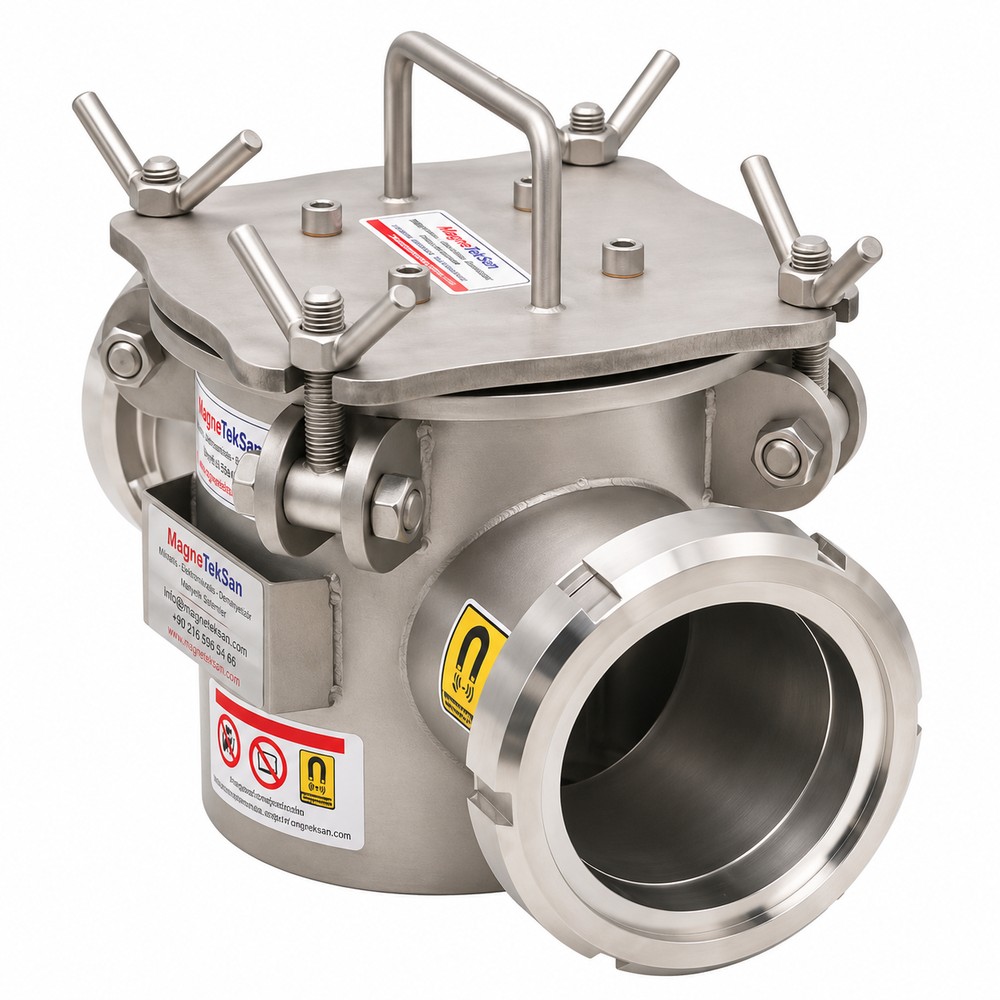
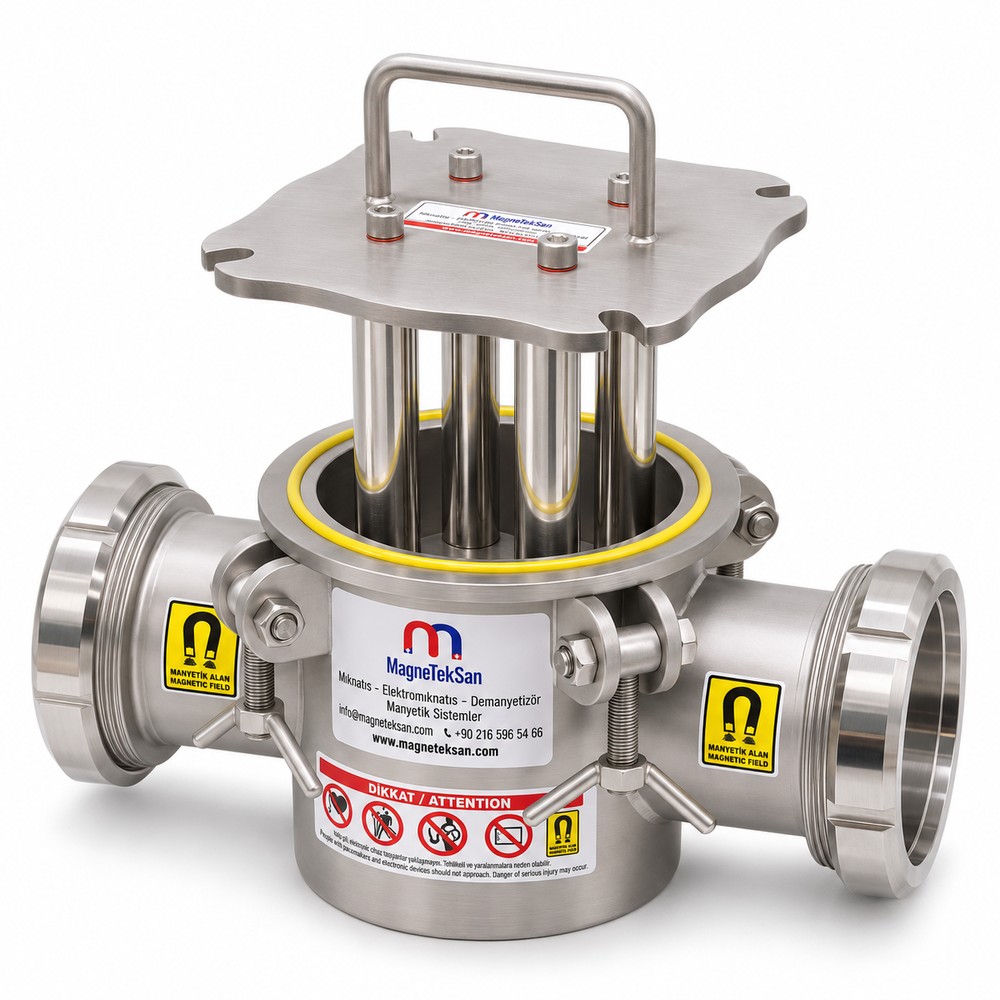
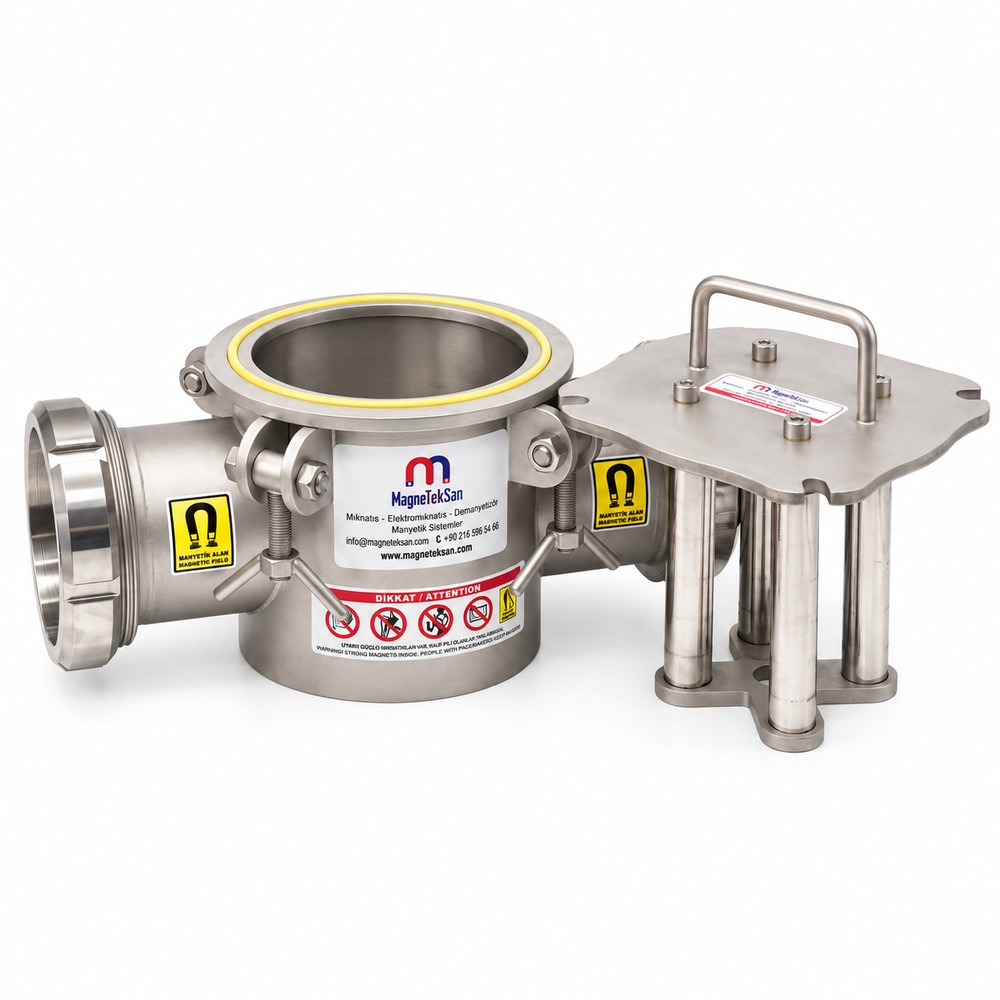
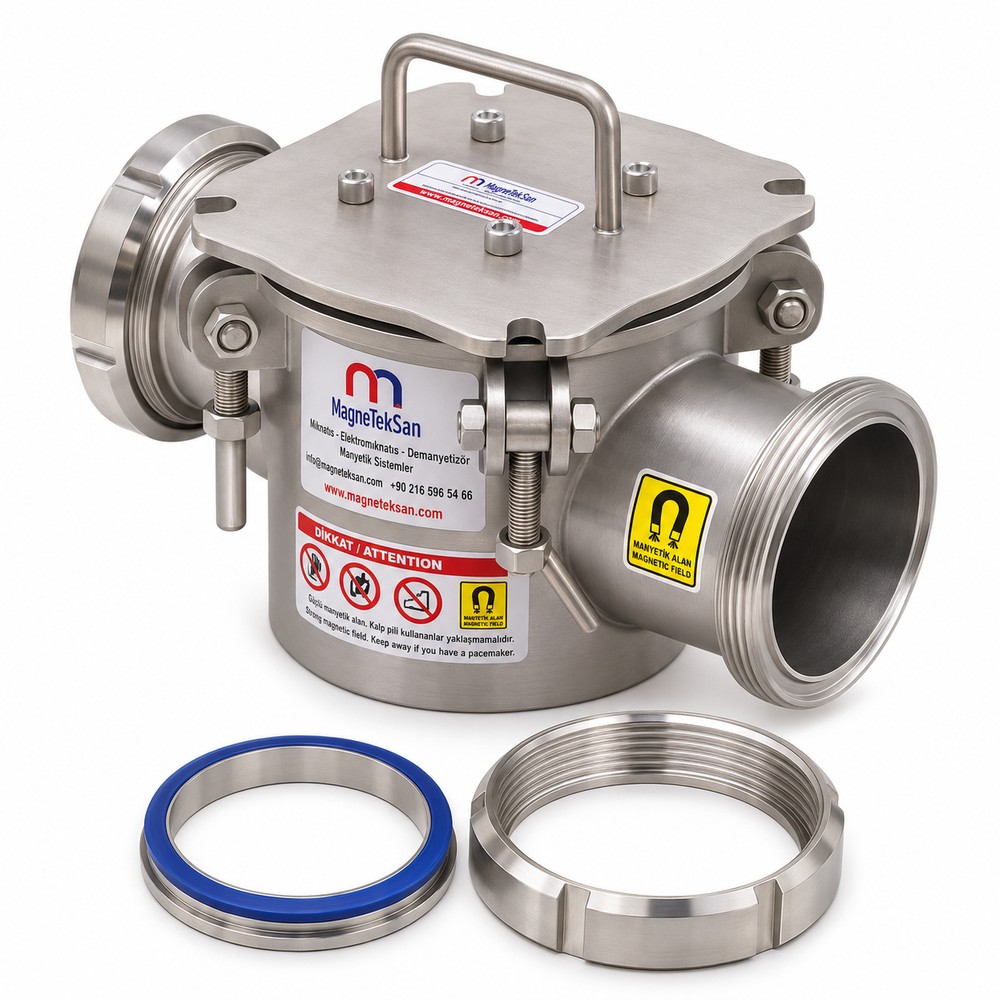
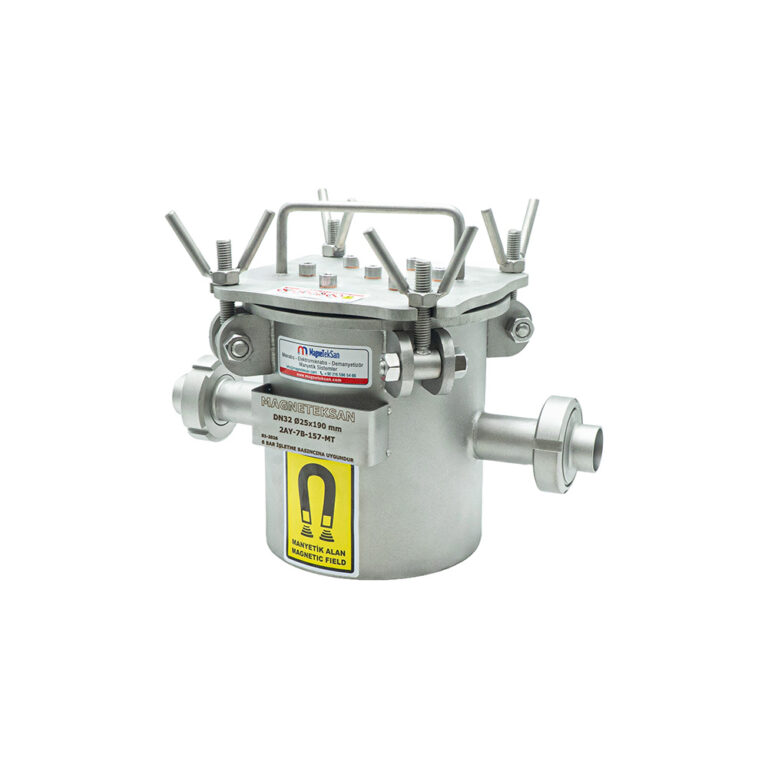
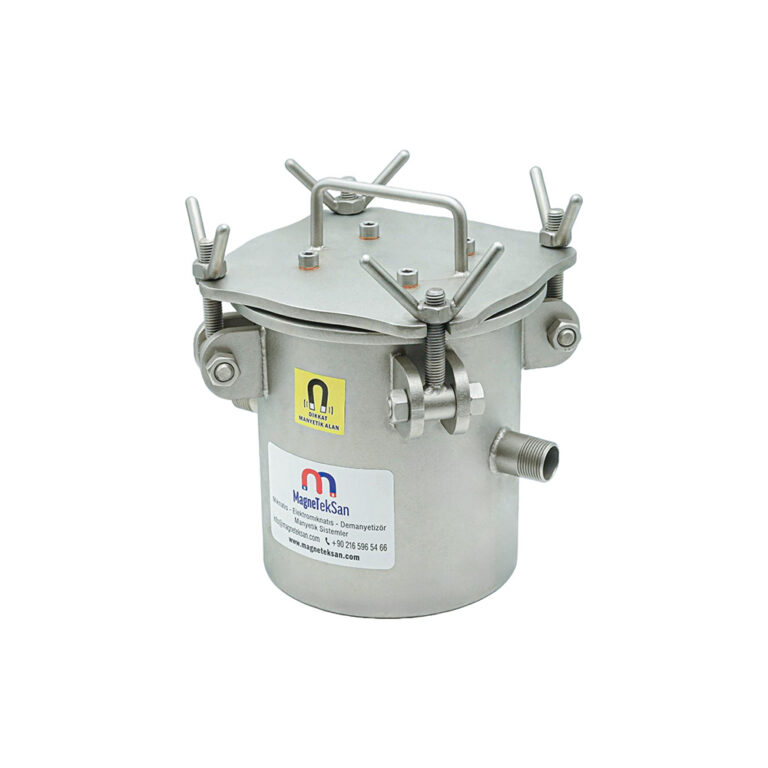
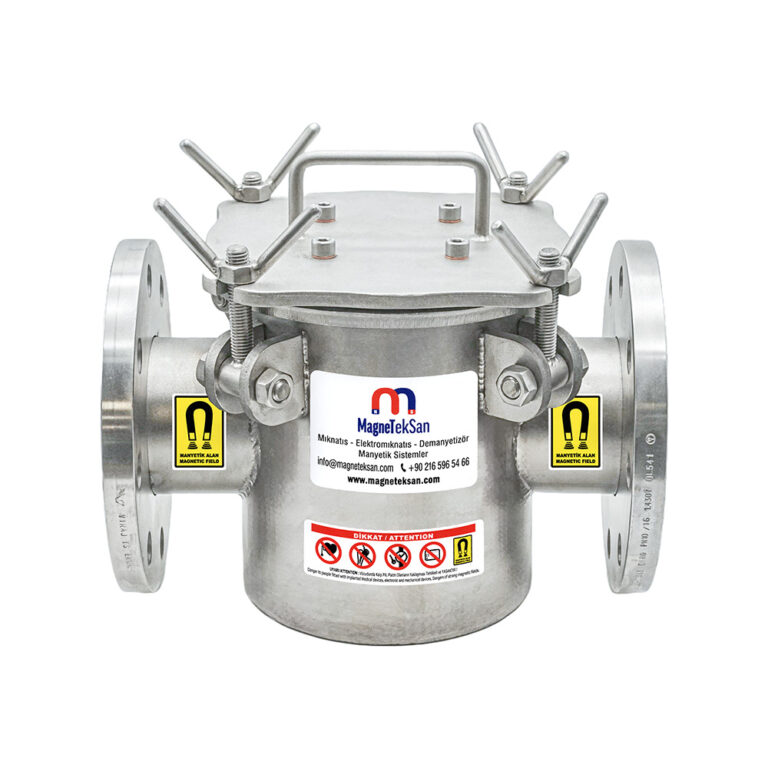
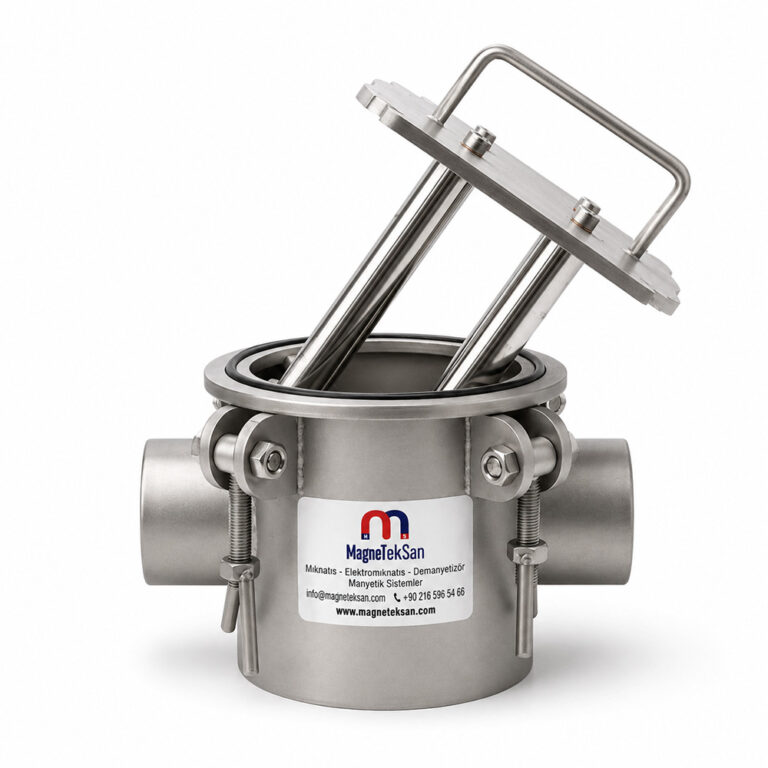
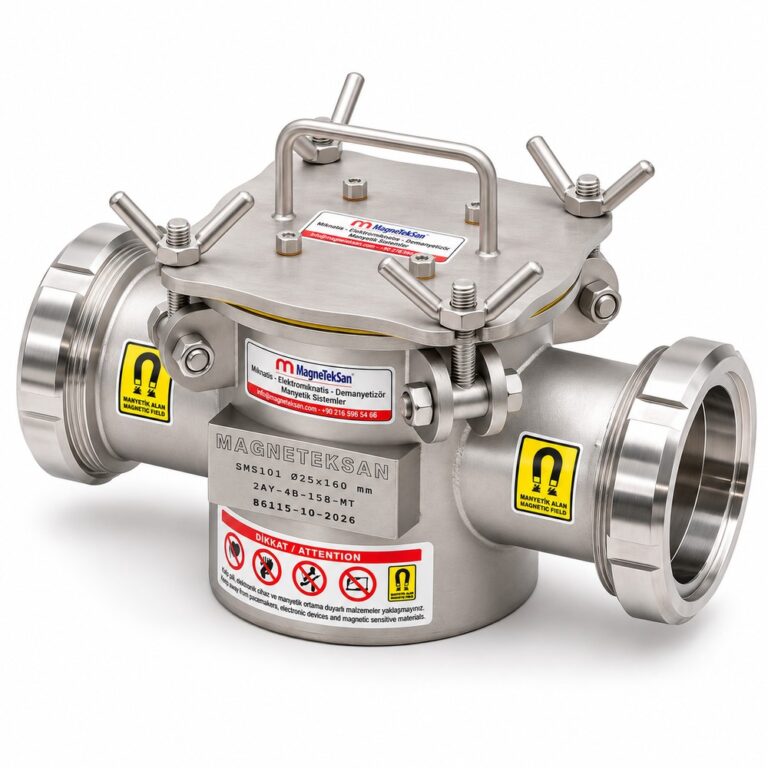
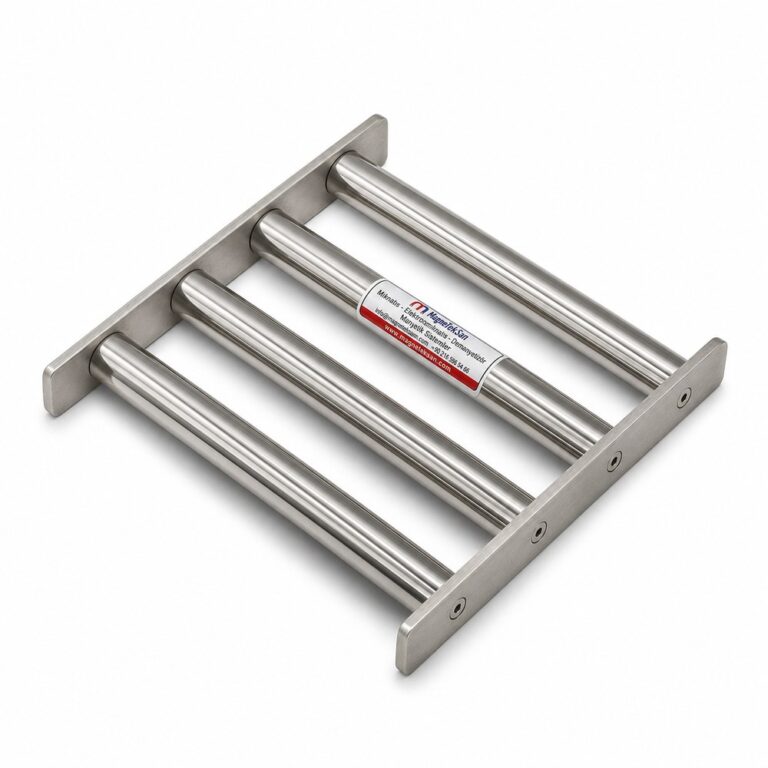
The SMS101 magnetic filter is installed in the raw milk reception line of dairy plants to capture iron and steel particles in milk unloaded from tankers. It connects to the pipeline with SMS101 unions. As milk passes through the body, it flows around four Ø25×160 mm neodymium rods fixed to the lid, and screws, washers, fragments of wire and other ferrous particles are held on the rod surfaces.
| Specification |
Value |
| Product type |
Inline neodymium magnetic filter |
| Model code |
SMS101 Ø25×160 mm 2AY-4B-158-MT |
| Connection |
SMS101 union (101.6 mm), nut and seal ring included |
| Number of rods |
4 |
| Rod size |
Ø25×160 mm |
| Magnetic field |
8,000 Gauss (at the rod surface) |
| Magnet material |
Neodymium (NdFeB) |
| Body material |
Stainless steel |
| Lid |
Square, with carry handle; closed with 4 hinged bolts and wing nuts |
| Lid gasket |
Silicone |
| Maximum operating temperature |
150 °C |
| Power supply |
None required (permanent magnet) |
| Application |
Raw milk reception and tanker unloading lines |
Where Does Metal Come From in Milk Reception?
Milk from farms and collection centres reaches the plant by tanker and is unloaded with the reception pump. On the way it can pick up metal from tanker valves, hose connections, clamps and the pump itself. Screws, nuts and washers left behind after maintenance can also remain in the line.
These particles can damage downstream equipment:
- They wear the impeller and mechanical seal of the centrifugal pump.
- They scratch valve and gasket surfaces and impair sealing.
- They can reach the separator, cooler and pasteuriser plates, increasing the risk of breakdown.
Fitted at the start of the reception line, the magnetic filter captures iron particles before they reach this equipment.
Mounting Position
- After the tanker unloading hose and before the reception pump
- After the coarse strainer on the reception line, in the pipe to the cooler or the silo tank
The male threaded SMS101 unions at both ends are connected to the pipeline with the nut and seal ring supplied with the filter. Choose a position where the body is upright and the lid can be opened easily.
Cleaning
- Stop the line and release the pressure.
- Loosen the four wing nuts on the lid and swing the hinged bolts aside.
- Lift the lid by its handle; the rods come out with the lid.
- Wipe the metal particles off the rods with a gloved hand or a cloth.
- Check the silicone gasket, put the lid back and tighten the nuts evenly.
Check the rods at the end of every reception day for the first few weeks, then set the cleaning interval according to how much metal builds up.
Nameplate and Traceability
The engraved plate on the body shows the model (SMS101 Ø25×160 mm, 2AY-4B-158-MT) and the product number (86115-10-2026). Please quote the plate details when requesting Gauss measurements or spare parts.
Limits and Safety
The magnetic filter captures ferromagnetic particles such as iron and carbon steel. It does not capture aluminium, brass, glass, plastic or gasket fragments, and it does not reliably capture austenitic stainless steel. A mechanical strainer and a metal detector are needed for these. Always stop the line and release the pressure before opening the lid. Neodymium magnets are strong: keep the rods away from anyone fitted with a pacemaker or other implanted medical device, and from bank cards and electronic devices, and take care not to trap your fingers when bringing them near steel surfaces.
Other Models
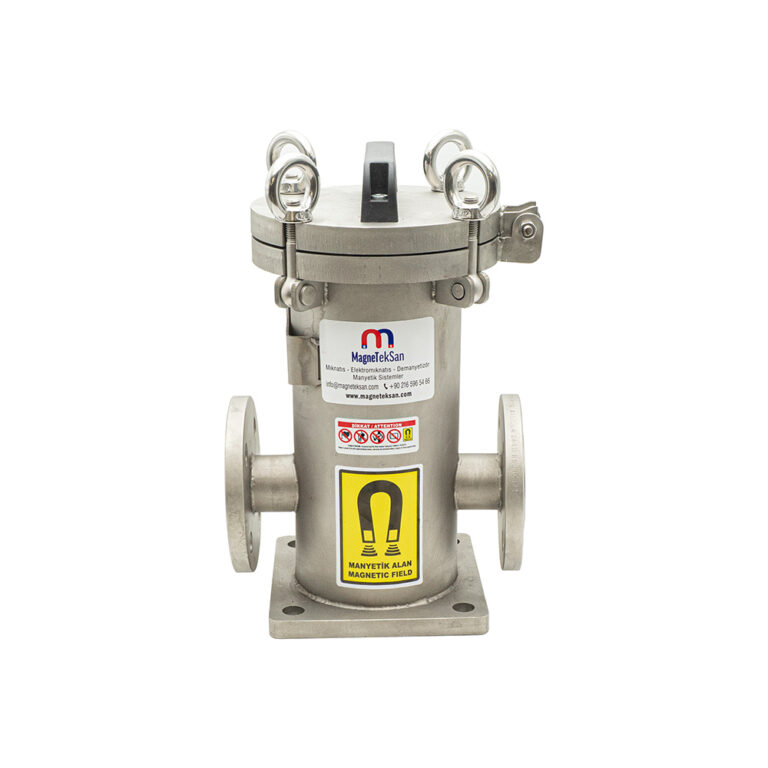
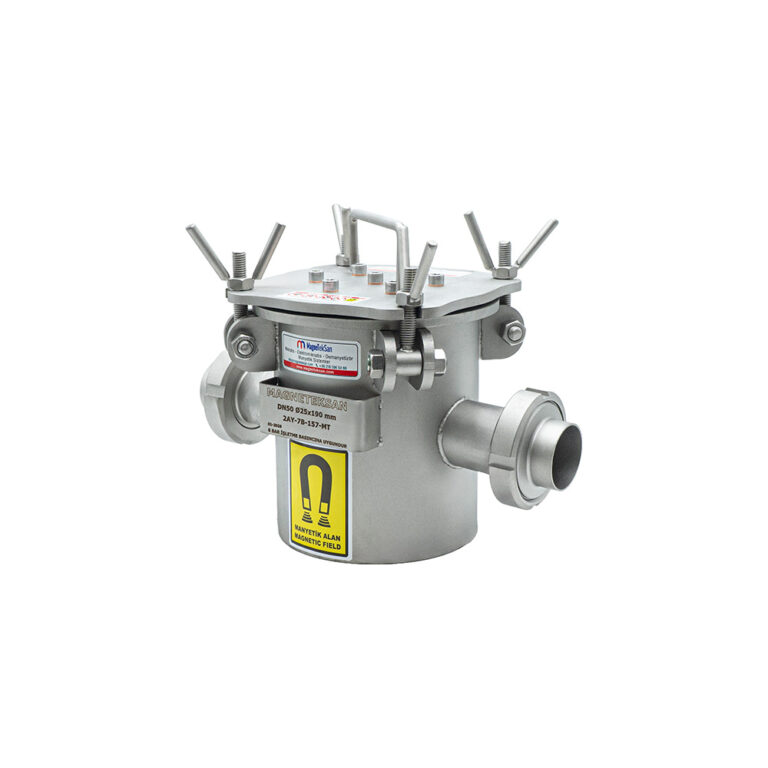
Browse our manual cleanable magnetic filters or read more about magnetic filters. For smaller lines, see our DN50 magnetic filter with nipple connection; for milk powder, see our milk powder drawer magnet. Contact us with your line details for a quotation.
Frequently Asked Questions
What does SMS101 mean?
SMS is a hygienic union standard widely used in the dairy industry. 101 is the connection size for tube with an outside diameter of 101.6 mm (4 inch).
Are the nut and seal ring supplied?
Yes. The SMS nut and seal ring that fit the male threaded unions on the body are supplied with the filter.
Will the filter slow down the milk flow?
Milk passes around the rods inside the cylindrical body. Send us your pipe size and flow rate and we will confirm whether it suits your line.