Product Information
Extra Information
Product Information
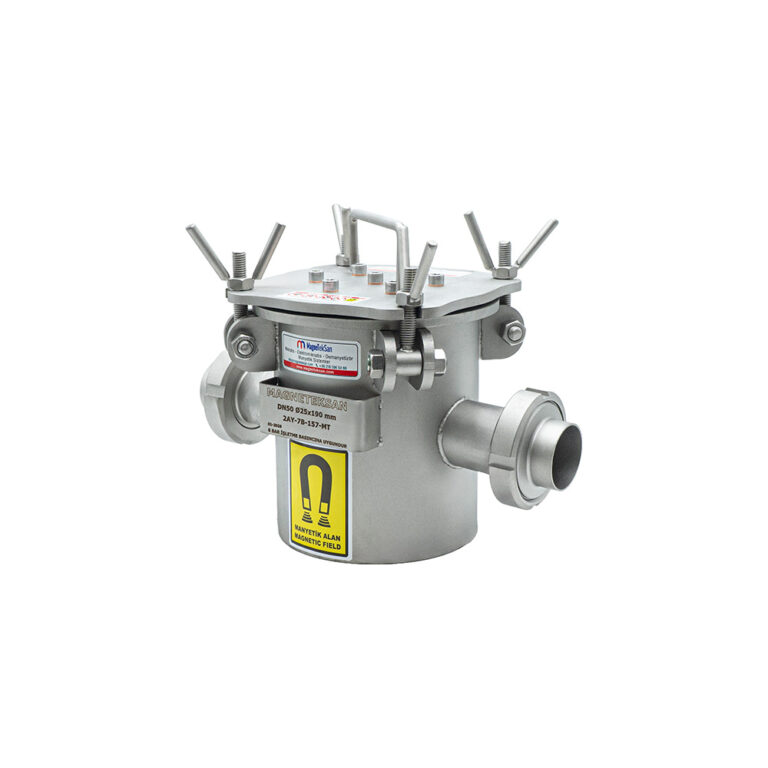
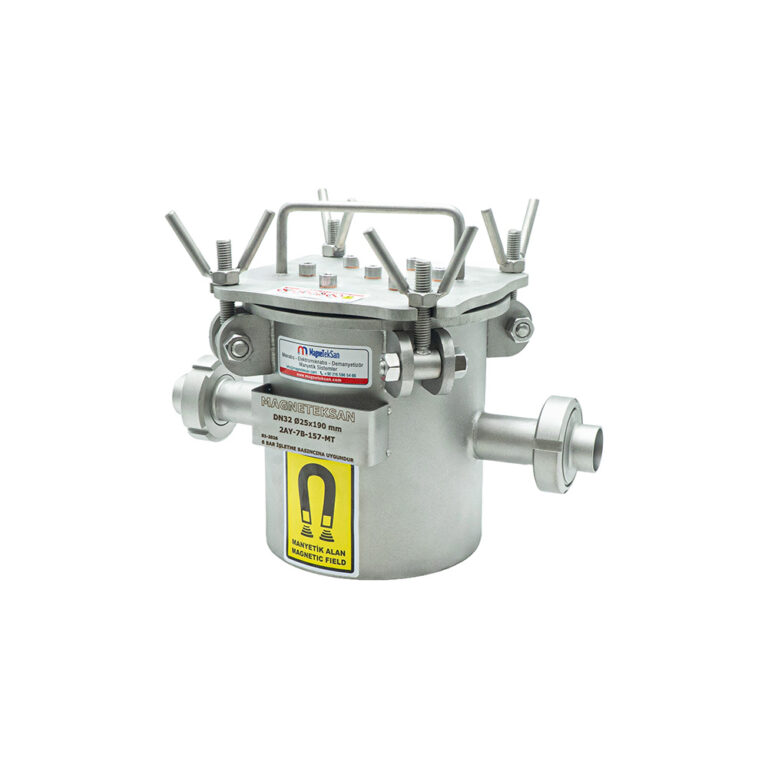
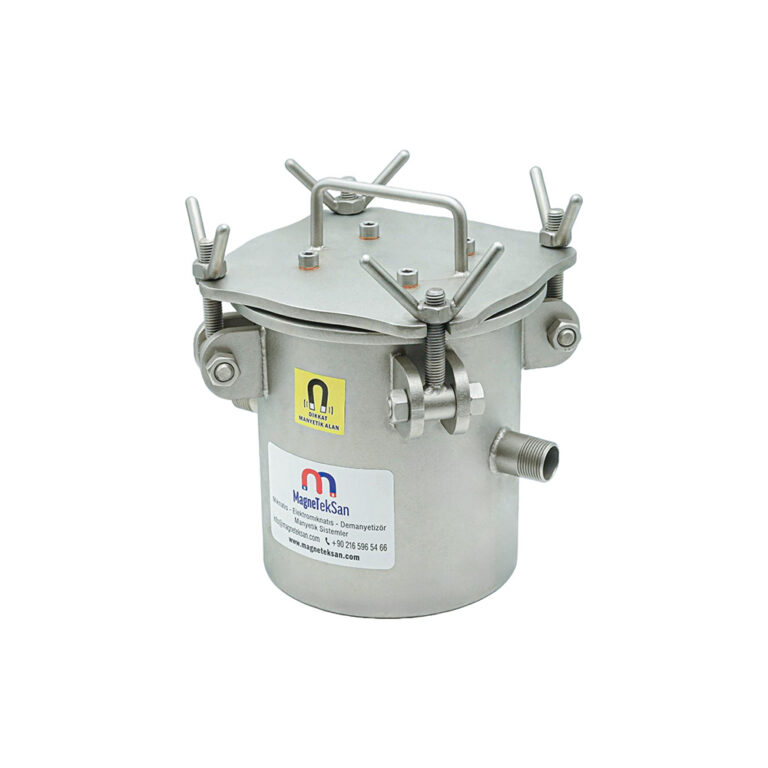
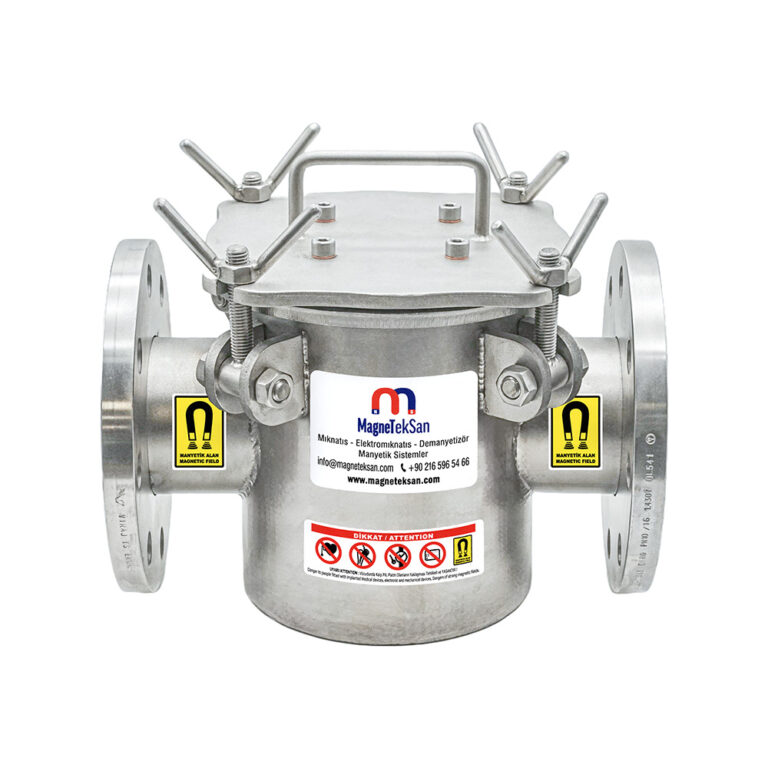
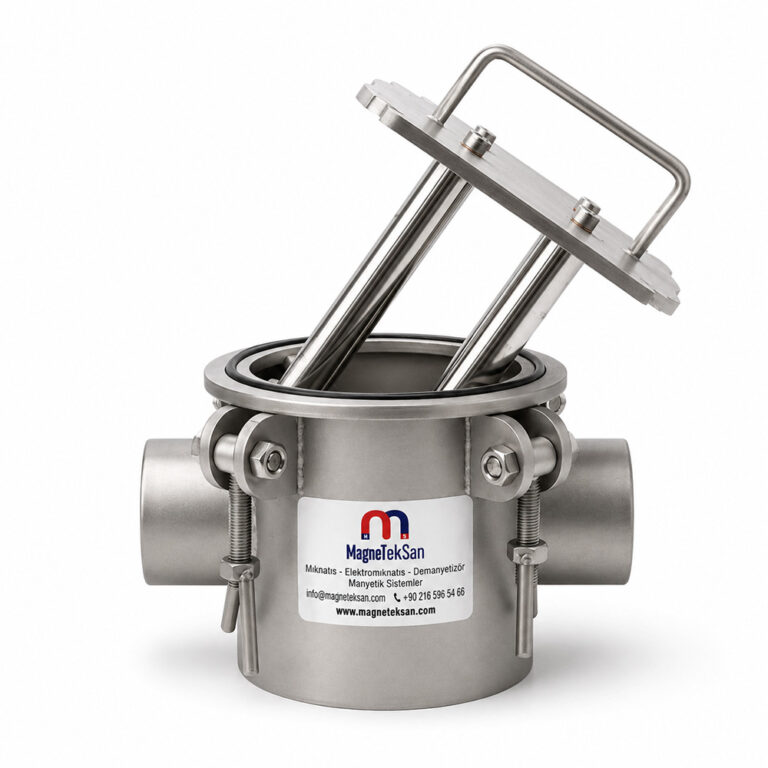
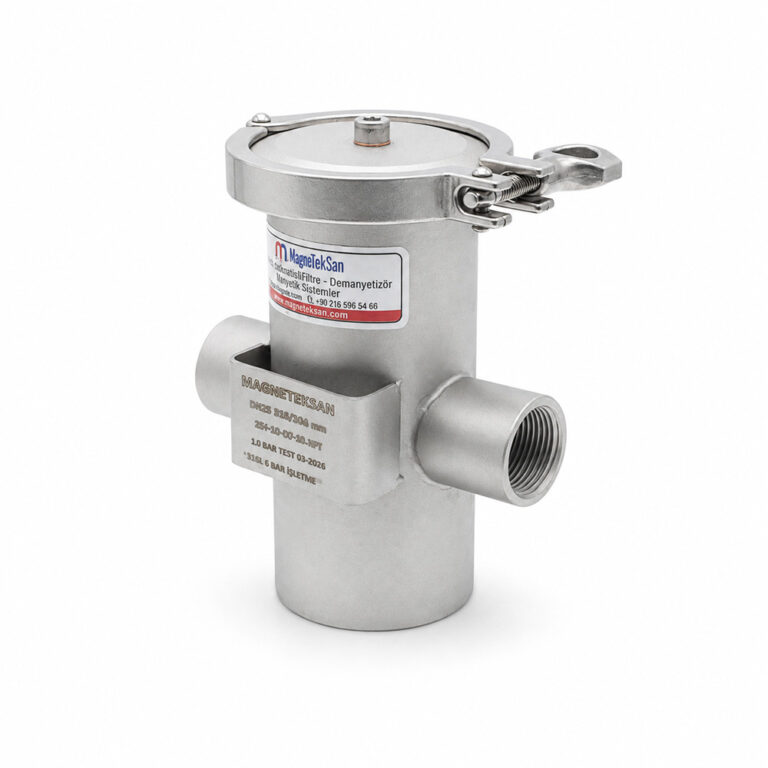
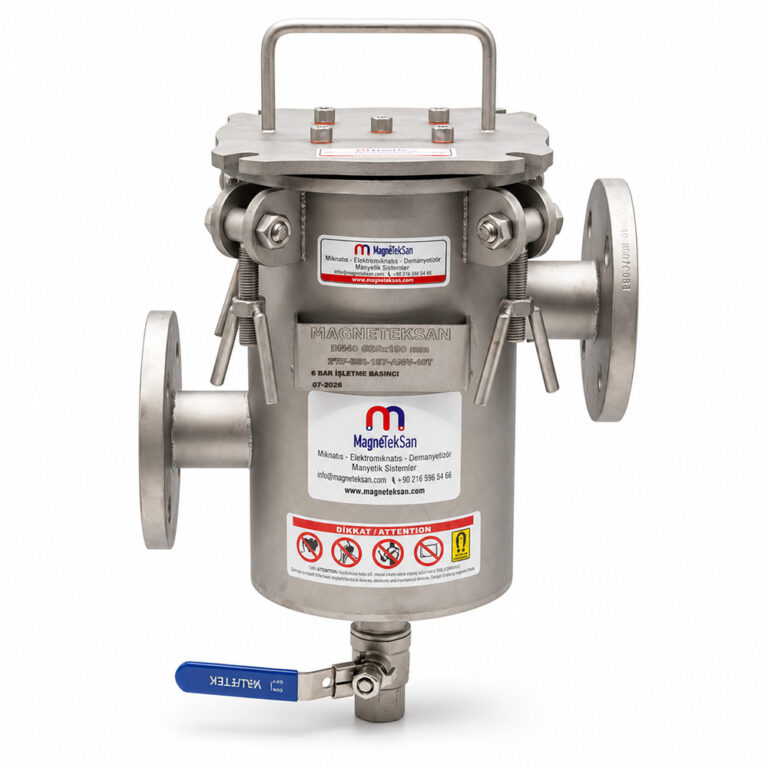
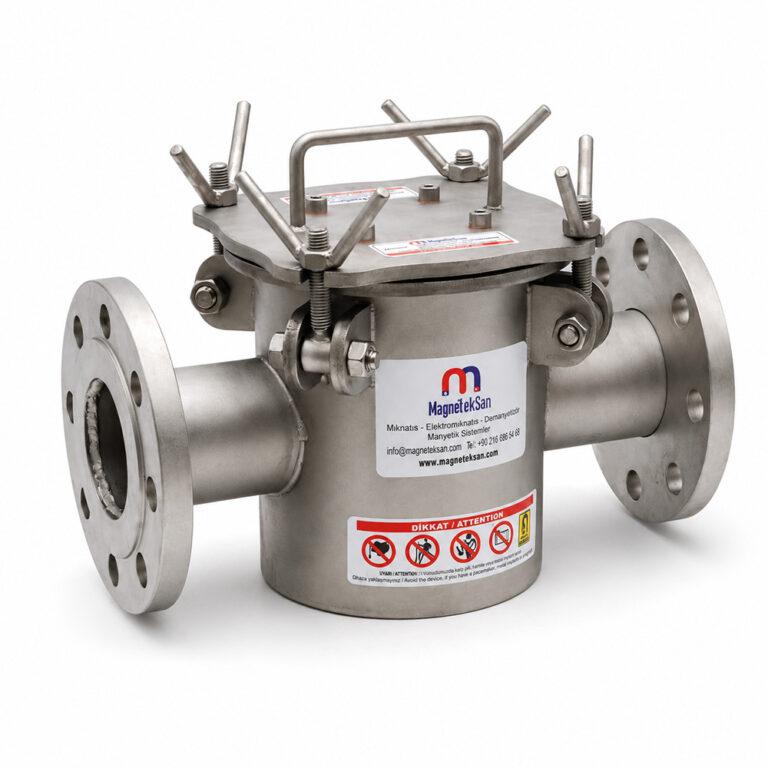
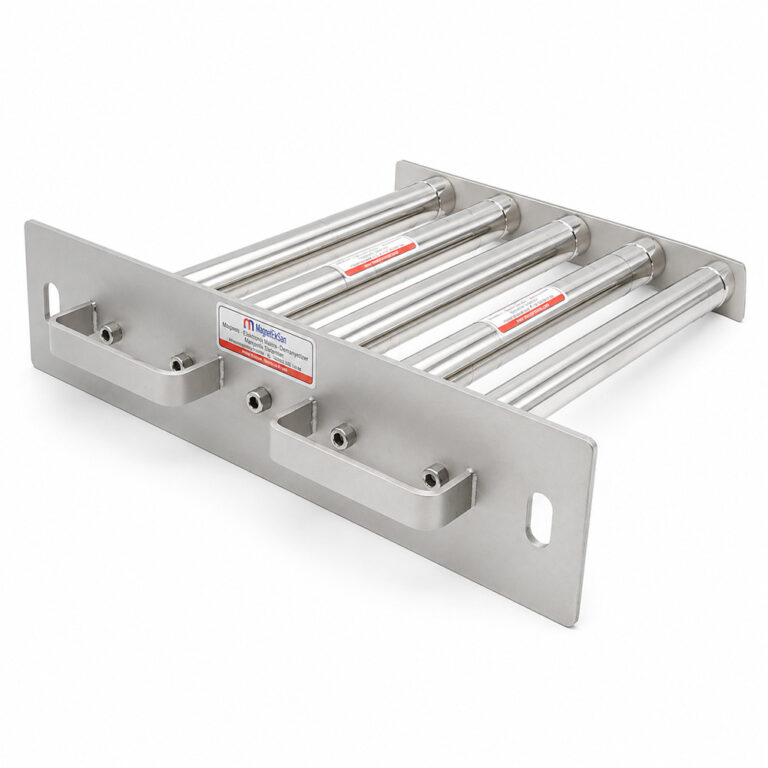
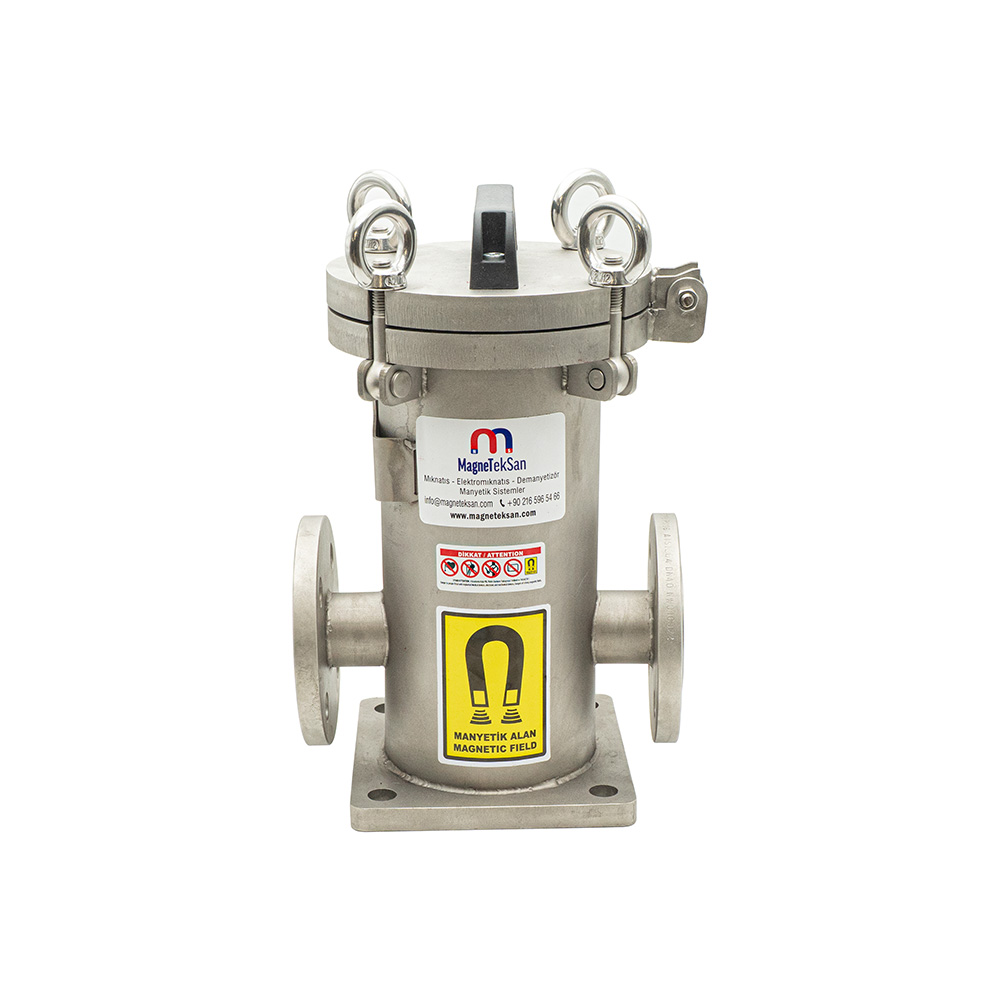
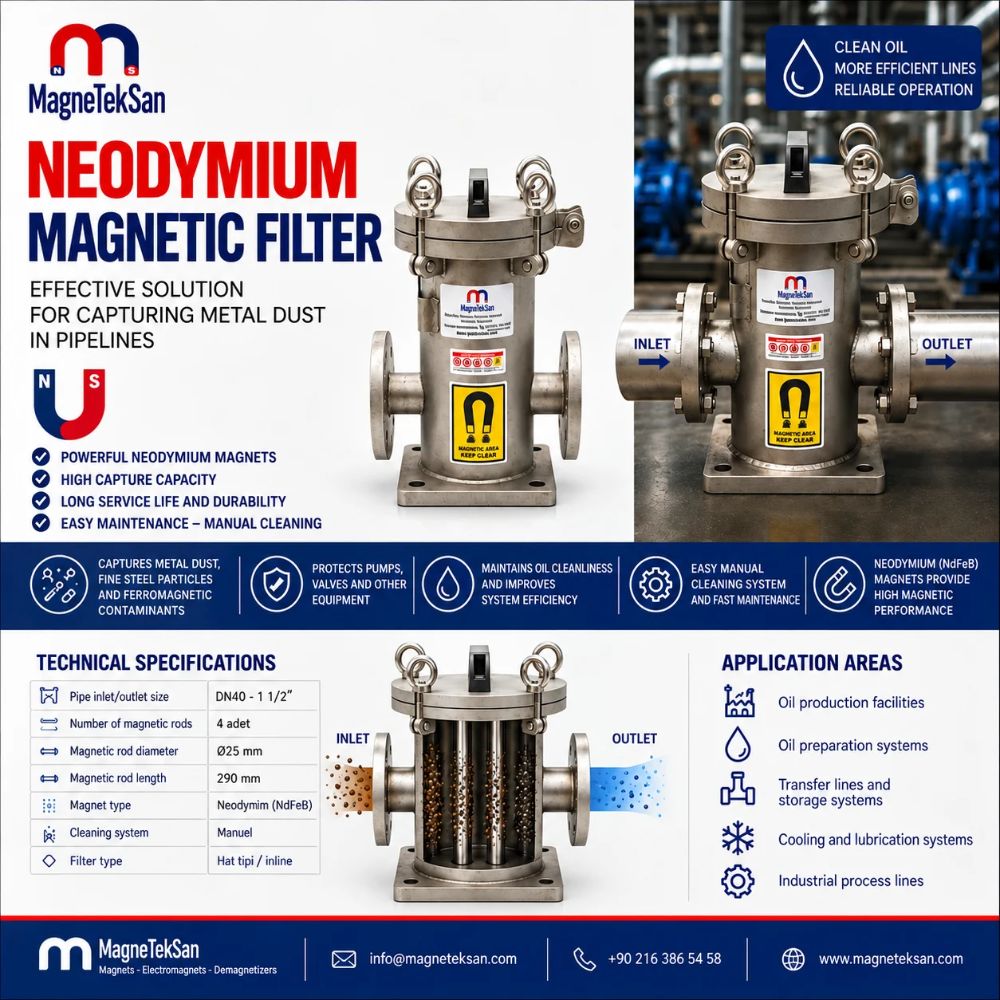
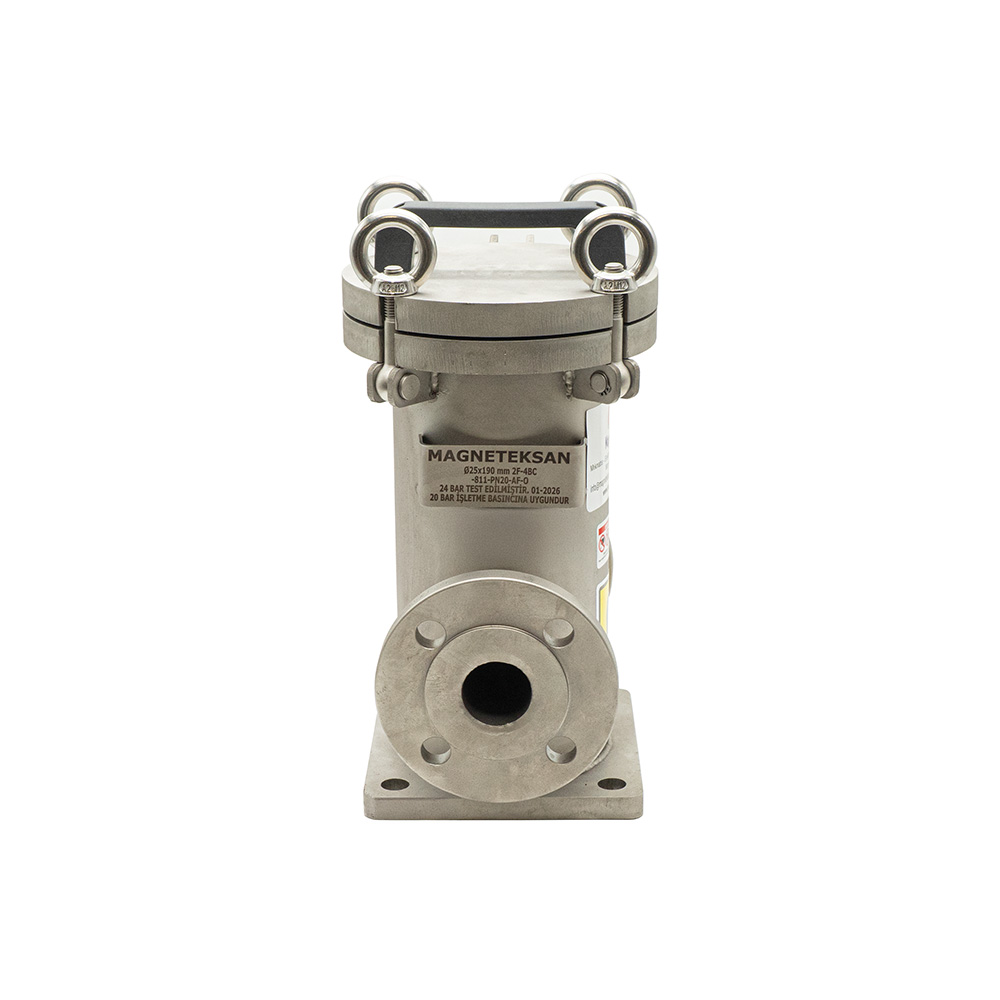
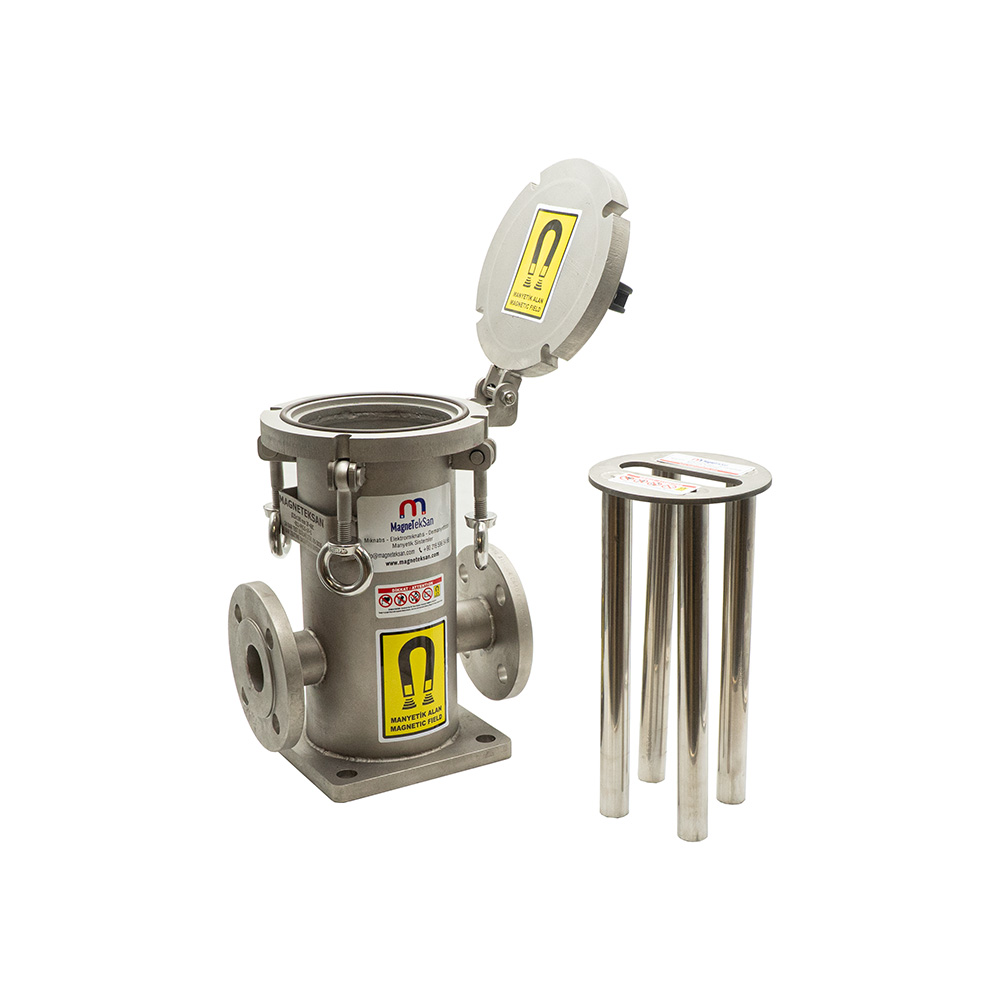
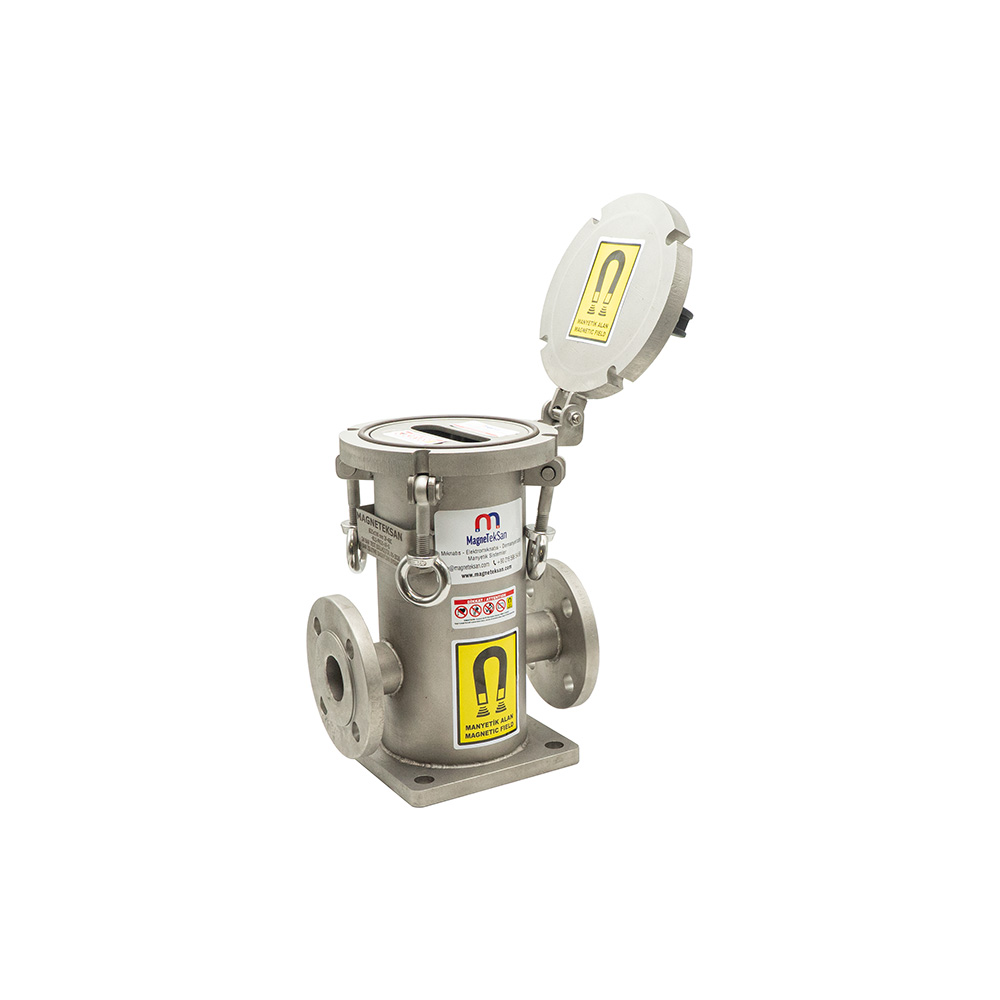
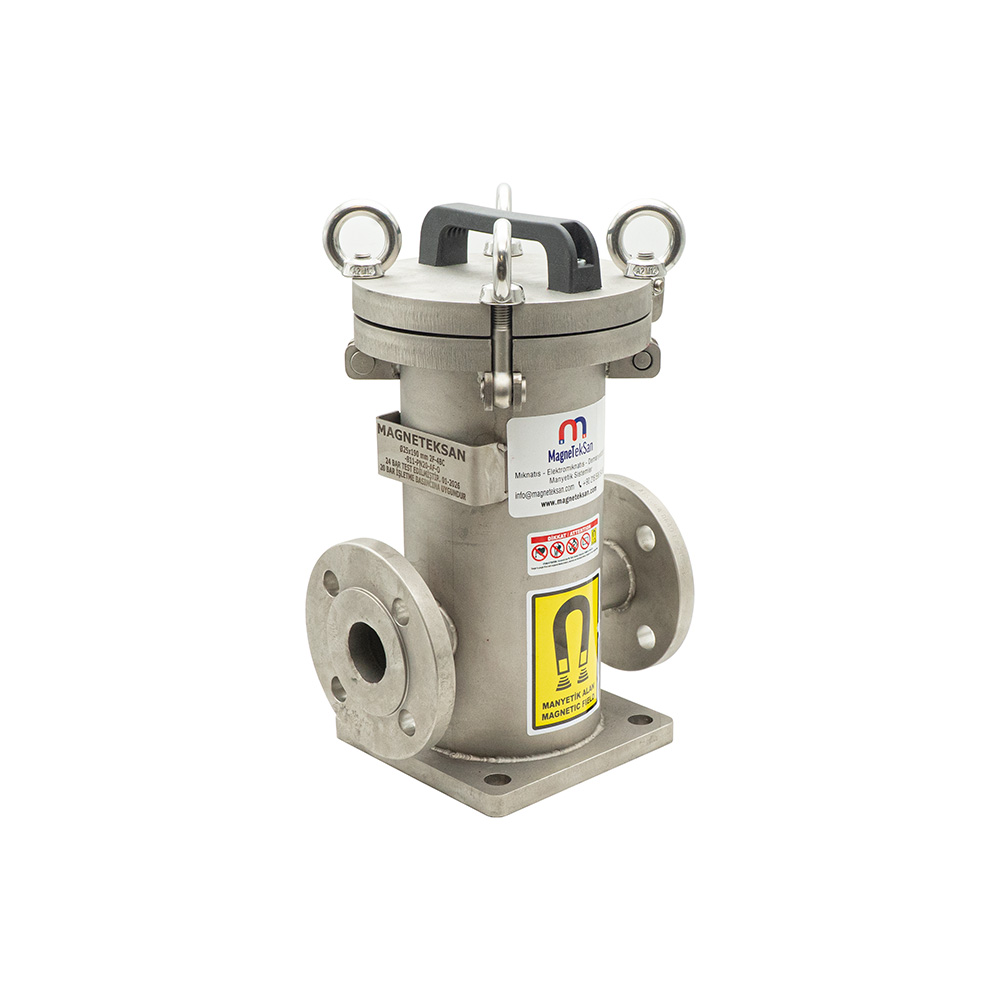
The DN40 Neodymium Magnetic Filter is designed to capture ferromagnetic metal particles in compatible boron oil production and transfer lines. Its four N52 neodymium magnetic rods, each measuring Ø25×290 mm, provide magnetic collection surfaces within the inline filter assembly. The permanent-magnet system requires no electrical excitation, while the manually cleanable configuration allows accumulated ferrous contamination to be removed during scheduled maintenance.
| Technical Specification | Details |
|---|---|
| Product Type | Inline magnetic filter |
| Nominal Connection Size | DN40 |
| Nominal Connection Equivalent | 1 1/2 inch |
| Number of Magnetic Rods | 4 |
| Magnetic Rod Diameter | Ø25 mm |
| Magnetic Rod Length | 290 mm |
| Magnetic Material | Neodymium (NdFeB) |
| Magnet Grade | N52 |
| Primary Application | Boron oil production and transfer lines |
| Compatible Media | Suitable industrial liquids, subject to compatibility assessment |
| Target Contaminants | Ferromagnetic metal particles |
| Separation Principle | Permanent magnetic attraction |
| Cleaning Method | Manual cleaning |
| Electrical Requirement | None for magnetic field generation |
| Installation Configuration | Inline pipework installation |
| Product Category | Manually Cleanable Magnetic Filters |
Extra Information
1. DN40 Neodymium Magnetic Filter for Industrial Liquid Lines
The DN40 Neodymium Magnetic Filter is an inline magnetic separation device designed for compatible industrial liquid systems. Its primary application is the removal of ferromagnetic contamination from boron oil production and transfer lines.
The filter contains four neodymium magnetic rods positioned within the filter assembly. Each rod has a nominal diameter of Ø25 mm and a length of 290 mm.
The magnetic rods attract suitable ferromagnetic particles as the liquid passes through the filter. These particles remain on the magnetic collection surfaces until they are removed during maintenance.
The filter should be selected according to the operating conditions of the intended pipeline. Connection details, fluid compatibility and hydraulic requirements must be verified before installation.
2. Magnetic Separation in Boron Oil Production
Boron oil is commonly used as a term for certain metalworking and machining fluids. Such fluids may carry fine metallic contamination generated during production, transfer or industrial use.
Ferromagnetic particles can originate from steel components, pumps, machinery or other equipment. A magnetic filter provides an additional method of capturing suitable particles within the liquid circuit.
The four neodymium rods create magnetic collection surfaces inside the filter. Their effectiveness depends on the properties of the contamination and the conditions of liquid flow.
Magnetic separation should complement other fluid maintenance practices. It does not replace every type of mechanical filtration or contamination-control equipment.
3. DN40 Inline Magnetic Filter Design
The filter is intended for inline installation in a pipeline with a nominal DN40 connection size. The nominal size corresponds to a 1 1/2-inch pipe designation.
Inline installation allows the liquid to pass through the magnetic separation assembly as part of the transfer process. This arrangement can provide contamination control without a separate manual filtering step.
The filter contains four magnetic rods, each measuring Ø25×290 mm. These rods provide surfaces where suitable ferromagnetic particles can accumulate.
The exact connection construction must be confirmed before installation. DN40 alone does not identify whether the supplied connections are threaded, flanged, welded or another configuration.
4. Four Neodymium Magnetic Rods
This filter contains four neodymium magnetic rods. Each rod provides an additional surface for capturing ferromagnetic metal particles from the circulating liquid.
The arrangement of the rods is an important aspect of the filter design. Liquid flow and particle trajectories determine how closely contamination approaches the magnetic surfaces.
Using four rods does not establish a particular separation efficiency without testing. Particle size, magnetic response, flow conditions and magnetic field distribution all affect performance.
The specifications of this four-rod filter should not be confused with those of filters containing different numbers of rods. Each configuration requires its own technical assessment.
5. Ø25×290 mm Magnetic Rod Dimensions
Each magnetic rod has a nominal diameter of Ø25 mm and a length of 290 mm. These dimensions identify the magnetic elements used in the product.
Rod geometry affects the available magnetic collection surfaces and the internal layout of the filter. It also contributes to the overall design of the flow path.
The rods contain neodymium permanent magnets. Ferromagnetic particles passing sufficiently close to their surfaces may be attracted and retained.
Rod dimensions alone do not establish the magnetic field strength or separation efficiency. Those characteristics require appropriate product-specific technical information or testing.
6. N52 Neodymium Magnet Technology
The filter is specified with N52-grade neodymium magnets. Neodymium magnets are permanent magnetic materials commonly identified by the chemical composition NdFeB.
The N52 designation refers to a magnet material grade. It should not be interpreted as a direct measurement of the magnetic flux density at the rod surface.
Magnetic collection occurs when suitable ferromagnetic particles encounter sufficient magnetic attraction. The actual capture conditions depend on the completed rod construction and operating environment.
A numerical gauss value has not been established for this filter. Any published magnetic field measurement should be verified for the specific finished assembly.
7. Removal of Ferrous Particles from Industrial Liquids
Ferrous contamination may enter industrial liquids through equipment wear, machining operations or contact with steel components. Fine particles can remain suspended and circulate through the system.
The DN40 magnetic filter is intended to capture particles with sufficient ferromagnetic properties. These particles may collect on the four neodymium magnetic rods.
Capturing suitable metallic contamination can support cleaner fluid handling. However, the degree of removal depends on particle characteristics and operating conditions.
Nonmagnetic contamination is not reliably removed by permanent magnets. Additional filtration may be necessary where nonmagnetic solids or other impurities must be controlled.
8. Magnetic Filtration in Metalworking Fluid Systems
Metalworking fluid systems may accumulate particles produced by cutting, grinding and other manufacturing operations. Some of these particles respond strongly to magnetic fields.
An inline magnetic filter can provide an additional contamination-control stage in a compatible liquid circuit. The DN40 configuration is intended for a pipeline of the corresponding nominal connection size.
The four Ø25×290 mm magnetic rods offer collection surfaces for ferromagnetic particles. The liquid continues through the assembly while suitable contaminants may be retained.
Compatibility with a particular coolant formulation must be confirmed. The term metalworking fluid covers products with different chemical and physical properties.
9. Magnetic Separation in Liquid Transfer Lines
Industrial transfer lines move fluids between storage vessels, production equipment and other process locations. During transfer, liquids may carry metallic contamination originating from upstream components.
An inline magnetic filter can be positioned at a suitable point in the transfer circuit. Its function is to capture ferromagnetic particles as the liquid passes through.
The magnetic elements operate continuously without electrical excitation. Captured particles remain on the rods until the assembly is cleaned.
Installation location should be determined by the actual pipeline layout. Maintenance access and the ability to isolate the filter are important considerations.
10. Permanent Magnetic Filtration Without Electricity
The filter uses permanent neodymium magnets to generate magnetic attraction. No electrical supply is required to energize the magnetic rods.
This operating principle avoids the need for an electromagnetic power supply. The magnetic elements remain active during normal use and while the filter is out of service.
The absence of an electrical requirement does not eliminate the need for mechanical maintenance. Contamination must still be removed from the magnetic collection surfaces.
Other equipment in the liquid circuit, such as pumps and monitoring instruments, may require electricity. The electrical independence described here applies specifically to magnetic field generation.
11. Manual Cleaning of Magnetic Rods
The filter is designed for manual cleaning. During operation, suitable ferromagnetic particles may accumulate on the magnetic rods.
Before cleaning, the system must be isolated and made safe. Residual pressure, liquid temperature and chemical exposure should be assessed according to the installation.
Collected particles should be removed carefully without allowing them to re-enter the liquid circuit. Appropriate protective equipment and cleaning procedures should be used.
After cleaning, the filter should be reassembled and checked before returning it to service. The maintenance procedure must follow the actual mechanical design of the supplied unit.
12. Periodic Inspection and Maintenance
Periodic inspection helps identify accumulated metal particles and potential equipment damage. The inspection frequency should reflect contamination levels and operating conditions.
The magnetic rods should be examined for deposits and visible damage. Accessible components should also be checked for conditions that could affect safe operation.
A maintenance record can document cleaning intervals and unusual findings. Such records may help identify changes in the upstream manufacturing process.
Maintenance intervals should not be assigned solely on the basis of the DN40 connection size. Actual particle loading and process requirements must be considered.
13. Ferromagnetic Contamination from Pumps and Machinery
Pumps, steel components and industrial machinery may contribute metallic particles to circulating liquids. Wear or damage can increase the amount of contamination entering the circuit.
A magnetic filter can retain suitable ferromagnetic particles downstream of their source. The four neodymium rods provide surfaces for magnetic collection.
An increase in collected particles may indicate changes in equipment condition. Inspection of the upstream system may be appropriate when unusual deposits are found.
The filter captures contamination but does not repair its source. Preventive maintenance remains necessary to address mechanical wear and equipment damage.
14. Magnetic Filters for Circulating Industrial Fluids
Many industrial processes recirculate liquid through pumps, tanks and production equipment. Contaminants can remain within the circuit if no effective removal method is provided.
The DN40 magnetic filter can be considered for compatible circulation systems. It is intended to capture ferromagnetic particles passing through its magnetic separation region.
The four magnetic rods provide permanent collection surfaces. Their magnetic attraction does not depend on switching an electrical supply on or off.
The filter must be evaluated against the circuit’s actual hydraulic conditions. Maximum flow rate and pressure drop cannot be established from the available dimensional information alone.
15. Magnetic Filtration Versus Mechanical Filtration
Magnetic filtration uses magnetic attraction to retain suitable ferromagnetic particles. Mechanical filtration generally separates solids using screens, cartridges or other physical barriers.
The two methods address different contamination characteristics. A mechanical filter may capture nonmagnetic solids that a magnetic rod cannot reliably attract.
Magnetic and mechanical filtration can be used together where appropriate. Their arrangement should be based on the process and the expected types of contamination.
The DN40 neodymium filter should not be described as a complete replacement for all mechanical filters. Its primary function is the magnetic collection of ferromagnetic particles.
16. Ferromagnetic and Nonmagnetic Metal Particles
Ferromagnetic materials respond strongly to magnetic fields under suitable conditions. Certain iron- and steel-based particles can therefore be captured by neodymium magnetic rods.
Not all metallic contamination behaves in the same way. Aluminium and copper, for example, are not reliably retained by this type of permanent magnetic filter.
The magnetic response of stainless steel particles can also vary according to alloy and material condition. Their capture should not be assumed without appropriate evaluation.
Understanding the expected contaminants is essential when selecting filtration equipment. Other technologies may be required for particles that cannot be removed magnetically.
17. Importance of Magnetic Rod Arrangement
The arrangement of the four magnetic rods influences the locations of the magnetic collection surfaces. It also affects the path available for the liquid inside the filter.
Particles passing close to the rods may experience sufficient magnetic attraction to be captured. Particles travelling farther away may be less likely to encounter effective collection conditions.
Flow distribution and magnetic field geometry must be considered together. Rod count alone is not a complete indicator of performance.
Different internal configurations may produce different hydraulic and separation characteristics. Product-specific testing is needed to quantify those differences.
18. Liquid Flow Rate and Magnetic Separation
Liquid flow rate affects the time available for particles to interact with the magnetic field. It also influences the movement of contamination through the filter.
At higher flow velocities, particle trajectories and the forces acting on them may change. The effect on capture performance depends on the completed filter design.
No verified maximum flow rate has been supplied for this DN40 model. A numerical capacity should therefore not be stated without supporting data.
Flow requirements should be reviewed during equipment selection. Where necessary, practical testing can be carried out using the intended liquid and operating conditions.
19. Pressure Drop in Inline Magnetic Filters
An inline filter forms part of the hydraulic path of a liquid transfer system. Its internal construction may introduce resistance to fluid flow.
Pressure drop depends on the filter geometry, liquid properties and operating flow rate. Accumulated contamination may also affect flow conditions.
The DN40 nominal connection size does not establish a pressure-drop value. Reliable figures require appropriate engineering calculations or measurements.
The filter should be selected with consideration for the available pump performance. Excessive hydraulic resistance may affect the operation of the wider liquid circuit.
20. Installation in DN40 Pipework
The product is identified by a DN40 nominal connection size. This designation must be matched to the actual connection details of the installation.
Before installation, the pipework arrangement and available maintenance space should be reviewed. The filter must be supported and connected according to its supplied construction.
The correct sealing and assembly methods depend on the connection type. No specific thread standard, flange rating or welded-end configuration should be assumed.
The system should be checked for safe operation before liquid circulation begins. Installation and commissioning must follow the applicable site procedures.
21. Compatibility with Boron Oil and Cutting Fluids
Boron oil formulations used in industrial applications can vary. Their chemical composition, concentration and operating characteristics should be considered when selecting filtration equipment.
The filter’s primary stated application is boron oil production and transfer lines. This does not automatically confirm compatibility with every commercial cutting-fluid formulation.
Material compatibility must include the wetted components of the completed filter assembly. Chemical resistance and operating temperature should be verified where relevant.
If the liquid composition is unusual or contains aggressive additives, additional technical review may be required. The specific process conditions should guide final equipment selection.
22. Magnetic Particle Collection During Continuous Operation
During liquid circulation, the permanent magnetic rods remain active. Suitable ferromagnetic particles passing through the magnetic region may be retained.
The collected particles accumulate on the available magnetic surfaces. The amount retained before cleaning depends on the actual contamination load and operating conditions.
A manually cleanable filter does not discharge the collected particles automatically. Scheduled maintenance is therefore part of normal operation.
The operating procedure should prevent excessive accumulation and unsafe maintenance practices. Cleaning intervals should be adjusted using observations from the actual system.
23. Inspection of Captured Metallic Contamination
Collected particles can provide useful information about the condition of upstream equipment. Their quantity, appearance and frequency may change as the process operates.
During cleaning, maintenance personnel can examine the deposits on the magnetic rods. Unusual changes may justify further investigation.
The removed contamination should be handled so that it cannot return to the liquid system. Appropriate collection and disposal procedures should be followed.
Documenting inspection findings may support preventive maintenance decisions. Such records can also help identify recurring sources of ferromagnetic contamination.
24. Industrial Applications of Four-Rod Magnetic Filters
The principal application of this filter is magnetic separation in boron oil production and transfer lines. Other compatible industrial liquid applications may also be evaluated.
A four-rod magnetic assembly provides multiple surfaces for collecting ferromagnetic contamination. Its suitability depends on the liquid, pipeline configuration and operating requirements.
Potential applications may include certain machining-fluid circulation systems. However, compatibility with a particular process must be confirmed rather than assumed.
Alternative applications may require different filter dimensions, magnetic arrangements or connection details. Each installation should be assessed on its own technical requirements.
25. Engineering Selection of Inline Magnetic Filters
Selecting an inline magnetic filter begins with understanding the process liquid and expected contamination. Pipeline dimensions and operating conditions are also important.
For this product, the confirmed nominal connection is DN40. The magnetic assembly contains four Ø25×290 mm rods using N52-grade neodymium magnets.
Additional selection data may include pressure, temperature, flow rate and wetted material compatibility. These values must be verified for the supplied equipment.
The final selection should consider installation access and cleaning requirements. A filter that is difficult to isolate or maintain may not be suitable for the intended operating procedure.
26. Long-Term Operation and Maintenance Planning
Long-term filter operation requires periodic removal of captured ferromagnetic particles. The cleaning schedule should reflect the contamination generated by the process.
Regular inspection can identify deposits, visible damage and changes in equipment condition. Maintenance personnel should follow a documented procedure.
The filter must be isolated and made safe before it is opened for cleaning. Particular attention should be given to residual liquid pressure and potentially hazardous fluids.
Good maintenance planning supports consistent operation. It also helps ensure that accumulated contamination is not returned to the liquid circuit.
27. Confirmed Specifications and Technical Limitations
The confirmed product configuration includes a DN40 inline magnetic filter with four neodymium rods. Each rod measures Ø25×290 mm, and the magnet grade is identified as N52.
The primary application is boron oil production and transfer lines. The filter is manually cleanable and uses permanent magnets without electrical excitation.
A measured gauss value, maximum working pressure, maximum operating temperature, flow capacity and stainless steel grade have not been verified. These specifications should not be invented.
The DN40 designation also does not establish the exact connection standard. Product-specific technical documentation should be consulted whenever those details are required.
28. Reliable Magnetic Filtration for Industrial Liquid Processing
The DN40 Neodymium Magnetic Filter provides a magnetic separation stage for compatible industrial liquid systems. Its four N52 neodymium rods offer collection surfaces for suitable ferromagnetic particles.
The filter is particularly relevant to boron oil production and transfer applications where metallic contamination may circulate with the liquid. Its permanent magnets do not require electrical excitation.
Reliable operation depends on correct equipment selection, proper installation and periodic manual cleaning. The actual fluid and hydraulic conditions must be considered before commissioning.
Magnetic filtration should form part of a broader contamination-control and maintenance strategy. When correctly selected and maintained, it can help manage ferromagnetic particles within industrial liquid circuits.