Product Information
Extra Information
Product Information
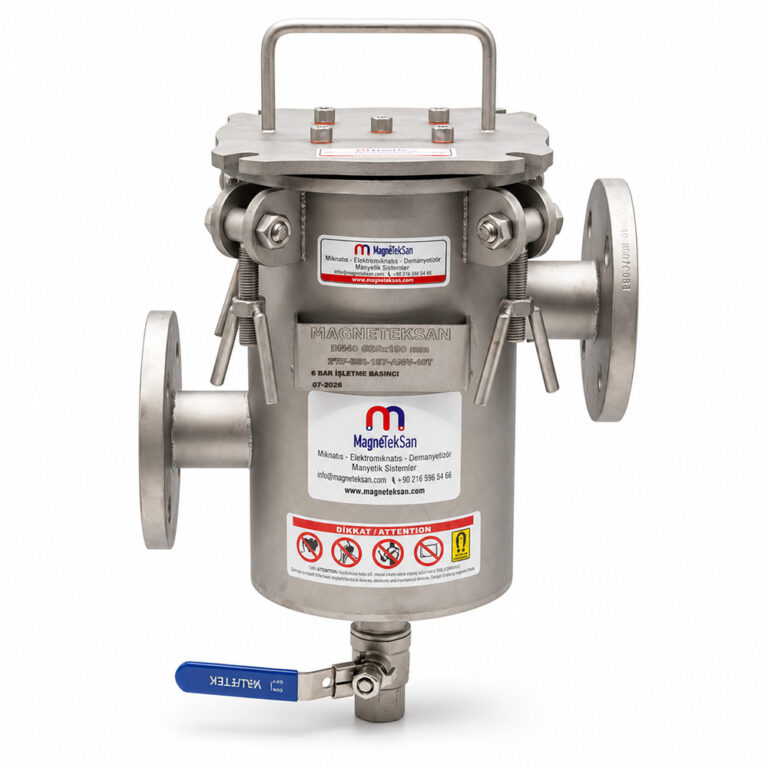
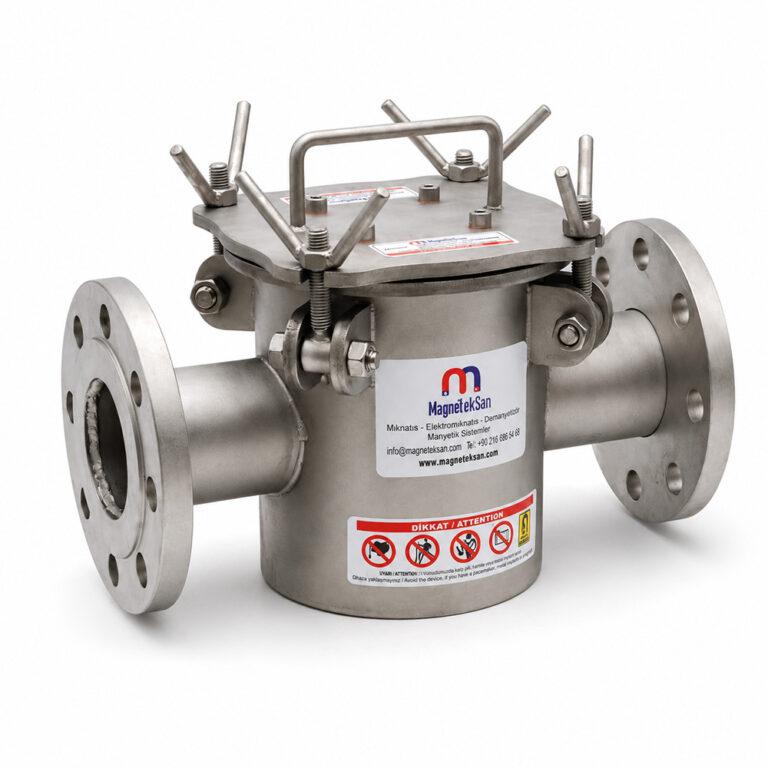
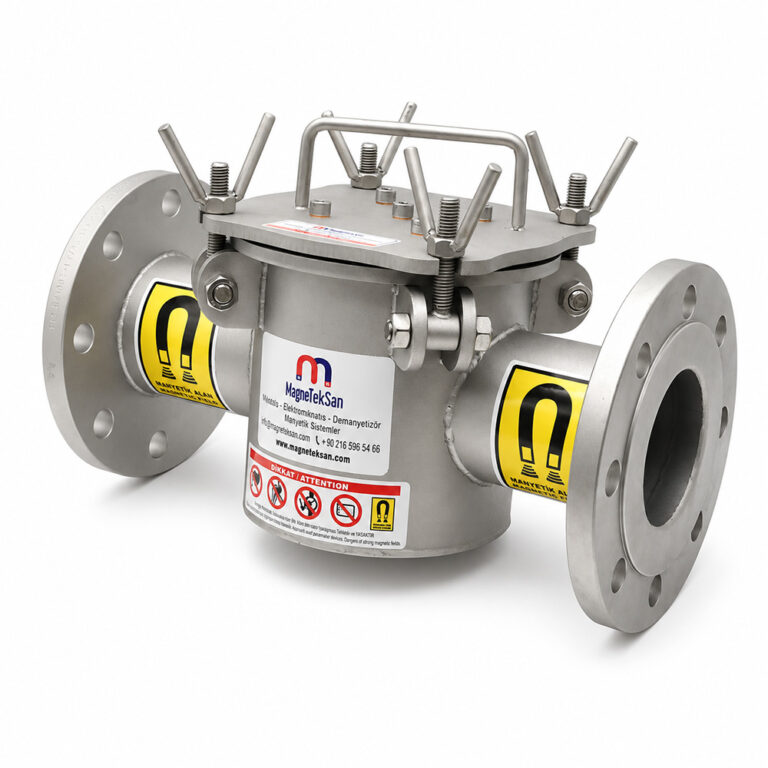
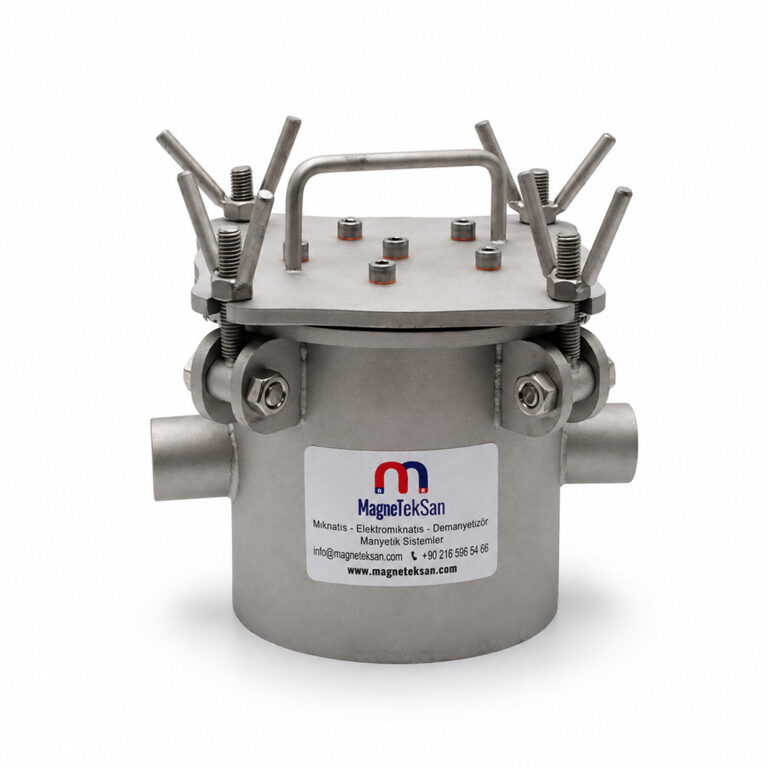
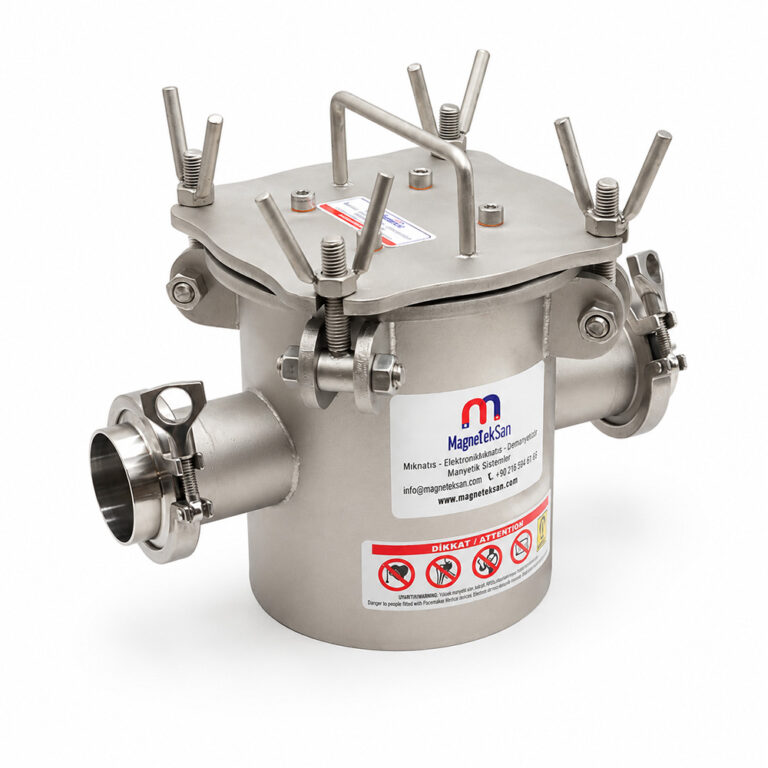
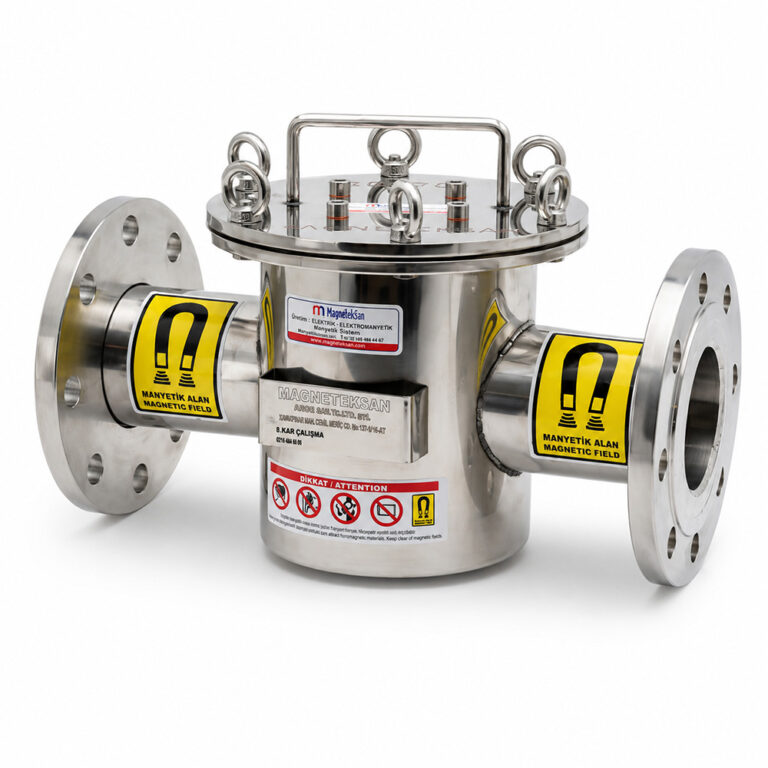
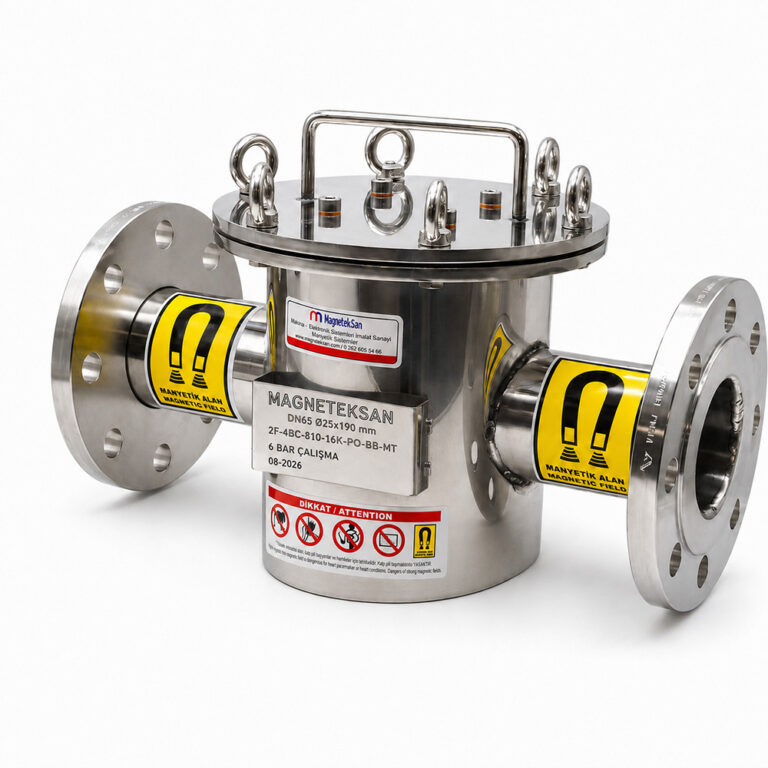
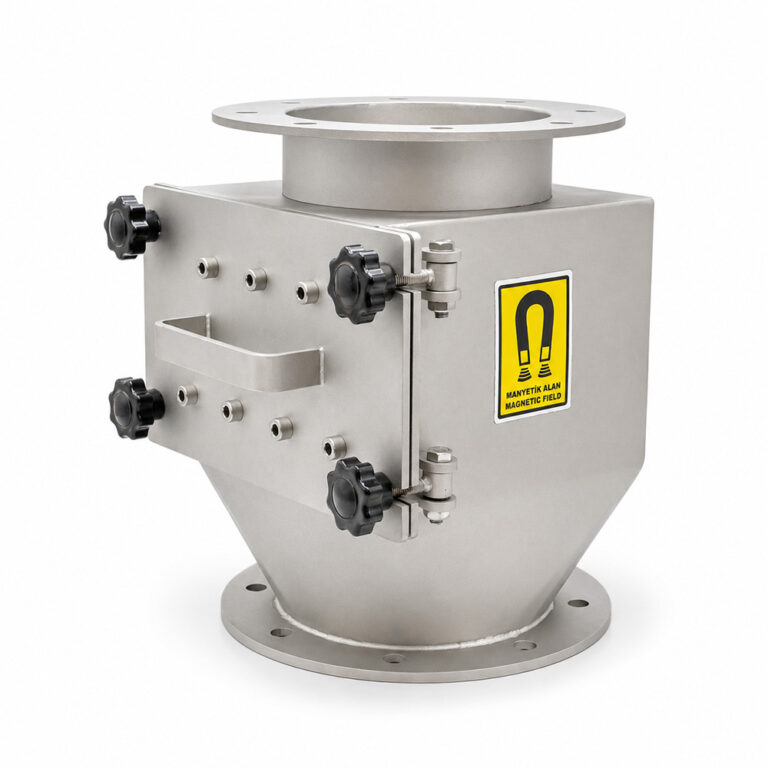
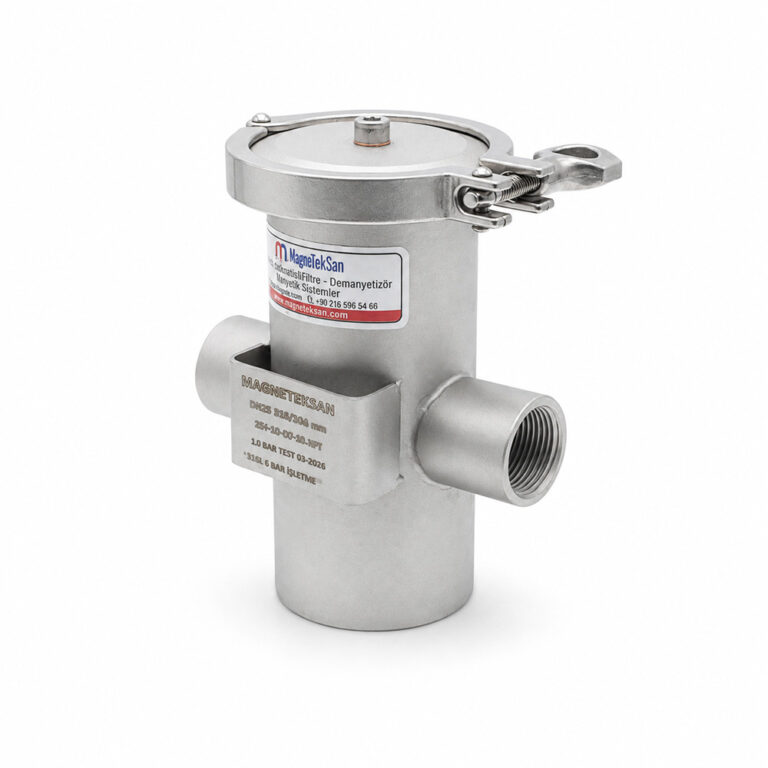
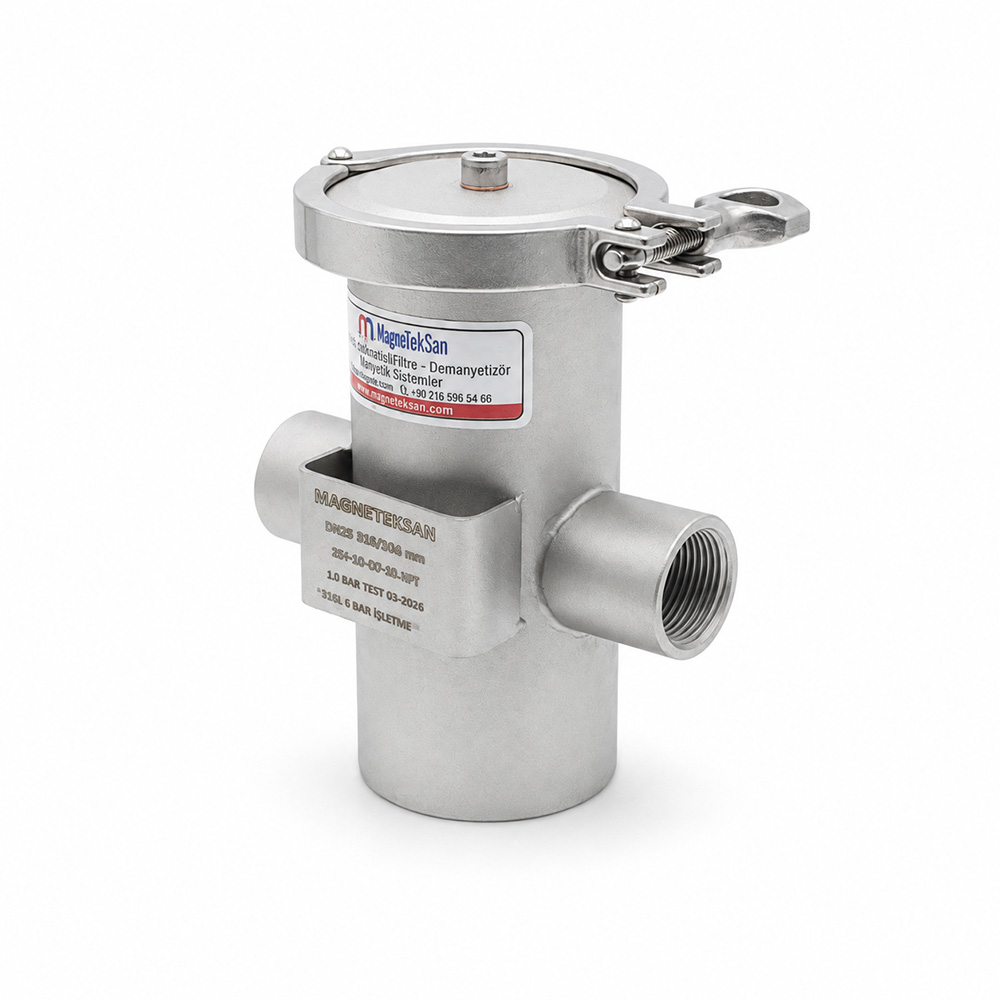
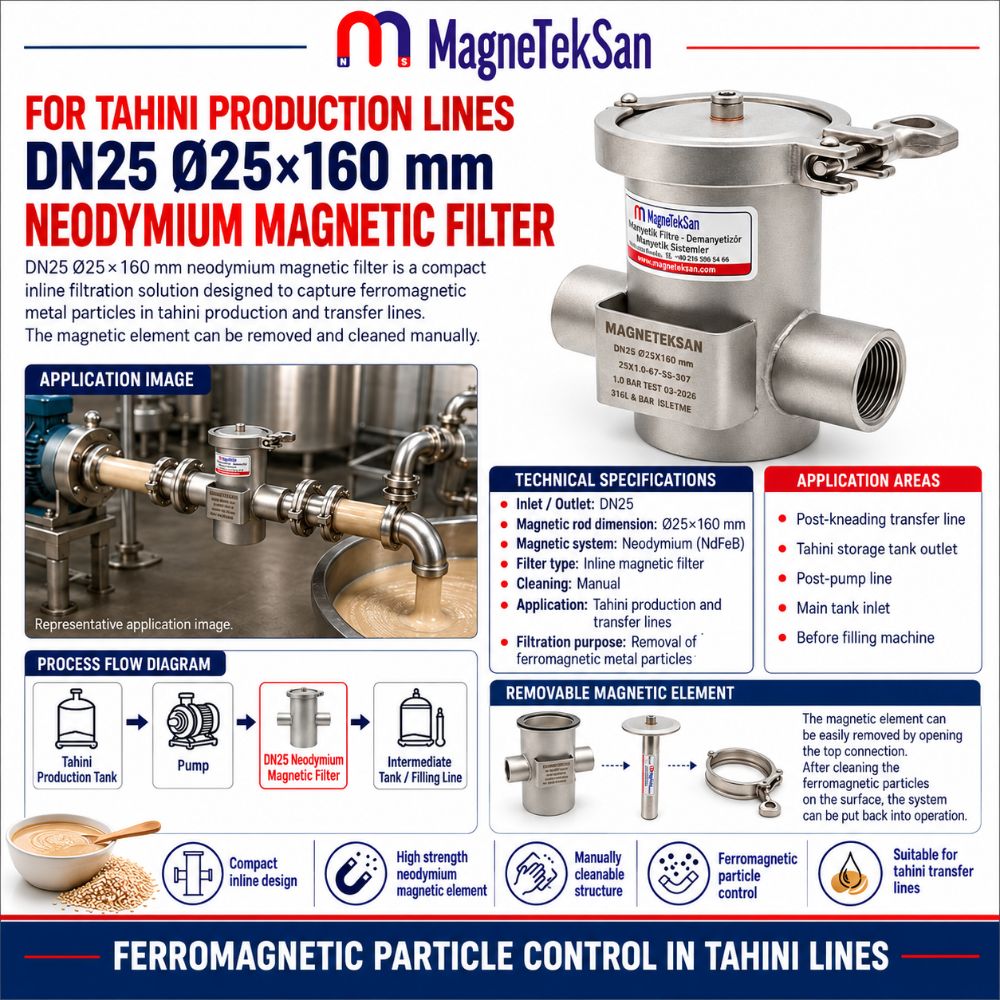
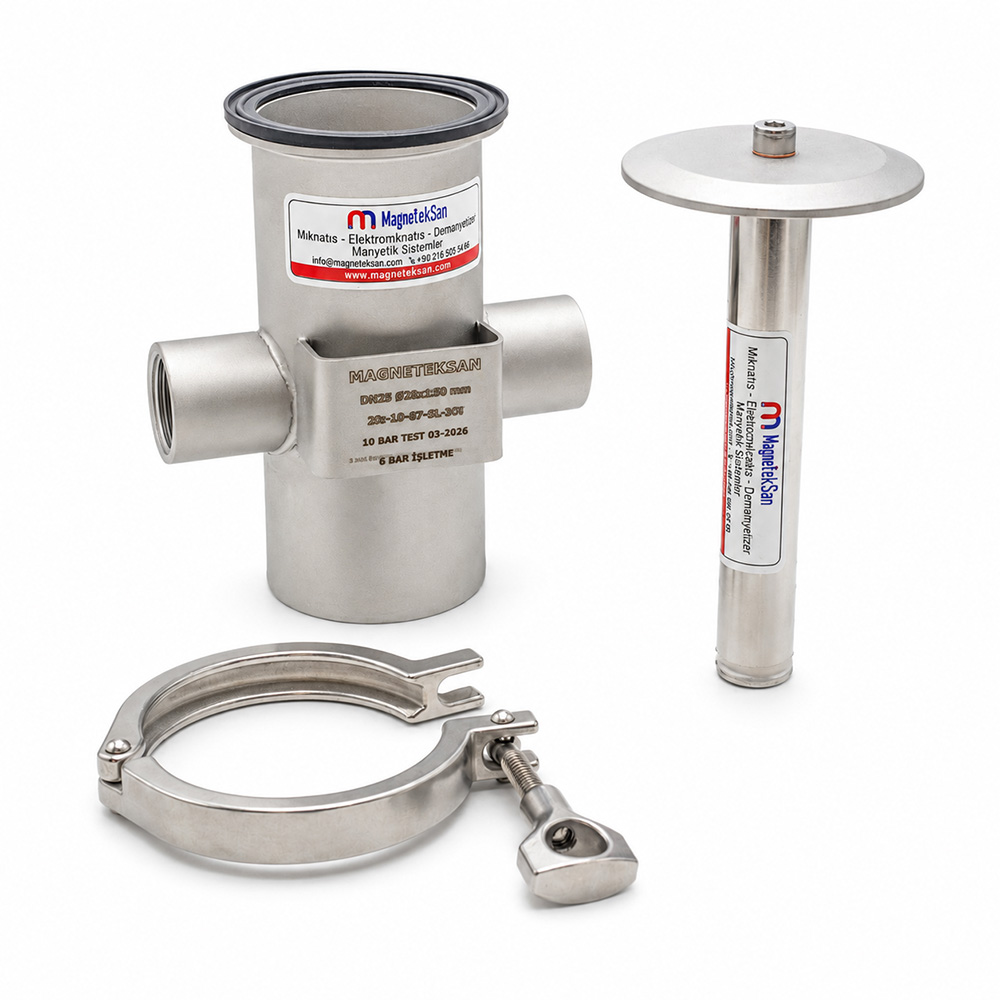
The DN25 Neodymium Magnetic Filter is a compact inline magnetic separator designed to help capture ferromagnetic metal contaminants in tahini production, transfer and filling lines. Its Ø25×160 mm permanent neodymium magnetic element attracts and retains suitable iron and ferromagnetic steel particles that pass sufficiently close to the magnetic surface as tahini flows through the filter. With its DN25 nominal connection size, the filter can be integrated into compatible processing pipelines and requires periodic manual cleaning without needing electricity to generate its magnetic field.
| Technical Specification | Description |
|---|---|
| Product Type | Inline Magnetic Filter |
| Nominal Connection Size | DN25 |
| Magnetic Element Diameter | Ø25 mm |
| Magnetic Element Length | 160 mm |
| Magnetic Element Dimensions | Ø25×160 mm |
| Magnetic Material | Neodymium (NdFeB) |
| Magnetic System | Permanent Magnet |
| Main Function | Ferromagnetic Metal Separation |
| Target Contaminants | Iron and Ferromagnetic Steel Particles |
| Primary Application | Tahini Production |
| Secondary Application | Tahini Transfer and Filling |
| Process Medium | Flowing Tahini / Sesame Paste |
| Installation Location | Compatible DN25 Processing Lines |
| Separation Configuration | Inline Magnetic Element |
| Cleaning Method | Manual |
| Electrical Requirement | None for Magnetic Field Generation |
Extra Information
1. DN25 Neodymium Magnetic Filter for Tahini Production Lines
The DN25 Neodymium Magnetic Filter is designed for ferromagnetic metal contamination control in tahini production and filling processes. It provides an additional separation stage for sesame paste flowing through a compatible processing pipeline.
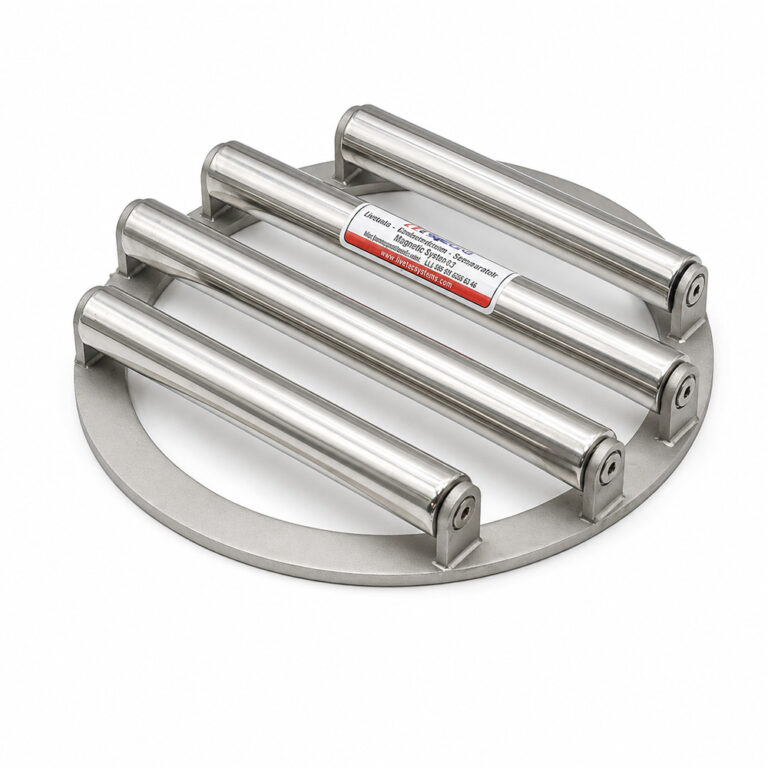
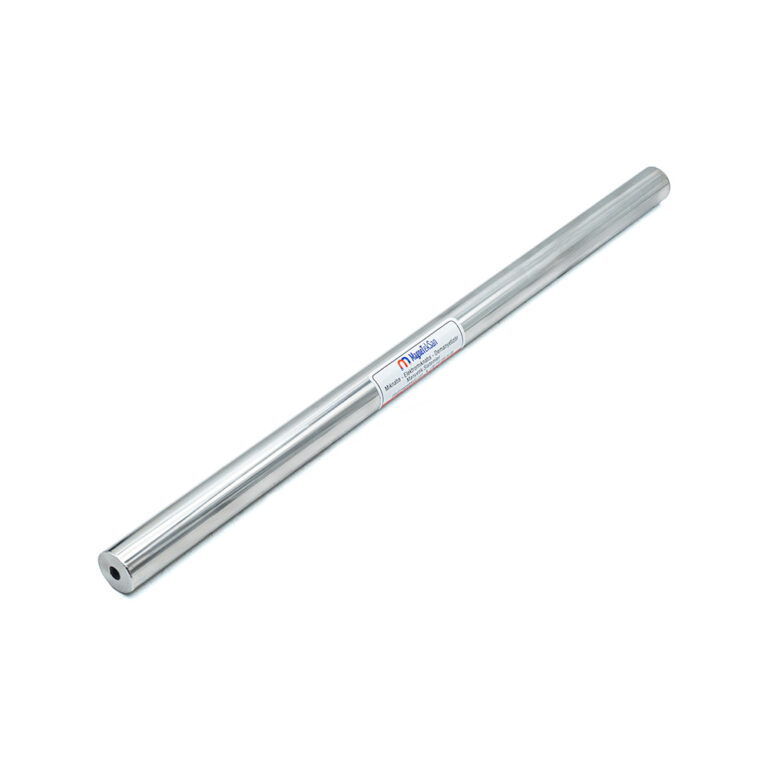
The filter incorporates a permanent neodymium magnetic element measuring Ø25×160 mm. This magnetic element provides an active surface for attracting suitable ferromagnetic particles carried by the product.
As tahini passes through the filter, iron and ferromagnetic steel particles that approach the magnetic element closely enough may be attracted and retained. The remaining product continues through the processing system.
Separation performance depends on the viscosity of the tahini, flow conditions, magnetic working distance and contaminant characteristics. The filter should be considered part of an integrated contamination-control programme rather than a guarantee of complete metal removal.
2. What Is an Inline Neodymium Magnetic Filter?
An inline neodymium magnetic filter is a magnetic separation device installed within a product transfer pipeline. Its purpose is to expose flowing material to a magnetic field that can capture suitable ferromagnetic contaminants.
The magnetic element uses permanent neodymium magnets, commonly identified by the material designation NdFeB. These magnets generate a magnetic field without requiring continuous electrical excitation.
When ferromagnetic particles move sufficiently close to the magnetic surface, magnetic attraction can cause them to separate from the product flow. The captured particles remain on the element until they are removed during maintenance.
An inline magnetic filter is not equivalent to a metal detector or a conventional fine-mesh filter. It is primarily intended to capture materials that respond adequately to magnetic attraction.
3. DN25 Nominal Pipeline Connection
DN25 identifies the nominal connection size associated with this magnetic filter. It is an important reference when assessing compatibility with the intended tahini production pipeline.
The filter can be considered for compatible DN25 transfer and filling lines. The exact mechanical connection arrangement must be verified against the supplied filter design and existing pipework.
DN25 does not independently establish the internal flow diameter, maximum flow rate or operating pressure. Those characteristics depend on the actual filter geometry and process requirements.
Before installation, the connection dimensions, sealing arrangement and available maintenance space should be checked. Mechanical compatibility is essential for reliable integration into the production line.
4. Ø25×160 mm Neodymium Magnetic Element
The filter uses a neodymium magnetic element with a nominal diameter of Ø25 mm and a length of 160 mm. These dimensions describe the magnetic element rather than the complete external dimensions of the filter assembly.
The magnetic element creates the working surface where suitable ferromagnetic contaminants may be captured. Its location within the filter influences how closely particles approach the magnetic field.
The Ø25×160 mm dimensions are relevant for understanding the basic magnetic configuration and planning maintenance access. However, they do not establish a guaranteed particle-capture distance.
The magnetic grade, measured surface gauss value and precise internal magnet arrangement have not been confirmed for this model. These specifications should only be published after verification.
5. Permanent Neodymium Magnetic System
The DN25 magnetic filter uses permanent neodymium magnetic technology. The magnetic field is generated without an external electrical power supply.
This operating principle allows magnetic attraction to remain available during normal product transfer. Actual separation performance depends on the design of the magnetic assembly and the properties of the contaminants.
The magnetic field remains active when the production line is switched off. Personnel must account for the continuing attraction of ferromagnetic tools and components during maintenance.
Permanent magnetic operation does not eliminate the need for inspection or cleaning. Captured metal particles must be removed periodically to maintain suitable operating conditions.
6. Ferromagnetic Metal Separation in Tahini Processing
Tahini processing involves the handling, grinding, transfer and filling of sesame-based material. Mechanical equipment and maintenance activities can introduce potential sources of metallic contamination.
An inline magnetic filter provides an opportunity to capture suitable iron and ferromagnetic steel particles from the flowing product. It is particularly relevant where ferromagnetic contamination has been identified as a process risk.
Particles passing close enough to the neodymium element may be attracted and retained on its surface. The separation mechanism depends on magnetic properties rather than conventional mechanical sieving.
The filter does not remove every possible foreign material from tahini. A complete contamination-control strategy should also address nonmagnetic metals and other relevant hazards.
7. Magnetic Filtration in Sesame Paste Production
Sesame paste production involves processing sesame seeds into a flowing or pumpable food product. The resulting material can have a viscosity that varies with temperature, formulation and processing conditions.
A magnetic filter can be incorporated into an appropriate transfer stage to help reduce ferromagnetic contamination. Its position should be selected according to the actual production arrangement.
The magnetic element must be exposed to the product flow in a way that allows suitable particles to approach its surface. The internal flow path is therefore important to separation performance.
Before commissioning, the filter should be evaluated using representative tahini and expected operating conditions. This helps determine whether the installation is suitable for the process.
8. Magnetic Separation in Tahini Transfer Lines
Tahini transfer lines move product between processing machines, holding vessels and filling equipment. These transfer stages can provide practical locations for magnetic separation.
The DN25 filter can be considered where its nominal connection size matches the intended pipeline. The surrounding system must also provide sufficient space for installation and cleaning.
The movement of tahini through the filter determines how contaminants interact with the magnetic element. Flow velocity and product viscosity influence the time available for magnetic attraction.
The filter should be installed so that maintenance can be carried out safely. A suitable arrangement also needs to preserve acceptable product transfer conditions.
9. Ferrous Metal Control Before Tahini Filling
Filling is an important stage in tahini manufacturing because the processed product is transferred into its final container. Ferromagnetic contamination control before filling can provide an additional process safeguard.
An inline magnetic filter may be positioned at a suitable transfer point upstream of filling equipment. The objective is to capture appropriate ferromagnetic particles before the product reaches the filling stage.
Particles retained on the magnetic element are removed during scheduled cleaning. The required cleaning frequency depends on contamination levels and operating conditions.
Magnetic separation should complement other appropriate inspection and quality-control procedures. It should not be presented as a substitute for all forms of metal detection.
10. Installation in Compatible DN25 Processing Pipelines
Successful installation begins with confirming that the DN25 filter is mechanically compatible with the processing line. Nominal connection size alone is not sufficient to establish complete compatibility.
The actual connection type, sealing method and required installation orientation must be checked. These details should be established from the technical drawing or the supplied unit.
The installation should permit product to flow through the intended separation zone. It should also allow the magnetic element to be inspected and cleaned without unnecessary dismantling.
After installation, appropriate commissioning checks should be performed before normal production begins. These checks should include mechanical integrity and suitability for the intended product.
11. Integration with Tahini Pumps and Transfer Equipment
Tahini is commonly transferred using pumping equipment suited to its rheological properties. The magnetic filter must be selected with the pump and surrounding pipework in mind.
The pressure drop across the filter depends on the internal geometry, flow rate, product viscosity and accumulation of retained material. It cannot be determined from DN25 alone.
An unsuitable filter arrangement could interfere with product transfer or increase the load on the pumping system. The installation should therefore be assessed as part of the complete line.
The magnetic filter can help control certain ferromagnetic contaminants, but it does not replace pump maintenance. Sources of mechanical wear should be investigated and corrected independently.
12. Magnetic Separation of Viscous Food Products
Tahini is a viscous sesame-based product, and its flow behaviour differs from that of water or other low-viscosity liquids. This distinction is important when assessing magnetic separation.
Viscous flow can influence the movement of metal particles toward the magnetic element. Product velocity and the internal flow path affect the opportunity for capture.
The Ø25×160 mm magnetic element provides an active magnetic surface, but the available working distance is not established by its dimensions alone. Actual performance should be evaluated under process conditions.
The filter should be assessed for the specific tahini formulation and operating temperature. Assumptions based on unrelated liquid-processing applications may not be appropriate.
13. Tahini Viscosity and Magnetic Filter Performance
The viscosity of tahini can change with temperature, sesame composition and processing conditions. These changes may affect product movement inside the filter.
At different viscosities, the transport of ferromagnetic particles through the flow can also change. This may influence their likelihood of approaching the magnetic element.
The relationship between viscosity and magnetic capture cannot be expressed as a universal efficiency value for this product. Testing may be necessary where specific performance requirements apply.
Operating conditions should be recorded when assessing separation results. Consistent process parameters can help make performance observations more meaningful.
14. Magnetic Element Positioning and Product Flow
The position of the magnetic element inside an inline filter affects how the product interacts with its magnetic field. Suitable particle capture requires adequate proximity to the active magnetic surface.
Particles travelling near the magnetic element may experience stronger attraction than particles following more distant flow paths. The actual internal geometry therefore matters.
Flow distribution can change with product viscosity, pump conditions and the filter arrangement. These factors should be considered during equipment selection.
The confirmed magnetic element dimensions are Ø25×160 mm. Other internal dimensions should be verified rather than inferred when evaluating the filter design.
15. Magnetic Working Distance
Magnetic working distance describes the separation between a contaminant particle and the magnetic surface capable of attracting it. It is an important factor in magnetic separation.
A suitable ferromagnetic particle passing close to the magnetic element may be captured, while an otherwise similar particle farther away may not be retained. Magnetic force changes with distance.
Particle size, shape, composition and movement also affect capture behaviour. The magnetic field alone does not establish a universal minimum removable particle size.
No guaranteed capture distance has been verified for this DN25 model. Performance claims should be supported by appropriate testing rather than assumed from the neodymium material.
16. Flow Rate and Pressure Drop Considerations
Flow rate affects how quickly tahini moves through the magnetic filter. It can also influence the time available for ferromagnetic particles to interact with the magnetic field.
Pressure drop is influenced by the filter’s internal geometry, tahini viscosity, flow conditions and accumulated contaminants. A DN25 connection designation does not establish a fixed pressure-drop value.
The filter should be selected so that it does not create unacceptable restrictions in the production line. Pump capability and process requirements must be considered together.
No verified maximum flow rate or operating pressure has been specified for this particular model. These values should be confirmed before finalising the installation.
17. Iron and Ferromagnetic Steel Contaminants
Iron and many carbon steels have ferromagnetic properties. Suitable particles of these materials can be attracted by the field generated by the neodymium element.
Potential contaminants may include small steel fragments, iron particles, wire pieces and material produced by mechanical wear. Their magnetic properties and dimensions can vary.
When these particles pass sufficiently close to the magnetic element, they may be captured and retained. They can then be removed during scheduled maintenance.
Not all steel grades behave identically in a magnetic field. Some stainless steels are weakly magnetic or effectively nonmagnetic under particular conditions.
18. Limitations with Nonmagnetic Metal Contaminants
The DN25 neodymium magnetic filter is intended primarily for ferromagnetic metal separation. It is not designed to capture every type of metallic contaminant.
Aluminium, copper and brass are not reliably retained through ordinary attraction to permanent magnetic rods. Certain stainless steel grades may also respond weakly.
Where nonmagnetic metals present a significant risk, additional inspection or separation technologies may be necessary. These should be selected according to the hazards identified in the process.
A magnetic filter and a metal detector perform different functions. They may be used together as part of a wider foreign-body control system.
19. Manual Cleaning of the Magnetic Filter
Ferromagnetic particles captured during operation can accumulate on the magnetic element. These particles must be removed through appropriate cleaning procedures.
Before maintenance, the product transfer system must be stopped, isolated and made safe. Any retained process pressure must be addressed according to the site’s approved procedures.
The magnetic element should be cleaned using suitable methods and equipment. Care is required because the permanent magnetic field remains active even when machinery is switched off.
After cleaning, the magnetic element and accessible filter components should be inspected before production resumes. The cleaning method must also be compatible with food-processing hygiene requirements.
20. Determining Cleaning Intervals
The required cleaning frequency depends on the amount of ferromagnetic contamination entering the filter. A universal cleaning interval cannot be established for all tahini production lines.
During initial operation, more frequent inspections can help determine how quickly particles accumulate. These observations provide a basis for setting a practical cleaning schedule.
Changes in raw materials, production volume or equipment condition can affect contamination levels. Cleaning intervals may need to be adjusted when operating conditions change.
Recording the type and quantity of collected metal can support preventive maintenance. Unexpected increases may indicate wear or damage elsewhere in the production line.
21. Inspection and Preventive Maintenance
Routine inspection helps confirm that the magnetic filter remains correctly installed and suitable for continued use. Accessible connections and supporting components should be checked for visible defects.
The magnetic element should be inspected for retained metal particles and surface damage. Any condition that may affect safe operation or separation performance should be investigated.
Changes to the pump, pipework or production process may alter the filter’s operating conditions. Such changes should prompt a review of the installation.
If magnetic performance verification is required, a suitable measurement or functional test procedure should be established. Acceptance criteria should reflect the actual application requirements.
22. Hygiene Considerations in Tahini Production
Tahini production requires equipment that can be cleaned and maintained according to applicable food-processing hygiene requirements. Magnetic filters should be evaluated within this framework.
The installation should allow practical access to surfaces that may come into contact with sesame paste. Product residue should not be allowed to accumulate unnecessarily.
The exact stainless steel grade, seal material and food-contact documentation for this model have not been confirmed. These details should be verified for the supplied configuration before making compliance claims.
Cleaning procedures should be compatible with the filter’s materials and the surrounding processing equipment. Suitability for a particular chemical cleaning programme should not be assumed without verification.
23. Preventing Product Accumulation and Flow Restrictions
Viscous tahini can behave differently from low-viscosity liquids when passing through processing equipment. Filter geometry and operating conditions can influence product accumulation.
Retained metal particles and product residue may affect the available flow path. Regular inspection helps identify conditions that could interfere with transfer.
The filter should be installed with appropriate consideration for the pump and pipeline. Its internal configuration must be suitable for the expected flow conditions.
Any unusual reduction in flow or increase in pressure drop should be investigated. Maintenance procedures should address the underlying cause rather than relying solely on increased pumping pressure.
24. Magnetic Filtration and Tahini Quality Control
Magnetic filtration can contribute to a manufacturer’s programme for controlling foreign-body contamination. Its specific role is to capture suitable ferromagnetic particles.
In tahini processing, the filter may be used as an additional control point during transfer or before filling. The appropriate location depends on the production arrangement.
The presence of a magnetic filter does not eliminate the need for hazard assessment, equipment maintenance or other quality-control measures. Separation performance should be evaluated as part of the overall process.
Inspection records and documented cleaning activities can support traceability and maintenance management. The required verification programme should follow the manufacturer’s established quality procedures.
25. Custom DN25 Magnetic Filter Manufacturing
Different tahini production facilities may have different pipeline layouts, connection arrangements and maintenance requirements. Custom magnetic filter design can help address these differences.
Magneteksan develops magnetic separation solutions for industrial processing applications. A DN25 filter can be evaluated in relation to the actual transfer and filling system.
The Ø25×160 mm magnetic element is the confirmed magnetic component dimension for this model. Any alternative dimensions or construction details should be specified separately.
Customisation should consider mechanical compatibility, product flow, cleaning access and magnetic separation requirements together. The final design should be confirmed through technical review.
26. Custom Magnetic Elements and Filter Configurations
Magnetic filter configurations can differ in their internal magnetic arrangement and mechanical construction. The most suitable design depends on the product and the intended installation.
Additional magnetic surfaces may improve opportunities for particle capture, but they can also affect the flow path. These competing requirements should be assessed together.
Tahini viscosity and the available DN25 connection space are important considerations. A configuration suitable for a low-viscosity liquid may not behave identically with sesame paste.
For this model, the confirmed magnetic element dimension is Ø25×160 mm. The number of elements and any alternative magnetic specifications must be verified rather than assumed.
27. Selecting a Magnetic Filter for Tahini Production
Selecting a magnetic filter begins with understanding the actual tahini production process. Essential information includes product viscosity, operating temperature, expected flow rate and pipeline configuration.
The type of expected contamination must also be considered. Neodymium magnetic separation is primarily suitable for iron and other sufficiently ferromagnetic materials.
Mechanical compatibility, cleaning access and acceptable pressure drop are equally important. A nominal DN25 connection does not by itself confirm suitability for every DN25 process line.
The DN25 Neodymium Magnetic Filter with its Ø25×160 mm element can be considered where its confirmed characteristics meet the application requirements. Final selection should be supported by an engineering assessment.
28. Magneteksan Magnetic Filtration Solutions for Tahini Processing
Magneteksan manufactures industrial magnetic separation equipment for different material-handling and processing applications. Inline neodymium magnetic filters form part of these solutions.
The DN25 Neodymium Magnetic Filter is intended to help control ferromagnetic metal particles in tahini production, transfer and filling lines. Its Ø25×160 mm neodymium element provides a magnetic capture surface within the filter.
The permanent magnetic system requires no electricity to generate its magnetic field. Captured ferromagnetic particles must be removed through periodic manual cleaning.
Successful integration depends on product characteristics, installation dimensions, flow behaviour and maintenance requirements. These factors should guide the selection and use of the magnetic filter within the complete tahini production process.