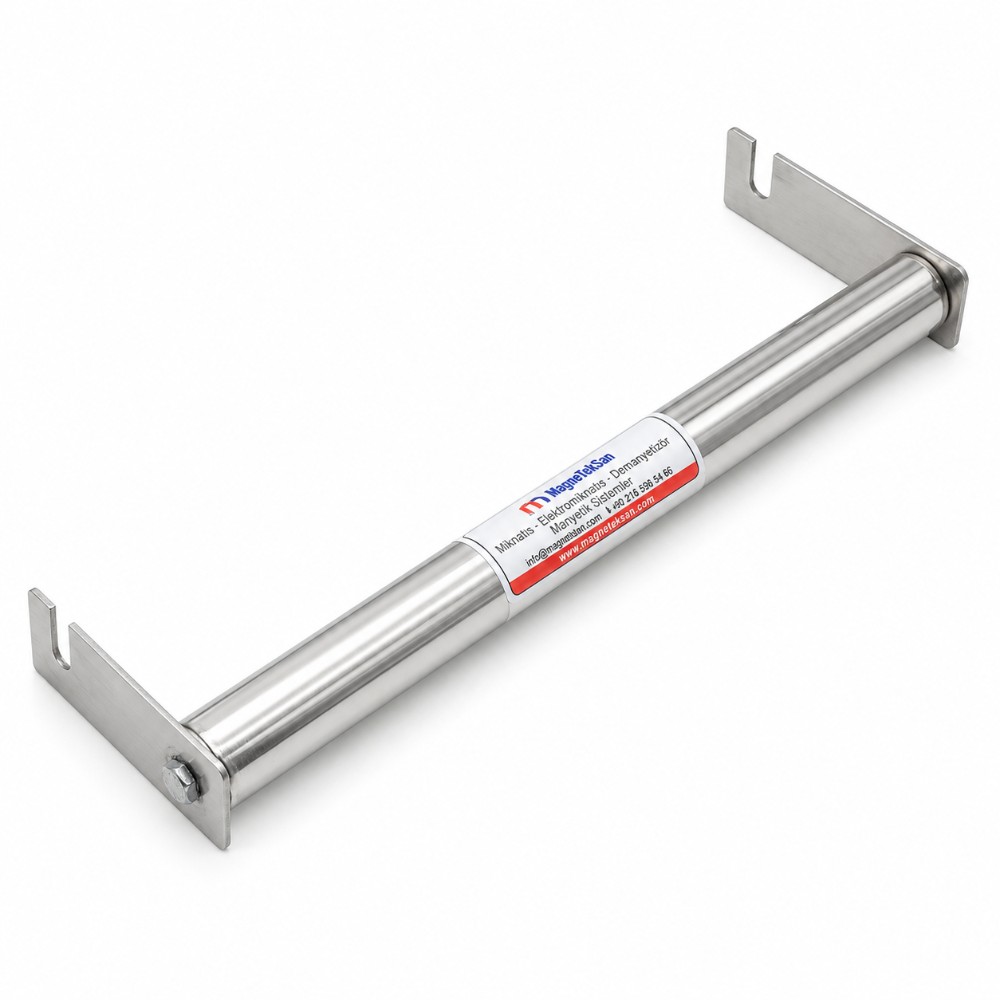
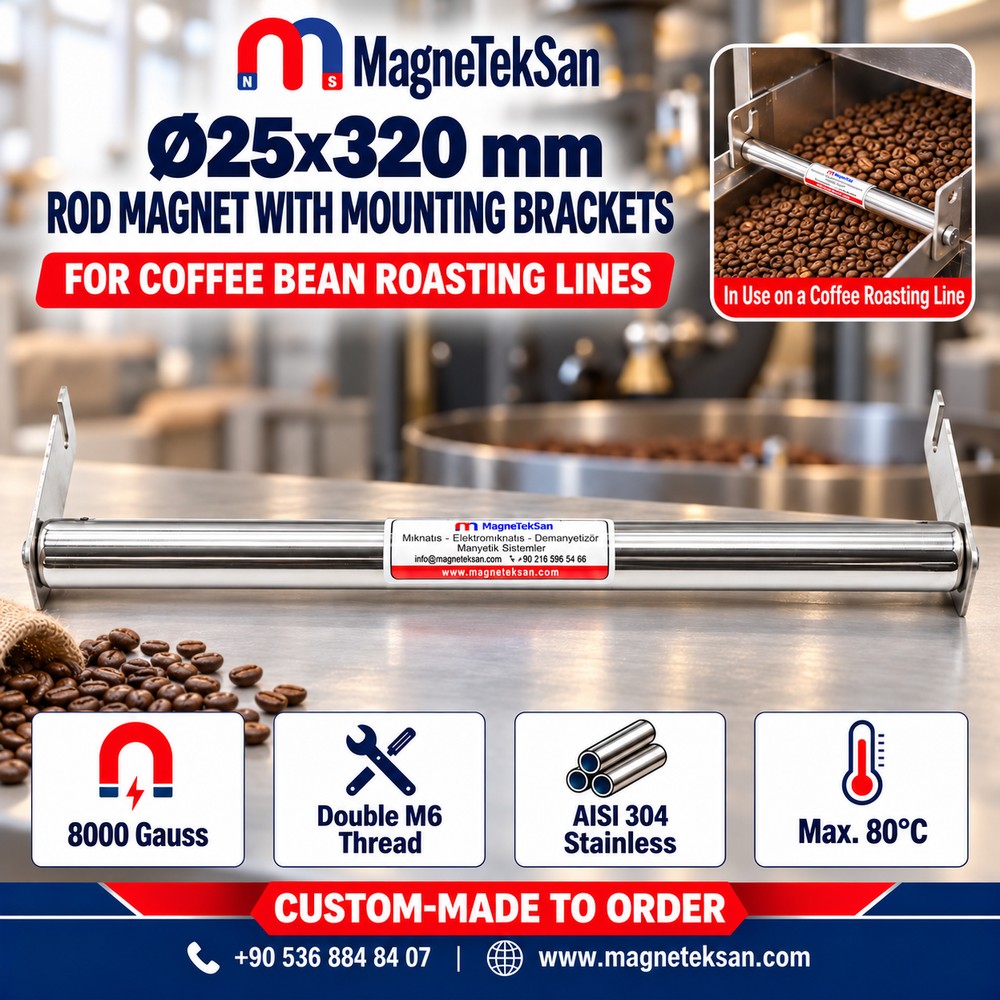
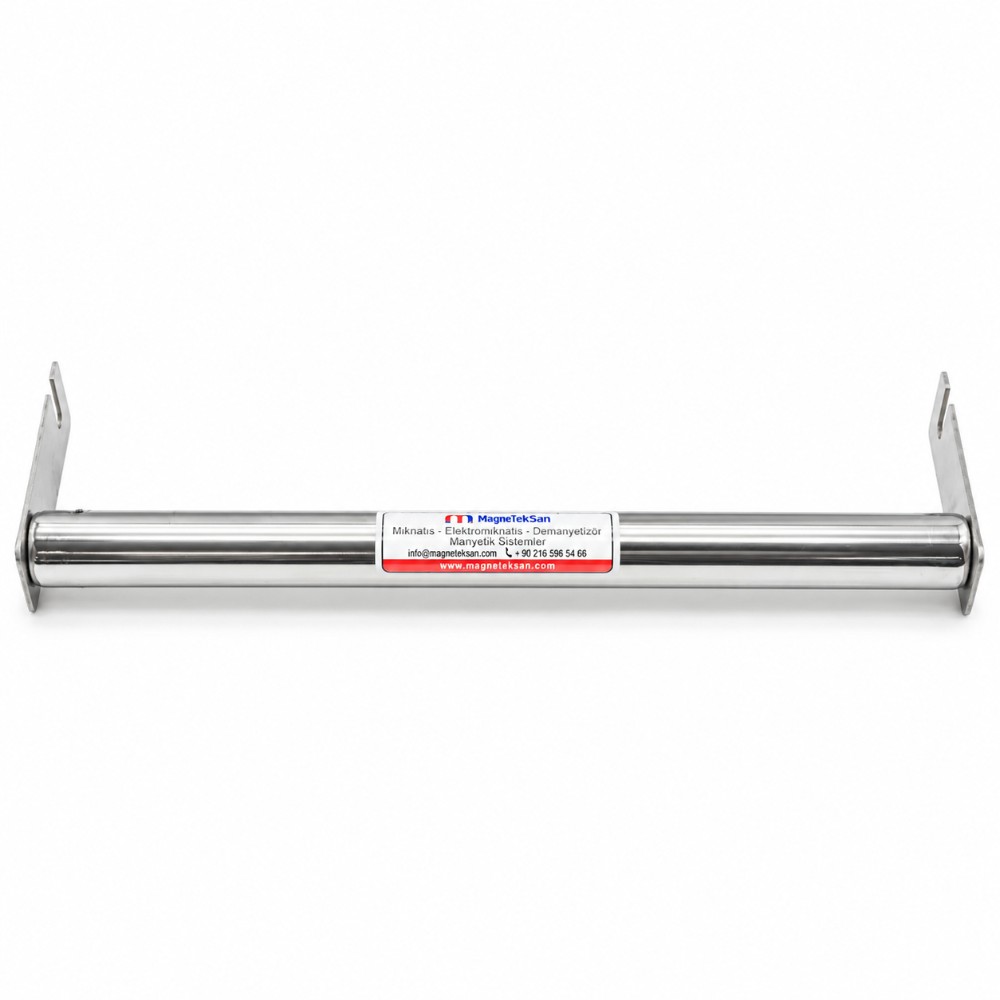
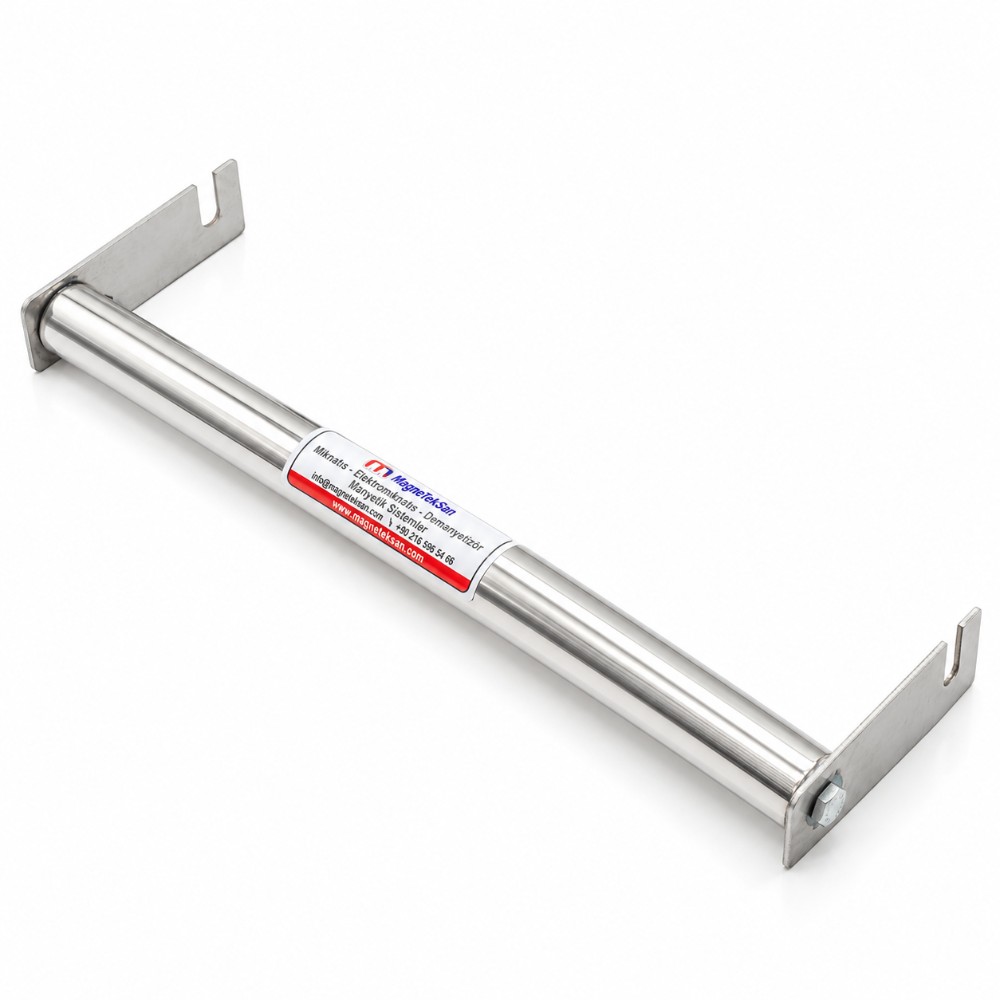
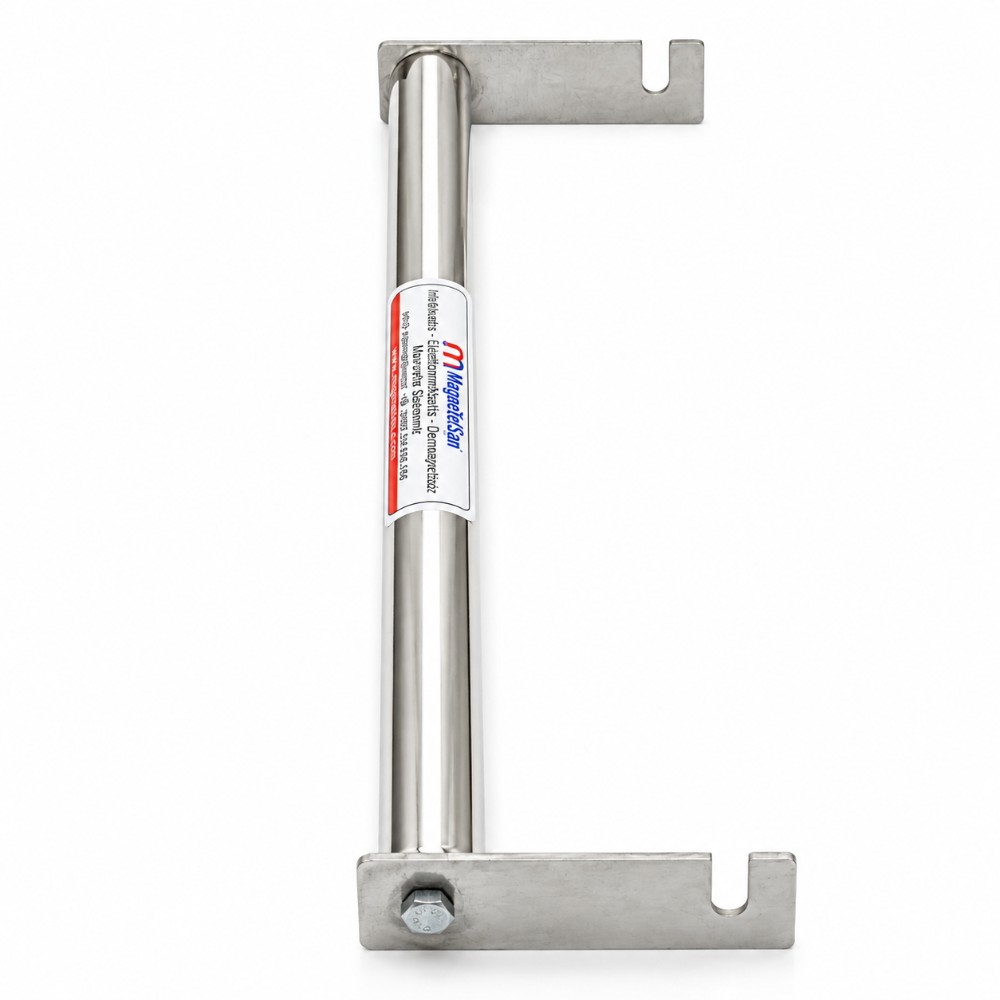
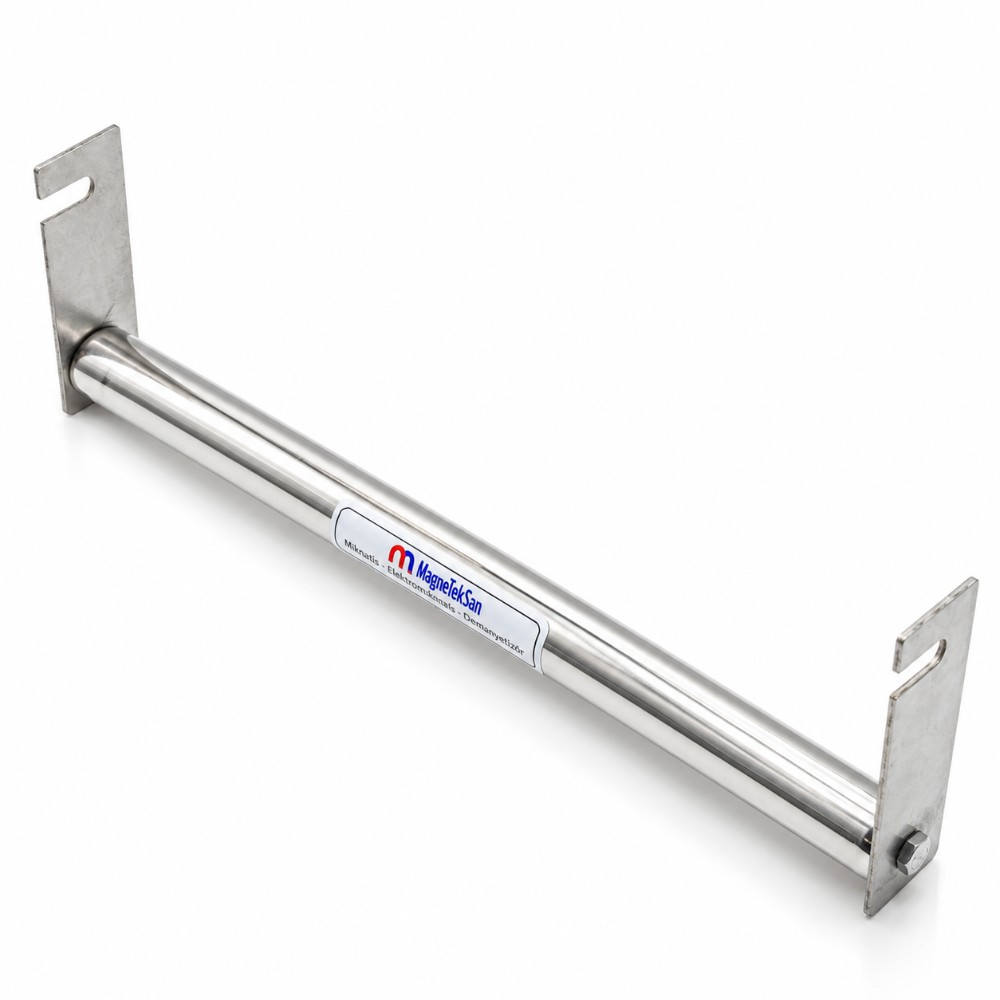
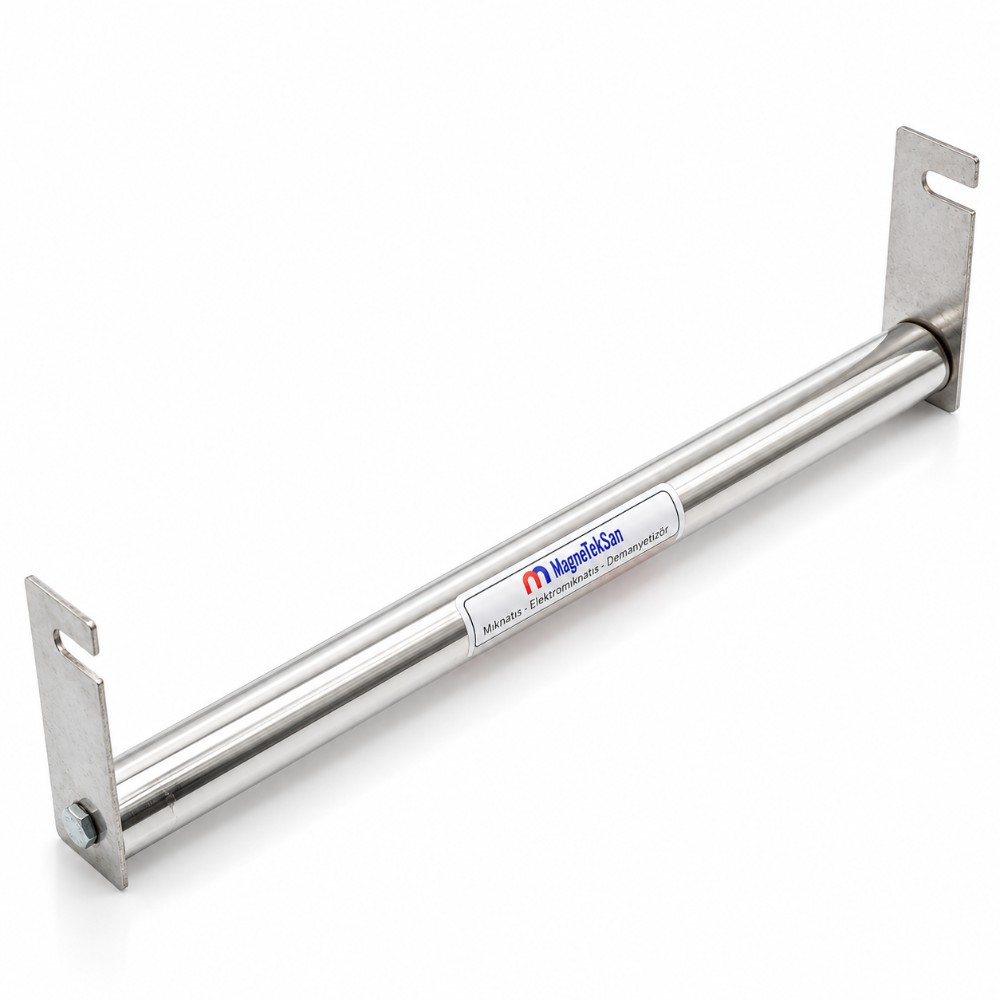
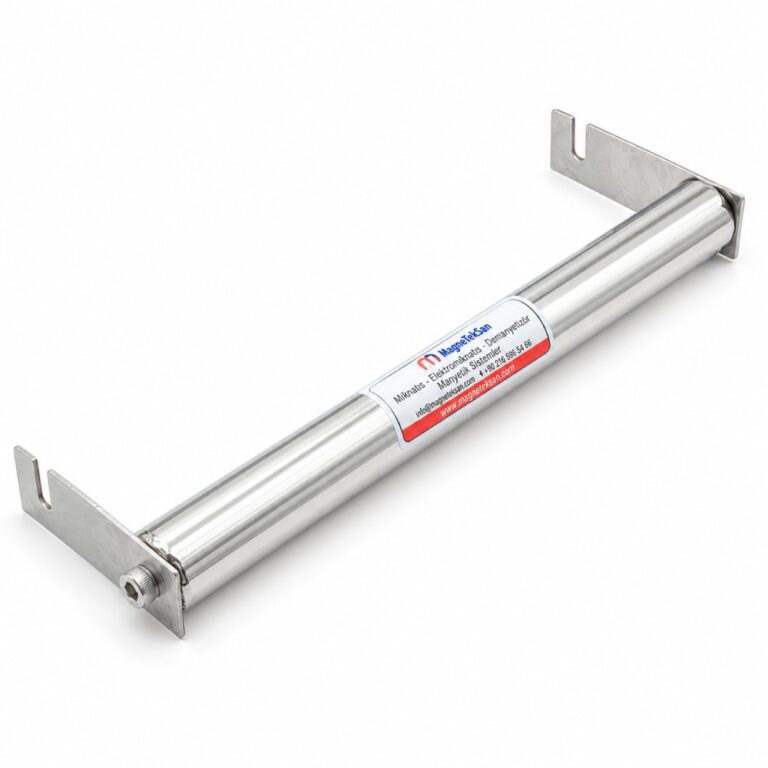
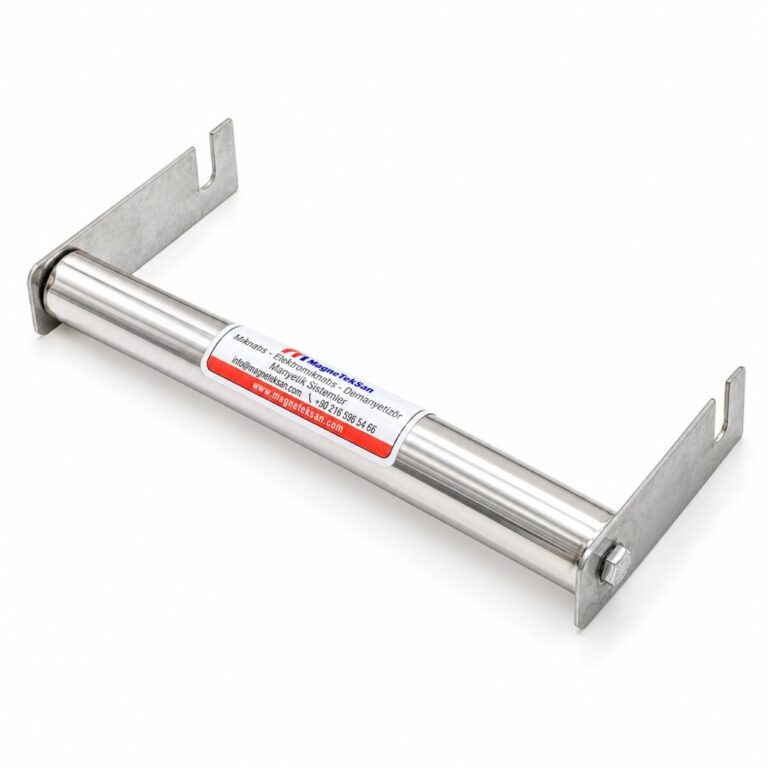
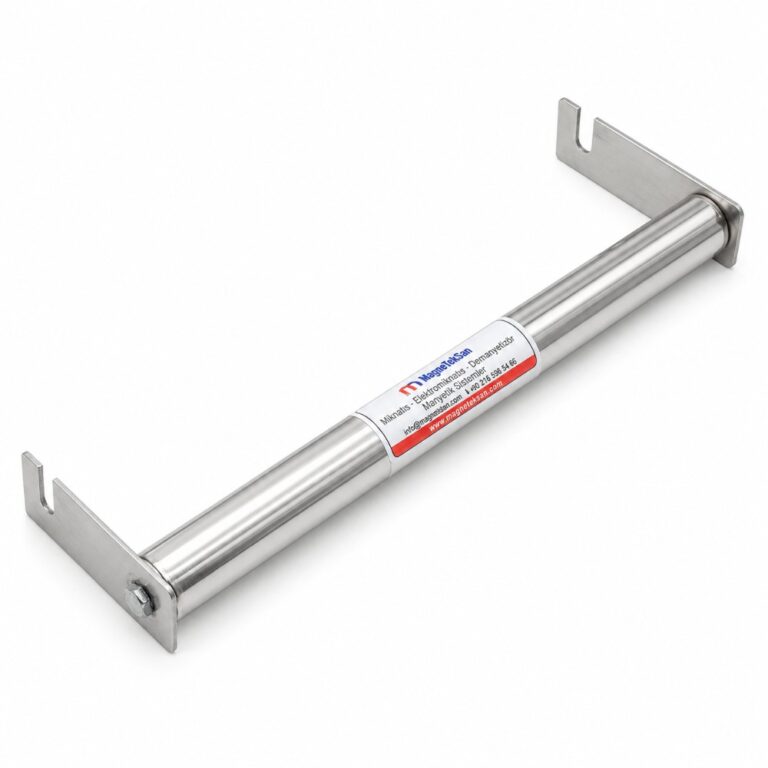
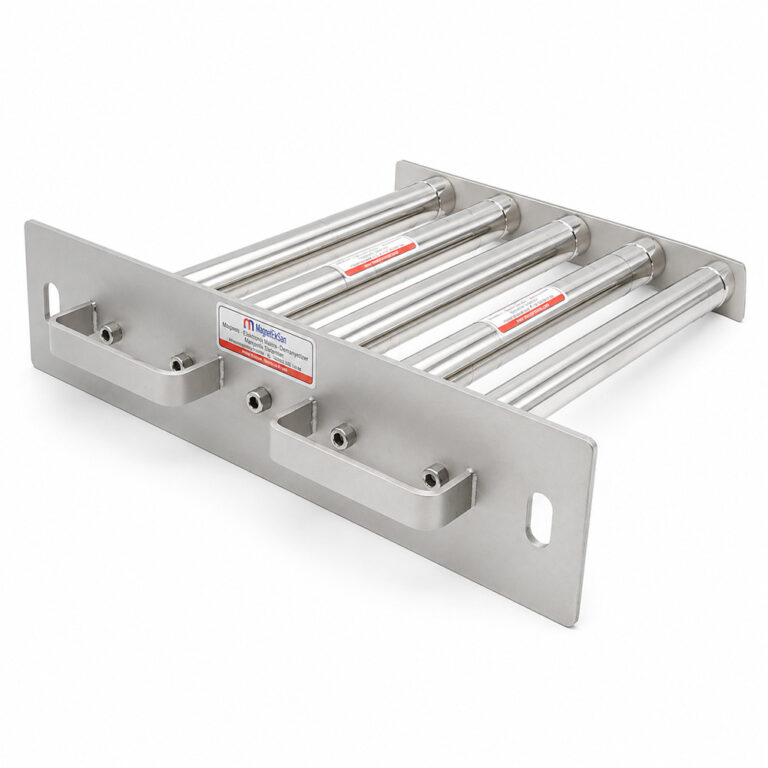
The Ø25×320 mm neodymium rod magnet with mounting brackets, also known as a magnetic rod, magnetic bar or tube magnet, removes iron and steel from green coffee before it is loaded into the roaster. Its 320 mm magnetic length covers the loading hopper and wide feed chutes with a single rod, and the slotted brackets at both ends bolt directly to the chute wall.
| Specification |
Value |
| Product type |
Neodymium rod magnet with mounting brackets (magnetic bar) |
| Model code |
Ø25×320 mm 2TM6S88-K |
| Stock code |
MGK-CU-369 |
| Rod diameter |
Ø25 mm |
| Magnetic length |
320 mm |
| Surface flux density |
8,000 Gauss (0.8 T) at the tube surface |
| Magnet material |
Neodymium iron boron (NdFeB) |
| Tube material |
AISI 304 (1.4301) stainless steel, polished |
| Tube ends |
Sealed |
| Connection |
M6 thread at both ends |
| Mounting |
Slotted L-shaped bracket at each end |
| Maximum operating temperature |
80 °C |
| Power supply |
None required (permanent magnet) |
| Application |
Coffee bean roasting lines |
Where the Metal in Green Coffee Comes From
Green coffee is dried and bagged in the country of origin and then travels for months. On the way, jute sack stitching wire, staples, pallet nails and fragments from storage equipment get into the beans. A destoner removes heavy stones but does not always remove thin pieces of wire. Metal that enters the roasting drum can damage the drum and mixing paddles and end up in the roasted coffee and the grinder, so the feed line before roasting is the simplest place to remove it.
Where to Fit It
- In the chute after the sack tipping station
- At the inlet of the roaster loading hopper
- At the outlet of the green coffee silo
The inside of the roasting drum and its hot outlet are not suitable; the tube is rated to 80 °C.
Why 320 mm
Coffee beans are large and smooth, so they move quickly down a chute. If the rod does not span the full width, part of the flow passes beside it and any metal in that part is missed. The 320 mm magnetic length spans a wide loading chute in one piece; for narrower chutes the 230 mm version is enough.
Model Code Explained
The code 2TM6S88-K reads as follows: 2T M6 = M6 thread at both ends; S = sealed tube; 8 = maximum 80 °C; 8 = 8,000 Gauss; K = with mounting brackets.
Installation and Cleaning
Bolt the brackets to the chute wall with M6 screws and set the rod across the flow where the beans strike the chute floor; this is where most metal is caught. If the flow is very fast, two rods fitted a few centimetres apart, one after the other, hold more metal. Dust and chaff from the green beans build up on the tube. Remove the rod at least once a day, wipe it, and slide the metal to one end of the tube with a gloved hand. Keeping a note of what you remove shows which lots of green coffee arrive more contaminated.
Limits
The rod holds ferromagnetic metals such as iron, carbon steel and tool steel. Austenitic stainless steels (AISI 304 and 316) are not magnetic, or only weakly so, and are not reliably removed; aluminium, brass, glass and stone pass straight through. Do not use the rod above 80 °C. Neodymium magnets are very strong: keep fingers clear when handling the rod near steel, and keep it away from anyone fitted with a pacemaker or other implanted medical device and from bank cards and other magnetic storage media.
Other Sizes and Options
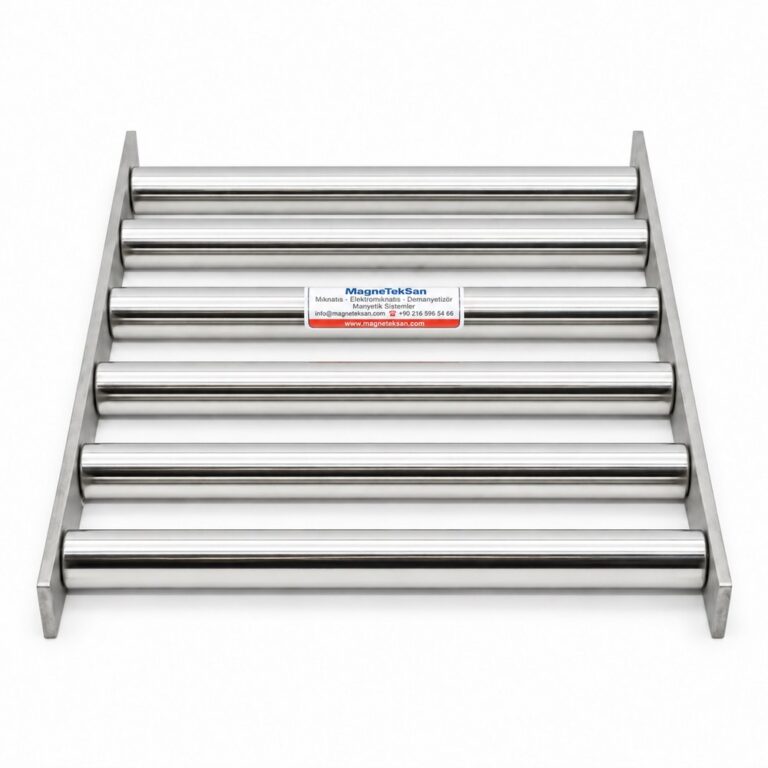
Length, diameter, thread size and Gauss level are made to suit your chute. See our rod magnets with special connections, or read more about rod magnets. Where the magnet must be cleaned without opening the chute, an easy-clean rod magnet or a drawer magnet may suit better. Contact us with your chute width for a quotation.
Frequently Asked Questions
Do I need a magnet if I already have a destoner?
Yes. A destoner separates by density, so light, thin pieces of wire can pass through with the beans. The magnet holds them.
Are sack staples and pallet nails magnetic?
Most are made of ordinary steel and are held easily. Stainless steel parts are usually non-magnetic and are not reliably removed.
Does the magnet lose strength over time?
Used below 80 °C, neodymium magnets lose strength very slowly. Many food plants check their magnets once a year with a gaussmeter and keep the result for audits.