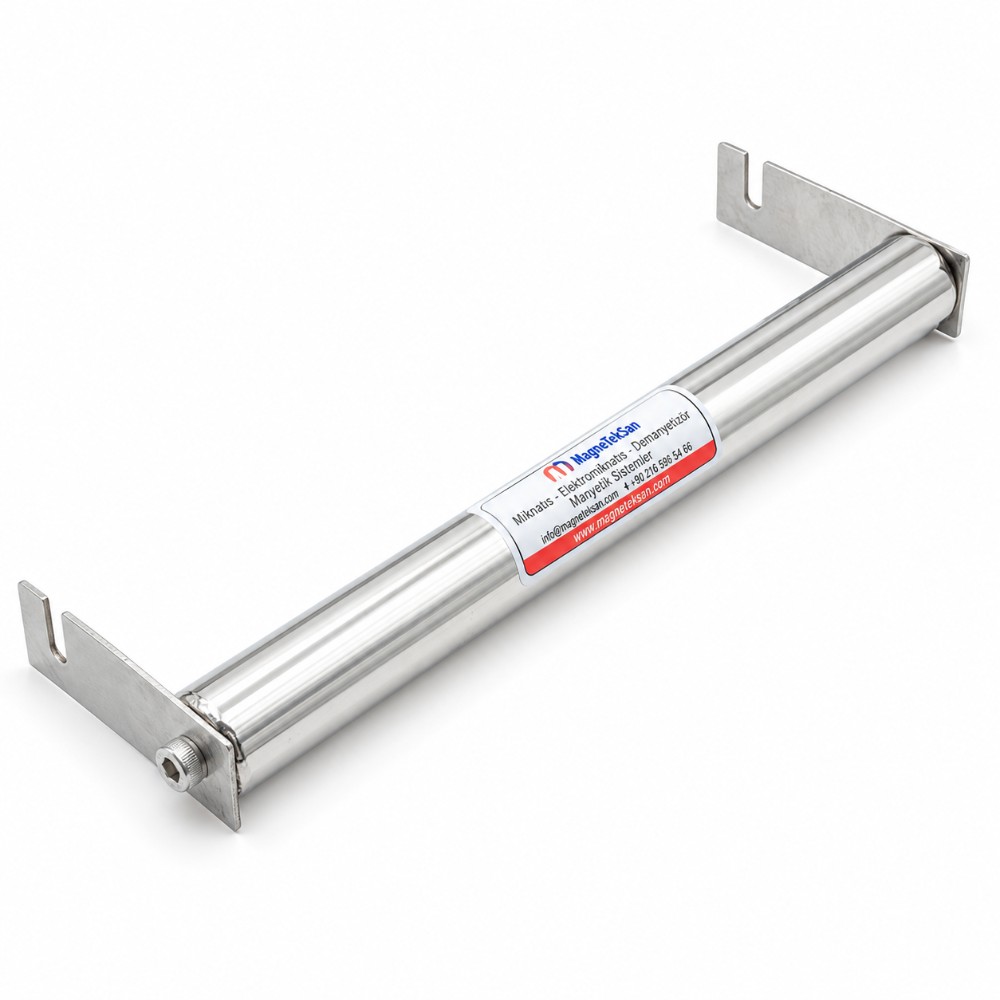
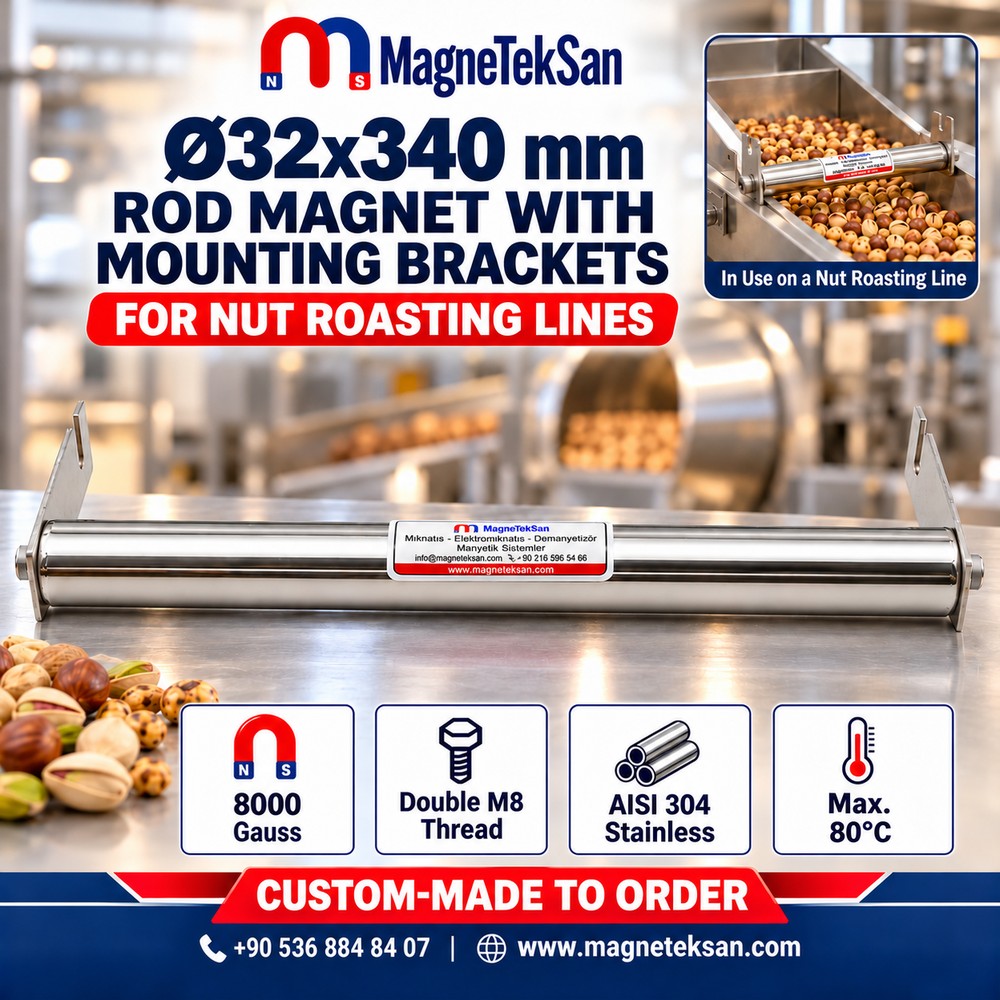
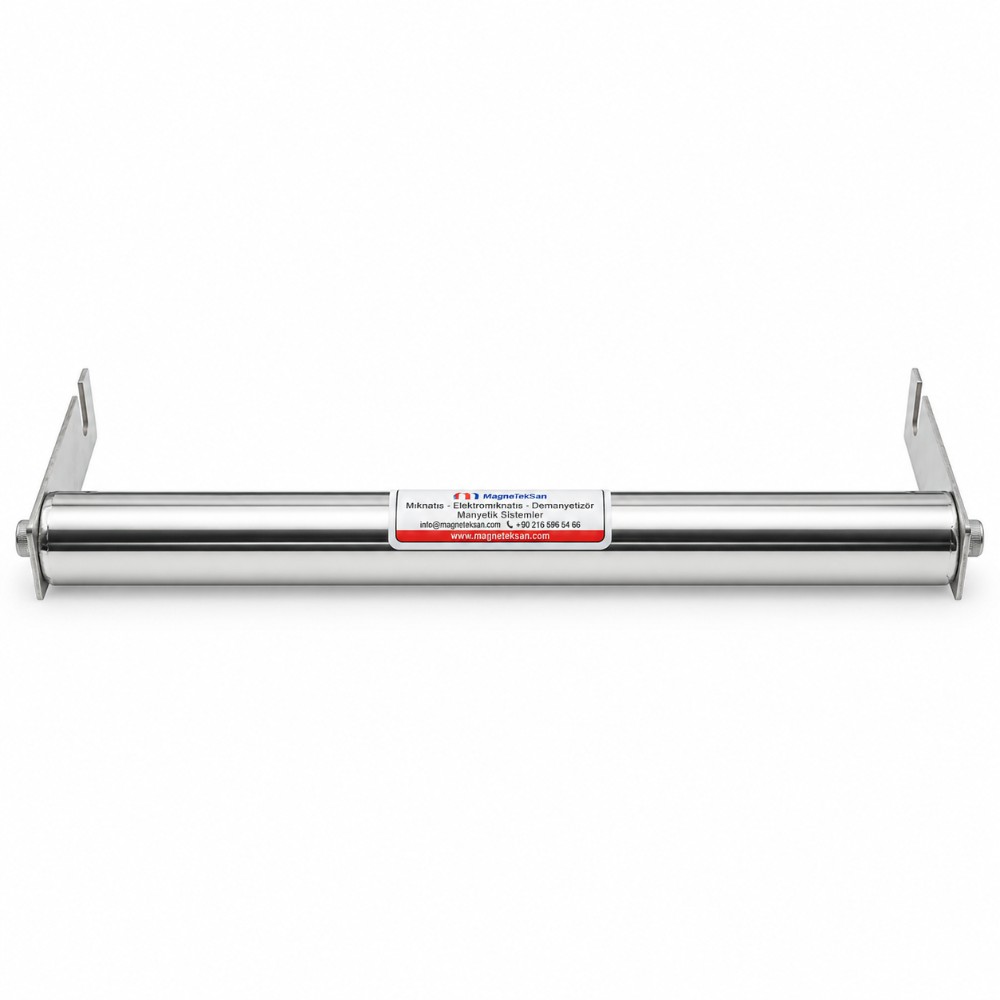
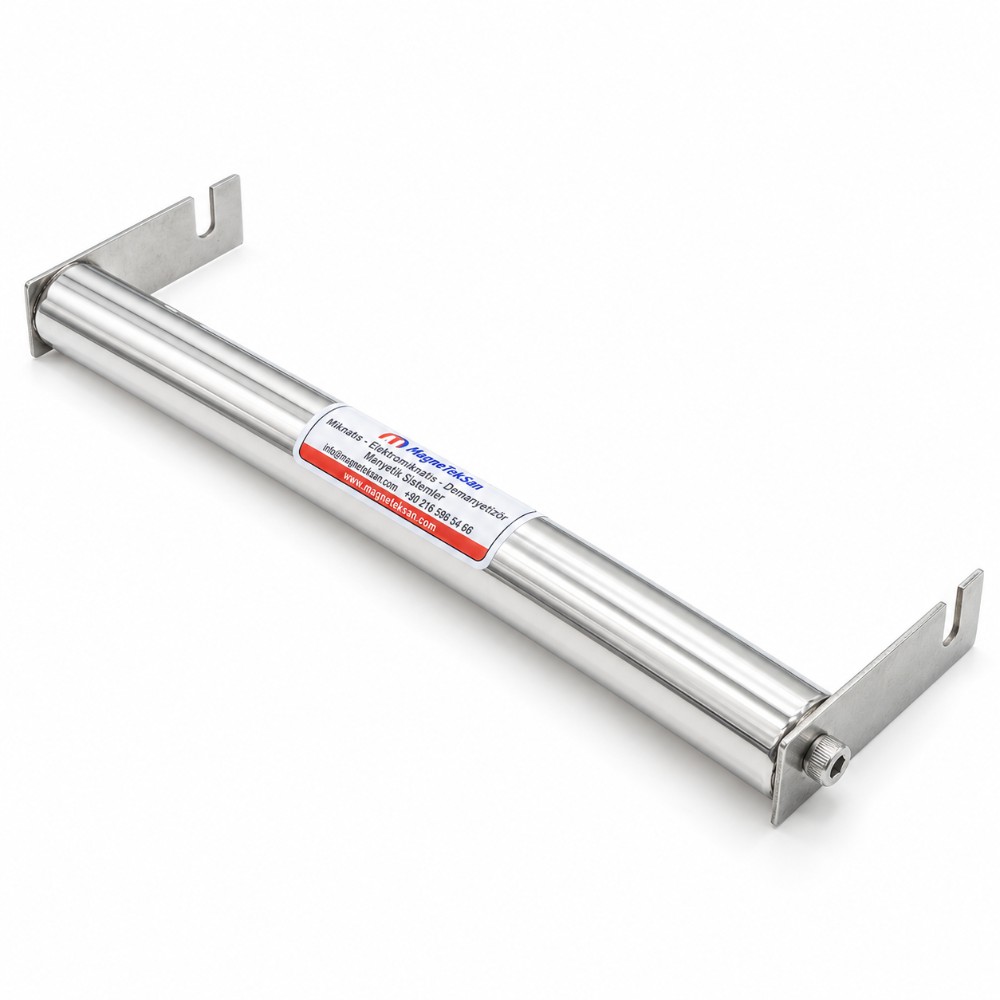
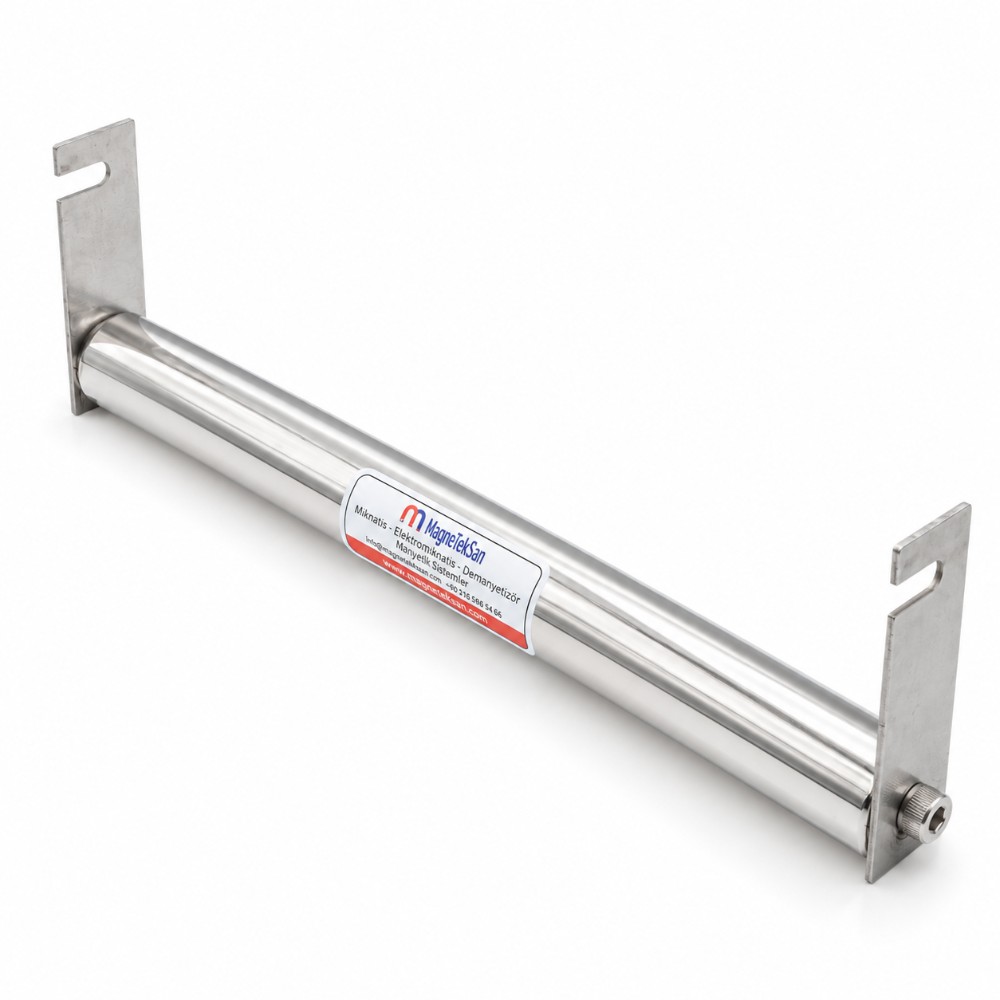
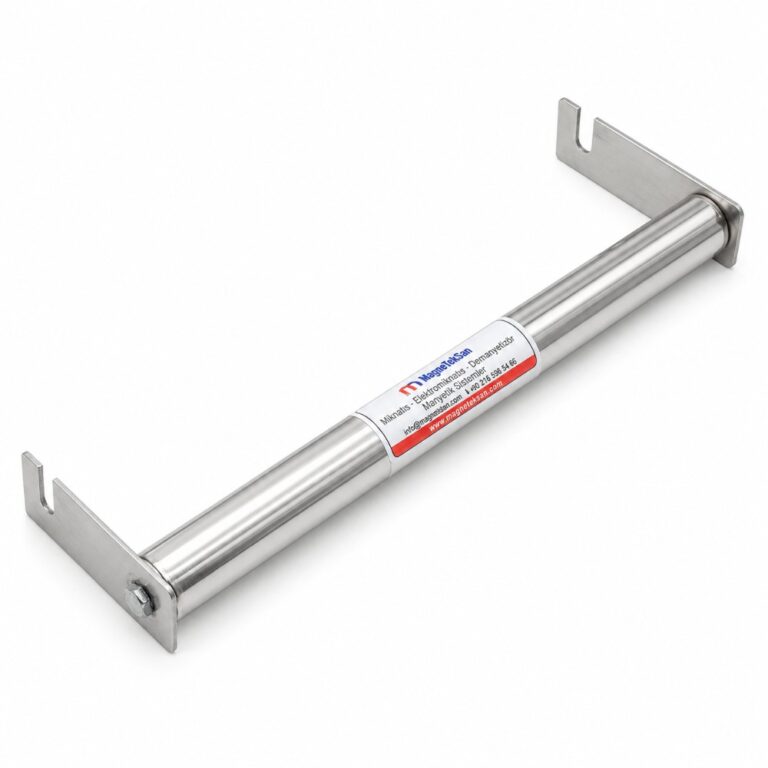
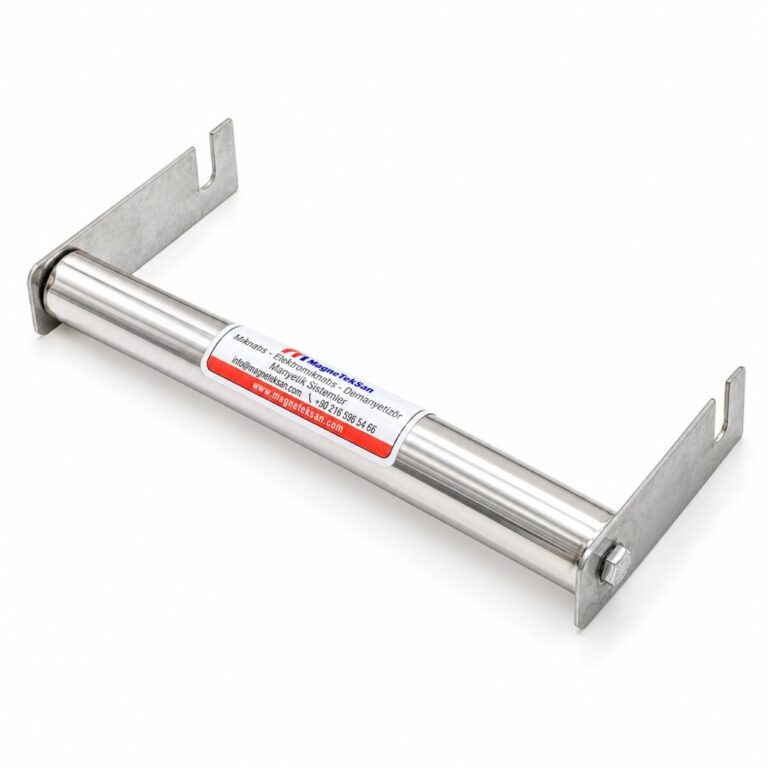
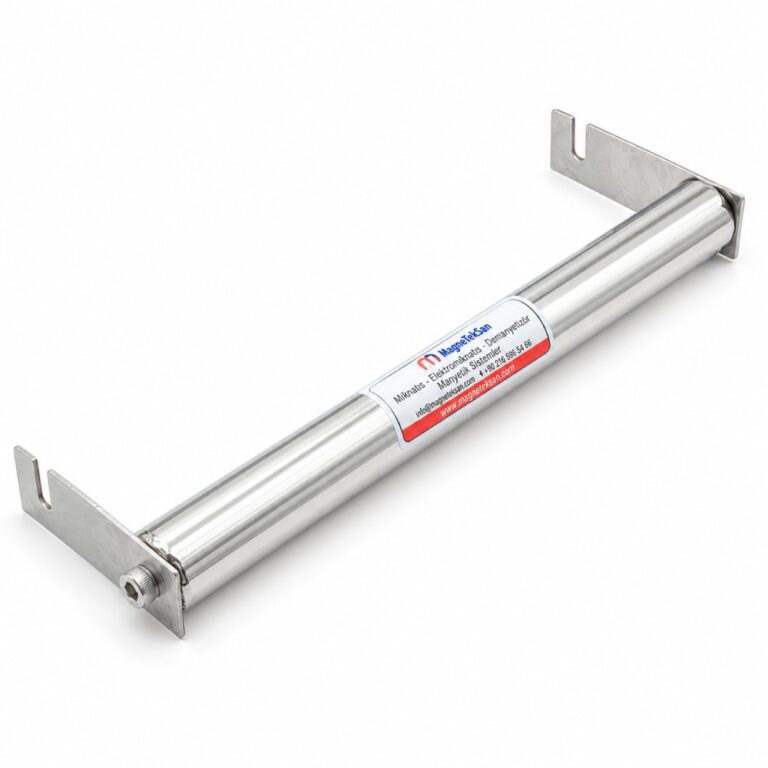
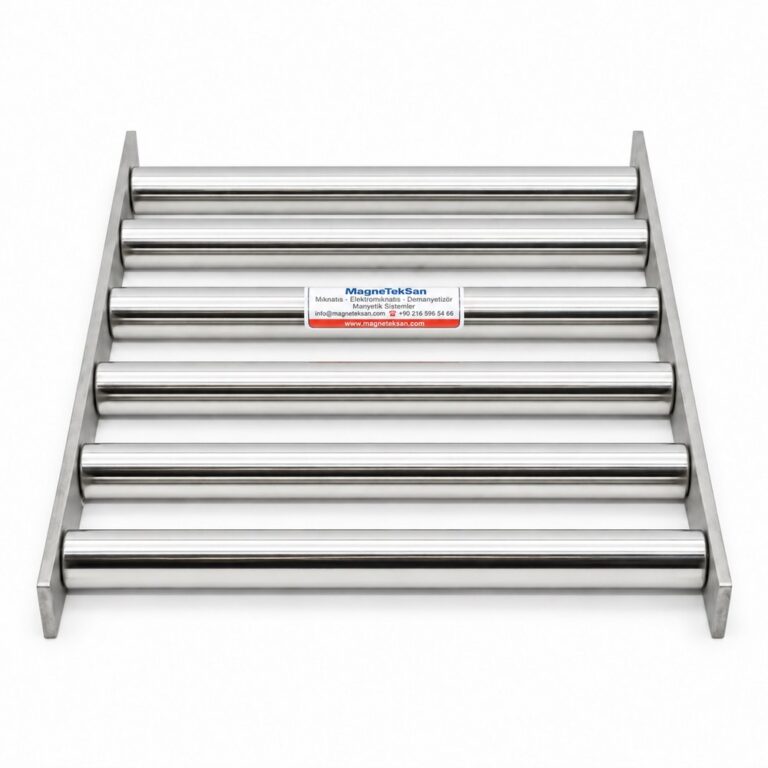
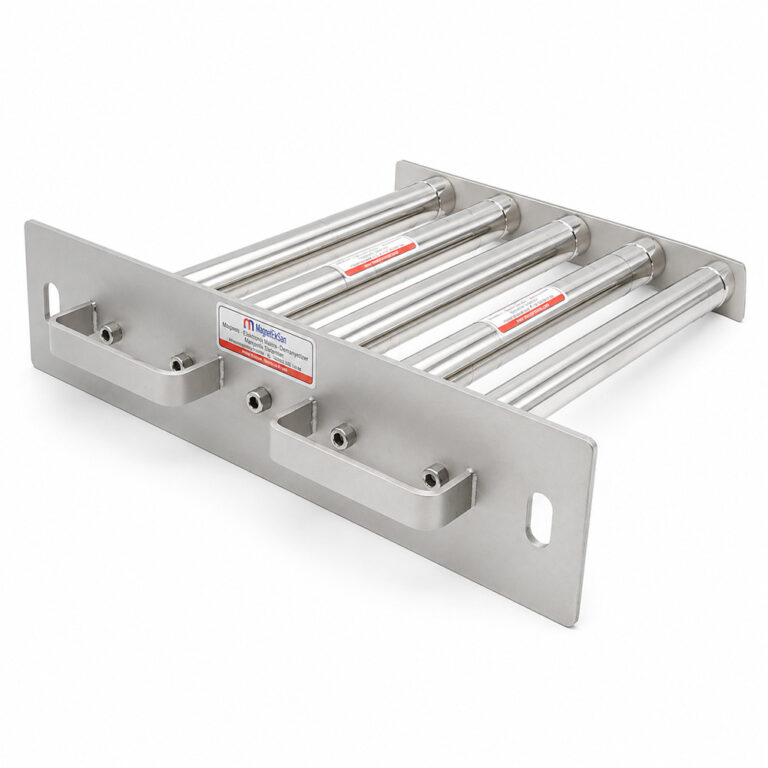
The Ø32×340 mm neodymium rod magnet with mounting brackets, also known as a magnetic rod, magnetic bar or tube magnet, removes iron and steel contamination from peanuts, roasted chickpeas, sunflower seeds and hazelnuts on nut roasting lines. The Ø32 mm tube stays rigid under heavy product flow despite its length, and the slotted brackets for M8 bolts at both ends fix it firmly to the chute wall.
| Specification |
Value |
| Product type |
Neodymium rod magnet with mounting brackets (magnetic bar) |
| Model code |
Ø32×340 mm 2TM8S88-K |
| Stock code |
MGK-CU-372 |
| Rod diameter |
Ø32 mm |
| Magnetic length |
340 mm |
| Surface flux density |
8,000 Gauss (0.8 T) at the tube surface |
| Magnet material |
Neodymium iron boron (NdFeB) |
| Tube material |
AISI 304 (1.4301) stainless steel, polished |
| Tube ends |
Sealed |
| Connection |
M8 thread at both ends |
| Mounting |
Slotted L-shaped bracket at each end |
| Maximum operating temperature |
80 °C |
| Power supply |
None required (permanent magnet) |
| Application |
Nut and seed roasting lines |
Where the Metal in Nuts Comes From
Nuts reach the plant after harvesting, shelling and cracking. Harvester parts, worn cracking blades, screen wire and sack staples can all get into the product. Roasting drums and salting tumblers do not remove these pieces; they carry them through to the pack. A small piece of metal in a packed snack can lead to a customer complaint or a product recall, so the rod is used before roasting and again before packing.
Where to Fit It
- In the chute to the roaster, after unloading and screening the raw nuts
- After the cooling conveyor, before the salting and flavouring tumbler
- In the feed chute of the packing weigher
Do not fit the rod in the path of hot product straight from the roaster; use it after cooling, as the tube is rated to 80 °C.
Why Ø32 mm and M8
Peanuts and hazelnuts are heavy and flow in large pieces. A thin 340 mm rod would vibrate under this load and its fixings could work loose over time. The Ø32 mm tube and M8 brackets keep the rod rigid. The larger diameter also gives a slightly deeper field than a Ø25 mm rod.
Model Code Explained
The code 2TM8S88-K reads as follows: 2T M8 = M8 thread at both ends; S = sealed tube; 8 = maximum 80 °C; 8 = 8,000 Gauss; K = with mounting brackets.
Installation and Cleaning
Bolt the brackets to the chute wall with M8 screws and set the rod across the flow where the product strikes the chute floor. If the chute is wider than 340 mm, two rods can be fitted side by side or staggered. Salted and oily snacks leave a film on the tube. At the end of each shift, remove the rod, wipe off the oil and salt, and slide the metal to one end with a gloved hand. Rods used after salting should be rinsed in warm water and dried daily, because AISI 304 can pit if salt is left on it.
Limits
The rod holds ferromagnetic metals such as iron, carbon steel and tool steel. Austenitic stainless steels (AISI 304 and 316) are not magnetic, or only weakly so, and are not reliably removed; aluminium, brass, glass and stone pass straight through. Do not use the rod above 80 °C. Neodymium magnets are very strong: keep fingers clear when handling the rod near steel, and keep it away from anyone fitted with a pacemaker or other implanted medical device and from bank cards and other magnetic storage media.
Other Sizes and Options
Length, diameter, thread size and Gauss level are made to suit your chute. See our rod magnets with special connections, or read more about rod magnets. Where the magnet must be cleaned without opening the chute, an easy-clean rod magnet or a drawer magnet may suit better. Contact us with your chute width for a quotation.
Frequently Asked Questions
Can it be used with in-shell peanuts?
Yes. In-shell product is bulkier, so depending on the chute width we usually recommend two rods.
Will it hold pieces from cracking machine blades?
Hardened steel blade fragments are magnetic and are held on the tube. Stainless steel parts are usually non-magnetic and are not reliably removed.
Do you make other sizes for nut lines?
Yes. We usually recommend a slimmer rod for small products such as chickpeas and a thicker one for large nuts such as hazelnuts.