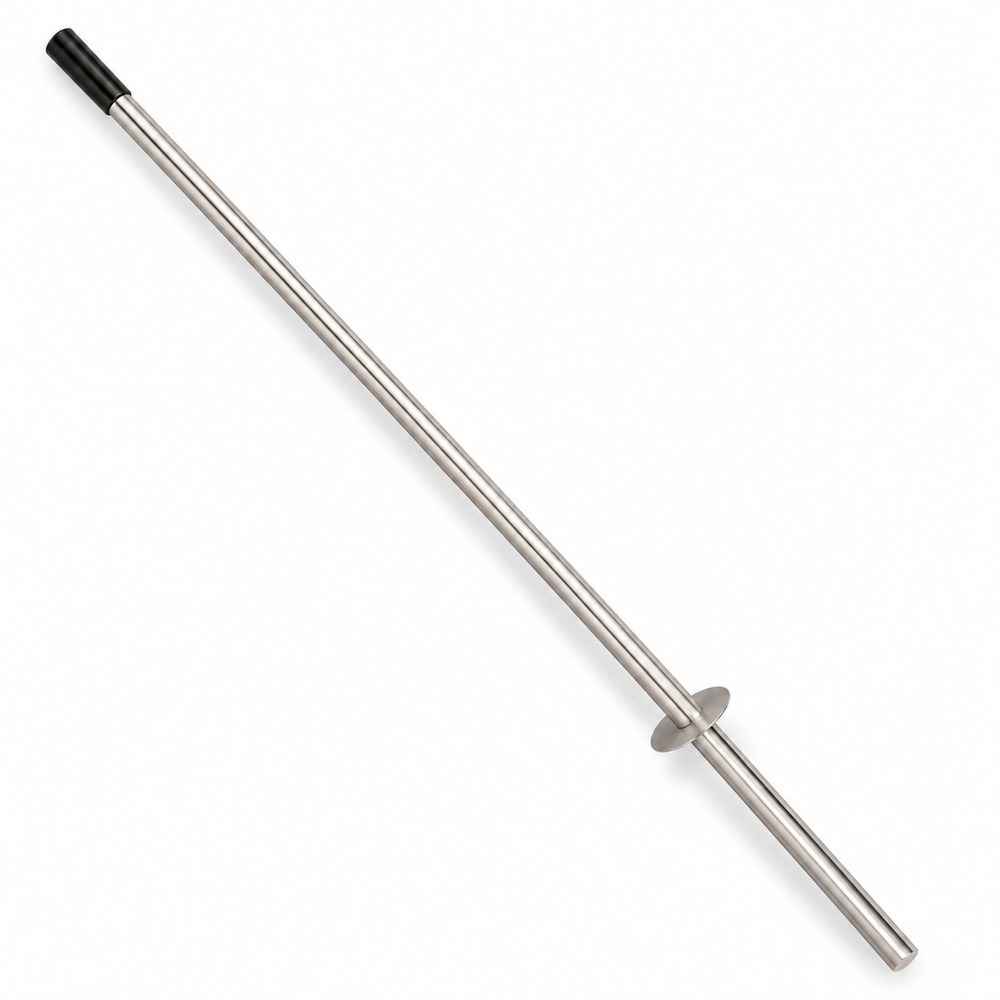
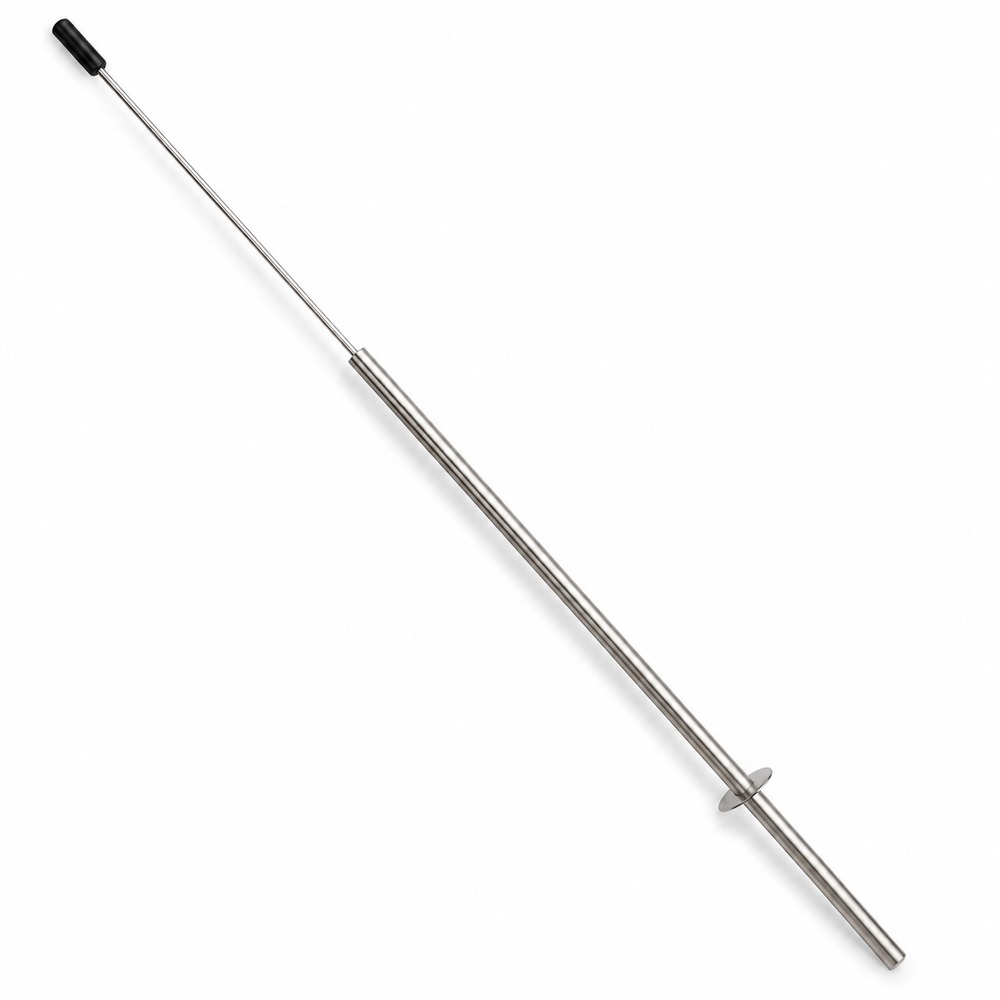
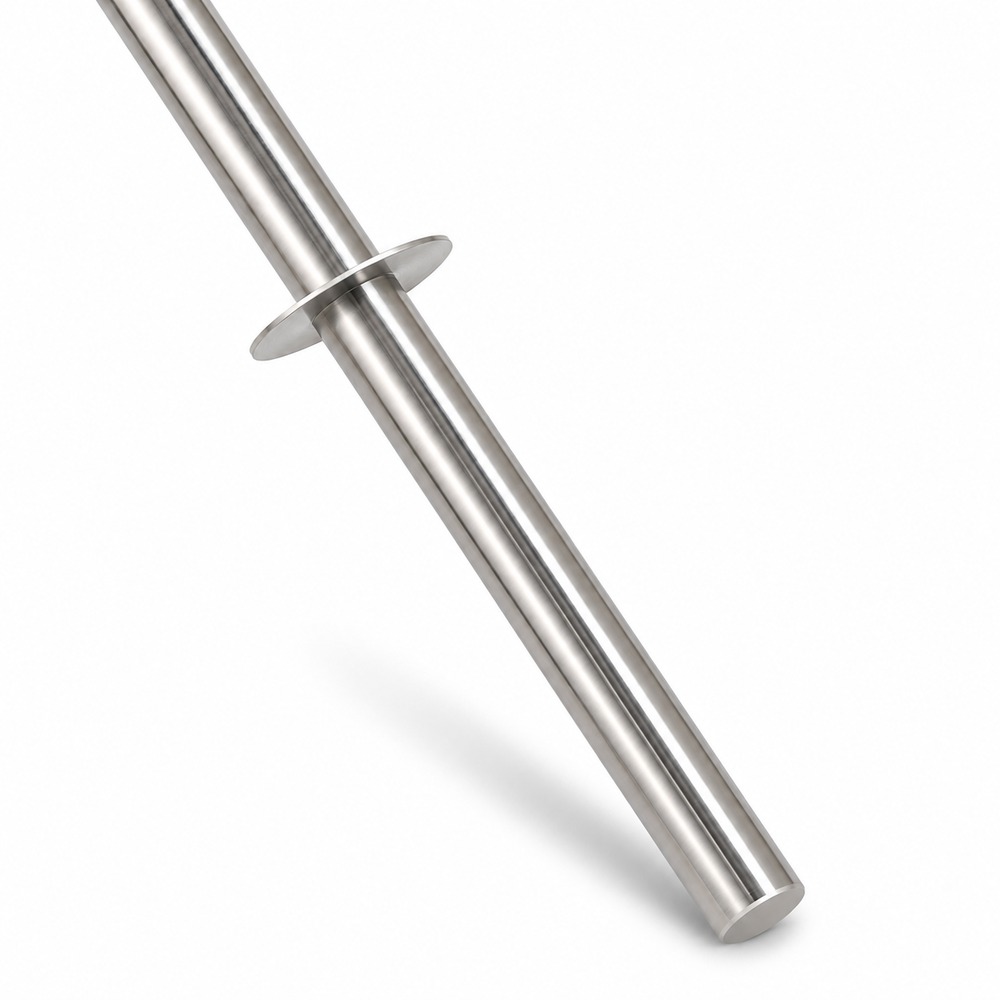
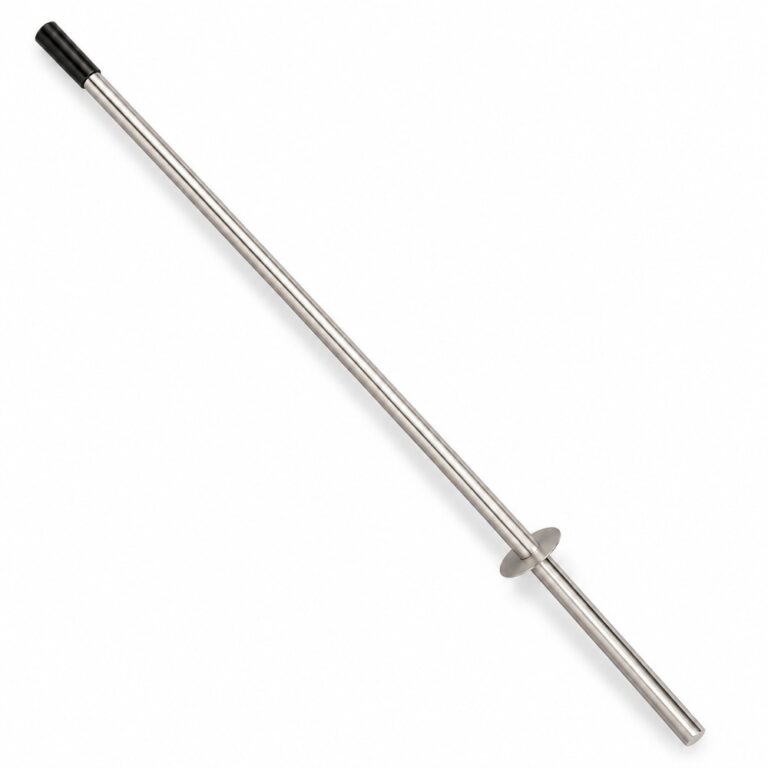
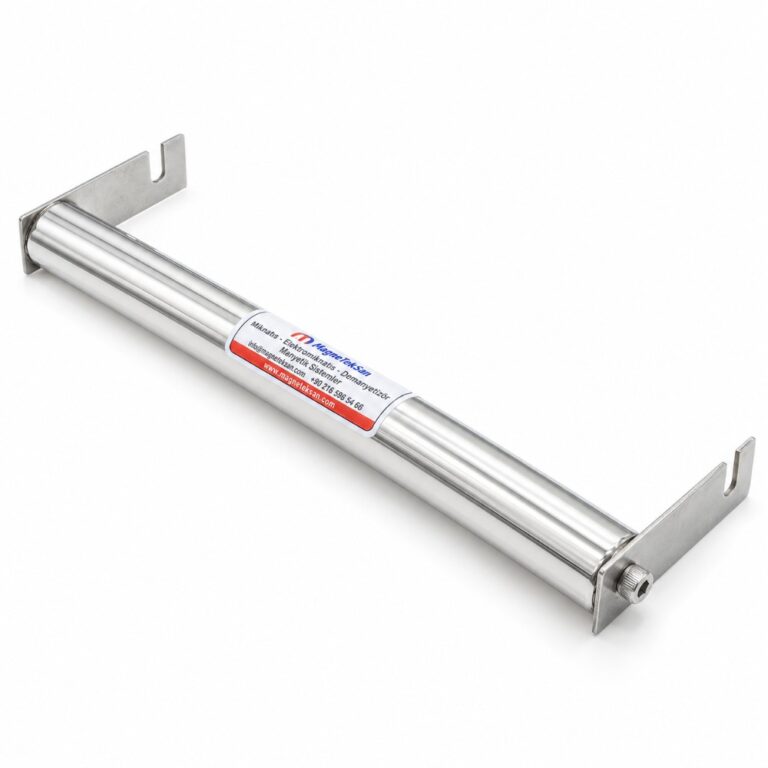
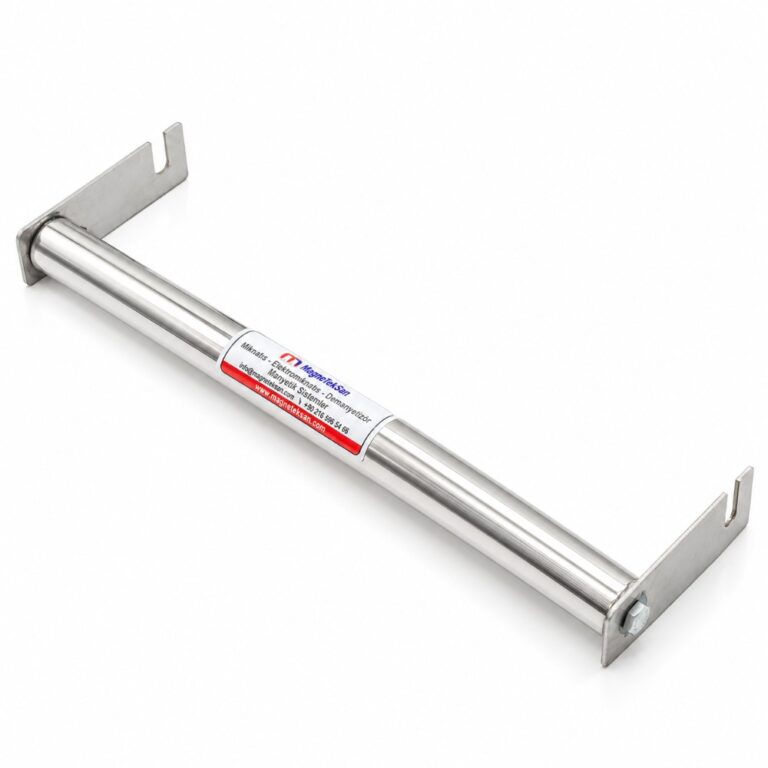
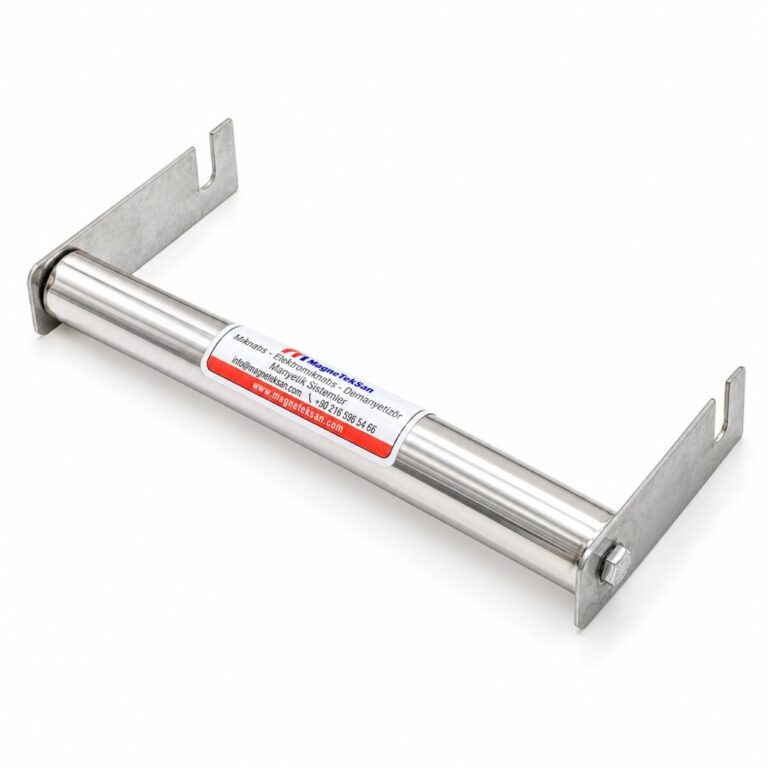
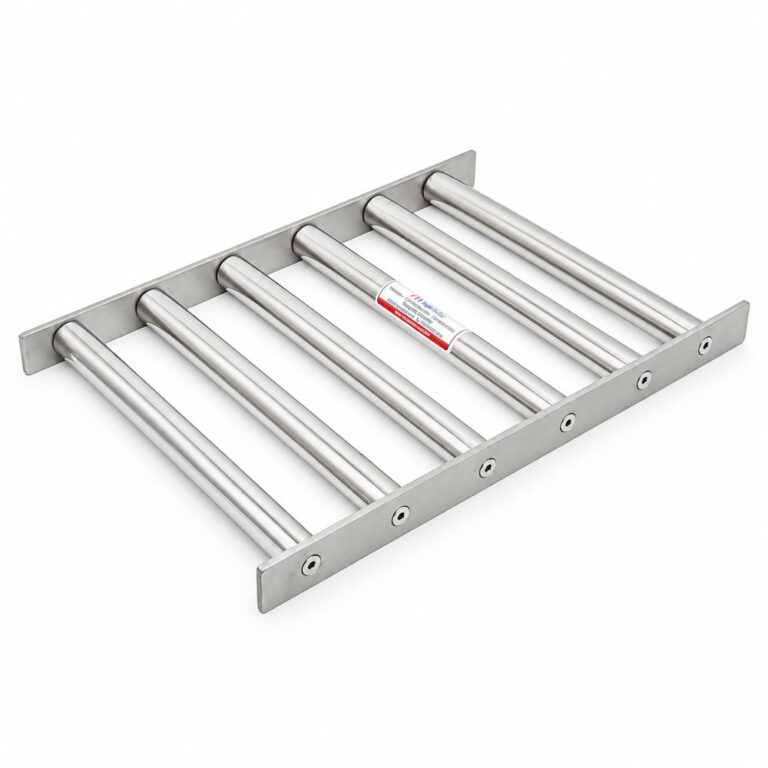
The Ø25×1250 mm magnetic probe, also known as a long-handle magnetic rod or magnetic sampling probe, is used at the intake of feed mills, flour mills and grain stores to check whether a delivered bulk load contains iron. The quality inspector pushes the probe into the maize, wheat or meal in the truck, pulls it out and looks at the metal held on the 250 mm magnetic zone at the bottom. Pulling the handle up draws the magnet past the disc, and the captured pieces drop into a tray.
| Specification |
Value |
| Product type |
Long-handle, easy-clean neodymium magnetic probe |
| Model code |
Ø25×250 mm Y811-C-BS1250B-KT |
| Tube diameter |
Ø25 mm |
| Magnetic zone length |
250 mm (between the tip and the disc) |
| Overall length |
Approx. 1250 mm |
| Surface flux density (max.) |
11,000 Gauss (1.1 T) |
| Magnet material |
Neodymium iron boron (NdFeB) |
| Tube |
Polished stainless steel |
| Tip |
Closed, flat end |
| Stripper disc |
Round stainless disc at the top of the magnetic zone |
| Cleaning system |
Pull-out; the inner rod is drawn up by the handle |
| Handle |
Bakelite |
| Maximum operating temperature |
80 °C |
| Power supply |
None required (permanent magnet) |
| Application |
Bulk grain and feed raw material intake inspection |
Why Check for Metal at Intake?
Grain that comes from harvest, storage and haulage can carry pieces broken off combine harvesters, rust flakes from trailer bodies, sack stitching wire and loose bolts. Once inside the mill, these pieces damage hammer mill screens, pellet press dies and screw conveyors. Probing a load at several points before it is tipped shows which suppliers deliver more metal and lets a problem load be held back.
The probe is an inspection tool; it does not replace the grid magnets and rod magnets in the process line. All of the product passes through the line magnets, while the probe gives an early indication of how much metal a load contains.
How to Use It
- When the truck reaches the weighbridge or intake area, choose one point at the front, middle and rear of the load.
- With the handle pushed fully down, insert the probe vertically to the depth you want to check.
- Hold it for a few seconds, draw it out slowly and inspect the pieces held on the magnetic zone.
- Hold the probe over an empty tray and pull the handle up; the pieces collect against the disc and drop into the tray.
- Photograph and weigh what you find, and record it with the vehicle registration and supplier.
How the Pull-Out Cleaning Works
The magnets sit inside the stainless tube, at the end of an inner rod connected to the bakelite handle. With the handle down, the magnets are in the bottom 250 mm of the tube and hold metal there. As the handle is pulled up, the captured pieces slide up the tube with the magnet until they meet the disc. Once the magnet passes above the disc, nothing holds the pieces and they fall into the tray. The inspector does not have to wipe metal off by hand, and the job can be done wearing gloves.
Why 1250 mm and 11,000 Gauss
Vibration during transport can move heavy metal pieces into the lower layers of a load, so a check at the surface alone can be misleading. Allowing for the handle and grip, the 1250 mm length lets the inspector check down to about 1 m. The slim Ø25 mm tube goes into grain and meal far more easily than a thick bar. A surface field of up to 11,000 Gauss attracts and holds fine wire fragments and small nuts and bolts firmly.
Which Raw Materials?
The probe is used in bulk feed raw materials such as maize, wheat, barley, rye, soybean meal, sunflower meal, bran and DDGS (distillers’ dried grains with solubles). It works the same way in open stores and in raw materials delivered in bulk bags. In fine materials such as bran and flour, insert and withdraw the probe slowly so that fine iron particles are not wiped off by friction.
Limits and Safety
The probe holds ferromagnetic metals such as iron and carbon steel. Austenitic stainless steels (304/316), aluminium and brass are not held, and glass, stone and plastic cannot be removed with a magnet; a metal detector and a destoner are needed for these. Do not use the probe above 80 °C. Neodymium magnets are very strong: keep the probe away from anyone fitted with a pacemaker or other implanted medical device, and from bank cards and magnetic storage media.
Other Sizes and Options
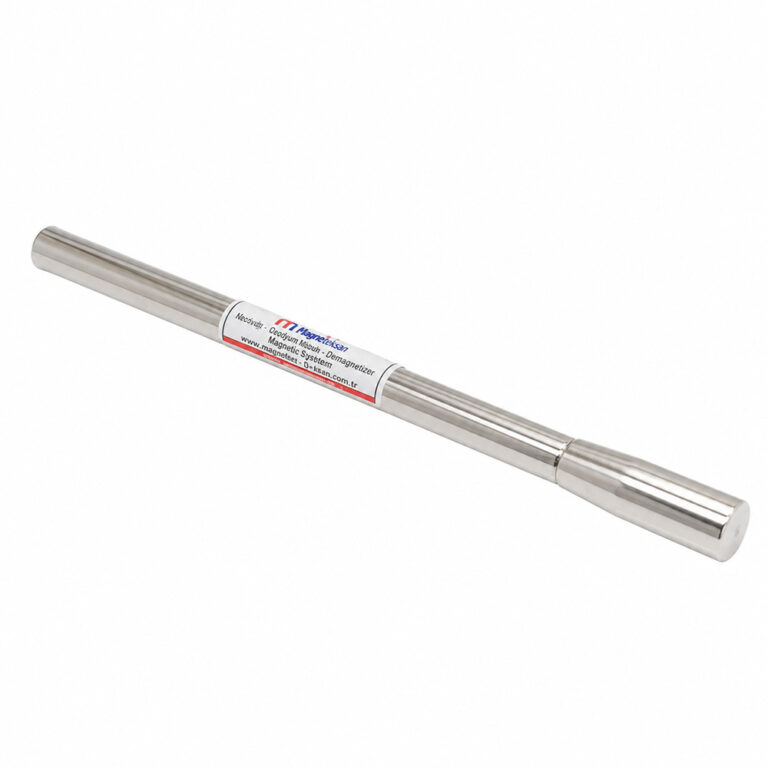
Length, diameter, Gauss level and handle type are made to suit your application. See our easy-clean rod magnets and bar magnets with handle, or read more about rod magnets. Contact us with your truck or bulk bag depth for a quotation.
Frequently Asked Questions
Can the probe replace the magnets in the process line?
No. The probe works like a sample and shows how contaminated a load is. To remove metal from all of the raw material, the line needs grid or rod magnets.
How many points should be checked?
One insertion does not represent the whole load. We recommend at least three points, at the front, middle and rear; for suspect loads, check more points.
Can it be made longer or shorter?
Yes. The overall length, magnetic zone length and handle type are set to suit your application. Just tell us the depth of the truck body or bulk bag.