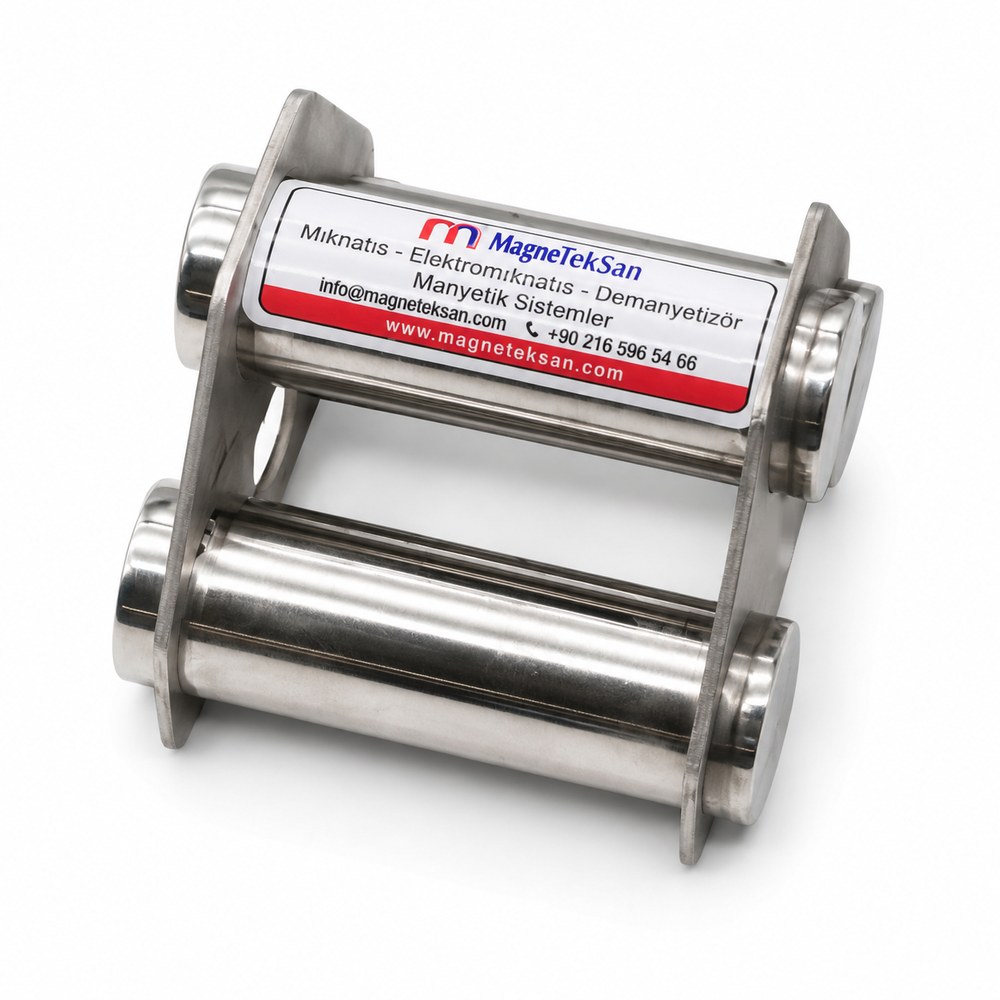
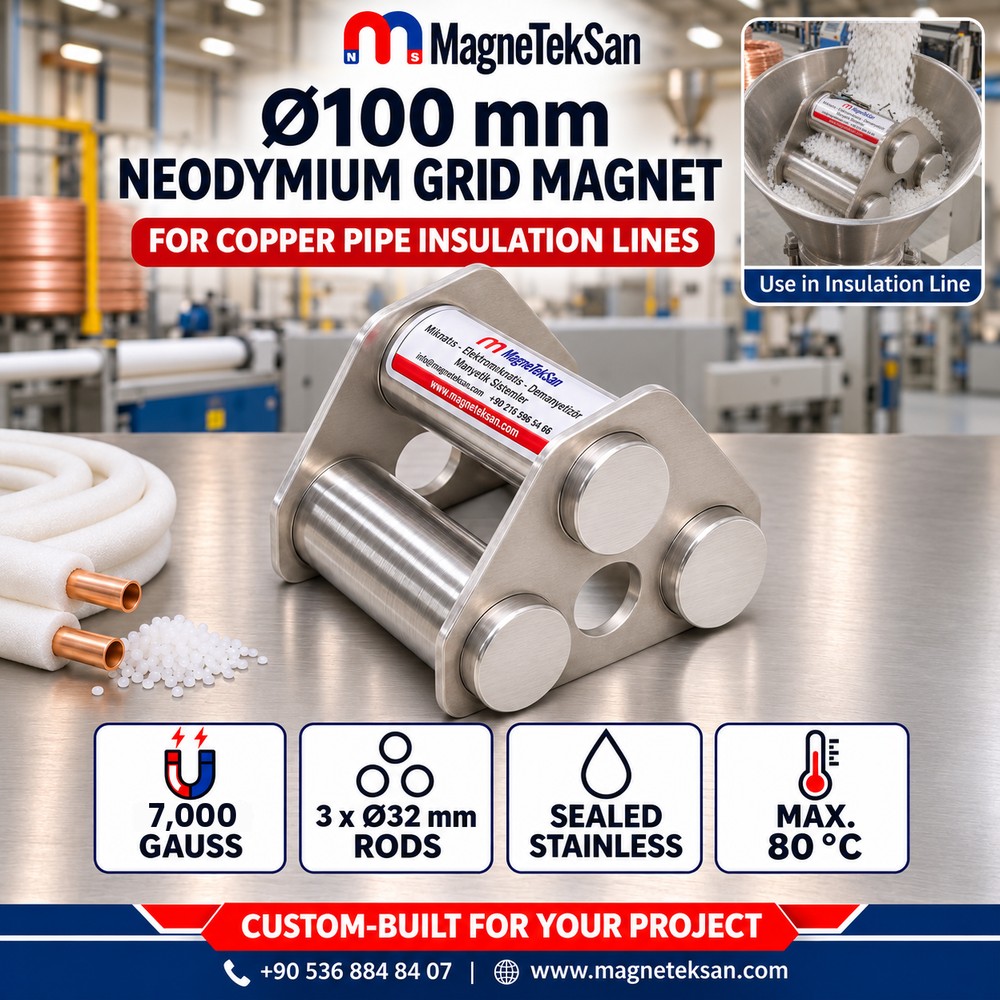
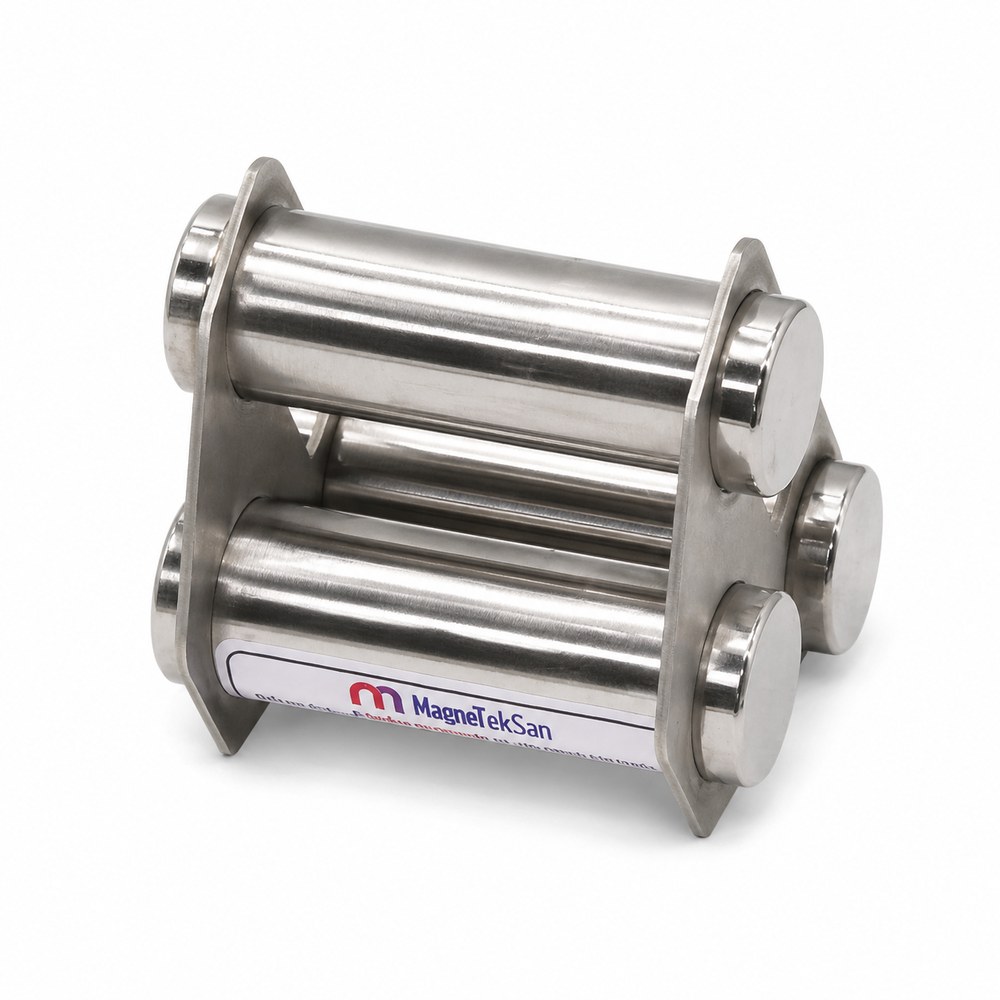
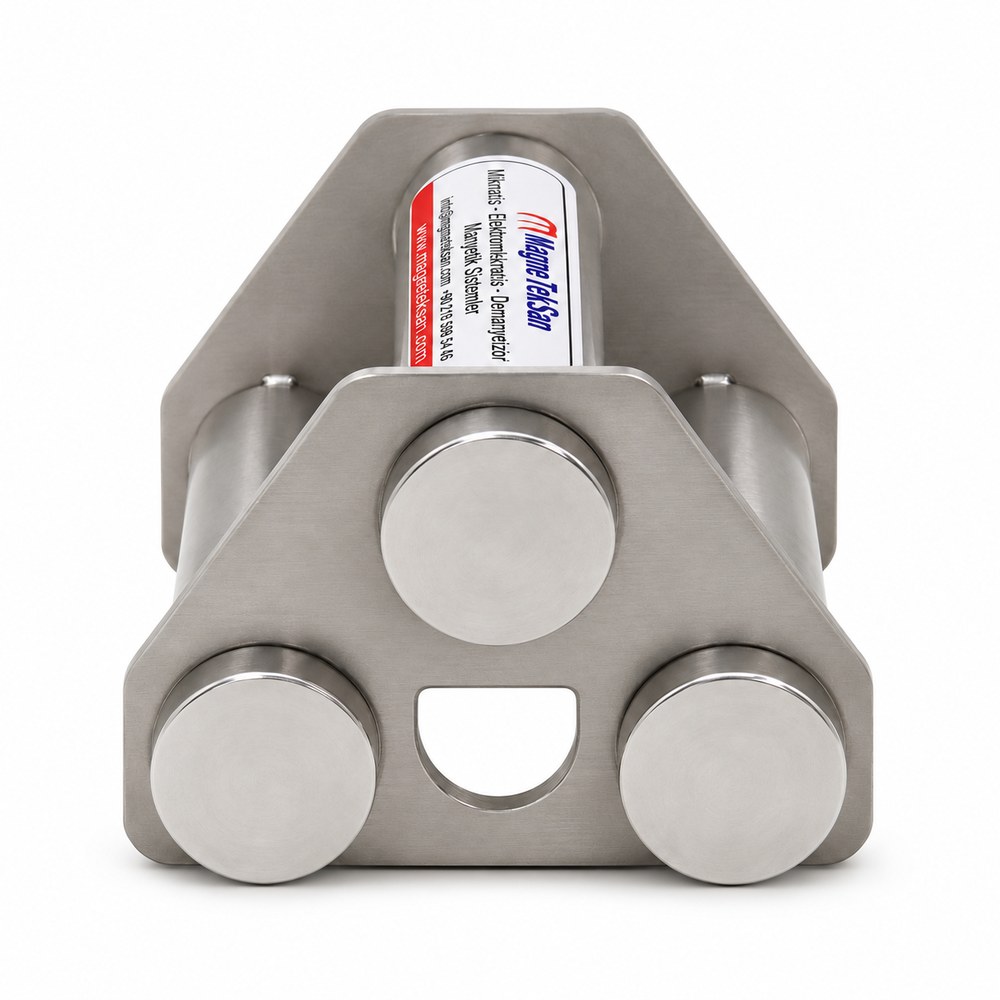
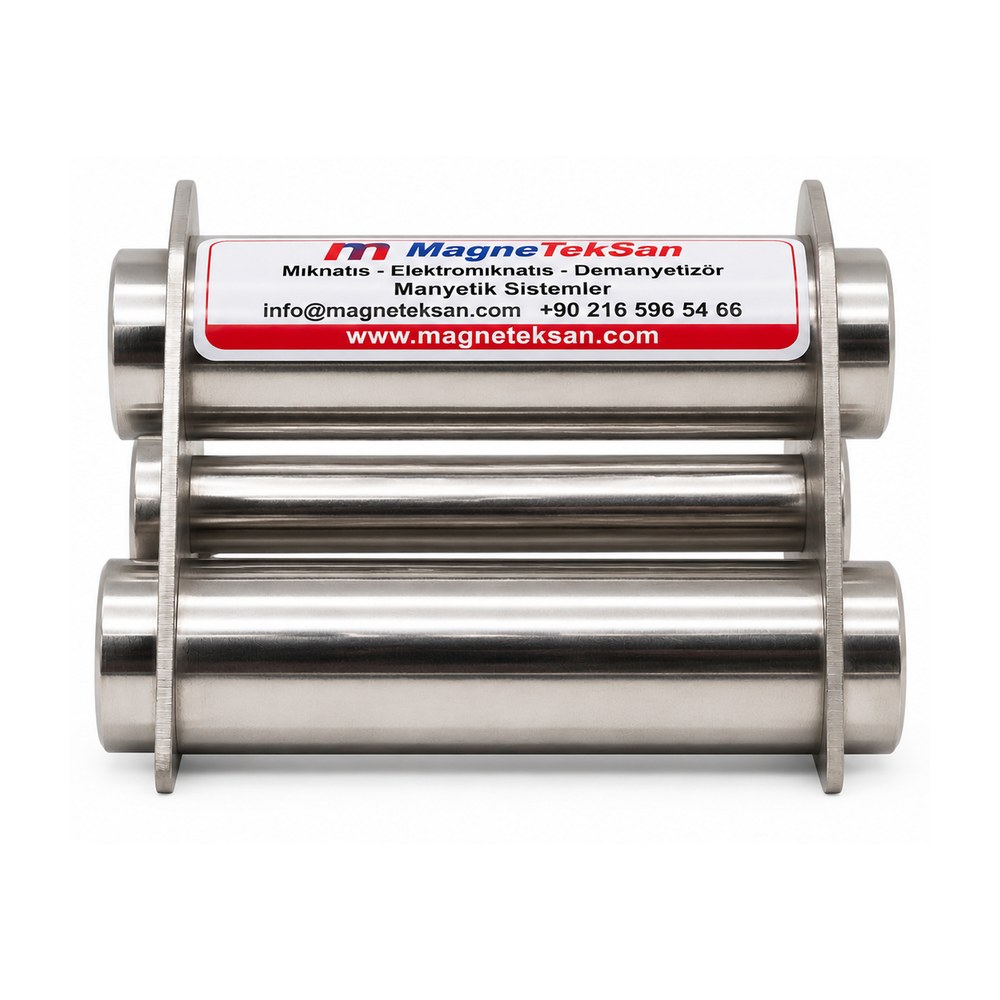
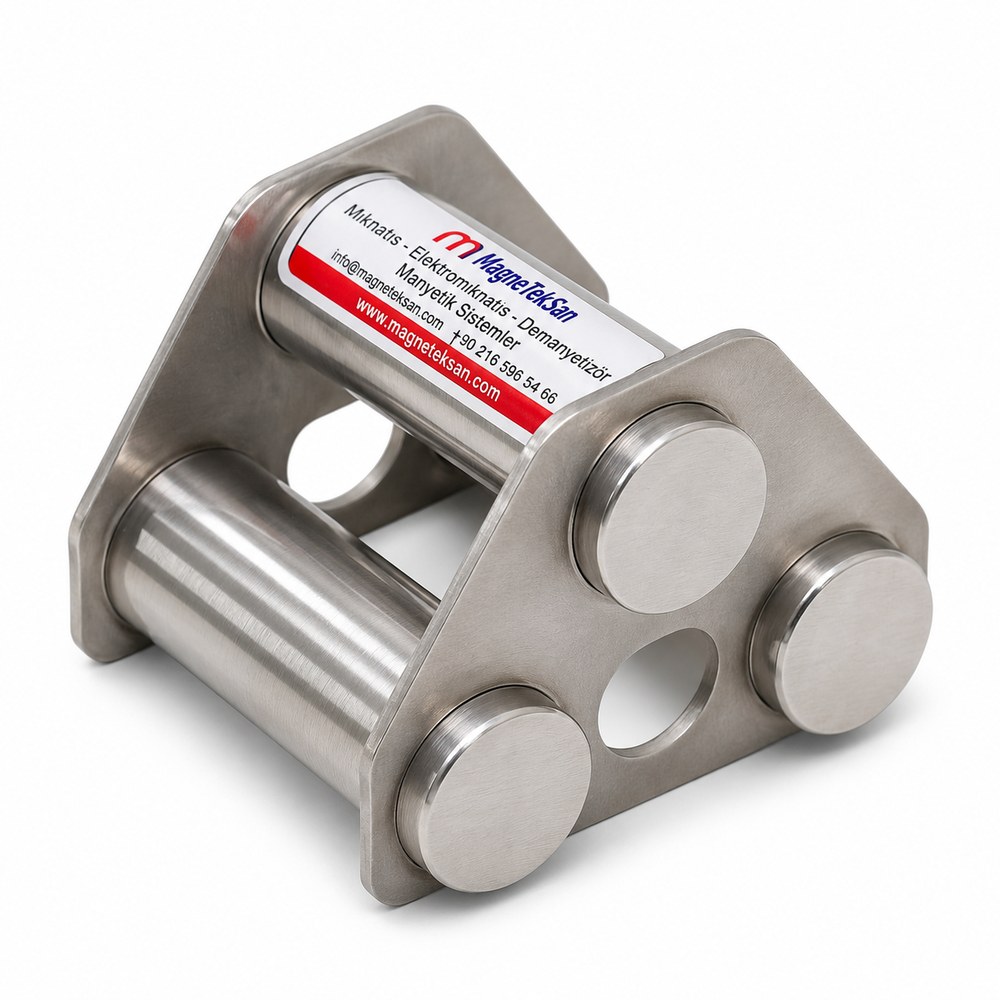
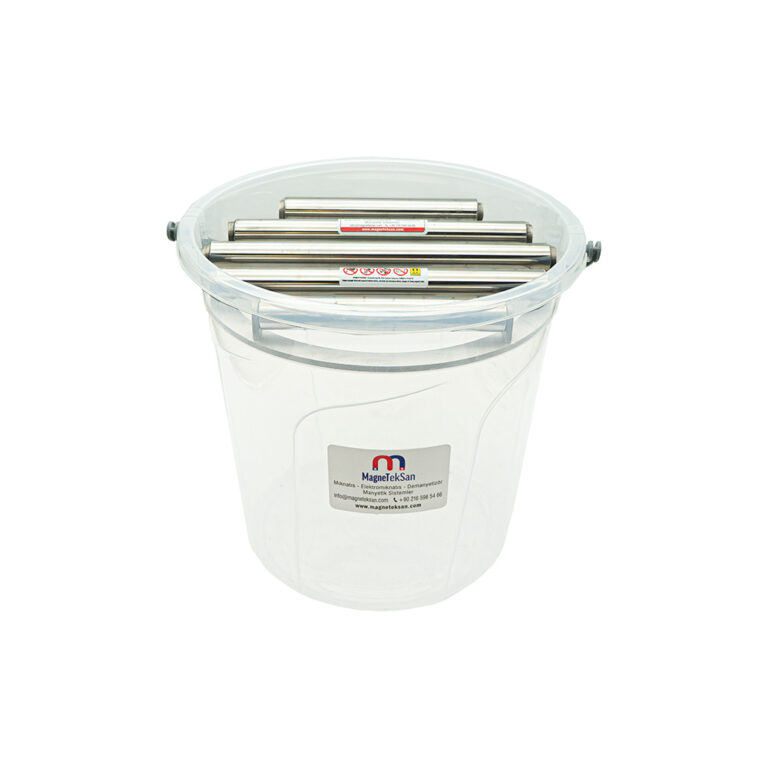
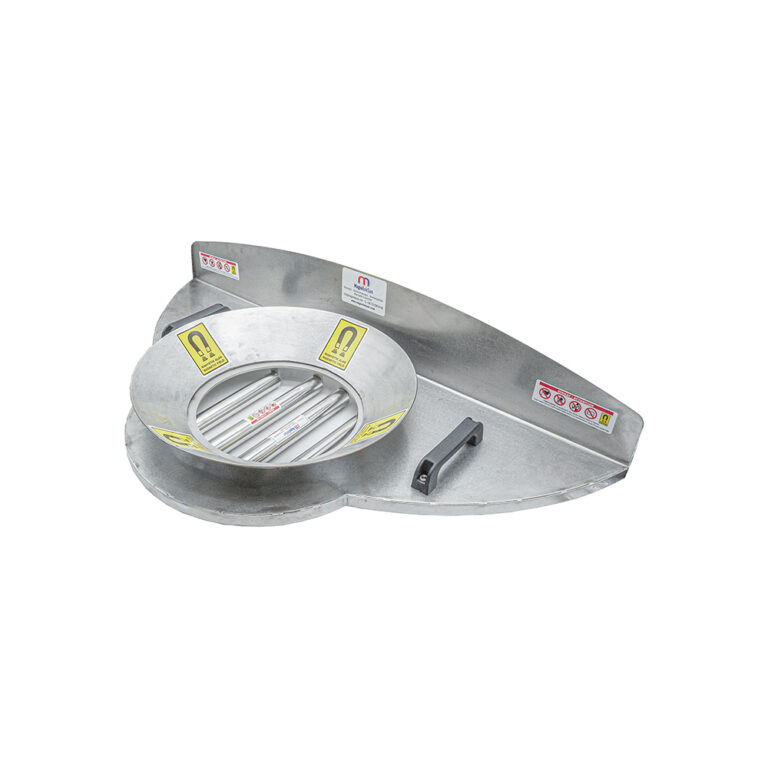
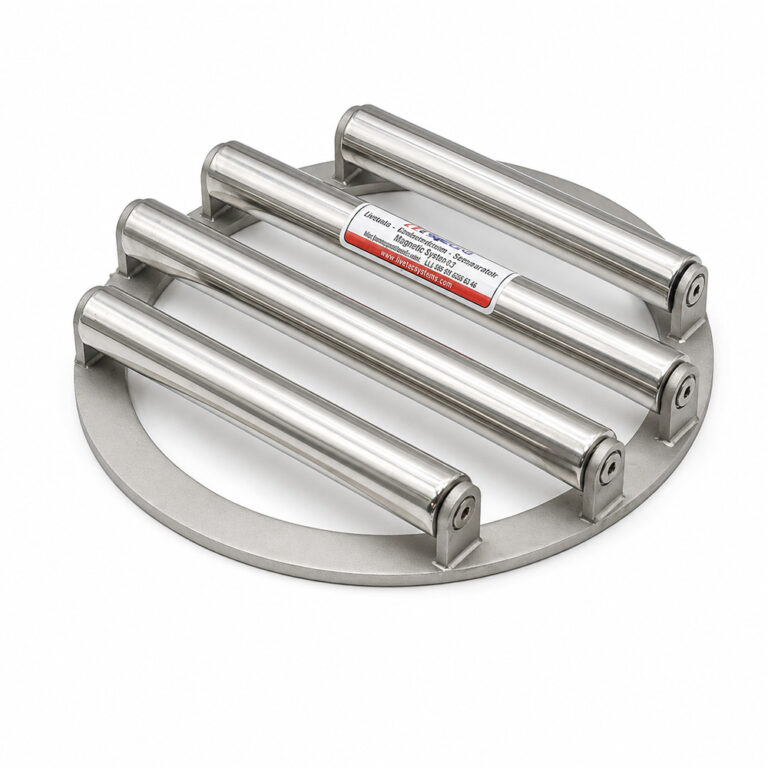
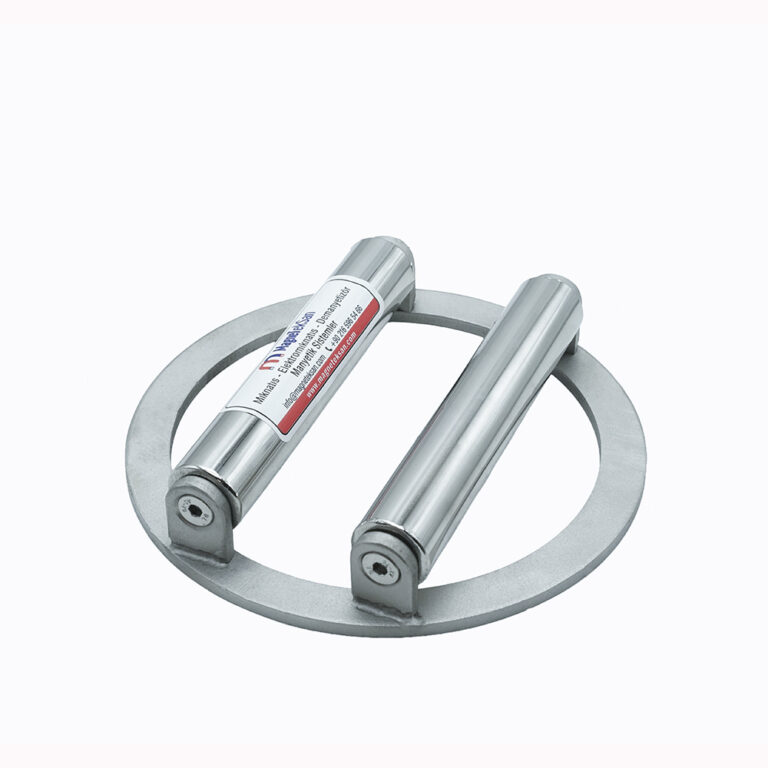
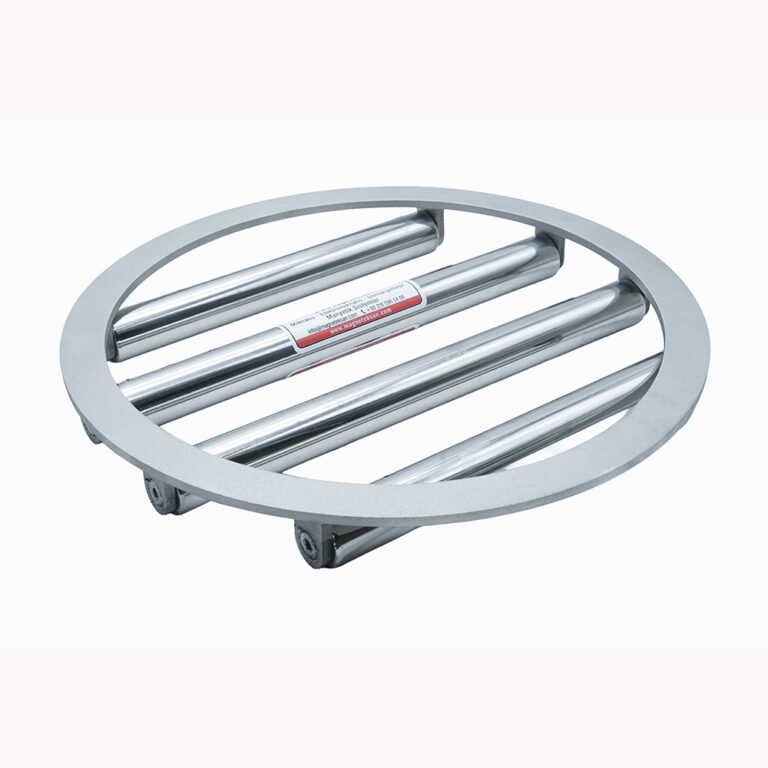
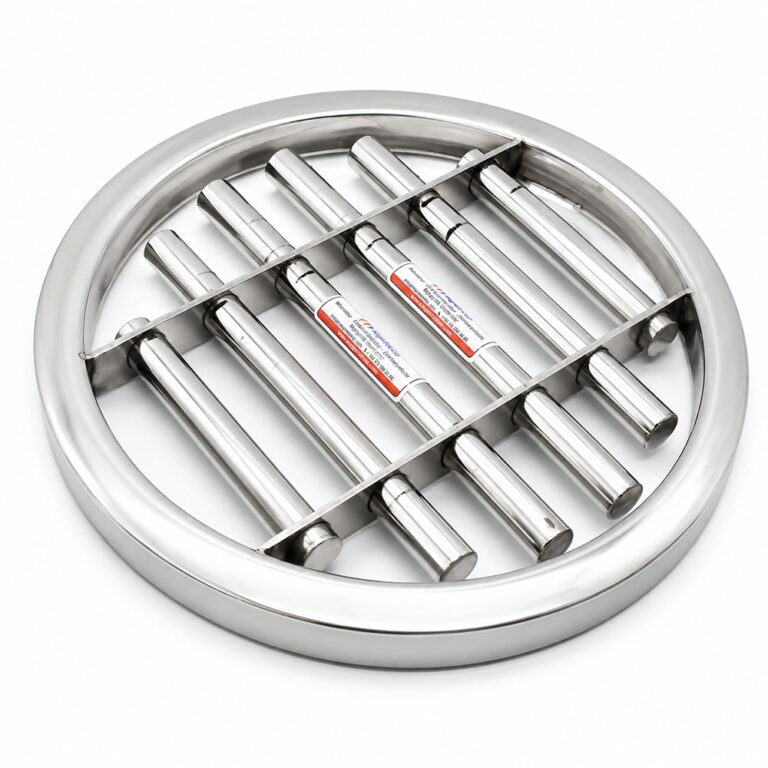
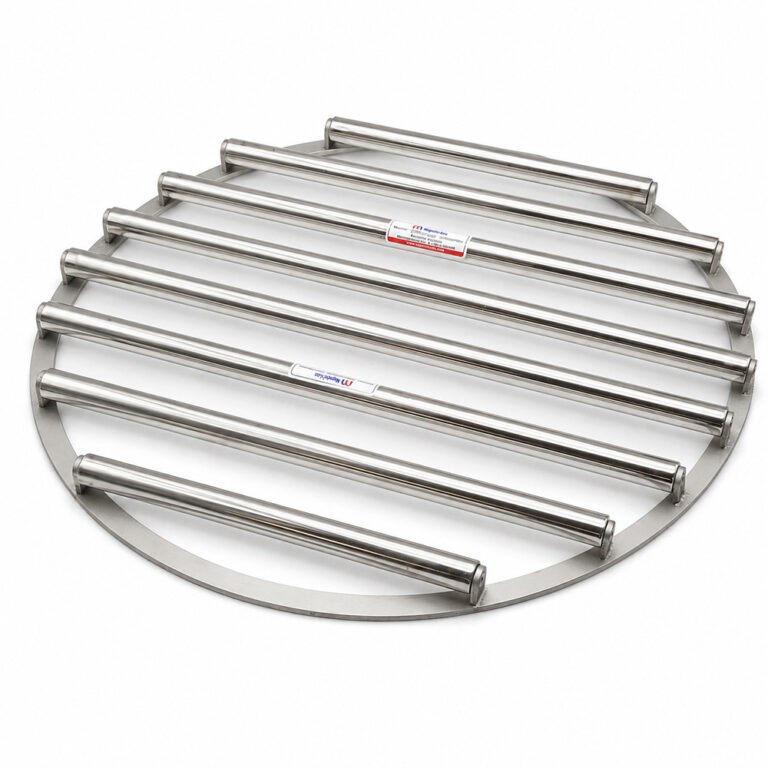
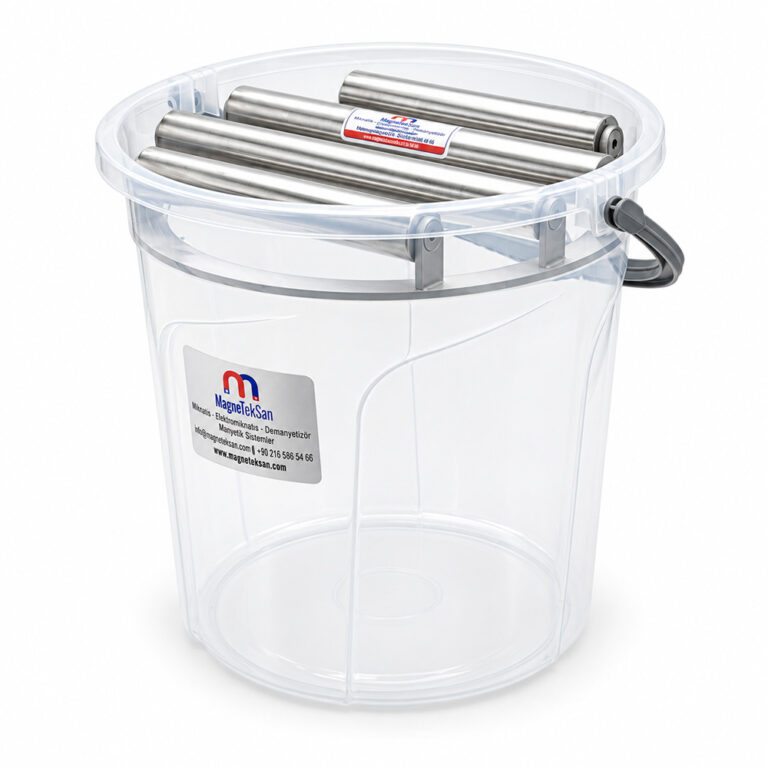
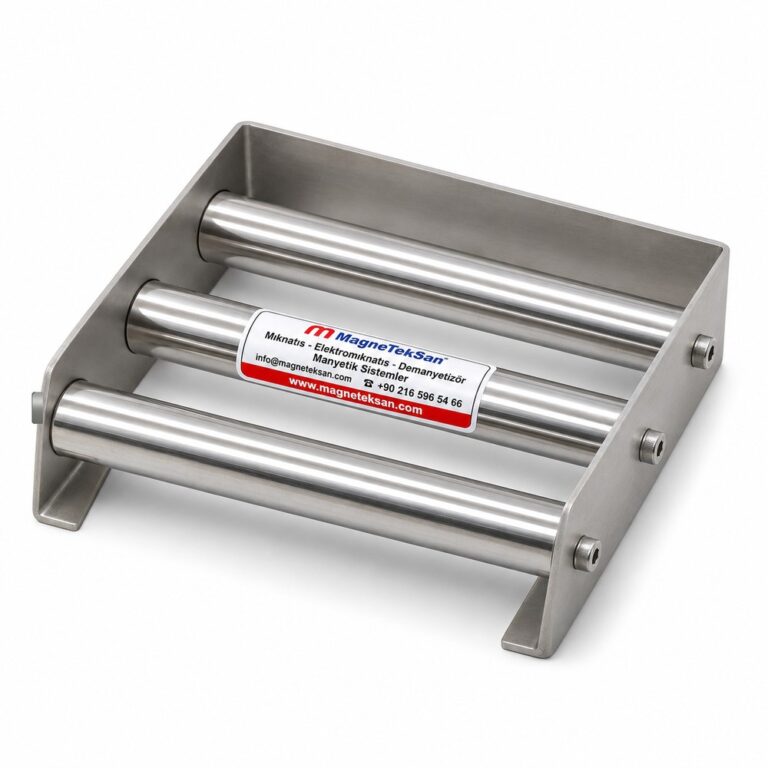
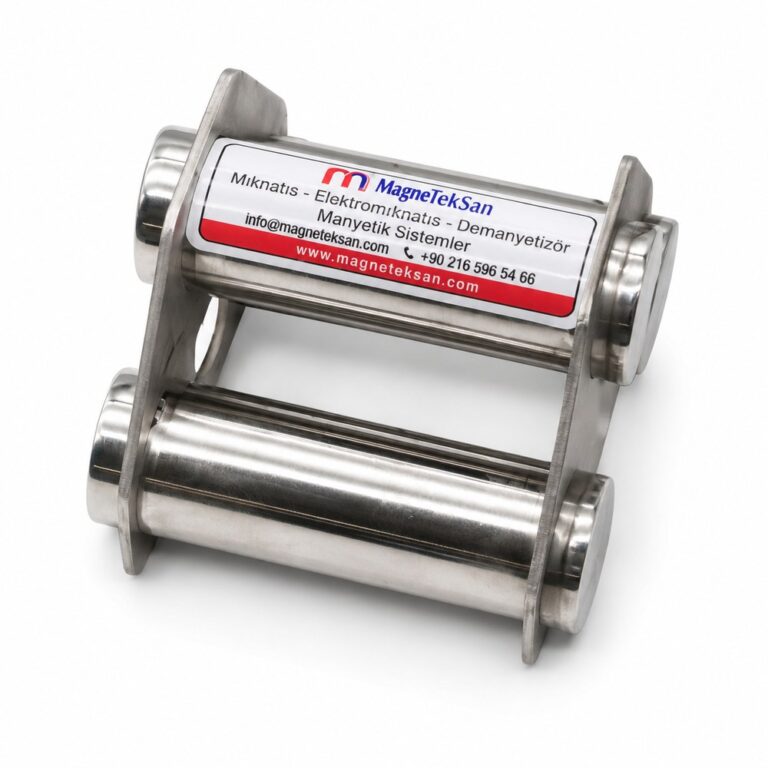
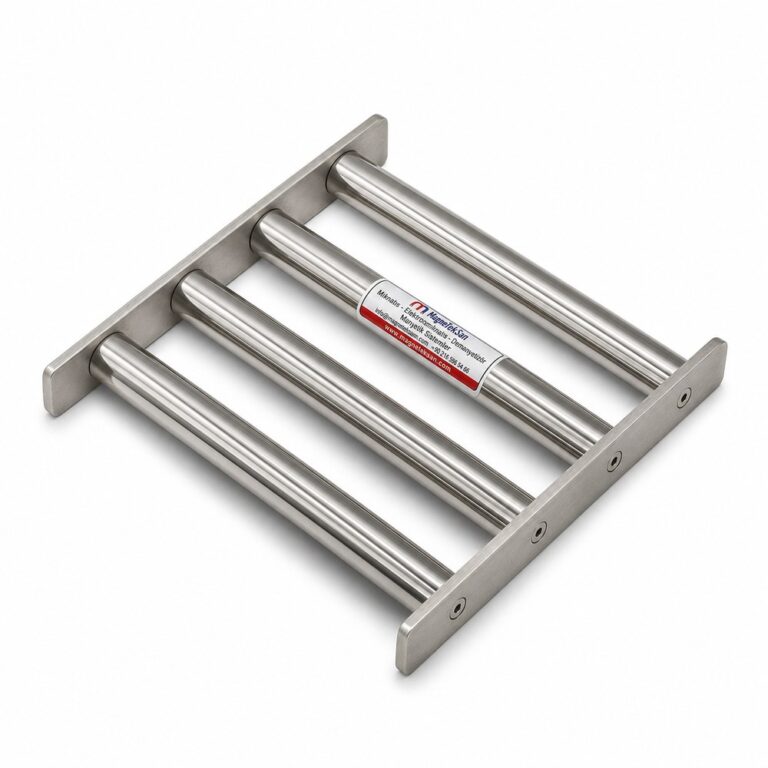
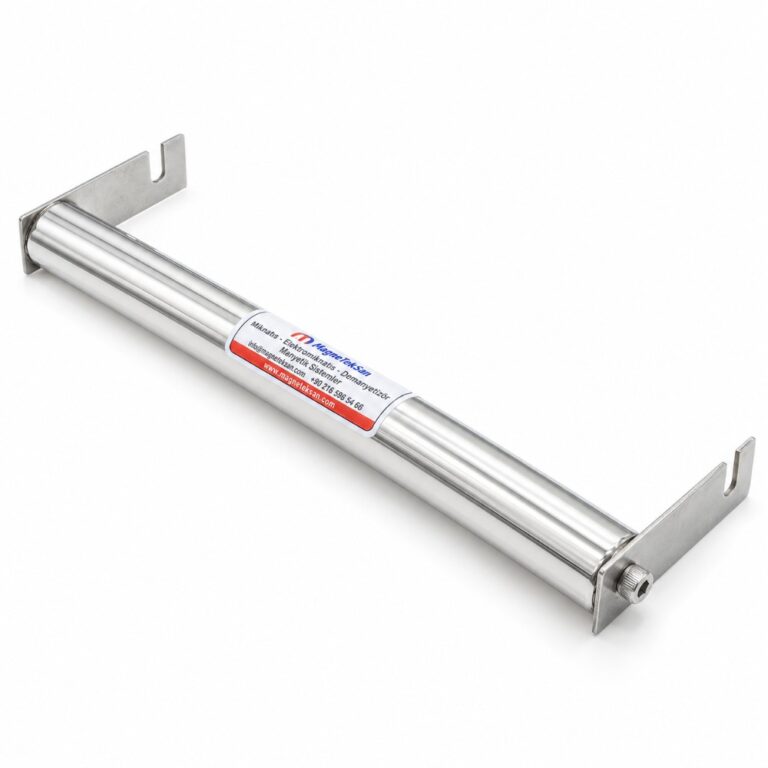
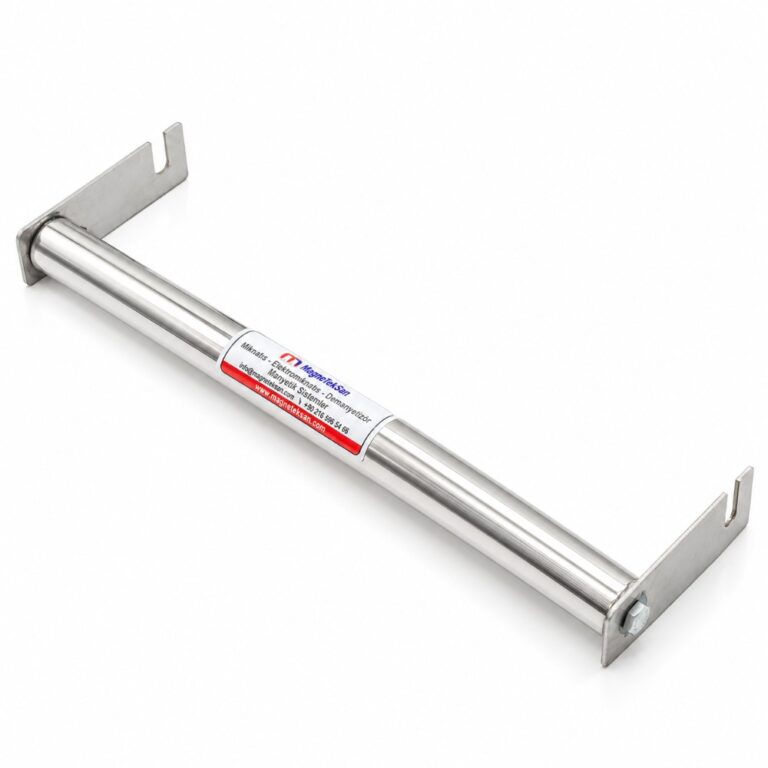
This Ø100 mm grid magnet is used in insulated copper pipe production to remove iron particles from the PE granules that are extruded into the foam insulation around the pipe. It has three Ø32 mm neodymium rods arranged in a triangle between two triangular AISI 316 stainless steel side plates. As the granules flow into the extruder hopper they pass between the rods, and screws, nuts, wire pieces and steel fragments are held on the rods.
| Specification |
Value |
| Product type |
Round neodymium grid magnet (magnetic grate) |
| Model code |
Ø100 mm Ø32×3 S87O216K-3K-O |
| Opening size |
Ø100 mm |
| Number of rods |
3 (2 at the bottom, 1 at the top) |
| Rod diameter |
Ø32 mm |
| Magnetic field |
7,000 Gauss (at the rod surface) |
| Magnet material |
Neodymium (NdFeB) |
| Rod body |
AISI 316 stainless steel, sealed |
| Frame |
Two triangular AISI 316 stainless steel side plates with rounded corners |
| Maximum operating temperature |
80 °C |
| Power supply |
None required (permanent magnet) |
| Application |
Insulated copper pipe lines, PE foam extruder feed |
Where Does Metal in an Insulation Line Come From?
PE foam insulation on copper pipes for air conditioning and refrigeration is produced by extrusion. The PE granules are fed into the extruder through a hopper. Staples and wire ties from bags and octabins, parts that break off conveying equipment, and screws or washers left behind after maintenance can end up in the granules going to the hopper.
A steel part that enters the extruder can damage the screw and barrel and cause defects in the foam insulation. The magnetic grate takes these parts out of the flow before the extruder inlet.
Where Is the Ø100 mm Grid Magnet Fitted?
The grid magnet sits in the Ø100 mm hopper throat above the extruder feed section. As the granules pass between the rods they come close to the magnet surface, and iron particles are pulled onto the rods. Fit it where the ambient and granule temperature does not exceed 80 °C.
Why 3 Rods and Ø32 mm?
In a narrow opening such as Ø100 mm, many thin rods would reduce the space the granules can pass through. This grid has three Ø32 mm rods arranged in a triangle, and the granules flow between them.
How to Clean It
- Stop the extruder feed and lift the magnet out by its side plates.
- Remove the collected metal and fines from the rods, wearing gloves.
- Wipe the rods with a dry cloth and refit the grate.
Check it at the end of every shift in the first weeks, then set the interval by how much metal builds up. As the rods fill with metal, capture efficiency falls, so do not skip cleaning.
Limits and Safety
The grid magnet holds ferromagnetic particles such as iron and carbon steel. It does not hold copper, brass, aluminium or plastic, and it does not reliably hold austenitic stainless steel. A metal detector is needed for these. Do not use the product above 80 °C. Neodymium magnets are strong: keep the product away from anyone fitted with a pacemaker or other implanted medical device, and from bank cards and electronic devices, and take care not to trap your fingers when bringing it near steel surfaces.
Other Sizes
Opening diameter, number of rods and rod diameter can be made to suit your hopper. For other options, see our round grid magnets. For larger granule hoppers, see our grid magnet for plastic granules and masterbatch and grid magnet for plastic recycling. Contact us with the size of your hopper opening for a quotation.
Frequently Asked Questions
Does the Ø100 mm grid magnet also catch copper pieces?
No. Copper is not magnetic; the magnet only holds iron and steel parts. If regrind from insulation offcuts may contain copper, use a metal detector.
Does it slow down the granule flow?
The granules keep flowing between the three rods. Regular cleaning keeps the gaps between the rods clear.
My hopper opening is not Ø100 mm. Can you make another size?
Yes. Send us the inside diameter of your hopper or pipe, and we will size the grid and rod count to suit.