
Product Information
Extra Information
Product Information
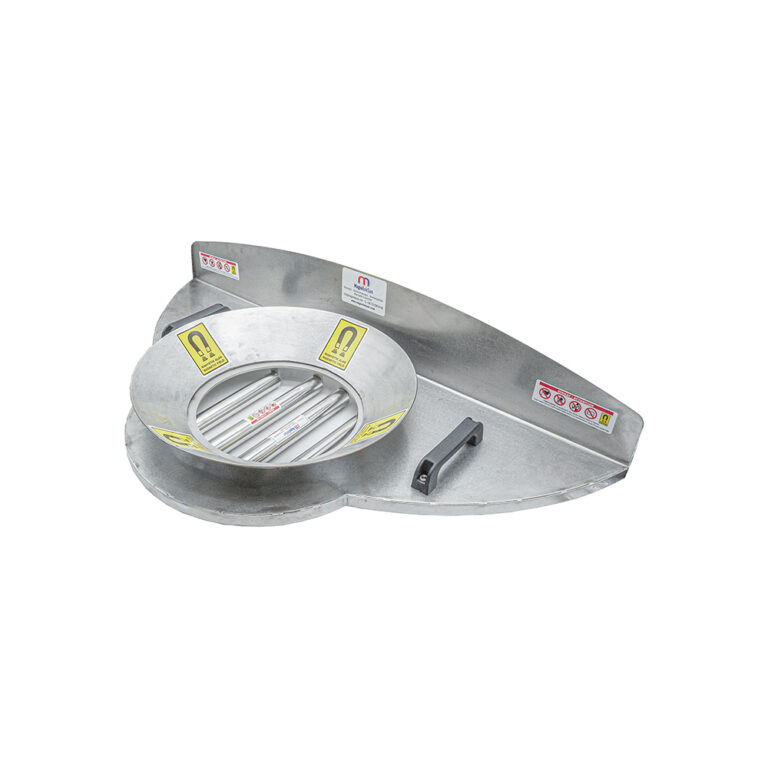
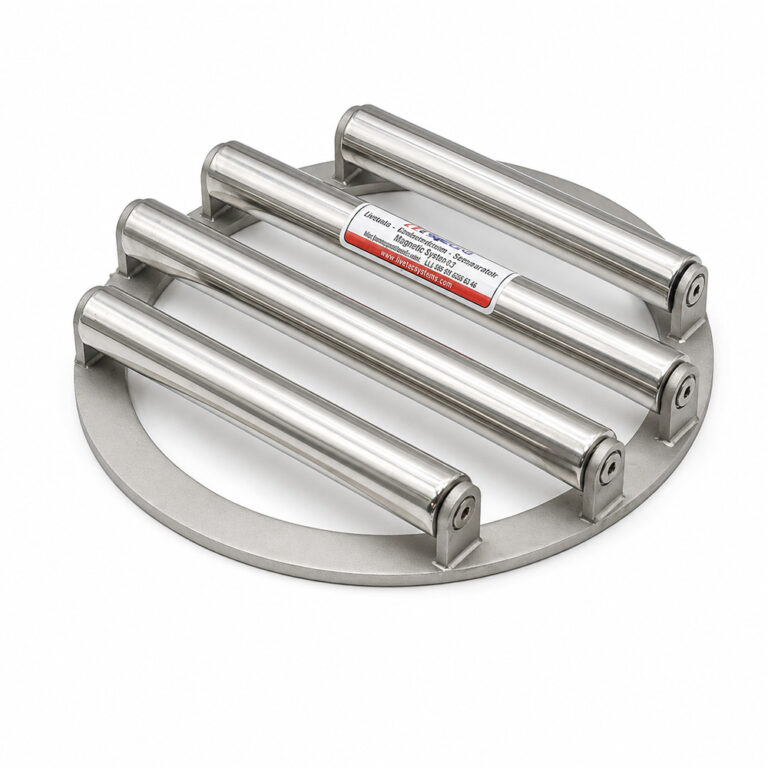
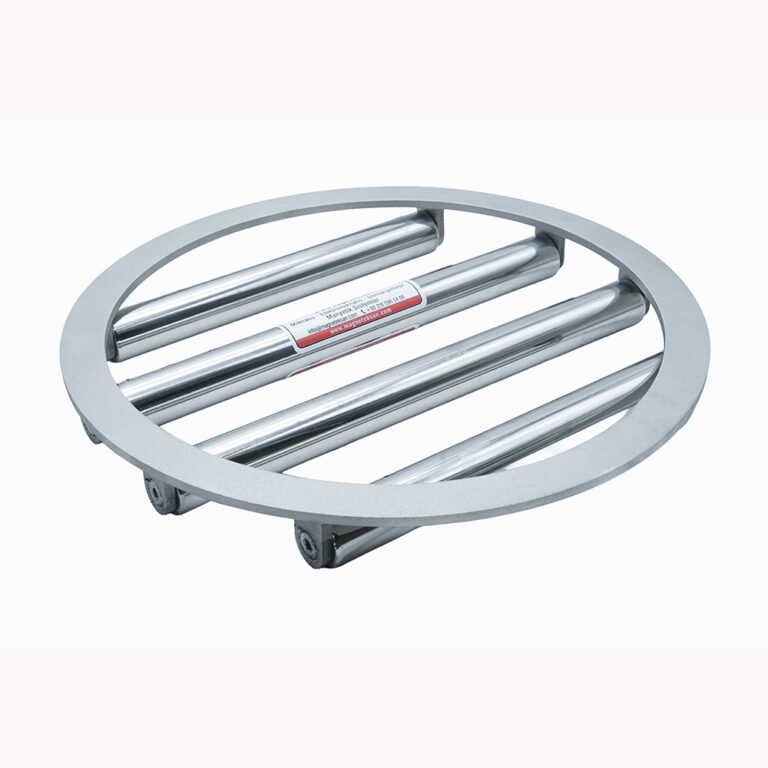
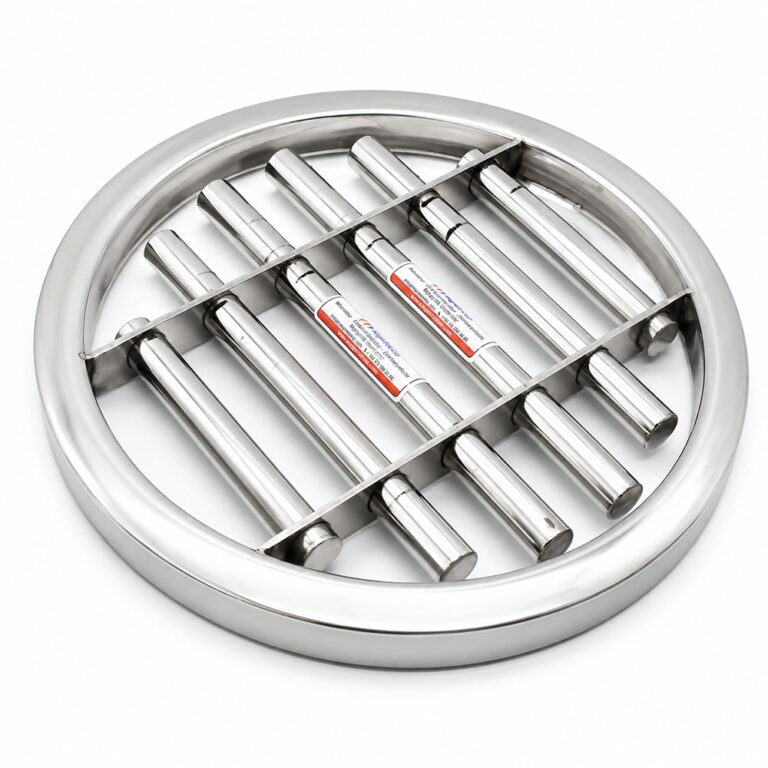
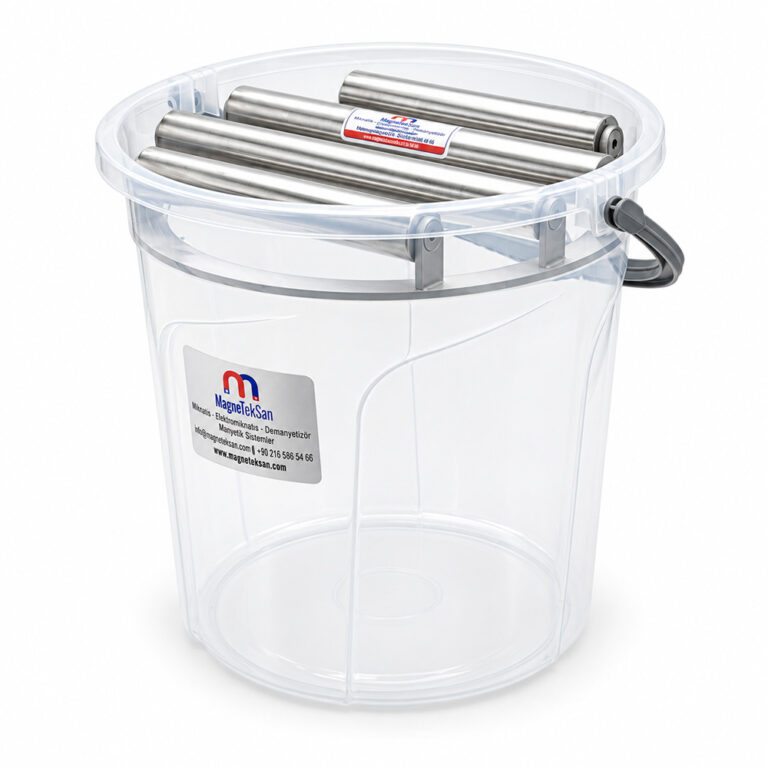
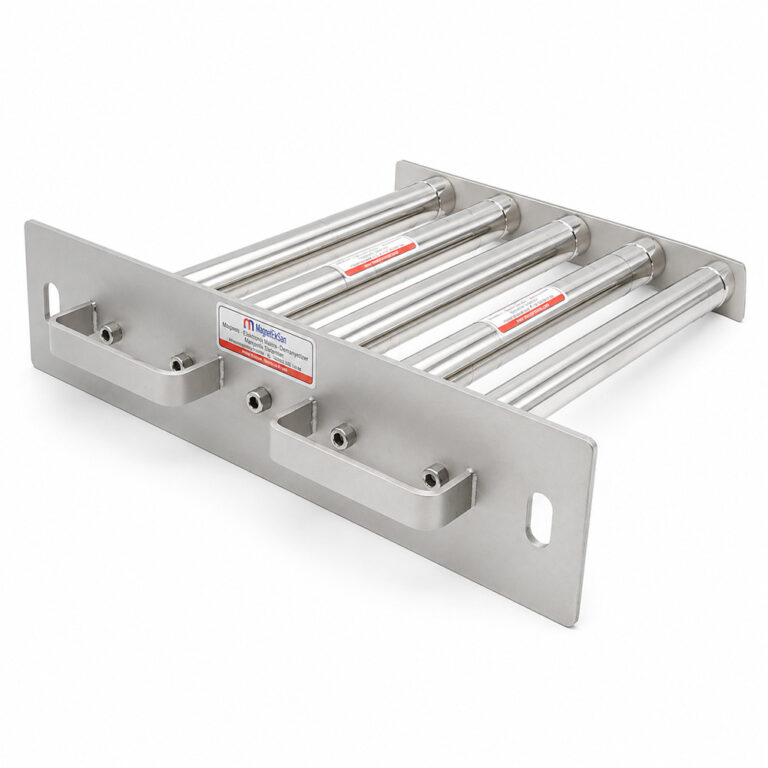
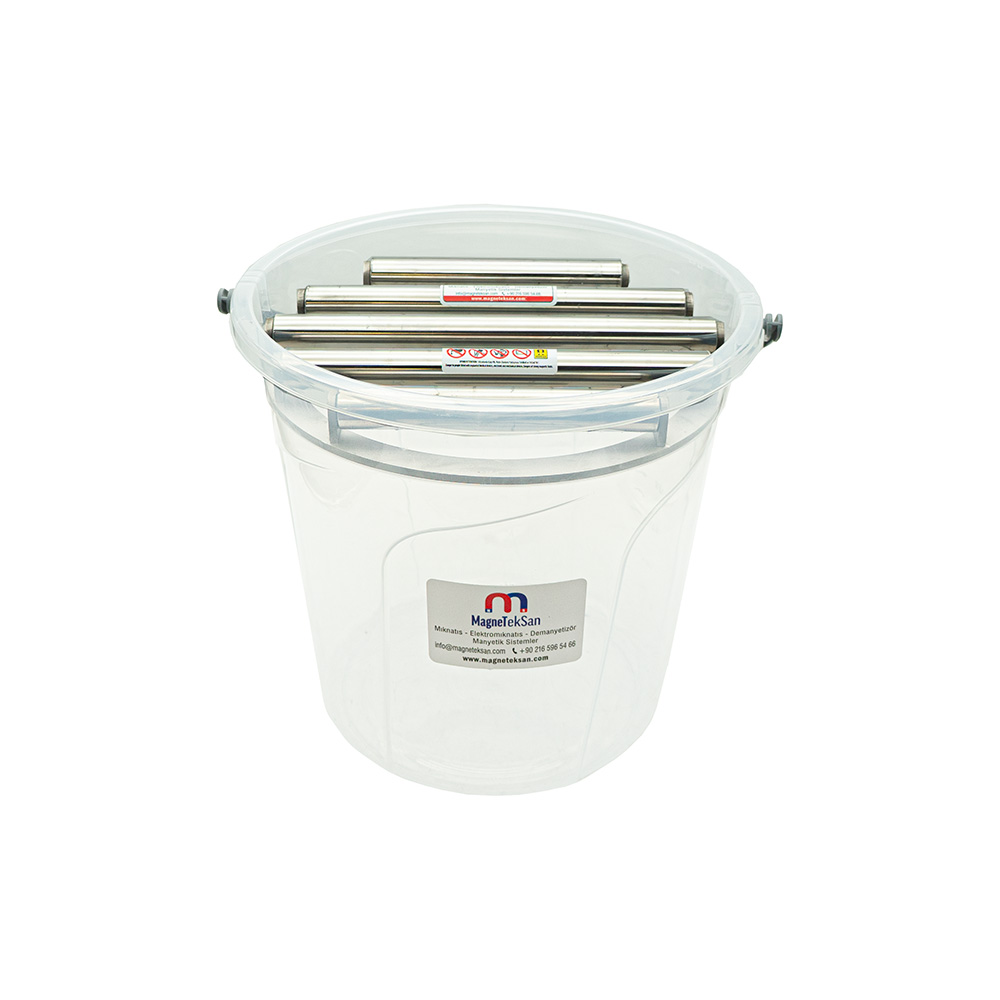
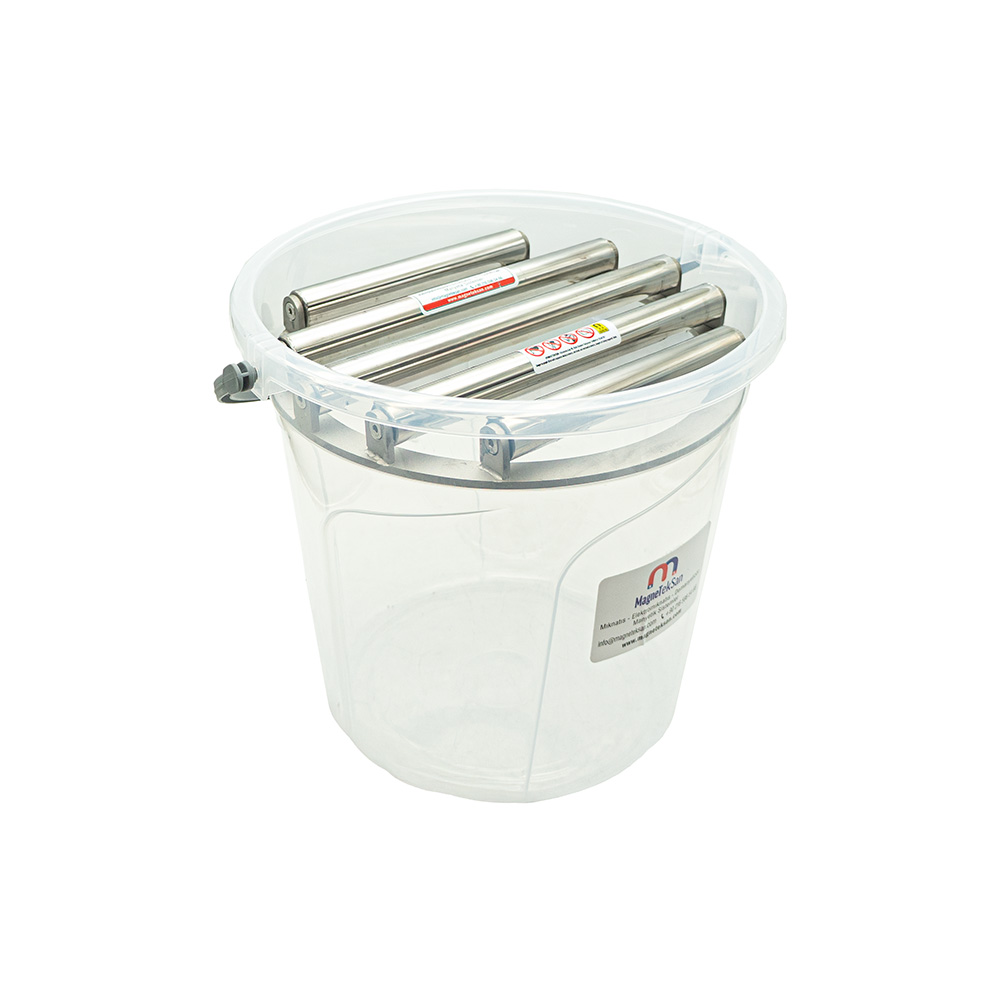
The Ø300 mm Bucket-Mounted Neodymium Grid Magnet is designed for manual spice screening and the collection of ferromagnetic metal contamination during spice handling and processing. Its five Ø25 mm neodymium magnetic rods provide magnetic collection surfaces, with a specified spacing of 33 mm between rods. The stainless steel grid is installed in a food-contact-compatible HDPE bucket, providing a practical arrangement for manual processing and periodic cleaning.
| Technical Specification | Details |
|---|---|
| Product type | Bucket-mounted round grid magnet |
| Grid diameter | Ø300 mm |
| Magnetic rod quantity | 5 |
| Magnetic rod diameter | Ø25 mm |
| Spacing between rods | 33 mm |
| Magnetic material | Neodymium |
| Magnetic assembly | Round grid |
| Grid material | Stainless steel |
| Bucket material | HDPE |
| Food-contact suitability | Food-contact-compatible product-contact materials |
| Specified temperature resistance | 80°C |
| Main application | Manual spice screening |
| Target contaminants | Ferromagnetic metal particles and iron dust |
| Separation principle | Permanent magnetic attraction |
| Cleaning method | Manual cleaning |
| Product category | Round Grid Magnets |
Extra Information
1. Ø300 mm Bucket-Mounted Neodymium Grid Magnet
The Ø300 mm Bucket-Mounted Neodymium Grid Magnet is designed for manual spice screening. It combines a round magnetic grid with a food-contact-compatible HDPE bucket.
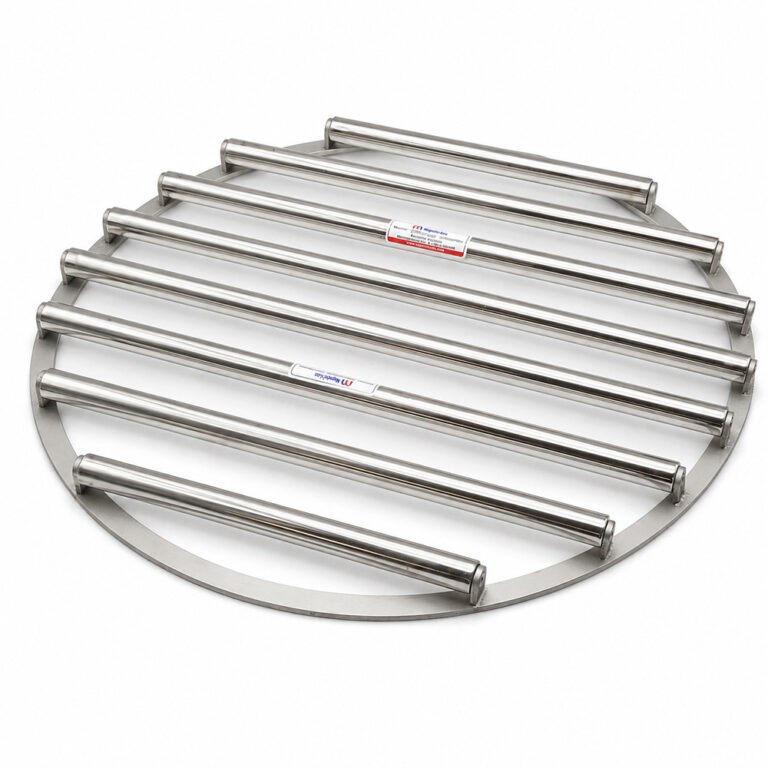
The grid contains five neodymium magnetic rods. Each rod has a specified diameter of Ø25 mm.
As spices pass across the magnetic grid, suitable ferromagnetic particles can be attracted to the rods. The remaining material can continue through the screening arrangement.
This design provides a dedicated magnetic separation stage for spice handling. Its suitability should be assessed according to the characteristics of the processed product.
2. Magnetic Separation in Spice Production
Spice production involves several handling stages where foreign material may enter the product. Ferromagnetic contamination can originate from processing equipment or metallic components.
A neodymium grid magnet provides a means of collecting suitable magnetic particles. The magnetic rods are positioned in the material passage area.
The Ø300 mm grid is intended for manual spice screening applications. It can be used as part of a broader contamination control procedure.
Magnetic separation does not eliminate every type of foreign material. Nonmagnetic contamination may require additional inspection or separation equipment.
3. Bucket-Mounted Magnetic Grid Design
The magnetic grid is mounted in an HDPE bucket. This arrangement combines material handling with a magnetic separation stage.
The bucket provides a defined area for manual spice processing. Its food-contact-compatible material is suitable for the intended application.
The magnetic grid is made with stainless steel product-contact components. These surfaces are intended for contact with spices during screening.
The arrangement should be inspected before use. The grid must be properly positioned and the bucket must remain suitable for the intended product.
4. Five Neodymium Magnetic Rods
This product incorporates five neodymium magnetic rods. Each rod provides a surface for collecting suitable ferromagnetic contaminants.
The rods are distributed across the round magnetic grid. Their arrangement influences the paths available for material passage.
The presence of five rods should not be interpreted as a guaranteed separation efficiency. Actual collection depends on particle properties and processing conditions.
The rods require periodic inspection and cleaning. Collected metallic particles should be removed without allowing them to re-enter the spices.
5. Ø25 mm Magnetic Rod Diameter
Each magnetic rod has a specified diameter of Ø25 mm. This dimension is an important part of the grid’s mechanical configuration.
The cylindrical surfaces provide contact areas where ferromagnetic particles may accumulate. Their positioning relative to the product flow affects collection opportunities.
Rod diameter alone does not establish magnetic field strength. Measurements of the completed assembly would be needed to determine a specific surface gauss value.
The Ø25 mm specification should be retained in technical descriptions. It distinguishes this product from magnetic grids using rods of other diameters.
6. 33 mm Spacing Between Magnetic Rods
The product specification identifies a spacing of 33 mm between magnetic rods. This dimension is relevant to the passage of spices through the grid.
Rod spacing affects the available openings within the assembly. It can also influence how bulk material moves around the magnetic surfaces.
The specified spacing does not establish a particular particle-size screening classification. Magnetic separation and conventional mesh sieving operate according to different principles.
Material flow should be assessed using the actual spice product. Particle size, moisture content and tendency to form lumps can affect handling.
7. Neodymium Permanent Magnet Technology
The magnetic rods use neodymium permanent magnets. These magnets provide the magnetic attraction used for collecting suitable ferromagnetic particles.
Permanent magnets do not require electrical excitation to generate their magnetic field. The separation principle therefore operates without a dedicated electrical supply to the grid.
The product information identifies neodymium as the magnetic material. It does not establish a specific magnet grade or verified surface gauss measurement.
Magnetic performance should be evaluated using the actual finished assembly. The magnetic material designation alone is not a complete performance specification.
8. Ferromagnetic Contamination in Spices
Ferromagnetic contamination may include iron dust and small particles from steel components. Such material can enter spices during processing or handling.
The grid magnet is intended to attract suitable particles when they pass near its magnetic rods. Captured particles remain on the surfaces until cleaning.
The amount collected depends on the contamination present in each batch. Different production environments may create different contamination risks.
The separator should form part of a documented contamination control system. Additional checks may be necessary for materials that cannot be attracted magnetically.
9. Manual Spice Screening Applications
Manual screening is useful when spices are handled in batches rather than through a fully automated line. A bucket-mounted grid provides a practical configuration for such operations.
The operator can introduce compatible spices through the magnetic screening area. Suitable ferromagnetic particles may be collected on the rods.
The material should be handled in a controlled manner. Excessive accumulation or obstruction of the grid can interfere with normal processing.
The screening procedure should be defined for the specific spice and production environment. Product characteristics and hygiene requirements must be considered.
10. HDPE Bucket for Food Handling
The bucket is manufactured from HDPE, or high-density polyethylene. The product specification identifies it as suitable for food contact.
HDPE provides the container structure supporting the manual screening arrangement. Its suitability must be considered alongside the intended cleaning procedures.
The bucket should be inspected for cracks, damage and persistent contamination. Damaged product-contact surfaces may require replacement.
Compatibility with cleaning agents should be checked before use. Food-contact suitability does not automatically establish compatibility with every chemical or operating condition.
11. Stainless Steel Magnetic Grid Construction
The magnetic grid incorporates stainless steel construction. Its product-contact surfaces are specified as suitable for the intended food application.
Stainless steel provides the structural surfaces surrounding the magnetic assembly. The exact alloy grade has not been established in the available product information.
The grid should be inspected during routine maintenance. Surface damage and accumulated residues should be addressed according to the site’s hygiene procedures.
The stainless steel specification should not be expanded into an unverified material grade. Any requirement for a particular alloy should be confirmed separately.
12. Food-Contact-Compatible Magnetic Separation
Food processing equipment must be selected with attention to the surfaces that contact the product. This grid magnet is described as using food-contact-compatible materials.
The HDPE bucket and stainless steel magnetic grid form the product-handling arrangement. Both should be maintained in a clean and suitable condition.
Food-contact suitability does not mean that all operating conditions are automatically approved. Cleaning methods and specific regulatory requirements may need separate verification.
A magnet certificate is identified in the product information. The exact scope of any documentation should be checked rather than assuming additional certifications.
13. Permanent Magnetic Attraction Without Electricity
The neodymium rods create magnetic attraction without electrical excitation. This distinguishes the separator from an electromagnet-based system.
The magnetic field remains present during normal handling and after the screening operation stops. Appropriate care is therefore necessary when cleaning the rods.
The bucket-mounted grid does not need an electrical supply to create its magnetic field. Other equipment used in the overall production process may still require electricity.
The permanent magnetic principle simplifies the separation stage. However, cleaning, inspection and appropriate handling remain essential.
14. Manual Cleaning of the Magnetic Grid
Ferromagnetic particles collected on the rods must be removed periodically. This product uses a manual cleaning procedure rather than an automatic discharge mechanism.
Cleaning should take place away from exposed spice material. This helps prevent captured metallic contamination from returning to the product.
Personnel should follow appropriate hygiene and safety procedures. Particular care is required when removing strongly attracted metal fragments.
After cleaning, the grid should be inspected before reuse. The operator should confirm that the assembly is correctly positioned in the bucket.
15. Periodic Inspection and Maintenance
Routine inspection supports consistent use of the magnetic grid. The frequency should reflect the amount of contamination and the production schedule.
The operator should check for accumulated metallic particles and visible damage. The condition of the bucket and accessible magnetic surfaces should also be reviewed.
Maintenance records can document cleaning dates and unusual contamination findings. Such records may help identify changes in upstream processing equipment.
No universal cleaning interval can be established from the Ø300 mm diameter alone. The interval should be determined from actual operating experience.
16. Magnetic Separation Versus Mechanical Sieving
Magnetic separation relies on attraction between magnets and suitable ferromagnetic materials. Mechanical sieving separates material according to physical opening size.
The two methods therefore address different characteristics of contamination. A magnetic grid cannot be assumed to remove every oversized or nonmagnetic particle.
The bucket-mounted product provides a magnetic separation stage during manual spice handling. A conventional sieve may be used separately where particle-size classification is required.
The appropriate combination depends on the product and the contamination risks. Neither method should be treated as a universal replacement for the other.
17. Ferromagnetic and Nonmagnetic Metal Particles
Iron and certain steel particles can respond strongly to a magnetic field. Their response depends on material composition and other physical characteristics.
Other metals, including aluminium and copper, are not reliably collected by this permanent magnetic grid. Stainless steel particles can also differ significantly in magnetic behaviour.
The magnetic separator should be selected according to the contaminants expected in the process. Understanding their composition is essential for evaluating suitability.
Additional detection or separation equipment may be necessary for nonmagnetic metals. The grid should not be described as removing all metal contaminants.
18. Magnetic Rod Arrangement and Product Flow
The five magnetic rods are positioned across the round grid. Their arrangement establishes magnetic collection surfaces within the material passage.
Spices moving close to these surfaces may carry ferromagnetic particles into the magnetic field. The probability of collection depends partly on the path of each particle.
Material distribution should be considered during manual operation. Uneven loading or excessive accumulation may alter how spices pass through the grid.
The actual arrangement should be assessed as part of the completed product. Rod quantity alone does not define a measurable separation percentage.
19. Spice Particle Size and Material Behaviour
Different spices have different particle sizes and bulk-flow characteristics. Ground powders, coarse granules and mixed products may behave differently during screening.
Moisture and product cohesion can influence the movement of spices across the rods. These factors should be considered when developing an operating procedure.
The 33 mm rod spacing is a geometric specification of the magnetic grid. It should not be interpreted as a guaranteed finished-product particle-size limit.
Practical suitability should be checked with the actual material. A representative trial can help identify handling and cleaning requirements.
20. Temperature Resistance of the Magnetic Assembly
The product specification states a temperature resistance of 80°C. This value should be considered when assessing the intended operating environment.
Temperature can affect magnetic materials and other components. The operating conditions must remain compatible with the complete assembly.
The stated temperature resistance should not be extended to higher temperatures without confirmation. The limits of the bucket and other product-contact components must also be respected.
If the application involves elevated-temperature spices or cleaning processes, additional verification may be required. The selected operating procedure should reflect the approved conditions.
21. Integration into Spice Processing Operations
The bucket-mounted grid is designed for manual spice screening. It may be used at a suitable stage in the handling of compatible products.
The separator can provide a magnetic collection point during material transfer into or through the bucket. Its location should support safe and hygienic handling.
The surrounding process should be assessed for contamination sources. Magnetic separation is most useful when integrated with appropriate upstream and downstream controls.
The installation and handling method should be adapted to the production site. Operators should receive instructions for inspection, cleaning and contamination management.
22. Capturing Fine Iron Dust in Spices
Fine iron dust can originate from metallic wear or contact with steel processing equipment. These particles may become mixed with spices during production.
The neodymium magnetic rods are intended to attract suitable ferromagnetic dust. Collection occurs when the particles experience sufficient magnetic force near the rods.
Not every fine particle will necessarily be captured under all conditions. Particle size, magnetic properties and material movement influence the outcome.
The captured material should be removed carefully during cleaning. Regular inspection can also help reveal recurring contamination sources.
23. Monitoring Collected Metal Contamination
Metallic particles collected on the magnetic grid can provide information about the process. Their quantity and appearance may vary between production batches.
Operators can inspect the rods during scheduled cleaning. Unusual deposits may indicate a need to investigate upstream machinery.
Collected contamination should be disposed of appropriately. It should not be returned to the spice product or the production environment.
Recording inspection findings supports traceability and maintenance planning. Such information may help identify repeated sources of ferromagnetic contamination.
24. Hygienic Handling During Manual Screening
Manual spice screening requires attention to equipment cleanliness and operator practices. Product-contact surfaces should be cleaned according to the facility’s hygiene procedures.
The HDPE bucket and magnetic grid should be examined before processing begins. Visible residues or damage should be addressed before use.
Cleaning tools and collection containers should be appropriate for the application. Removed metallic contamination must be kept separate from acceptable product.
The process should also prevent cross-contamination between different spice batches. Hygiene controls should be defined by the facility’s food safety procedures.
25. Engineering Selection of Round Grid Magnets
Selecting a round grid magnet begins with the intended application and material characteristics. The required installation diameter and expected contaminants are important considerations.
This model has a specified grid diameter of Ø300 mm. It incorporates five Ø25 mm neodymium rods with 33 mm spacing between rods.
Additional considerations include the handling method, temperature and cleaning access. Compatibility with the intended food product and production environment must be assessed.
The selection should not rely on magnetic material alone. The completed assembly and operating conditions determine practical suitability.
26. Long-Term Operation and Cleaning Planning
Long-term use requires regular removal of collected ferromagnetic particles. The cleaning schedule should reflect contamination levels and processing frequency.
The magnetic grid should be inspected for visible damage and persistent deposits. The HDPE bucket should also remain in a suitable condition for food handling.
Operators should follow a consistent procedure for disassembly where applicable, cleaning and reassembly. The procedure must correspond to the actual supplied construction.
A documented maintenance routine helps support repeatable operation. It also reduces the risk of collected contamination being reintroduced into spices.
27. Confirmed Specifications and Technical Limitations
The confirmed product configuration is a Ø300 mm bucket-mounted neodymium grid magnet. It has five Ø25 mm magnetic rods with specified spacing of 33 mm.
The grid is described as stainless steel, while the bucket is made from food-contact-compatible HDPE. The stated temperature resistance is 80°C.
The available product information does not establish a verified gauss value or neodymium magnet grade. These figures should not be added without supporting measurements or documentation.
The product is intended for manual spice screening and ferromagnetic particle collection. Its performance should not be presented as a guaranteed percentage of total metal removal.
28. Magnetic Contamination Control for Spice Processing
The Ø300 mm Bucket-Mounted Neodymium Grid Magnet provides a dedicated magnetic separation stage for manual spice processing. Its five magnetic rods help collect suitable ferromagnetic particles from the material.
The stainless steel grid and HDPE bucket form an arrangement intended for food-contact applications. The separator operates using permanent magnetic attraction without electrical excitation.
Reliable use depends on suitable product handling, regular inspection and manual cleaning. The operating procedure should be matched to the spices being processed.
Magnetic separation is one component of a broader contamination control strategy. When selected and maintained appropriately, the grid can help manage ferromagnetic contamination risks in spice production.