Product Information
Extra Information
Product Information
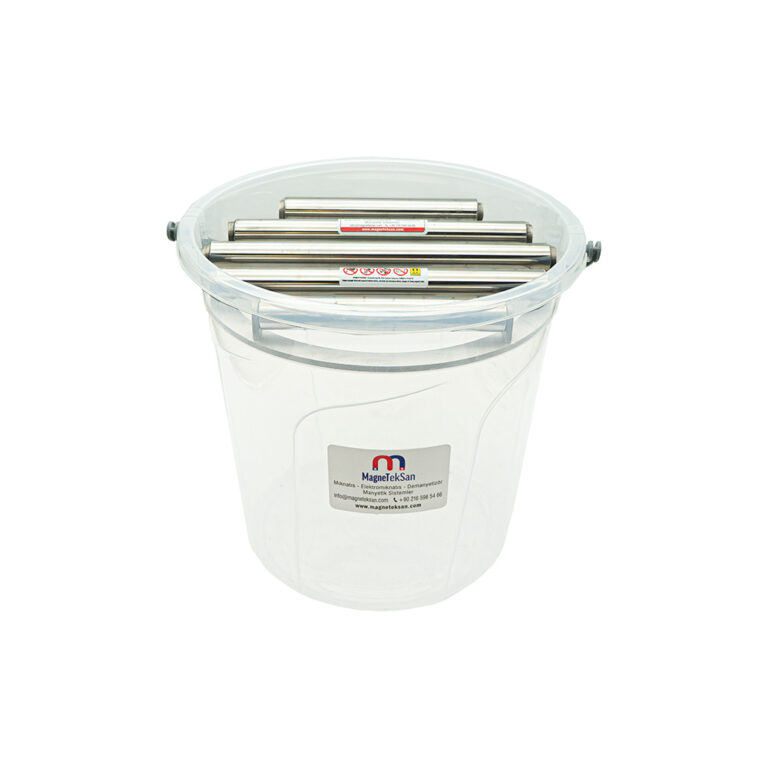
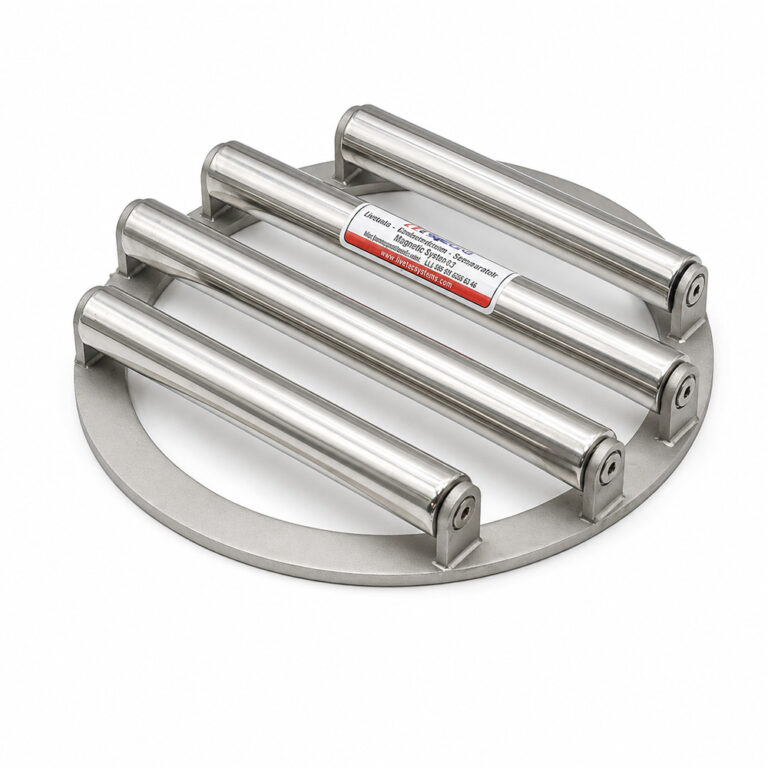
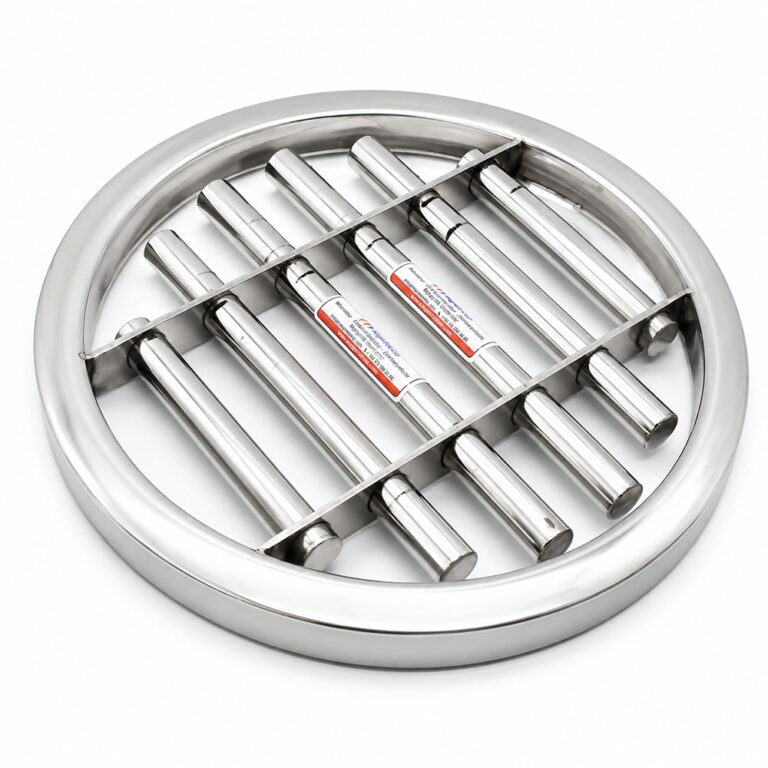
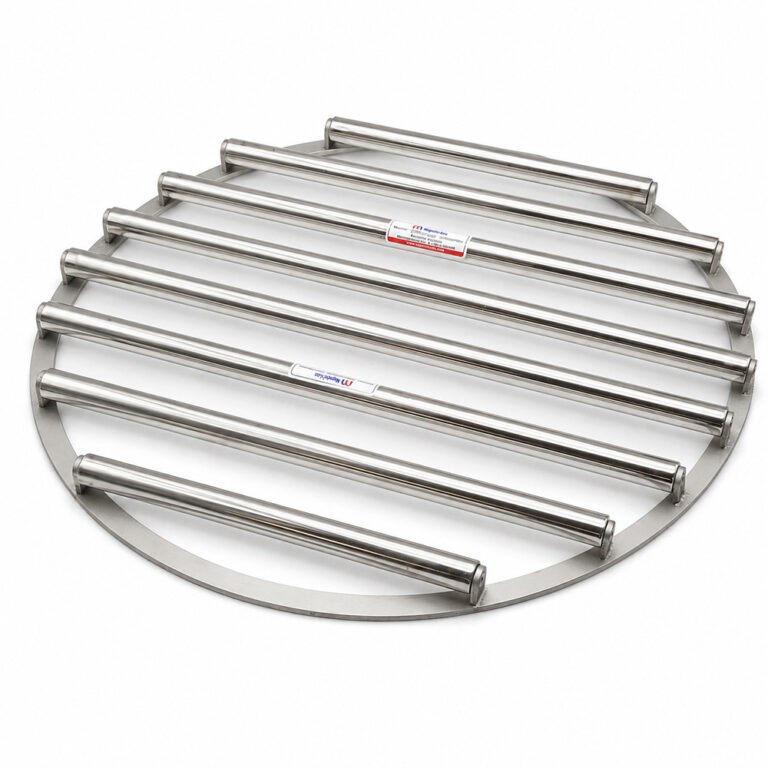
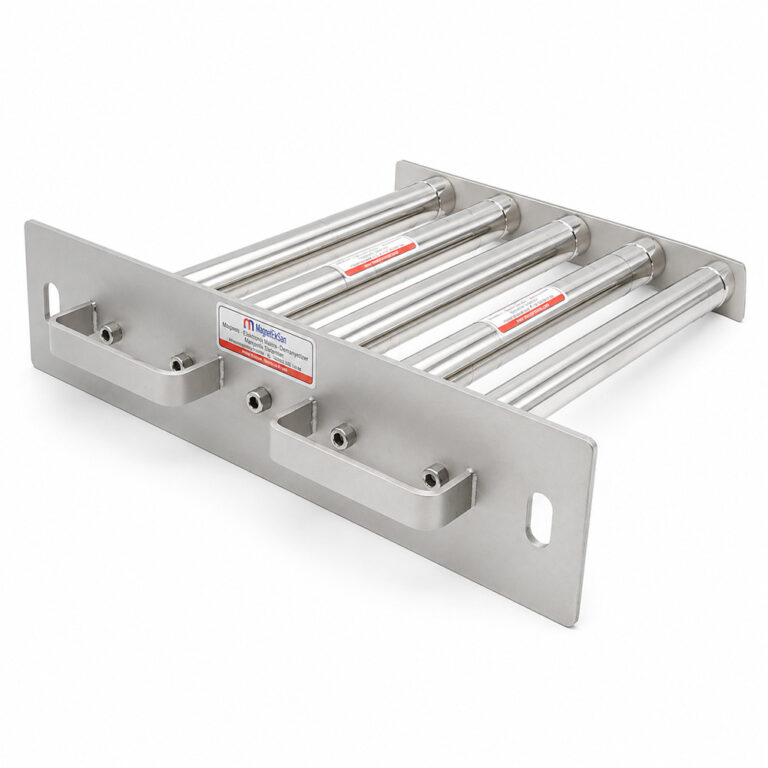
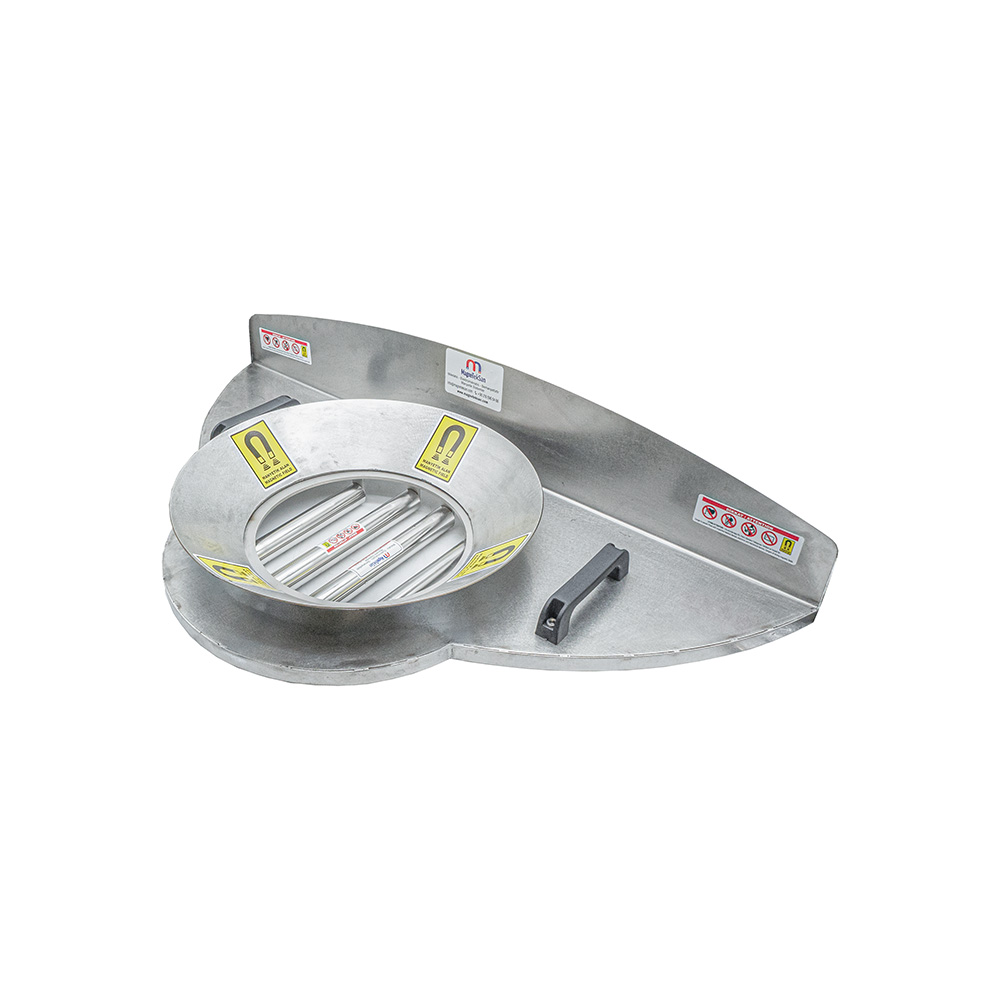
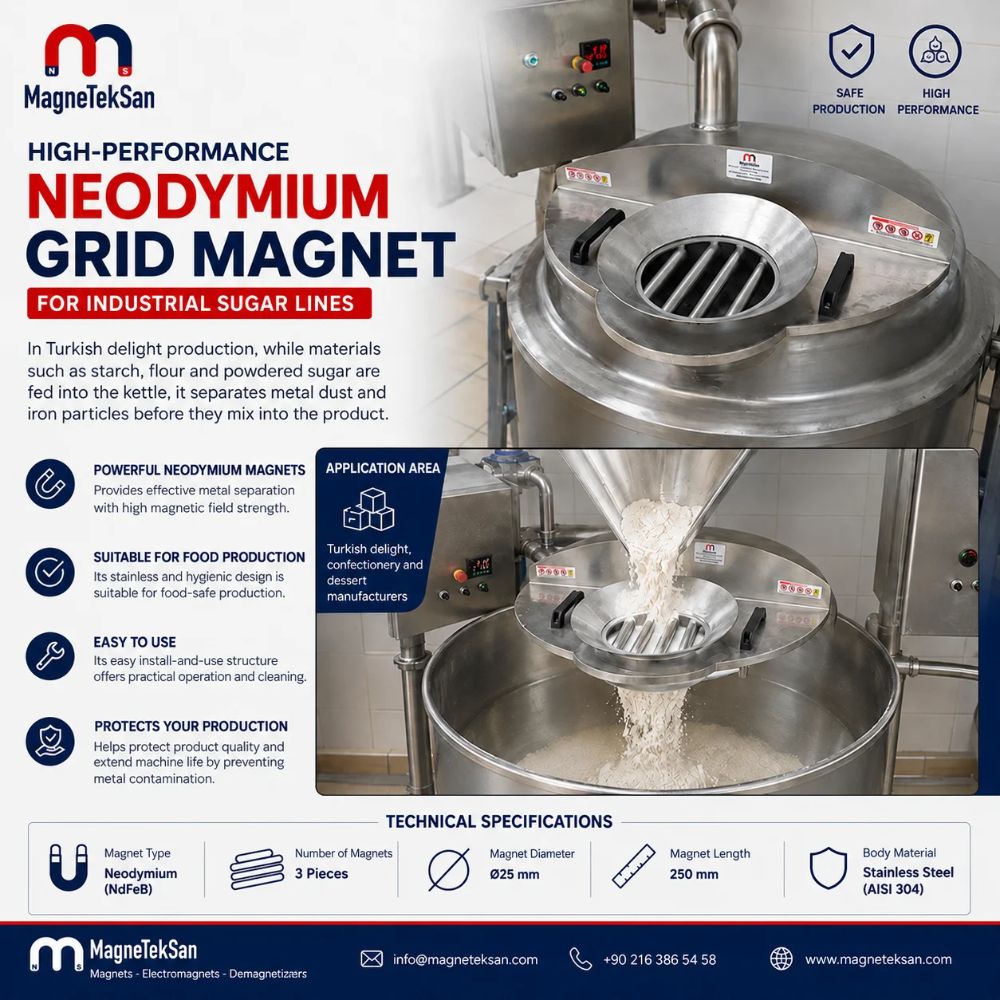
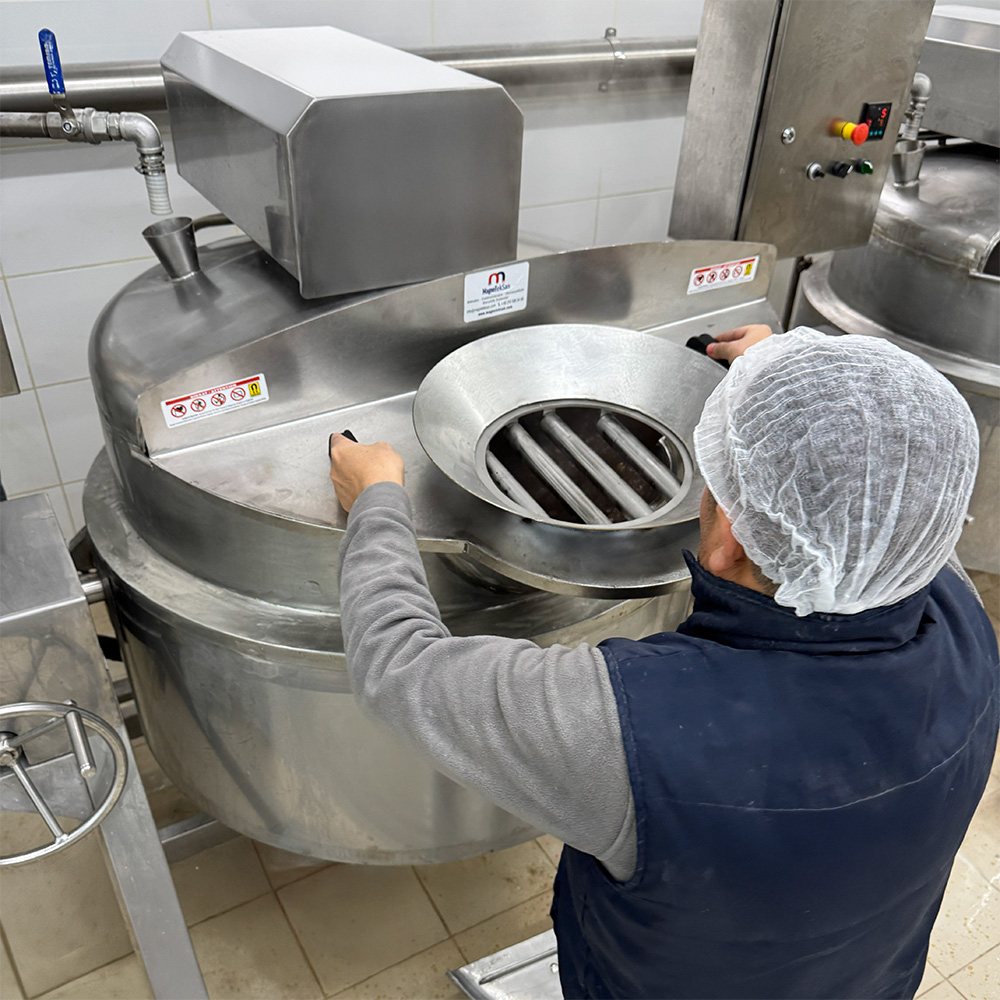
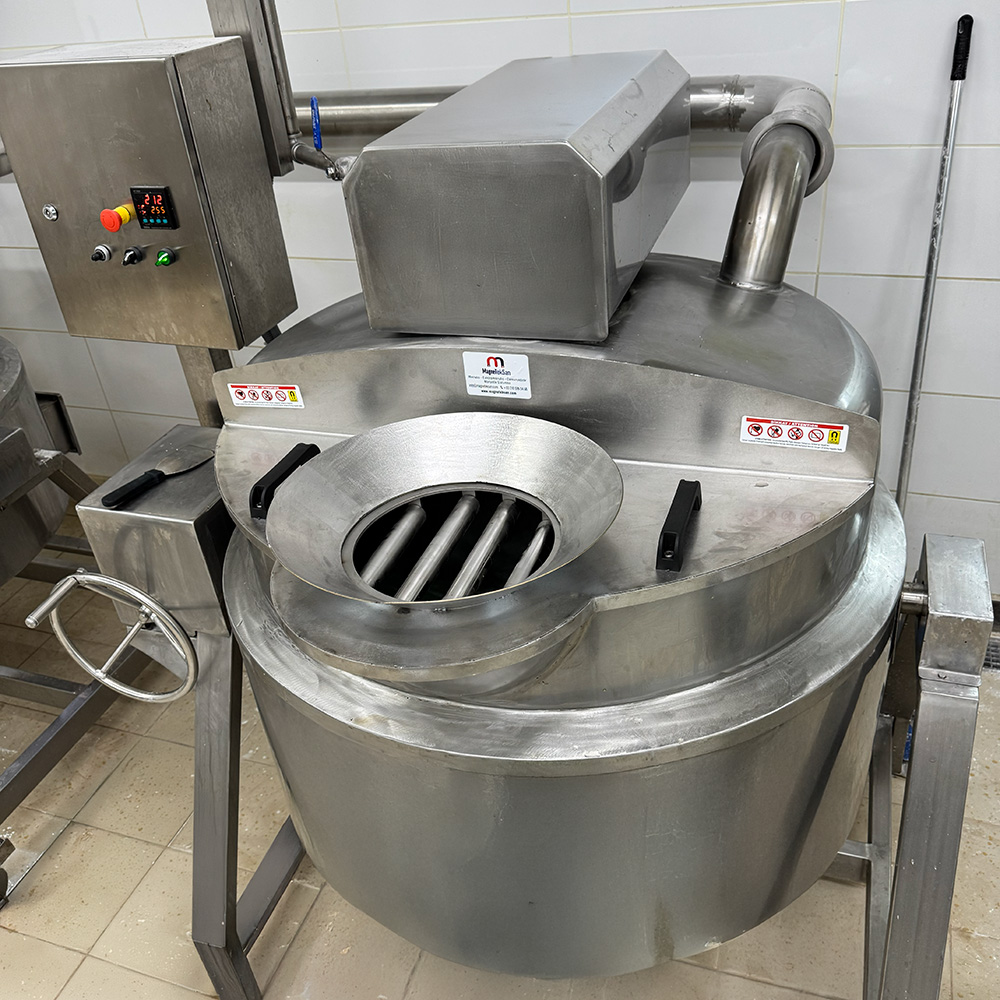
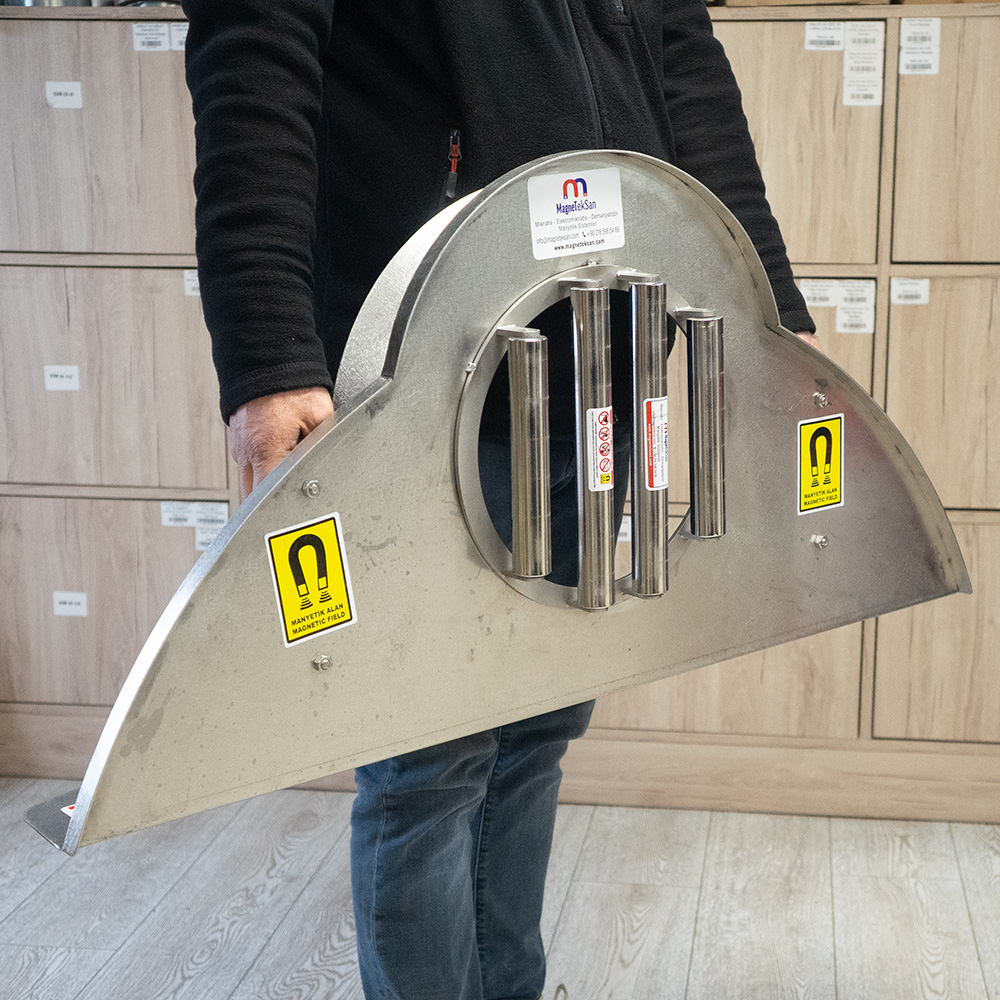
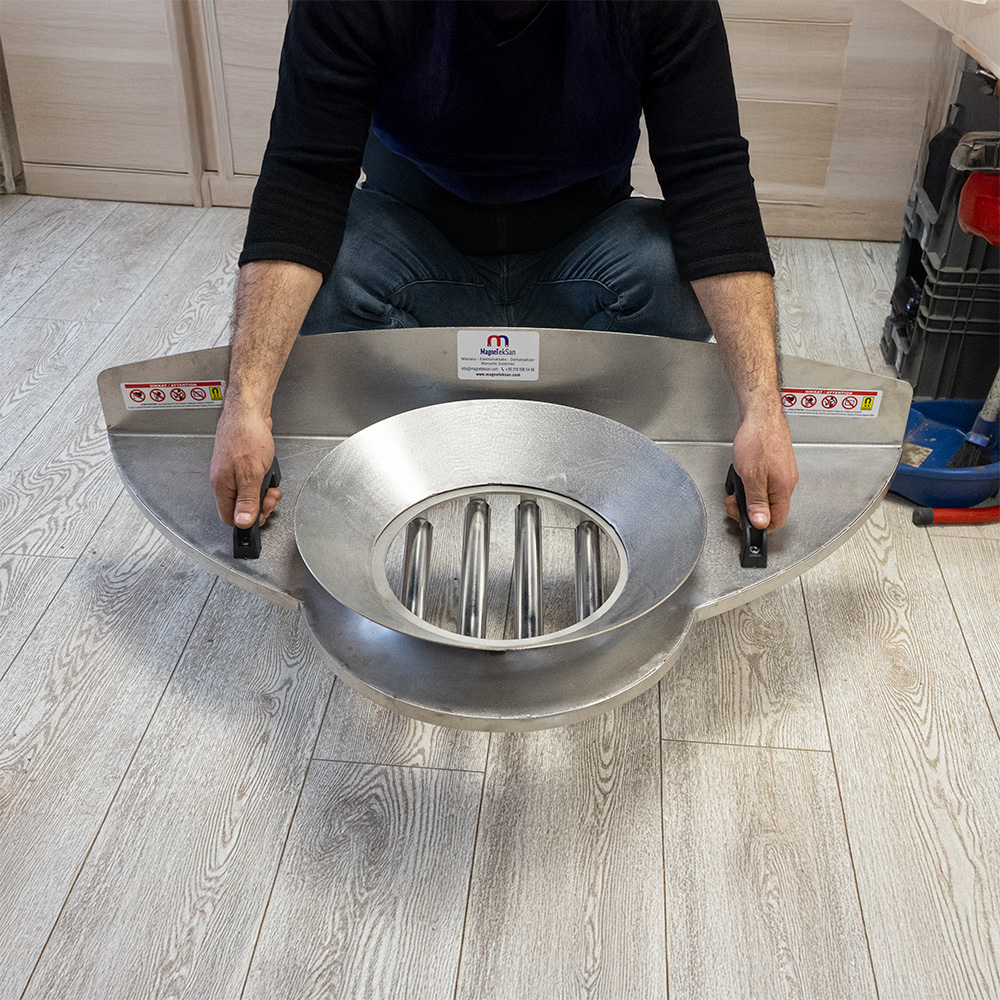
The Ø300 mm Neodymium Grid Magnet is designed for manual feeding of starch, flour and similar powdered ingredients into Turkish delight cooking kettles. Its four Ø25 mm neodymium magnetic rods help capture ferromagnetic metal particles as raw materials pass through the grid before entering the kettle. The permanent magnetic system operates without electrical power and can be removed from the kettle opening for periodic manual cleaning.
| Technical Specification | Details |
|---|---|
| Product Type | Round neodymium grid magnet |
| Grid Outer Diameter | Ø300 mm |
| Magnetic Rod Quantity | 4 |
| Magnetic Rod Diameter | Ø25 mm |
| Magnetic Material | Neodymium (NdFeB) |
| Main Application | Turkish delight production |
| Installation Location | Cooking kettle inlet |
| Feeding Method | Manual raw material feeding |
| Suitable Raw Materials | Starch, flour and similar powders |
| Target Contaminants | Ferromagnetic metal particles |
| Separation Principle | Permanent magnetic attraction |
| Cleaning Method | Manual |
| Electrical Requirement | Not required for magnetic separation |
| Product Flow | Gravity-fed through magnetic rods |
| Grid Configuration | Round, open-flow magnetic grid |
| Custom Manufacturing | Alternative diameters and rod quantities available |
Extra Information
1. Ø300 mm Neodymium Grid Magnet for Turkish Delight Production
The Ø300 mm neodymium grid magnet is designed for the manual feeding stage of Turkish delight production. It provides an additional magnetic separation point before powdered ingredients enter the cooking kettle.
The round grid contains four neodymium magnetic rods with a diameter of Ø25 mm each. These rods help attract and retain suitable ferromagnetic particles carried by incoming raw materials.
Starch, flour and similar powdered ingredients can pass through the openings between the rods under gravity. Ferromagnetic particles that approach the magnetic surfaces may remain attached to the rods.
The grid should be selected according to the actual kettle opening and feeding arrangement. Its Ø300 mm outer diameter does not automatically guarantee compatibility with every cooking kettle.
2. Magnetic Separation in Turkish Delight Manufacturing
Turkish delight manufacturing involves the handling, transfer and mixing of powdered ingredients. These operations can introduce opportunities for unwanted metallic contamination.
Starch and flour may pass through several processing and packaging stages before reaching the cooking kettle. Magnetic separation at the kettle inlet provides an additional opportunity to capture ferromagnetic particles.
The magnetic grid uses permanent neodymium magnets rather than an electrically powered separation mechanism. Its magnetic field remains active without a separate electrical supply.
Magnetic separation should complement raw material inspection and preventive equipment maintenance. It does not replace a complete foreign-body control programme.
3. Round Ø300 mm Magnetic Grid Design
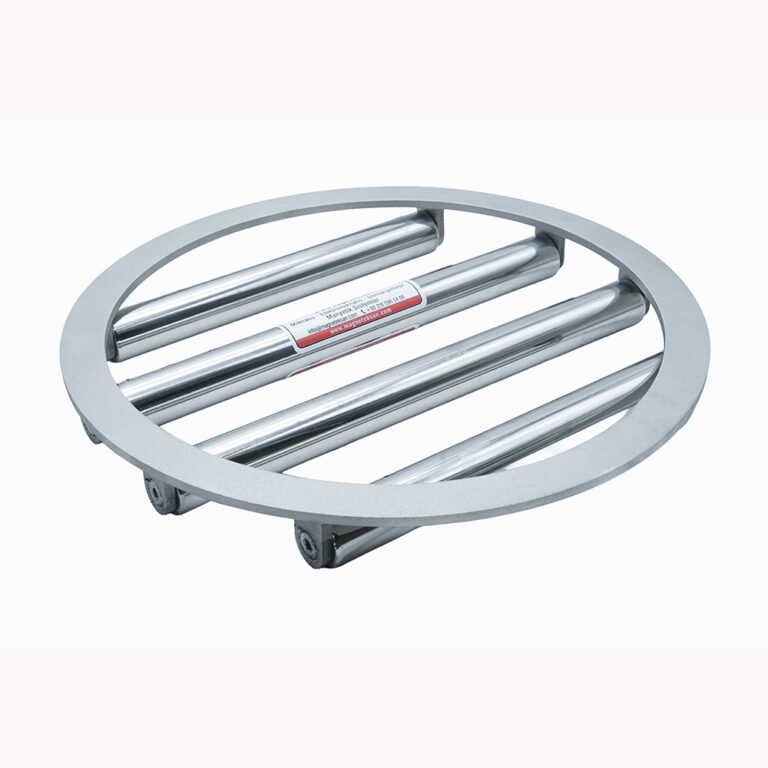
The product has a round grid configuration with an outer diameter of Ø300 mm. This shape is intended for positioning over a compatible raw material inlet.
Four magnetic rods are arranged within the round grid. The spaces between them allow suitable powdered ingredients to pass toward the kettle.
The installation should be assessed for stable positioning during manual pouring. The grid must not be allowed to move unexpectedly while ingredients are being introduced.
The kettle opening and surrounding geometry should be measured before ordering. Additional support or a customised mounting arrangement may be necessary for some installations.
4. Four Neodymium Magnetic Rods
This model contains four magnetic rods made with neodymium magnetic material. Each rod provides a surface on which suitable ferromagnetic particles can be captured.
The four-rod arrangement allows ingredients to flow through the spaces between the magnetic elements. Actual separation performance depends on the material flow and the characteristics of the contaminants.
Rod quantity is an important design feature but does not independently determine capture efficiency. Magnetic field distribution, particle properties and exposure to the rods also matter.
This product must not be confused with other Ø300 mm grids containing five or more rods. Their dimensions and technical specifications may differ.
5. Ø25 mm Magnetic Rod Diameter
Each magnetic rod has a specified diameter of Ø25 mm. This dimension is relevant to the grid geometry and the available magnetic contact surfaces.
The rods use neodymium, also known as NdFeB, as their magnetic material. Permanent magnets generate the magnetic attraction used for particle capture.
Rod diameter influences the physical space occupied by the magnetic elements. The complete grid arrangement also affects how powdered ingredients move through the openings.
The exact rod length and measured surface magnetic field have not been confirmed for this configuration. These values should be verified from the corresponding technical drawing or inspection report when required.
6. Removing Ferromagnetic Particles from Starch
Starch is an important ingredient in many Turkish delight production processes. During storage, handling and transfer, it may be exposed to contamination from processing equipment.
A magnetic grid at the kettle inlet can help capture suitable ferromagnetic particles present in incoming starch. The powder continues through the spaces between the magnetic rods.
Particles containing iron and exhibiting sufficient magnetic properties may be retained on the rod surfaces. Their capture depends on particle size, magnetic response and flow conditions.
The grid is not a substitute for all forms of powder filtration or screening. Nonmagnetic contaminants require other suitable control methods.
7. Magnetic Separation for Flour Feeding
Flour may be manually added to cooking or mixing equipment in confectionery production. This feeding operation can benefit from an additional magnetic control point.
The Ø300 mm grid can be positioned over a compatible kettle inlet. Flour poured through the grid passes between four neodymium magnetic rods.
Suitable ferromagnetic particles can be attracted to the magnetic surfaces during this movement. The remaining flour continues toward the kettle under gravity.
The feeding rate should allow ingredients to pass without excessive accumulation. Operators should inspect the grid and clean it when necessary.
8. Magnetic Control Before Ingredients Enter the Kettle
Installing a magnetic grid at the raw material inlet places the separation stage immediately before ingredient addition. This is useful in manually operated Turkish delight production lines.
The operator pours suitable powdered ingredients onto the grid. Material flows through the available openings into the kettle.
Ferromagnetic particles passing sufficiently close to the rods may be captured. This reduces the risk of those particles reaching the cooking process.
The effectiveness of the control point depends on correct placement and operating practices. Ingredients should not bypass the magnetic grid during feeding.
9. Manual Raw Material Feeding Systems
Some Turkish delight factories introduce ingredients directly from bags or containers. These facilities may not use automated pneumatic or screw-conveyor feeding systems.
The round neodymium grid is intended for this type of manual feeding arrangement. It creates a magnetic separation point without requiring an automatic discharge mechanism.
Operators can pour starch, flour and similar powders through the grid. The four rods remain magnetically active throughout the operation.
The feeding method should be assessed for operator safety and consistent material flow. Suitable procedures help prevent spillage and unintended bypass.
10. Gravity-Fed Magnetic Separation
The grid relies on gravity to move powdered ingredients through its openings. It does not require a powered conveyor to create the magnetic separation action.
When material is poured onto the grid, it moves between the magnetic rods. Suitable ferromagnetic contaminants can be attracted to the rod surfaces.
The rate and distribution of material flow affect how particles approach the magnets. Excessively concentrated pouring may reduce the opportunity for magnetic contact.
Operators should use a controlled feeding technique appropriate to the process. The grid should be cleaned before accumulated particles interfere with operation.
11. Neodymium Permanent Magnet Technology
Neodymium magnets are permanent magnetic materials commonly identified as NdFeB. They are used in industrial magnetic separation equipment.
The four rods in this grid use neodymium to generate magnetic attraction. No external electrical supply is required to maintain the separation field.
Permanent magnetic operation simplifies the basic separation principle. However, the grid still requires appropriate installation, inspection and manual cleaning.
A specific Gauss rating has not been verified for this product. Magnetic performance claims should be supported by measurements of the actual configuration.
12. Ferromagnetic Contamination from Processing Equipment
Metal particles can originate from worn machinery, damaged components or material-handling equipment. Such contamination is undesirable in confectionery ingredients.
Magnetic separation is particularly relevant when contaminants contain sufficiently ferromagnetic materials. These particles may be attracted to neodymium rod surfaces.
The grid can help intercept particles before ingredients enter the cooking kettle. Captured material remains on the magnetic surfaces until cleaning.
Finding metal particles on the rods may indicate a contamination source upstream. Operators should investigate recurring or unusually high levels of contamination.
13. Magnetic Grids for Dry Powder Ingredients
The Ø300 mm grid is intended for suitable dry powdered materials. Starch and flour are examples identified for this application.
Dry ingredients move through the open spaces between the rods. The magnetic elements act on ferromagnetic particles rather than mechanically filtering every powder particle.
Powder characteristics influence flow behaviour through the grid. Moisture, agglomeration and ingredient handling conditions should be considered.
This product should not automatically be assumed suitable for every liquid or highly cohesive material. Application compatibility should be confirmed before use.
14. Turkish Delight Cooking Kettle Inlet Protection
The cooking kettle inlet is a practical location for controlling contaminants immediately before processing. Ingredients can be checked magnetically as they enter the vessel.
The round grid is designed to sit at a compatible kettle opening. Its Ø300 mm outer diameter is the primary confirmed external dimension.
The four neodymium rods provide magnetic collection surfaces across the ingredient flow path. Suitable ferromagnetic particles can be retained during pouring.
Correct positioning is important for reliable operation. The grid should remain secure and accessible for removal and cleaning.
15. Manual Cleaning of Magnetic Rods
The magnetic rods must be cleaned periodically to remove accumulated metal particles. Cleaning intervals depend on contamination levels and operating conditions.
Before removing the grid, operators should stop ingredient feeding and follow the facility’s safety procedures. They should also account for hot kettle surfaces and nearby equipment.
Captured particles should be removed carefully from the rod surfaces. The cleaning procedure must prevent the collected material from falling into the kettle.
After cleaning and inspection, the grid can be returned to its intended position. The operator should verify that it is stable before resuming feeding.
16. Periodic Inspection and Maintenance
Regular inspection helps identify accumulated contaminants and potential mechanical damage. The condition of the rods and grid assembly should be checked.
Operators should examine accessible surfaces for wear, damage or material build-up. Any condition that could compromise safe use should be investigated.
Inspection frequency can be adjusted according to production volume and the amount of captured contamination. A documented cleaning schedule may support consistent operation.
The grid should be handled carefully during removal and storage. Permanent magnets can attract nearby ferromagnetic tools and components.
17. Magnetic Separation Without Electricity
The separation function is provided by permanent neodymium magnets. An electrical connection is not needed to generate the magnetic field.
This makes the grid suitable for consideration in simple manual feeding operations. It does not require an electric motor or control panel for magnetic attraction.
The absence of an electrical requirement does not eliminate other installation considerations. Operators must still ensure mechanical stability and safe handling.
Cleaning and inspection remain necessary during long-term operation. The permanent magnetic field does not automatically remove collected particles from the rods.
18. Magnetic Grids Versus Conventional Sieves
A magnetic grid captures suitable ferromagnetic particles through magnetic attraction. It is not designed to perform the same function as a mesh sieve.
Conventional sieves separate materials according to aperture size and particle geometry. They may retain nonmagnetic oversize material that a magnetic grid cannot capture.
These technologies address different contamination risks. They may be used together when both particle-size screening and magnetic separation are required.
The correct combination depends on the raw material and production process. A magnetic grid should not be presented as a universal replacement for mechanical sieving.
19. Magnetic Separation Versus Metal Detection
Magnetic grids physically retain suitable ferromagnetic particles on their surfaces. The captured material remains attached until it is removed during cleaning.
Metal detectors use a different principle to identify metallic contaminants. Depending on the technology, they may detect certain metals that magnets do not capture effectively.
Nonmagnetic metals such as aluminium and copper are not reliably removed by neodymium magnetic rods. The grid therefore cannot control every category of metal contamination.
Magnetic separation and metal detection can be complementary measures. Their selection should follow the contamination risks identified for the production line.
20. Importance of Magnetic Rod Arrangement
The arrangement of four rods determines the locations of the magnetic surfaces within the grid. It also defines the spaces through which ingredients pass.
The distribution of incoming powder affects its exposure to the rods. Material passing closer to magnetic surfaces may have greater opportunity for particle capture.
The number and spacing of rods must be considered alongside the required feeding capacity. A greater number of rods does not automatically guarantee better overall process performance.
Custom grid configurations may be appropriate for different kettle openings or ingredient flow requirements. Their performance should be evaluated separately.
21. Powder Flow and Feeding Rate
The feeding rate influences how starch or flour passes through the magnetic grid. Consistent pouring can help distribute ingredients across the available openings.
Large quantities introduced at once may accumulate temporarily on the grid. Material characteristics and operator technique both influence this behaviour.
The grid should be assessed for the intended batch size and feeding method. Its confirmed Ø300 mm diameter alone does not define a maximum throughput.
Where feeding capacity is critical, practical testing may be required. Such testing should reflect the actual ingredients and operating conditions.
22. Installation at the Kettle Opening
The magnetic grid should be positioned so that incoming ingredients pass through the magnetic rod arrangement. Its placement must suit the actual kettle opening.
The confirmed outer diameter is Ø300 mm. The dimensions of the kettle, supports and surrounding equipment should be checked before installation.
A secure position helps prevent movement during manual feeding. Operators should be able to remove the grid without unsafe contact with the cooking process.
Custom mounting solutions may be required for some kettle designs. The installation arrangement should be agreed upon during technical selection.
23. Manual Bag Emptying Applications
In some confectionery factories, powdered ingredients are supplied in sacks. Operators empty these sacks directly into production kettles.
The magnetic grid can be used as an additional control point between the bag and the kettle. Ingredients pass over the neodymium rods during pouring.
Suitable ferromagnetic particles may be captured before entering the process. The remaining ingredient continues through the open grid.
The operation should be organised to minimise dust release and ingredient spillage. Safe lifting and handling practices remain important.
24. Applications in Confectionery Production
The primary application of this model is Turkish delight production. Its operating principle may also be relevant to compatible dry powder feeding tasks in confectionery manufacturing.
Ingredients such as starch and flour can be introduced through the grid. The magnets provide an additional opportunity to capture ferromagnetic particles.
Different confectionery processes may use ingredients with different flow characteristics. Suitability should therefore be reviewed for each application.
Custom dimensions or magnetic rod quantities may be required for other equipment. Alternative configurations should not be assumed to have identical specifications.
25. Custom Round Grid Magnet Manufacturing
Production kettles do not all have the same inlet diameter or feeding arrangement. A standard Ø300 mm grid may therefore be unsuitable for some installations.
Magneteksan offers custom magnetic grid configurations with alternative diameters and rod quantities. Connection arrangements can also be adapted to project requirements.
The four-rod Ø300 mm model described here is a specific product configuration. Any customised version should have its own confirmed technical specifications.
Customers should provide kettle opening dimensions and details of the raw material feeding process. This information supports the selection of a suitable magnetic separation solution.
26. Inspection of Captured Metal Particles
Particles collected on magnetic rods can provide useful information about contamination sources. Their quantity and appearance may change as equipment condition changes.
Operators can inspect the rods during scheduled cleaning. Unusual accumulations should prompt further investigation of upstream equipment and material handling.
The inspection process should prevent captured particles from returning to the raw material. Cleaning tools and procedures should be appropriate for the production environment.
Records of cleaning and observed contamination may support process monitoring. They can also help determine whether maintenance intervals need adjustment.
27. Confirmed Specifications and Technical Limitations
The confirmed product configuration includes a Ø300 mm round grid and four Ø25 mm magnetic rods. The magnetic material is neodymium (NdFeB).
The primary application is manual feeding of starch, flour and similar powdered ingredients into Turkish delight cooking kettles. The magnetic assembly is cleaned manually and requires no electricity for magnetic separation.
The source information does not establish a specific Gauss value, operating temperature limit, stainless steel grade or magnetic rod length for this model. These details should be verified before inclusion in a technical specification.
Data from other Ø300 mm magnetic grids must not be transferred automatically to this product. In particular, five-rod models may have different construction and performance characteristics.
28. Engineering Selection and Long-Term Operation
Selecting a grid magnet for a Turkish delight cooking kettle begins with checking the kettle opening and feeding method. Ingredient characteristics and expected contamination should also be considered.
The four neodymium rods provide magnetic collection surfaces across the flow path. Their purpose is to help retain suitable ferromagnetic particles before ingredients enter the kettle.
Long-term operation requires secure positioning, periodic inspection and careful manual cleaning. Changes in ingredients or feeding practices may require reassessment of the installation.
Magnetic separation should form part of a broader foreign-body control strategy. Appropriate selection and maintenance help support consistent raw material handling in Turkish delight production.