Product Information
Extra Information
Product Information
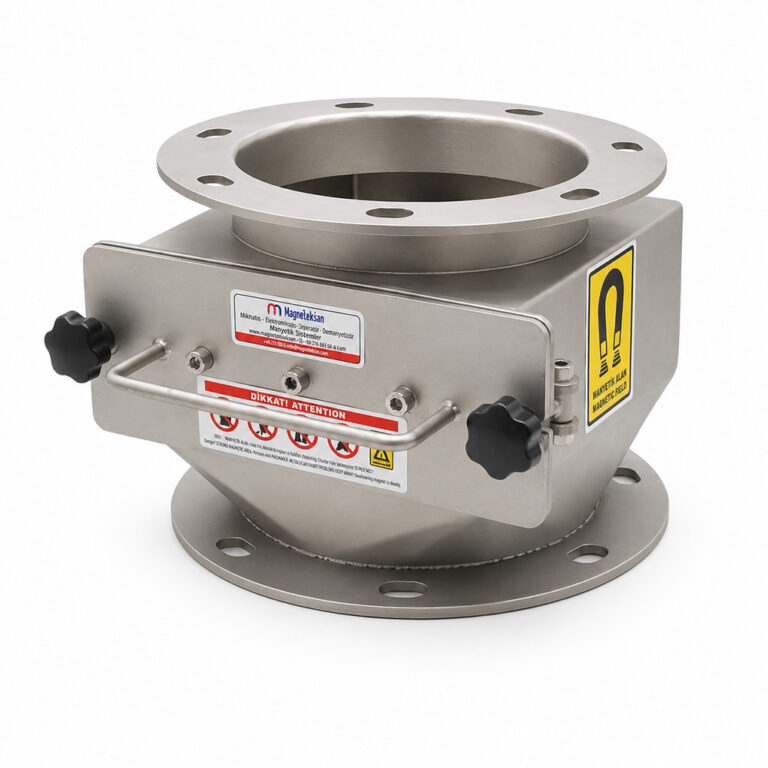
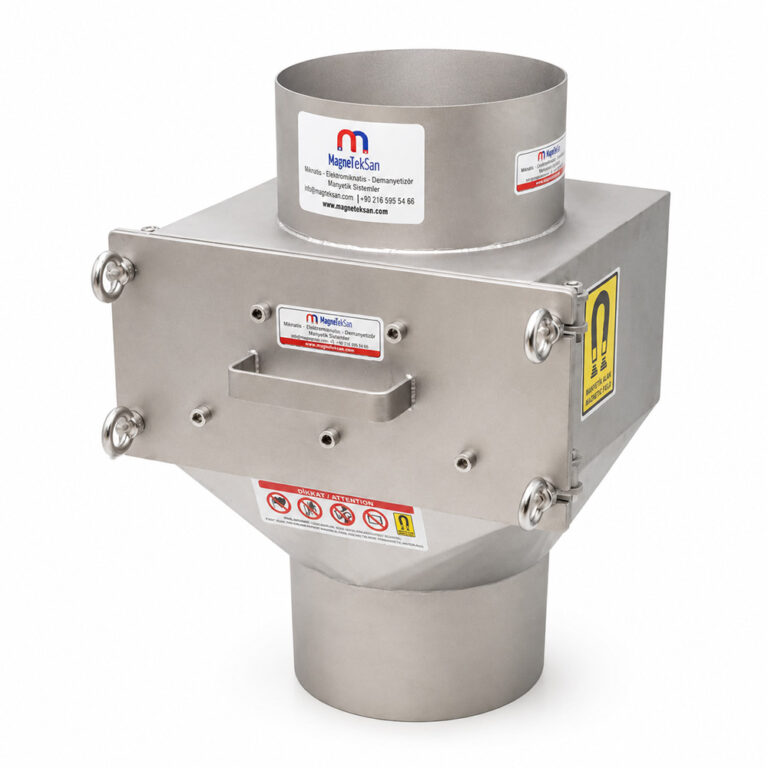
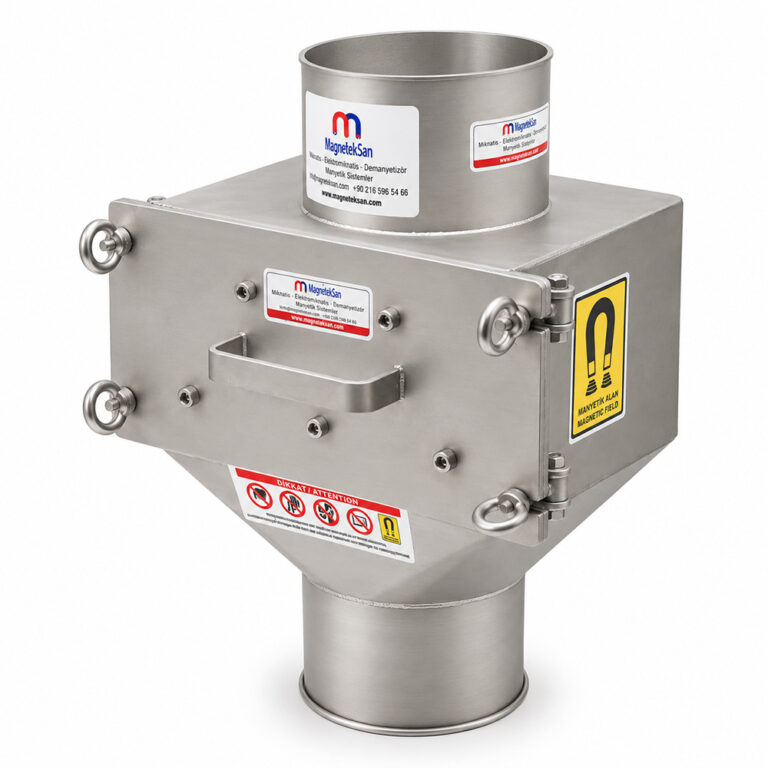
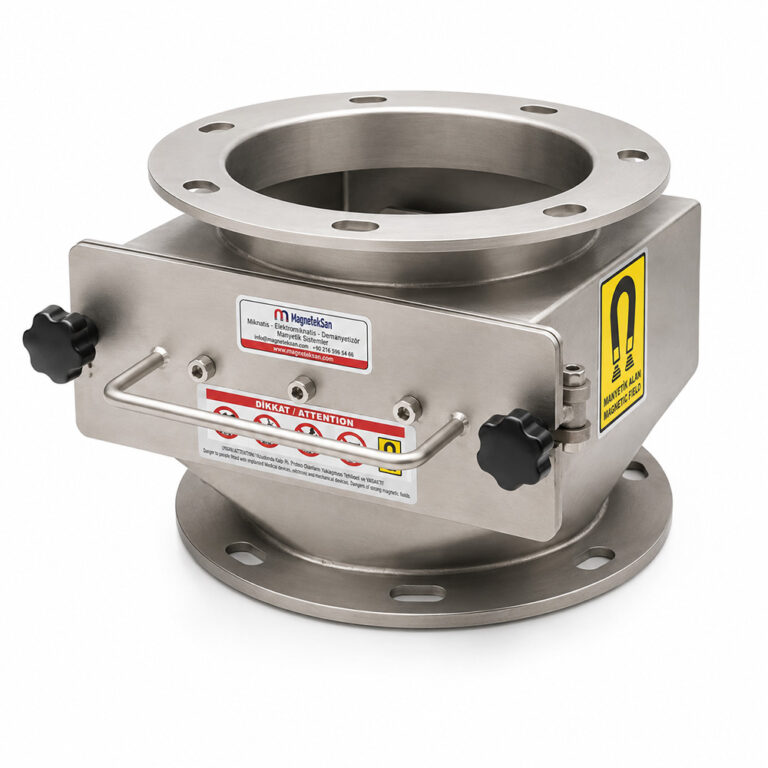
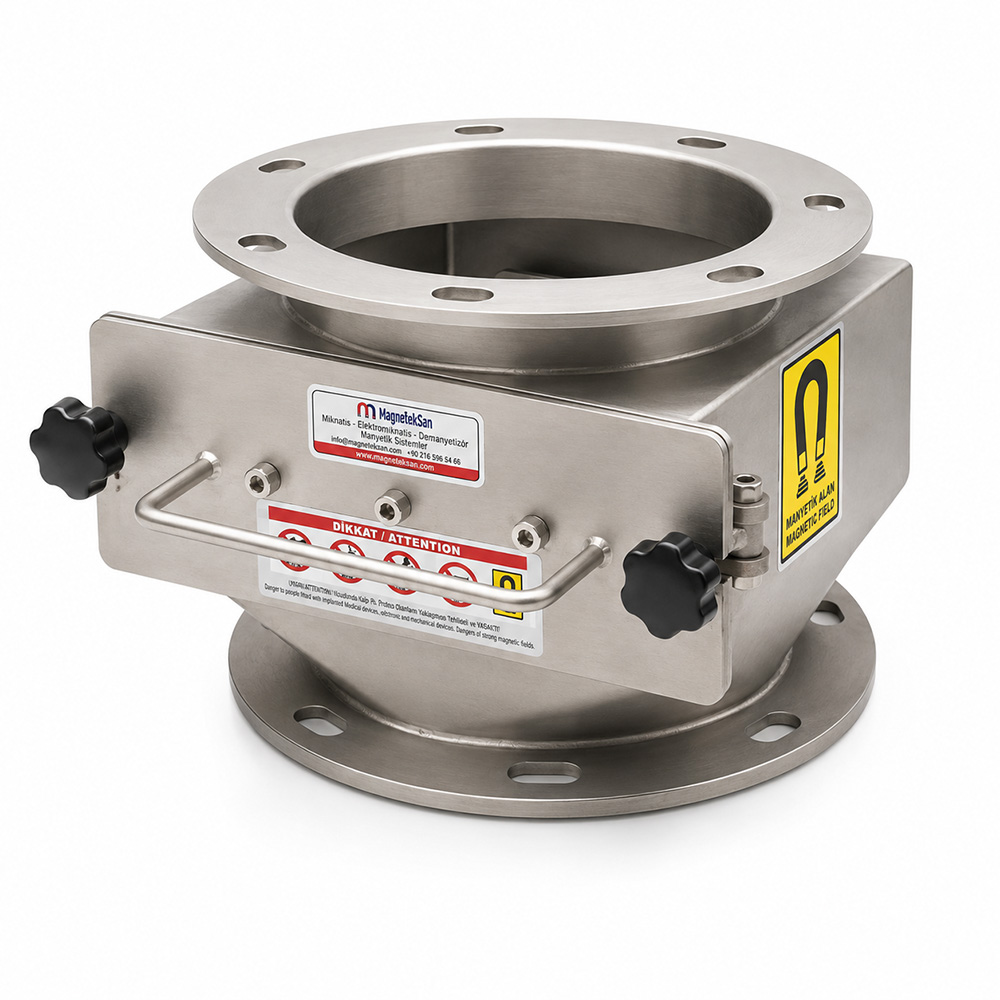
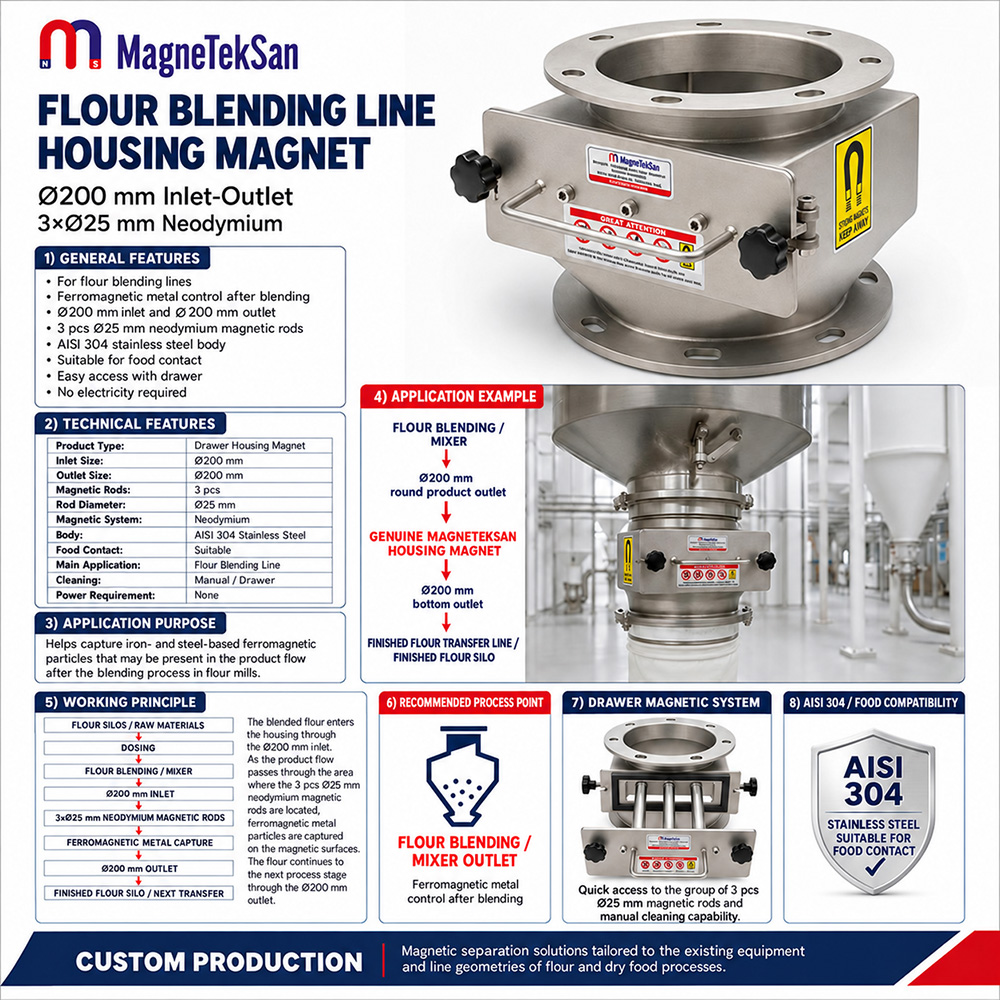
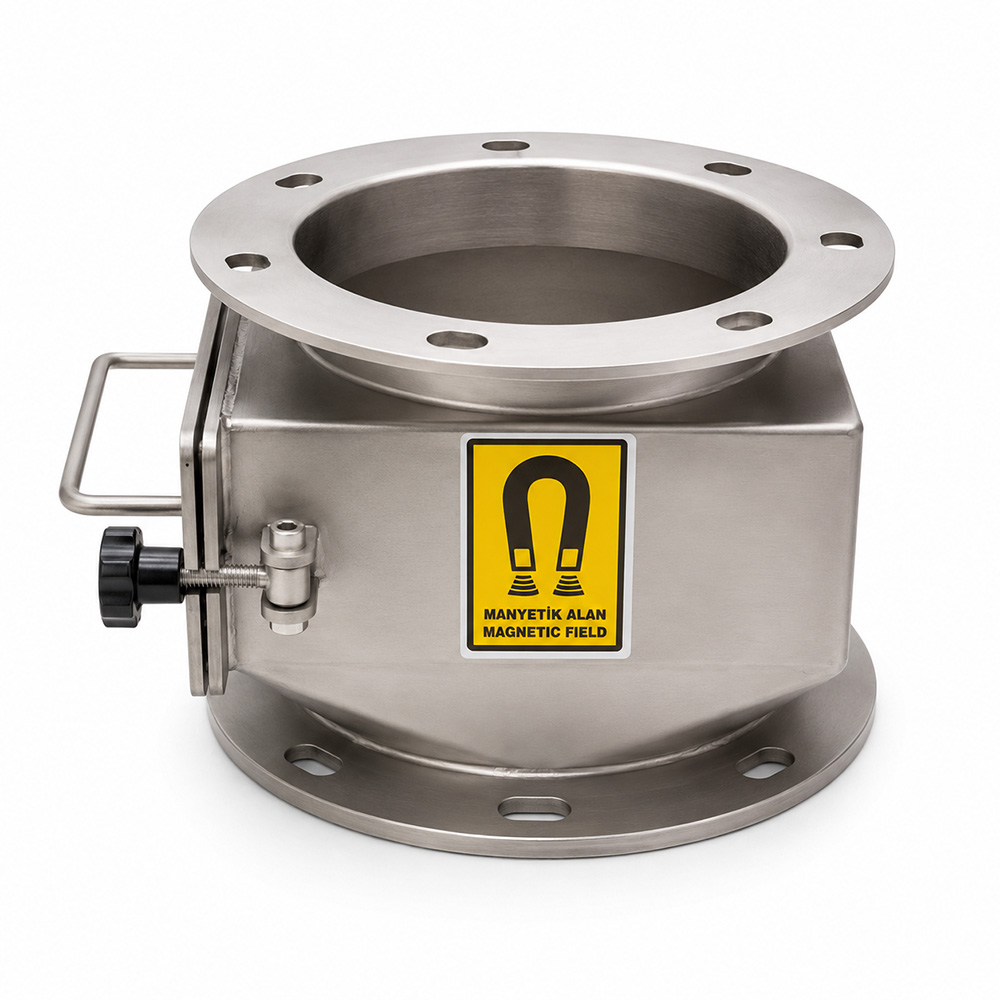
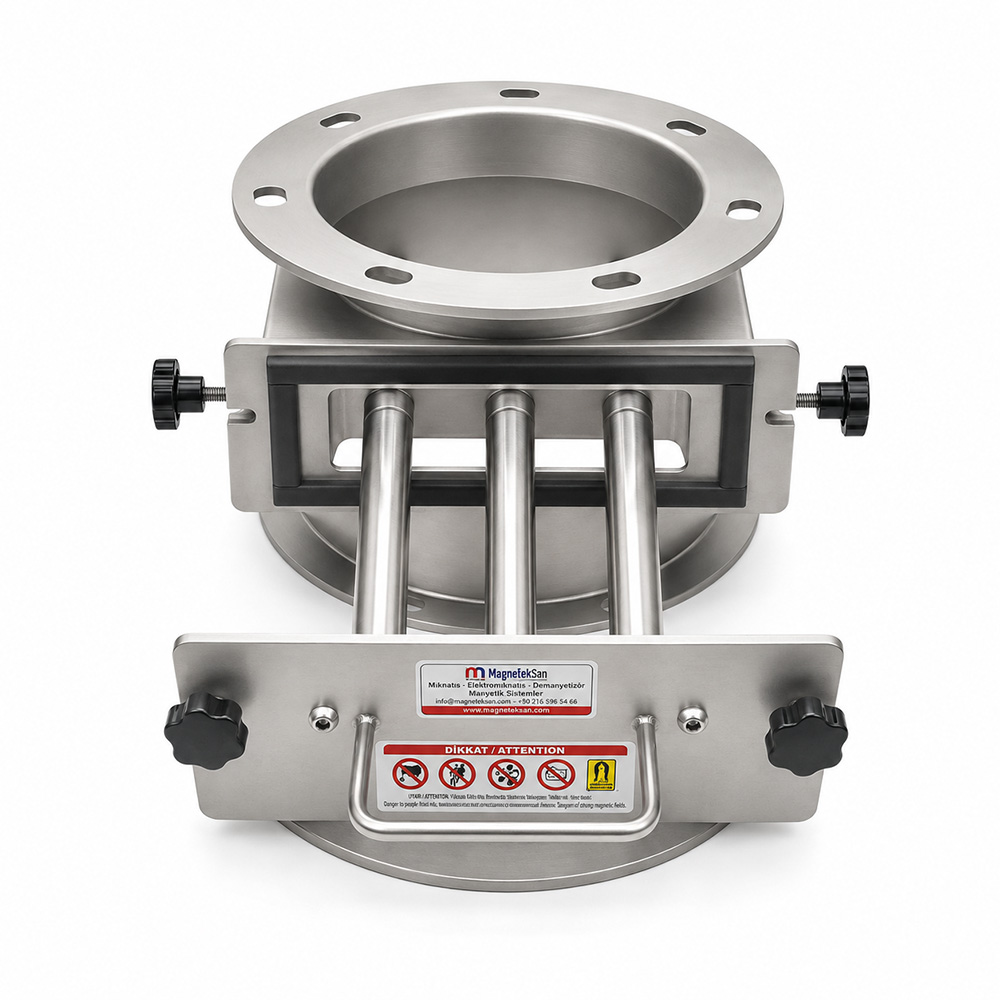
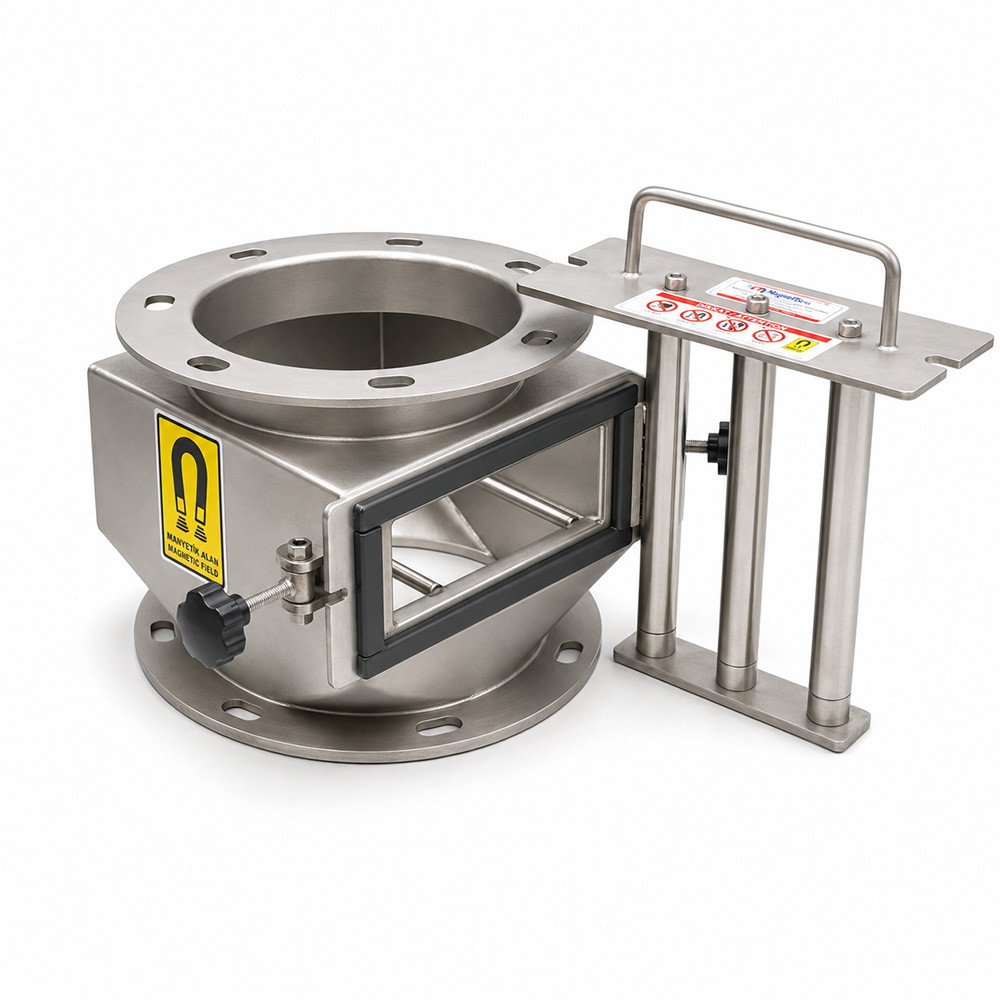
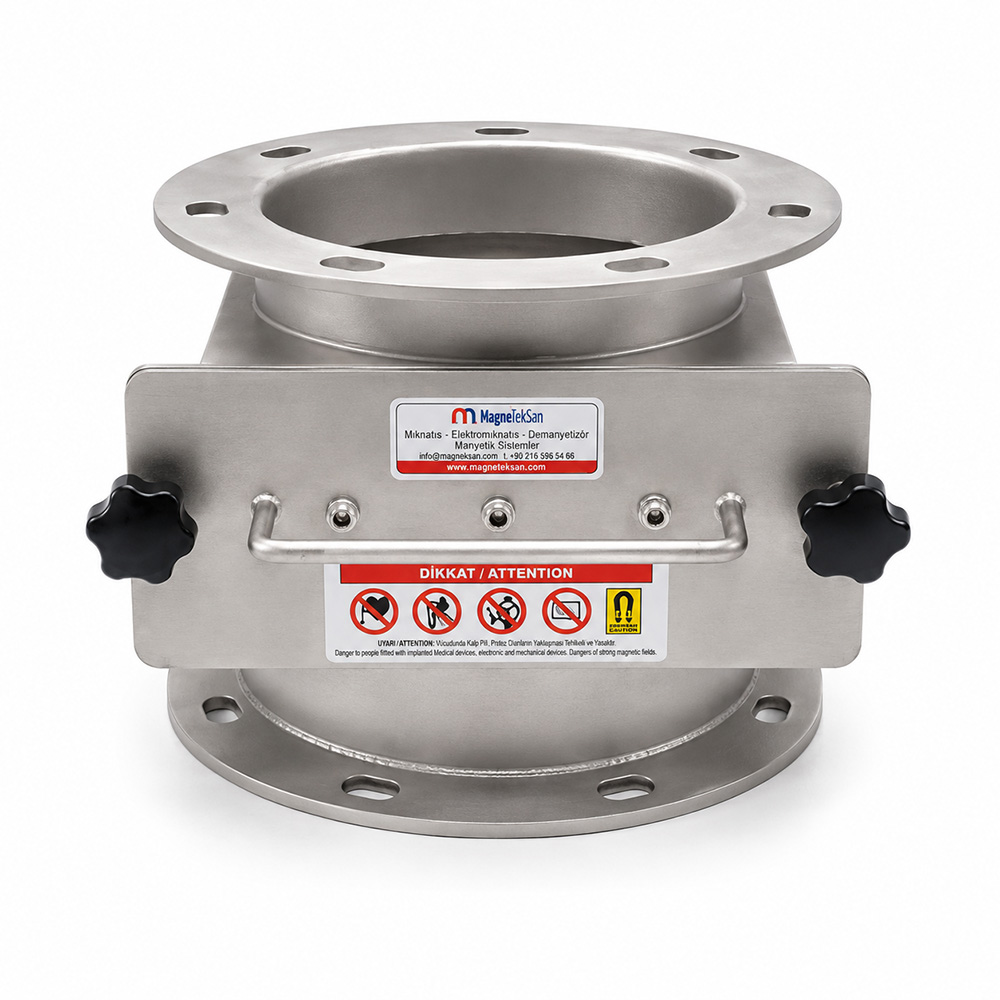
The Ø200 mm Flour Blending Line Drawer Magnet is a neodymium magnetic separator designed to capture ferromagnetic metal contaminants in flour processing lines after blending or mixing. It features 3 magnetic rods Ø25 mm, an Ø200 mm inlet and outlet, and a food-contact-suitable AISI 304 stainless steel housing. Its removable drawer provides convenient access for manual cleaning, while the permanent magnetic system operates without electrical power.
| Technical Specification | Value |
|---|---|
| Product Type | Neodymium Drawer-Type Magnetic Separator |
| Main Application | Flour Blending Line |
| Process Location | After Blending / Mixer Outlet |
| Inlet Diameter | Ø200 mm |
| Outlet Diameter | Ø200 mm |
| Number of Magnetic Rods | 3 |
| Magnetic Rod Diameter | Ø25 mm |
| Magnetic Material | Neodymium |
| Housing Material | AISI 304 Stainless Steel |
| Food Contact | Designed for Food-Contact Applications |
| Suitable Product | Dry, Free-Flowing Flour |
| Cleaning Method | Manual / Removable Drawer |
| Electrical Power Required | No |
| Target Contaminants | Iron and Ferromagnetic Metal Particles |
Extra Information
What Is a Flour Blending Line Drawer Magnet?
A Flour Blending Line Drawer Magnet is an industrial magnetic separator designed to capture ferromagnetic metal contaminants that may be present in flour after the blending or mixing process.
This model combines an Ø200 mm inlet and outlet, three Ø25 mm neodymium magnetic rods, an AISI 304 stainless steel housing and a manually removable magnetic drawer.
Its primary purpose is to provide an additional magnetic contamination control point between flour blending and subsequent product transfer.
What Is Flour Blending?
Flour blending is the process of mixing different flour types or suitable recipe ingredients in specified proportions to obtain the desired characteristics of the finished product.
Depending on the flour mill, blending may involve dosing equipment, mixers, storage bins and conveying systems.
The magnetic separator is intended to help control ferromagnetic contamination after this mixing process.
Why Is Magnetic Separation Important in Flour Blending Lines?
During blending and conveying, flour may pass through various mechanical components, including:
-
Dosing equipment
-
Industrial flour mixers
-
Screw conveyors
-
Elevators
-
Valves
-
Transfer pipes
-
Discharge hoppers
Wear, maintenance activities or damage to equipment may introduce iron or carbon steel particles into the product stream.
Installing a magnetic separator after blending provides an additional opportunity to capture suitable ferromagnetic contaminants before downstream processing.
Where Should the Magnetic Separator Be Installed?
The principal installation location for this model is after the flour blending or mixing stage.
An example process arrangement is:
Flour Silos / Raw Materials
Dosing System
Flour Blender / Mixer
Ø200 mm Drawer Magnet
3xØ25 mm Neodymium Magnetic Rods
Finished Flour Silo / Next Transfer Stage
The actual installation point should be determined according to the plant layout, product flow and mechanical connection requirements.
How Does the Flour Blending Magnetic Separator Work?
Blended flour enters the separator through the Ø200 mm inlet.
As the product passes through the housing, it flows around three Ø25 mm neodymium magnetic rods.
Iron and steel particles with sufficient ferromagnetic properties may be attracted to and retained on the magnetic surfaces.
The flour continues through the Ø200 mm outlet to the next processing stage.
Can the Separator Be Installed at the Flour Mixer Outlet?
Yes, provided the mixer discharge arrangement, connection geometry and product flow are compatible.
One possible configuration is:
Flour Mixer → Ø200 mm Drawer Magnet → Finished Flour Transfer Line
This is one of the main intended applications of the product.
Should the Magnetic Separator Be Installed Before or After Blending?
For this model, the main application is after blending.
Positioning the separator downstream of the mixer allows flour to pass through a magnetic contamination control point after contact with the blending equipment.
Other magnetic separators may also be installed upstream if required by the plant’s contamination control strategy.
Why Are Both the Inlet and Outlet Ø200 mm?
This model is manufactured with:
Inlet diameter: Ø200 mm
Outlet diameter: Ø200 mm
These dimensions allow integration to be considered for suitable Ø200 mm dry-product transfer connections.
However, the nominal connection diameter does not determine the separator’s processing capacity.
How Many Magnetic Rods Are Inside the Separator?
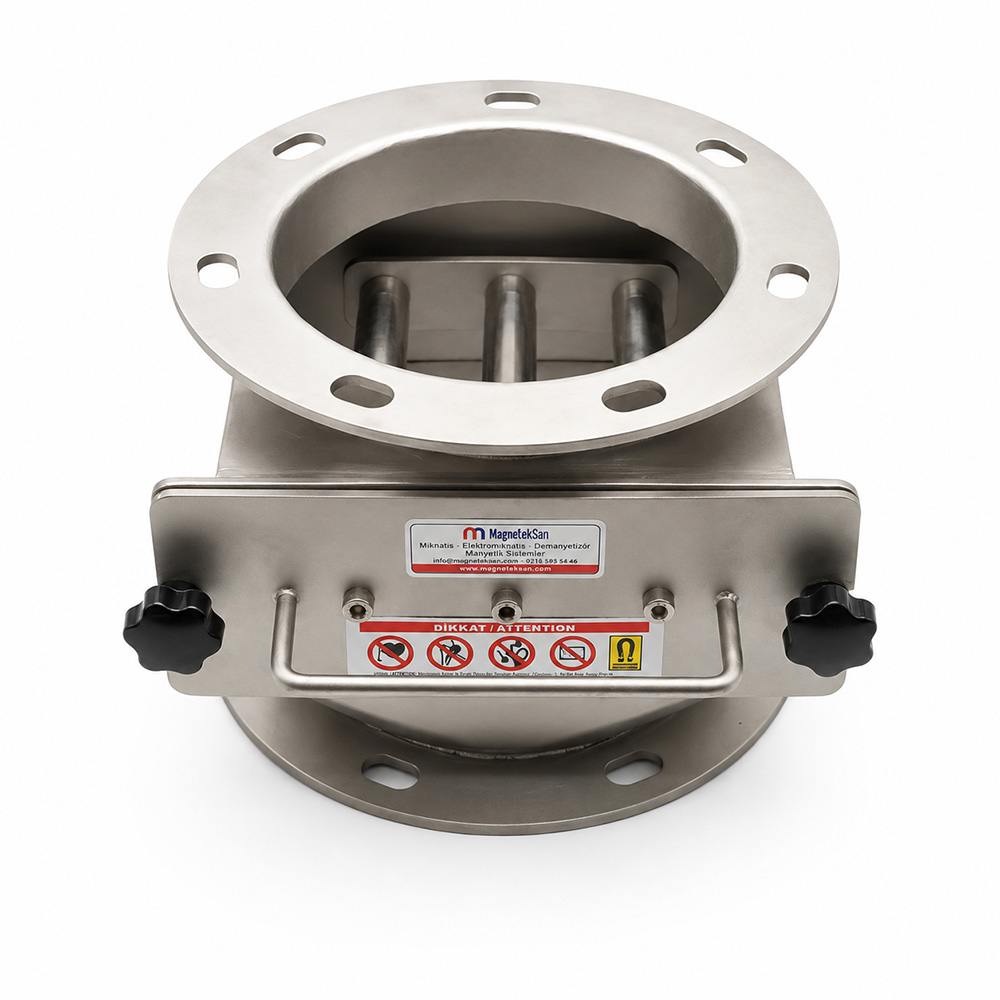
The unit contains 3 neodymium magnetic rods, each with a diameter of Ø25 mm.
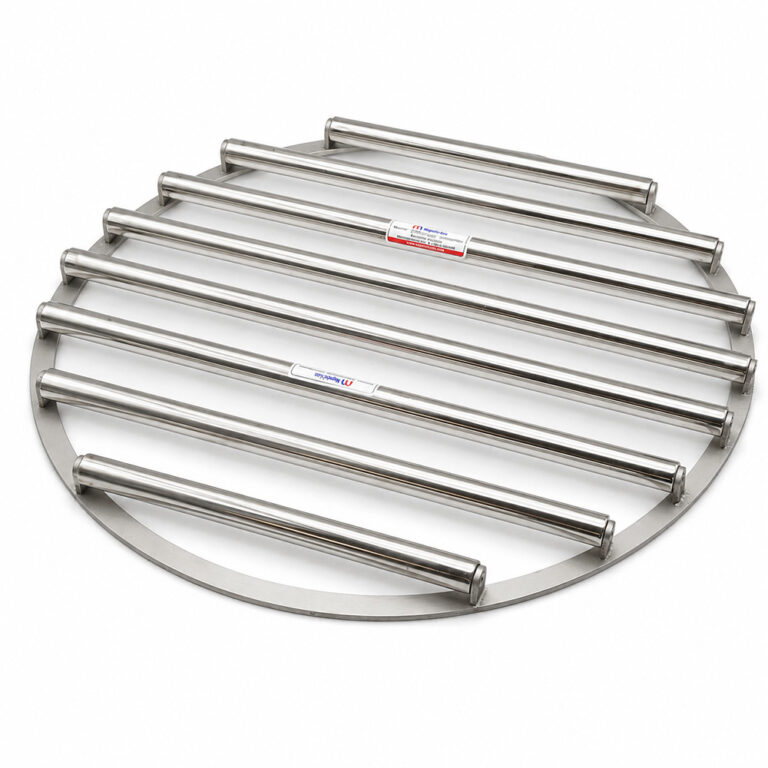
These rods are mounted within the removable magnetic drawer and form the active magnetic collection surfaces.
What Is the Purpose of the Ø25 mm Magnetic Rods?
The rods generate permanent magnetic fields that attract suitable ferromagnetic particles passing close enough to their surfaces.
Their function is to retain magnetic contamination while allowing the flour to continue through the housing.
The actual separation performance depends on the particle properties, magnetic field distribution and process conditions.
Why Are Neodymium Magnets Used?
Neodymium magnets are high-energy permanent magnets commonly used in industrial magnetic separation equipment.
They can provide strong magnetic fields in compact assemblies and do not require electrical power to remain magnetized.
For this specific product, a verified numerical Gauss rating has not been provided, so a particular surface field strength should not be assumed.
What Is the Gauss Rating of This Product?
The published specifications do not state a verified Gauss value for this model.
Therefore, it would be incorrect to advertise it as a 10000 Gauss or 12000 Gauss separator without a corresponding measurement or technical confirmation.
The magnetic performance should be confirmed against the requirements of the application.
What Grade of Neodymium Is Used?
The product is specified as using neodymium magnetic rods.
A particular grade, such as N35, N42 or N45, has not been confirmed for this model.
The magnet grade should therefore not be assumed.
Which Metal Contaminants Can the Separator Capture?
The system is intended to capture suitable ferromagnetic contaminants, including:
-
Iron particles
-
Carbon steel fragments
-
Ferromagnetic steel shavings
-
Magnetic wear debris from processing equipment
-
Other particles with sufficient ferromagnetic properties
Capture efficiency varies with particle size, shape, composition, distance from the rods and flow conditions.
Can It Capture Very Fine Iron Particles?
Fine iron particles may be attracted to the neodymium magnetic rods if their magnetic properties and the operating conditions permit.
However, no verified minimum particle size is specified.
Claims such as guaranteed removal of all particles below a particular micron size would require appropriate testing.
Can It Remove Stainless Steel Particles?
This depends on the stainless steel grade and its metallurgical condition.
Some stainless steels are magnetic, while certain austenitic grades have weak magnetic responses.
Consequently, the separator cannot be guaranteed to capture every stainless steel particle.
Testing with the actual contaminant material is recommended.
Can It Remove Aluminium, Copper or Brass?
Not through conventional ferromagnetic attraction.
Aluminium, copper and brass are not ferromagnetic materials.
This separator should therefore not be described as a device capable of removing all metal types.
Can It Remove Stones, Plastic or Other Foreign Materials?
No.
Stones, plastics, wood and other nonmagnetic foreign materials are not captured by the magnetic rods through magnetic attraction.
Mechanical sieves, metal detectors or other separation technologies may be required for those contaminants.
Is This Product a Flour Sieve?
No.
A drawer magnet and a mechanical sieve perform different functions.
| Equipment | Separation Principle |
|---|---|
| Neodymium Drawer Magnet | Ferromagnetic properties |
| Mechanical Flour Sieve | Particle size |
Both devices can be used within the same flour processing line where appropriate.
Can This Magnetic Separator Replace a Metal Detector?
No.
A magnetic separator physically retains suitable ferromagnetic contaminants on magnetic surfaces.
A metal detector electronically identifies detectable metal contamination within its validated detection limits.
The two technologies may provide complementary contamination control functions.
Why Is the Housing Made from AISI 304 Stainless Steel?
The separator housing is manufactured from AISI 304 stainless steel, a material widely used in food processing equipment.
Its relevant characteristics include corrosion resistance under suitable conditions, cleanable surfaces and mechanical durability.
Compatibility with particular cleaning chemicals and plant operating conditions should still be assessed.
Is the Separator Suitable for Food-Contact Applications?
Yes. The manufacturer specifies this model as intended for food-contact applications and identifies AISI 304 stainless steel as the housing material.
It is designed for suitable dry flour processes.
Any required food-contact declarations, material traceability records or plant-specific approvals should be verified separately.
What Is the Advantage of the Removable Drawer?
The three magnetic rods are housed in a removable drawer assembly.
This design allows operators to access the magnetic surfaces for inspection and manual cleaning without dismantling the entire housing.
Sufficient clearance must be provided around the equipment to remove the drawer safely.
How Are the Magnetic Rods Cleaned?
A typical manual cleaning procedure includes:
-
Stop the flour flow.
-
Safely isolate the associated equipment and prevent unexpected operation.
-
Open and remove the magnetic drawer.
-
Carefully remove accumulated ferromagnetic particles.
-
Inspect the rods and housing for wear or damage.
-
Reinstall and secure the drawer.
-
Restart the equipment according to approved plant procedures.
The facility’s hygiene, food safety and occupational safety requirements must be followed.
How Often Should the Magnetic Separator Be Cleaned?
There is no single cleaning interval suitable for every flour blending line.
Cleaning frequency depends on the production rate, contamination level, operating hours, accumulated metal particles and the facility’s quality procedures.
More frequent inspections during initial operation can help establish an appropriate cleaning schedule.
What Happens When the Magnetic Rods Become Covered with Metal?
Excessive accumulation of ferromagnetic material may reduce the magnetic surface area available for collecting additional contaminants.
It may also influence product flow.
Regular inspection and cleaning are therefore important for maintaining the separator’s intended operation.
Does the Drawer Magnet Require Electricity?
No.
The separator uses permanent neodymium magnets.
It does not require electrical power, electromagnetic coils or a DC power supply to generate its magnetic field.
Does the Separator Affect Flour Flow?
The magnetic rods occupy part of the internal flow passage.
Their presence can influence how flour moves through the housing.
Actual flow behaviour depends on flour bulk density, moisture, flowability, feed rate and the geometry of the installation.
Unrestricted flow or a particular throughput cannot be guaranteed without evaluating the process.
What Is the Processing Capacity in kg/h or t/h?
A verified throughput capacity is not specified for this product.
Capacity cannot be calculated from the Ø200 mm inlet and outlet dimensions alone.
It should be assessed using the actual flour characteristics, flow conditions and available passage area.
Can It Be Used in a Pneumatic Conveying Line?
Compatibility with pressurized pneumatic conveying has not been confirmed.
No verified maximum working pressure or housing pressure rating is provided.
A separate engineering assessment is necessary before considering installation in a pressurized conveying system.
The main intended use is in suitable dry, free-flowing flour transfer points.
Can It Be Installed Before the Finished Flour Silo?
Yes, if the plant transfers blended flour to a finished-product silo and the installation conditions are suitable.
An example is:
Flour Blending → Drawer Magnet → Finished Flour Silo
The principal application remains ferromagnetic contamination control after blending.
Can It Be Used Before Flour Packaging?
It may be considered for a suitable dry-product transfer point before packaging.
However, this particular model is primarily positioned for the flour blending line, rather than as a dedicated pre-packaging separator.
The installation should be selected according to the plant’s process layout.
How Is This Model Different from the Ø250 mm Flour Silo Inlet Magnet?
The two models are intended for different process locations.
| Feature | Flour Blending Line Magnet | Flour Silo Inlet Magnet |
|---|---|---|
| Main Application | After Flour Blending | Flour Silo Inlet |
| Inlet Diameter | Ø200 mm | Ø250 mm |
| Outlet Diameter | Ø200 mm | Ø250 mm |
| Magnetic Rods | 3xØ25 mm | 4xØ25 mm |
| Magnetic Material | Neodymium | Neodymium |
Both products may be used at different points in a flour mill when the process requires them.
How Is It Different from the Flour Plansifter Outlet Magnet?
The flour plansifter outlet model has a 340×230 mm rectangular inlet, an Ø250 mm circular outlet and 4xØ25 mm neodymium rods.
The flour blending line model has a circular Ø200 mm inlet and outlet, with 3xØ25 mm neodymium rods.
They are designed for different connection geometries and process positions.
Can All Three Flour Processing Magnets Be Used in the Same Factory?
Yes, if the plant layout and contamination control requirements justify multiple magnetic separation points.
| Model | Typical Process Location |
|---|---|
| 340×230 mm / Ø250 mm, 4xØ25 mm | Flour Plansifter Outlet |
| Ø250 mm / Ø250 mm, 4xØ25 mm | Flour Silo Inlet |
| Ø200 mm / Ø200 mm, 3xØ25 mm | Flour Blending Line |
Using separators at different stages may provide additional opportunities to control ferromagnetic contamination throughout the process.
What Is the Maximum Operating Temperature?
A verified maximum operating temperature is not specified for this model.
The allowable temperature should be confirmed based on the magnetic assembly, process temperature and operating environment.
It would be inappropriate to assume a particular temperature rating without technical confirmation.
Does the Separator Require Regular Inspection?
Yes.
Periodic inspections should cover the magnetic rods, housing, drawer mechanism, connections, accumulated contamination and any signs of mechanical wear.
Inspection frequency should be established according to the plant’s maintenance and food safety procedures.
Can a Custom Flour Blending Line Drawer Magnet Be Manufactured?
Yes.
Custom neodymium drawer magnets can be designed according to the specific requirements of flour blending and dry-product transfer lines.
Possible design parameters include:
-
Inlet diameter
-
Outlet diameter
-
Number of magnetic rods
-
Magnetic rod diameter
-
Magnet grade and required field strength
-
Housing dimensions and geometry
-
Connection arrangement
-
Drawer configuration
-
Cleaning mechanism
-
Operating temperature requirements
Custom designs should be evaluated against the actual product flow, contamination control objectives and installation conditions.