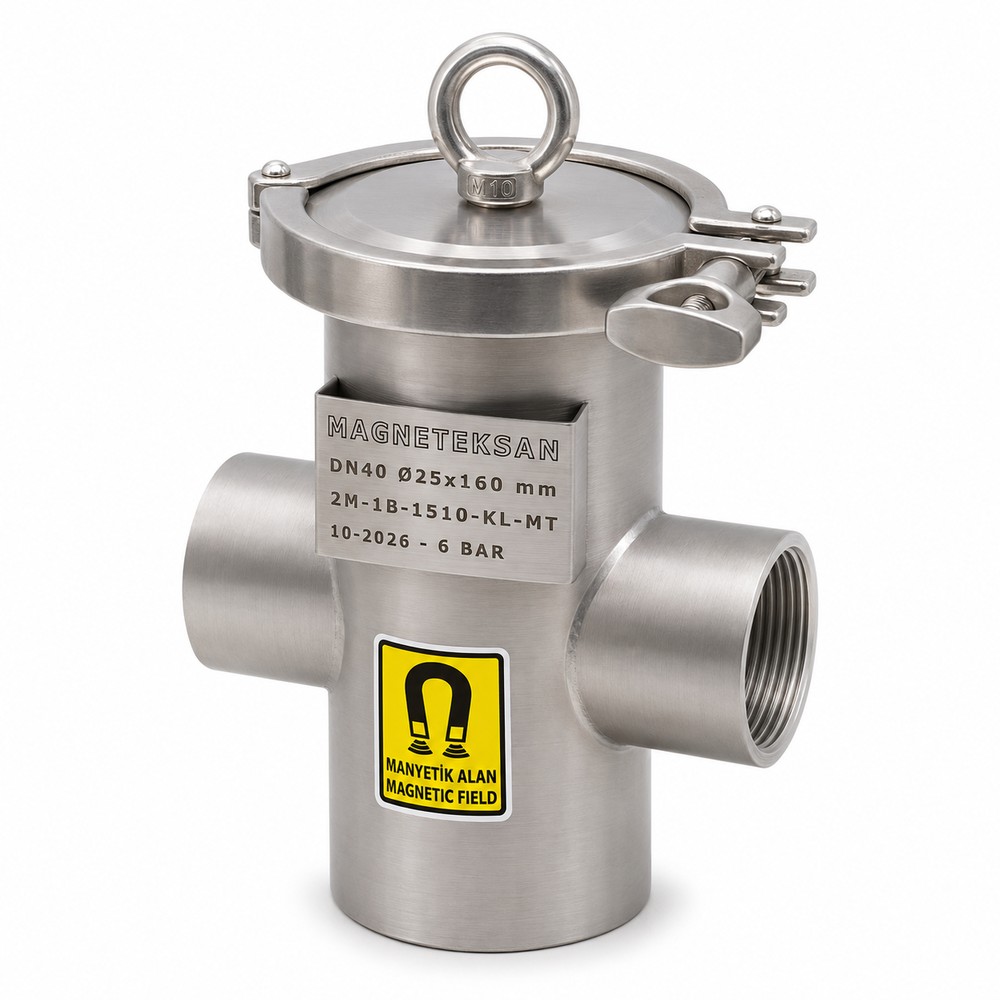
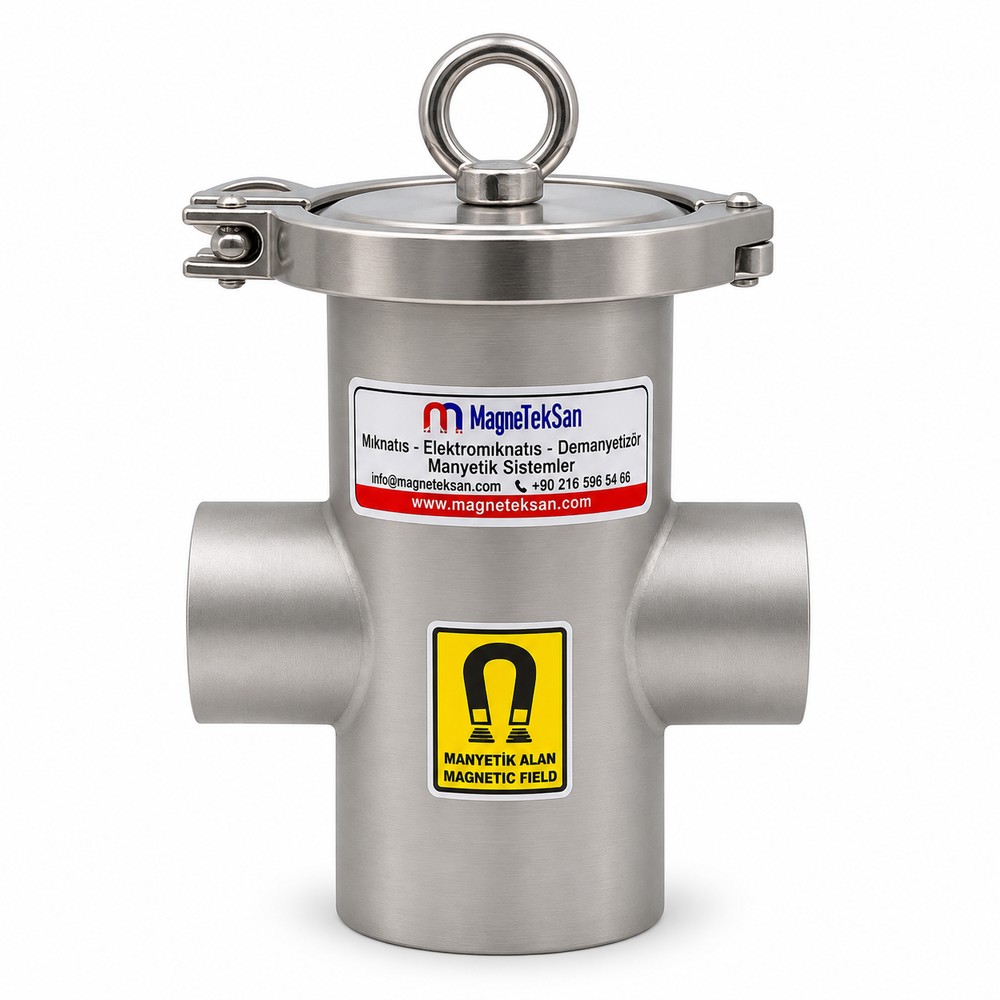
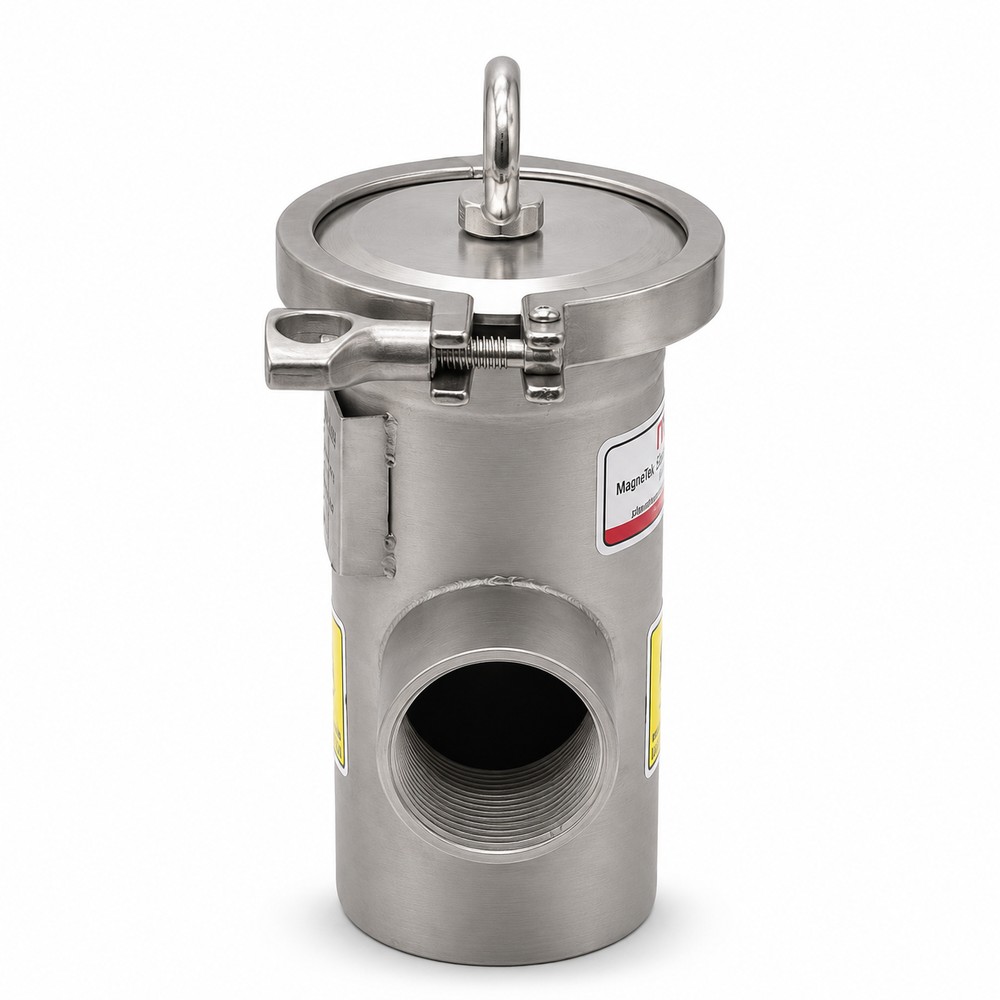
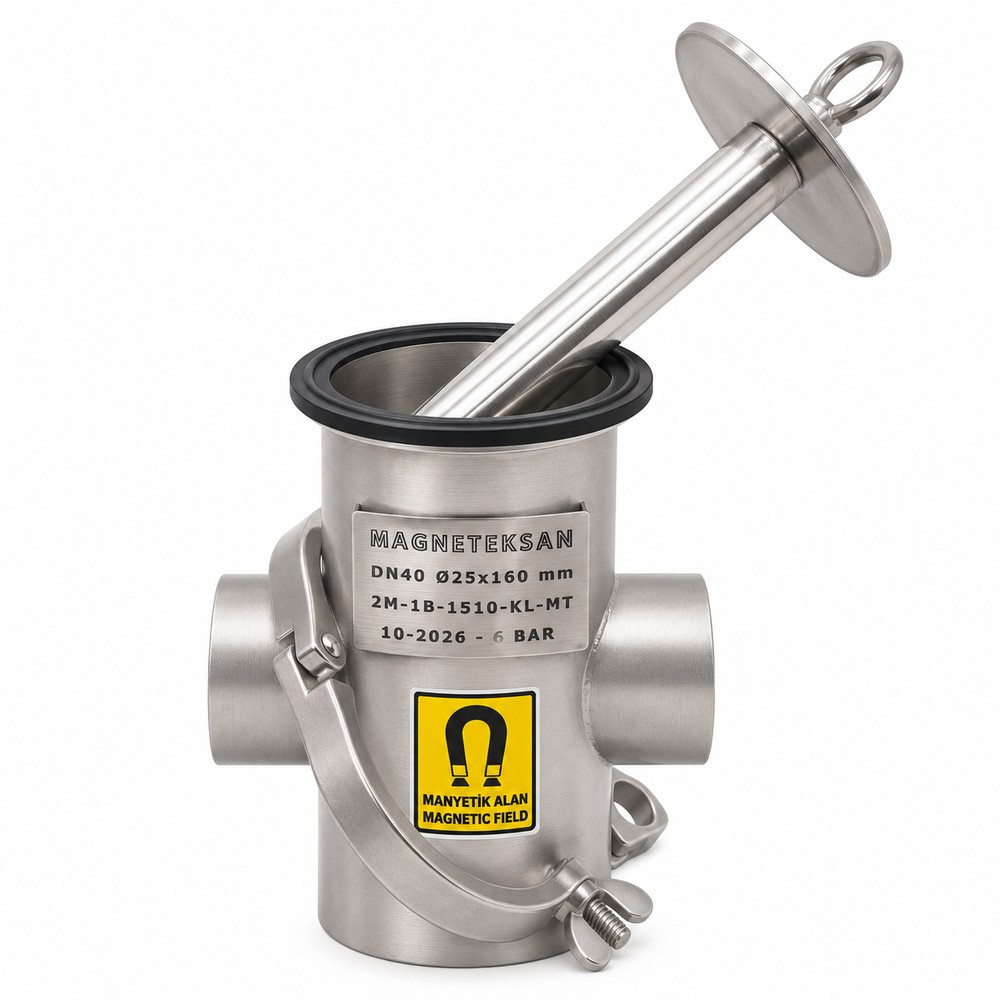
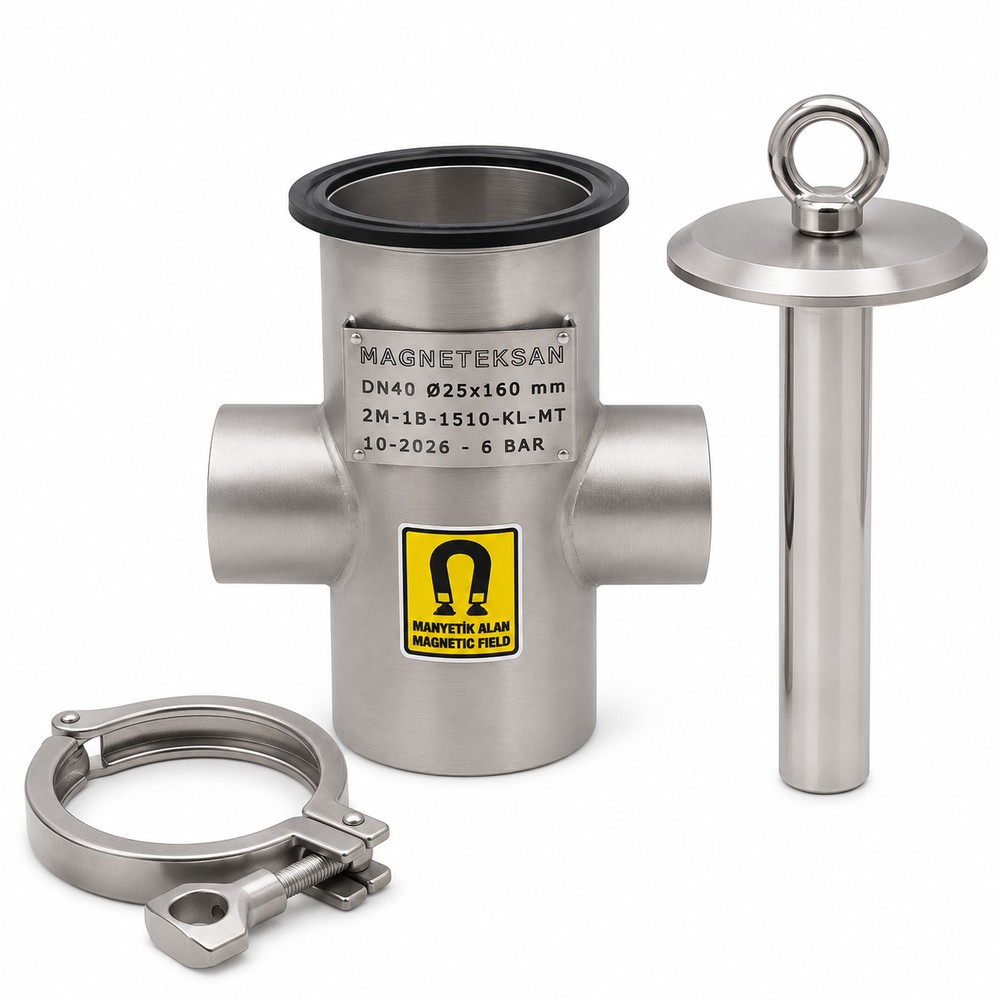
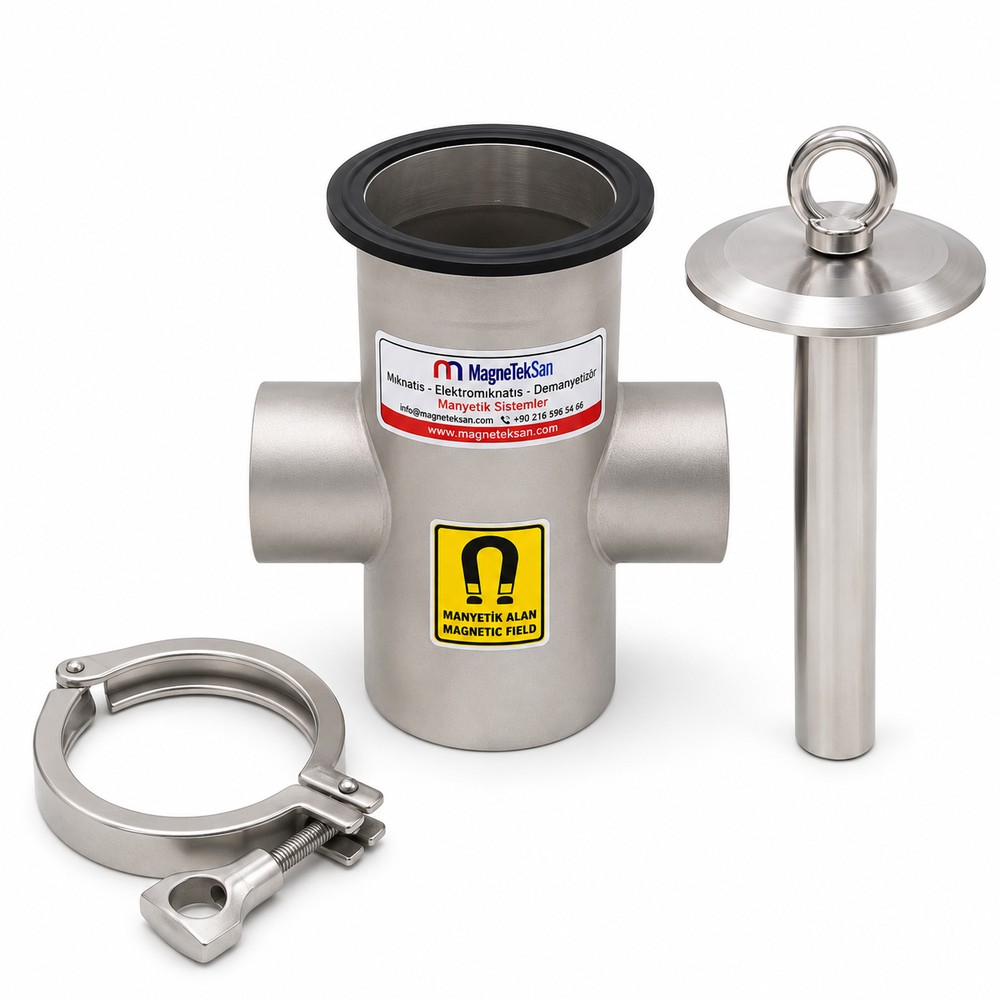
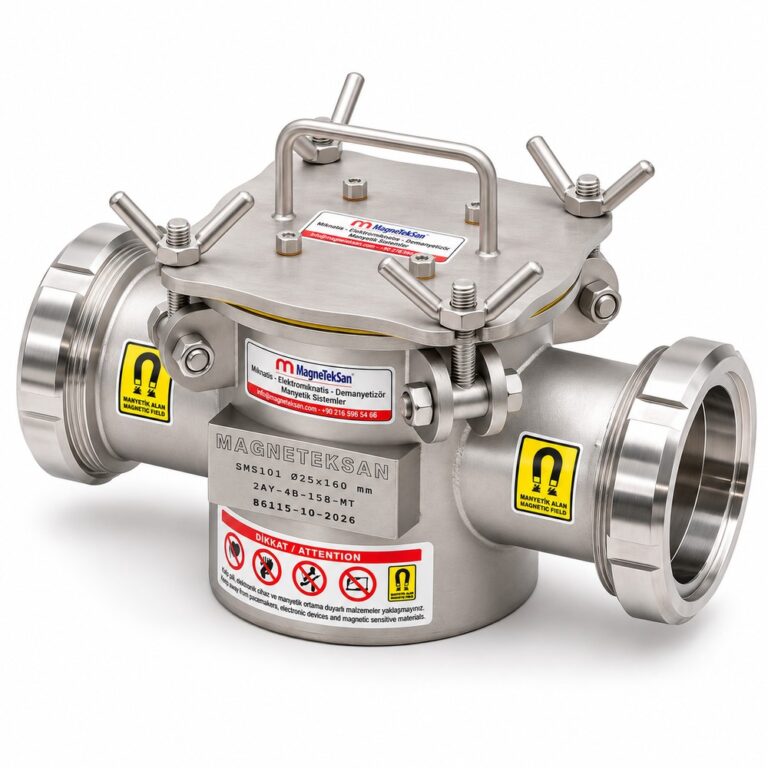
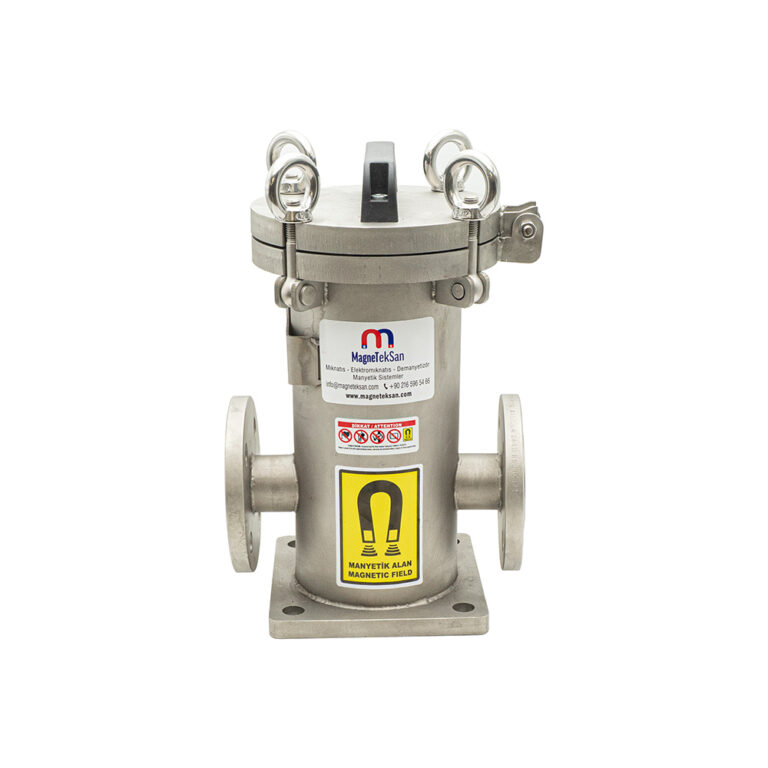
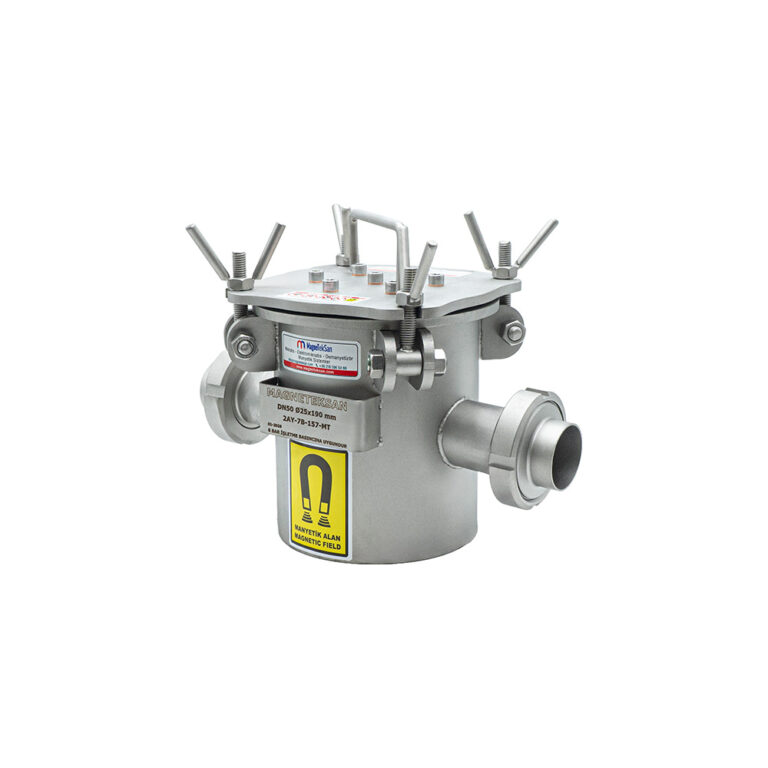
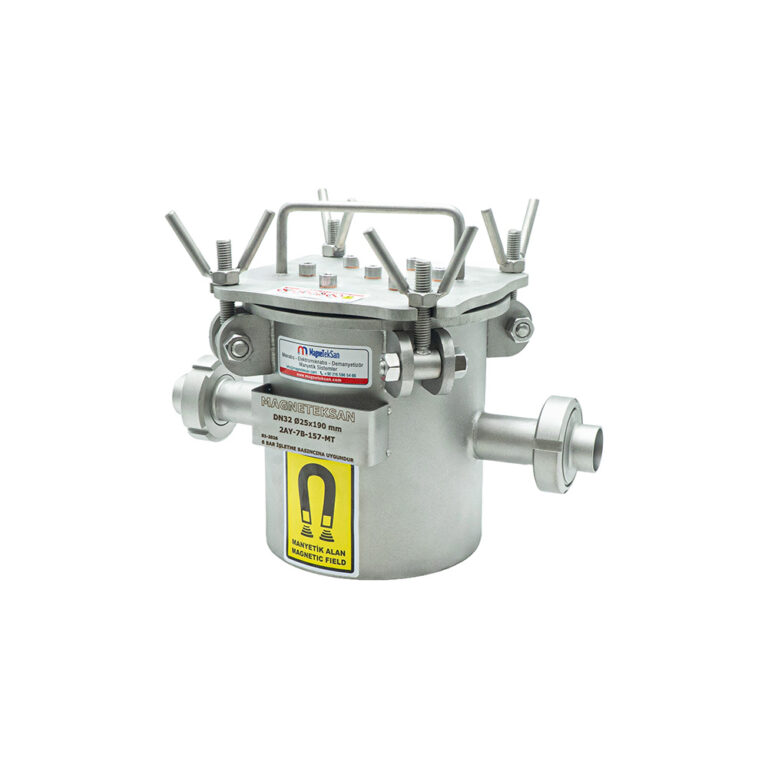
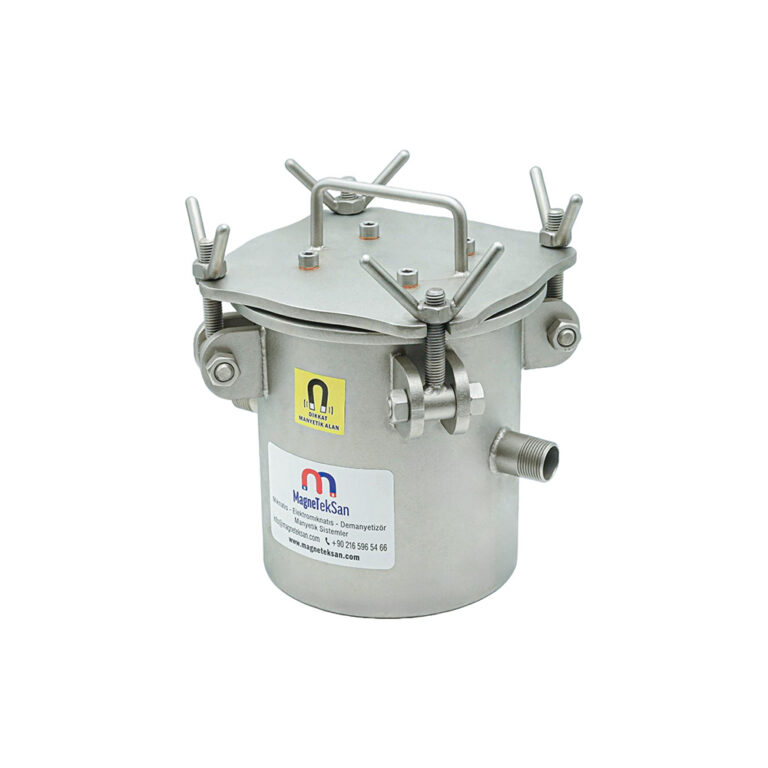
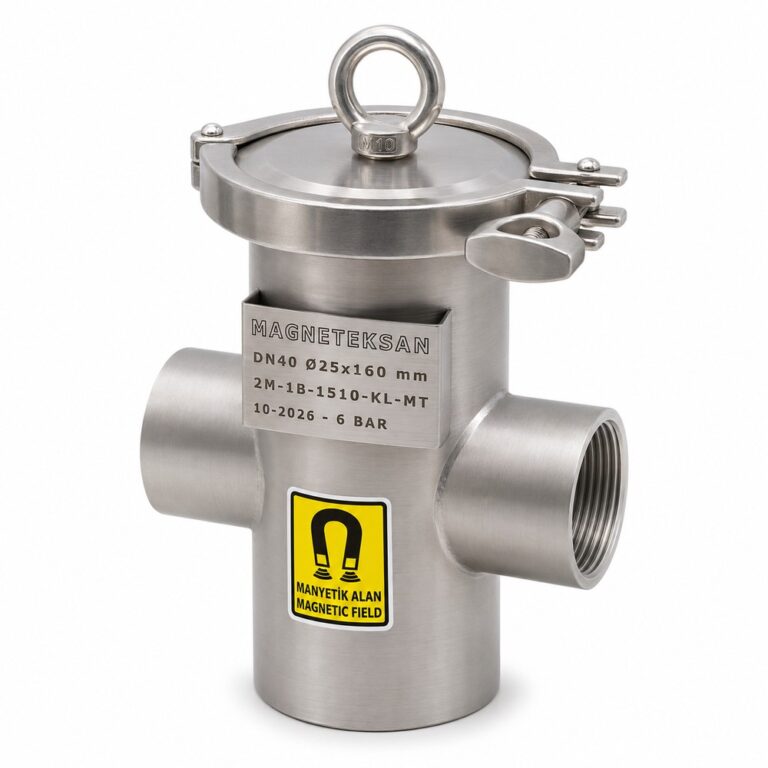
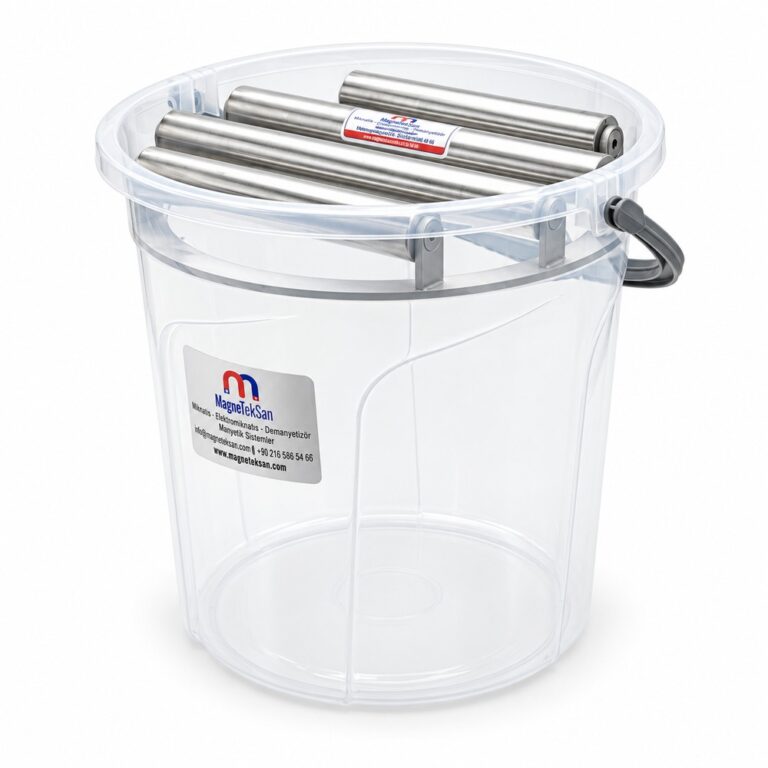
This DN40 magnetic filter for ketchup hot-fill lines fits in the pipe between the cooking kettle and the filling machine. Hot ketchup enters the cylindrical stainless body through the side port, flows around the Ø25×160 mm neodymium rod that hangs down the centre of the body and leaves through the opposite port. Ferrous particles in the sauce, such as wire, swarf, broken screw ends and tinplate fragments, stay on the rod surface. The magnets in the rod are chosen from a grade that works up to 150 °C, so they do not suffer permanent loss of strength at hot-fill and hot-wash temperatures.
| Specification |
Value |
| Product type |
Inline neodymium magnetic filter, manual cleaning |
| Model code |
DN40 Ø25×160 mm 2M-1B-1510-KL-MT |
| Nominal size |
DN40 |
| Connections |
Internally threaded socket, inlet and outlet |
| Number of rods |
1 |
| Rod size |
Ø25×160 mm |
| Magnetic field |
10,000 Gauss (at the rod surface) |
| Magnet material |
Neodymium (NdFeB), high-temperature grade |
| Maximum operating temperature |
150 °C |
| Working pressure |
6 bar |
| Lid |
Stainless disc welded to the rod, eye bolt in the centre |
| Lid closure |
Stainless clamp with wing nut, gasket at the body mouth |
| Body |
Stainless steel, cylindrical |
| Cleaning |
Manual (open the clamp and lift the rod out) |
| Power supply |
None required (permanent magnet) |
| Application |
Ketchup and sauce hot-fill lines |
How Does Metal Get into Ketchup?
In ketchup production, tomato paste, sugar, vinegar, salt and spices are diluted with water in a mixing kettle and then cooked to the right consistency. The paste usually arrives in aseptic bag-in-drums or large tins; when a tin is opened, a sliver of cut tinplate or a burr from the lid can fall into the mix. Mixer blades, pump rotors, valve bodies and small fasteners left behind after maintenance are other sources of metal on the line.
Ketchup is dark red and opaque, so a small piece of wire cannot be seen by eye. In hot filling the product goes straight from cooking into the bottle or jar, which leaves little room for a second checkpoint. A magnetic filter fitted just before the filling machine holds ferrous particles before the product enters the packaging and protects the dosing pistons from scoring.
Why 150 °C Rated?
In hot filling, ketchup is filled at a temperature high enough to pasteurise the inside of the pack, usually at 85–95 °C. During the hot-water or CIP wash at the end of production the body reaches similar temperatures. Standard neodymium magnets start to lose strength permanently above 80 °C; the rod in this filter is chosen to work up to 150 °C and leaves a margin above hot-fill temperature.
Where Is the DN40 Magnetic Filter Installed?
- At the outlet of the cooking kettle or pasteuriser
- On the feed line of the filling machine, as the last point before filling
The inlet and outlet ports are internally threaded and connect to the line with a suitable threaded nipple or union. We recommend confirming the thread type against the fittings on your line before ordering. Because the rod is lifted out together with the lid, leave more clearance above the filter than the rod length (160 mm).
Product Plate and Model Code
The stainless plate on the body is engraved with the model code (DN40 Ø25×160 mm, 2M-1B-1510-KL-MT), the production date and the 6 bar working pressure. In the code, 2M stands for the two socket connections at inlet and outlet, 1B for the single rod, 1510 for the 150 °C limit and 10,000 Gauss, KL for the clamp lid and MT for manual cleaning. Quoting this code is enough when you reorder or ask for a Gauss measurement.
How Is the Rod Cleaned?
- Stop the pump and make sure the line pressure has fully dropped and the product has cooled.
- Loosen the wing nut of the clamp and open the clamp.
- Lift the rod out together with the lid by the eye bolt.
- Wipe the sauce layer and the metal particles caught in it along the rod with a disposable towel.
- Seat the gasket at the body mouth, refit the rod, close the clamp and tighten the nut.
Washing removes sauce residue from the rod, but metal held by the magnet stays in place, so manual cleaning is still needed. In the first weeks, set the check interval according to how much metal comes out after each batch.
Limits and Safety
The magnet only attracts ferrous (ferromagnetic) particles. Most aluminium, brass, glass, plastic and austenitic stainless steel (304/316) fragments pass through the filter; a metal detector or sieve is needed for these before filling. Temperatures above 150 °C can permanently reduce the magnet’s strength, and line pressure must not exceed 6 bar. Do not open the clamp while the line is under pressure or the product is hot; use heat-resistant gloves while the body and clamp are hot. Keep the neodymium rod away from people with pacemakers or medical implants, magnetic cards and electronic devices, and take care not to trap your fingers when bringing it close to a steel surface.
Other Models
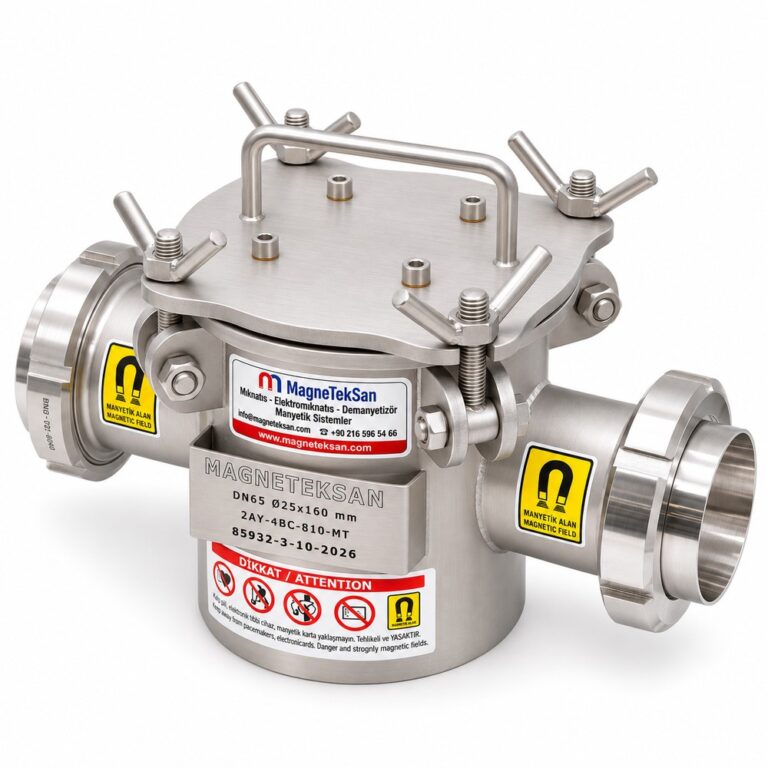
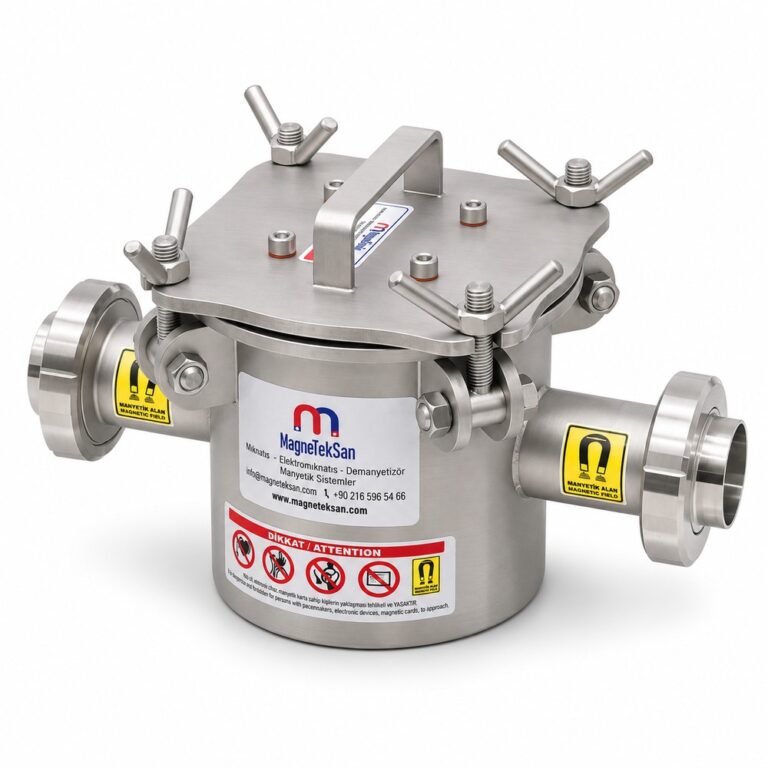
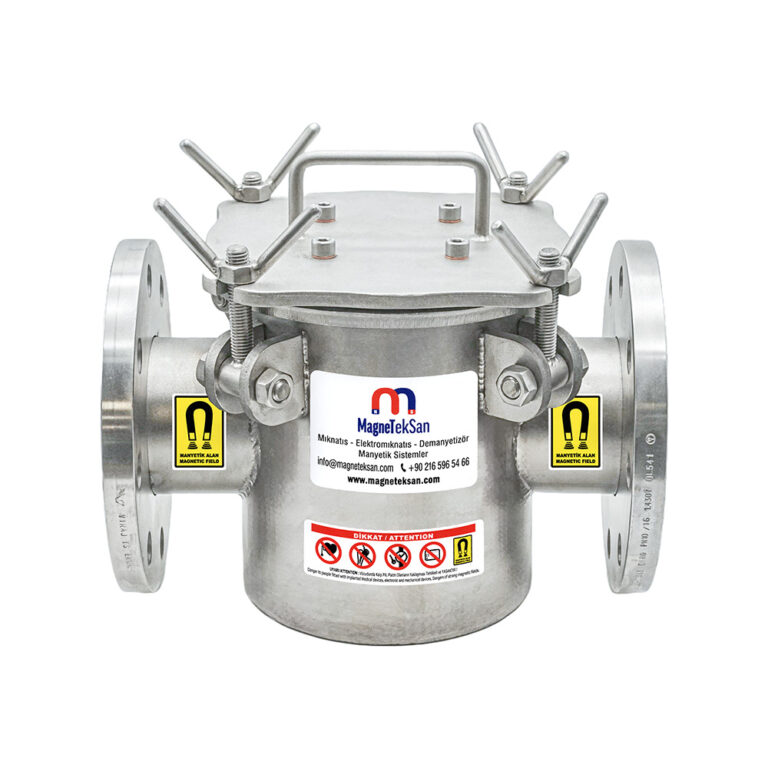
Filters for other pipe sizes and connection types are listed on the manual cleanable magnetic filters page. For cold-filled emulsion sauces there is also the DN65 filter for mayonnaise production lines. To find the right model for your line, send us the pipe size, flow rate and product temperature through our contact page.
Frequently Asked Questions
Is a single rod enough?
In small-bore lines such as DN40, the product passes through a narrow ring around the central rod, so it flows close to the magnetic field. Models with more rods are recommended for lines with high flow or a heavy metal load; share your line details and we will assess it with you.
Does thick ketchup pass through the filter easily?
Ketchup flows through the gap between the rod and the body wall under pump pressure. It is more fluid when hot; even so, pressure drop rises as viscosity increases. Tell us the flow rate and line pressure and we will check suitability.
Can it be used on barbecue or hot sauce lines?
Yes. It can be used in the same way on pumped sauce and purée lines that stay within the 150 °C and 6 bar limits. For sauces with large pieces, ask us whether the gap between the rod and the body is wide enough.