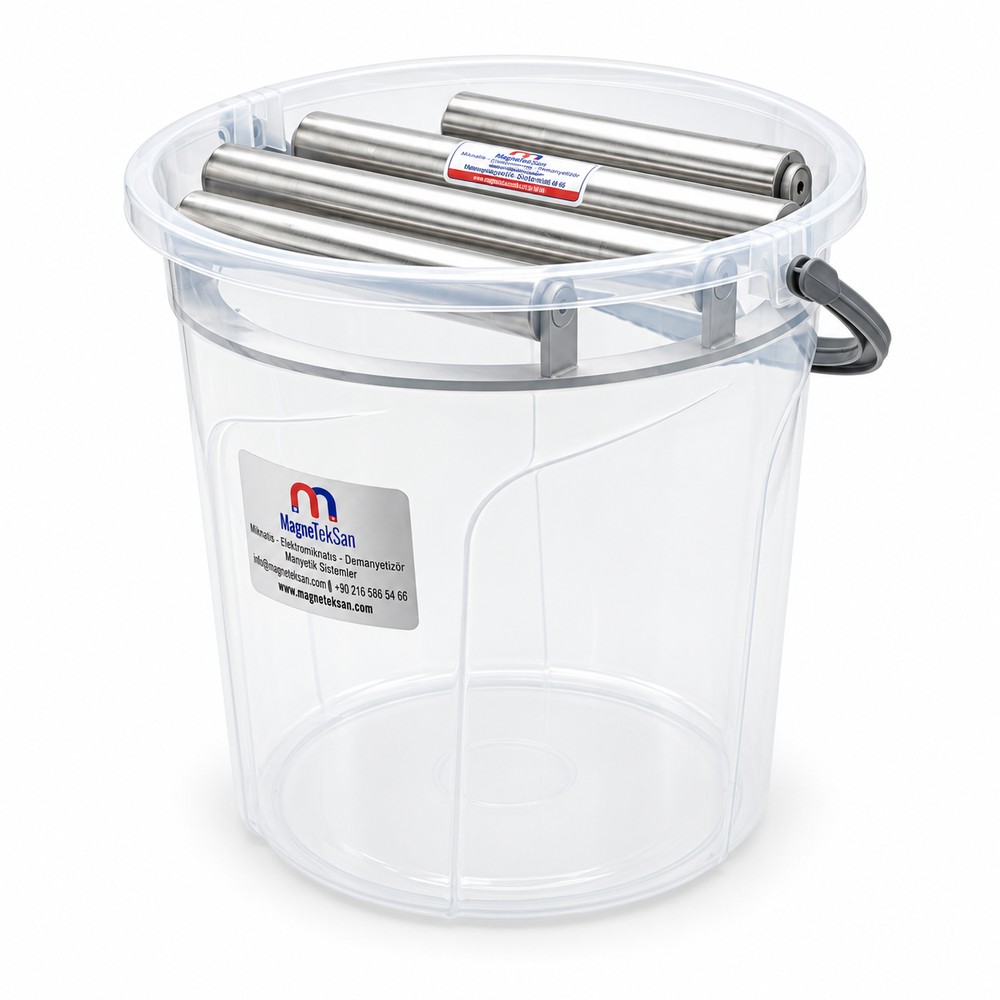
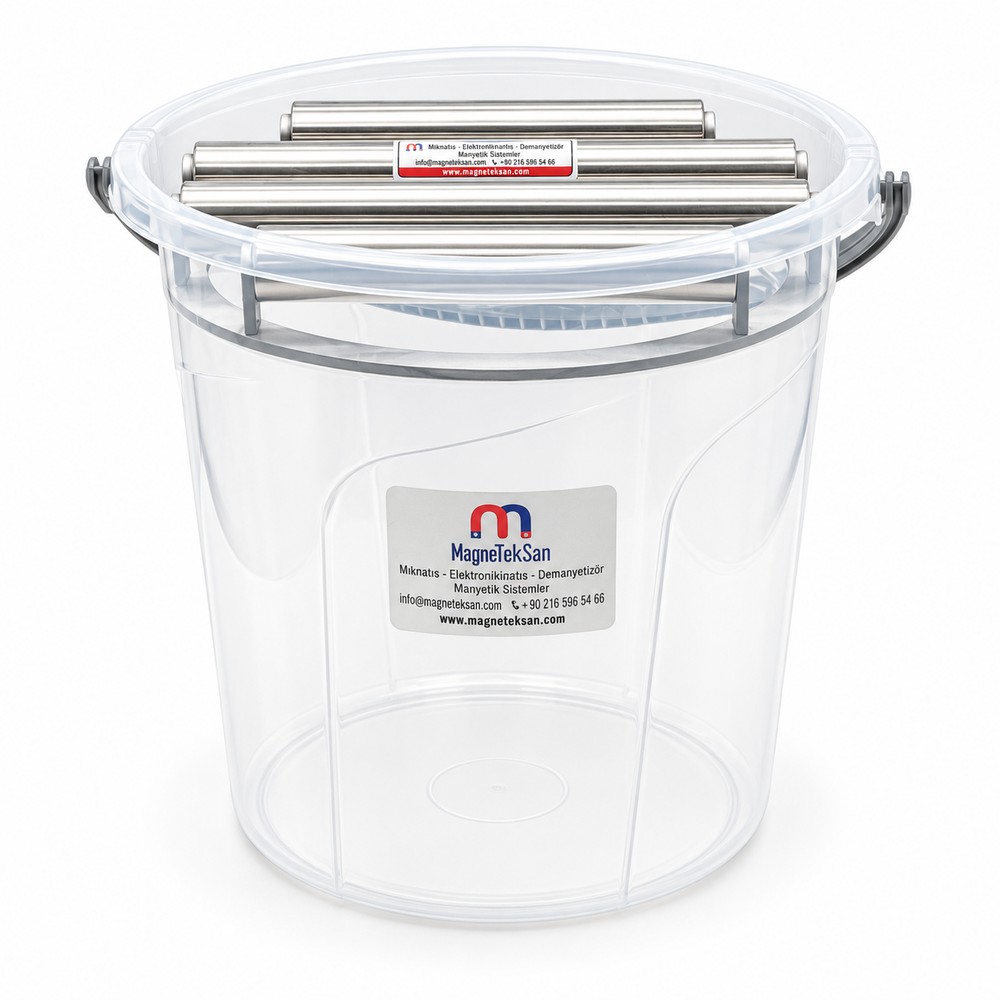
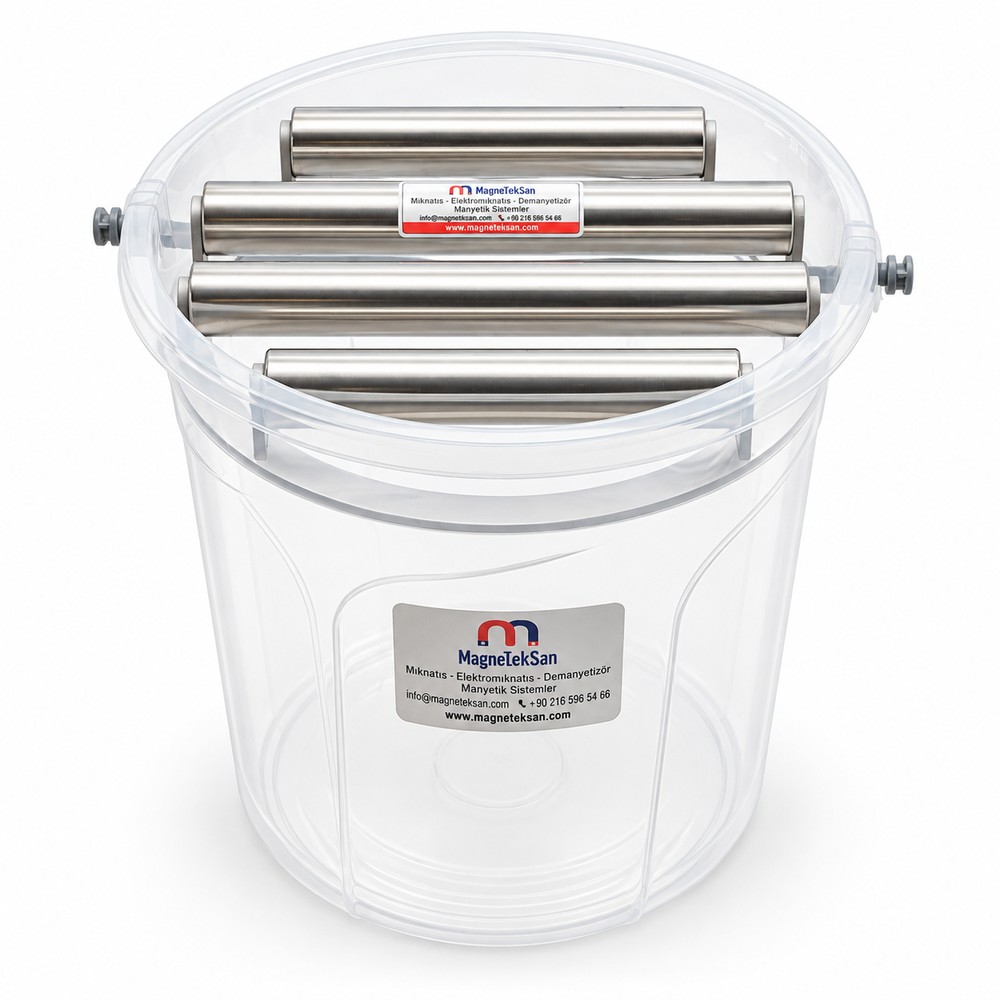
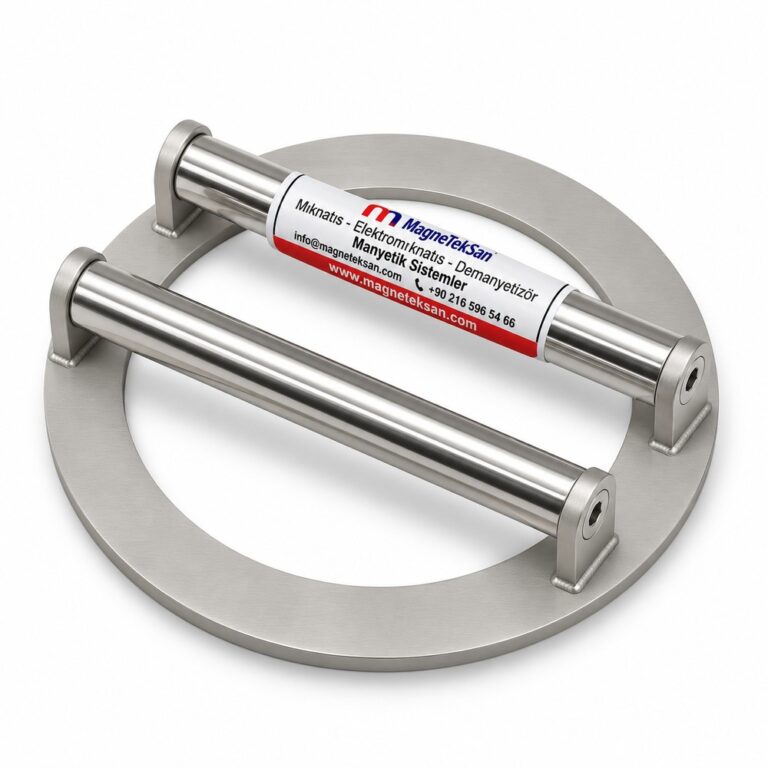
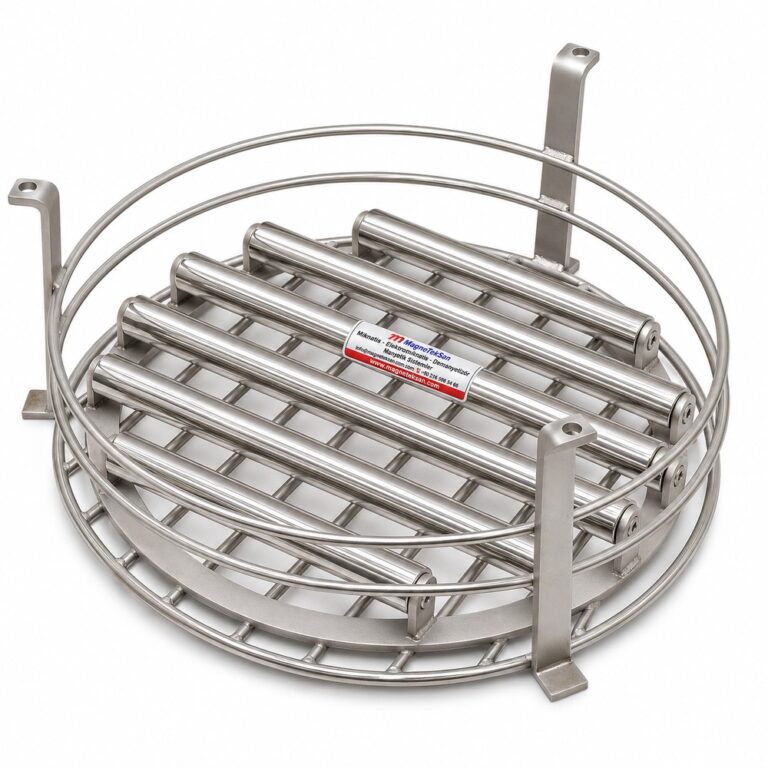
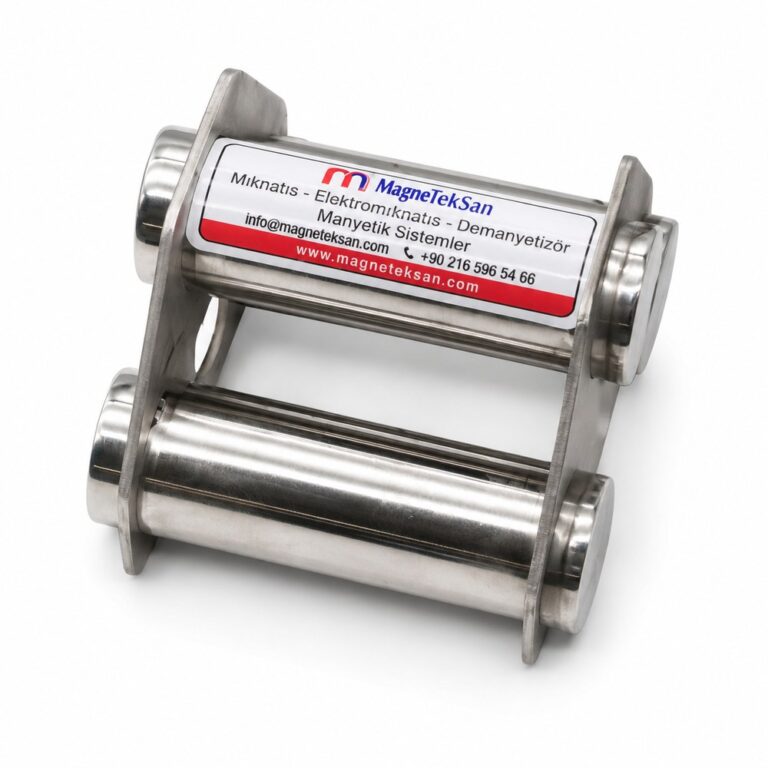
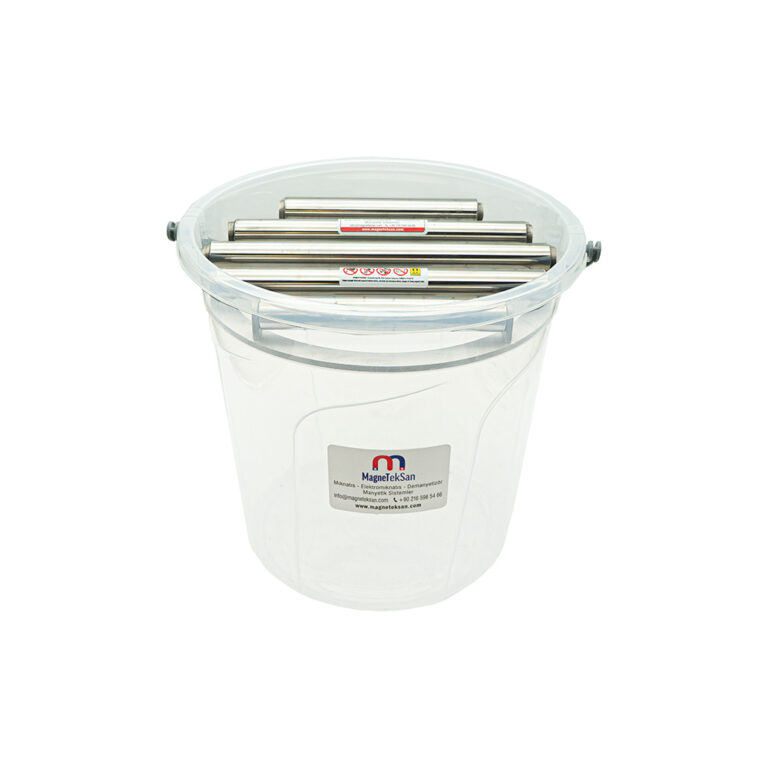
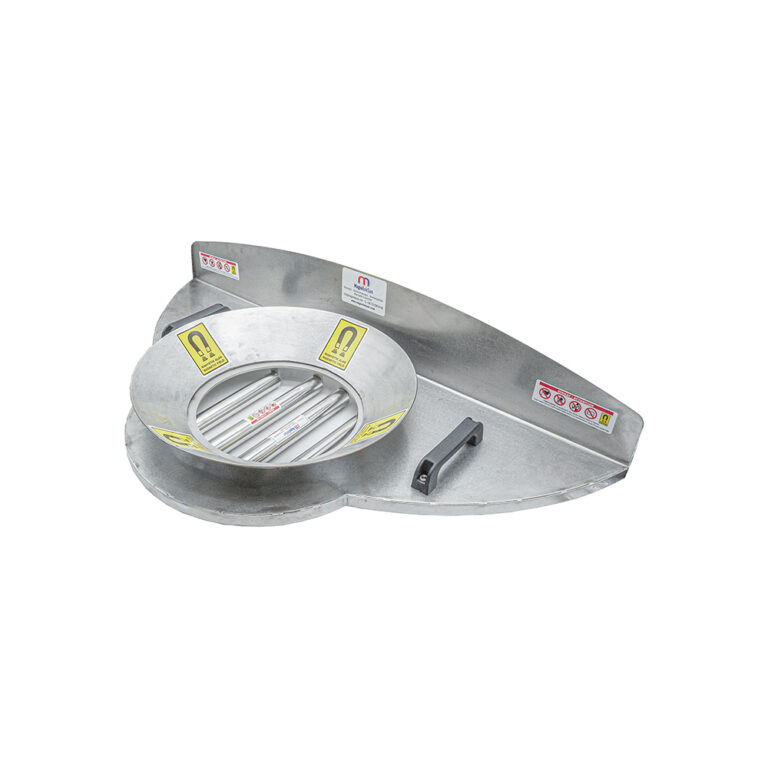
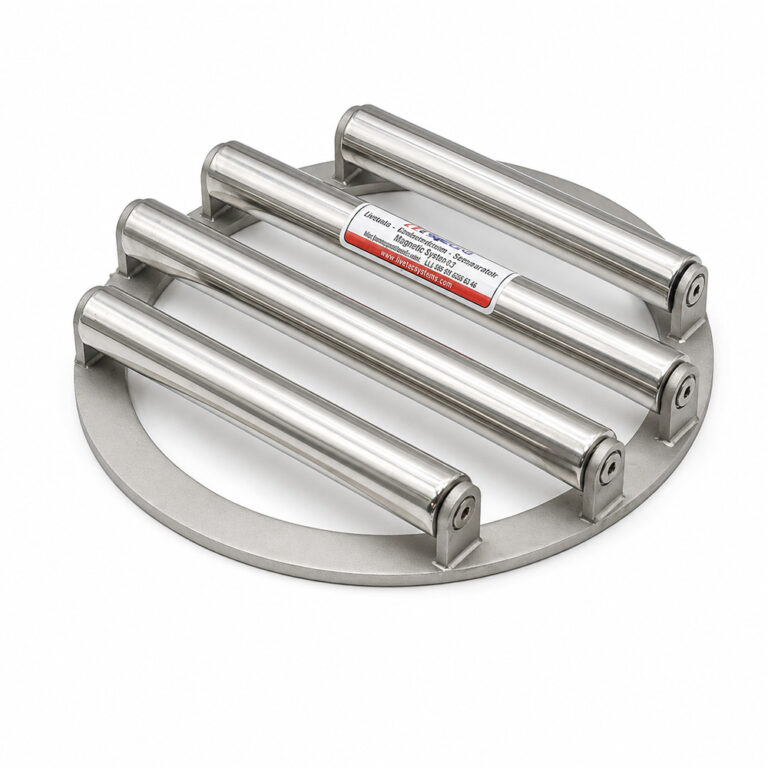
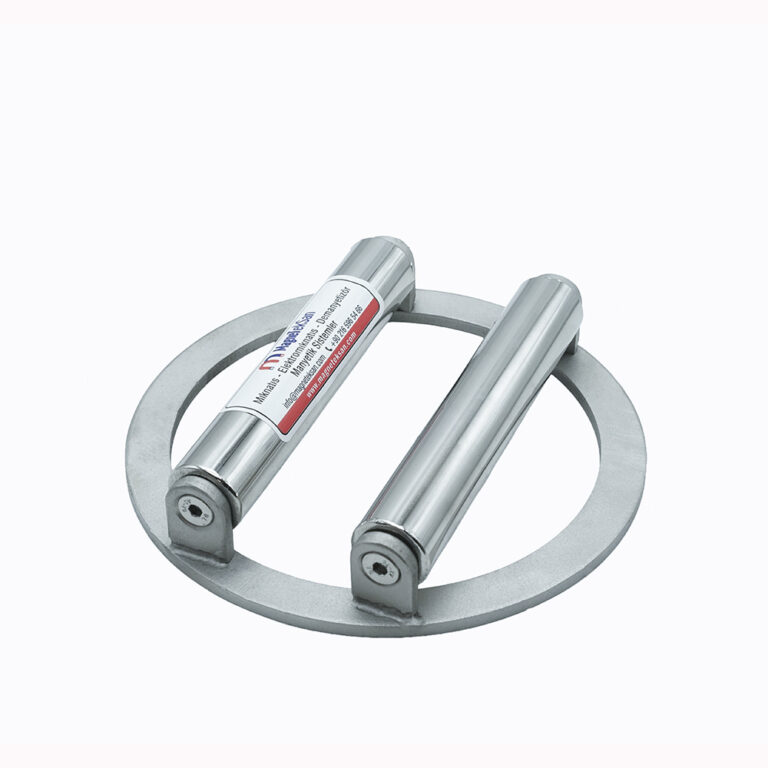
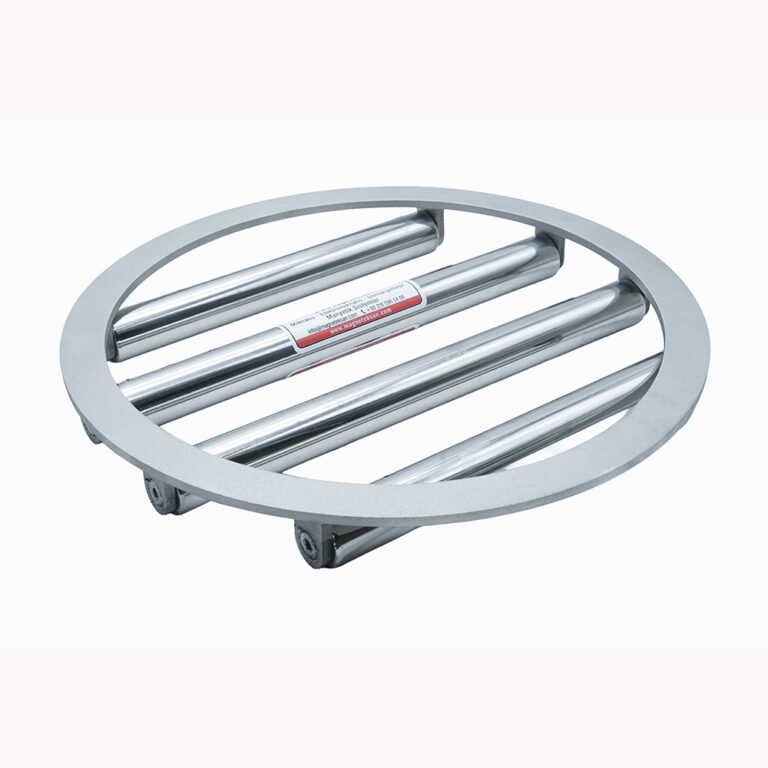
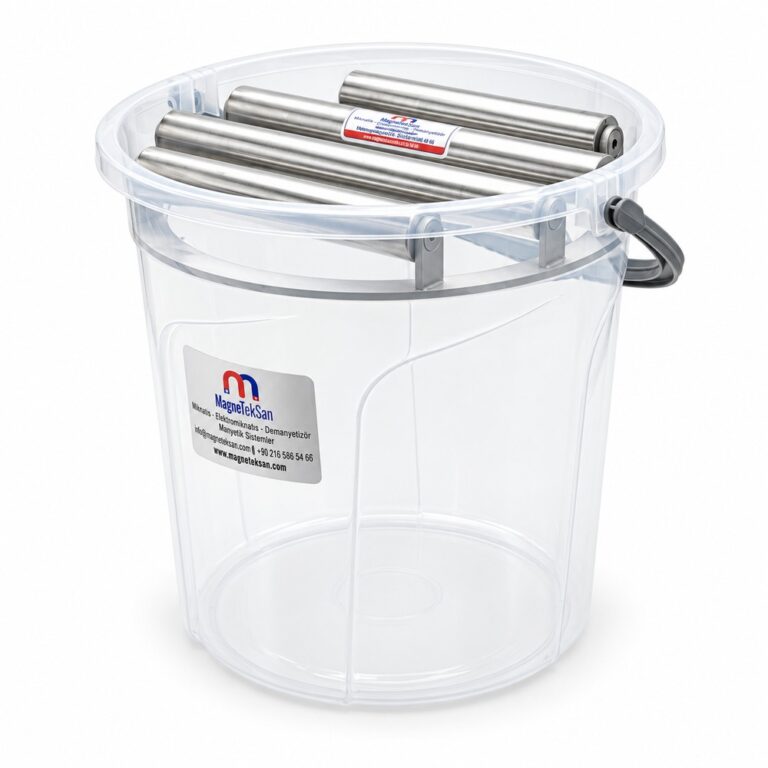
This magnetic salt sieve consists of a Ø300 mm round grid magnet that sits in the mouth of a clear plastic bucket. When salt is scooped from a sack or big bag and poured into the bucket, it passes between four Ø32 mm neodymium rods. Ferrous contaminants in the salt, such as wire fragments, machine burrs, bolt tips and iron fines, stick to the rod surface while clean salt collects in the bucket. It needs no power supply or installation, which makes it a practical choice for salt packers, salt wholesalers and food plants that use salt as an ingredient and check it batch by batch.
| Specification |
Value |
| Product type |
Bucket-mounted round neodymium grid magnet |
| Model code |
Ø300 mm Ø32×4 S88KL |
| Grid diameter |
Ø300 mm |
| Number of rods |
4 |
| Rod diameter |
Ø32 mm |
| Magnetic field |
8,000 Gauss (at the rod surface) |
| Magnet material |
Neodymium (NdFeB) |
| Rods and frame |
AISI 304 stainless steel, seal-welded |
| Bucket |
Clear plastic, with handle |
| Maximum operating temperature |
80 °C |
| Cleaning |
Manual |
| Power supply |
None required (permanent magnet) |
| Application |
Salt screening and metal control before packing |
How Does Metal Get into Salt?
Rock salt is broken up in crushers and mills after it leaves the mine, while sea salt is gathered from the pans with loaders and conveyors. At these stages small pieces chipped off crusher jaws, worn screen wires and burrs from conveyors and loader buckets can end up in the salt. Stitching wire from salt sacks and fasteners dropped during maintenance can also turn up in it.
A small piece of wire between salt crystals is hard to spot by eye. Passing salt through a grid magnet before packing or before it goes into production is a simple way to remove ferrous particles at the last step.
How Is the Magnetic Salt Sieve Used?
- Place the grid magnet in the mouth of the bucket.
- Pour the salt slowly and spread it over the rods; tipping it all at once lets crystals pass without touching the rods.
- As the salt flows between the rods into the bucket, ferrous particles stay on the rods.
- When the bucket is full, lift off the grid magnet and transfer the salt to a sack or packaging.
The gaps between the rods let coarse rock salt and crystal sea salt pass freely. It can also be used with fine powdered salt, but damp, caked salt may build up on top of the rods; in that case break up the lumps before pouring.
Salt and Stainless Steel
Salt is hard on stainless steel. The rods and frame are made of AISI 304 stainless steel and seal-welded so that the magnets are fully enclosed. Grade 304 holds up well in dry salt, but if salt stays on the surface with moisture for long periods, pitting and staining can appear. Regular cleaning therefore matters: wipe the rods at the end of use, rinse with clean water if needed, dry them and do not leave them in a damp place. If there will be constant contact with wet salt or brine, the rods can be made with AISI 316 stainless steel tubes; please state this when ordering.
How Are the Rods Cleaned?
- Take the grid magnet off the bucket and shake off the salt away from the bucket.
- Wipe the metal particles along the rods and off the ends with a dry cloth or a gloved hand.
- Wipe off salt residue with a damp cloth and dry the rods.
- Put the grid magnet back on the bucket and start the next batch.
At first, check how much metal has built up on the rods after each batch and set the cleaning interval accordingly.
Limits and Safety
The magnet only attracts ferrous (ferromagnetic) particles. Aluminium, brass, glass, stone and plastic pieces, as well as most austenitic stainless steel fragments, pass through the grid. The operating temperature must not exceed 80 °C. A grid magnet does not replace a metal detector; if the packing line has a detector, use the two together. Neodymium rods are strong: keep them away from people with pacemakers or medical implants, bank cards and electronic devices, and take care not to trap your fingers when bringing them close to steel surfaces.
Other Models
Models in other diameters are listed on the round grid magnets page. For continuous salt lines there is also the Ø160 mm drawer magnet for salt sieve outlets. The same bucket design is used for pulses as well: bucket grid magnet for pulses before packaging. For a different diameter or number of rods, request a quote through our contact page.
Frequently Asked Questions
Will the grid magnet fit our own bucket?
The product comes with its clear plastic bucket. If you want to use it on your own bucket, tell us the inner diameter of the bucket mouth and we can make the grid to suit.
Does it remove stones from rock salt?
No. The magnet only holds ferrous metals. Stones, sand and oversized pieces need a mechanical screen.
Does salt reduce the strength of the magnet?
Salt does not touch the magnets themselves; they are inside sealed stainless steel tubes. As long as the tubes are cleaned regularly, kept dry and not taken above 80 °C, the magnetic strength is maintained. If you see deep corrosion or cracks on a tube, stop using the product and contact us.