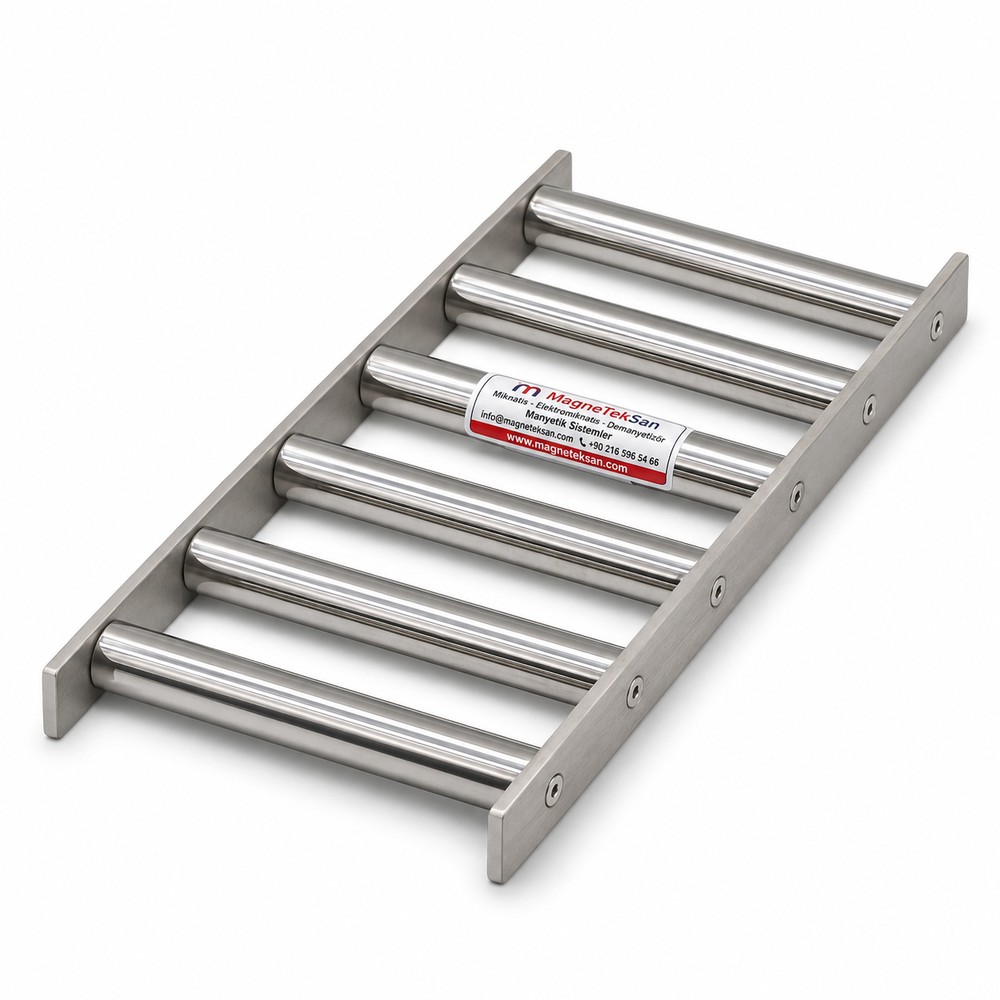
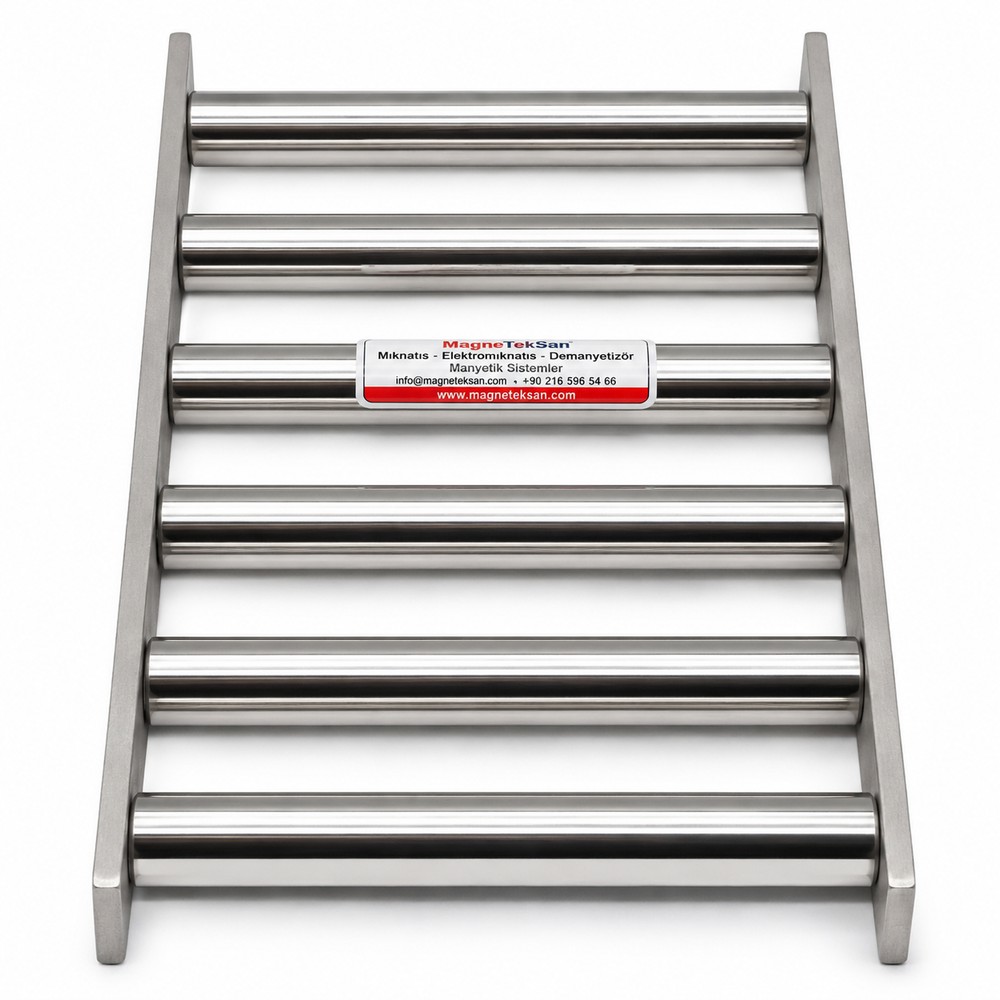
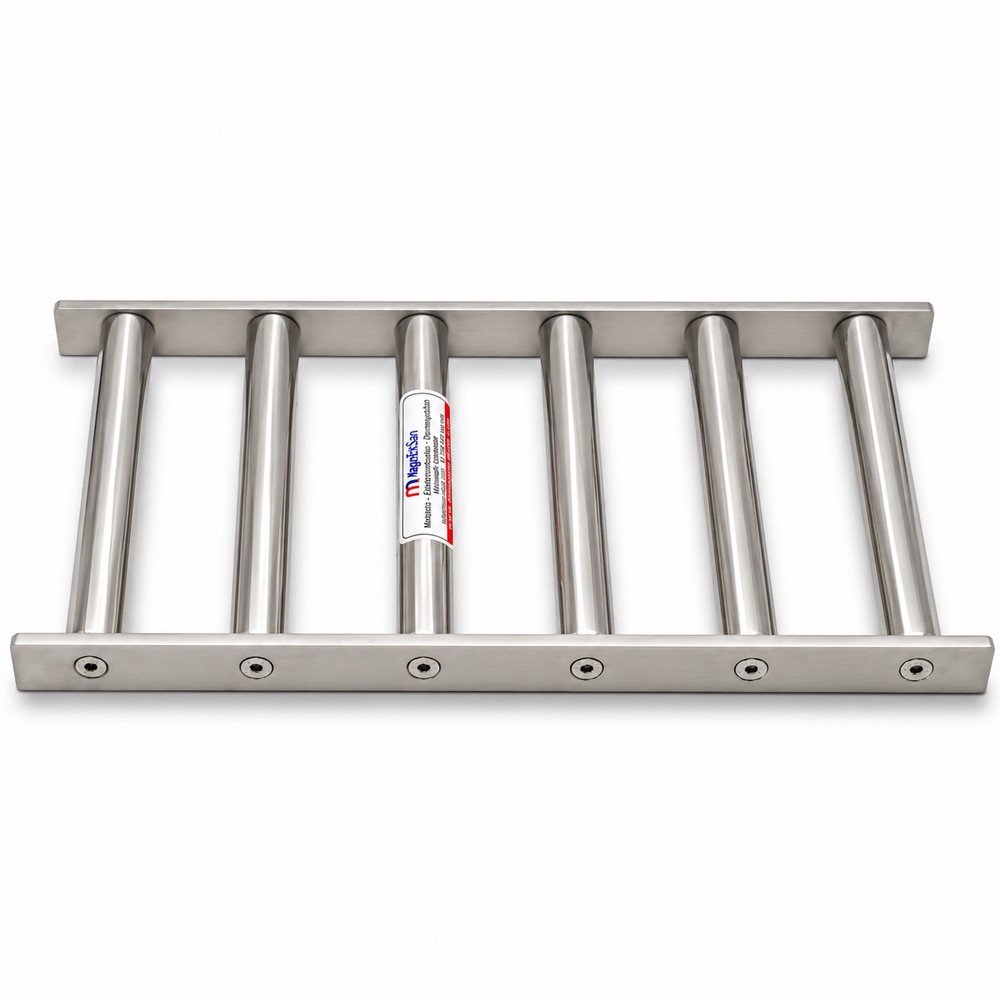
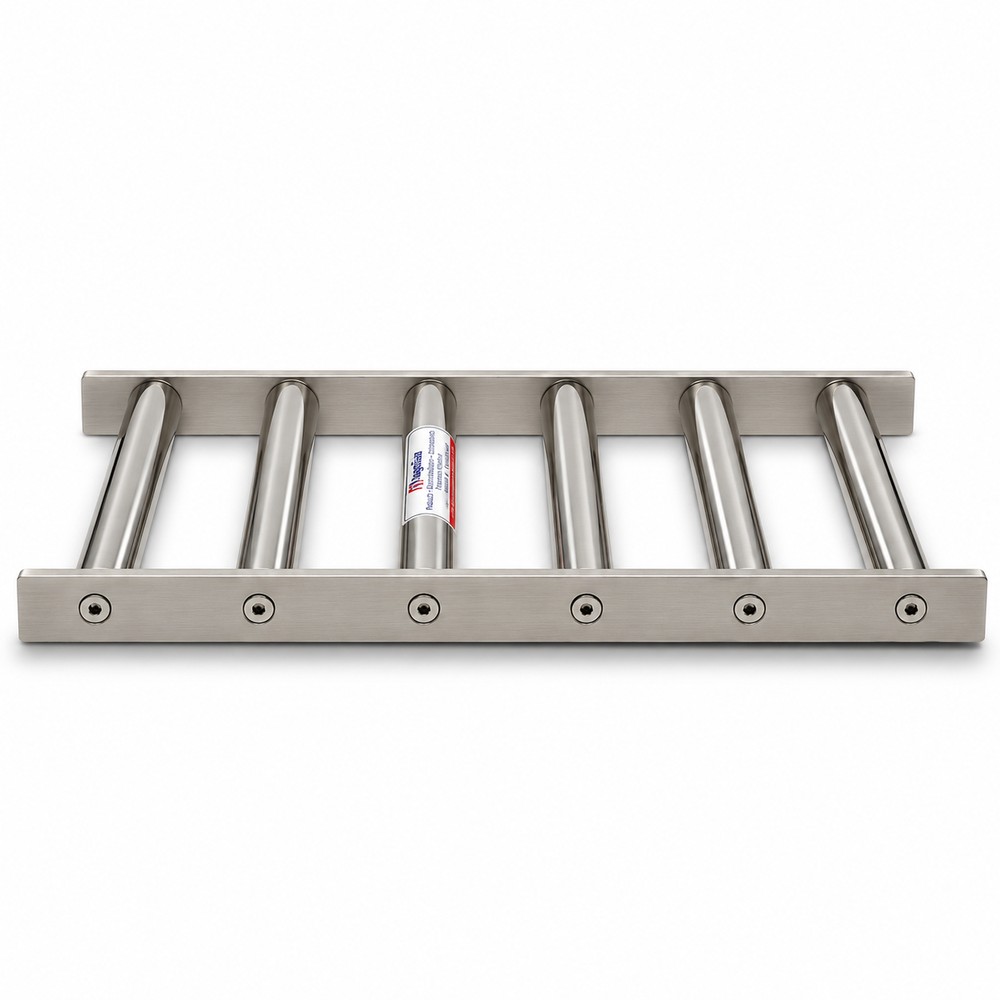
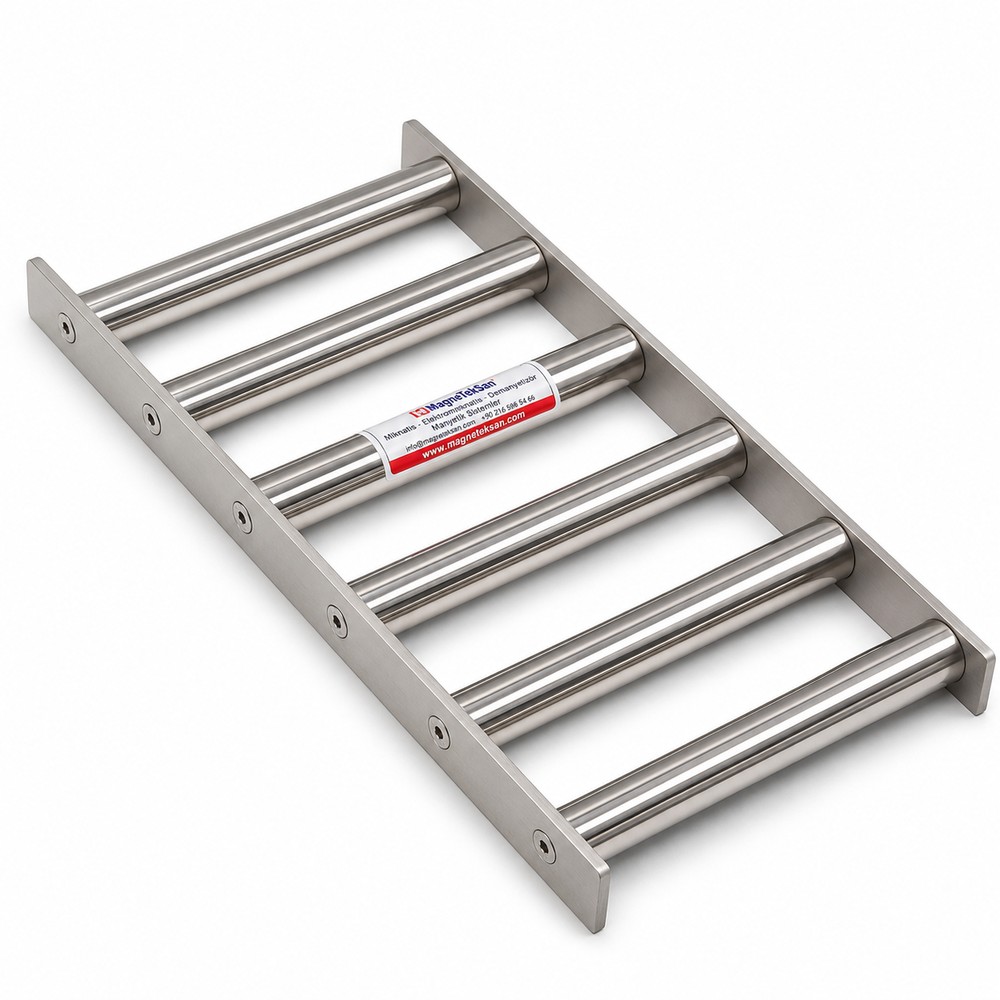
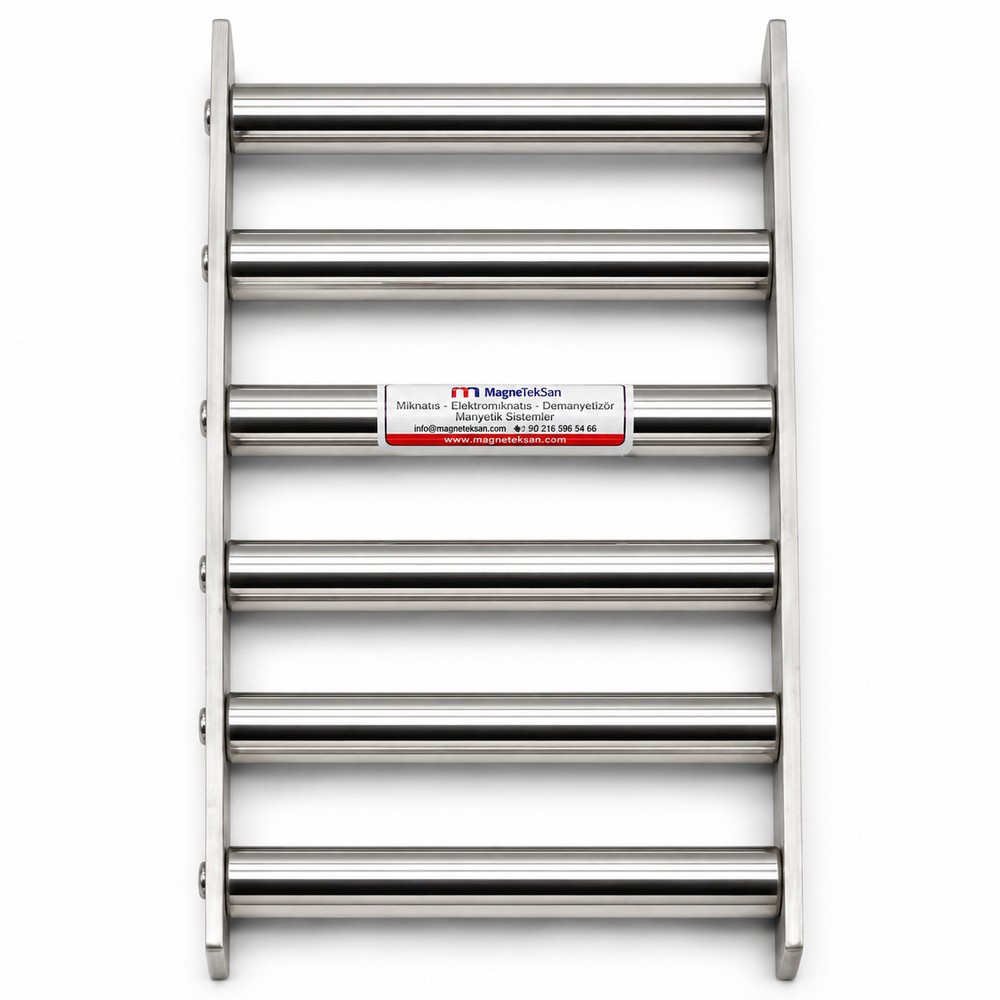
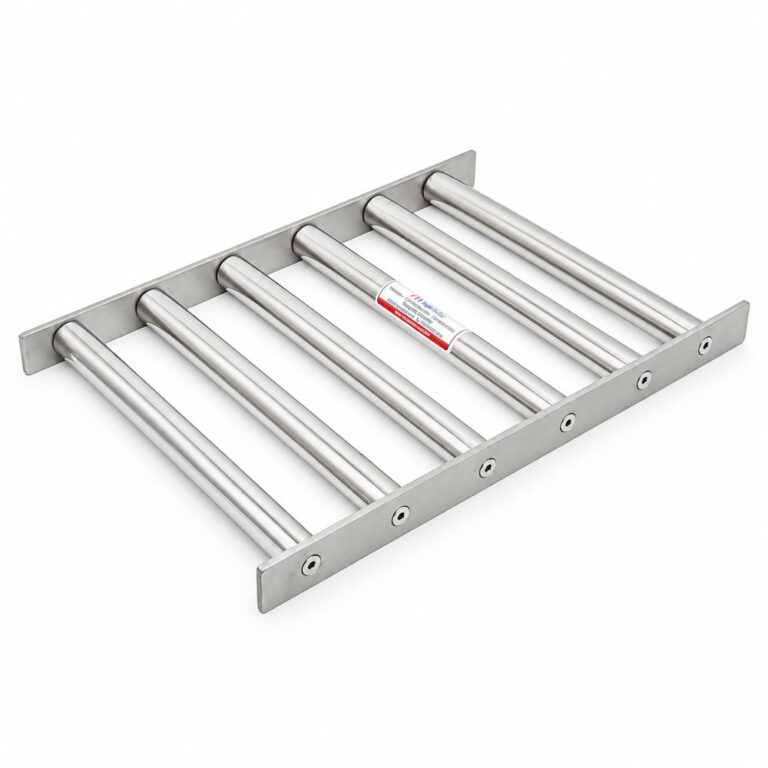
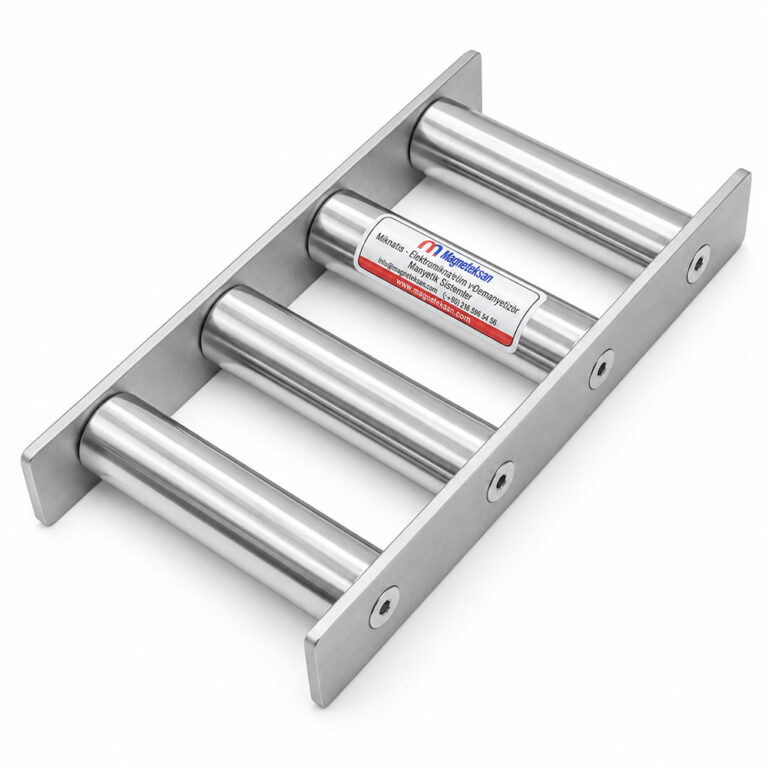
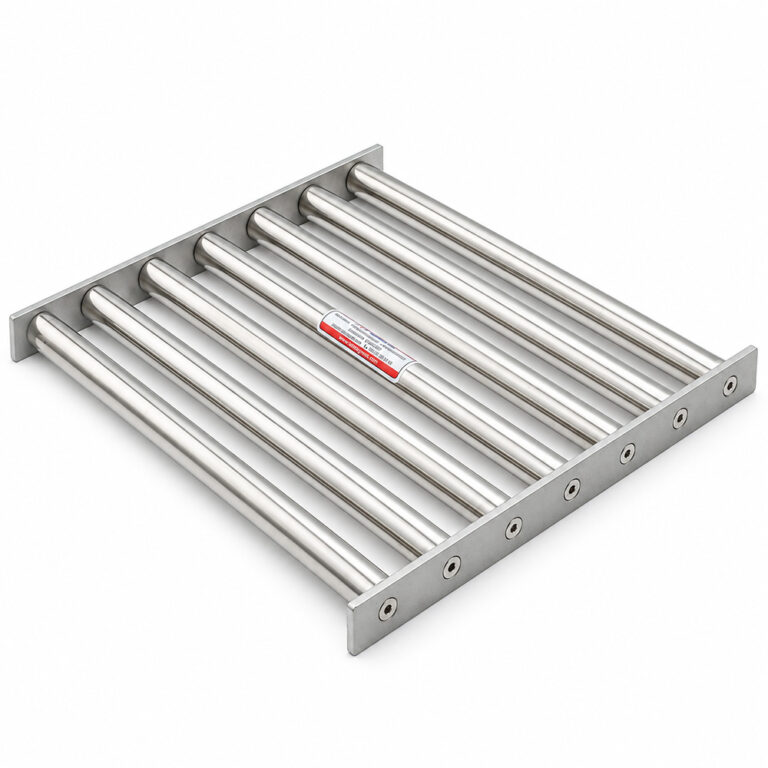
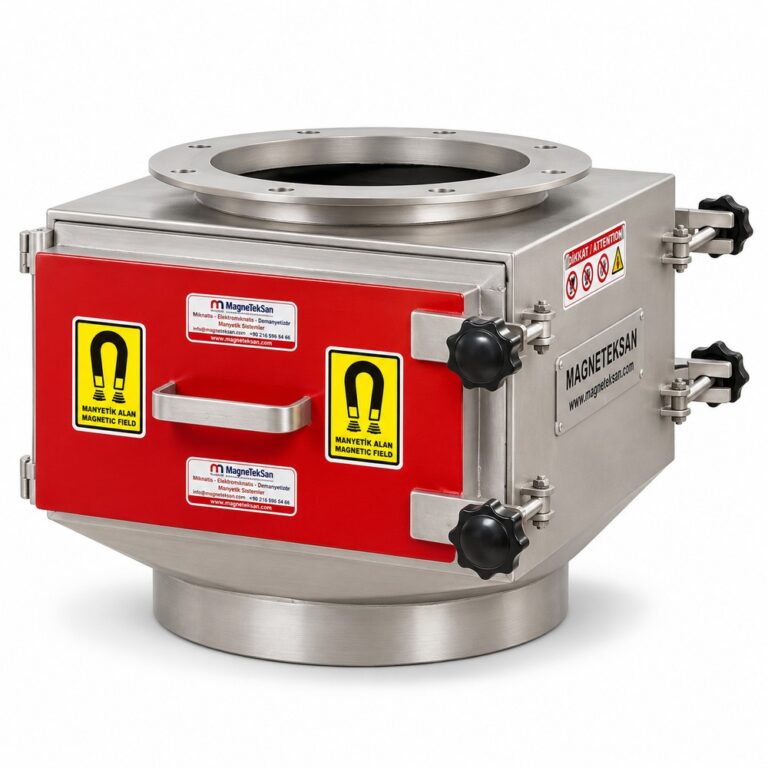
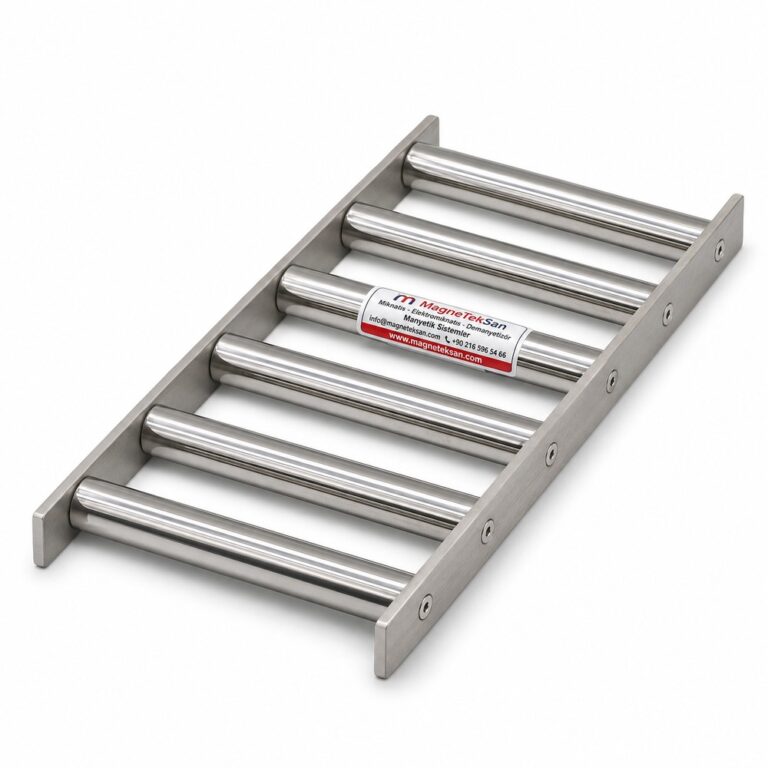
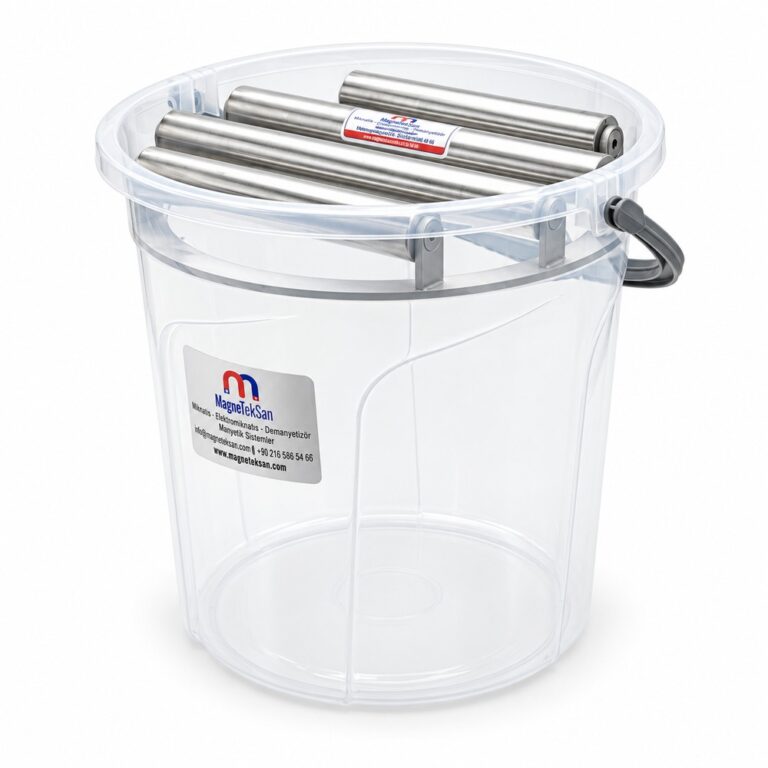
This 400×180 mm grid magnet is used on biscuit production lines to separate ferrous particles from flour, sugar and other dry raw materials before they reach the mixer. It consists of six Ø25 mm neodymium rods spaced evenly between two flat stainless side plates. As powder and granules pass between the rods, wire, screws, nuts and steel fragments stick to the rod surface while the clean material carries on down the line.
| Feature |
Value |
| Product type |
Rectangular neodymium grid magnet (magnetic grate) |
| Model code |
400×180 mm Ø25×6 S8102T |
| Size |
400×180 mm |
| Number of rods |
6, parallel |
| Rod diameter |
Ø25 mm |
| Magnetic field |
10,000 Gauss (at the rod surface) |
| Magnet material |
Neodymium (NdFeB) |
| Rod housing |
Stainless steel, sealed |
| Side plates |
Two flat stainless plates, one at each end of the rods |
| Rod fixing |
Screwed to the side plates |
| Maximum operating temperature |
80 °C |
| Cleaning |
Manual |
| Power supply |
None required (permanent magnet) |
| Application |
Biscuit production lines, dry raw materials before the mixer |
How Does Metal Get into Biscuit Dough?
Biscuit dough is made by mixing flour, caster sugar, starch, milk powder, raising agents and fat in a mixer. Most dry ingredients arrive in sacks and travel from the sack tipping station to the sifter, then on to the weighing and dosing hoppers. Sack stitching wire, bits broken off cutting blades, wear particles from screw and belt conveyors and small fasteners left behind after maintenance can all end up in the raw material along the way.
Hard pieces like these can damage the mixer arms and the rotary moulding rolls that shape the dough. A grid magnet placed after the sifter catches most ferrous particles before they reach the dough.
Where Is the 400×180 mm Grid Magnet Fitted?
- In the rectangular outlet of the sifter
- In the inlet of the weighing or dosing hopper
- In the mixer feed chute, where product falls from above
The grid magnet sits in the opening with its rods across the flow. Powder hits the rods and goes through the magnetic field as it passes between them. The gaps between the rods let flour and sugar flow freely; with damp blends that tend to clump, check during the first days that product is not building up on top of the rods.
Why 10,000 Gauss?
Some of the metal contamination in flour and sugar is fine wire and swarf. A field of 10,000 Gauss at the rod surface holds these small pieces on the rod instead of letting the flow carry them away. In the model code, S8102T stands for sealed rods, an 80 °C operating limit, 10,000 Gauss and side plates on both sides.
How Are the Rods Cleaned?
- Stop the line and lift the grid magnet out of its seat.
- Gently shake off product residue.
- Slide the collected metal along each rod and off the end, using a dry cloth or a gloved hand.
- Wipe the rods clean with a dry cloth if needed and put the grid magnet back.
In the first weeks, set the cleaning interval by how much metal comes off at the end of each shift. If a lot builds up, clean more often.
Limitations and Safety Warnings
The magnet only attracts ferrous (ferromagnetic) particles. Aluminium, brass, glass and plastic are not held, and austenitic stainless steel fragments mostly pass through; these need a metal detector. The operating temperature must not exceed 80 °C. The rods have a strong magnetic pull: keep them away from people with pacemakers or medical implants, magnetic cards and electronic devices, and keep fingers clear when bringing them near steel surfaces.
Other Models
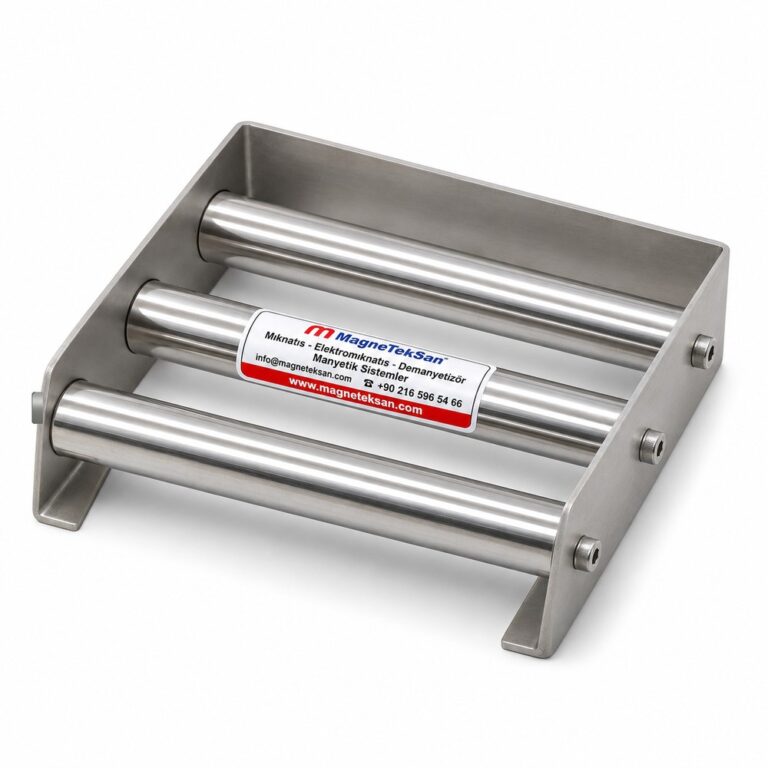
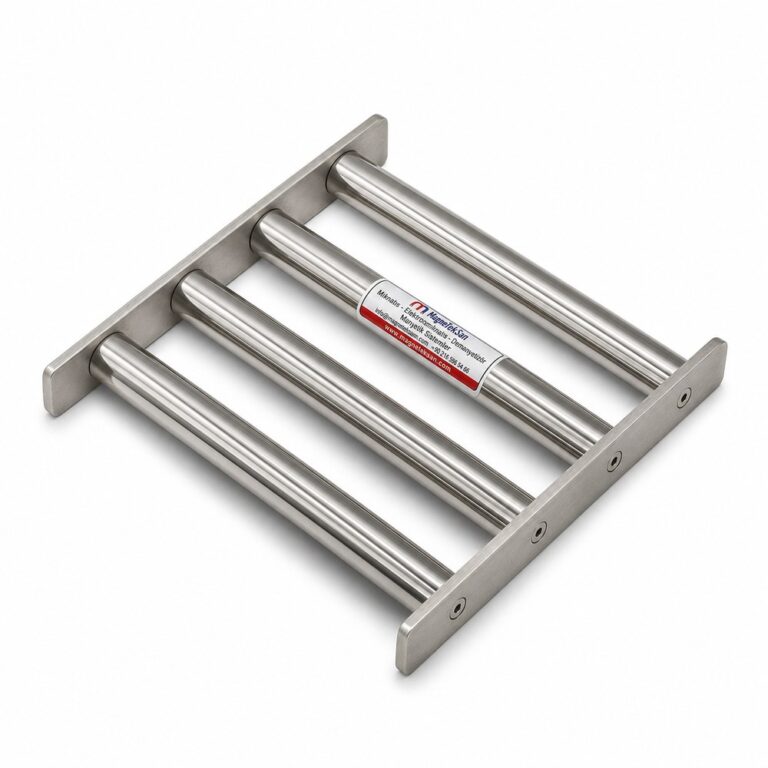
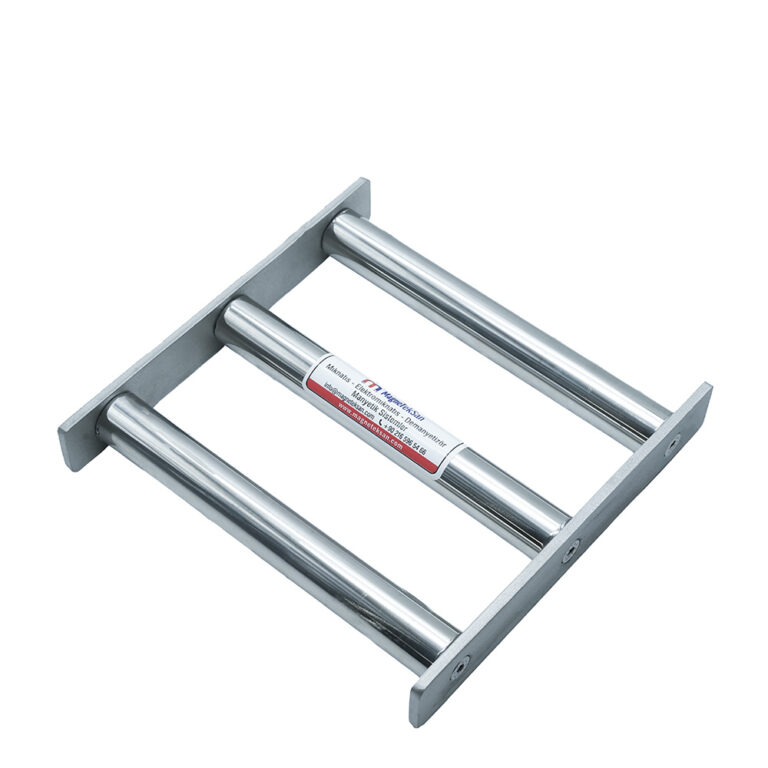
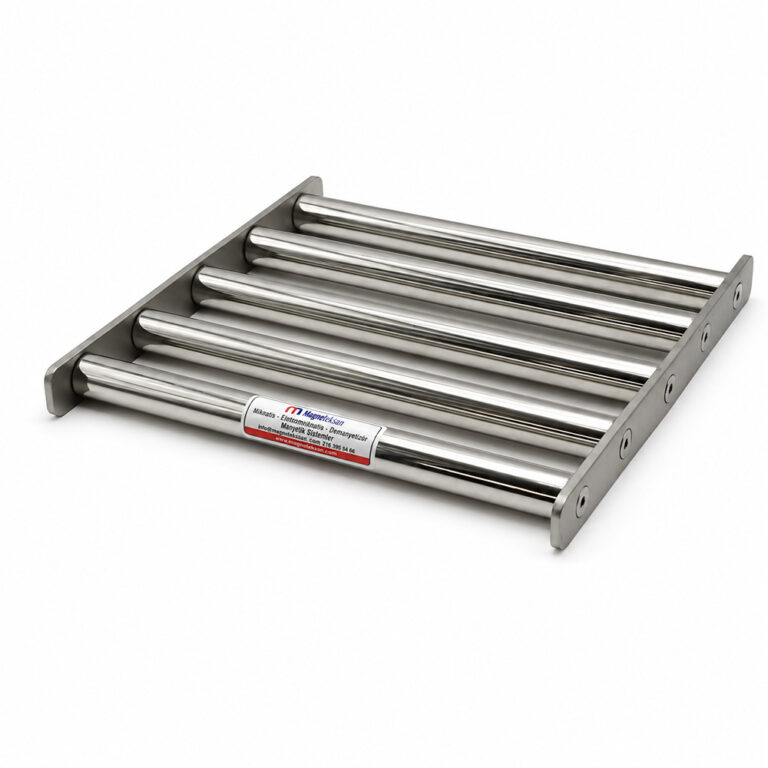
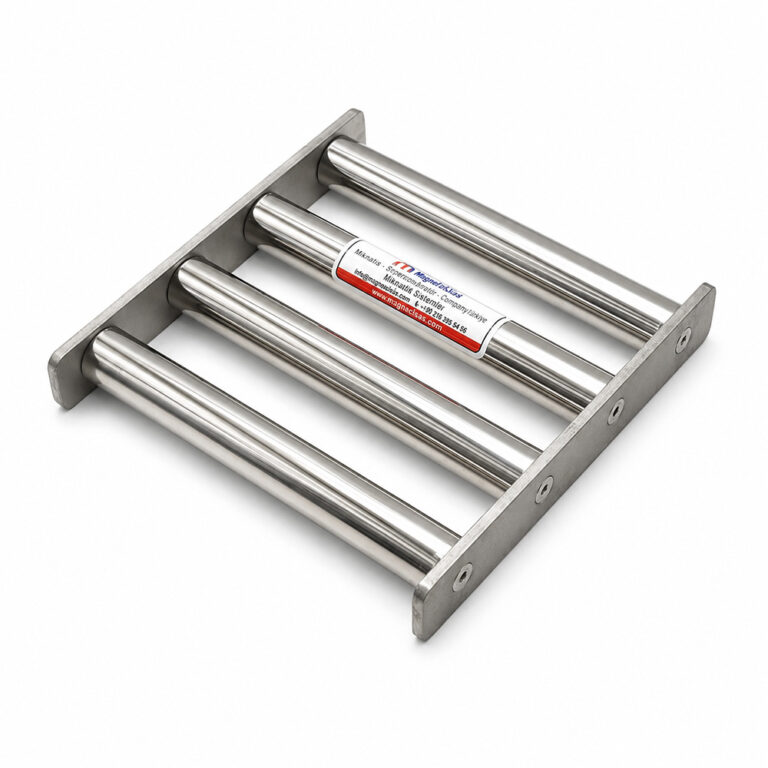
Models in other sizes and rod counts are listed on the square and rectangular grid magnets page. For a smaller example used on bakery lines, see the bakery flour sifting grid magnet. To have one made to your opening size, get in touch through our contact page.
Frequently Asked Questions
Will the grid magnet fit our outlet?
400×180 mm is a standard size. Send us the inside dimensions of your opening and the direction of flow, and we can build the width, length and number of rods to suit.
Does caster sugar or icing sugar build up on the rods?
Dry caster sugar flows freely between the rods. Icing sugar and sugar that has picked up moisture can leave a thin layer on top of the rods; simply wipe it off during cleaning.
We already have a metal detector. Do we still need a grid magnet?
A metal detector usually checks the product just before packing. A grid magnet holds ferrous particles at the start of the line, so they never reach the mixer, the moulding rolls or the oven band. One does not replace the other; they work together.