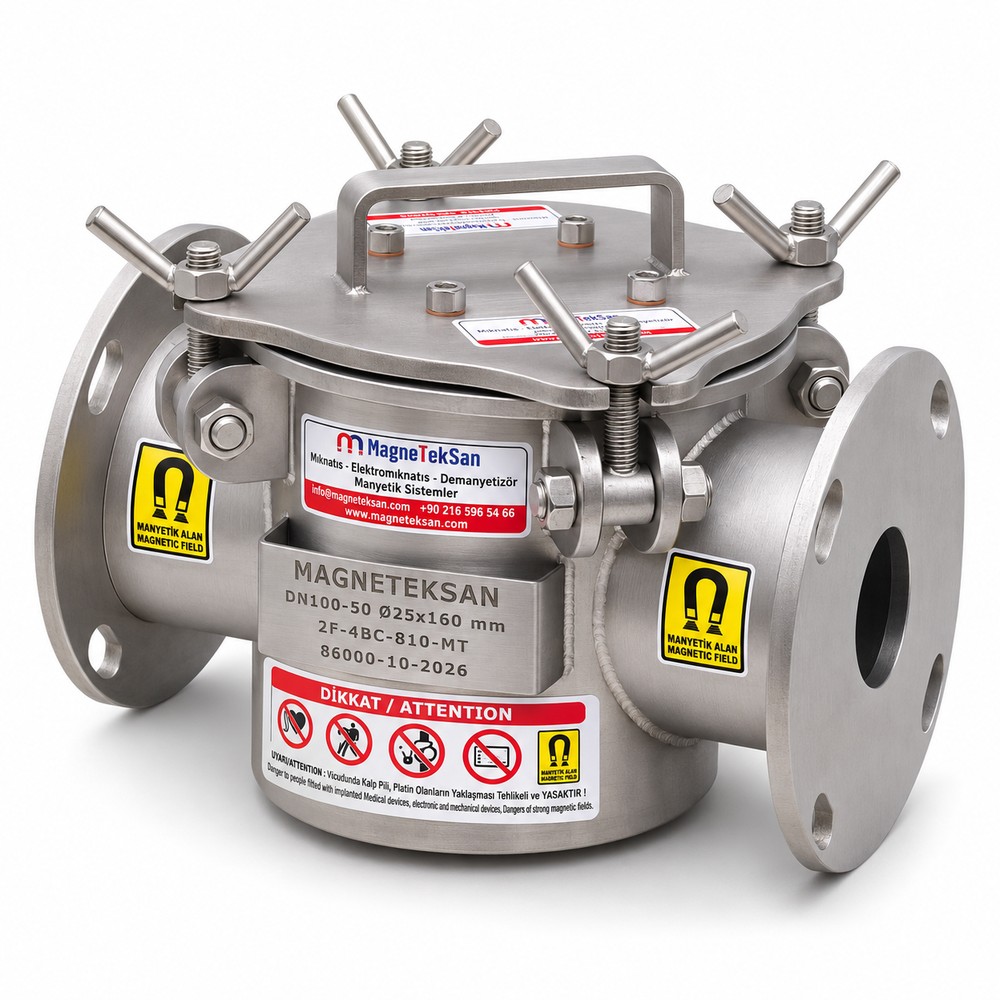
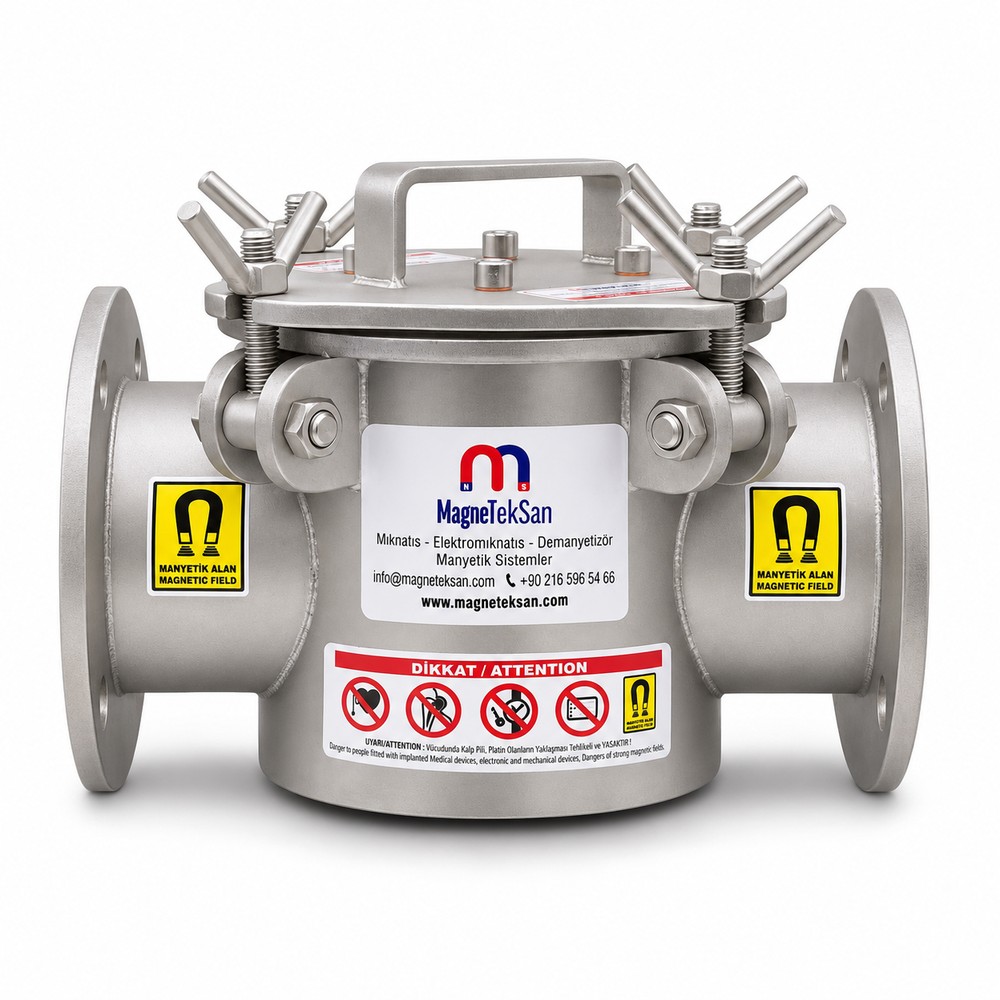
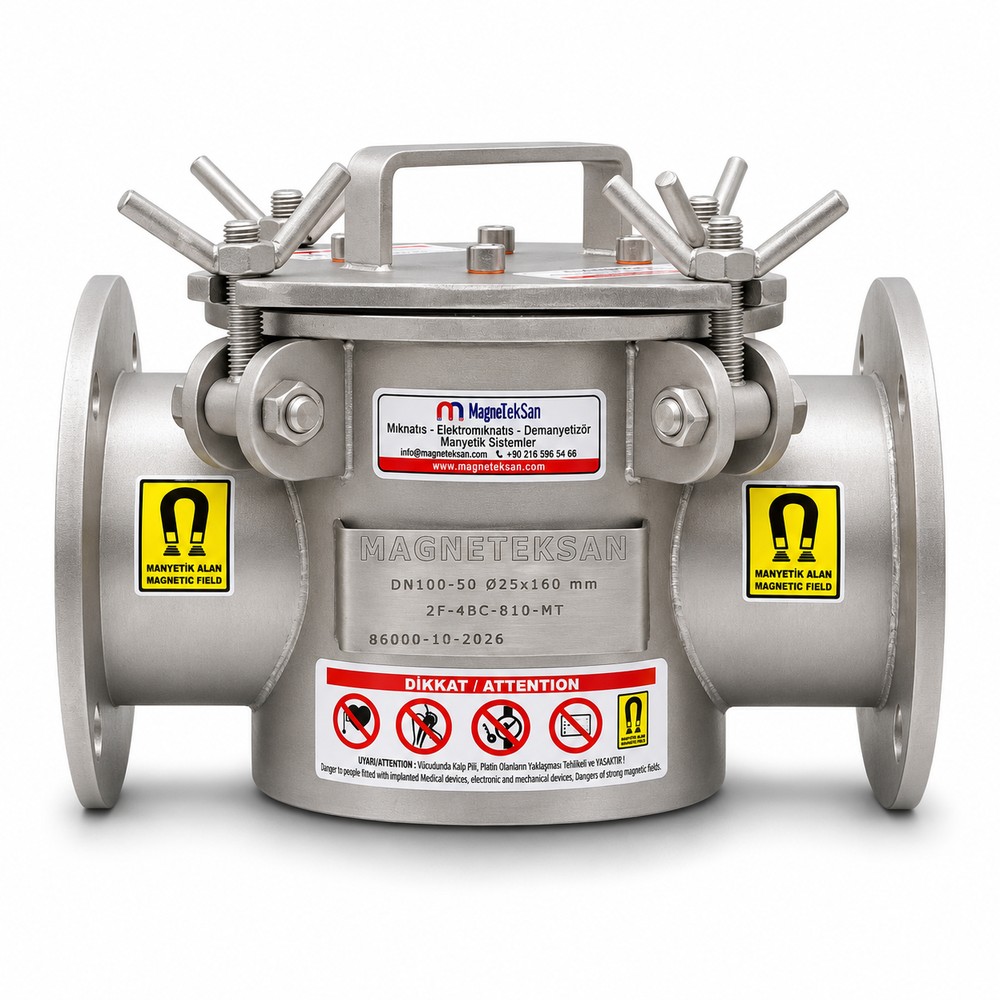
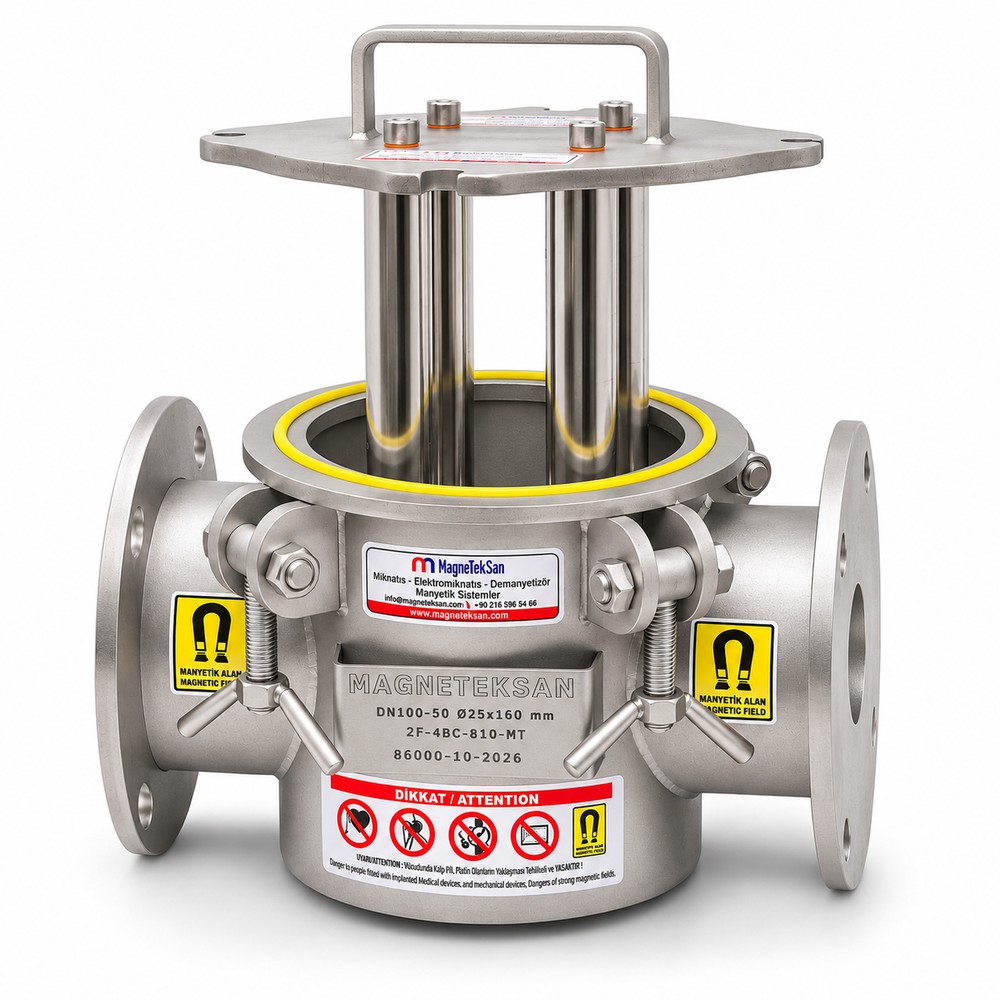
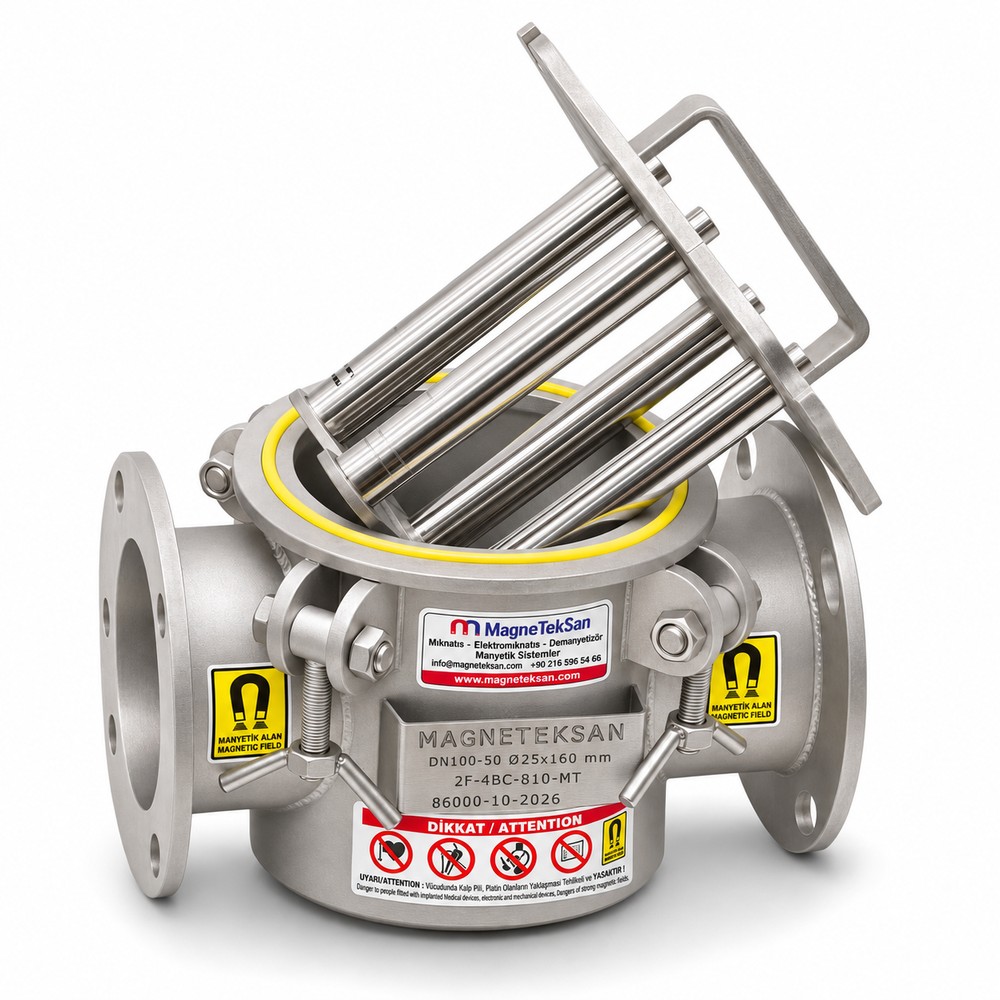
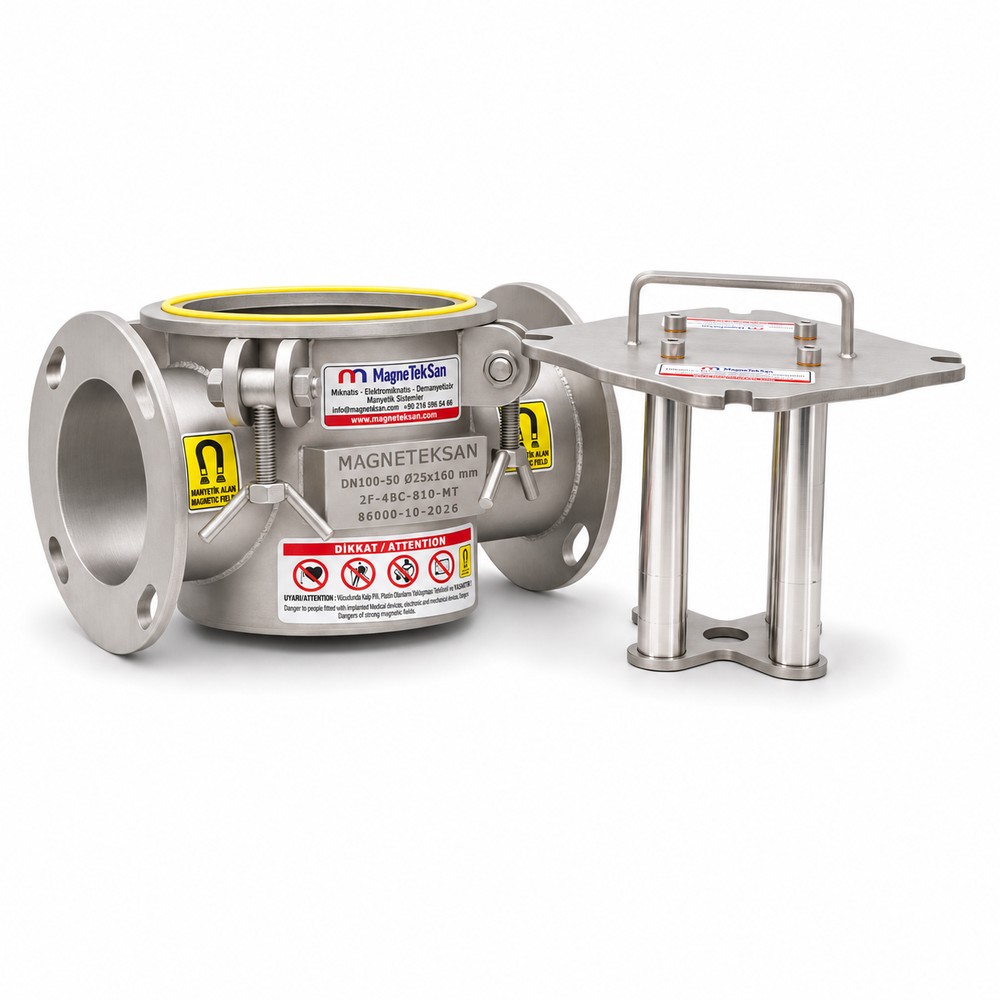
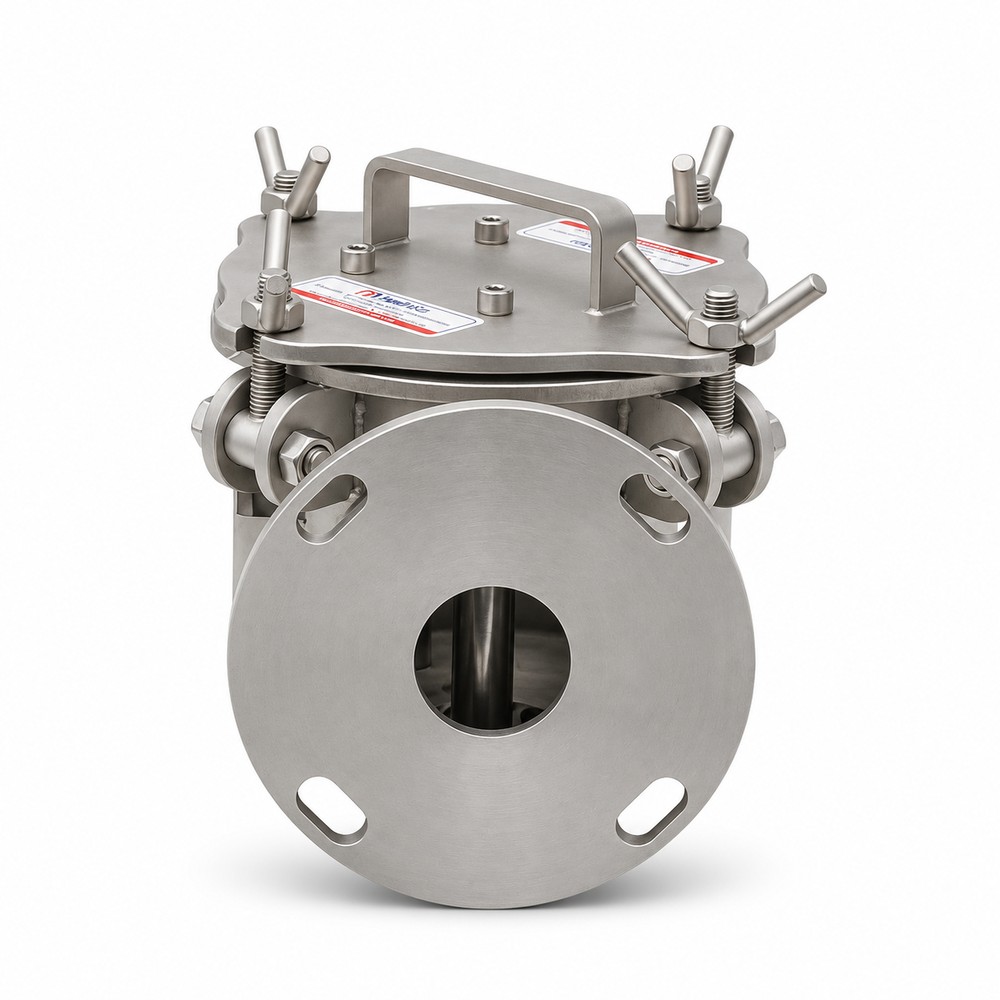
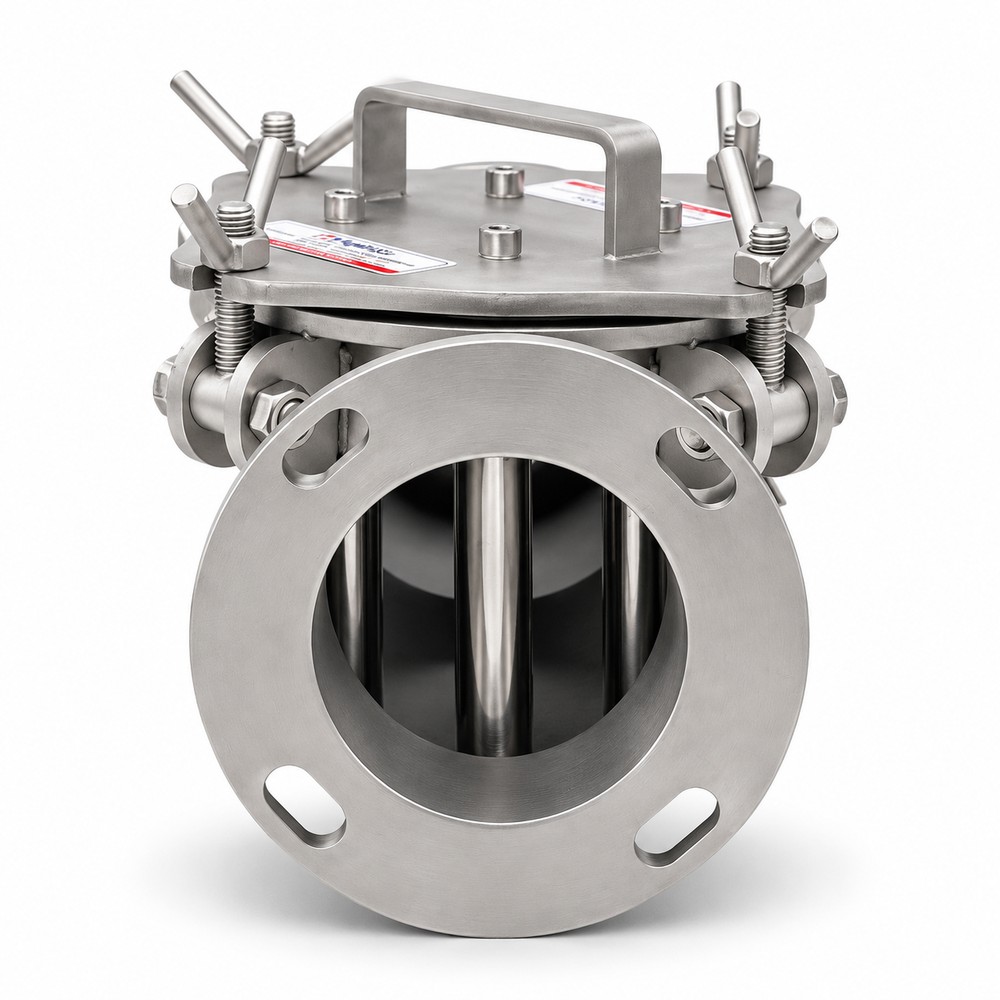
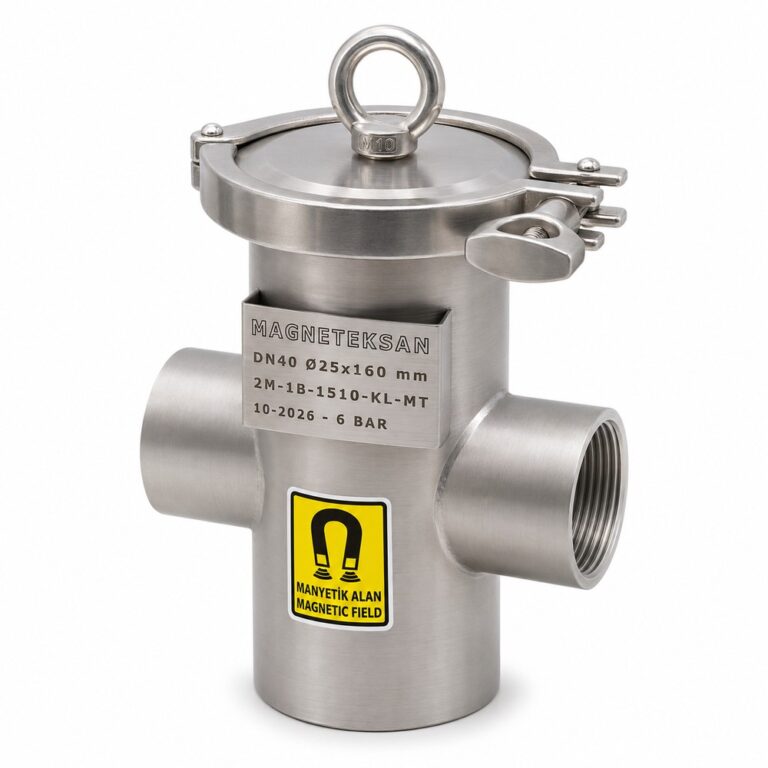
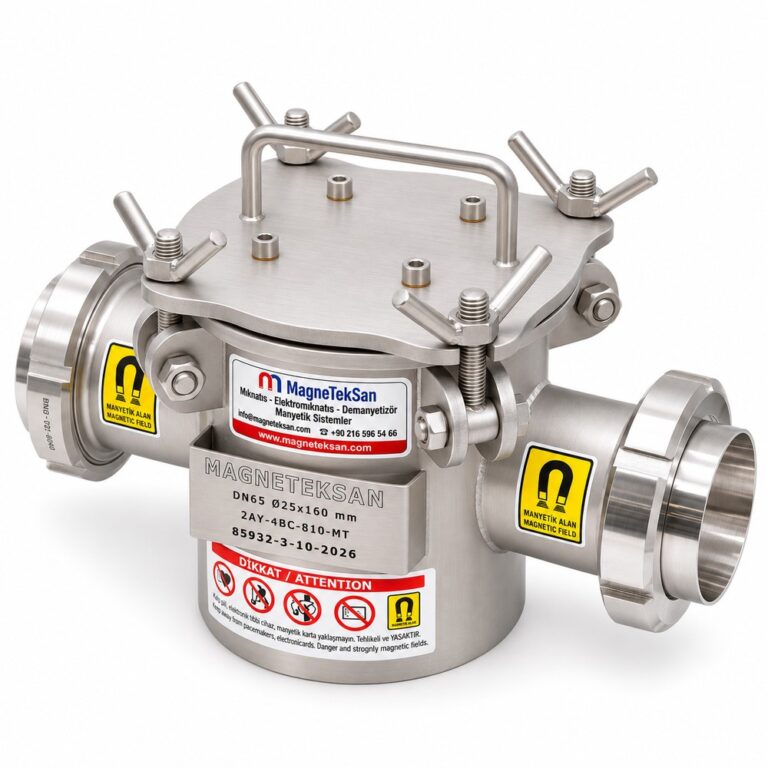
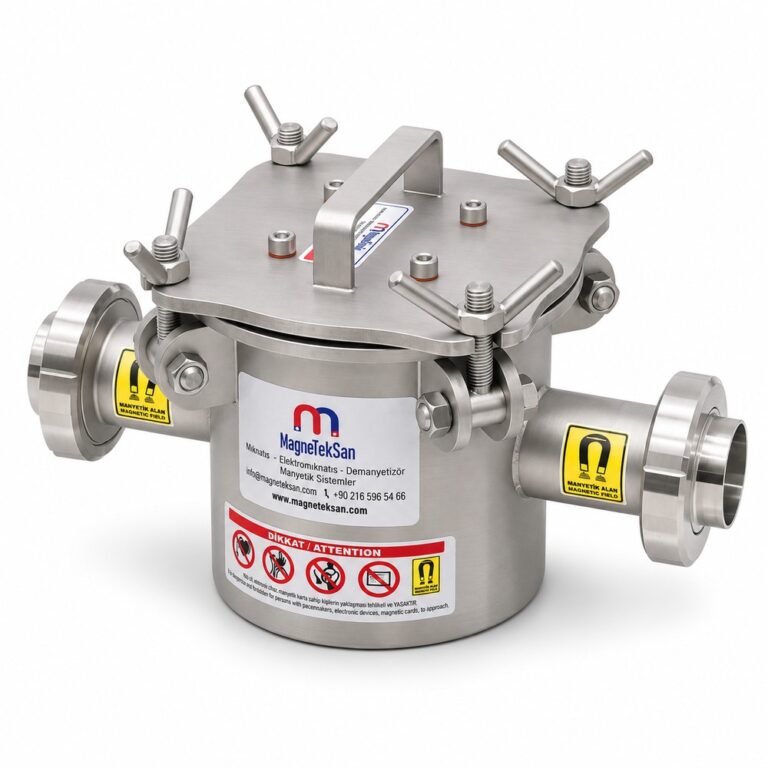
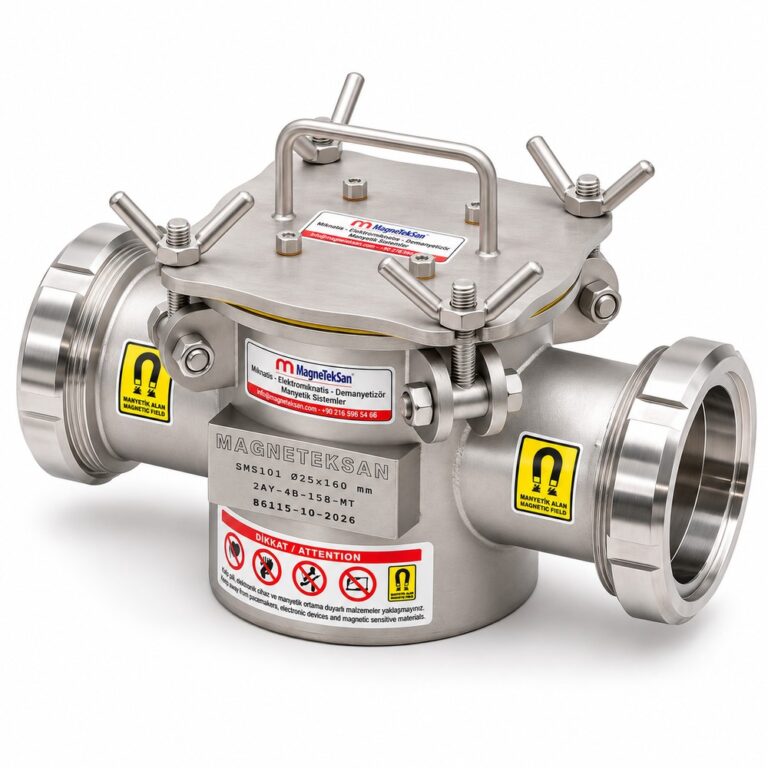
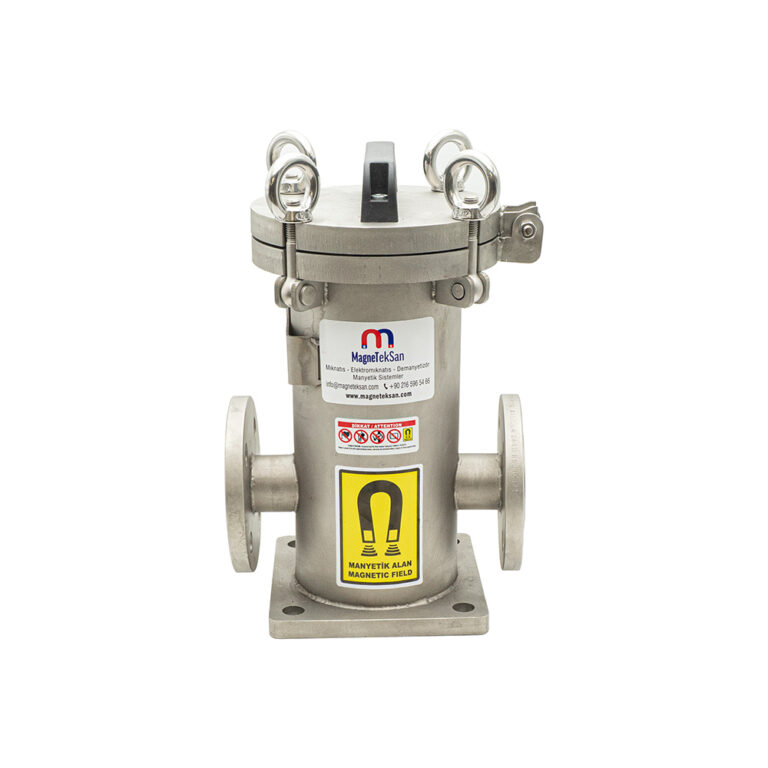
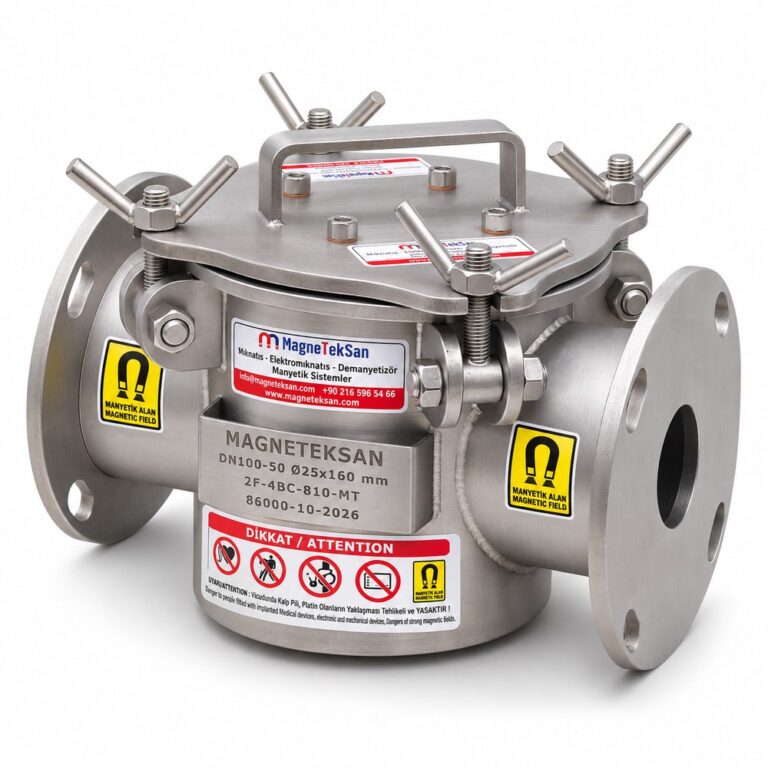
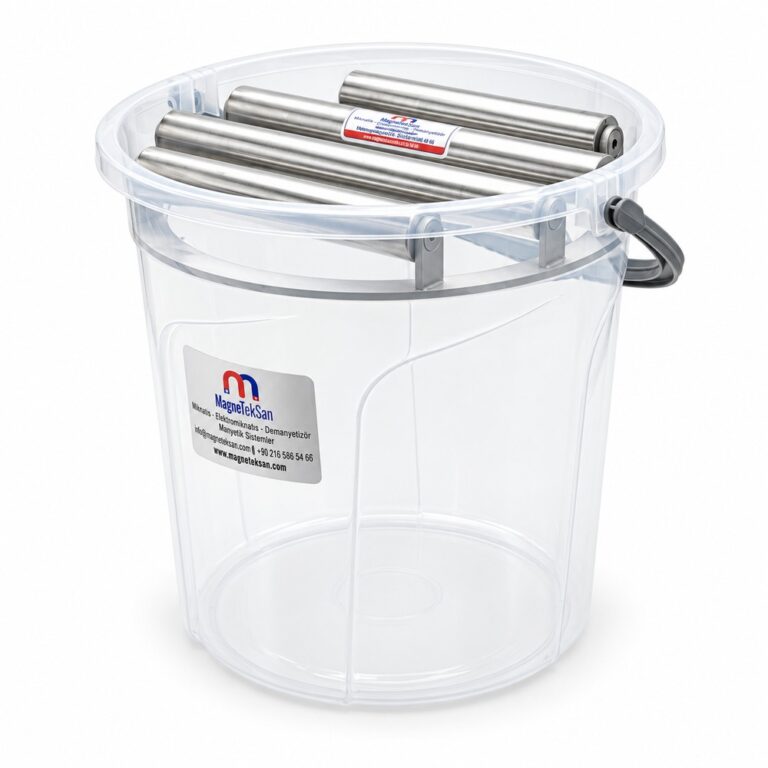
The flanged DN100-50 magnetic filter is fitted in the line that carries glucose syrup from the storage tank to the cooker in confectionery plants. Pumped syrup enters the cylindrical stainless steel housing through the wide DN100 port, flows around four Ø25×160 mm neodymium bars that hang from the lid and are joined by a plate at their lower ends, and leaves through the DN50 port. Ferrous particles mixed into the syrup, such as screws, washers, wire and pump wear fragments, stay on the surface of the bars.
| Feature |
Value |
| Product type |
Inline neodymium magnetic filter |
| Model code |
DN100-50 Ø25×160 mm 2F-4BC-810-MT |
| Connection |
Flanged inlet and outlet (DN100 / DN50) |
| Number of bars |
4 (lower ends joined by a plate) |
| Bar size |
Ø25×160 mm |
| Magnetic field |
10,000 Gauss (at the bar surface) |
| Magnet material |
Neodymium (NdFeB) |
| Housing |
Stainless steel, cylindrical |
| Lid |
With handle, closed by 4 swing bolts and wing nuts |
| Lid gasket |
Silicone |
| Maximum operating temperature |
80 °C |
| Cleaning |
Manual (by opening the lid) |
| Power supply |
None required (permanent magnet) |
| Application |
Confectionery production, glucose syrup transfer line |
How Does Metal Get into Glucose Syrup?
In hard candy, jelly and caramel production, glucose syrup arrives at the plant by tanker and is kept in heated storage tanks so that it stays pumpable. From there it is pumped through valves and bends to the weighing unit and the sugar cooker. The tanker discharge pump, worn parts of gear pumps, and valve and clamp connections can all leave small metal fragments along the way. A nut or washer left in the line after maintenance also travels with the syrup.
A small piece of metal cannot be seen in thick, sticky syrup. If it reaches the cooker and depositor, it can scratch nozzles and moulds and, in the worst case, end up inside a sweet and reach the consumer. A magnetic filter fitted between the tank outlet and the cooker catches ferrous contaminants at this stage.
Where Is the DN100-50 Magnetic Filter Fitted?
- At the glucose storage tank outlet, after the transfer pump
- In the feed line to the cooker, before the weighing or dosing unit
- In the tanker discharge line, before the syrup enters the storage tank
The filter is bolted to the mating flanges in the line with a gasket in between. It is installed with the wide DN100 port on the tank or pump side and the DN50 port on the pipe going to the cooker. Because the bars are lifted out together with the lid, leave more clearance above the filter than the length of the bars.
Product Plate and Model Code
The model code (DN100-50 Ø25×160 mm, 2F-4BC-810-MT) and the product number (86000-10-2026) are engraved on the stainless steel plate on the housing. In the code, 2F stands for flanged inlet and outlet, 4BC for four bars, 810 for the 80 °C limit and 10,000 Gauss, and MT for manual cleaning. Simply give us these two details when ordering spare bars or asking for a Gauss measurement.
How Are the Bars Cleaned?
- Stop the pump and make sure the line pressure has fully dropped.
- Loosen the four wing nuts and swing the bolts outwards.
- Lift the lid by its handle; the bars, joined at their lower ends, come out in one piece.
- Soften the syrup layer on the bars with warm water and wipe the metal fragments off along the bars with a disposable towel.
- Seat the yellow silicone gasket, close the lid and tighten the nuts evenly in a crosswise order.
If the line is washed with hot water or CIP, the temperature must not exceed 80 °C. Washing dissolves the syrup stuck to the bars, but metal held by the magnets stays in place, so manual cleaning is still needed. Check the filter at the end of every shift during the first weeks and extend the interval according to the amount of metal collected.
Limitations and Safety Warnings
The magnet only attracts iron-based (ferromagnetic) particles. Aluminium, brass, glass, plastic, gasket pieces and austenitic stainless steel fragments pass through the filter; a metal detector or sieve at the end of the line is needed for these. Product or washing temperatures above 80 °C can permanently weaken the magnets. Do not open the lid while the line is under pressure. Keep the neodymium bars away from people with pacemakers or medical implants, magnetic cards and electronic devices, and keep fingers clear when bringing them close to a steel surface.
Other Models
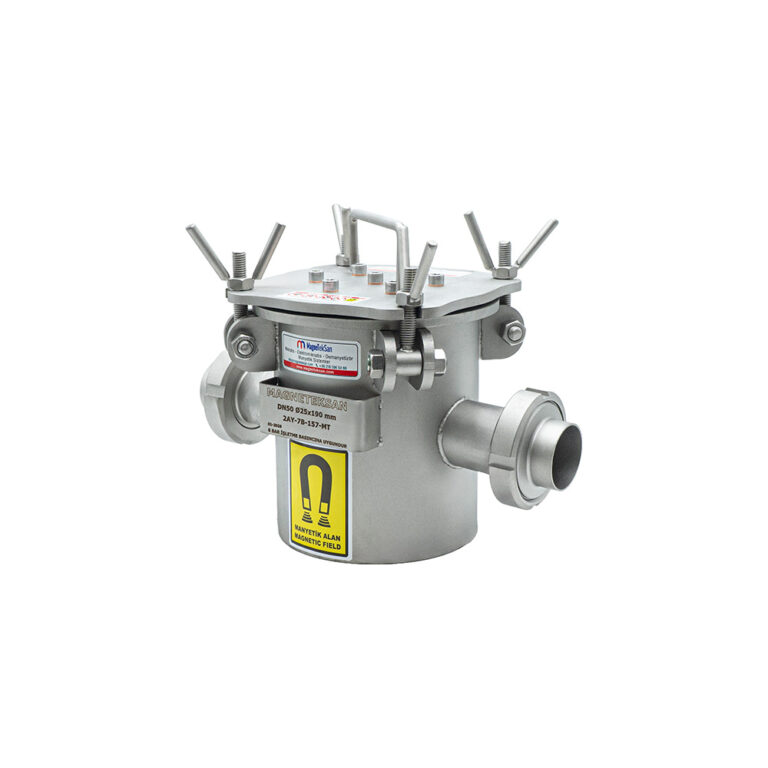
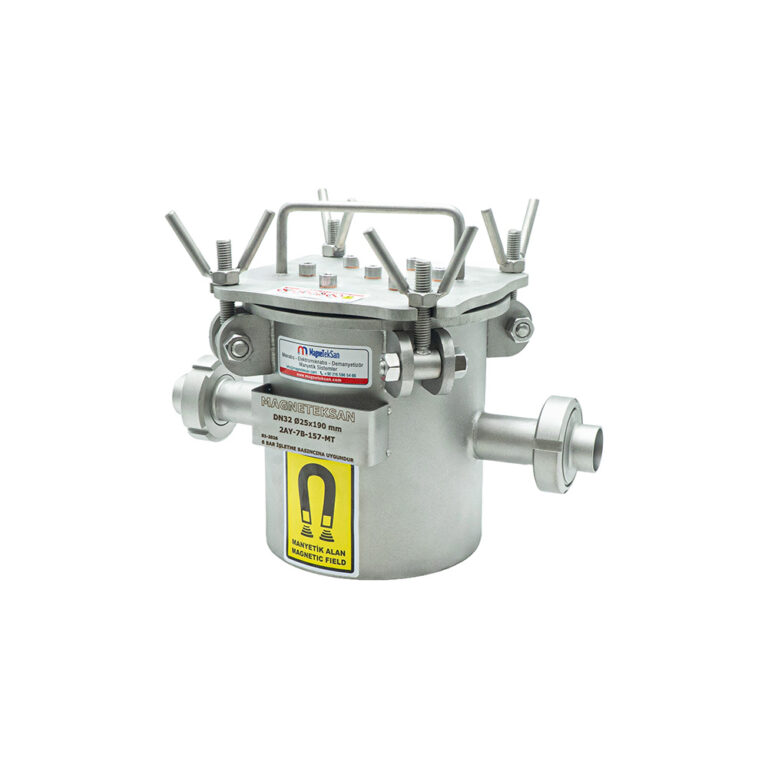
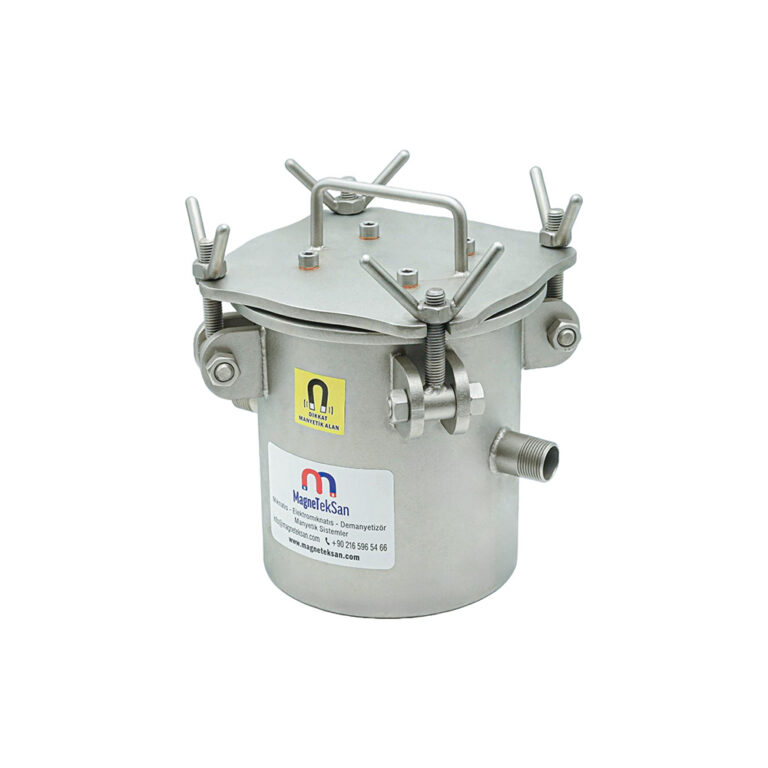
Filters for other pipe sizes and connection types are listed on the manual cleanable magnetic filters page. To choose the right model for your line, send us the pipe diameter, flow rate and product temperature through the quote form.
Frequently Asked Questions
Does thick glucose syrup flow easily through the filter?
The syrup is pushed by the pump through the gaps between the bars and between the bars and the housing wall. As the syrup cools, its viscosity and the pressure drop increase; share the flow rate, temperature and viscosity with us and we will assess suitability together.
Why are the inlet and outlet sizes different?
This filter was made for a line with DN100 pipe on the tank side and DN50 pipe on the cooker side, so it also takes care of the size change without a separate reducer. We can make it with equal or different flange sizes to suit your line.
Does the magnetic strength of the bars drop over time?
There is a 10,000 Gauss field at the bar surface. As long as the 80 °C limit is not exceeded, the strength of the neodymium magnets does not drop noticeably; you can keep a record of this with periodic Gauss measurements.