Product Information
Extra Information
Product Information
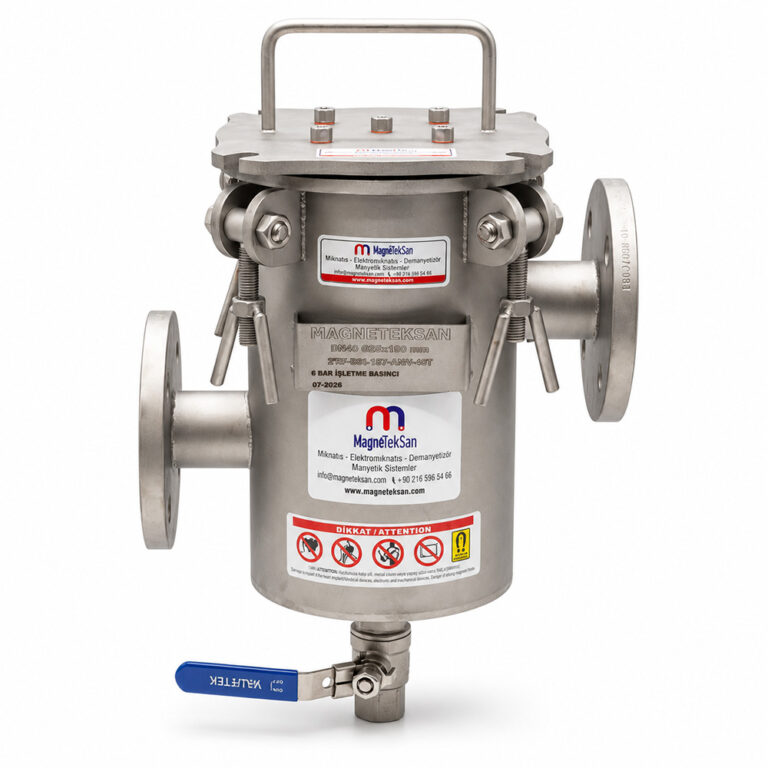
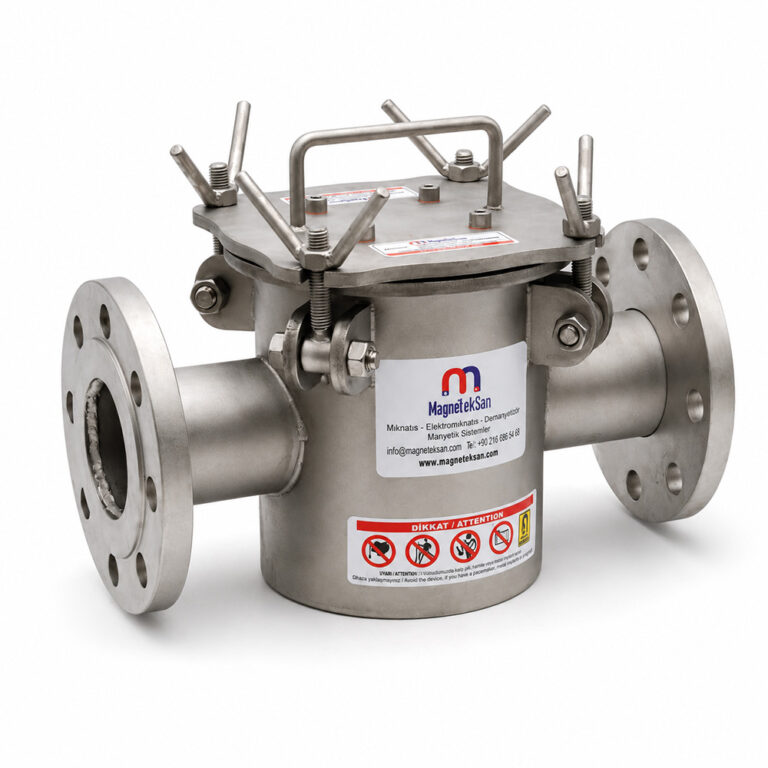
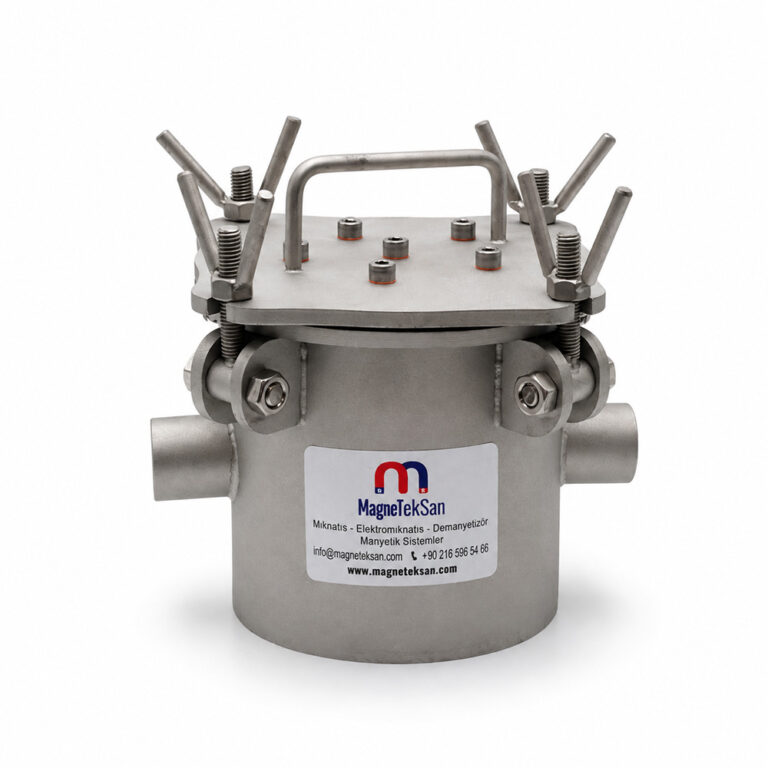
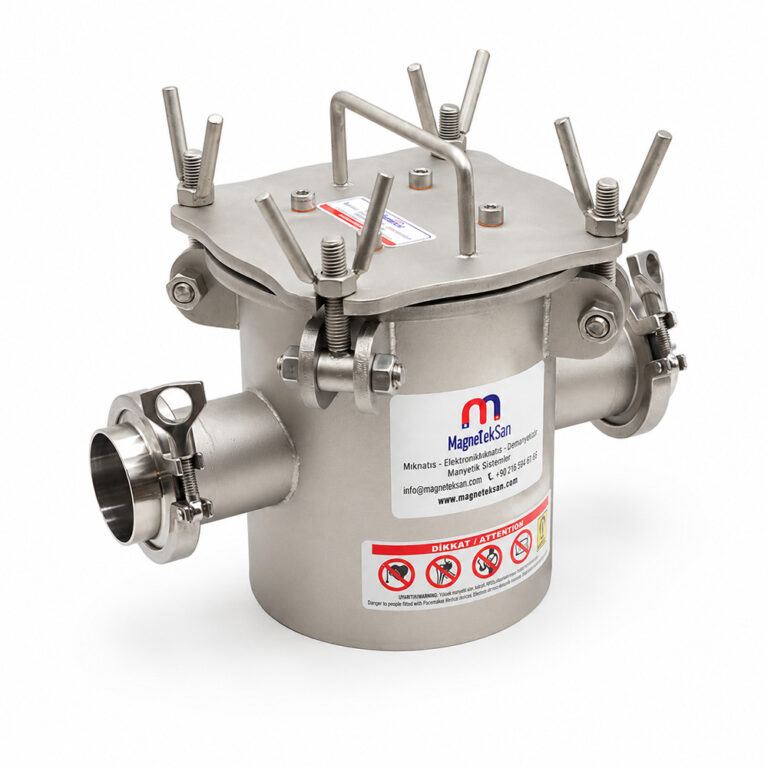
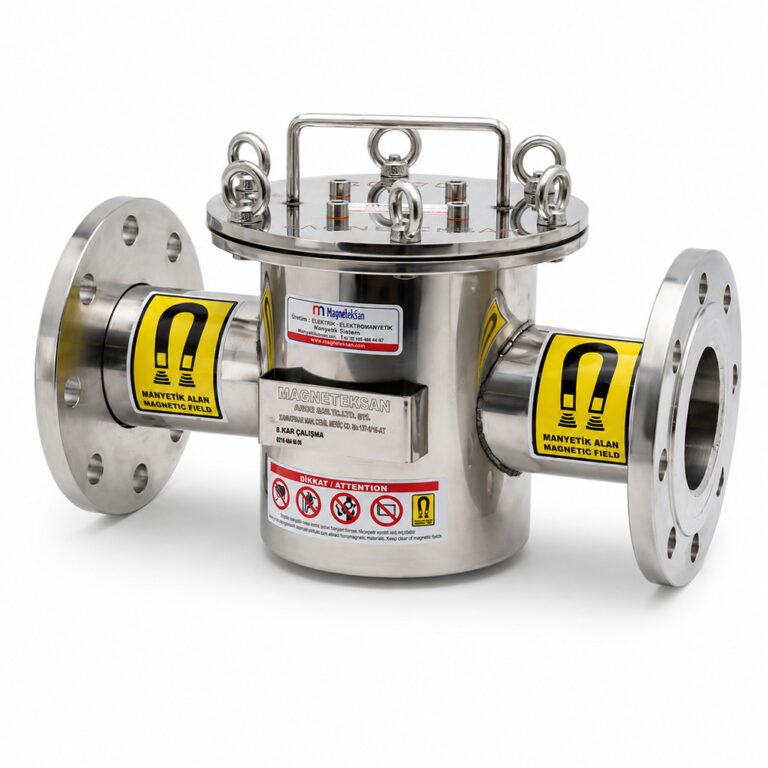
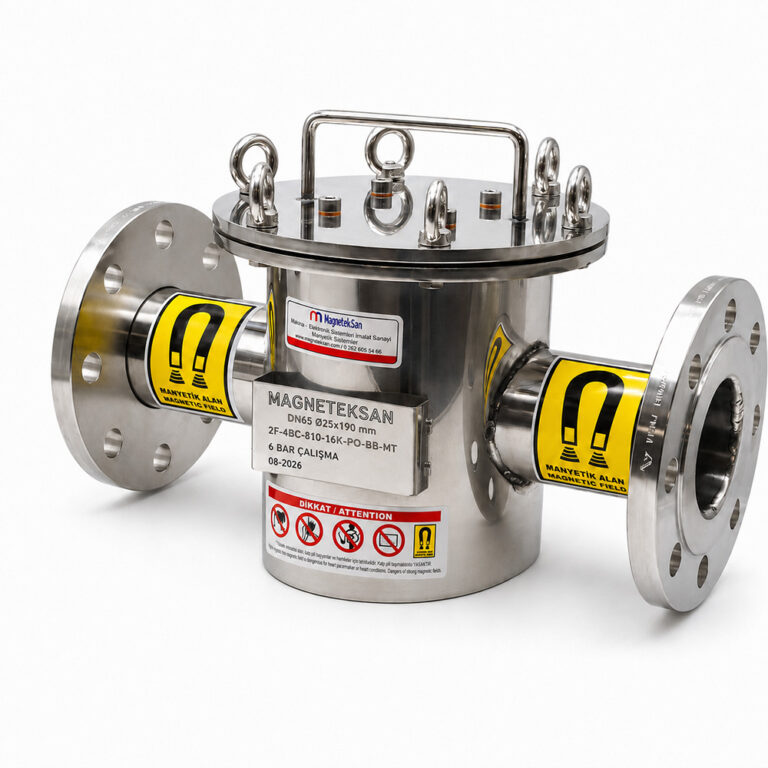
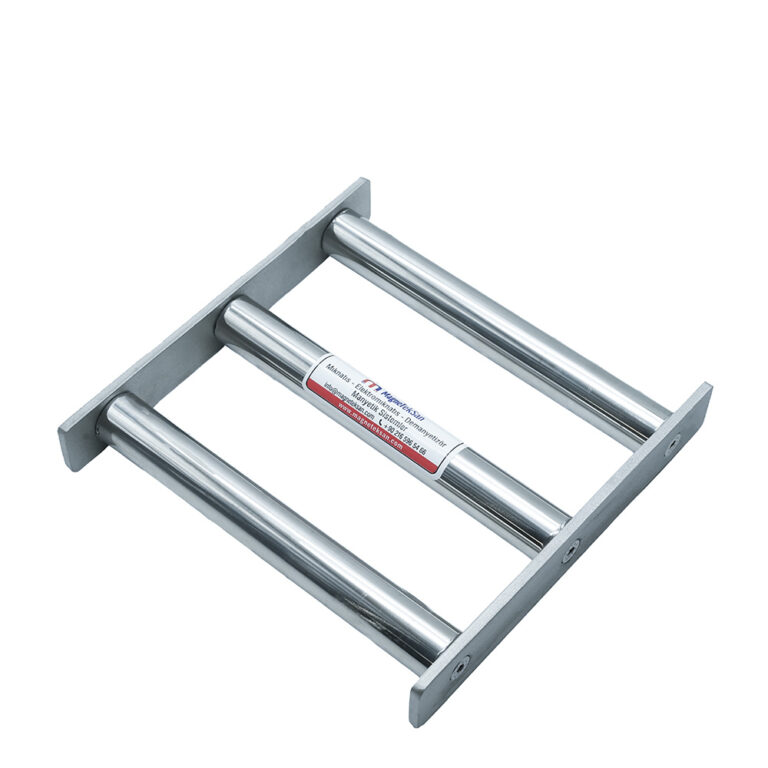
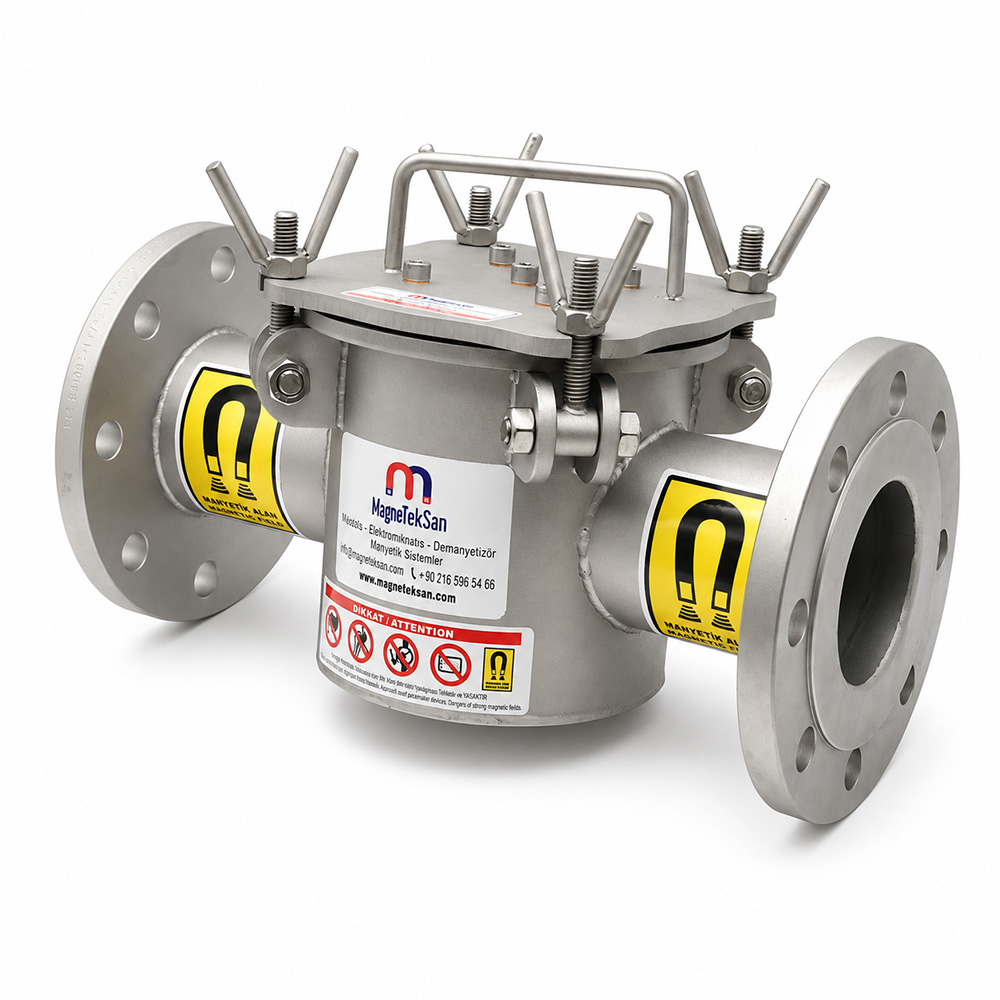
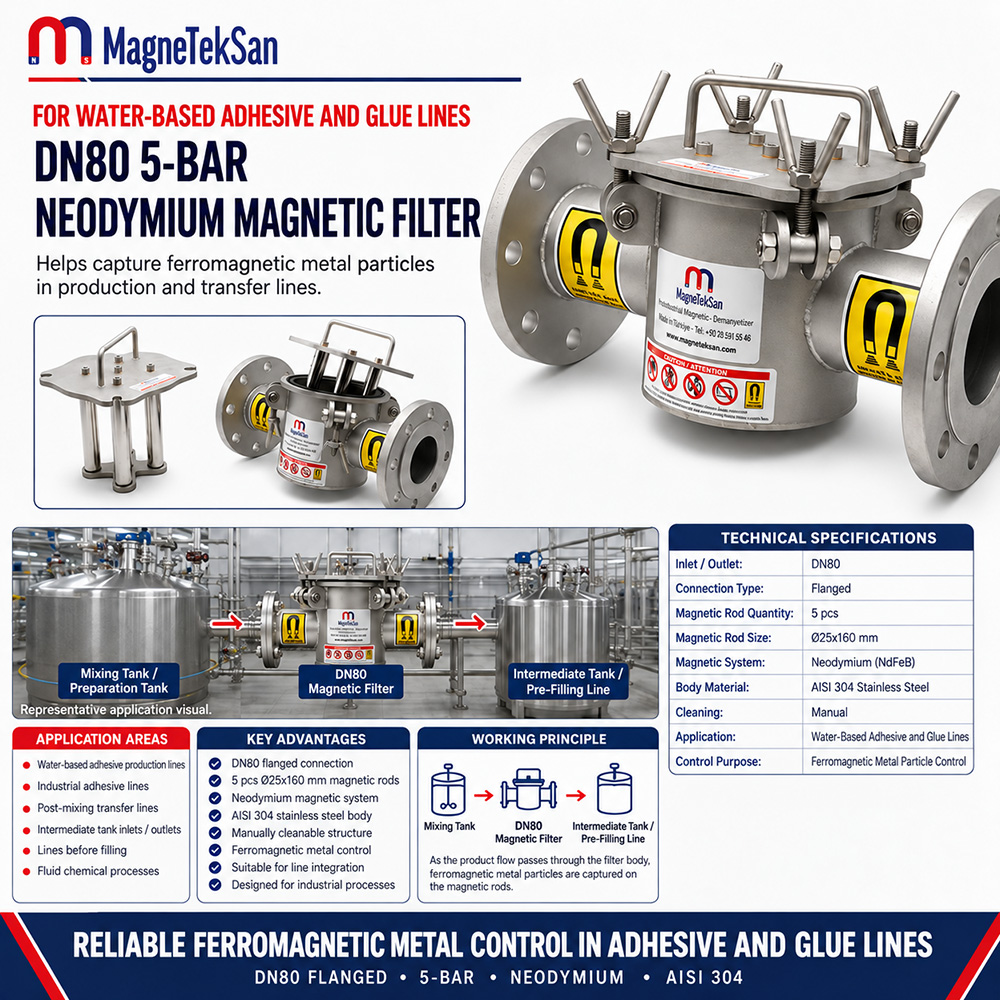
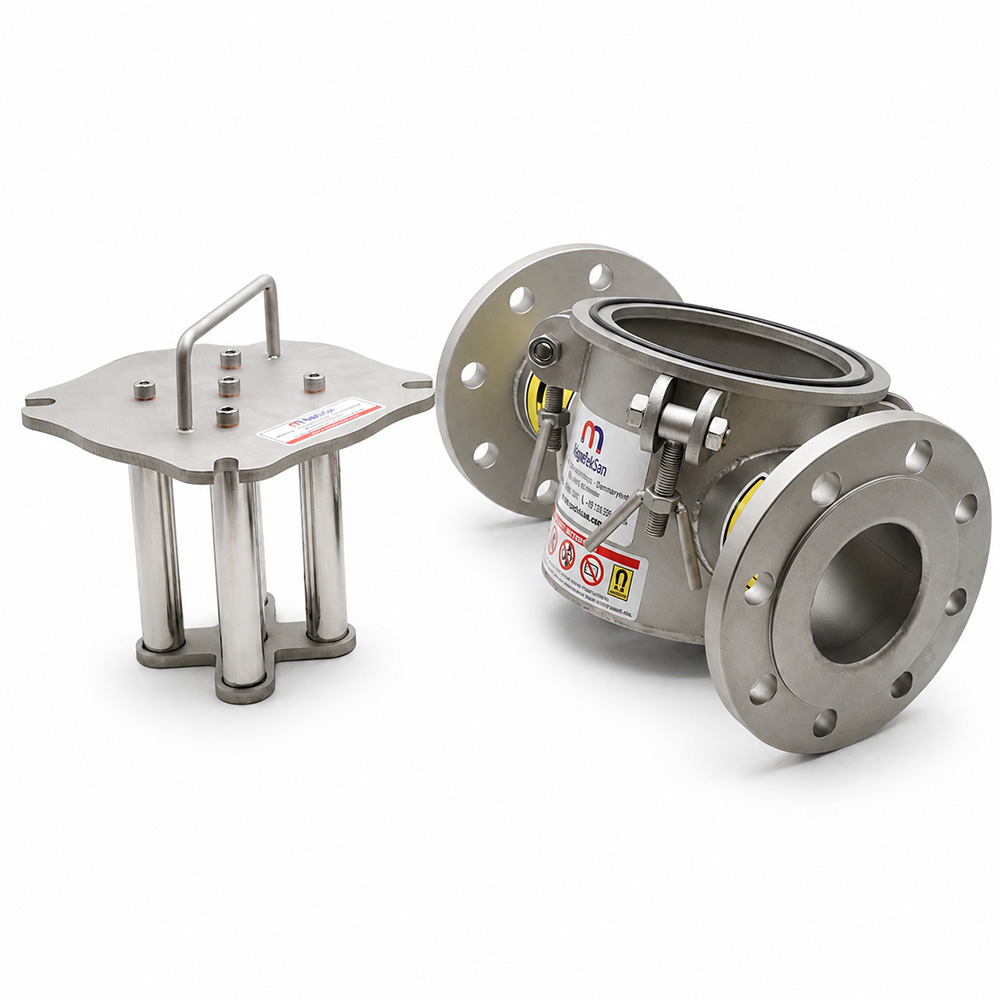
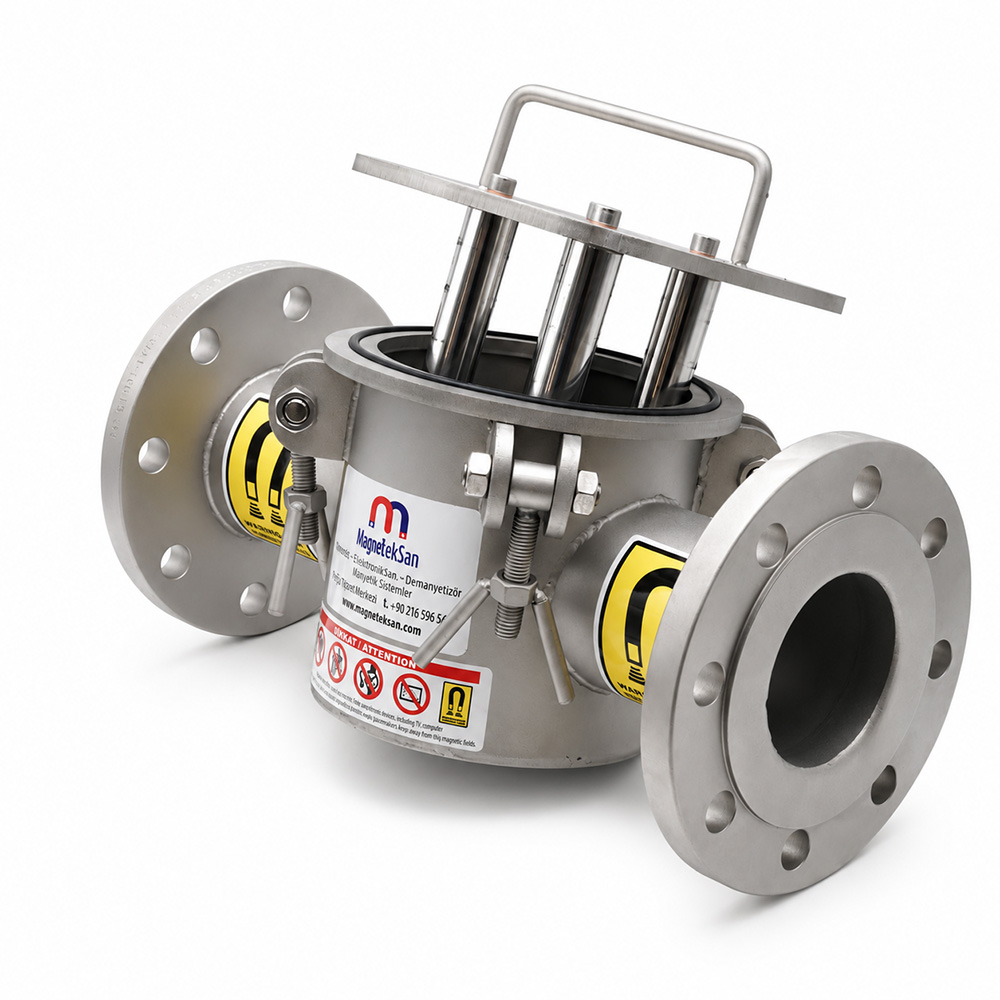
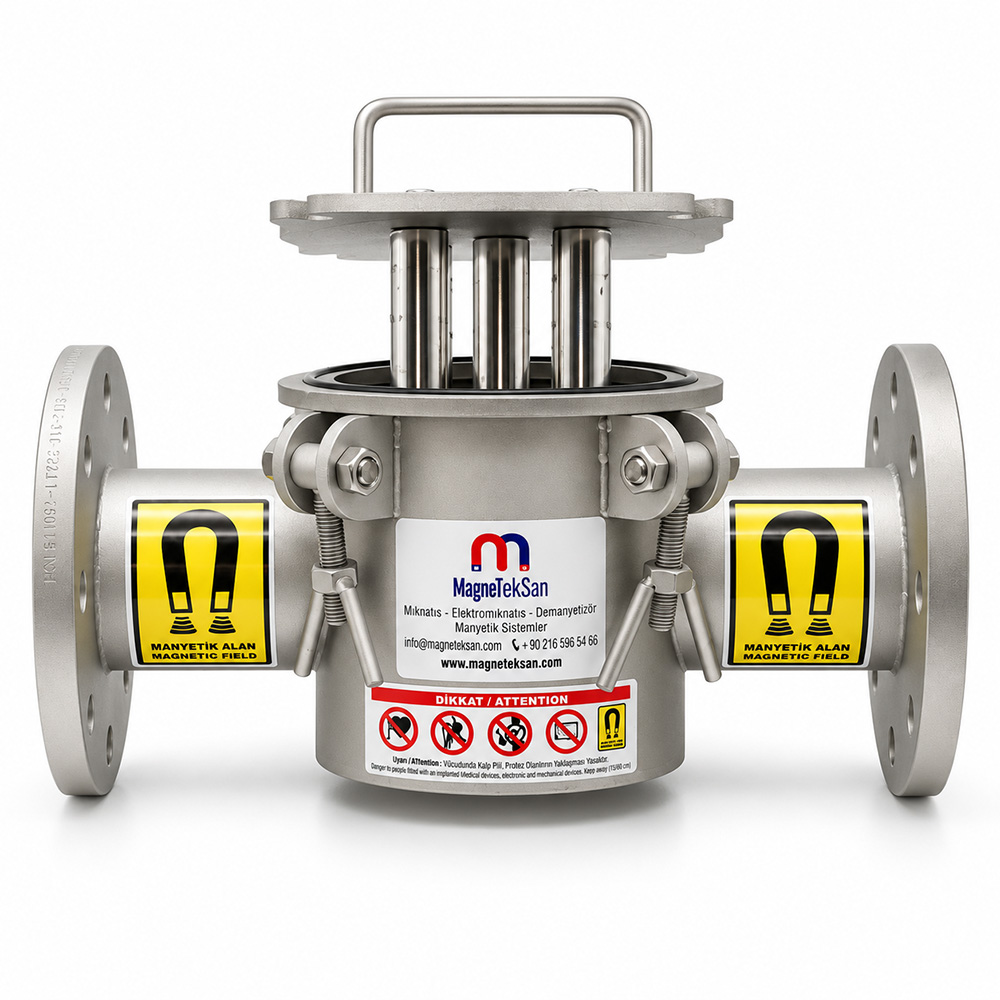
The DN80 5-Rod Neodymium Magnetic Filter is designed to help capture ferromagnetic iron and steel particles in water-based adhesive and glue production and transfer lines. Its five Ø25×160 mm neodymium magnetic rods provide multiple magnetic collection surfaces inside an AISI 304 stainless steel housing with DN80 flanged inlet and outlet connections. The openable top cover allows manual cleaning, while installation after mixing or homogenisation and before filling can help reduce the transfer of suitable ferromagnetic wear particles to subsequent processing stages.
| Technical Specification | Value |
|---|---|
| Product Type | Neodymium Inline Magnetic Filter |
| Nominal Inlet Connection | DN80 |
| Nominal Outlet Connection | DN80 |
| Connection Type | Flanged |
| Number of Magnetic Rods | 5 |
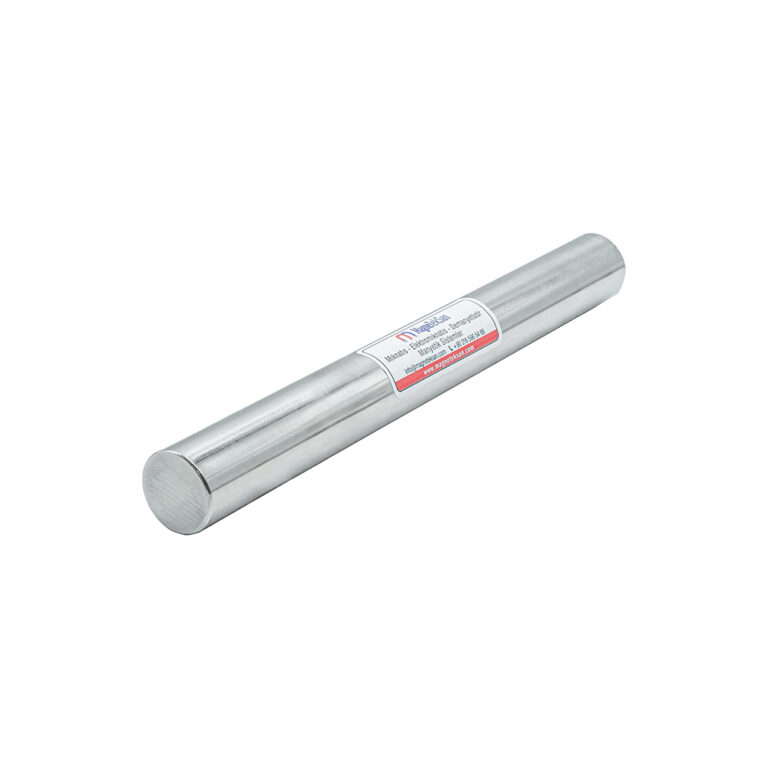
| Magnetic Rod Dimensions | Ø25×160 mm |
| Magnetic Rod Diameter | Ø25 mm |
| Magnetic Rod Length | 160 mm |
| Magnetic Material | Neodymium (NdFeB) |
| Magnetic System | Permanent Magnetic Rods |
| Housing Material | AISI 304 Stainless Steel |
| Cleaning Method | Manual Cleaning |
| Access Design | Openable Top Cover |
| Main Application | Water-Based Adhesives and Glues |
| Typical Process Position | After Mixing / Homogenisation and Before Filling |
| Target Contaminants | Suitable Ferromagnetic Iron and Steel Particles |
Extra Information
1. Why Is a Magnetic Filter Used in Water-Based Adhesive Production?
Water-based adhesive production involves several processing stages, including raw material preparation, mixing, homogenisation, pumping, intermediate storage and filling.
During these operations, adhesives may come into contact with metal components in mixers, pumps, valves and pipelines. Mechanical wear, maintenance activities or other contamination sources may introduce small ferromagnetic iron and steel particles into the product.
The DN80 5-Rod Neodymium Magnetic Filter provides an additional contamination-control point by helping capture suitable ferromagnetic particles before they reach downstream equipment or filling systems.
Magnetic filtration complements preventive maintenance and other quality-control procedures rather than replacing them.
2. What Is the DN80 5-Rod Neodymium Magnetic Filter?
The DN80 magnetic filter is an inline magnetic separation device designed for compatible water-based adhesive and glue production lines.
Its confirmed specifications include DN80 flanged inlet and outlet connections, five neodymium magnetic rods measuring Ø25×160 mm each, an AISI 304 stainless steel housing, an openable top cover and manual cleaning.
The magnetic rods help retain suitable ferromagnetic particles as the adhesive passes through the filter housing.
Before installation, compatibility with the adhesive formulation, viscosity, operating temperature, flow rate, working pressure and flange arrangement must be assessed.
3. How Does the Neodymium Magnetic Adhesive Filter Work?
Inside the filter housing, five permanent neodymium magnetic rods generate a magnetic field without requiring electrical power.
As water-based adhesive flows through the filter, suitable ferromagnetic iron and steel particles may be attracted to the magnetic rod surfaces.
The adhesive continues towards the next processing stage while the captured particles remain on the rods until cleaning.
A simplified process is:
Adhesive Flow → DN80 Magnetic Filter → Ferromagnetic Particle Retention → Continued Adhesive Flow
Actual capture performance depends on particle size, magnetic properties, adhesive viscosity, flow conditions and proximity to the magnetic surfaces.
Complete removal of every metal particle cannot be guaranteed.
4. Why Is Magnetic Filtration Considered After Mixing or Homogenisation?
Mixing and homogenisation are important stages in adhesive manufacturing.
During these processes, the product may contact rotating shafts, mixer blades, vessel components and other mechanical surfaces.
Depending on equipment condition and operating conditions, ferromagnetic wear particles may enter the adhesive.
Installing a magnetic filter after mixing or homogenisation can create a central control point before the product is transferred to an intermediate tank or filling machine.
A possible arrangement is:
Raw Material Preparation → Mixing / Homogenisation → DN80 Magnetic Filter → Intermediate Tank → Filling
The final installation position should be selected according to the actual process layout.
5. Can the DN80 Magnetic Filter Be Installed Before Adhesive Filling?
Yes. Installing the DN80 magnetic filter before adhesive filling can be considered where the process conditions and mechanical connections are compatible.
A possible arrangement is:
Product Tank → DN80 Magnetic Filter → Filling Machine
This provides an additional magnetic contamination-control stage before the adhesive enters its packaging.
The filter may help retain suitable ferromagnetic particles introduced during previous manufacturing or transfer stages.
However, magnetic filtration does not guarantee that the packaged adhesive will be entirely free from metal contamination.
Other inspection or filtration methods may still be necessary depending on product requirements.
6. Where Can Ferromagnetic Metal Particles Enter an Adhesive Production Line?
Potential contamination sources include mixers, homogenisers, pumps, valves, metal pipelines and worn mechanical components.
Metal particles may also enter the system during installation, repair or maintenance operations.
The amount and characteristics of contamination depend on equipment design, wear condition and maintenance practices.
A correctly positioned magnetic filter can help reduce the transfer of suitable ferromagnetic particles to downstream processes.
Nevertheless, the source of contamination should also be identified and corrected. Magnetic filtration does not replace proper equipment maintenance.
7. Why Does This Magnetic Filter Use Five Magnetic Rods?
This DN80 model contains five neodymium magnetic rods.
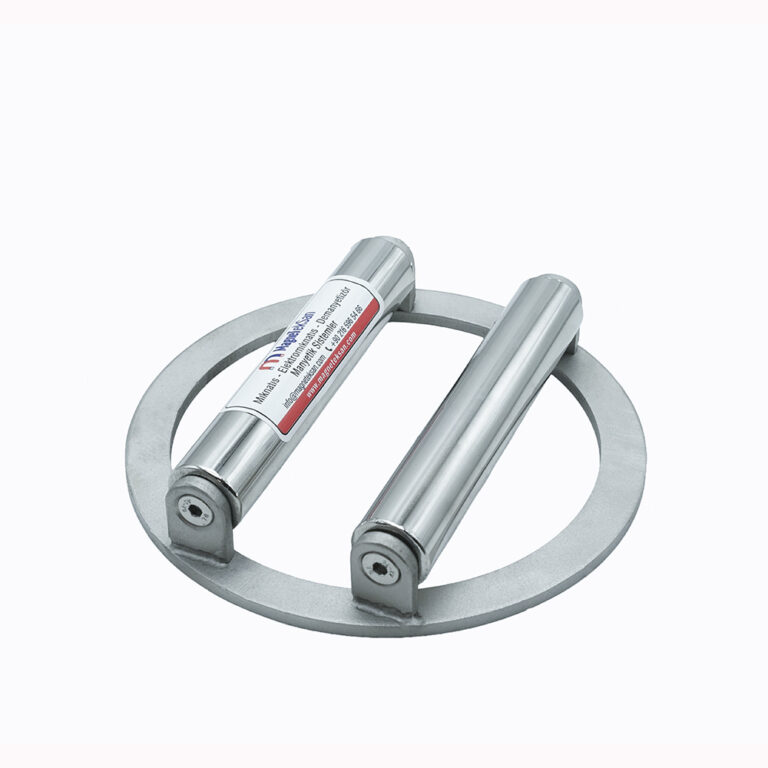
Multiple rods provide several magnetic collection surfaces inside the filter housing.
As the adhesive flows through the separation area, suitable ferromagnetic particles may approach one of these surfaces and become retained.
The arrangement creates opportunities for interaction between the particles and the magnetic field.
However, the number of rods alone does not establish a guaranteed separation efficiency.
Rod arrangement, magnetic field characteristics, viscosity, flow rate and particle properties must also be considered.
8. What Is the Importance of the Ø25×160 mm Magnetic Rod Dimensions?
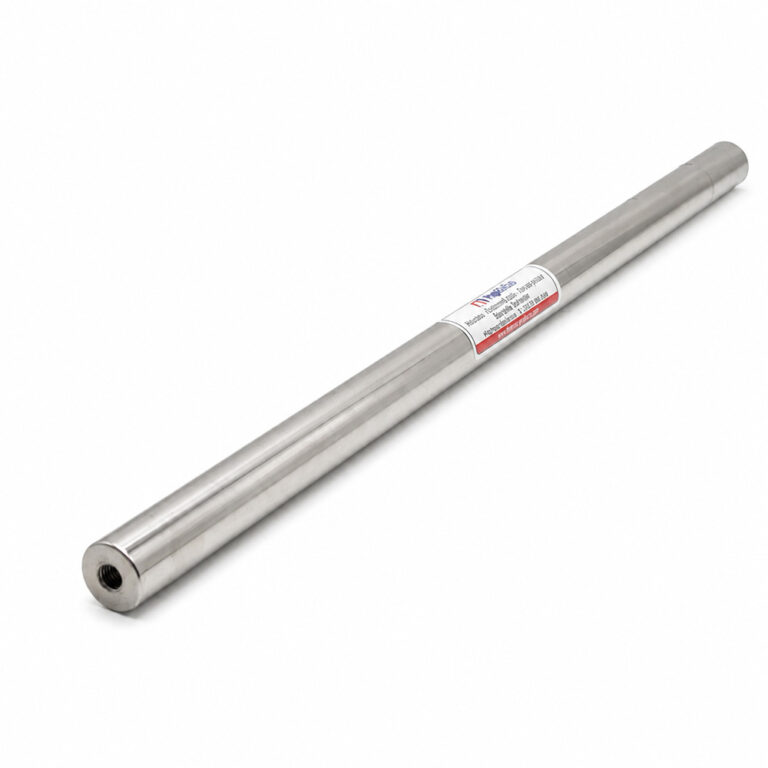
Each magnetic rod has confirmed dimensions of Ø25×160 mm, meaning a diameter of 25 mm and a length of 160 mm.
These dimensions are relevant when evaluating the geometry of the magnetic collection surfaces and the internal assembly.
The filter contains five rods of this size.
However, rod dimensions alone cannot establish a guaranteed magnetic flux density, minimum captured particle size or separation efficiency.
Additional technical data and operating conditions are required to determine these parameters.
9. What Are the Advantages of DN80 Flanged Connections?
The filter has DN80 flanged inlet and outlet connections for installation into compatible adhesive production pipelines.
Flanged connections can facilitate mechanical integration with suitable piping systems and provide a defined connection interface.
Before installation, the mating flange standard, pressure rating, gasket material, bolt arrangement and pipeline operating conditions must be checked.
The DN80 designation indicates nominal connection size, not a particular flange standard.
It also does not establish the filter’s maximum flow rate or allowable working pressure.
10. Does a DN80 Connection Determine the Filter’s Flow Capacity?
No. DN80 indicates the nominal size of the inlet and outlet connections.
Actual flow capacity depends on the adhesive viscosity, internal filter geometry, magnetic rod arrangement, pressure drop, pump characteristics and operating conditions.
Water-based adhesives can vary substantially in viscosity and flow behaviour.
For this reason, the required production flow rate should be assessed together with the actual adhesive formulation.
No specific maximum flow capacity has been confirmed for this model.
The filter should not be selected solely on the basis of its DN80 connection size.
11. Why Is Adhesive Viscosity Important for Magnetic Filtration?
Water-based adhesives may have higher viscosities than water, depending on their formulation and processing temperature.
Viscosity affects how the adhesive flows through the housing and around the magnetic rods.
Higher viscosity may influence pressure drop, pump loading, residence time and cleaning requirements.
Before selecting the filter, the adhesive viscosity should be determined under actual operating conditions.
A filter suitable for one adhesive formulation may not automatically be suitable for another.
No maximum allowable viscosity has been confirmed for this model.
12. How Does Flow Rate Affect Ferromagnetic Particle Separation?
Flow rate influences the time particles spend within the magnetic field.
At higher flow velocities, the available time for magnetic attraction may decrease.
Depending on the internal geometry and particle characteristics, this can affect the likelihood of particles reaching a magnetic collection surface.
Flow rate should therefore be evaluated together with adhesive viscosity, particle size, magnetic properties and pressure drop.
The five magnetic rods provide multiple collection surfaces, but they do not guarantee a particular separation efficiency at an unspecified flow rate.
13. Why Should Pressure Drop Be Evaluated Before Installation?
Adding equipment to a liquid transfer line may increase hydraulic resistance.
Inside this filter, adhesive flows through the housing and around the magnetic rods.
The resulting pressure drop depends on the internal flow path, viscosity, flow rate and operating conditions.
Before installation, the pump must be assessed to determine whether it can maintain the required flow with the additional resistance.
The housing, flanges and seals must also be compatible with the actual line pressure.
The maximum allowable working pressure and pressure-drop curve have not been confirmed for this model.
14. Can This Filter Be Used for Water-Based Industrial Glues?
The filter is intended for applications involving water-based adhesives and glues.
Its suitability for a particular industrial glue depends on chemical composition, viscosity, operating temperature, flow rate and pressure.
The adhesive must also be compatible with the AISI 304 stainless steel housing and other wetted components.
The magnetic system is designed to retain suitable ferromagnetic metal particles rather than remove the normal ingredients of the adhesive formulation.
Each application should therefore be evaluated individually.
15. Is the DN80 Magnetic Filter Suitable for Packaging Adhesives?
Water-based adhesives used in packaging operations may pass through mixing, pumping, transfer and filling stages.
If ferromagnetic contamination is a concern, the DN80 magnetic filter may be considered as an additional control point.
Potential applications include certain water-based adhesives used for cardboard and packaging production, subject to process compatibility.
However, packaging adhesive formulations differ in viscosity, additives and chemical characteristics.
Compatibility with the housing, seals and other wetted components must be verified for the specific product.
16. Can the Magnetic Filter Be Used for Water-Based Laminating Adhesives?
Certain water-based laminating adhesives may be evaluated for magnetic filtration where ferromagnetic metal contamination is a relevant risk.
The filter’s five neodymium rods are intended to retain suitable magnetic particles that may originate from equipment wear or other sources.
Before use, the formulation, viscosity, flow conditions and chemical compatibility must be assessed.
The filter is not designed to remove nonmagnetic particles, adhesive gels or other formulation defects merely because they are present in the product.
Suitability should be confirmed for the actual laminating adhesive process.
17. Does the Magnetic Filter Capture the Adhesive Itself?
The primary purpose of the magnetic filter is not to remove adhesive from the production stream.
The magnetic rods are designed to attract suitable ferromagnetic metal particles.
The basic operating principle is:
Water-Based Adhesive → Five Magnetic Rods → Ferromagnetic Particle Retention → Continued Adhesive Flow
The behaviour of special fillers or additives should be evaluated according to the adhesive formulation.
Magnetic filtration is not a substitute for mechanical filtration designed to remove nonmagnetic solids or agglomerates.
18. Which Ferromagnetic Metals Can the Filter Capture?
The neodymium magnetic system is intended to attract particles with suitable ferromagnetic properties.
Potential examples include iron fragments, carbon steel particles, ferromagnetic steel shavings and suitable metal wear particles from mixers or pumps.
Whether a particular particle is captured depends on its size, shape, mass, magnetic properties and distance from the rods.
Therefore, the filter should not be described as capable of capturing every metal or every particle size.
No guaranteed minimum captured particle size or separation efficiency has been confirmed.
19. Can the Filter Capture Fine Metal Wear Particles?
Fine ferromagnetic wear particles may be generated during operation of mixers, pumps, valves and other equipment.
Neodymium magnetic rods may help capture these particles when their magnetic properties and the flow conditions allow sufficient attraction.
However, small particle size alone does not guarantee capture.
Performance depends on magnetic properties, viscosity, flow rate and filter geometry.
A specific micron rating or guaranteed minimum captured particle size has not been established for this product.
20. Can the Filter Remove Aluminium, Copper or Brass?
Aluminium, copper and brass are not ferromagnetic under normal operating conditions.
They are therefore not attracted to ordinary permanent magnets in the same way as iron and ferromagnetic steel.
The DN80 neodymium magnetic filter should not be presented as a universal separator for all metals.
Stainless steel grades also vary in magnetic behaviour depending on their alloy composition and metallurgical structure.
If the process requires removal of non-ferromagnetic particles, additional separation or detection technologies may be necessary.
21. What Are the Advantages of the AISI 304 Stainless Steel Housing?
The DN80 magnetic filter has a confirmed AISI 304 stainless steel housing.
AISI 304 is widely used in industrial equipment because of its general corrosion resistance and fabrication characteristics.
The housing provides the mechanical structure containing the magnetic rod assembly.
However, water-based adhesives can contain different chemical additives, and cleaning agents may have properties that differ from those of the adhesive.
Compatibility with AISI 304 must therefore be checked for the actual formulation and cleaning procedure.
The housing material alone does not confirm a maximum working pressure, universal chemical resistance or a particular certification.
22. Why Must Chemical Compatibility Be Checked for Adhesive Applications?
Water-based adhesive formulations vary according to manufacturer and intended use.
They may contain polymers, resins, fillers, dispersants and other additives.
Cleaning chemicals used during product changeovers may also differ from the adhesive under normal operating conditions.
Compatibility assessment should include the AISI 304 housing and all other wetted components.
Operating temperature and cleaning methods should also be considered.
The exact gasket material and chemical compatibility limits have not been confirmed for this model.
23. Can the DN80 Magnetic Filter Be Installed After a Pump?
Yes. Depending on the hydraulic design, installation on the pump discharge side may be considered.
A possible arrangement is:
Adhesive Transfer Pump → DN80 Magnetic Filter → Filling Machine
This position may help capture suitable ferromagnetic particles originating from pump wear or upstream equipment.
However, flow rate, line pressure, viscosity and pressure drop must be evaluated.
The filter’s allowable pressure and flange compatibility must be verified before installation.
The installation position should be selected according to the process requirements rather than convenience alone.
24. Is a Magnetic Filter the Same as a Mechanical Mesh Filter?
No. Magnetic and mechanical filtration use different physical principles.
The DN80 magnetic filter uses neodymium rods to attract suitable ferromagnetic particles.
A mechanical mesh filter retains particles according to their size and the openings of the filter element.
A micron filtration rating should not be assigned to the magnetic filter without specific technical verification.
The magnetic filter should also not be assumed to remove nonmagnetic solids, adhesive lumps or agglomerates.
Depending on the process, magnetic and mechanical filtration may be used as complementary methods.
25. Can a Magnetic Filter Replace a Metal Detector?
Not necessarily. Magnetic filters and metal detectors perform different functions.
A magnetic filter physically captures suitable ferromagnetic particles that pass sufficiently close to its magnetic rods.
A metal detector uses an electronic detection principle and may identify different types of metals depending on its design and operating conditions.
The magnetic filter should not be assumed to detect or remove every type of metal contamination.
For applications with more demanding contamination-control requirements, both technologies may be considered as complementary measures.
26. How Is the DN80 Magnetic Filter Cleaned Manually?
This product features an openable top cover and a manually cleanable magnetic rod assembly.
Before cleaning, the production line must be safely stopped, hazardous energy sources isolated and unintended restart prevented.
The filter must then be fully depressurised and drained as required by the site’s safety procedures.
The top cover can be opened and the magnetic rod assembly accessed according to the manufacturer’s instructions.
Captured ferromagnetic particles should be carefully removed from the rod surfaces. After cleaning, the assembly must be inspected, correctly reinstalled and checked before the line returns to operation.
Permanent magnets remain magnetically active even when the production equipment is switched off.
Appropriate precautions must therefore be taken against sudden attraction of ferromagnetic tools and components.
27. How Often Should the Magnetic Rods Be Inspected and Cleaned?
There is no universal cleaning interval suitable for every water-based adhesive production line.
Inspection and cleaning frequency depend on contamination levels, operating hours, production volume, adhesive viscosity, flow conditions and the rate of particle accumulation.
More frequent inspections during initial operation can help establish an appropriate maintenance schedule.
As metal particles accumulate on the rods, the available magnetic collection surfaces may become less accessible to incoming particles.
Cleaning intervals should therefore be adjusted according to actual inspection results.
28. How Do You Select the Right Magnetic Filter for Water-Based Adhesives?
Selecting a magnetic filter requires more than checking the nominal connection size or number of magnetic rods.
The following factors should be considered:
- Type of water-based adhesive or glue
- Chemical composition and formulation
- Operating viscosity
- Required flow rate
- Operating temperature
- Pipeline pressure
- Nominal connection size
- Flange standard and gasket compatibility
- Type and size of ferromagnetic contaminants
- Planned installation position
- Available installation and maintenance space
- Required cleaning frequency
The confirmed specifications of this model are DN80 flanged inlet and outlet connections, five Ø25×160 mm neodymium (NdFeB) magnetic rods, an AISI 304 stainless steel housing, an openable top cover and manual cleaning.
The filter is intended to help control suitable ferromagnetic metal particles in water-based adhesive and glue production and transfer lines, particularly after mixing or homogenisation and before filling.
The following parameters have not been confirmed: magnetic flux density in gauss, neodymium magnet grade, maximum operating temperature, maximum working pressure, nominal flow capacity, pressure-drop curve, gasket material, exact flange standard and guaranteed separation efficiency.
Magneteksan – Magnetic Filtration Solutions for Adhesive Production
The DN80 5-Rod Neodymium Magnetic Filter provides an additional ferromagnetic contamination-control solution for compatible water-based adhesive and glue processing lines.
Its five Ø25×160 mm neodymium rods provide multiple magnetic collection surfaces inside an AISI 304 stainless steel housing. DN80 flanged connections support integration into compatible pipelines, while the openable top cover facilitates manual cleaning.
For technical evaluation or a quotation, customers can provide Magneteksan with information about the adhesive type, viscosity, flow rate, operating temperature, line pressure, flange requirements and expected ferromagnetic contaminants.
Magneteksan – Industrial Magnetic Filtration and Separation Solutions for Liquid Processing and Transfer Applications.