Product Information
Extra Information
Product Information
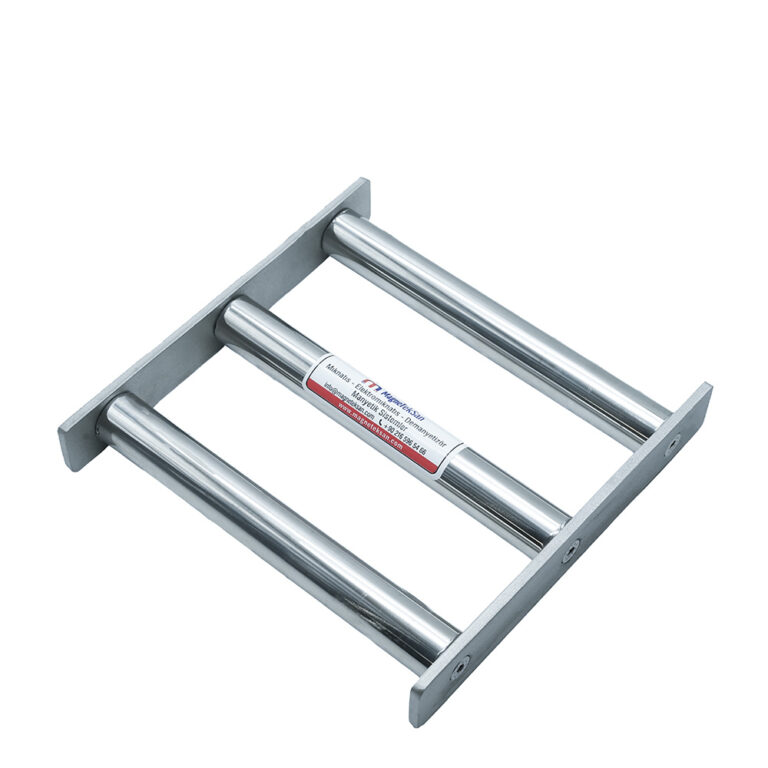
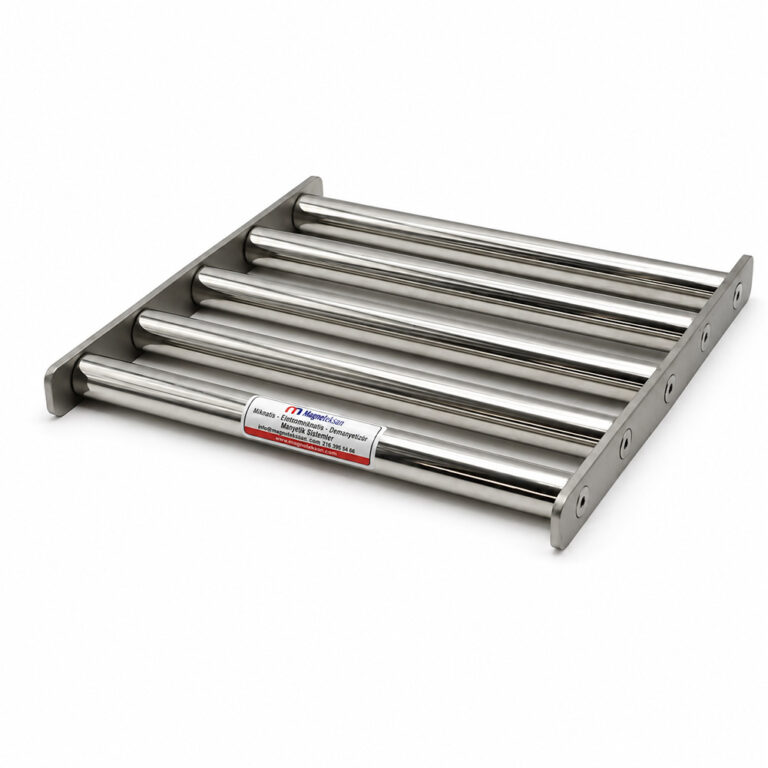
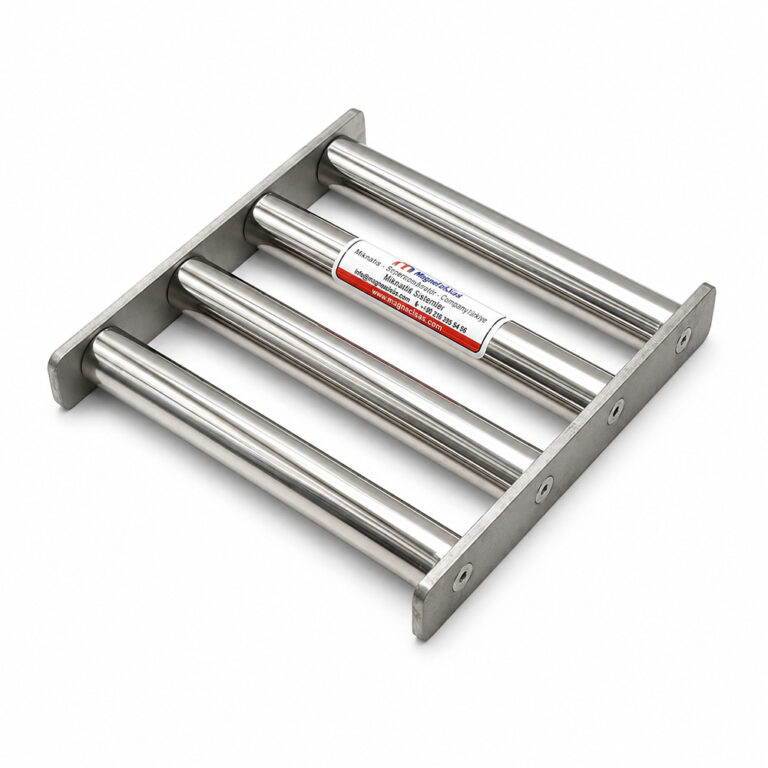
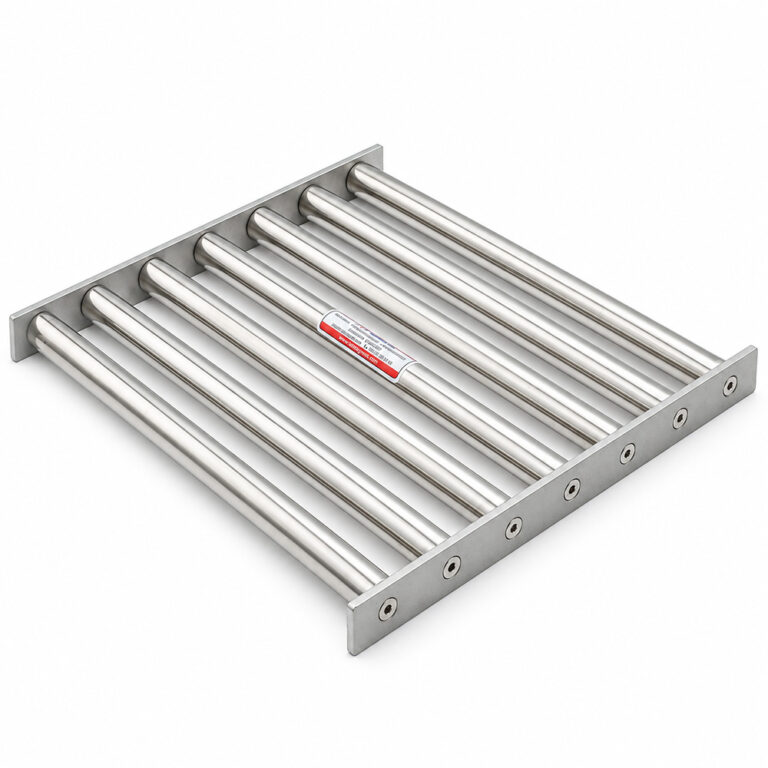
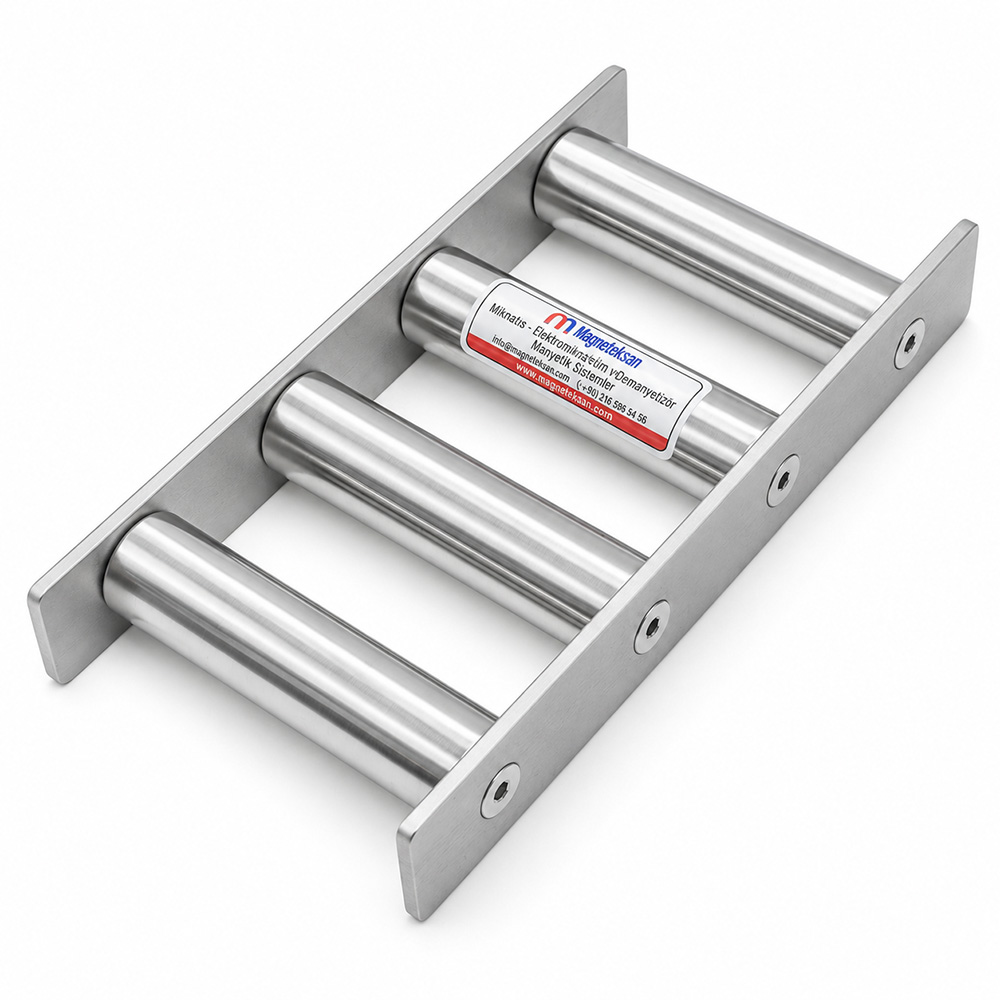
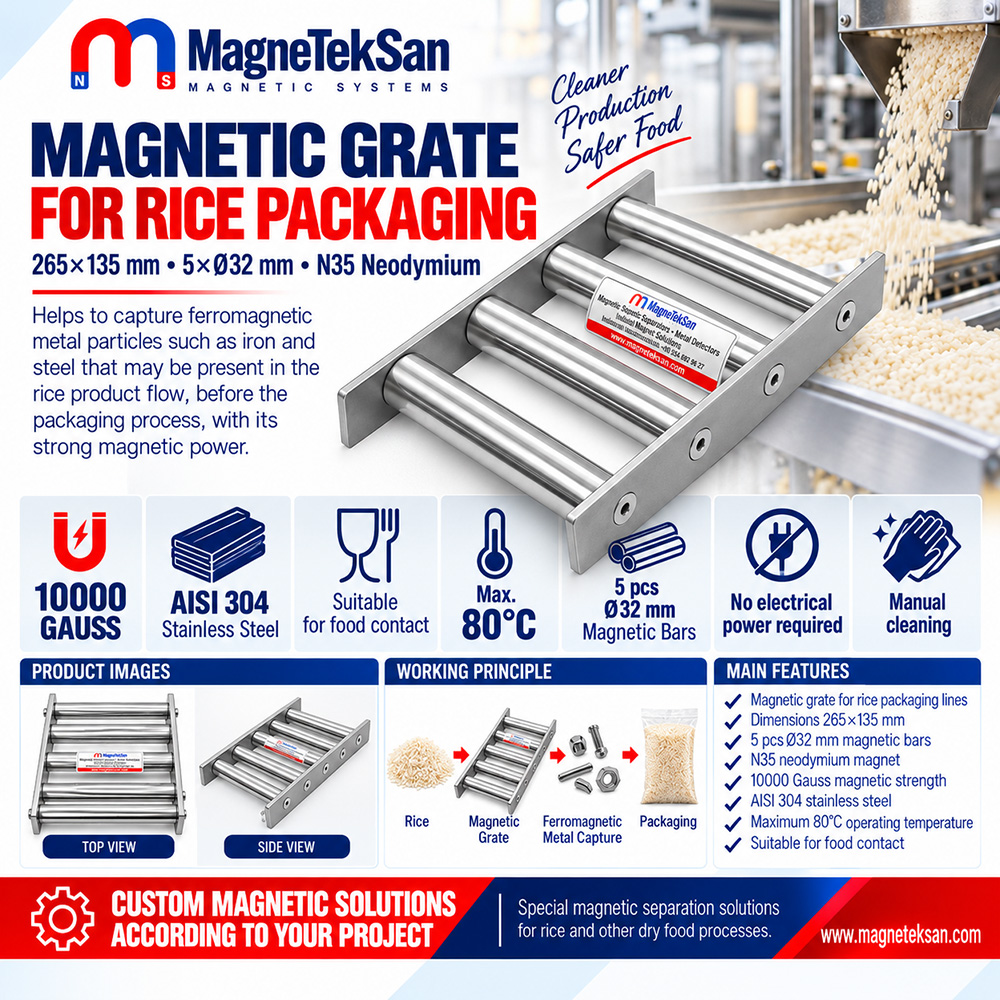
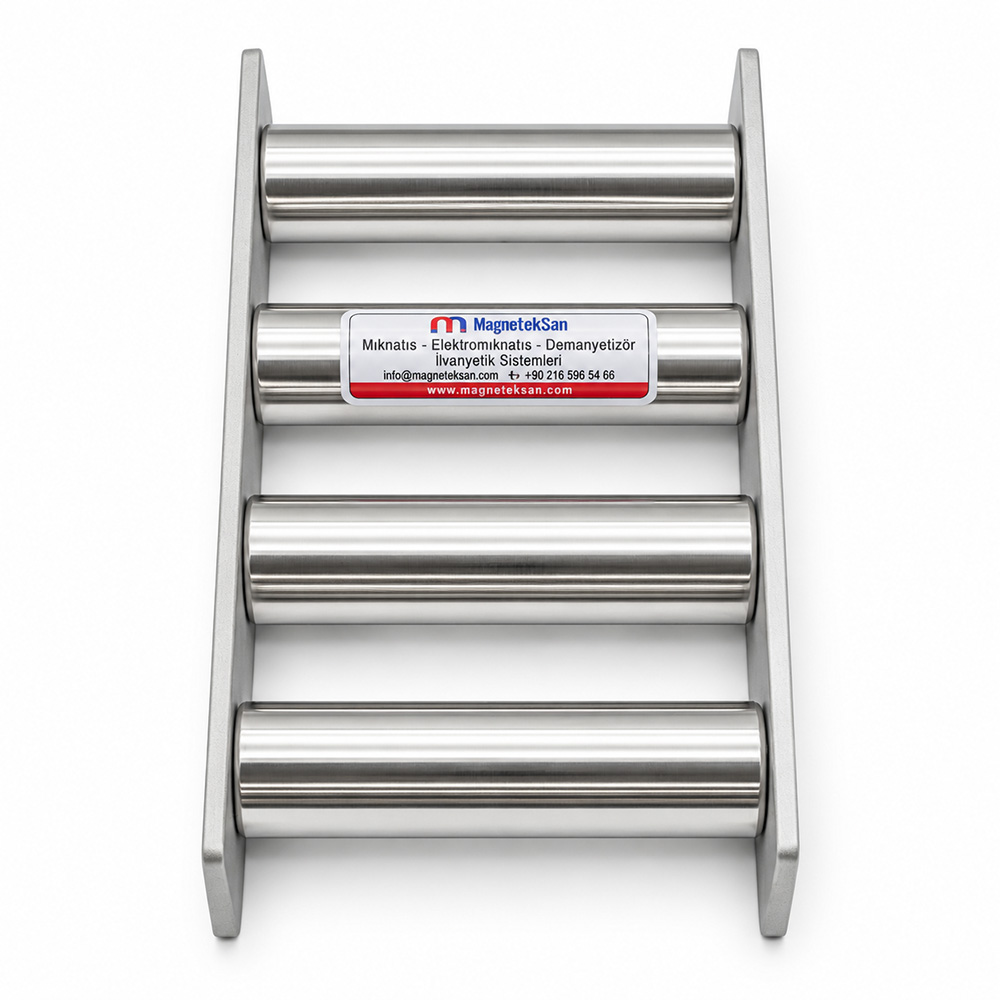
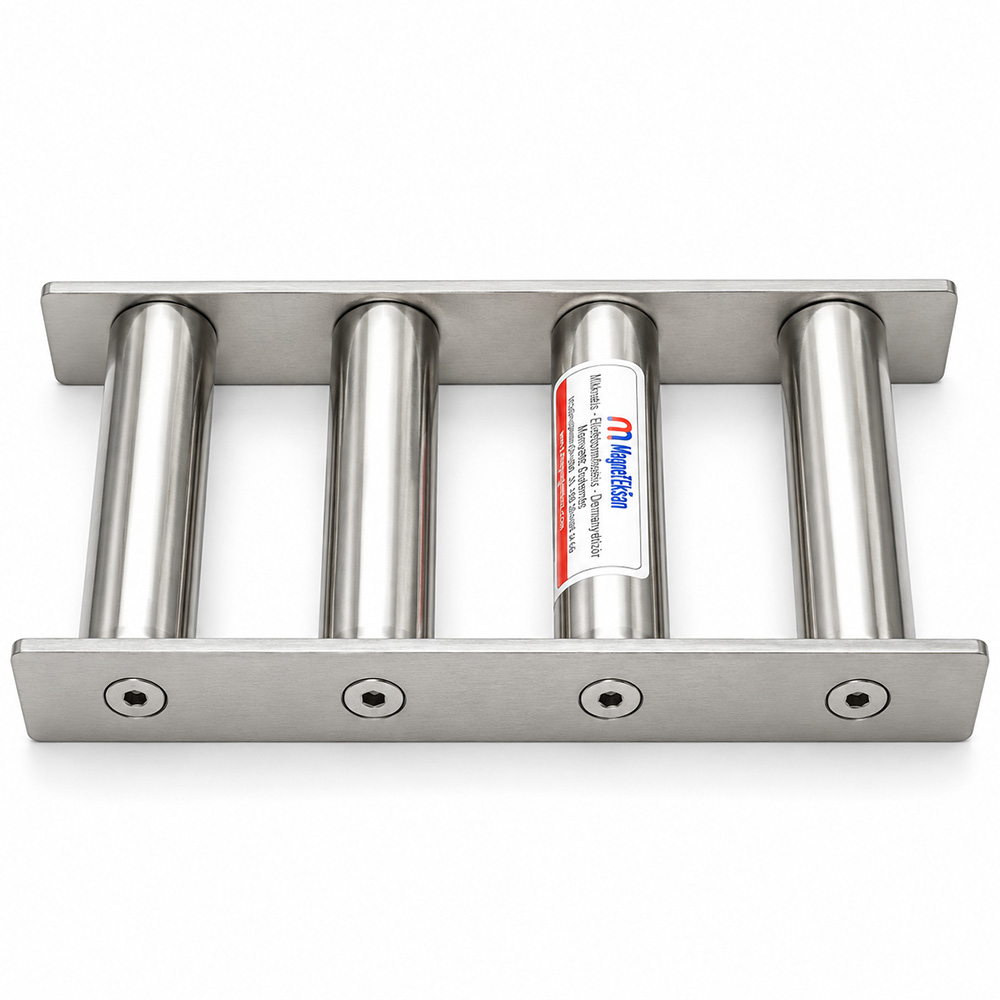
The Rice Packaging Line Grid Magnet is a 265×135 mm rectangular magnetic separator designed to help capture ferromagnetic metal contaminants from rice before weighing and packaging. Its 5 parallel Ø32 mm N35 neodymium magnetic rods provide a magnetic strength of 10,000 Gauss, while the AISI 304 stainless steel system operates without electrical power.
| Technical Specification | Value |
|---|---|
| Product Type | Rectangular Neodymium Grid Magnet |
| Main Application | Rice Packaging Line |
| Grid Dimensions | 265×135 mm |
| Number of Magnetic Rods | 5 |
| Magnetic Rod Diameter | Ø32 mm |
| Rod Arrangement | Parallel |
| Neodymium Grade | N35 |
| Magnetic Strength | 10,000 Gauss |
| Material | AISI 304 Stainless Steel |
| Maximum Operating Temperature | 80°C |
| Cleaning | Manual |
| Electricity Required | No |
Extra Information
What is a Rice Packaging Line Grid Magnet?
A Rice Packaging Line Grid Magnet is a permanent magnetic separation unit designed to help capture unwanted ferromagnetic metal particles that may be present in the rice product flow before weighing and packaging.
This model features a 265×135 mm rectangular structure, 5 Ø32 mm magnetic rods, N35 neodymium magnets, 10,000 Gauss magnetic strength and AISI 304 stainless steel construction.
Where is the grid magnet used in a rice processing line?
Its main installation point is the product flow immediately before the packaging machine. Depending on the line configuration, it can be integrated into the final product hopper, packaging machine feed hopper, product chute or another suitable gravity-flow section.
A typical process can be:
Rice Cleaning / Classification
↓
Final Product Hopper
↓
Packaging Machine Feed Hopper / Chute
↓
265×135 mm Ø32×5 Grid Magnet
↓
10,000 Gauss Magnetic Control
↓
Weighing
↓
Packaging
Why is a grid magnet used before rice packaging?
During processing, small ferromagnetic particles can potentially enter the rice stream from equipment wear, maintenance activities, screws and fasteners, or conveying equipment.
Installing a grid magnet before packaging provides an additional magnetic control point and helps reduce the risk of suitable ferromagnetic contaminants reaching the final packaged product.
What do the 265×135 mm dimensions represent?
The specified outer dimensions of the magnetic grid are:
265×135 mm
Its rectangular geometry makes it particularly suitable for integration into narrow and elongated process sections such as:
- product chutes,
- feed hoppers,
- gravity drop channels,
- packaging machine feed sections.
The available installation space and actual product-flow cross-section should always be checked before installation.
What is the purpose of the 5 Ø32 mm magnetic rods?
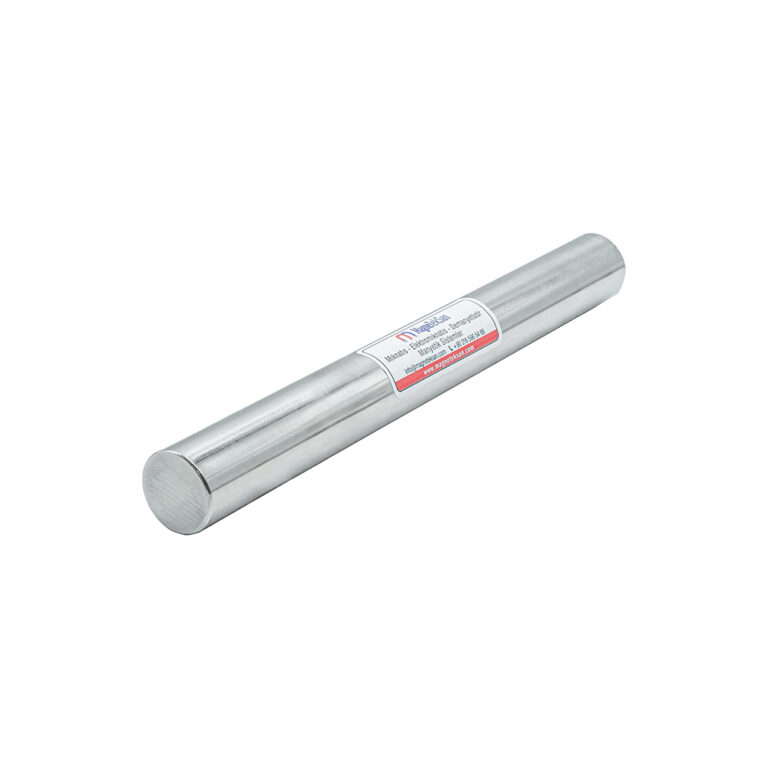
The unit contains 5 magnetic rods with an outside diameter of Ø32 mm each.
As rice passes between the rods, suitable ferromagnetic contaminants entering the effective magnetic field can be attracted toward and retained on the surfaces of the magnetic rods.
Why are the magnetic rods arranged in parallel?
The five magnetic rods are positioned parallel to one another.
This arrangement provides multiple magnetic surfaces across the product flow while allowing rice to pass through the spaces between the rods. It also provides magnetic control within the compact 265×135 mm rectangular structure.
What does Ø32 mm mean?
The outside diameter of each magnetic rod is:
Ø32 mm
This model contains a total of 5 Ø32 mm magnetic rods.
What does N35 neodymium mean?
The magnetic elements used in this product are N35 grade neodymium magnets.
N35 identifies the grade of the neodymium magnetic material used in the system. Because these are permanent magnets, no electrical power is required to generate the magnetic field.
What does 10,000 Gauss mean?
The specified magnetic value of the rods is:
10,000 Gauss
The magnetic field helps attract suitable ferromagnetic metal contaminants toward the magnetic rod surfaces.
However, a 10,000 Gauss value does not by itself define:
- a fixed attraction distance,
- a lifting capacity in kilograms,
- a guaranteed particle size,
- 100% metal removal efficiency.
Actual separation performance depends on the application and operating conditions.
Does 10,000 Gauss guarantee that all iron particles will be captured?
No.
Actual separation performance can be affected by:
- particle size,
- particle shape,
- magnetic properties of the contaminant,
- distance from the magnetic rod,
- product flow rate,
- product layer thickness,
- position of the contaminant in the rice stream,
- metal already accumulated on the magnetic surfaces.
For critical applications, the complete process conditions should therefore be evaluated rather than relying only on the Gauss value.
What types of metal can the grid magnet capture?
Suitable ferromagnetic contaminants can be affected by the magnetic field, including:
- iron particles,
- carbon steel fragments,
- pieces of steel wire,
- screw fragments,
- small ferromagnetic wear particles,
- other suitable ferromagnetic steel contaminants.
The system is primarily intended for ferromagnetic metal separation.
Does the magnet attract rice?
No.
Rice is not ferromagnetic. The rice passes between the magnetic rods while suitable ferromagnetic foreign metal particles can be attracted to and retained on the magnetic surfaces.
Does the grid magnet capture aluminium?
No, not in the same way as iron or ferromagnetic steel.
Aluminium is not ferromagnetic and is therefore not strongly attracted by a conventional permanent neodymium grid magnet.
If aluminium separation is required, another appropriate separation technology should be considered.
Does it capture copper or brass?
No.
Copper and brass are not normally ferromagnetic and are not captured by this grid magnet in the same manner as iron or carbon steel.
In English, it is also important to distinguish between rice, the food product, and brass, the copper-zinc metal alloy. The Turkish word “pirinç” can refer to either depending on context; this product is designed for rice processing and packaging.
Can it capture stainless steel?
It depends on the stainless steel grade and its metallurgical condition.
Some stainless steels can exhibit magnetic response, while others have very weak magnetic attraction. Therefore, capture performance should not be guaranteed for every stainless steel contaminant.
If stainless steel separation is important to the application, representative samples should be tested.
Why is AISI 304 stainless steel used?
The grid magnet is manufactured with an AISI 304 stainless steel structure.
AISI 304 is commonly used in process equipment because of characteristics such as:
- corrosion resistance,
- cleanable surfaces,
- widespread use in processing equipment.
Suitability for a specific food-contact application should be assessed according to the hygiene and process requirements of the installation.
What is the maximum operating temperature?
The specified maximum operating temperature for this product is:
80°C
If the product or surrounding process temperature can exceed 80°C, the standard N35 magnetic system should be evaluated separately before use.
Does the Rice Packaging Line Grid Magnet require electricity?
No.
The permanent N35 neodymium magnetic system does not require:
- electrical connection,
- power supply,
- electromagnetic coils,
- electrical control panel.
The magnetic field is continuously generated by permanent neodymium magnets.
How does the Rice Packaging Line Grid Magnet work?
The basic operating principle is:
Rice Enters the Product Feed Section
↓
Rice Reaches the 265×135 mm Grid Magnet
↓
Rice Passes Between 5 Ø32 mm Magnetic Rods
↓
Ferromagnetic Contaminants Enter the Magnetic Field
↓
Suitable Metal Particles Are Retained on the Rod Surfaces
↓
Rice Continues to Weighing and Packaging
This corresponds to the operating sequence described for the product.
Does the grid magnet classify rice by grain size?
No.
The term grid magnet refers to the arrangement of magnetic rods. It is not a conventional mechanical sieve designed to classify rice according to grain size.
Its primary purpose is to help remove suitable ferromagnetic metal contaminants from the product flow.
How can it be integrated into a packaging machine?
If the mechanical dimensions are suitable, the grid magnet can be positioned in locations such as:
- the feed hopper,
- the product drop chute,
- before the weighing unit,
- a suitable product passage in the packaging machine.
The installation should be designed so that the relevant product stream passes through the effective area of the magnetic rods.
What should the product flow direction be?
In a typical gravity-fed installation:
Product Inlet from Above
↓
Grid Magnet
↓
Product Outlet Below
Rice flows downward between the magnetic rods under gravity.
Can rice become blocked between the magnetic rods?
Flow behaviour depends on several factors, including:
- rice grain size,
- spacing between the rods,
- product flow rate,
- product moisture,
- flow geometry.
Testing with the actual rice product under real operating conditions is the most reliable way to evaluate flow behaviour.
What is the processing capacity in tons per hour?
No verified fixed tons-per-hour capacity is specified for this product.
Actual capacity depends on factors such as:
- product flow characteristics,
- chute cross-section,
- grain characteristics,
- feed rate,
- installation geometry.
A fixed throughput value should therefore not be stated without application-specific data.
How is the grid magnet cleaned?
This model uses manual cleaning.
After the production and product flow have been safely stopped, accumulated ferromagnetic metal particles should be manually removed from the magnetic rod surfaces.
Because captured contaminants can include sharp metal fragments and the magnetic field is strong, appropriate personal protective equipment and safe handling procedures should be used.
How often should the grid magnet be cleaned?
There is no single cleaning interval suitable for every application.
Cleaning frequency should be determined according to factors such as:
- quantity of rice processed,
- ferromagnetic contamination level,
- operating time,
- size of captured contaminants,
- rate of metal accumulation.
Regular inspection helps establish an appropriate cleaning schedule for the actual process.
Does metal accumulation affect magnetic separation performance?
Yes.
Excessive metal accumulation on the magnetic rod surfaces can cover part of the active magnetic area and make it more difficult for newly arriving ferromagnetic contaminants to approach the magnetic surface.
Regular inspection and cleaning are therefore important for maintaining effective operating conditions.
Can it be used as the final magnetic control point before packaging?
Yes.
This is one of the primary applications of the product. Rice can pass through an additional magnetic control stage immediately before weighing and packaging.
Does the grid magnet replace a metal detector?
No.
A grid magnet and a metal detector operate according to different principles.
The grid magnet physically attracts and retains suitable ferromagnetic contaminants, whereas a metal detector detects metallic contamination according to its detection technology and configuration.
Where required by the process, both technologies can be used together as complementary control systems.
What maintenance does the grid magnet require?
The following components should be inspected periodically:
- Ø32 mm magnetic rod surfaces,
- side support plates,
- fasteners and bolted connections,
- welded or mechanical joints.
Equipment showing significant deformation, surface damage or mechanical deterioration should be evaluated before continued use.
Can the Rice Packaging Line Grid Magnet be manufactured in custom dimensions?
Yes.
Depending on the application, parameters such as the following can be customized:
- external dimensions,
- number of magnetic rods,
- magnetic rod diameter,
- support plate design,
- product passage opening.
The final configuration can be designed according to the geometry of the rice packaging line and the actual product-flow requirements.