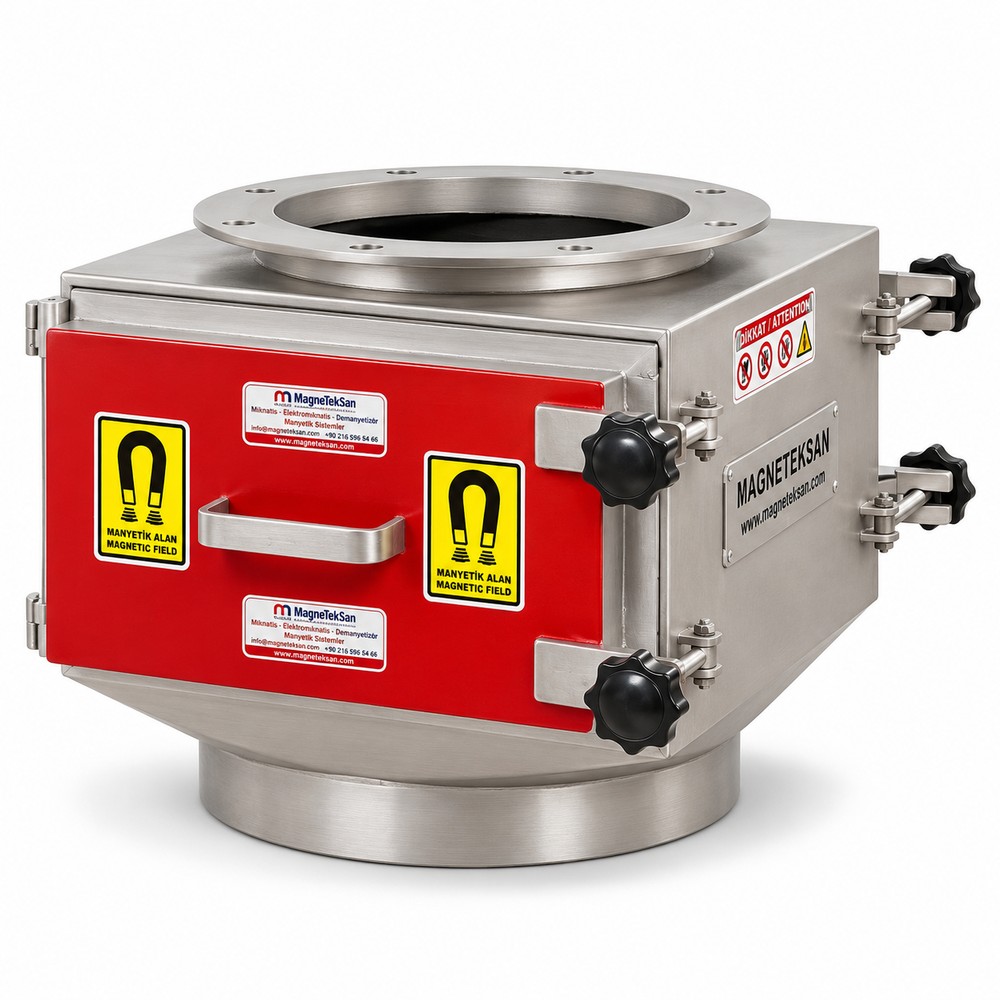
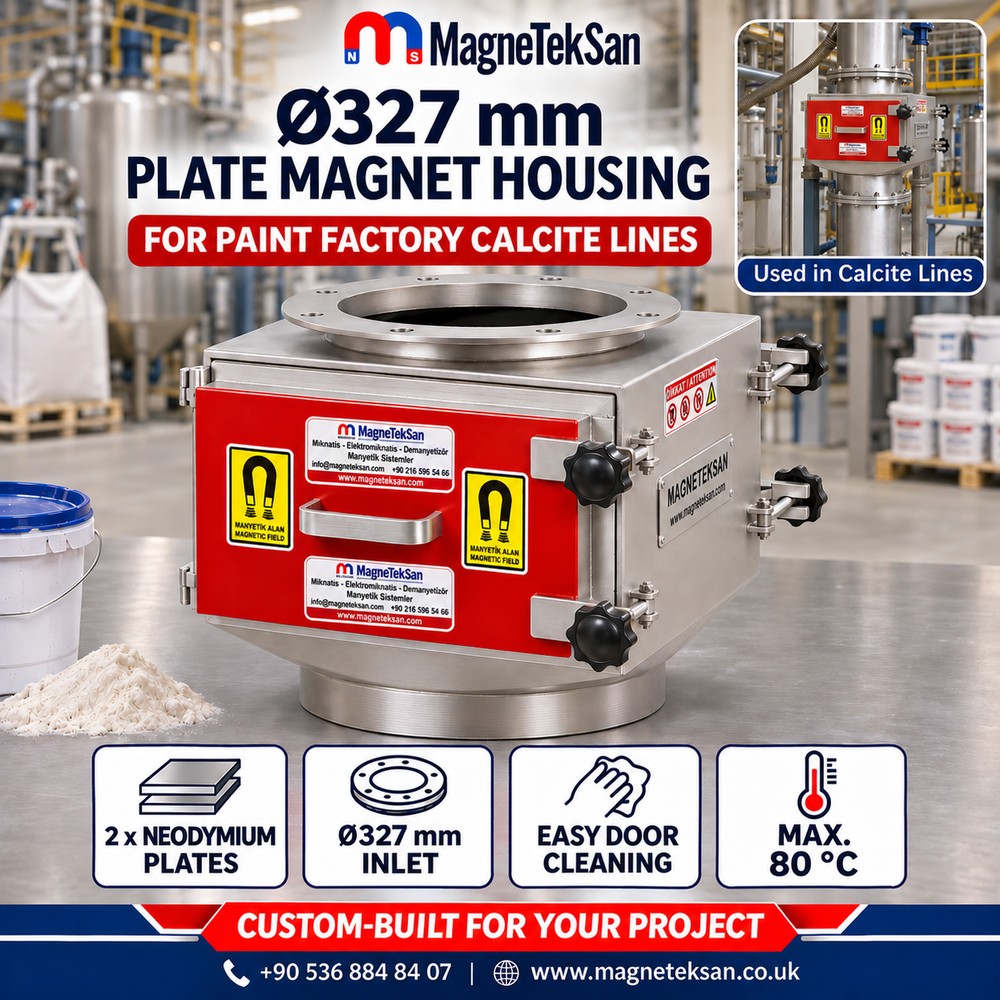
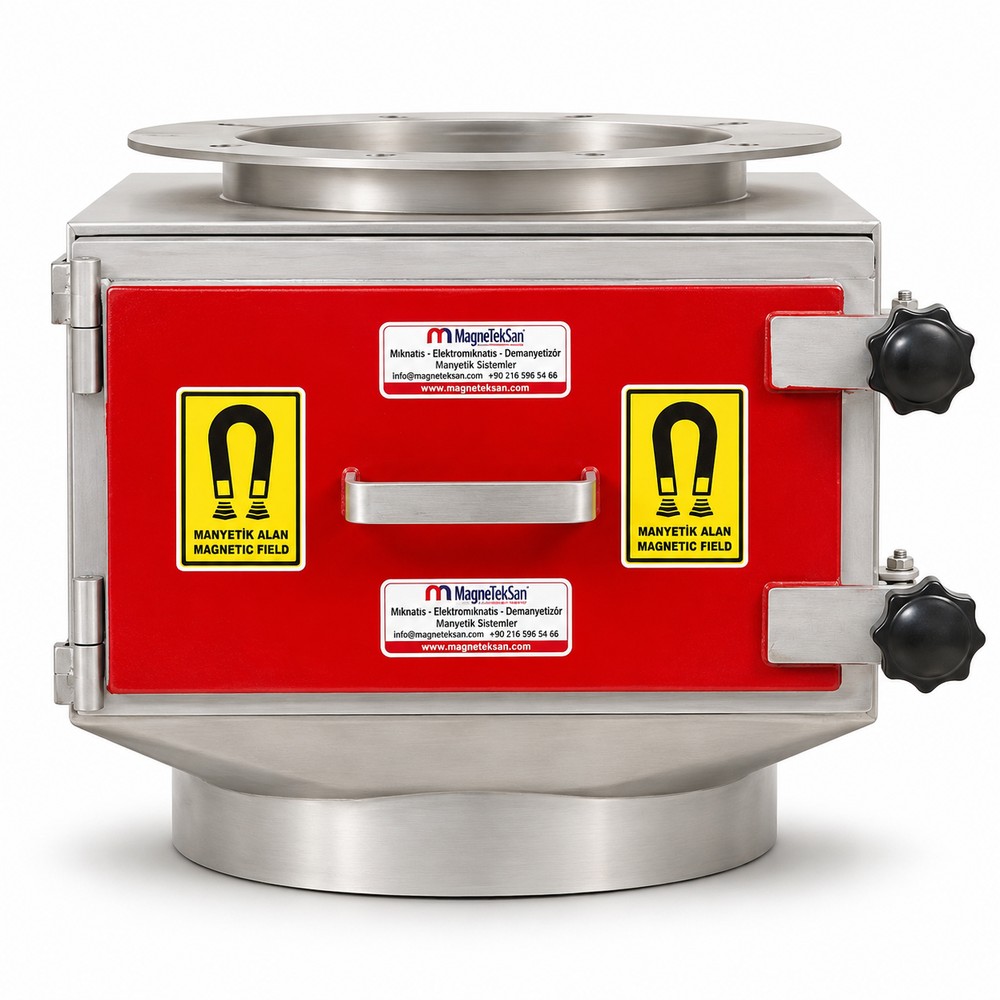
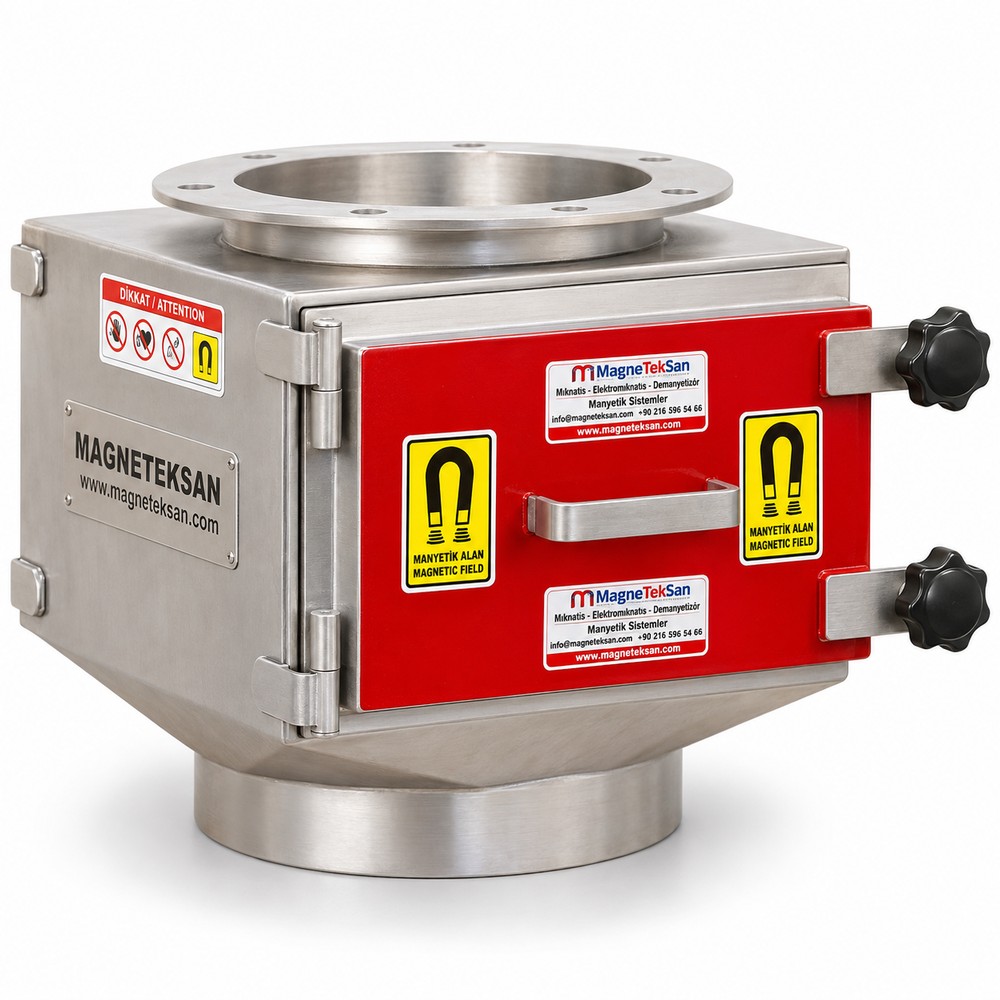
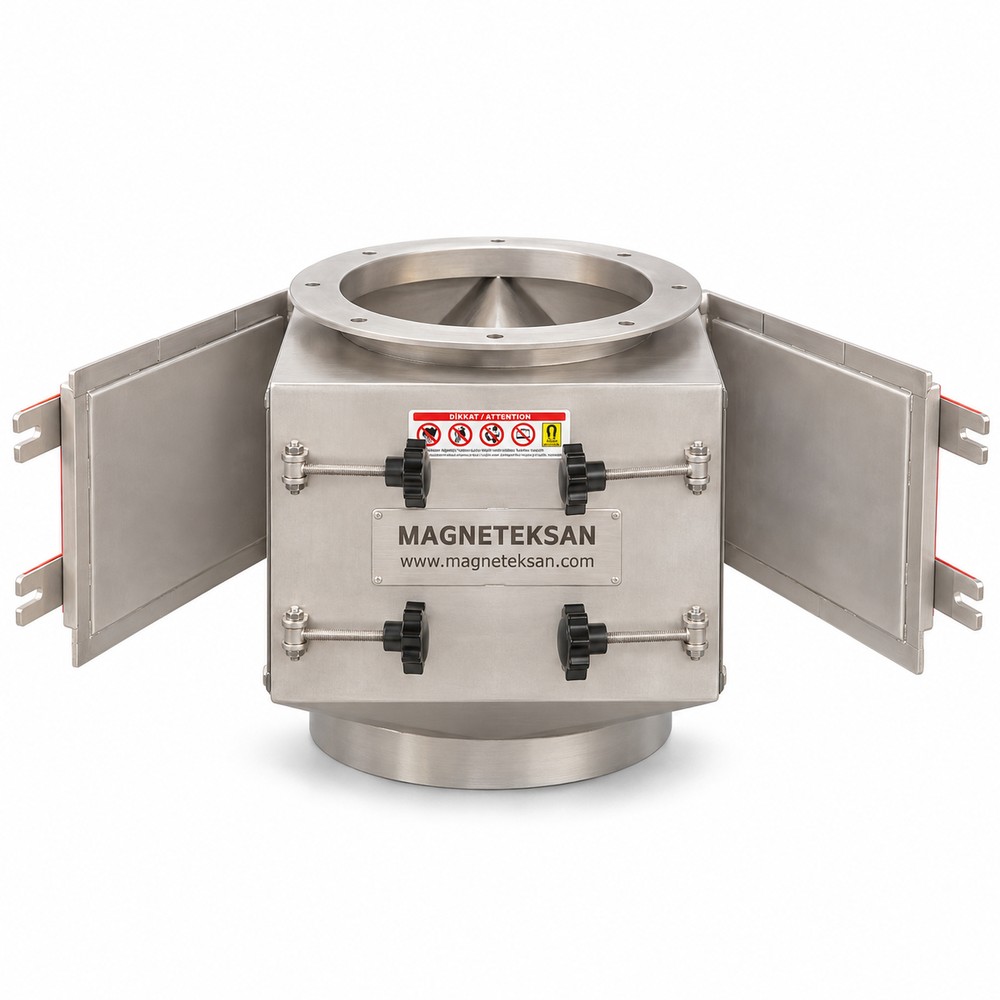
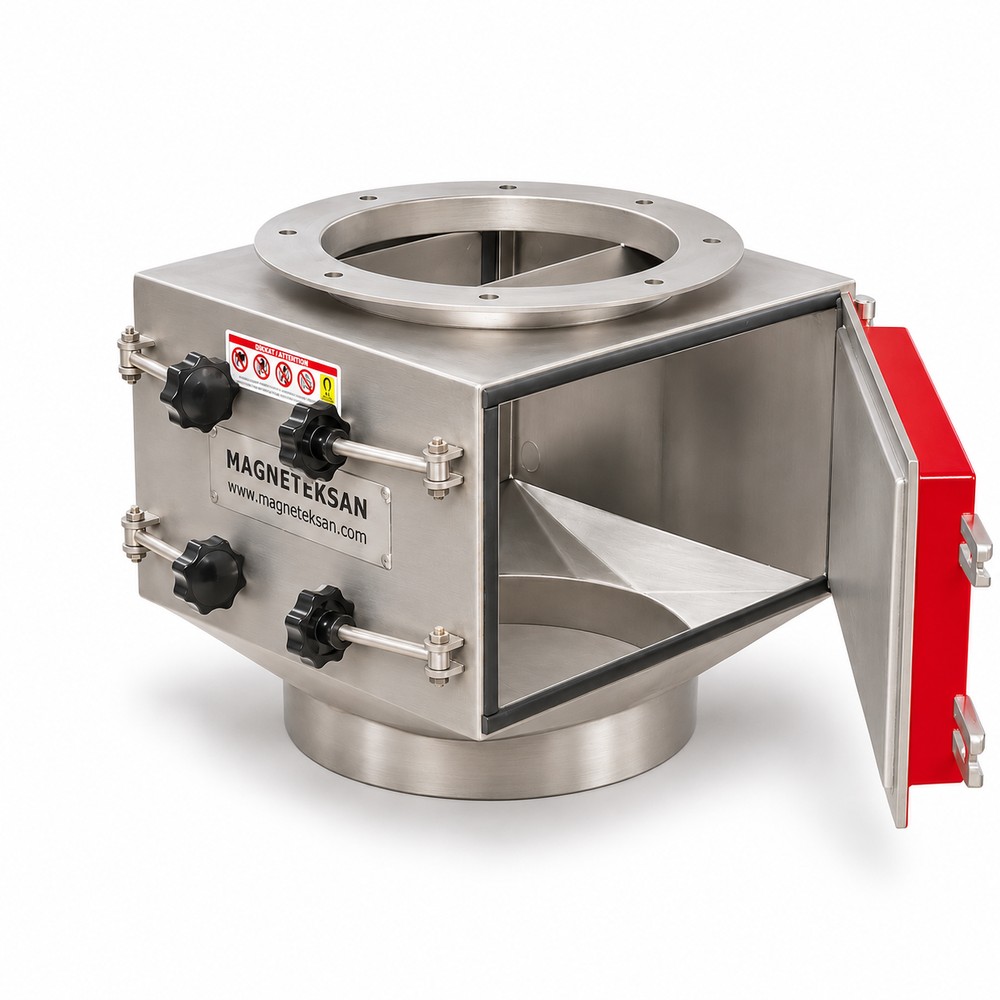
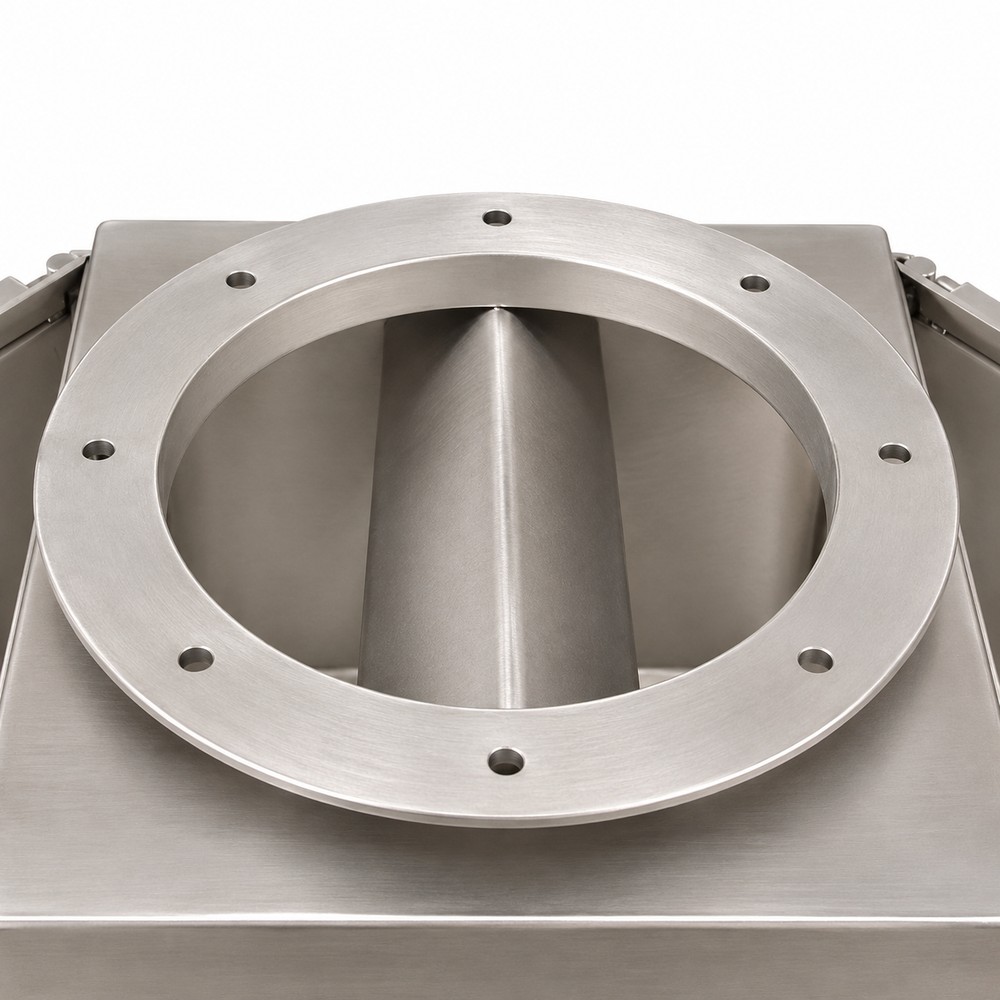
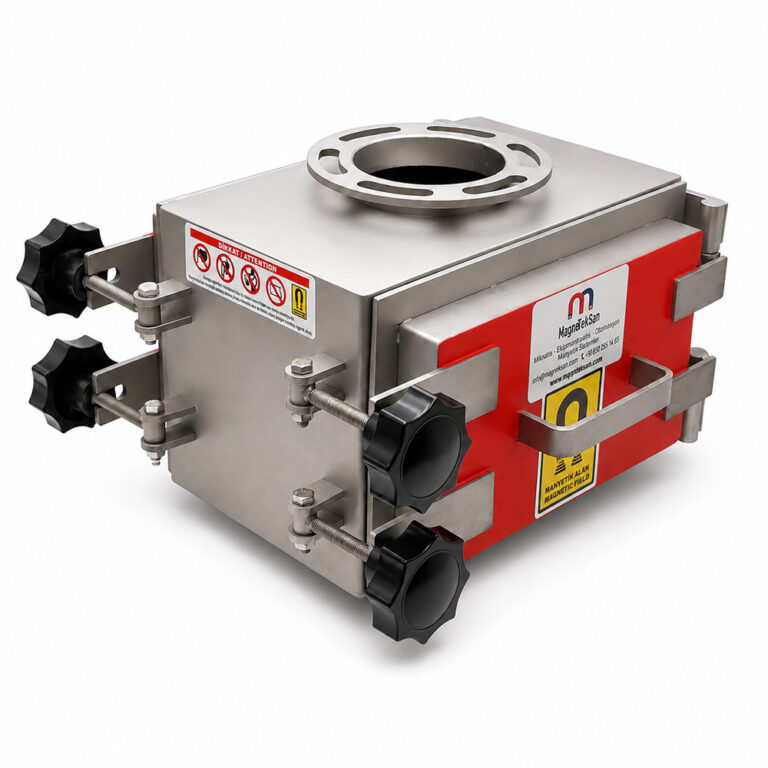
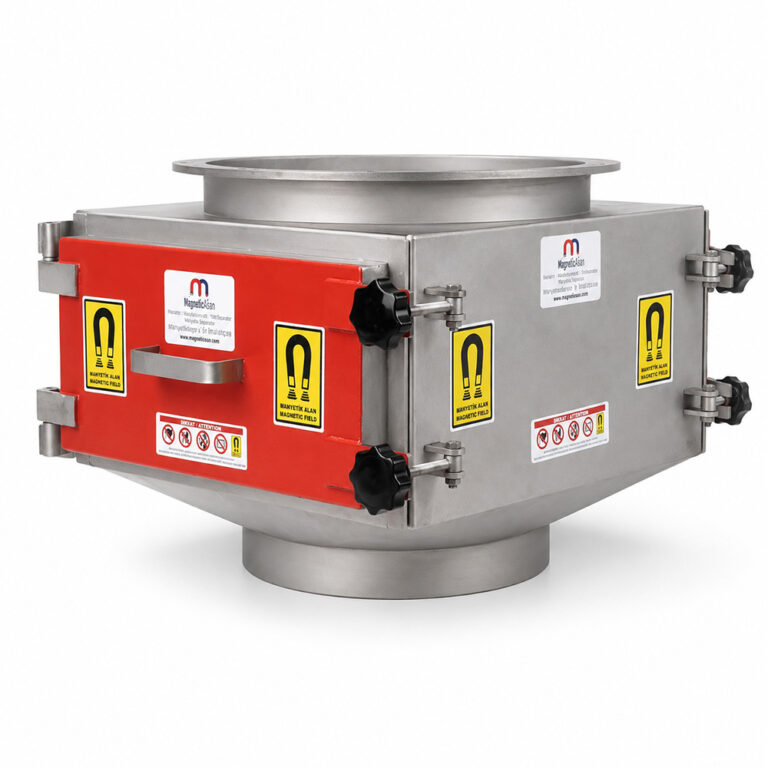
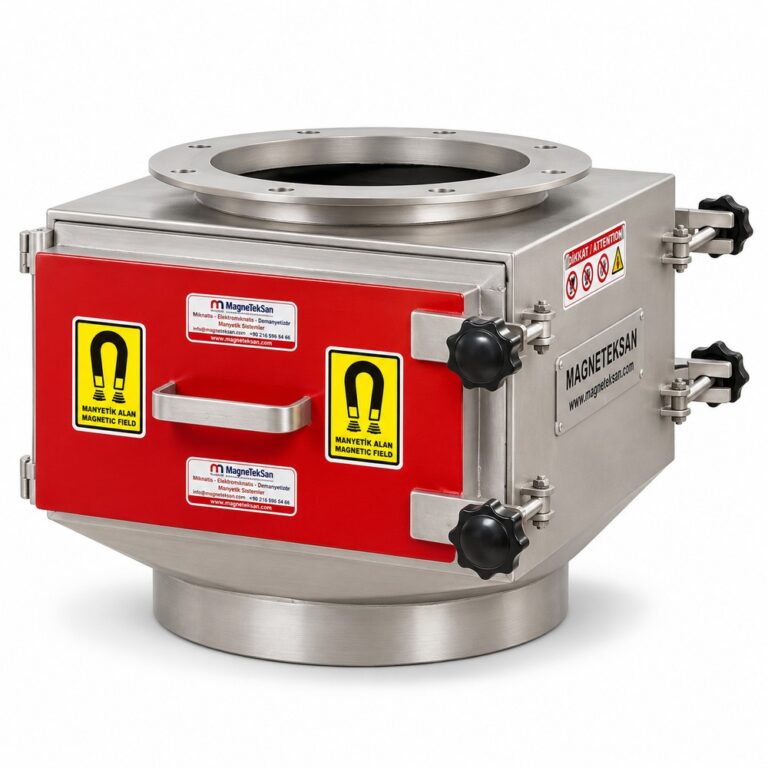
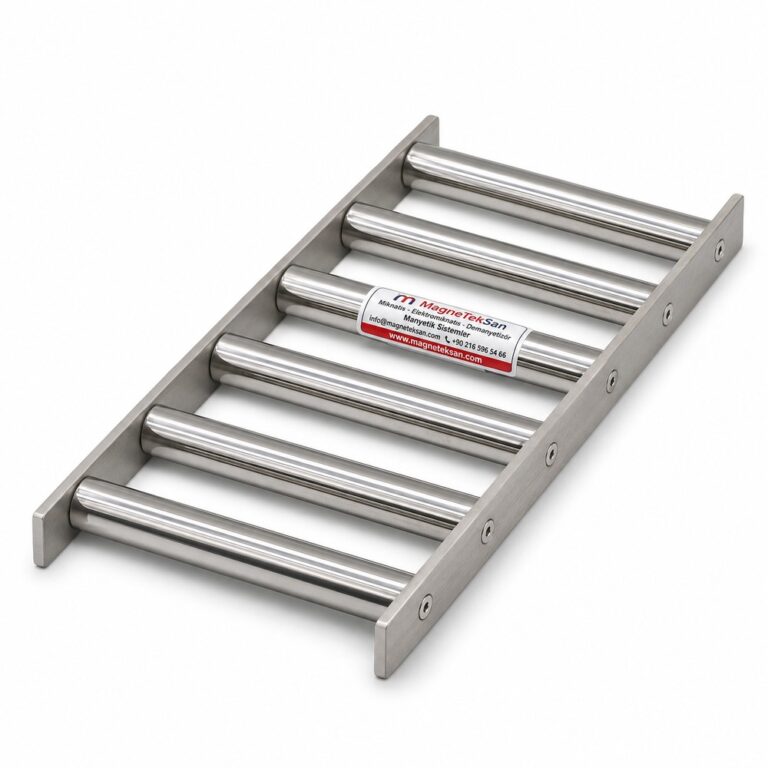
This Ø327 mm plate magnet housing is used in paint factories to separate ferrous particles from calcite and other powder fillers before they reach the dissolver. The square stainless housing has a Ø327 mm drilled inlet flange on top and a Ø363 mm outlet at the bottom. Each of the two side doors carries a 450x210x52 mm neodymium magnet plate. Powder falling from above hits the roof-shaped deflector in the middle of the housing, splits to both sides and passes in front of the plates. Wire, screws, nuts and steel fragments stay on the plate surface while the clean powder carries on through the outlet.
| Feature |
Value |
| Product type |
Neodymium plate magnet housing (round inlet) |
| Model code |
Ø327xØ363 mm 450x210x52 mm 82X2KCRCT |
| Inlet |
Ø327 mm, drilled round flange |
| Outlet |
Ø363 mm plain round spigot |
| Housing |
Stainless steel, square section |
| Number of plates |
2 (one in each side door) |
| Plate size |
450x210x52 mm |
| Magnet material |
Neodymium (NdFeB) |
| Internal design |
Roof-shaped deflector |
| Door locking |
Star-knob swing bolts (2 per door) |
| Maximum operating temperature |
80 °C |
| Cleaning |
Manual (by opening the doors) |
| Power supply |
None required (permanent magnet) |
| Application |
Paint factory, calcite and powder filler feed line |
How Does Metal Get into Calcite?
Calcite is the most widely used filler in emulsion paints, primers and plasters. It usually arrives at the factory in big bags or by bulk tanker, and travels from the big bag discharge station or silo via screw conveyors, bucket elevators and dosing hoppers to the dissolver. Wear debris from the mill where the calcite was ground, staples and nails from sacks and pallets, parts broken off screw conveyors and elevator buckets, and small fasteners left behind after maintenance can all end up in the powder along the way.
Ferrous particles can damage the dissolver blade and the inside of the bead mill. Very fine iron fragments can also show up as black specks in white paint or as rust spots later on. A plate magnet housing fitted before dosing holds most of these particles before they enter the mix.
Where Is the Plate Magnet Housing Fitted?
- In the vertical drop pipe below the calcite silo or dosing hopper
- Between the big bag discharge station and the screw conveyor
- In the vertical line feeding the dissolver inlet
The housing is fitted in a vertical line where the product falls freely, with the inlet flange at the top. Because the deflector splits the flow, the powder passes in front of both plates. The housing is closed, so the powder goes through without escaping into the room.
Why Two Plates?
In single-plate housings, the part of the flow furthest from the plate may not come close enough to the magnet. In this model the roof-shaped deflector splits the flow to both sides, and the two 450x210x52 mm plates face each stream.
How Are the Plates Cleaned?
- Stop the calcite feed and let the line run empty.
- Loosen the star knobs, swing the bolts out and open the hinged door.
- Wipe the metal off the plate surface with a gloved hand or a dry cloth, working towards the edge of the plate.
- Close the door, tighten the knobs and repeat on the other door.
In the first weeks, clean at the end of every shift and adjust the interval to the amount of metal collected. Because the plates open with the doors, the housing does not need to be taken out of the line.
Limitations and Safety Warnings
The magnet only attracts ferrous (ferromagnetic) particles. Aluminium, brass, glass and plastic are not held, and austenitic stainless steel fragments mostly pass through; these need a metal detector. The operating temperature must not exceed 80 °C. Neodymium plates are strong: keep them away from people with pacemakers or medical implants, magnetic cards and electronic devices, and keep fingers clear of the gap between door and housing when opening or closing.
Other Models
Models with other inlet sizes and plate counts are listed on the plate type drawer magnets page. For a similar model, see the neodymium plate magnetic housing for cement plants. To have one built to your line’s flange size, get in touch through our contact page.
Frequently Asked Questions
Can you change the inlet and outlet sizes to suit our line?
Yes. We build the inlet and outlet diameters, flange drilling and plate length to suit your line. Send us your pipe diameter and flange dimensions.
Does fine calcite powder build up on the plates?
Dry calcite flows easily past the plates. Powder that has picked up moisture can leave a thin layer on the plate surface; wipe it off together with the metal when cleaning.
Can it be used on titanium dioxide or talc lines?
Yes. It can also be used with other dry powders and granules that flow by gravity. The product temperature must not exceed 80 °C, and please let us know in advance about products that flow poorly or tend to clump.