Product Information
Extra Information
Product Information
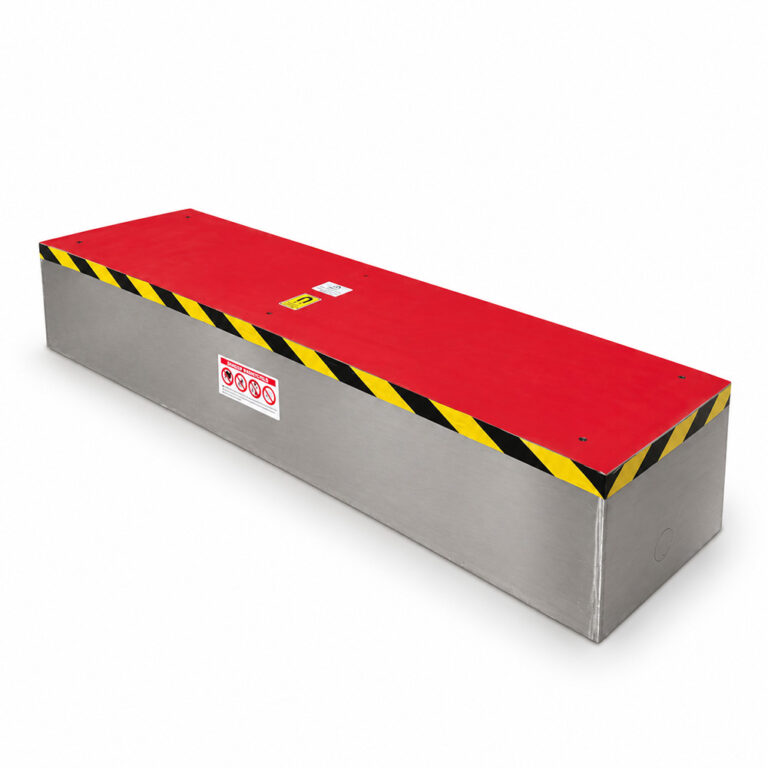
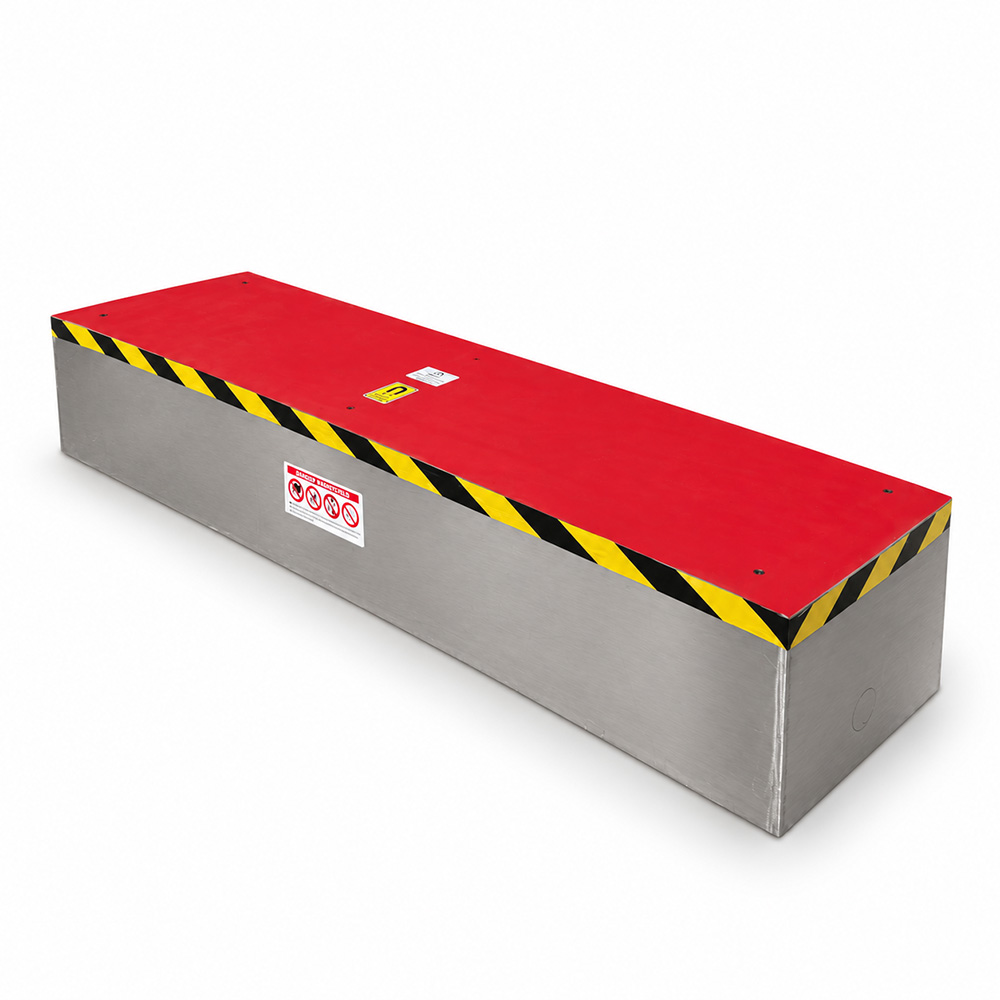
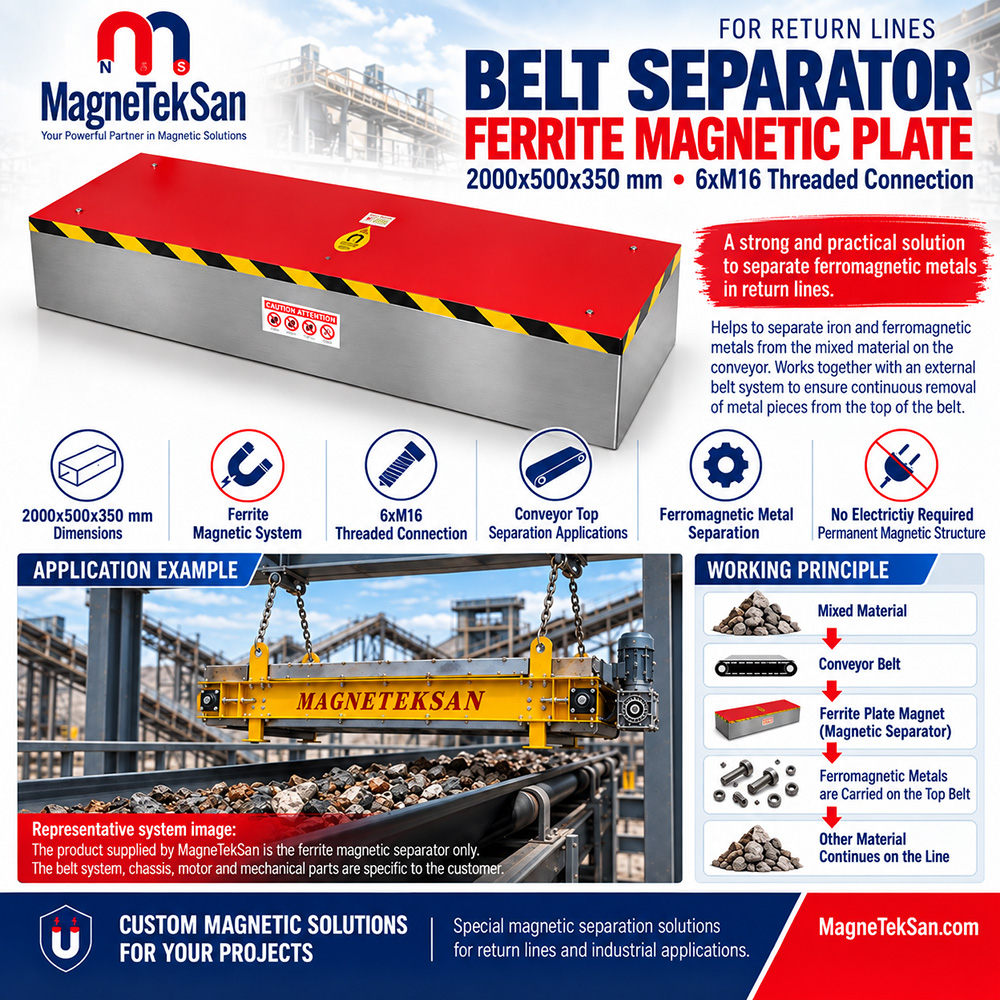
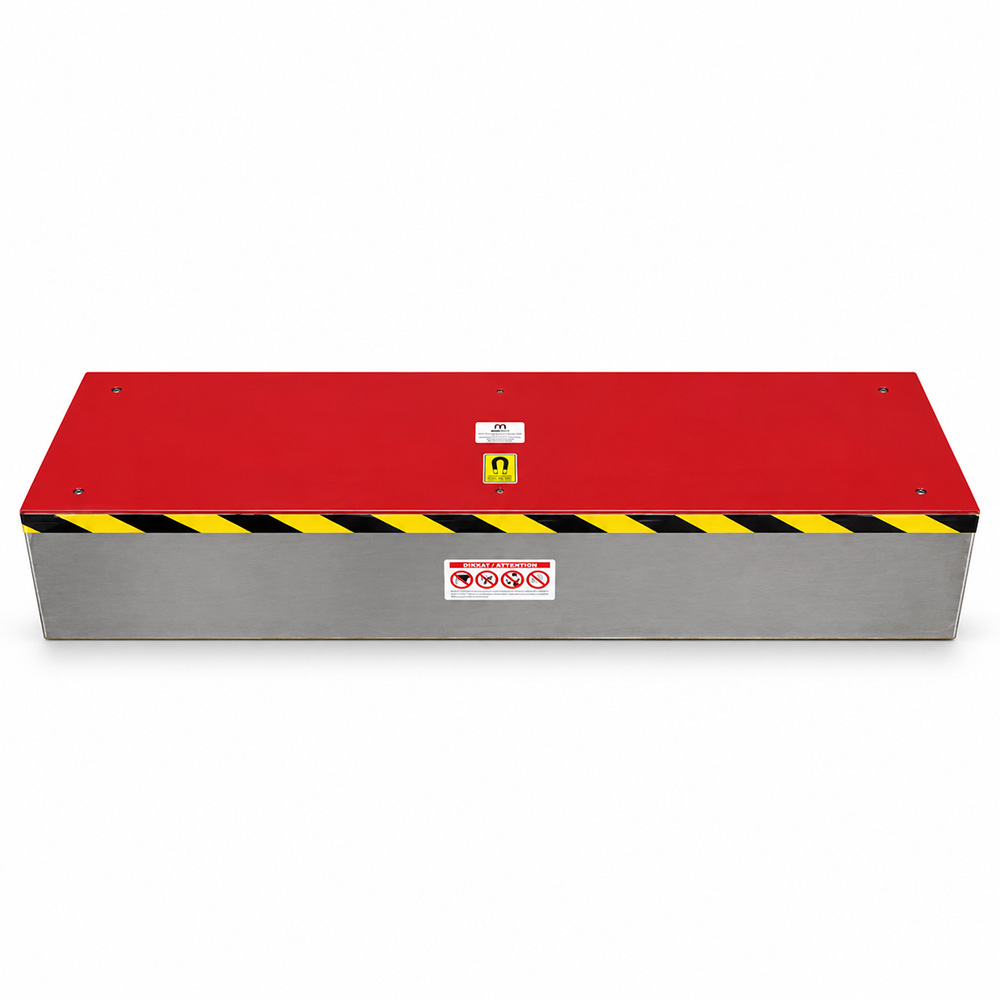
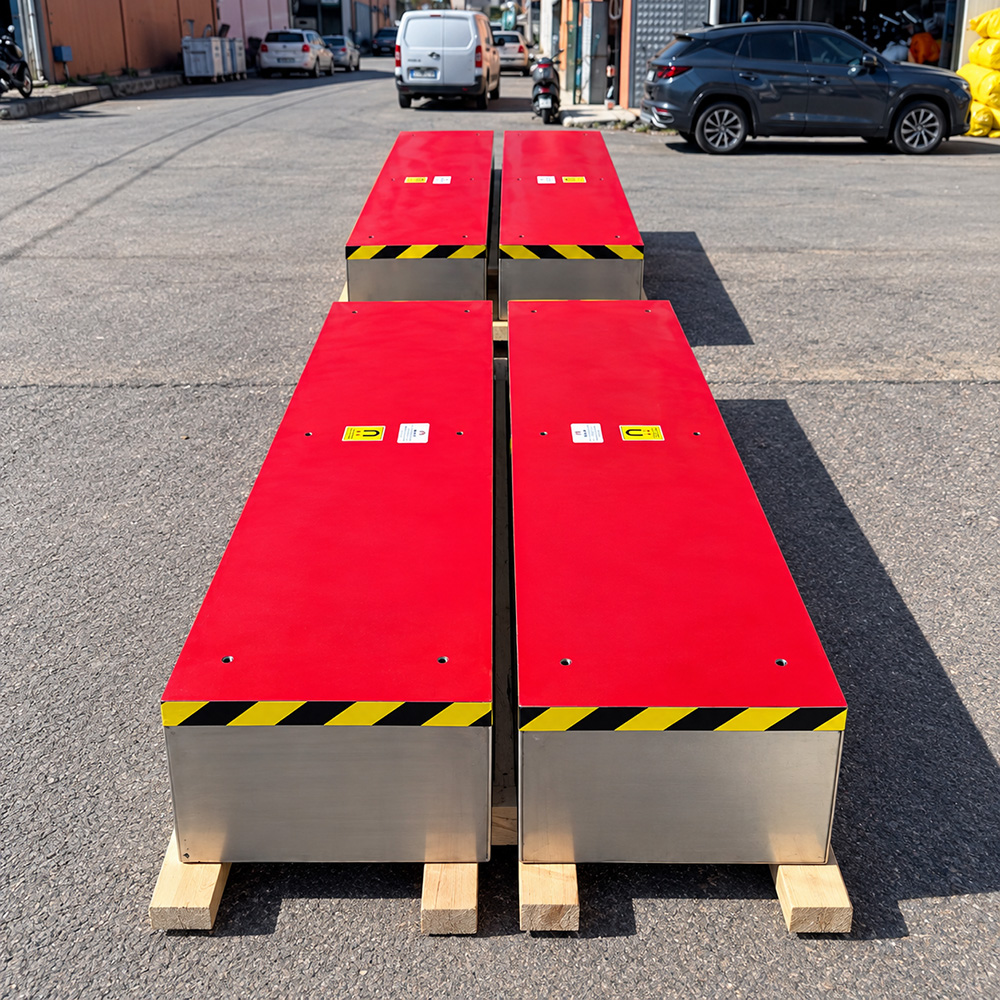
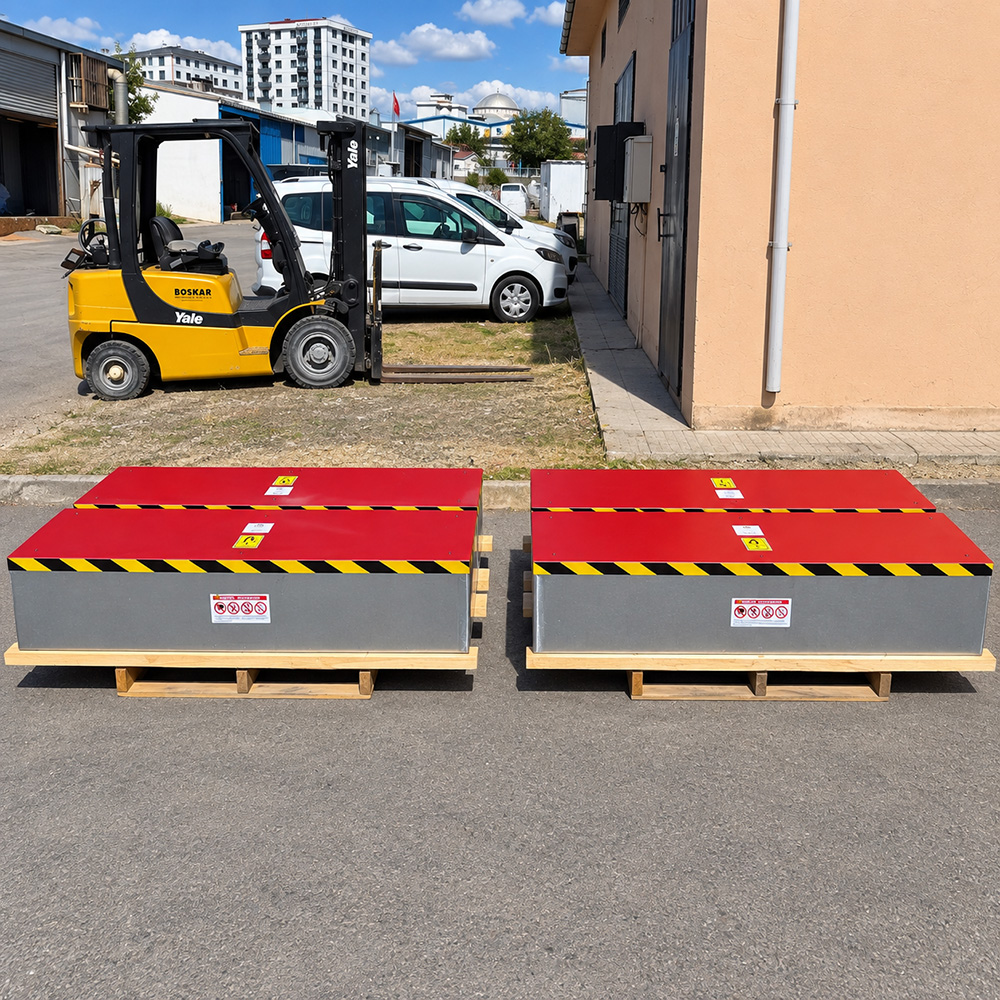
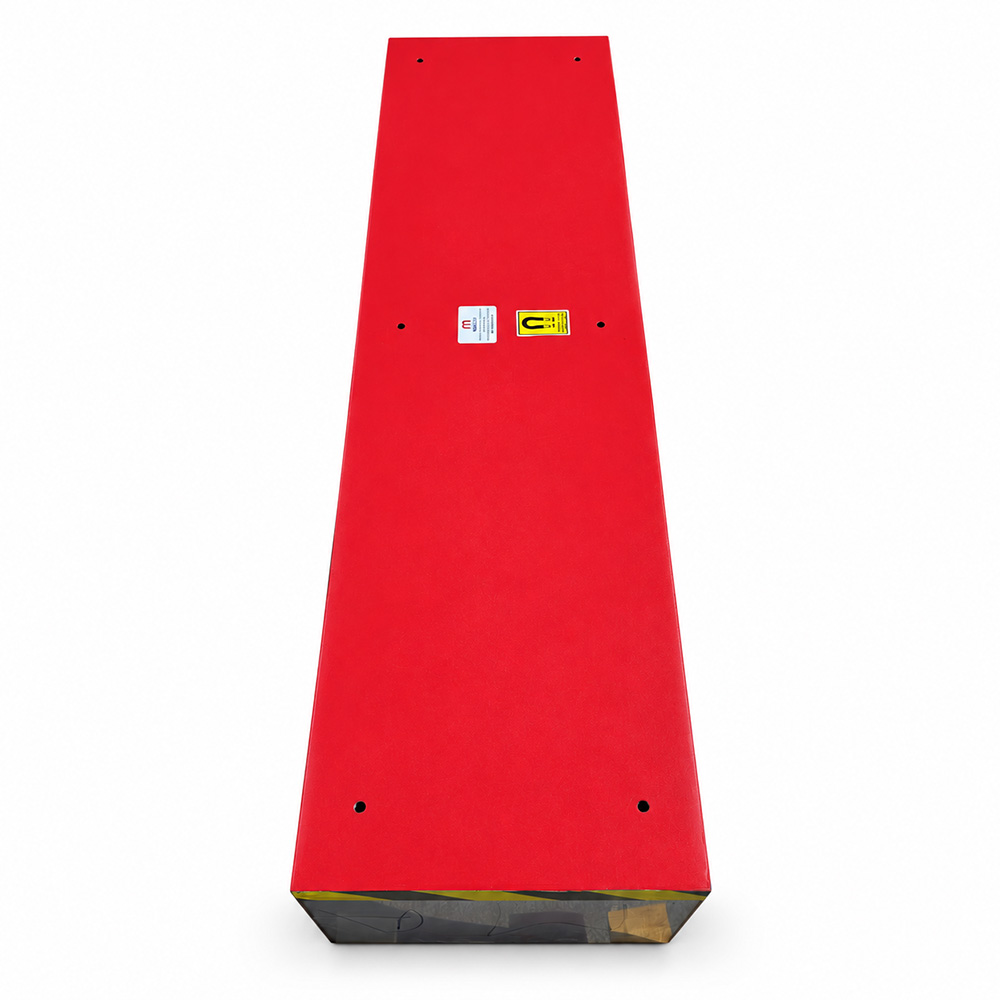
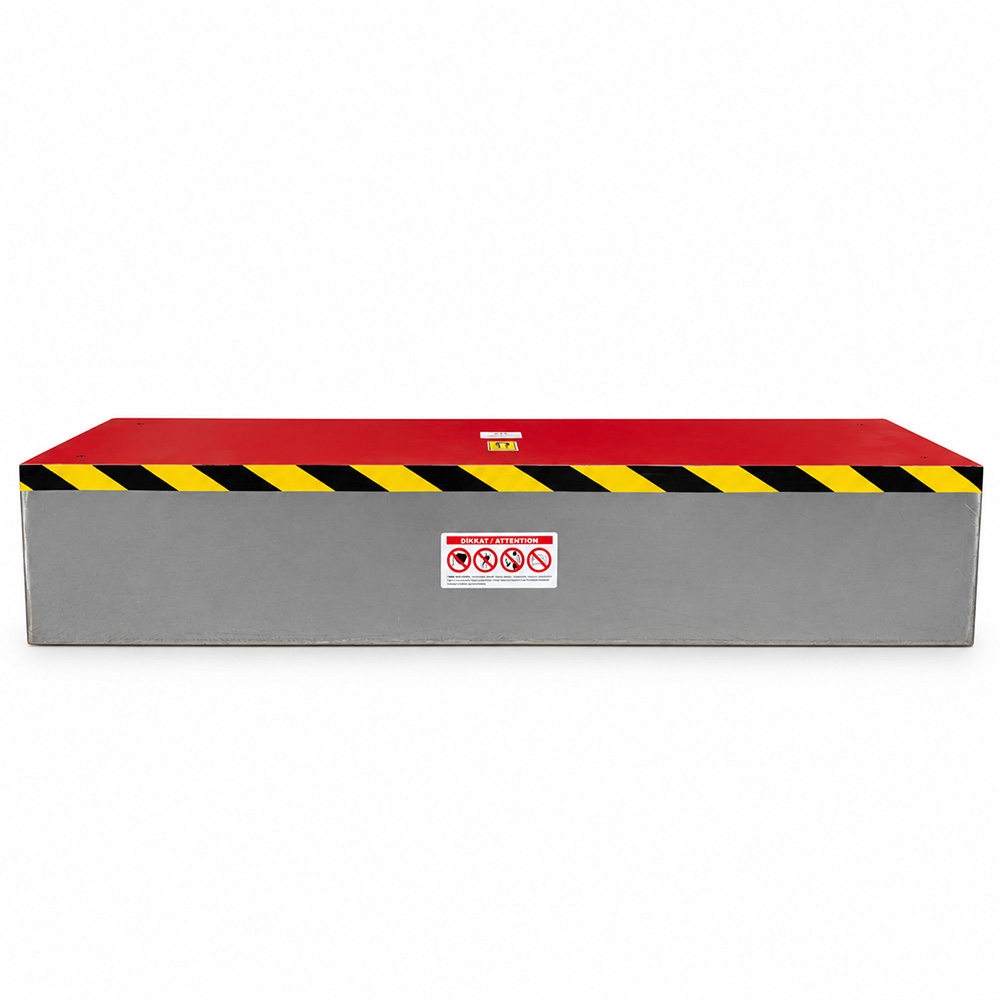
The Overband Separator Ferrite Magnetic Core is a 2000x500x350 mm permanent ferrite magnetic core designed for integration into moving-belt magnetic separator systems used on recycling and industrial conveyor lines. Its primary function is to generate the permanent magnetic field required to attract and separate ferromagnetic iron and steel pieces from mixed materials travelling on the main conveyor.
During operation, the magnetic core remains stationary inside the separator structure while an external moving separation belt travels around the magnetic core. Ferromagnetic metal passing beneath the separator is attracted towards the upper separation belt, carried across the magnetic field and transported beyond the effective magnetic zone, where it can be discharged into a separate collection point.
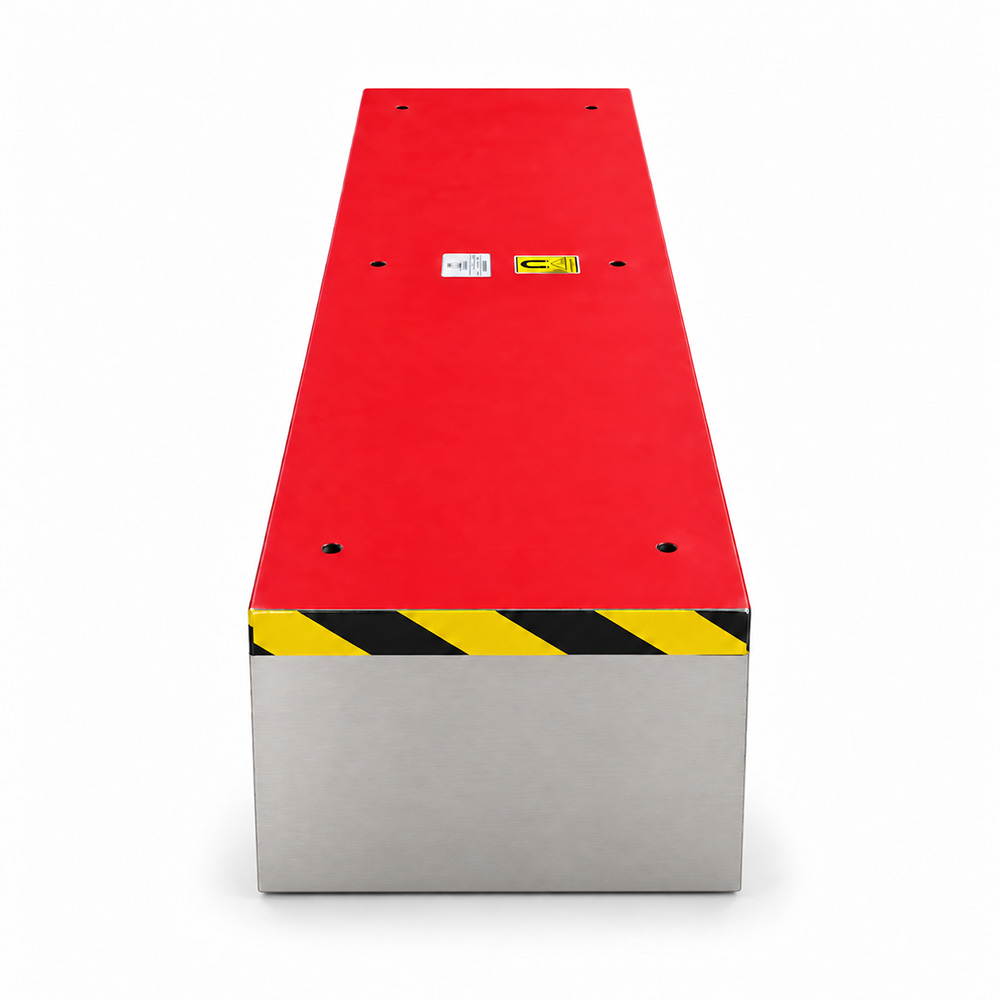
The magnetic core incorporates 6xM16 female threaded connection points to assist with secure integration into the customer’s separator structure. Because the magnetic field is generated by permanent ferrite magnets, the magnetic core itself requires no electrical power. The moving belt, belt drums, bearings, tensioning components, motor-gearbox and supporting structure form part of the external separator system and are not part of this magnetic core.
| Technical Specification | Value |
|---|---|
| Product Type | Overband Separator Ferrite Magnetic Core |
| Main Application | Recycling Line |
| Dimensions | 2000x500x350 mm |
| Magnetic System | Permanent Ferrite |
| Connection | 6xM16 Female Thread |
| Operating Position | Fixed Magnetic Core Inside External Moving Belt |
| Target Material | Ferromagnetic Iron / Steel |
| Metal Discharge | External Moving Separation Belt |
| Magnetic Field Electricity Requirement | None |
| Belt System | External / Customer-Supplied |
| Motor-Gearbox | External / Customer-Supplied |
| Supporting Structure | External / Customer-Supplied |
Extra Information
What is an Overband Separator Ferrite Magnetic Core?
An Overband Separator Ferrite Magnetic Core is the main stationary magnetic component positioned inside a moving-belt magnetic separator.
It generates the magnetic field required to attract ferromagnetic materials such as iron and steel from material travelling on a conveyor.
The external belt then transports the captured metal away from the magnetic zone.
Is This Product a Complete Overband Magnetic Separator?
No.
This product is specifically the:
Ferrite Magnetic Core
of the separator.
A complete overband separator system additionally requires components such as:
- supporting frame,
- moving separation belt,
- belt drums,
- bearings,
- belt tensioning system,
- motor and gearbox,
- mechanical guards and connections.
These components belong to the external separator construction.
How Does It Work on a Recycling Line?
A typical process is:
Mixed Material
↓
Main Conveyor Belt
↓
Separation Zone Below the Magnetic Core
↓
Ferromagnetic Iron / Steel is Attracted Upwards
↓
External Separation Belt Carries the Metal
↓
Metal Leaves the Magnetic Field
↓
Separated Metal is Discharged
Non-magnetic material continues along the main conveyor.
Does the Magnetic Core Move During Operation?
No.
Under the intended operating principle, the magnetic core remains stationary.
The external belt moves around the magnetic core.
This allows the magnetic field to remain fixed while the belt continuously transports captured ferrous material towards the discharge point.
Why is a Moving Belt Used Around the Magnetic Core?
The magnetic core attracts and holds ferromagnetic material.
If the magnetic surface were used without a moving discharge system, captured metal would accumulate around the magnetic zone.
The external moving belt carries the captured material across the magnetic field and moves it beyond the effective magnetic area.
Once the metal leaves the strong magnetic zone, it can be released into a separate collection area.
What Materials Can It Separate?
The system is intended primarily for ferromagnetic materials, including suitable:
- iron pieces,
- steel pieces,
- bolts,
- nuts,
- screws,
- nails,
- wire fragments,
- ferrous scrap.
Actual separation performance depends on the physical properties of the metal and the complete separator configuration.
Can It Separate Aluminium?
No.
Aluminium is not ferromagnetic under normal operating conditions and is therefore not a target material for this permanent ferrite magnetic separator.
Can It Separate Stainless Steel?
This depends on the stainless-steel grade.
Ferritic and martensitic stainless steels may show a significant magnetic response.
Austenitic stainless steels may show very weak or practically insufficient magnetic attraction.
Actual samples should therefore be tested where stainless steel separation is required.
Where Can This Magnetic Core Be Used?
Typical applications may include conveyor systems in:
- recycling plants,
- waste processing facilities,
- scrap processing lines,
- plastic recycling plants,
- glass recycling plants,
- construction waste processing,
- mining and aggregate lines,
- industrial raw material processing.
The final suitability depends on the actual process conditions and separator design.
Why is Ferrite Used?
Ferrite is a permanent magnetic material suitable for industrial separator applications where:
- continuous magnetic operation is required,
- no electrical power should be needed for the magnetic field,
- a large magnetic core is required,
- stable long-term magnetic performance is important.
The magnetic field remains continuously active without electrical excitation.
Does the Magnetic Core Require Electricity?
No.
The permanent ferrite magnetic system does not require electricity to produce its magnetic field.
However, the external moving belt normally requires a mechanical drive system, such as a motor and gearbox.
Therefore:
Magnetic Core → No Electricity Required
Moving Separation Belt → External Drive Required
Is the Motor Included?
No.
The motor and gearbox are not part of this magnetic core.
They belong to the external moving-belt separator system designed around the magnetic core.
Is the Separation Belt Included?
No.
The product covered by this page is the ferrite magnetic core.
The external moving separation belt must be selected and integrated according to the complete mechanical separator design.
Are the Belt Drums Included?
No.
The drums are part of the external separator mechanism.
The complete system may require:
- drive drum,
- return drum,
- bearings,
- shafts,
- belt tensioning components.
These must be designed according to the separator geometry.
Is the Supporting Frame Included?
No.
The magnetic core is intended to be integrated into a suitable supporting separator structure.
The supporting frame must be designed according to:
- magnetic core dimensions,
- conveyor layout,
- suspension height,
- belt geometry,
- mechanical loads,
- maintenance requirements.
What are the 6xM16 Female Connections Used For?
The magnetic core contains 6xM16 female threaded connection points.
These connections are intended to assist with securely mounting and integrating the magnetic core into the external separator structure.
What are the Dimensions of the Magnetic Core?
The dimensions are:
2000x500x350 mm
This means:
- Length: 2000 mm
- Width: 500 mm
- Height: 350 mm
The large dimensions make the core suitable for separator systems requiring a substantial magnetic working area.
Why is Such a Large Magnetic Core Used?
Large recycling and industrial conveyor systems may require a broad magnetic field because of:
- wide conveyor configurations,
- high-volume material flow,
- large material passage areas,
- industrial-scale separation requirements.
However, conveyor width and throughput should not be assumed solely from the magnetic core dimensions.
They must be determined according to the complete system design.
What Conveyor Width is Suitable?
A fixed conveyor width should not be specified based only on the magnetic core dimensions.
Suitable conveyor width depends on factors such as:
- separator mounting arrangement,
- belt width,
- required magnetic coverage,
- edge clearance,
- material distribution.
The complete conveyor and separator geometry should therefore be evaluated together.
What is the Attraction Distance?
A fixed attraction distance has not been specified for this product.
Magnetic attraction at working distance depends on:
- size of the metal piece,
- weight of the metal,
- shape of the metal,
- material depth on the conveyor,
- distance between metal and magnetic core,
- separator orientation.
For this reason, an exact attraction distance should be determined according to the actual application rather than stated as a fixed value.
What is the Gauss Value?
A verified fixed Gauss value has not been specified for this magnetic core.
For large industrial separator systems, surface Gauss alone does not fully describe separation performance.
The magnetic field available at the actual operating distance between the separator and the target metal is particularly important.
For this reason, an unverified Gauss value should not be added to the product specification.
What is the Maximum Capacity in Tonnes per Hour?
A fixed tonnes-per-hour capacity should not be specified for the magnetic core alone.
Actual throughput depends on the complete system, including:
- conveyor width,
- conveyor speed,
- bulk material density,
- material layer thickness,
- type and quantity of ferrous contamination,
- separator working height.
The magnetic core is only one component of the complete separation system.
How Should the Installation Height Be Determined?
Installation height should be determined according to the actual application.
Important parameters include:
- material layer height,
- target metal size,
- target metal weight,
- required separation performance,
- conveyor geometry,
- magnetic field at working distance.
Reducing unnecessary air gaps generally improves magnetic interaction, but the complete mechanical and process requirements must also be considered.
Can It Be Mounted Above a Conveyor?
Yes.
The magnetic core is primarily intended for integration into an external belt-cleaned separator installed above a conveyor.
The separator arrangement must provide suitable mechanical support and safe clearance above the material flow.
Can It Be Installed Across the Conveyor Belt?
Depending on the separator design, magnetic separators can be installed in different orientations relative to the conveyor.
The final orientation should be selected according to:
- conveyor direction,
- metal discharge direction,
- available installation space,
- belt-cleaning arrangement,
- material flow.
How Does the Ferrous Metal Move Along the Separation Belt?
While the metal remains within the effective magnetic field, magnetic force holds it towards the moving external separation belt.
As the belt travels, the metal travels with it.
When the metal reaches a point outside the effective magnetic field, magnetic attraction decreases and the metal can be discharged.
What Belt Speed Should Be Used?
There is no single belt speed suitable for every application.
The correct belt speed depends on:
- metal size,
- amount of collected metal,
- main conveyor speed,
- separator geometry,
- required discharge rate.
The belt drive should therefore be designed according to the complete system.
Does the External Belt Touch the Magnetic Core?
The exact belt path depends on the mechanical separator design.
The external belt, drums, magnetic core and tensioning arrangement must be designed with appropriate:
- mechanical clearances,
- alignment,
- belt tension,
- tolerances.
The belt arrangement should be engineered as part of the complete separator assembly.
Is the System Self-Cleaning?
When the magnetic core is integrated into a properly designed moving-belt system, the external belt continuously carries collected ferrous material away from the magnetic zone.
This creates the belt-cleaned / continuous-discharge principle used by overband separator systems.
The magnetic core itself, however, does not contain a motorised cleaning mechanism.
Can It Work Continuously?
The permanent magnetic core itself can continuously generate a magnetic field without electrical excitation.
Continuous metal discharge depends on the external moving belt and drive system.
The mechanical components must therefore be appropriately designed for the required duty cycle.
Does the Ferrite Magnetic Core Lose Magnetism During Normal Operation?
Permanent ferrite magnets are intended for long-term magnetic operation.
However, magnetic performance can be influenced by operating conditions such as:
- excessive temperature,
- severe mechanical damage,
- inappropriate operating conditions.
The magnetic system should therefore be used within its designed operating conditions.
How Should the System Be Maintained?
Periodic inspection should include:
- magnetic core housing,
- 6xM16 mounting connections,
- external separation belt,
- belt drums,
- bearings,
- drive system,
- belt tensioning components,
- supporting structure.
Maintenance requirements for the moving components depend on the customer’s separator construction.
Does the Process Material Directly Contact the Magnetic Core?
In the intended configuration, the ferrite magnetic core operates inside the external moving belt.
This arrangement helps reduce direct contact between the process material and the magnetic core itself.
Actual contact conditions depend on the final separator design.
Can It Be Custom Manufactured?
Yes.
For project-specific applications, magnetic separator cores can be evaluated according to parameters such as:
- conveyor width,
- material layer height,
- separator installation height,
- target ferrous contamination,
- available installation space,
- mechanical connection requirements.
A project-specific design is particularly important for large recycling and industrial conveyor systems.
What Information is Required for a New Project?
For correct magnetic separator selection, it is useful to provide:
- conveyor width,
- conveyor speed,
- maximum material layer height,
- material type,
- bulk density,
- approximate throughput,
- separator-to-material working distance,
- type and size of ferrous contamination,
- required metal discharge direction,
- available installation dimensions.
These parameters help determine the appropriate magnetic and mechanical separator configuration.