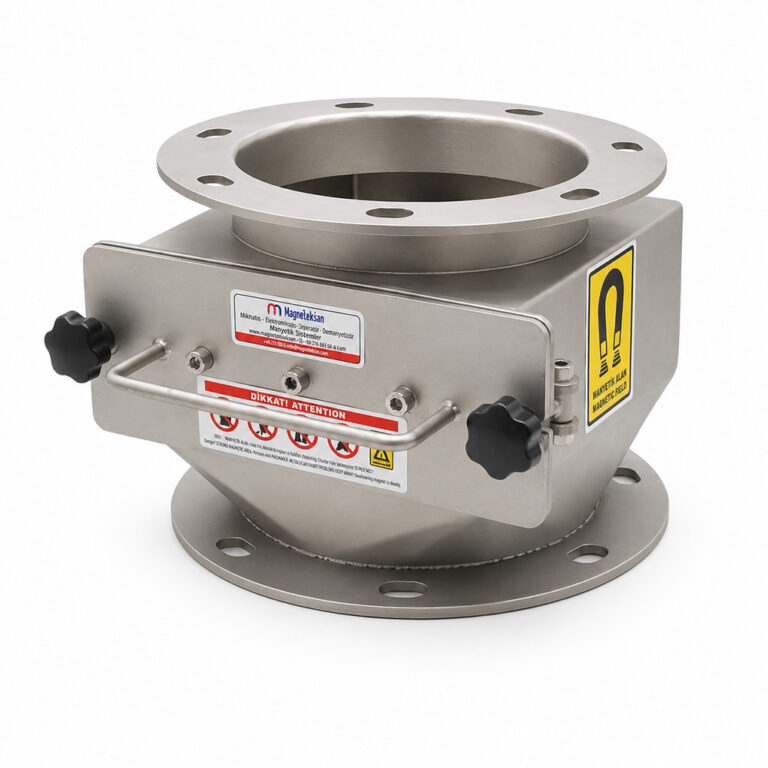
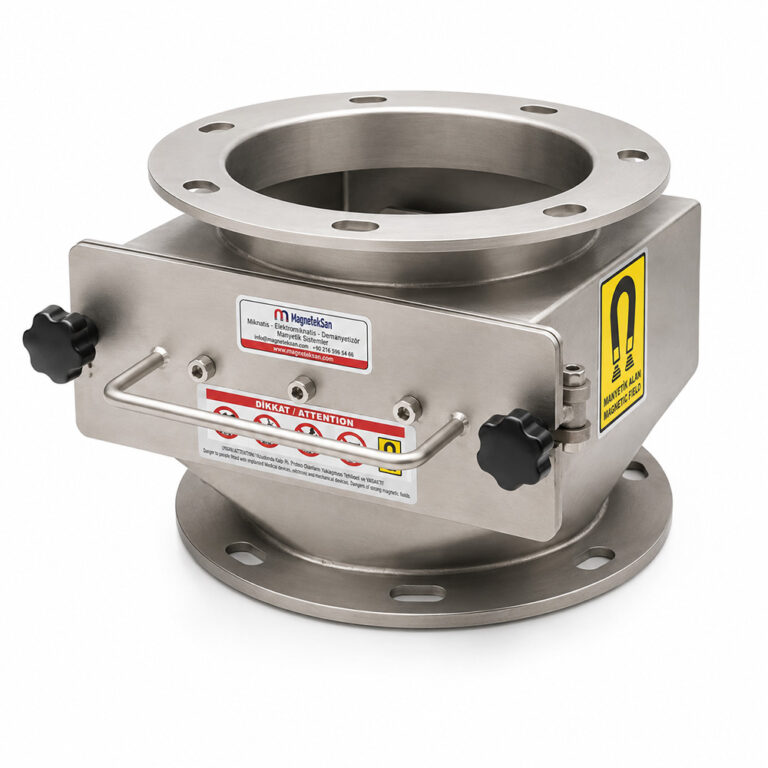
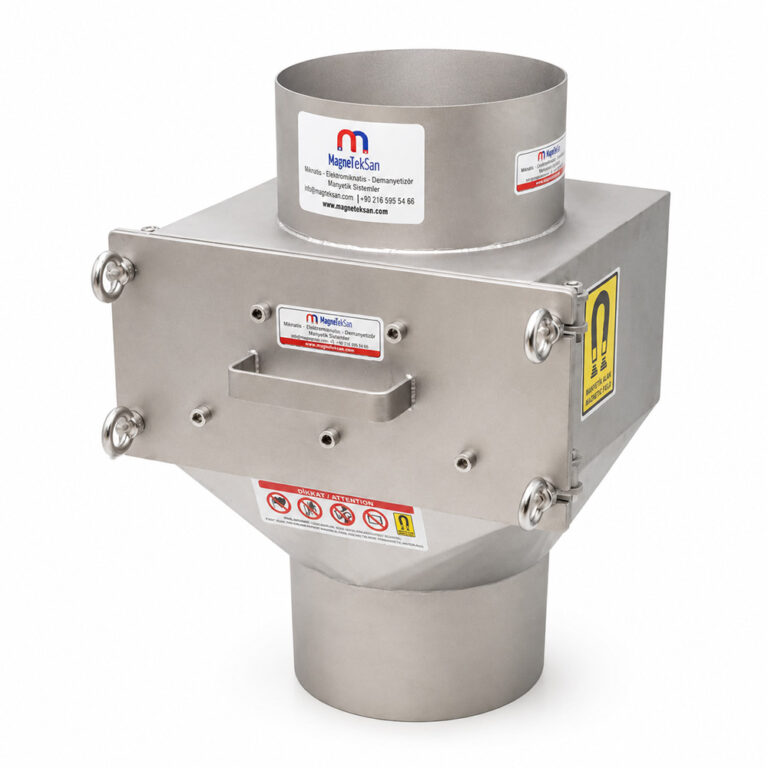
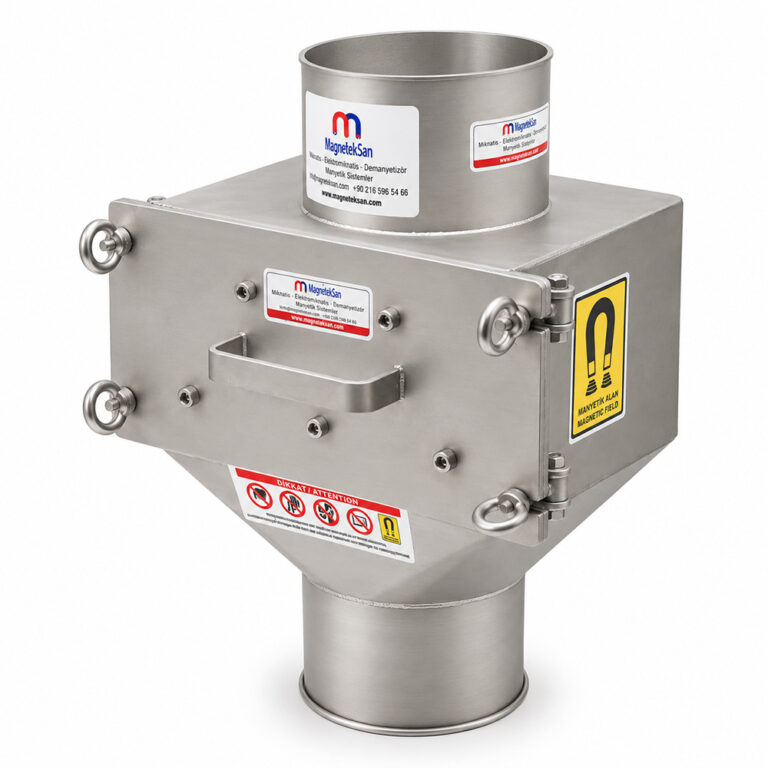
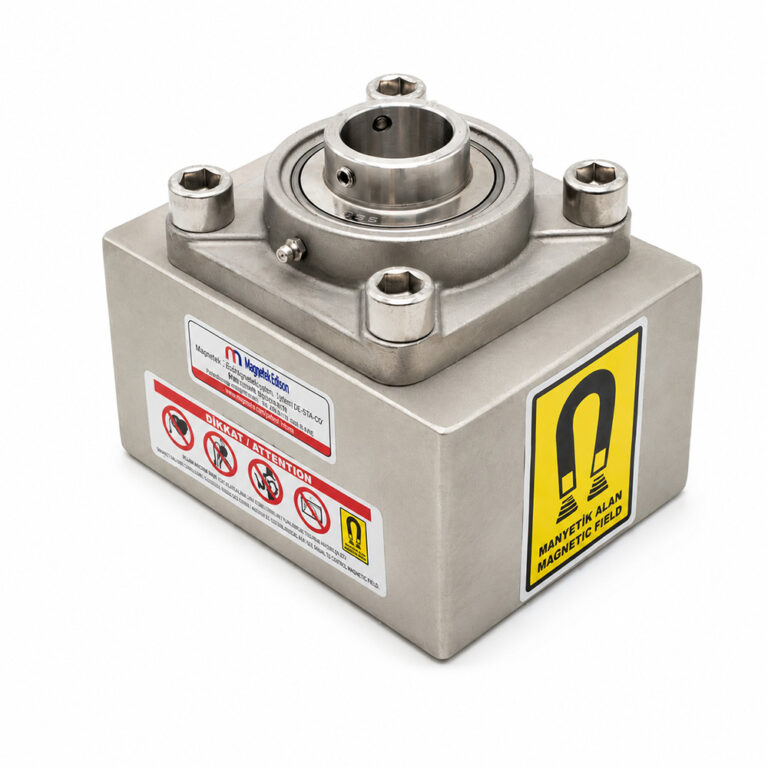
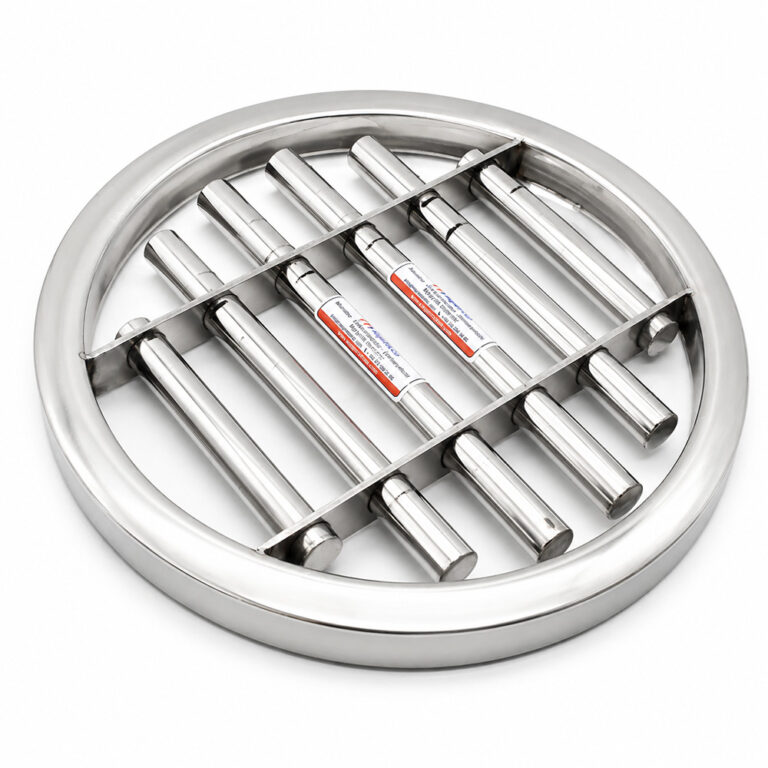
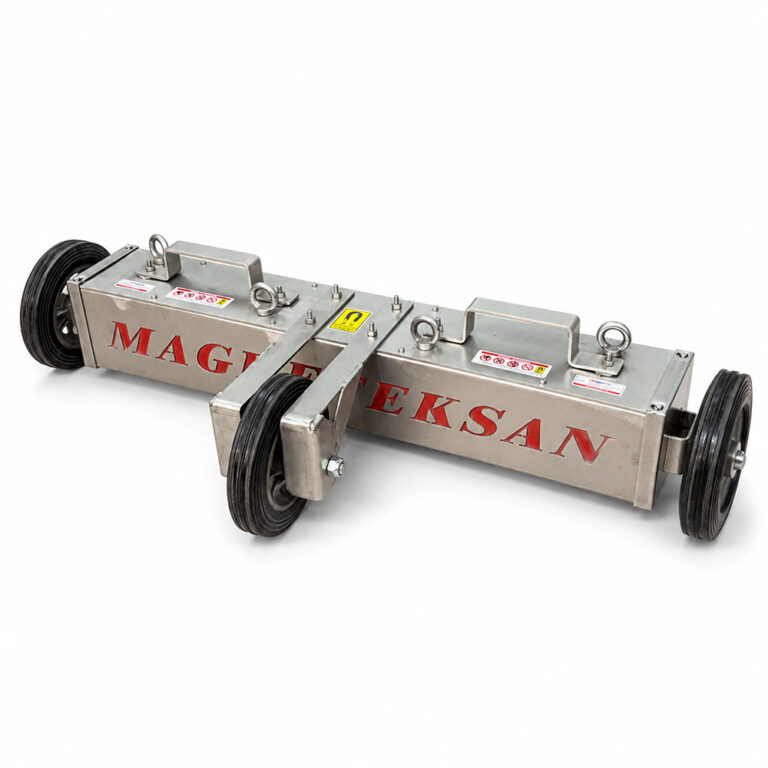
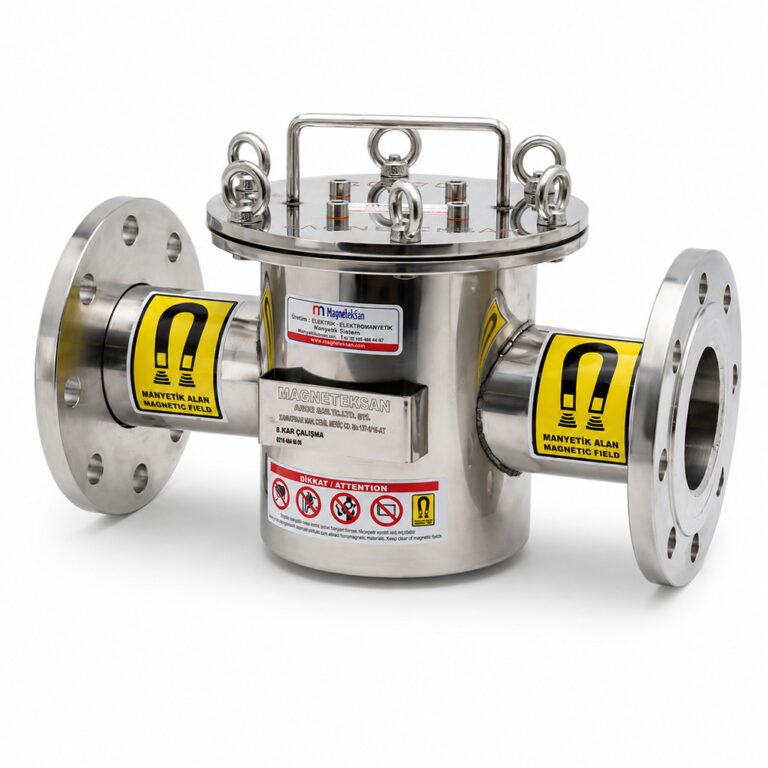
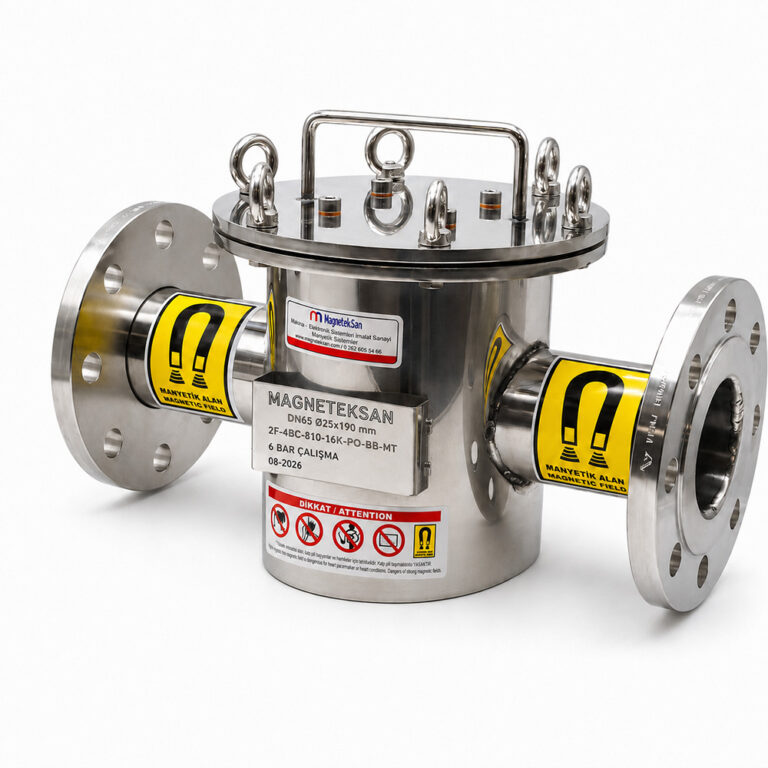
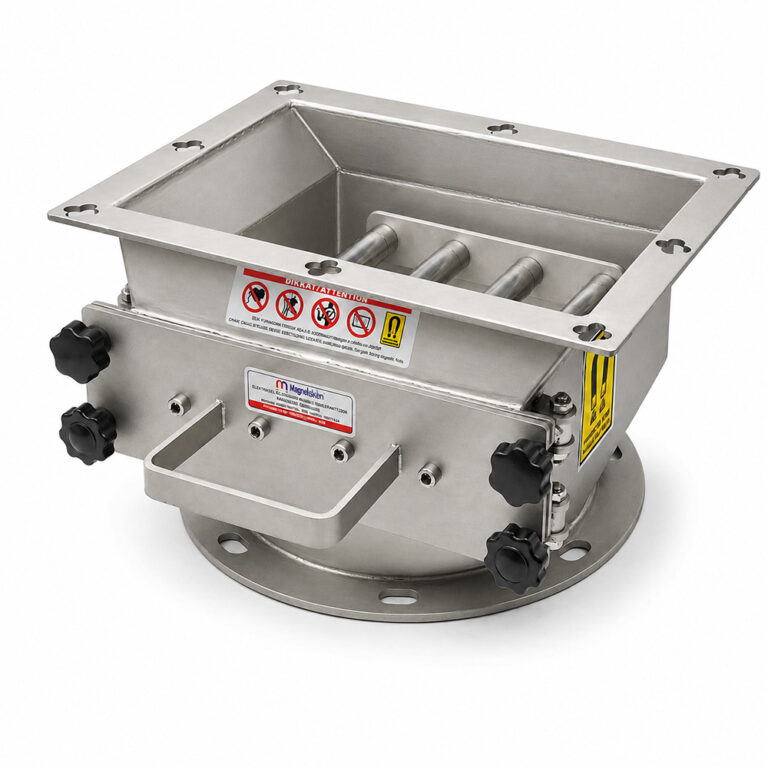
Grid Magnet with Easy-to-Install Chassis with Drawers
Magnetic drawer separators, which are our own production, capture metal fragments, dust passing through the pipe where the assembly is made. These metal residues, which can cause blockage and are undesirable for food safety, are captured by very strong neodium magnets. This system, which is completely stainless, is completely suitable for food.
Thanks to the reduction located in the housing, it does not block the product flow. It does not cause blockage. It is coated with AISI 304 and AISI 316 stainless steel, which is very high corrosion resistance and preferred by food companies. It can be made of ferrite or 300 oxide magnets, as well as neodium magnets can also be used.
- You can easily use it to separate unwanted metals such as nails, wires, iron contained in the system.
- The product can be easily installed in the casting zones.
- It can be used in interactive environments with liquid in a completely sealed way.
- If there is a temperature in the area you will use, it should be preferred for magnets used at appropriate temperatures. Please specify the ambient temperature.
Why Do We Use 304 and 316 Stainless Coatings in Our Products ?
Stainless steels are used in companies engaged in food production. Austenic stainless steels contain chromium up to 10 percent of the total compositions. Chromium, which interacts directly with oxygen, quickly forms a passive protective layer on the surface. It prevents the harmful corrosive layer that may occur on the surface of the material and creates a layer with high surface resistance.