- Magneteksan
- > Special Design Plate Magnets
- > 180x140x100 mm Underwater Neodymium Plate Magnet – Fully Sealed Subsea & ROV Applications
180x140x100 mm Underwater Neodymium Plate Magnet – Fully Sealed Subsea & ROV Applications
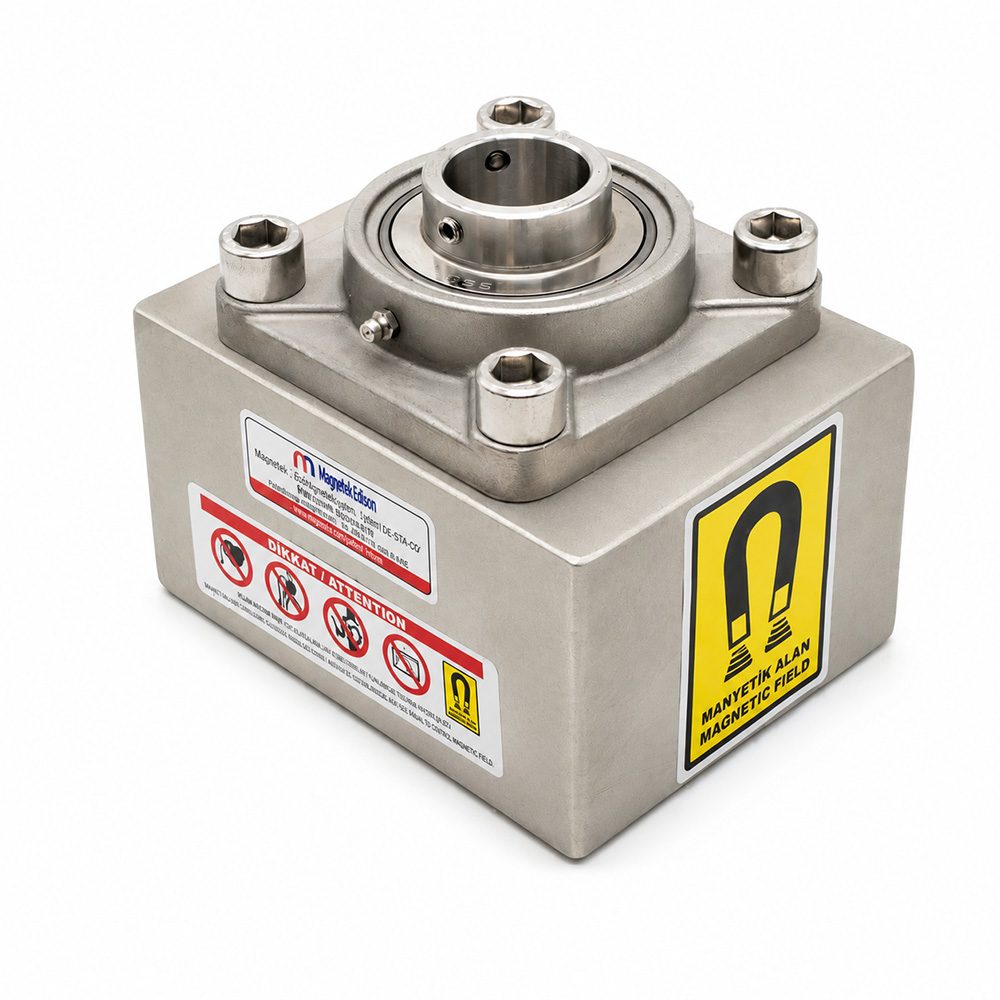
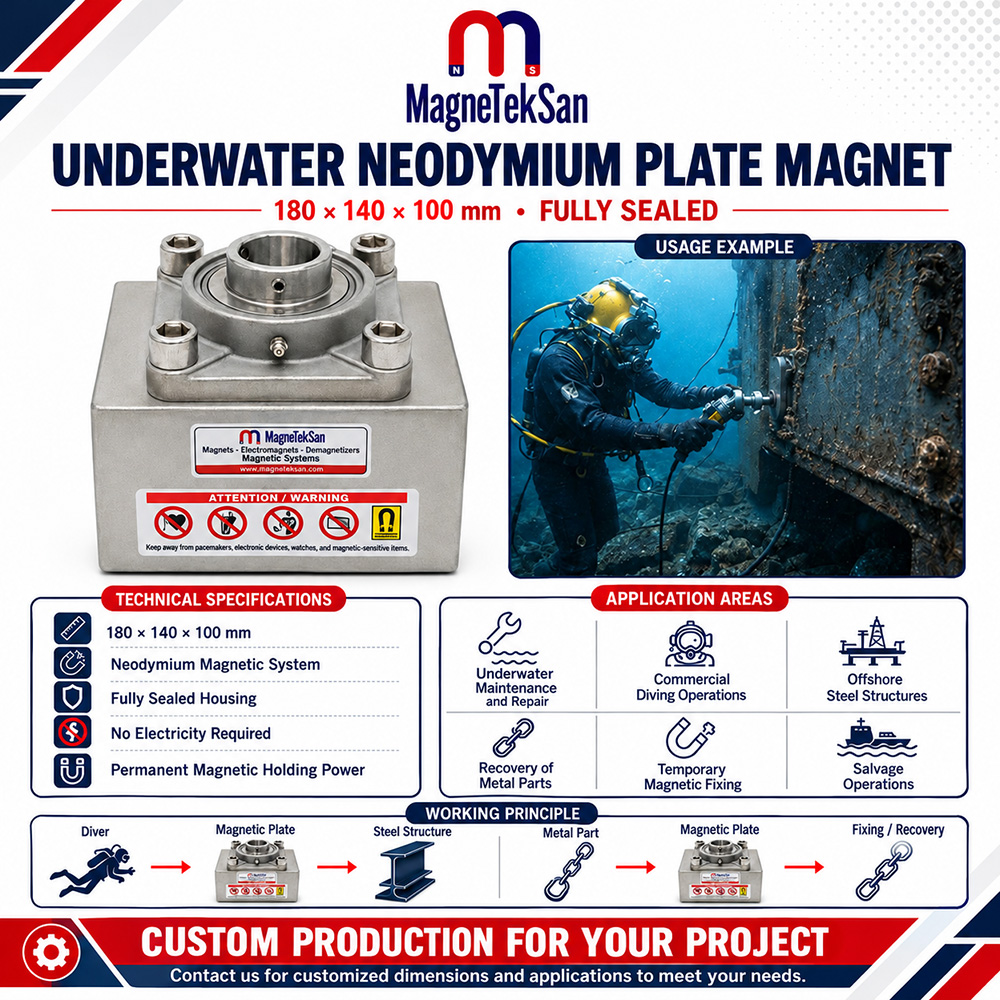
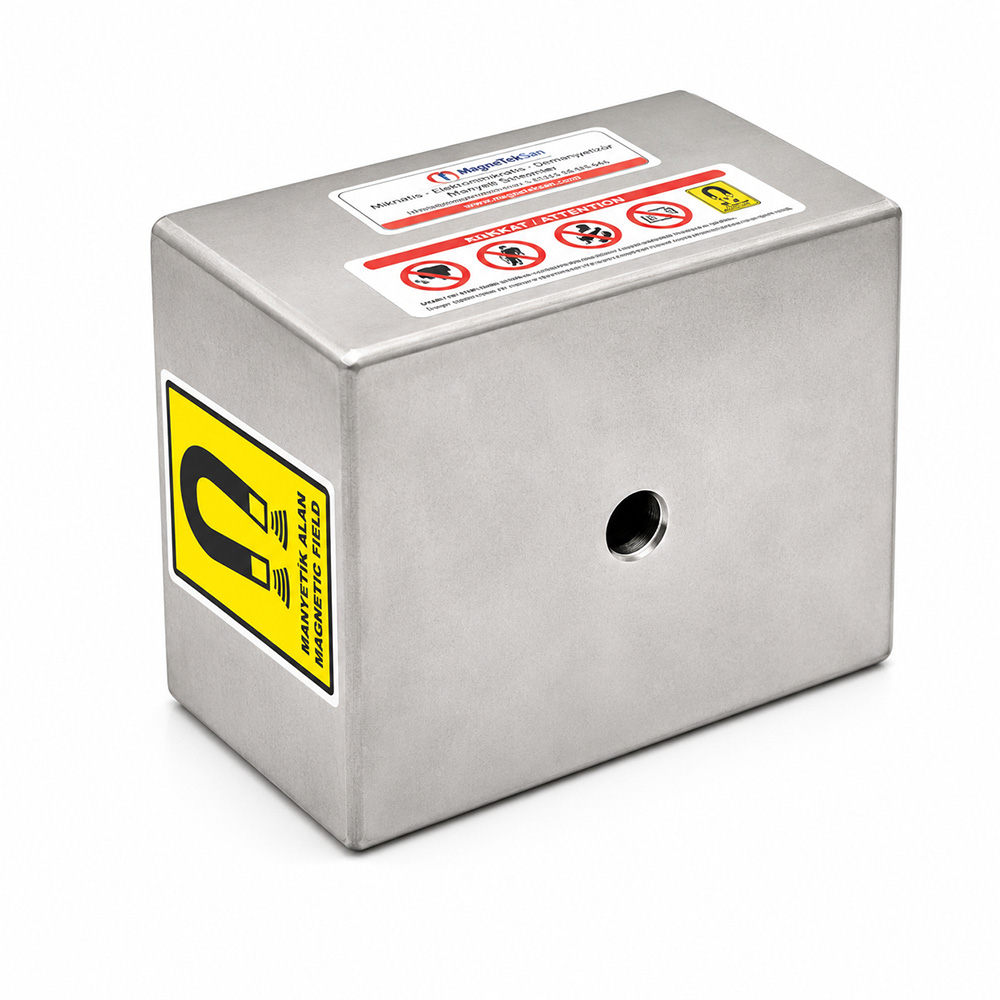
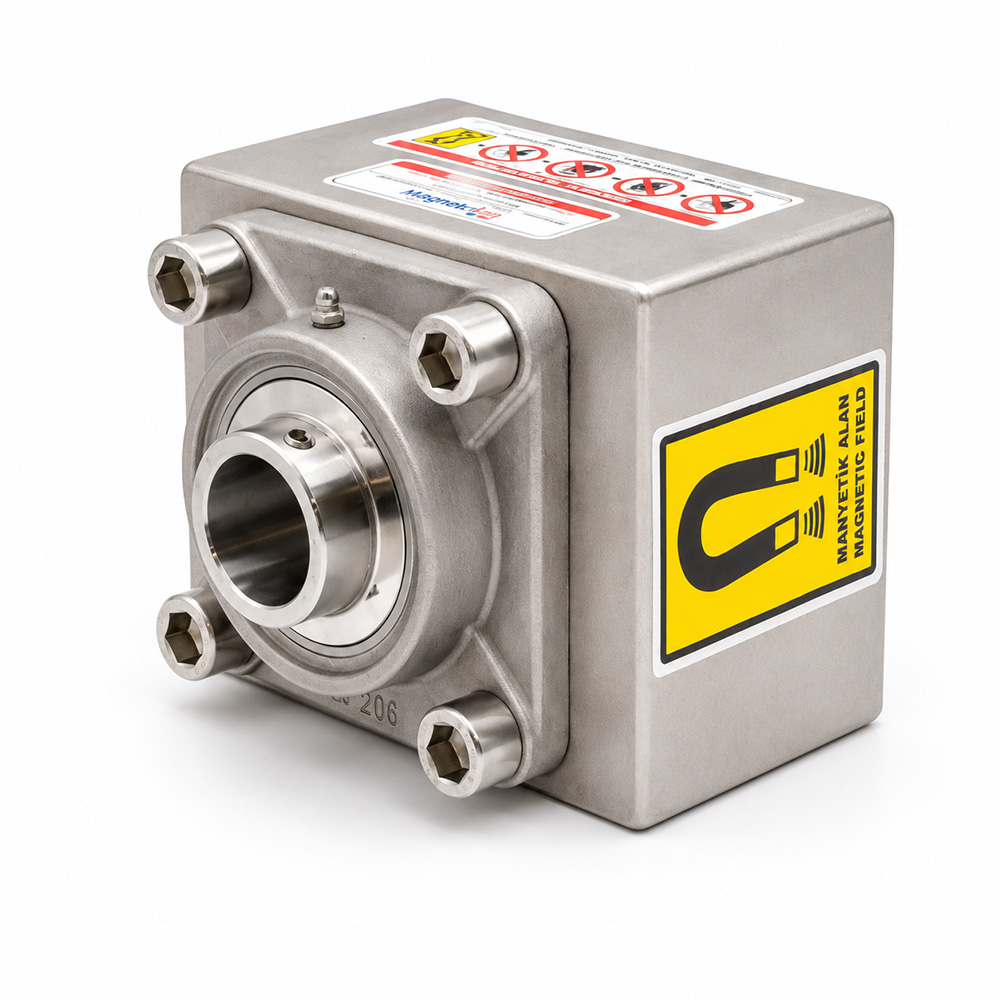
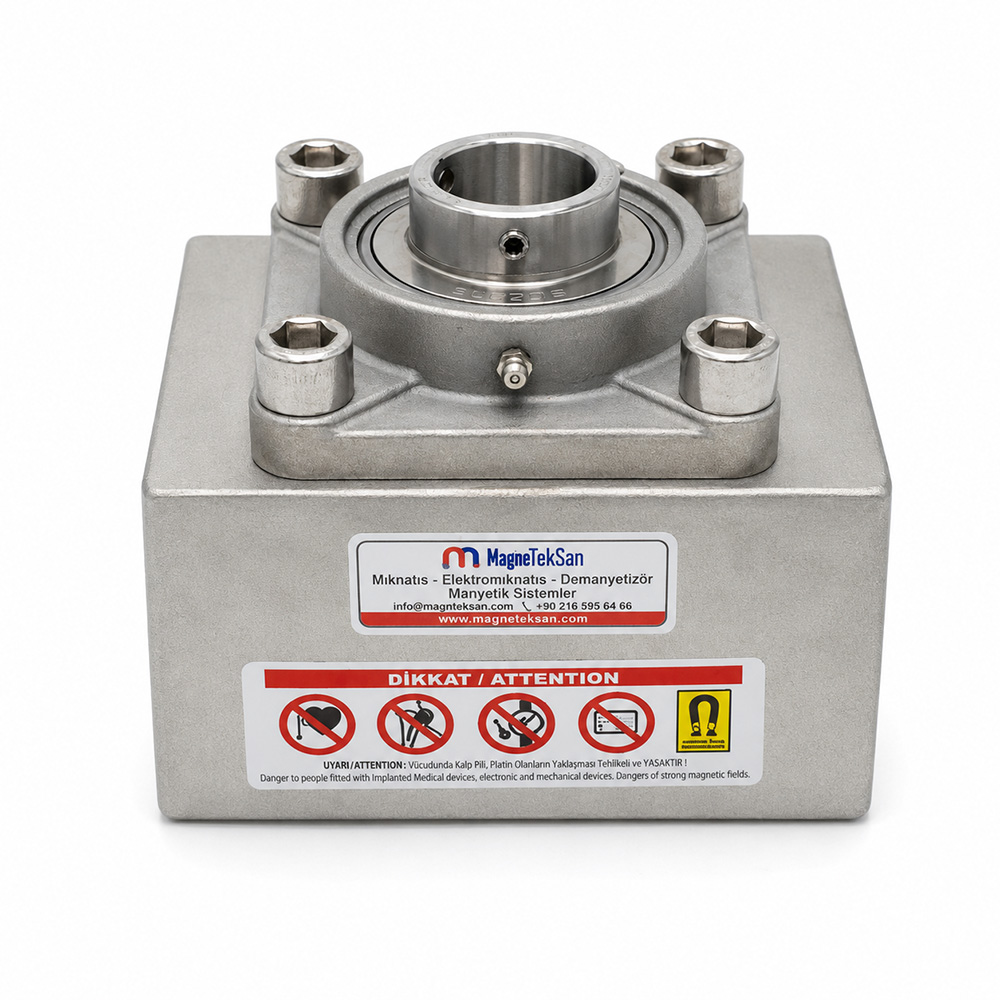
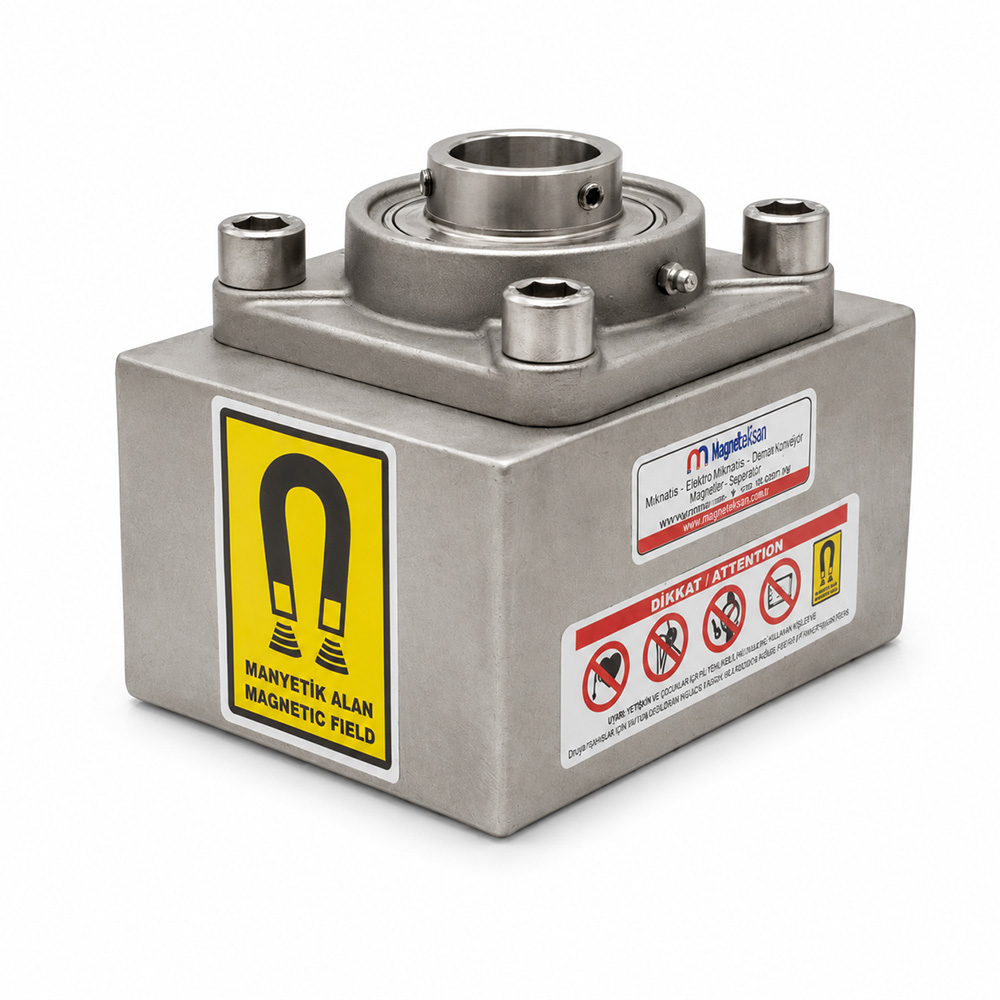
180x140x100 mm Underwater Neodymium Plate Magnet – Fully Sealed Subsea & ROV Applications
General Features
- Specially developed for industrial underwater and fully submerged applications.
- Custom-manufactured underwater magnetic plate measuring 180x140x100 mm.
- Equipped with a powerful permanent neodymium magnetic system.
- Features a fully sealed housing designed to isolate the magnetic components from the surrounding water.
- Suitable for engineering evaluation in ROV, subsea, offshore and underwater intervention projects.
- Can be used for magnetic attachment to suitable ferromagnetic surfaces, holding steel components and temporary positioning.
- Generates a continuous magnetic field without an external electrical power supply.
- Can be considered for underwater maintenance, inspection support and marine salvage applications.
- Available with project-specific dimensions and mechanical connection options.
Technical Specifications
- Product Type: Underwater Neodymium Plate Magnet
- Length: 180 mm
- Width: 140 mm
- Thickness / Height: 100 mm
- Overall Dimensions: 180x140x100 mm
- Magnetic Material: Neodymium
- Housing Construction: Fully Sealed
- Operating Environment: Underwater / Submerged Applications
- Operating Principle: Permanent Magnetic Holding
- Electrical Power Requirement: None for Magnetic Holding
- Primary Applications: Subsea / ROV / Offshore
- Intended Functions: Holding / Temporary Attachment / Ferromagnetic Metal Retrieval
- Manufacturing Type: Custom-Made / Project-Specific
Kategori: Special Design Plate Magnets
Product Information
Extra Information
Product Information
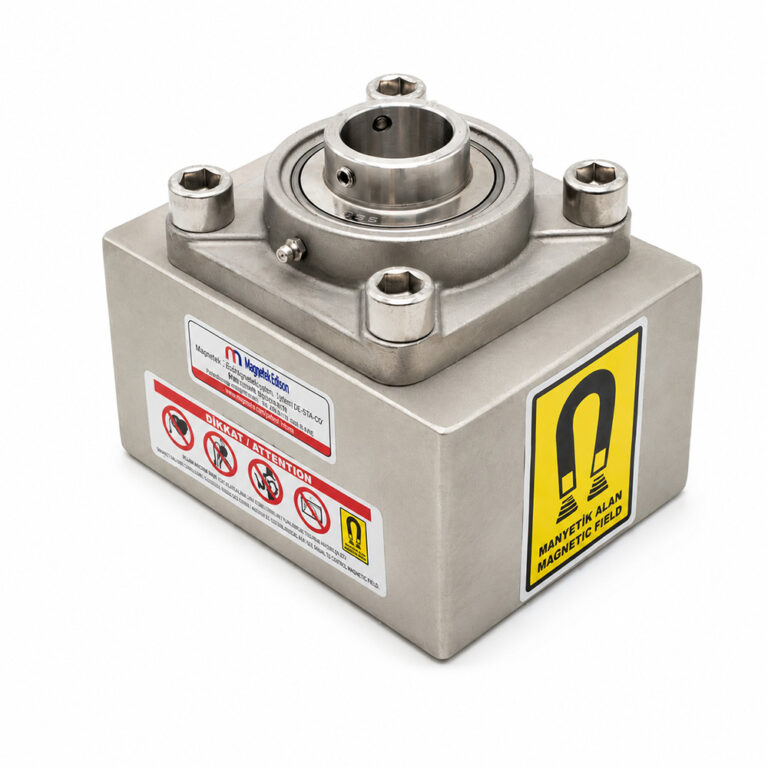
The 180x140x100 mm Underwater Neodymium Plate Magnet is a custom-engineered permanent magnetic system designed for holding ferromagnetic steel components and providing temporary magnetic attachment in underwater, subsea and offshore operations. Its fully sealed housing encloses the neodymium magnetic assembly, making the product suitable for evaluation in submerged applications involving ROVs, divers and underwater intervention equipment. The permanent magnetic system generates holding force without an external electrical power supply.
| Technical Specification | Value |
|---|---|
| Product Type | Underwater Neodymium Plate Magnet |
| Overall Dimensions | 180x140x100 mm |
| Length | 180 mm |
| Width | 140 mm |
| Height / Thickness | 100 mm |
| Magnetic Material | Neodymium |
| Housing Construction | Fully Sealed |
| Operating Environment | Underwater / Submerged |
| Operating Principle | Permanent Magnetic Holding |
| Electrical Power Requirement | None for Magnetic Holding |
| Main Applications | Subsea / ROV / Offshore |
| Intended Functions | Holding / Attachment / Metal Retrieval |
| Manufacturing Type | Custom-Made / Project-Specific |
Extra Information
What Is an Underwater Neodymium Plate Magnet?
An Underwater Neodymium Plate Magnet is a specially engineered permanent magnetic holding device intended for applications in which magnetic attachment must take place below the water surface.
Unlike conventional industrial plate magnets, which are often installed above conveyors or material discharge points, this product is designed for underwater contact with suitable ferromagnetic metal surfaces.
The Magneteksan model measures 180x140x100 mm and incorporates a neodymium magnetic system inside a fully sealed housing.
Its main purpose is to provide magnetic holding, temporary attachment, positioning assistance or the capture of suitable ferromagnetic metal components during underwater operations.
Potential applications include remotely operated vehicle (ROV) projects, subsea maintenance, offshore equipment servicing and selected marine salvage activities.
The magnetic field is generated by permanent magnets, so no electrical power is required to maintain magnetic attraction.
What Does Subsea Mean?
The term subsea refers to engineering activities, equipment and operations carried out beneath the surface of a sea or other body of water.
Subsea operations may involve:
- Offshore oil and gas infrastructure
- Underwater pipelines
- Submerged steel structures
- ROV inspection and intervention
- Diver-assisted maintenance
- Underwater equipment positioning
- Shipwreck inspection
- Marine salvage and recovery
- Subsea testing and installation
Many of these applications involve steel components that may provide suitable surfaces for magnetic attachment.
A specially designed underwater magnetic plate can be evaluated as an auxiliary holding or positioning device within such systems.
Where Can an Underwater Magnetic Plate Be Used?
The 180x140x100 mm neodymium magnetic plate can be considered for different underwater industrial applications, subject to engineering assessment.
Potential applications include:
- ROV-assisted underwater operations
- Offshore steel structure maintenance
- Underwater inspection equipment positioning
- Temporary attachment to suitable steel surfaces
- Ferromagnetic metal component retrieval
- Diver-supported intervention work
- Submerged machinery maintenance
- Marine salvage support
- Underwater testing systems
- Steel pipeline inspection support
The actual suitability of the magnet depends on the operating environment, target surface, mechanical mounting arrangement and required holding force.
How Does an Underwater Neodymium Plate Magnet Work?
The magnetic system contains permanent neodymium magnets enclosed within a fully sealed housing.
These magnets generate a continuous magnetic field without requiring an electrical supply.
When the magnetic working face approaches a suitable iron or ferromagnetic steel surface, magnetic attraction can develop between the plate and the target material.
Depending on the design of the application, the magnetic plate may then assist with holding, positioning or temporarily securing a component.
Two possible operating arrangements are:
ROV / Diver → Underwater Magnetic Plate → Ferromagnetic Steel Structure
Submerged Steel Component → Underwater Magnetic Plate → Holding / Retrieval
The magnetic field remains present even when external electrical power is unavailable.
The actual holding force must be evaluated under the intended operating conditions.
Why Is a Fully Sealed Housing Important?
Neodymium magnets are not generally intended to remain directly exposed to water for extended periods without suitable protection.
Water penetration can affect the internal magnetic assembly and may compromise its long-term condition.
The fully sealed housing separates the magnetic components from the surrounding water.
For underwater engineering, housing design is particularly important because the equipment may be exposed to:
- Continuous water contact
- External hydrostatic pressure
- Saltwater
- Sediment and marine deposits
- Mechanical impacts
- Handling forces
- Repeated installation and removal
The housing, sealing method and mechanical connections must be appropriate for the intended application.
A sealed construction is an important design feature, but its performance limits still require verification.
Does Fully Sealed Mean IP68 Certified?
No.
A fully sealed construction and a verified IP68 protection rating are not equivalent technical claims.
An IP rating is assigned according to defined testing and classification requirements.
Although this underwater neodymium plate magnet has a fully sealed housing, no verified IP68 test result has been specified for this model.
Therefore, it should not be advertised as IP68-certified without the relevant documentation.
The applicable immersion conditions must be established separately for each project.
What Is the Maximum Operating Depth?
A verified maximum operating depth has not been specified for this product.
The fact that a magnetic plate is designed for underwater applications does not automatically mean that it can operate at any depth.
Increasing water depth produces increasing hydrostatic pressure on the housing.
The permissible depth depends on factors such as:
- Housing design
- Material properties
- Wall thickness
- Welded joints
- Sealing arrangement
- Mechanical connections
- Inspection and testing results
The required working depth should be provided during the engineering and quotation stage.
A specific depth rating should only be declared after appropriate verification.
How Does Water Pressure Affect the Magnetic Plate?
As underwater depth increases, the external pressure acting on the magnetic housing increases.
This pressure may place additional demands on the enclosure, welded joints, seals and mechanical interfaces.
For a subsea installation, the engineering assessment should consider the relationship between the expected operating pressure and the housing’s structural resistance.
The magnetic attraction and the pressure resistance of the housing are separate design considerations.
A magnet may provide attraction to steel while its housing still requires additional verification for a particular depth.
For this reason, subsea magnetic equipment must be assessed as a complete mechanical and magnetic assembly.
Can the Underwater Magnet Be Used in Seawater?
The product has been developed for underwater applications, including potential subsea and offshore uses.
However, long-term seawater suitability depends on the corrosion resistance of the actual housing material, welds and connections.
Seawater is generally more aggressive than freshwater because of its salt content and other environmental factors.
Before approving a marine installation, the following should be considered:
- Housing material grade
- Corrosion resistance
- Weld condition
- Surface protection
- Exposure duration
- Water temperature
- Maintenance intervals
No unlimited seawater corrosion-resistance claim should be made without the necessary material and performance verification.
Is the Housing Made from AISI 316 Stainless Steel?
The exact stainless-steel grade of the housing has not been confirmed in the published technical specifications.
Therefore, this product should not be described as AISI 304 or AISI 316 stainless steel without supporting material documentation.
For a marine project, the housing material can be reviewed according to the environmental conditions and corrosion requirements.
The material specification should be confirmed before final production or procurement approval.
Why Are Neodymium Magnets Used for Underwater Holding?
Neodymium magnets belong to the rare-earth permanent magnet family and have a high magnetic energy density.
This characteristic makes them suitable for the development of compact magnetic holding systems.
In underwater applications, compact equipment can be advantageous where installation space is limited or where an ROV must handle a magnetic attachment device.
The neodymium system also provides a permanent magnetic field without requiring continuous electrical power.
However, the magnetic material alone does not determine the actual holding capacity.
The complete magnetic circuit, target steel and contact conditions must be considered.
What Is the Pulling Force of the 180x140x100 mm Magnet?
A verified pulling-force value has not been specified for this model.
The actual force developed between a magnetic plate and a steel target depends on several variables:
- Magnetic circuit design
- Thickness of the target steel
- Steel composition
- Available contact area
- Surface flatness
- Air or non-magnetic gaps
- Paint and protective coatings
- Corrosion
- Surface curvature
- Contact orientation
For example, a magnetic plate placed against a clean, flat steel surface may behave differently from the same plate placed against a curved, painted or corroded structure.
A specific pulling-force value in kilograms or newtons should only be stated after appropriate testing.
Can This Magnet Be Used in ROV Operations?
Yes, its use can be evaluated for suitable Remotely Operated Vehicle (ROV) projects.
ROVs are commonly used for underwater inspection, maintenance, intervention and equipment handling.
A custom magnetic plate may provide an auxiliary attachment point when a suitable ferromagnetic structure is available.
Possible ROV-related functions include:
- Temporary magnetic contact
- Equipment positioning
- Holding a steel component
- Assisting with the retrieval of ferromagnetic objects
- Supporting a specially engineered intervention tool
The mechanical integration of the magnet with the ROV must be designed according to the intended operation.
The required holding force, installation geometry and method of release must also be evaluated.
Can an ROV Attach Itself to a Steel Structure Using This Magnet?
Potentially, but the application requires specific engineering calculations and validation.
A magnetic plate may develop attraction to a suitable steel structure.
However, safe ROV attachment cannot be assumed solely because the magnet is made from neodymium.
Important factors include:
- Required holding force
- ROV weight and buoyancy
- Water currents
- Hydrodynamic loading
- Steel surface geometry
- Paint and coating thickness
- Available contact area
- Direction of applied forces
- Safety factor
- Attachment and release mechanism
A permanent magnetic attachment system should be designed to prevent unintended movement and to allow controlled disengagement when necessary.
No unverified claim should be made that this product can securely anchor an ROV of a particular weight.
Can the Magnet Be Used in Diver-Assisted Underwater Operations?
The magnetic plate may be evaluated for suitable diver-assisted tasks involving ferromagnetic steel surfaces.
Potential uses include temporary equipment positioning, holding selected steel components and assisting with underwater maintenance activities.
Because the product contains permanent magnets, the attraction force remains present throughout the operation.
Diver safety procedures must account for possible pinch points, unexpected attraction and difficulty separating the magnet from a steel surface.
The mounting and release arrangements should be assessed before operational use.
Can It Be Used for Marine Salvage?
Yes, the magnetic plate may be considered for selected marine salvage applications.
Marine salvage operations can involve the inspection, recovery or repositioning of submerged equipment and components.
A permanent magnetic plate may assist with holding suitable ferromagnetic objects such as:
- Steel machine components
- Ferromagnetic equipment parts
- Steel plates
- Suitable steel fittings
- Certain submerged metal fragments
The actual feasibility depends on the dimensions, weight, geometry and magnetic properties of the target object.
A separate lifting assessment is necessary if the recovered component will be suspended or raised using the magnet.
Can It Be Used During Shipwreck Recovery?
The product may be considered for specialised tasks involving ferromagnetic sections of submerged ship structures.
For example, a magnetic plate could be evaluated for temporary contact with suitable steel surfaces or for holding selected smaller components during an intervention.
However, shipwreck recovery involves complex mechanical and environmental conditions.
The ability to attach to a steel hull does not establish a safe lifting capacity for the structure.
Large-scale lifting or load-bearing applications require dedicated engineering, force verification and suitable certified equipment.
Is the Magnet Suitable for Offshore Steel Structures?
Offshore installations frequently include steel structural members, supports, machinery and pipelines.
Where a suitable ferromagnetic surface is available, a magnetic plate can potentially be integrated into a custom holding or positioning system.
Possible applications include temporary contact during inspection, intervention equipment positioning and selected maintenance activities.
Before installation, the target surface should be assessed for its material properties, coating thickness, corrosion and geometry.
The required holding force and safety margin must also be determined.
Can It Attach to Subsea Pipelines?
Potentially, provided the pipeline material is sufficiently ferromagnetic and the installation has been engineered for the actual surface.
Not all underwater pipelines provide suitable magnetic attachment surfaces.
Examples include:
- Carbon steel pipelines
- Stainless steel pipelines
- Composite pipelines
- Coated steel pipelines
- Concrete-coated pipelines
These materials and constructions can behave very differently in a magnetic application.
A carbon steel pipeline may provide magnetic attraction, while thick protective coatings or non-ferromagnetic construction may significantly reduce or prevent useful holding.
Pipeline material, coating thickness and curvature should be verified before selecting a magnetic attachment solution.
Does Paint or Protective Coating Reduce Magnetic Holding Force?
Yes.
A non-magnetic layer between the magnet and the steel surface increases the effective separation between them.
This can reduce magnetic attraction.
Possible sources of separation include:
- Thick paint
- Epoxy coatings
- Protective polymer layers
- Rust
- Marine growth
- Sediment
- Surface irregularities
The effect depends on the magnetic design and the thickness of the gap.
For applications requiring reliable attachment, testing should be performed on a representative surface with the actual coating system.
Can the Magnet Attach to Rusty Steel?
Magnetic attraction may still occur if the underlying steel has sufficient ferromagnetic properties.
However, corrosion products and surface irregularities can increase the effective gap between the magnet and the steel.
This may reduce the available holding force.
The degree of corrosion, contact geometry and surface condition must therefore be considered.
For safety-critical applications, magnetic holding should be verified under representative operating conditions.
Can the Magnet Attach to Stainless Steel?
It depends on the stainless-steel grade and its metallurgical condition.
Some stainless steels exhibit strong magnetic behaviour, while others have only a weak response.
Ferritic and martensitic stainless steels are generally more magnetic than many austenitic stainless steels.
Therefore, it should not be assumed that every stainless-steel surface will provide suitable magnetic attachment.
Where stainless steel is the target material, the actual grade and magnetic response should be checked.
Does the Magnet Work on Aluminium, Copper or Brass?
Not through conventional ferromagnetic attraction.
Aluminium, copper and brass are not ferromagnetic under normal operating conditions.
Consequently, they do not provide the same magnetic attachment behaviour as suitable iron or carbon steel.
The product is primarily intended for contact with ferromagnetic materials.
If the target component is non-ferromagnetic, an alternative mechanical holding or retrieval solution may be necessary.
Can the Magnet Collect Metal Parts from Underwater?
It may be used to capture suitable ferromagnetic metal components when they are brought sufficiently close to the magnetic working surface.
Examples may include certain steel fragments, machinery parts and ferromagnetic fittings.
However, successful capture depends on:
- Magnetic properties of the component
- Component size and mass
- Contact geometry
- Distance from the magnetic surface
- Orientation
- External forces during movement
The ability to attract a component does not automatically establish that the component can be safely lifted or transported.
Any load-handling application must be assessed separately.
Can It Be Used as a Certified Underwater Lifting Magnet?
This product should not be described as a certified lifting magnet without the necessary load testing and documentation.
No verified Safe Working Load (SWL) or Working Load Limit (WLL) has been specified.
For a lifting application, the engineering assessment should address:
- Verified magnetic holding force
- Load weight
- Load geometry
- Direction of loading
- Mechanical attachment strength
- Dynamic forces
- Safety factor
- Potential consequences of accidental release
A suitable lifting system must be selected and validated before any suspended-load operation.
Does the Underwater Magnetic Plate Require Electricity?
No.
The product uses permanent neodymium magnets to generate its magnetic field.
It does not require an electrical power supply to maintain magnetic attraction.
The magnetic system therefore does not need:
- An electromagnetic coil supply
- A DC power source
- A magnetic control panel
- Continuous electrical energisation
This can simplify the magnetic function in selected underwater applications.
However, any associated ROV, positioning system or release mechanism may have separate power requirements.
What Happens If Electrical Power Is Lost?
The magnetic field does not disappear when external electrical power is interrupted.
This is because the product uses permanent magnets rather than an electrically energised electromagnet.
If the magnet is attached to a suitable steel surface, the magnetic attraction remains present after a power failure.
This characteristic must be considered when designing an underwater attachment or recovery system.
Can the Magnetic Holding Force Be Switched Off Remotely?
Not by simply switching off electrical power.
The magnetic field of a permanent neodymium magnet remains present without electrical energy.
If a project requires remote release, the system must incorporate a suitable release method.
Depending on the application, this may involve a specially engineered mechanical arrangement or a different magnetic technology.
The release method must be evaluated as part of the overall equipment design.
Can the Magnet Operate Continuously Underwater?
The product has been manufactured with a fully sealed housing for underwater applications.
However, this does not establish unlimited operating duration at every depth and in every underwater environment.
Continuous operation must be evaluated according to:
- Water type
- Operating depth
- Water temperature
- Corrosion conditions
- Housing construction
- Mechanical loading
- Inspection and maintenance requirements
For long-term deployment, the operating environment and expected service duration should be specified during the design process.
How Should the Underwater Magnet Be Cleaned and Maintained?
After an underwater operation, the magnetic plate may contain attached steel fragments, mud, sediment or marine deposits.
A general inspection and maintenance procedure may include:
- Move the magnetic plate to a safe working area.
- Inspect the magnetic working surface.
- Carefully remove any retained ferromagnetic metal components.
- Clean the external housing.
- Check visible welded and sealed areas.
- Inspect mounting points and connections.
- Examine the housing for signs of damage or corrosion.
- Confirm the equipment’s condition before the next operation.
The final maintenance procedure should be defined according to the actual housing material, installation conditions and project requirements.
Should the Magnet Be Rinsed After Seawater Exposure?
For many types of marine equipment, removing residual salt after seawater exposure is beneficial as part of general maintenance.
Freshwater rinsing may therefore be considered where it is compatible with the equipment’s materials and approved maintenance procedure.
However, the correct cleaning method depends on the housing material, surface condition and operating environment.
The final procedure should follow the manufacturer’s project-specific maintenance instructions.
How Is an Underwater Plate Magnet Different from a Standard Industrial Plate Magnet?
The primary difference is the intended operating environment and function.
| Standard Industrial Plate Magnet | Underwater Neodymium Plate Magnet |
|---|---|
| Commonly used in dry or wet industrial processes | Developed for underwater applications |
| Often installed over conveyors or chutes | Evaluated for ROV, subsea and offshore use |
| Commonly used for ferrous metal separation | Primarily used for holding, attachment and retrieval |
| Standard industrial mounting arrangements | Project-specific mounting arrangements |
| Water-resistant construction may be optional | Fully sealed housing construction |
| Designed around material flow | Designed around underwater operational requirements |
The 180x140x100 mm underwater model is therefore best considered a custom-engineered magnetic holding system, rather than a conventional conveyor magnetic separator.
Why Was the Product Manufactured in 180x140x100 mm Dimensions?
This model was manufactured with overall dimensions of 180 mm length, 140 mm width and 100 mm height for a project-specific application.
In custom underwater magnetic equipment, dimensions may be determined by:
- Required magnetic performance
- Available installation space
- Target steel geometry
- Operating method
- Mounting configuration
- Equipment handling requirements
- Housing design
The dimensions should therefore be understood as a custom product configuration rather than a universal standard size.
Can Custom Underwater Neodymium Magnets Be Manufactured?
Yes.
Magneteksan can develop custom underwater magnetic plate solutions according to project-specific requirements.
Possible design parameters include:
- Overall length
- Overall width
- Overall height
- Magnetic circuit design
- Target holding force
- Housing configuration
- Mechanical mounting connections
- Installation orientation
- Intended operating environment
Custom designs can be evaluated for ROV equipment, offshore structures, underwater maintenance systems and selected marine salvage applications.
Final technical specifications should be established through engineering review and, where necessary, testing.
What Information Is Required for a Custom Subsea Magnet?
To evaluate a custom underwater neodymium magnetic system, the following project information is useful:
- Intended underwater application.
- Required operating depth.
- Freshwater or seawater environment.
- Required magnetic holding force.
- Target steel material and thickness.
- Target surface geometry.
- Paint or protective coating thickness.
- Available installation dimensions.
- Mechanical mounting method.
- Expected loading direction.
- Operating temperature.
- Required deployment duration.
- Expected water currents and external forces.
- Method of attachment and release.
- Relevant testing and certification requirements.
These details help determine the appropriate magnetic configuration, housing design and mechanical integration.
Magneteksan manufactures custom neodymium magnetic systems for specialised underwater, subsea, offshore and industrial engineering applications. Customers can submit their technical requirements to discuss project-specific dimensions, mounting options and magnetic holding solutions.