Product Information
Extra Information
Product Information
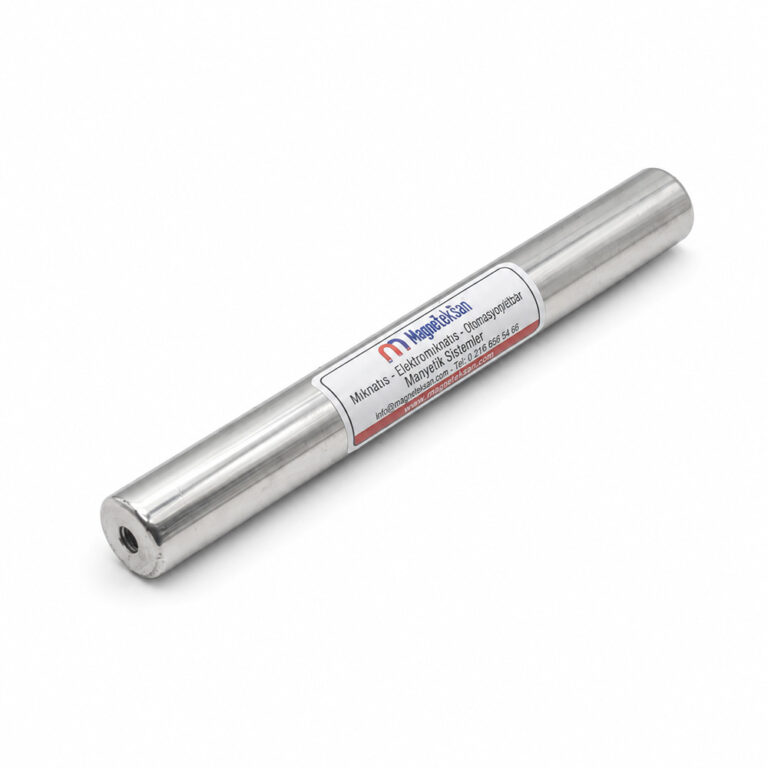
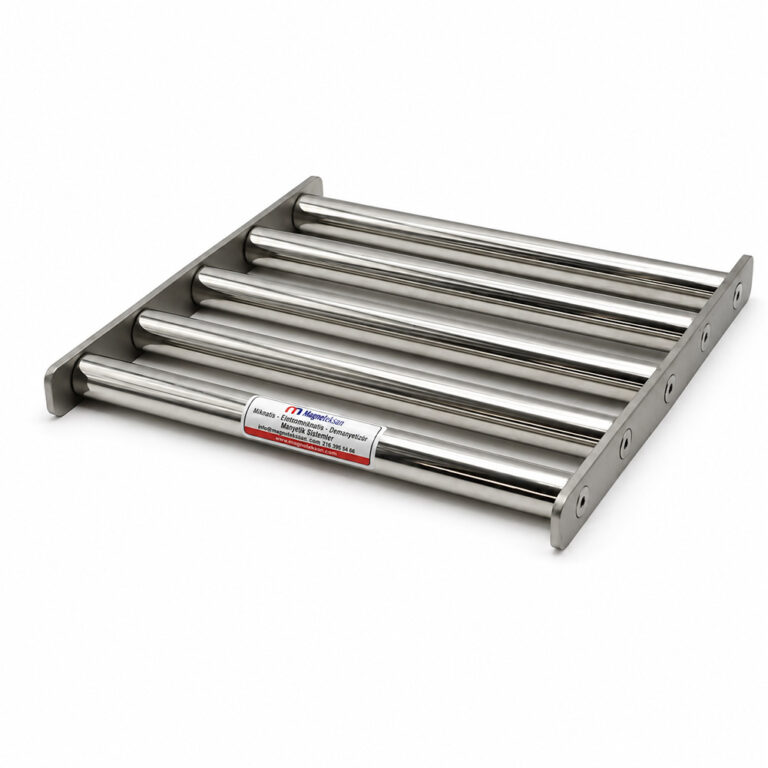
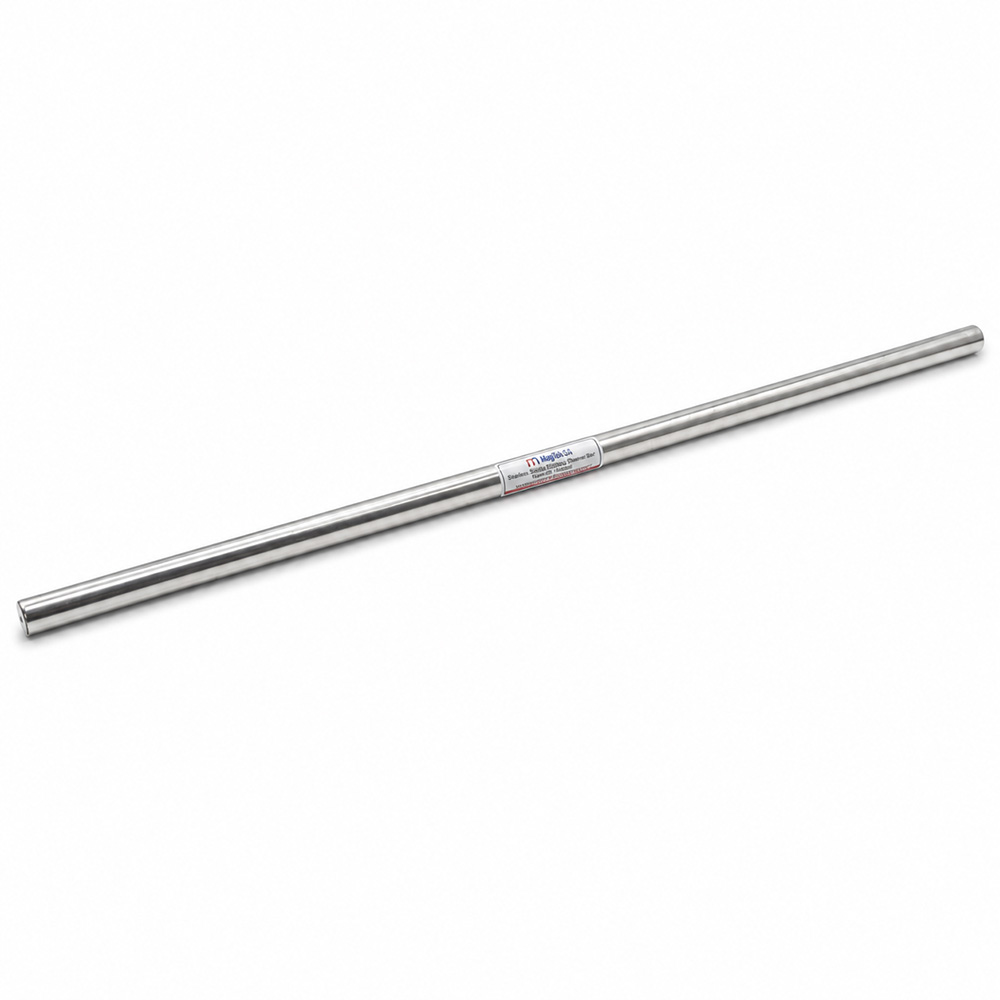
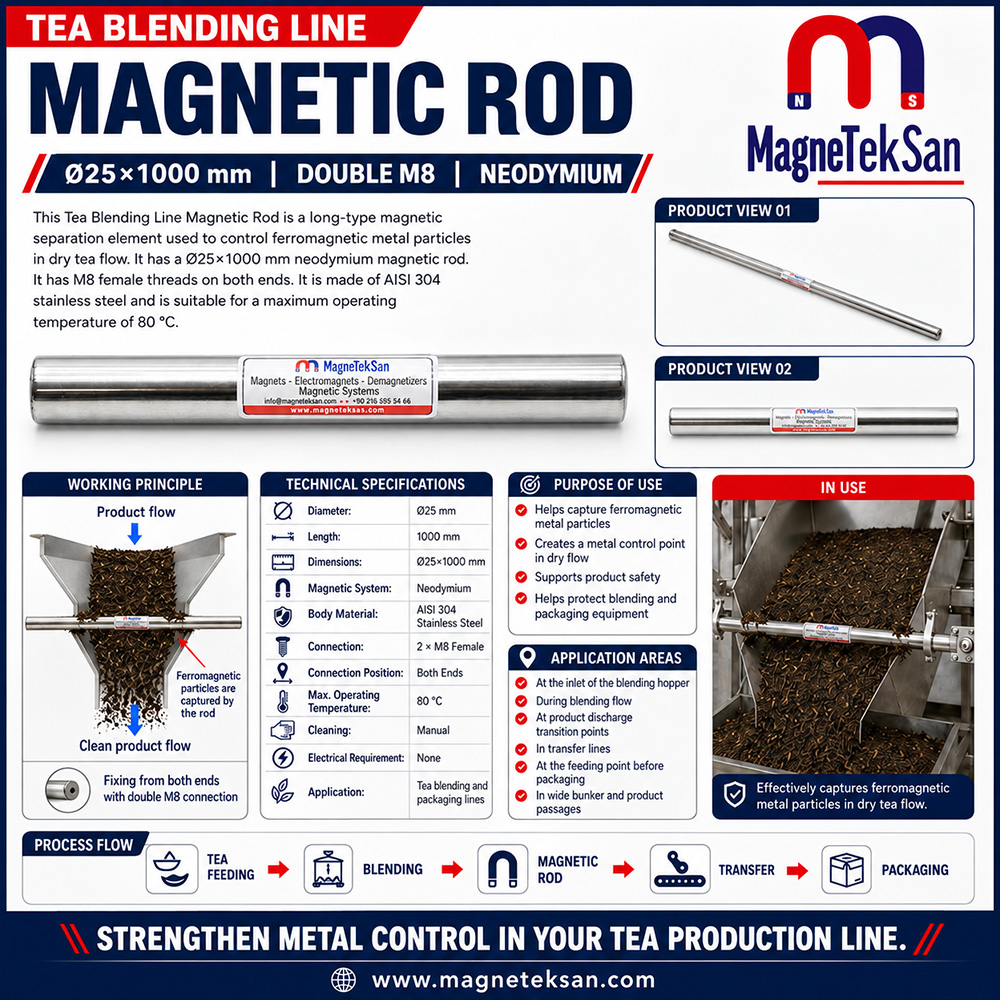
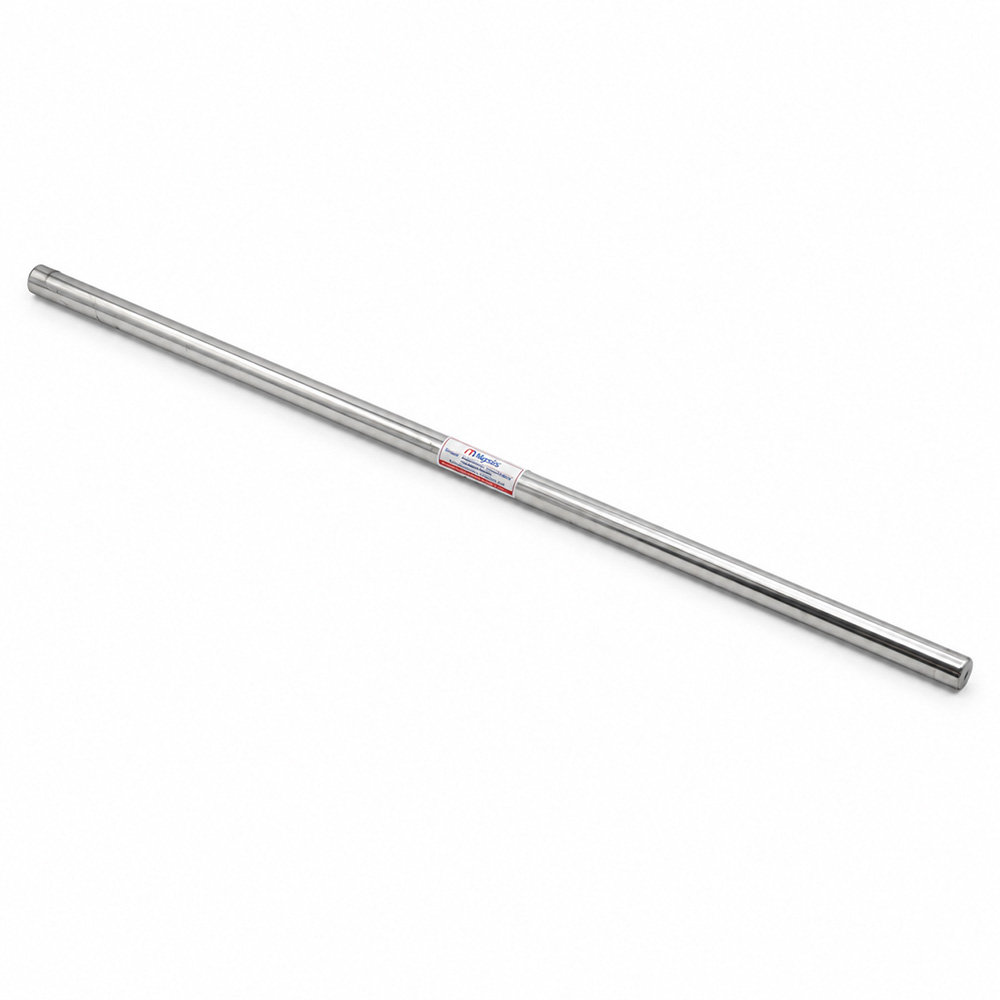
The tea blending line magnetic bar is a permanent neodymium magnetic separator element designed to help capture ferromagnetic metal contaminants from dry tea during blending, product transfer and packaging operations, providing a 1000 mm long magnetic separation surface for appropriately designed hoppers, blending equipment and product flow channels. Featuring a Ø25 mm diameter, AISI 304 stainless steel outer housing, M8 female threaded connections at both ends and a maximum operating temperature of 80°C, this magnetic bar can be mounted between suitable supports to create a magnetic control point without requiring electrical power.
| Technical Property | Specification |
|---|---|
| Product Type | Neodymium Magnetic Bar |
| Primary Application | Tea Blending and Packaging Lines |
| Diameter | Ø25 mm |
| Length | 1000 mm |
| Dimensions | Ø25×1000 mm |
| Magnetic System | Permanent Neodymium |
| Outer Housing | AISI 304 Stainless Steel |
| Connection Type | Female Thread |
| Thread Size | M8 |
| Number of Connections | 2 |
| Connection Position | Both Ends |
| Maximum Operating Temperature | 80°C |
| Cleaning Method | Manual |
| Electrical Power Requirement | None |
| Suitable Product Form | Dry / Free-Flowing Materials |
| Main Function | Ferromagnetic Metal Contaminant Capture |
Extra Information
1. What Is a Tea Blending Line Magnetic Bar?
A tea blending line magnetic bar is a permanent magnetic separation component used to help capture ferromagnetic metal contaminants that may be present in dry tea during processing and packaging.
The Magneteksan Ø25×1000 mm model contains a permanent neodymium magnetic system enclosed within an AISI 304 stainless steel outer housing.
Its main technical characteristics are:
- Diameter: Ø25 mm
- Length: 1000 mm
- Magnetic System: Neodymium
- Outer Housing: AISI 304 Stainless Steel
- Connection: Double M8 Female Thread
- Maximum Operating Temperature: 80°C
- Cleaning: Manual
- Electrical Requirement: None
The combination of a one-metre magnetic bar and threaded mounting connections at both ends makes this model suitable for consideration in wide tea blending hoppers, transfer passages and packaging equipment.
The magnetic bar acts as a separation element rather than a complete standalone processing machine.
2. Why Is Magnetic Separation Important in Tea Processing?
Tea processing involves several mechanical operations before the final product reaches its packaging stage.
Depending on the production facility, tea may pass through:
- Conveying equipment
- Screening machines
- Blending systems
- Storage and feeding hoppers
- Dosing equipment
- Weighing systems
- Packaging machinery
During production or maintenance, unwanted ferromagnetic metal particles may enter the product stream.
Potential sources include equipment wear, damaged metal components and maintenance-related contamination.
A correctly positioned neodymium magnetic bar provides an additional control point for capturing suitable iron and steel particles.
It can therefore form part of a broader foreign-material control strategy in tea manufacturing.
3. How Does the Ø25×1000 mm Neodymium Magnetic Bar Work?
The magnetic bar uses permanent neodymium magnets to create a magnetic field without electrical power.
When dry tea passes close to the active magnetic surface, sufficiently ferromagnetic metal contaminants may be attracted towards the stainless steel housing.
The captured particles remain on the magnetic surface until the bar is manually cleaned.
Typical operating sequence:
- Dry tea enters the processing equipment.
- The product flows through a hopper or transfer chute.
- Tea passes around or close to the magnetic bar.
- Ferromagnetic metal particles encounter the magnetic field.
- Suitable iron and steel contaminants are attracted to the bar.
- The non-magnetic tea continues through the process.
- Captured contaminants are removed during scheduled cleaning.
Example process flow:
Tea Feeding → Blending → Magnetic Separation → Transfer → Packaging
The actual separation performance depends on particle properties, product flow and the distance between contaminants and the magnetic surface.
4. Why Is the 1000 mm Length an Advantage?
The 1000 mm length is one of the distinguishing features of this magnetic bar.
A one-metre bar can be considered for equipment with relatively wide product passages, where a shorter magnetic rod might cover only part of the available opening.
Possible installations include:
- Large tea blending hoppers
- Wide product discharge openings
- Industrial tea transfer channels
- Packaging machine feed hoppers
- Custom magnetic separation frames
A longer magnetic bar can provide an extended magnetic control surface across an appropriately designed product passage.
However, length alone does not guarantee complete magnetic coverage.
The product flow depth, bar position and distance between the magnetic surface and the contaminants must also be considered.
5. What Is the Advantage of the Ø25 mm Diameter?
The bar has a nominal external diameter of 25 mm.
This diameter provides a cylindrical magnetic separation surface that can be integrated into suitable product channels and processing equipment.
The Ø25 mm geometry can be useful when designing:
- Custom bar mounting assemblies
- Parallel magnetic bar arrangements
- Magnetic separation grids
- Hopper-mounted magnetic separators
- Product transfer inspection points
The diameter must be considered together with the available installation space, product flow characteristics and required mechanical support.
It should not be used on its own to estimate magnetic strength or separation efficiency.
6. Why Are There M8 Female Threads at Both Ends?
The magnetic bar is equipped with two M8 female threaded connections, one at each end.
This configuration allows the bar to be mechanically secured from both sides using an appropriately designed mounting arrangement.
A simplified connection layout is:
M8 Female Thread ← Ø25×1000 mm Magnetic Bar → M8 Female Thread
Possible mounting arrangements include:
- Between two machine walls
- Between two supporting plates
- Inside a custom separation frame
- Across a suitable hopper opening
Two-sided mounting can be particularly useful for a long magnetic bar because it provides additional options for mechanical support and alignment.
The actual mounting design should account for operating loads, vibration and access for cleaning.
7. Where Can the Magnetic Bar Be Installed in a Tea Blending Machine?
The most suitable installation point depends on the geometry and operating conditions of the blending equipment.
Potential locations include:
- At the inlet of a blending hopper
- Near the discharge of a blending chamber
- Inside a suitable gravity-fed transfer chute
- Before the next processing stage
- Upstream of packaging equipment
For example:
Tea Feeding → Blending → Magnetic Bar → Product Transfer → Packaging
The magnetic bar should be positioned where the product flow brings potential ferromagnetic contaminants sufficiently close to the magnetic surface.
Installing the bar in an area where the product does not pass near it may significantly reduce its effectiveness.
8. Can the Magnetic Bar Be Used in Tea Packaging Lines?
Yes. The product can be considered for magnetic separation points upstream of tea packaging machinery.
Potential positions include the inlet of a packaging hopper, the discharge of a transfer channel or an appropriate location before weighing and dosing.
A typical arrangement might be:
Tea Blending → Magnetic Control → Weighing → Packaging
At these locations, the magnetic bar can help capture suitable ferromagnetic particles before the tea reaches the next processing stage.
The final installation point should be selected according to the machine layout and the characteristics of the tea flow.
9. What Types of Metal Contaminants Can It Capture?
The permanent neodymium magnetic system is intended to attract materials with sufficient ferromagnetic properties.
Examples may include:
- Iron particles
- Carbon steel fragments
- Small steel shavings
- Ferromagnetic wire fragments
- Steel fastener debris
- Iron-based particles resulting from equipment wear
Capture depends on the size, shape, magnetic properties and position of the contaminant.
A small particle passing very close to the bar may behave differently from an identical particle passing through a thick layer of product at a greater distance.
No specific minimum detectable particle size or guaranteed capture efficiency is stated for this model.
10. Can the Magnetic Bar Remove Aluminium, Copper or Brass?
No. A conventional permanent neodymium magnetic separator does not attract aluminium, copper or brass in the same way that it attracts ferromagnetic iron and steel.
These materials are not suitable targets for ordinary magnetic bar separation.
If a tea production facility needs to detect or control non-ferromagnetic metal contamination, additional technologies may be necessary.
A suitable industrial metal detector, for example, may complement the magnetic separation stage.
The correct equipment selection depends on the types of contamination that must be controlled.
11. Will Tea Leaves Stick to the Magnetic Bar?
Dry tea leaves are not normally ferromagnetic.
Therefore, the purpose of the magnetic bar is not to attract the tea itself.
Instead, it is designed to retain suitable ferromagnetic metal contaminants while allowing the tea to continue through the process.
Operating concept:
Dry Tea Flow → Neodymium Magnetic Bar → Ferromagnetic Particles Captured → Tea Continues
Nevertheless, tea particles may physically accumulate around a bar depending on the product’s flow behaviour, moisture content and installation geometry.
The design should therefore avoid unnecessary product build-up or flow obstruction.
12. Why Is AISI 304 Stainless Steel Used?
The outer housing of this magnetic bar is manufactured from AISI 304 stainless steel.
AISI 304 is widely used in food-processing equipment because of its corrosion resistance and suitability for cleanable equipment designs.
Its advantages include:
- Good corrosion resistance under suitable operating conditions
- A stainless steel contact surface
- Compatibility with many dry food-processing applications
- A surface that can be incorporated into appropriate cleaning procedures
The actual hygienic suitability of an installation also depends on the surface finish, joints, mounting details, cleaning methods and overall equipment design.
The use of AISI 304 stainless steel alone does not establish a particular food-contact certification or hygienic design approval.
13. What Does the 80°C Maximum Operating Temperature Mean?
The specified maximum operating temperature of the magnetic bar is 80°C.
This value is an important selection parameter when considering the product for tea production and packaging equipment.
The operating environment should be evaluated to ensure that the magnetic bar is not exposed to temperatures above the specified limit.
Relevant factors may include:
- Normal product temperature
- Ambient machine temperature
- Heat generated by nearby equipment
- Cleaning temperatures
- Temporary process temperature increases
Operation above the specified temperature may affect the magnetic system or other product components.
For higher-temperature applications, a different magnetic design may be required.
14. Does the Neodymium Magnetic Bar Require Electricity?
No.
The product contains a permanent neodymium magnetic system.
It generates its magnetic field without requiring:
- An electrical power supply
- An electromagnetic coil
- A switching controller
- An electrical control cabinet
- A PLC output for magnet activation
The magnetic field remains present during normal operation and when the production machinery is switched off.
This simplifies the electrical requirements of the magnetic separation component.
However, the permanent magnetic field also means that appropriate precautions are necessary during handling, installation and cleaning.
15. Can Multiple Ø25×1000 mm Magnetic Bars Be Used Together?
Yes. Multiple bars can be incorporated into a custom separation assembly when the equipment geometry and product flow require additional magnetic contact opportunities.
For example, a wide hopper discharge may be fitted with several parallel bars.
A conceptual arrangement could include:
- Magnetic Bar 1
- Magnetic Bar 2
- Magnetic Bar 3
These bars may be installed within a purpose-designed supporting frame.
The spacing between bars should be selected according to the product flow characteristics and the required separation performance.
Excessively narrow spacing may restrict product flow, while excessively wide spacing may allow contaminants to pass too far from the magnetic surfaces.
The arrangement should be assessed as a complete separation system.
16. Is One 1000 mm Magnetic Bar Always Sufficient?
Not necessarily.
Although the 1000 mm length provides an extended magnetic surface, a single bar may not be sufficient for every application.
For example, a deep or fast-moving layer of tea may allow some metal contaminants to pass at a considerable distance from the magnetic surface.
Depending on the installation, alternative arrangements may include:
- Two or more parallel magnetic bars
- Staggered magnetic bar layouts
- A magnetic grid assembly
- A drawer-type magnetic separator
The appropriate solution depends on the product passage dimensions, flow rate, product characteristics and contamination-control requirements.
17. What Is the Difference Between a Magnetic Bar and a Grid Magnet?
A magnetic bar is an individual cylindrical magnetic separation component.
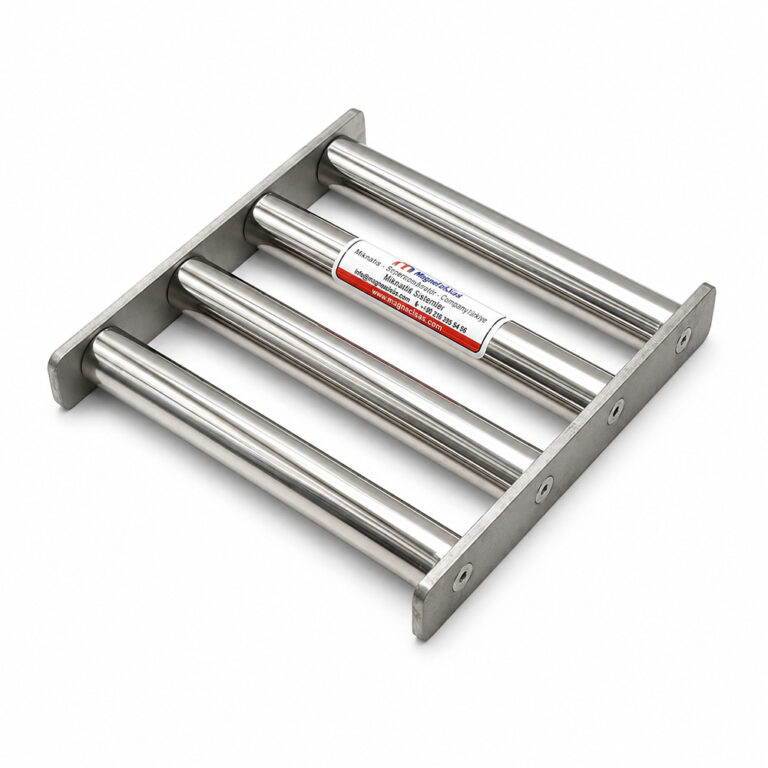
A grid magnet is a complete assembly consisting of multiple magnetic bars mounted within a supporting frame.
| Magnetic Bar | Grid Magnet |
|---|---|
| Individual magnetic rod | Multiple rods in a frame |
| Can be mounted separately | Supplied or designed as an assembly |
| Suitable for custom machine integration | Suitable for defined product passages |
| Bar arrangement depends on the installation | Bar spacing is part of the assembly design |
| Can be used to build a custom grid | Provides multiple magnetic contact opportunities |
The Ø25×1000 mm double M8 magnetic bar can serve as an individual component in a purpose-designed separation arrangement.
18. Can It Be Used Together with an Industrial Metal Detector?
Yes. Magnetic separators and industrial metal detectors perform different functions and may be used together within an appropriate contamination-control system.
The magnetic bar physically captures suitable ferromagnetic particles when they come sufficiently close to its magnetic surface.
A metal detector, by contrast, is designed to detect metal contamination within its specified operating capability.
A possible process arrangement is:
Magnetic Separation → Further Processing → Metal Detection → Packaging
Using both technologies can provide complementary control stages.
However, neither technology should be assumed to guarantee complete removal or detection of all possible contaminants without appropriate validation.
19. How Should the Magnetic Bar Be Positioned in the Product Flow?
Correct positioning is important for effective magnetic separation.
The bar should be located where the flowing tea passes close to its magnetic surface.
It should not be placed:
- Outside the main product flow
- In a dead zone where tea rarely passes
- Too far from the product stream
- In a position that prevents safe cleaning
- Where it causes unacceptable product blockage
The design objective is to create opportunities for ferromagnetic contaminants to encounter the magnetic field.
The final position should also account for mechanical support, product flow and maintenance access.
20. Why Does the Distance Between the Metal Particle and the Bar Matter?
Magnetic attraction depends strongly on the distance between a contaminant and the magnetic surface.
A ferromagnetic particle passing close to the bar may be more readily captured than a similar particle passing farther away.
Relevant factors include:
- Depth of the product layer
- Flow direction
- Particle position
- Magnetic properties of the contaminant
- Product movement
- Bar arrangement
The long magnetic surface is beneficial only when the product stream is appropriately directed through the magnetic control region.
A bar installed across a wide opening does not automatically provide equal separation performance at every point within a deep product flow.
21. How Is the Tea Blending Magnetic Bar Cleaned?
This model is specified for manual cleaning.
Before cleaning, the production flow should be stopped and the equipment made safe according to the facility’s maintenance procedures.
A typical procedure includes:
- Stop the tea flow and secure the equipment.
- Access the magnetic bar or carefully release the M8 mounting connections when required.
- Inspect the magnetic surface for captured metal particles.
- Remove retained ferromagnetic contaminants using a suitable method.
- Clean the stainless steel outer surface.
- Inspect the bar and mounting arrangement.
- Reinstall and secure the bar before restarting production.
Because the neodymium magnetic system remains active without electricity, care is required when handling ferromagnetic tools near the bar.
The cleaning method should be compatible with the equipment and the applicable food-processing hygiene procedures.
22. How Frequently Should the Magnetic Bar Be Cleaned?
There is no universal cleaning interval suitable for every tea processing facility.
The appropriate frequency depends on:
- Daily production volume
- Contamination levels in incoming tea
- Product flow conditions
- Number of magnetic bars
- Amount of captured metal
- Facility inspection procedures
During initial operation, more frequent inspections may help establish how quickly contaminants accumulate.
The cleaning interval can then be determined according to actual operating conditions.
Captured metal should not be allowed to accumulate to a level that compromises separation performance or product flow.
23. Does the Magnetic Bar Require Routine Maintenance?
The permanent neodymium magnetic system does not require electrical maintenance.
However, the complete magnetic bar assembly should be inspected periodically.
Recommended checks may include:
- Condition of the stainless steel surface
- Security of the M8 mounting connections
- Evidence of physical damage
- Product build-up
- Captured contaminant accumulation
- Corrosion or surface deterioration
- Changes in operating conditions
Where the facility’s quality procedures require it, magnetic performance can be checked using an appropriate measurement and verification method.
Any measurement should be made under defined, repeatable conditions.
24. Can the Magnetic Bar Be Used in Other Dry Food Processing Lines?
Although this model is positioned specifically for tea blending and packaging applications, the same general magnetic separation principle may be applicable to other dry, free-flowing materials.
Potential applications for engineering evaluation include:
- Dry herbal processing
- Spice handling
- Grain processing
- Powder handling
- Dry ingredient transfer
- Food packaging equipment
The suitability of the product must be checked for each application.
Important considerations include the material’s flow properties, operating temperature, cleaning requirements and installation geometry.
The fact that a magnetic bar can be used in tea processing does not automatically establish its suitability for every food-processing environment.
25. What Makes This Magnetic Bar Different from Other Magneteksan Magnetic Rods?
Magneteksan offers magnetic rods in different lengths and connection configurations for industrial separation applications.
The specific combination of this product is:
Ø25×1000 mm + Double M8 Female Thread + Neodymium + AISI 304 + 80°C + Tea Blending Application
Its distinguishing characteristics are the one-metre length, two-sided mounting arrangement and application-focused design for tea blending and packaging equipment.
Compared with shorter magnetic rods, this model can be considered where a longer separation surface is needed.
The correct model should be selected according to the machine dimensions, product flow and required mounting arrangement.
26. Can a Custom Magnetic Bar Be Manufactured for a Tea Processing Line?
Magnetic bars can be designed in different configurations to suit the geometry and operating conditions of a production line.
Parameters to consider for a custom design include:
- Hopper width
- Product passage dimensions
- Magnetic bar diameter
- Bar length
- Number of bars
- Threaded connection requirements
- Operating temperature
- Product flow depth
- Cleaning method
- Supporting frame design
For example, a tea blending machine with a particularly wide outlet may require a custom multi-bar arrangement rather than a single rod.
The final configuration should be developed according to the actual equipment dimensions and process requirements.
27. What Information Is Required for a Custom Magnetic Bar Quotation?
To evaluate a tea processing magnetic separation application, the following information is useful:
- Application: Tea blending, transfer, screening or packaging.
- Product Type: Dry tea leaves, blended tea or another material.
- Hopper Dimensions: Width, length and outlet geometry.
- Product Flow Rate: Expected throughput.
- Product Flow Depth: Approximate material layer thickness.
- Operating Temperature: Normal and maximum temperatures.
- Required Bar Diameter: Available space and design requirements.
- Required Bar Length: Width of the magnetic separation area.
- Number of Bars: Single bar or multi-bar assembly.
- Connection Type: Female thread or another mounting arrangement.
- Connection Dimensions: Required thread size and mounting details.
- Housing Material: Required stainless steel grade.
- Cleaning Method: Manual access and cleaning arrangements.
- Contamination Type: Expected iron or steel particles.
- Technical Drawings: Machine layout, hopper drawing or installation sketch.
These details help determine whether the standard Ø25×1000 mm double M8 model is appropriate or whether a different magnetic separator arrangement should be evaluated.
28. Magneteksan – Magnetic Separation Solutions for Tea Processing and Packaging
Magneteksan develops and manufactures industrial magnetic separation equipment for food processing, production machinery and material handling applications.
The Ø25×1000 mm Neodymium Magnetic Bar for Tea Blending Lines is designed to provide a permanent magnetic control surface for capturing suitable ferromagnetic contaminants from dry tea product streams.
Its AISI 304 stainless steel outer housing, double M8 female threaded connections and maximum operating temperature of 80°C make it a practical component to consider when designing magnetic separation points in tea blending, transfer and packaging equipment.
The 1000 mm length provides an extended separation surface, while the threaded connections at both ends support integration into appropriately designed mounting structures.
For new tea processing installations or upgrades to existing equipment, Magneteksan can evaluate magnetic bar dimensions, mounting requirements, operating conditions and product flow characteristics to help identify a suitable magnetic separation configuration.
Magneteksan – Industrial Magnetic Separation Solutions for Tea Processing, Blending and Packaging.