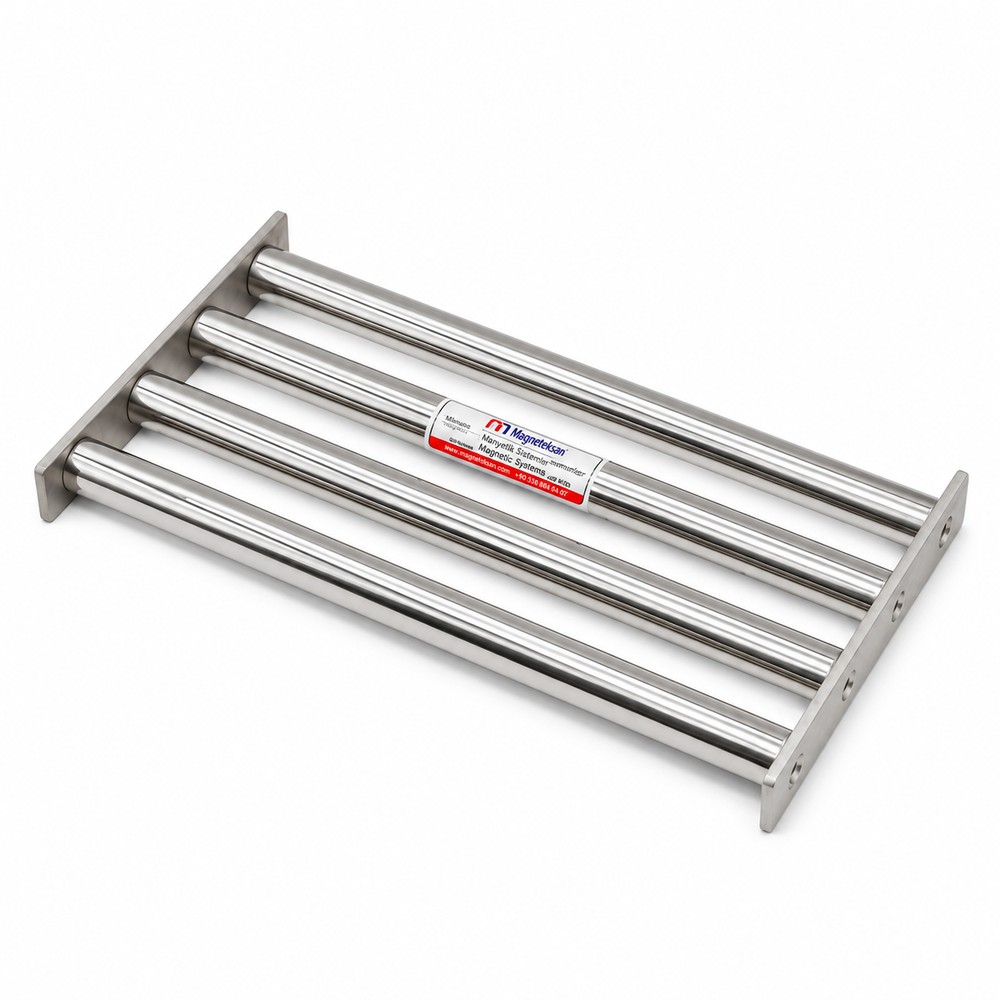
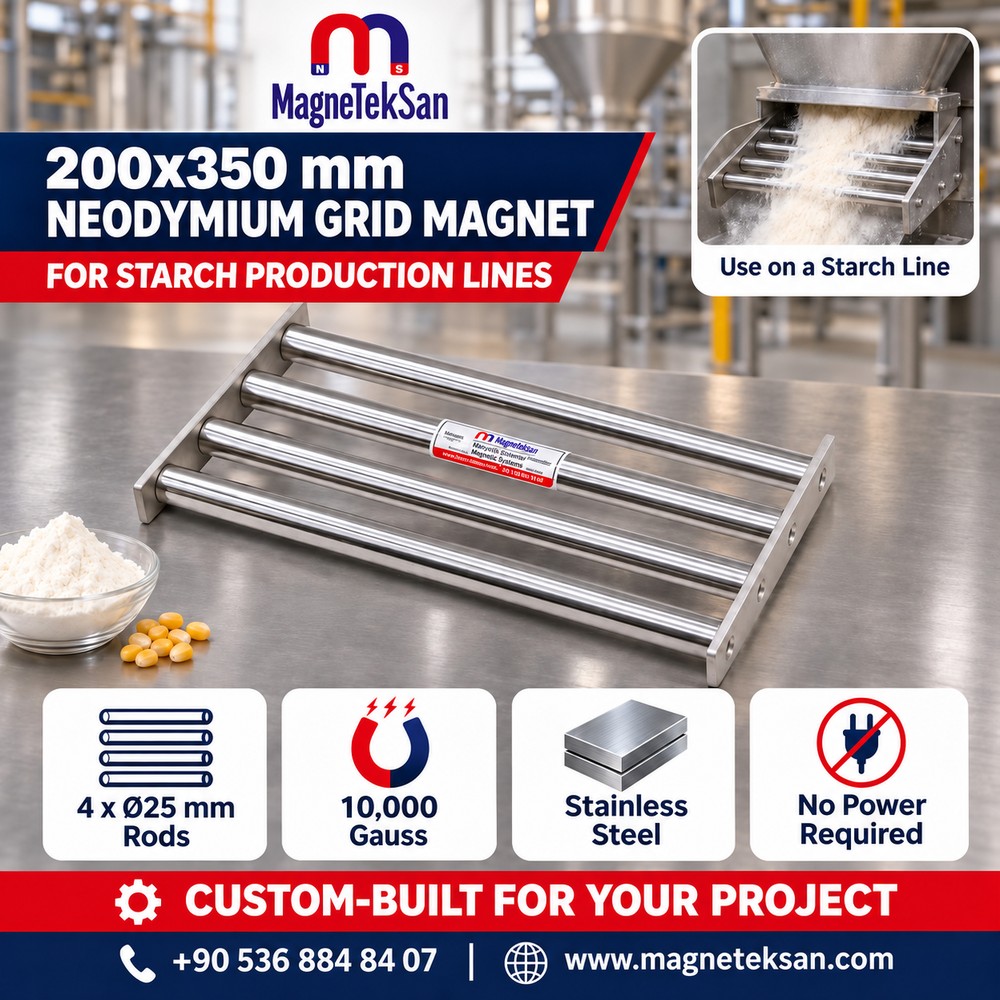
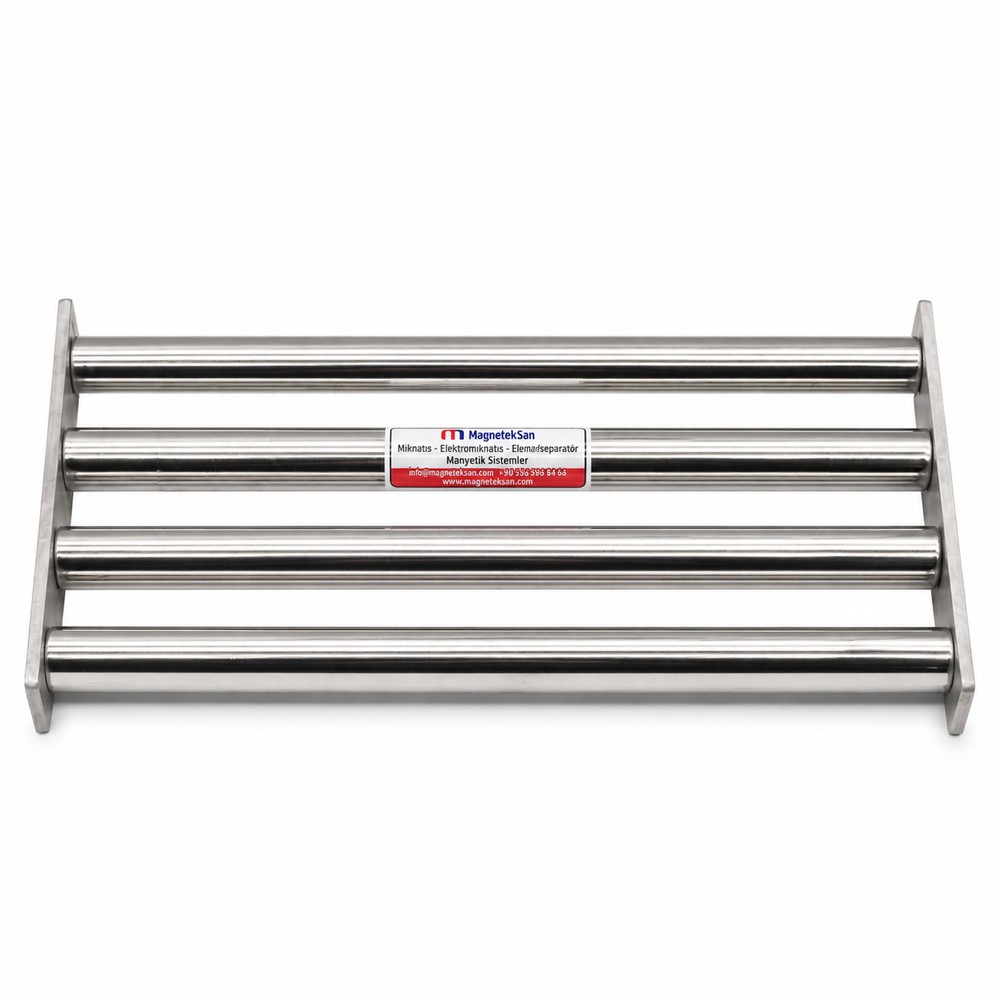
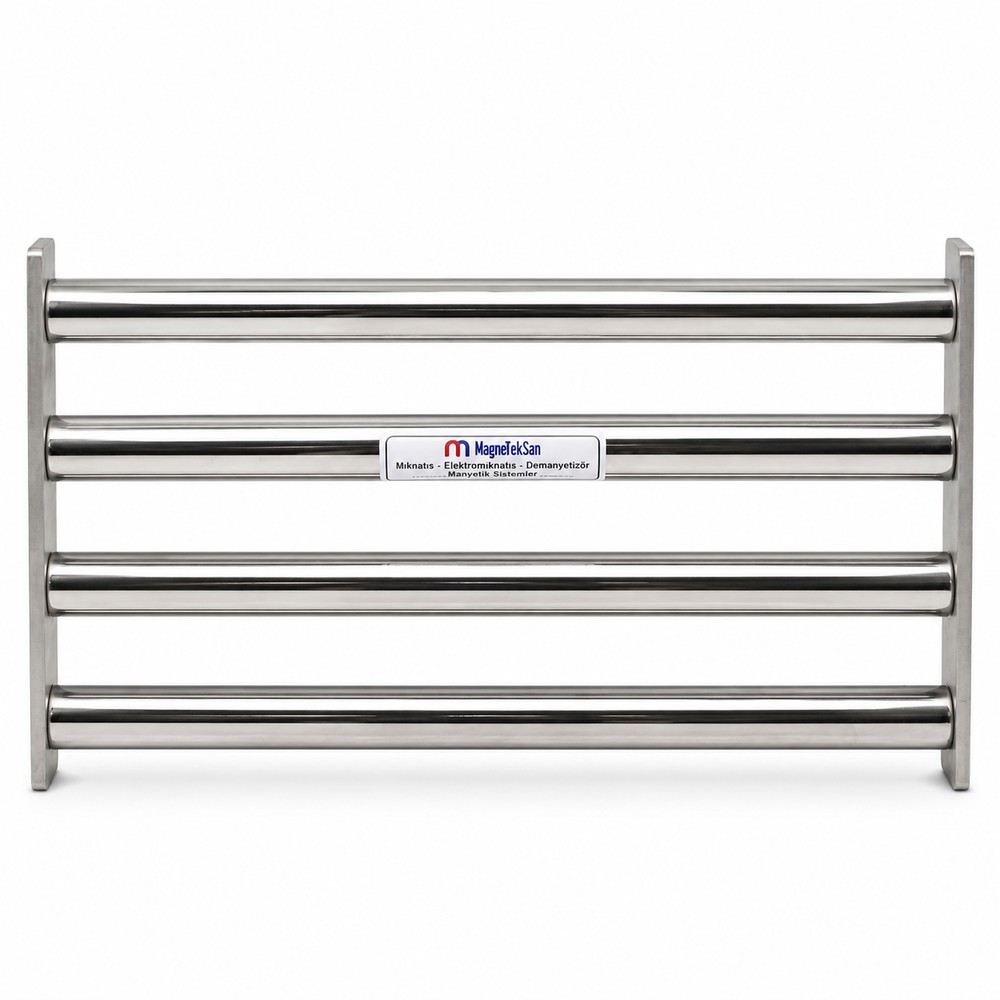
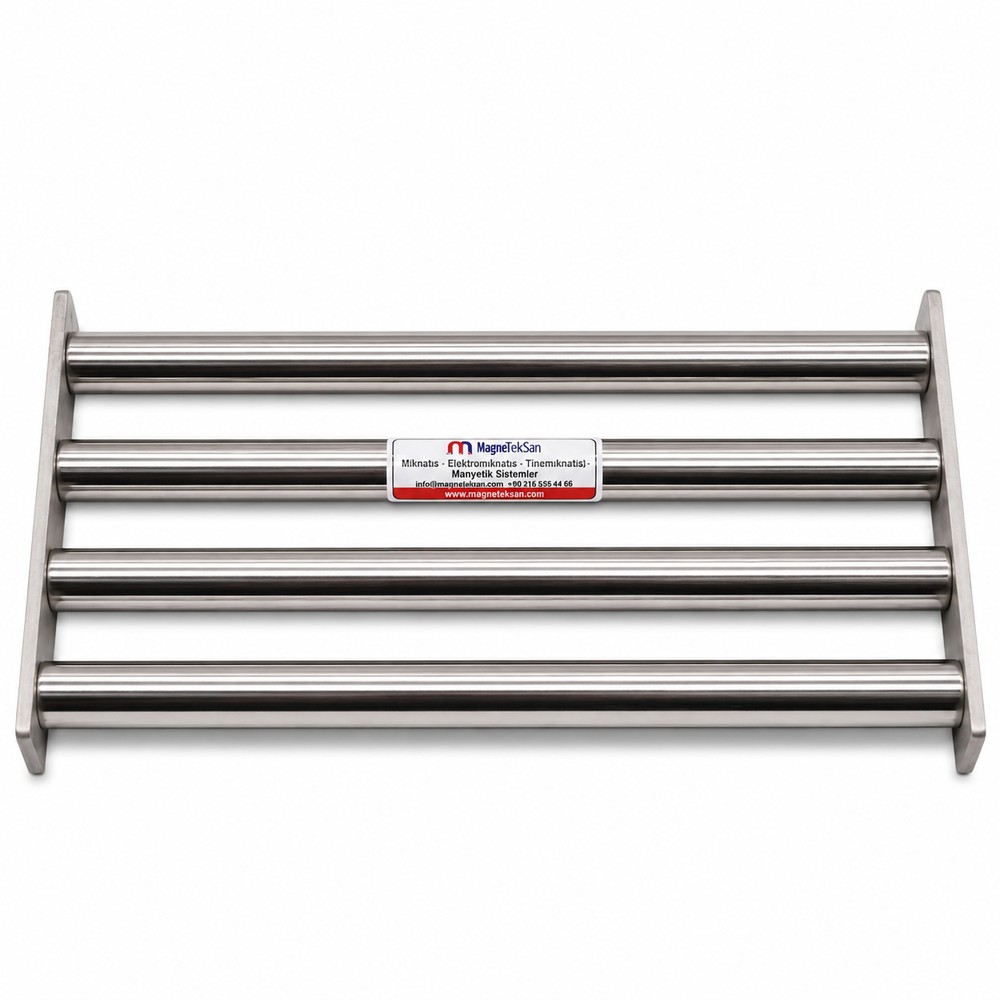
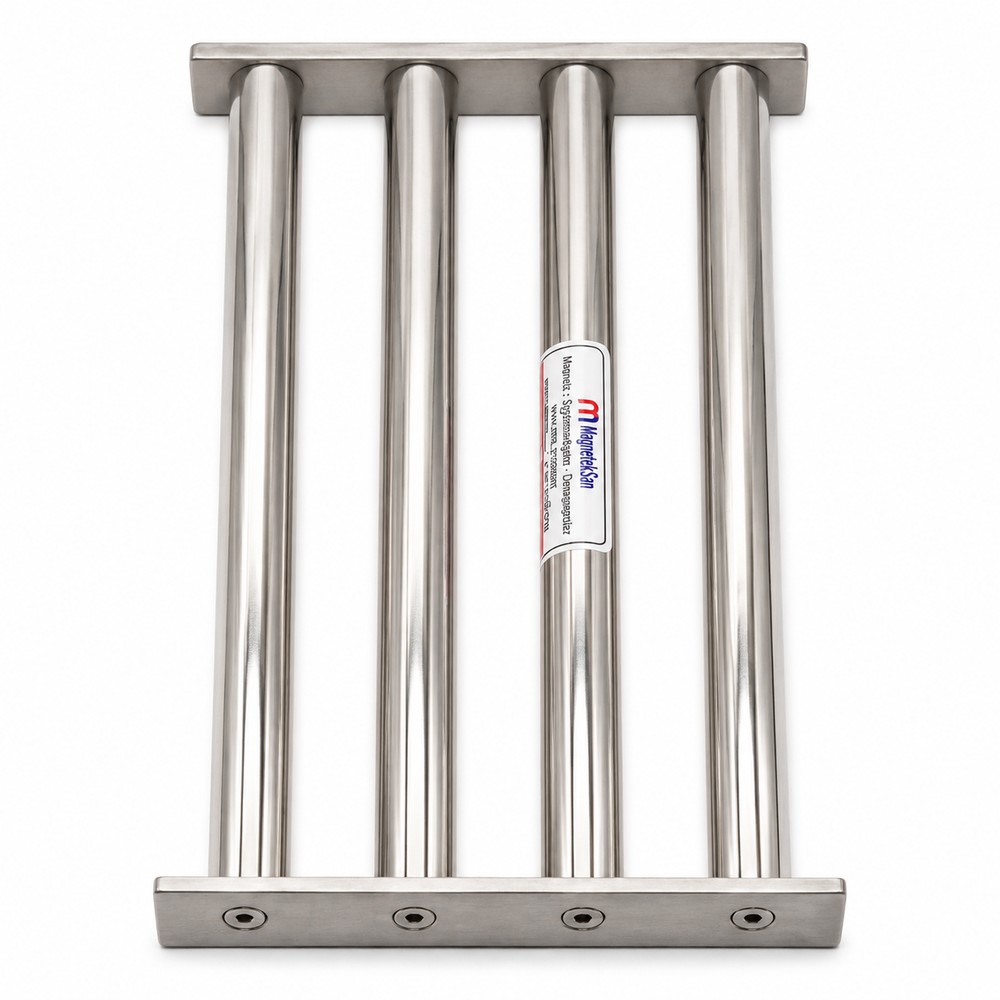
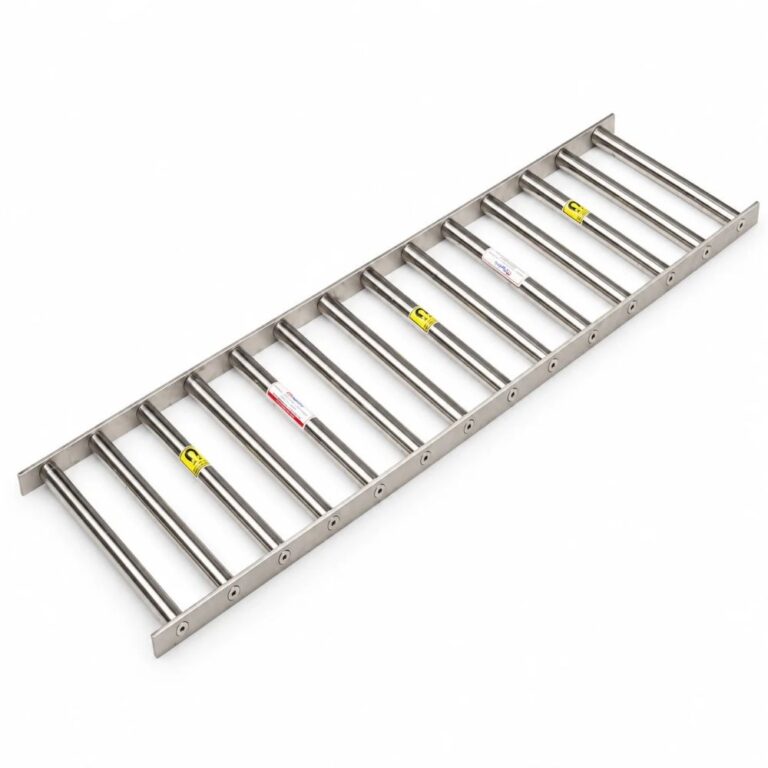
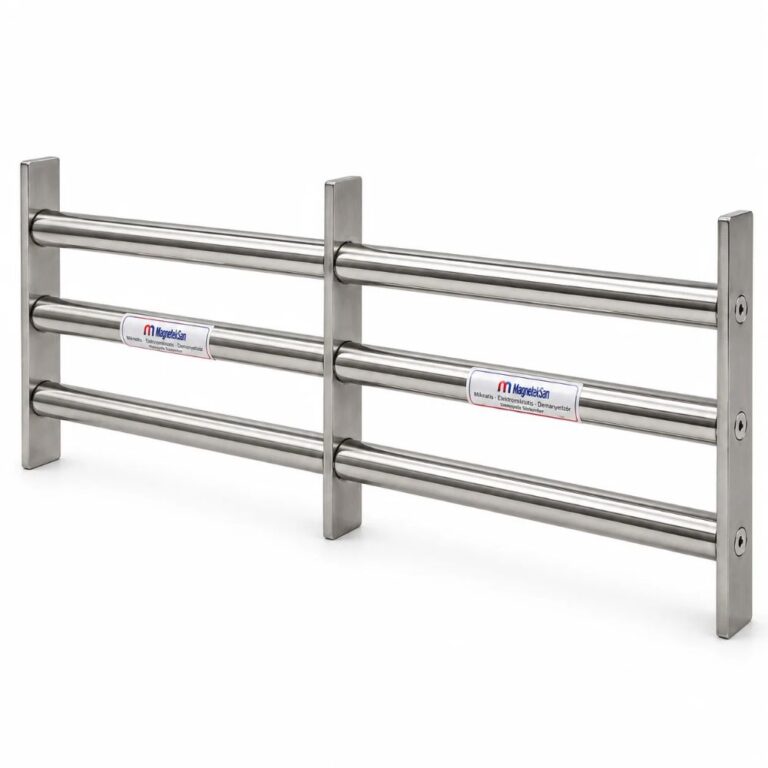
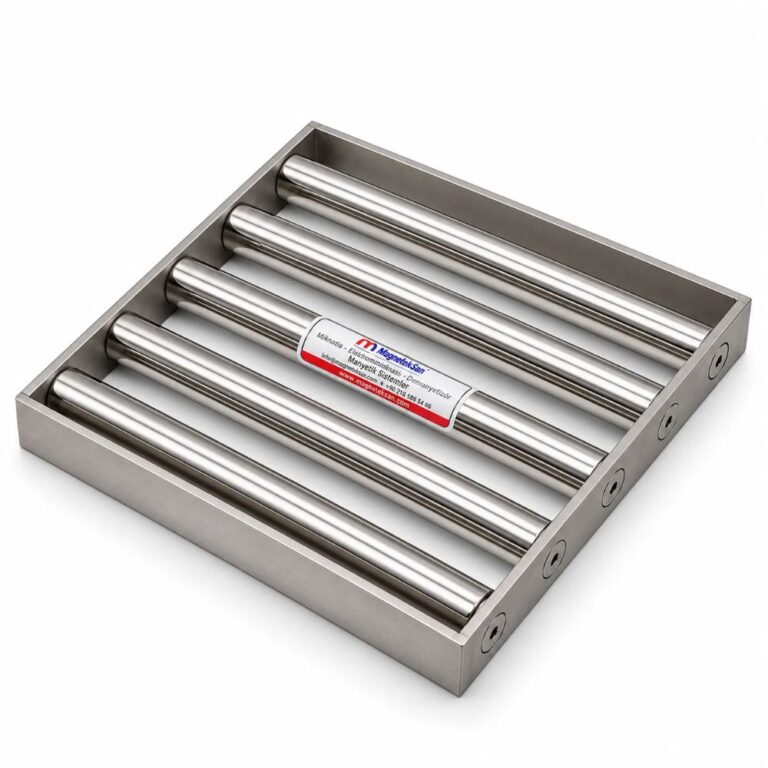
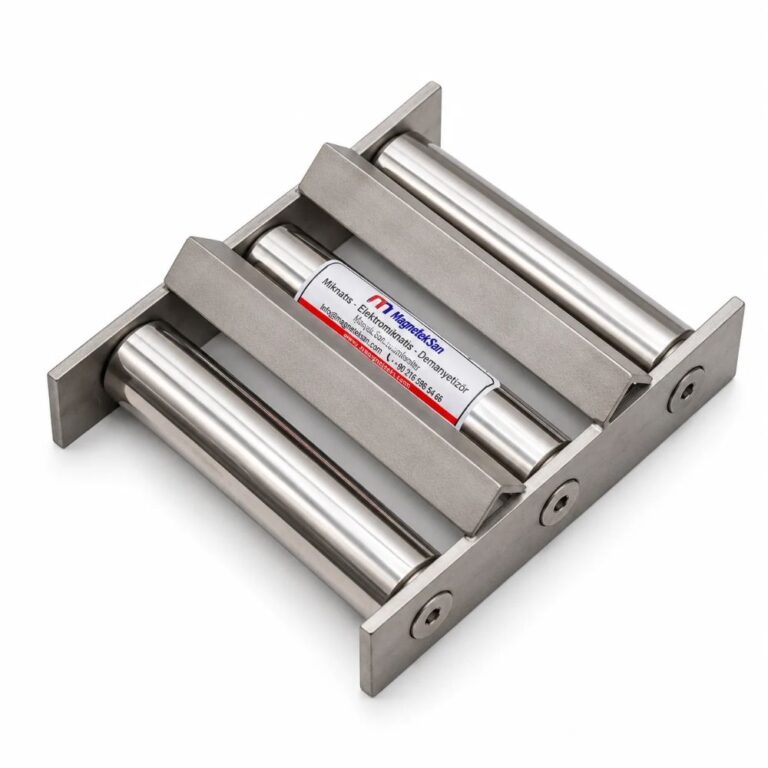
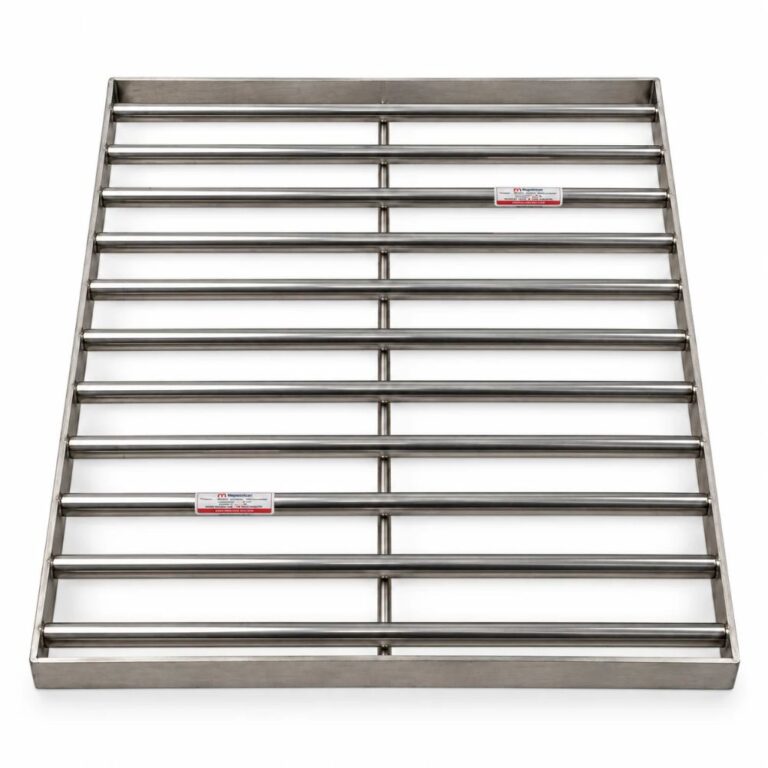
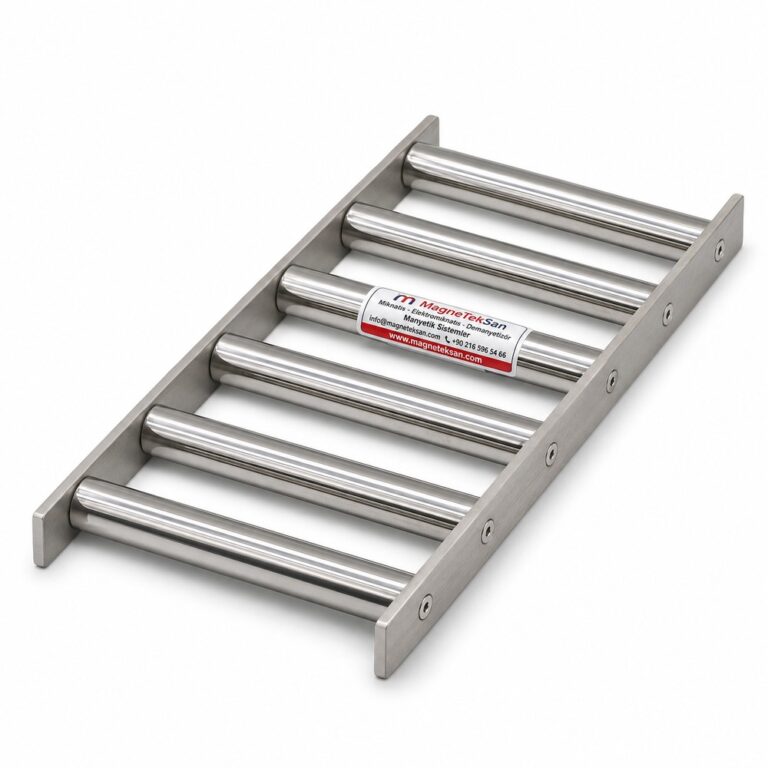
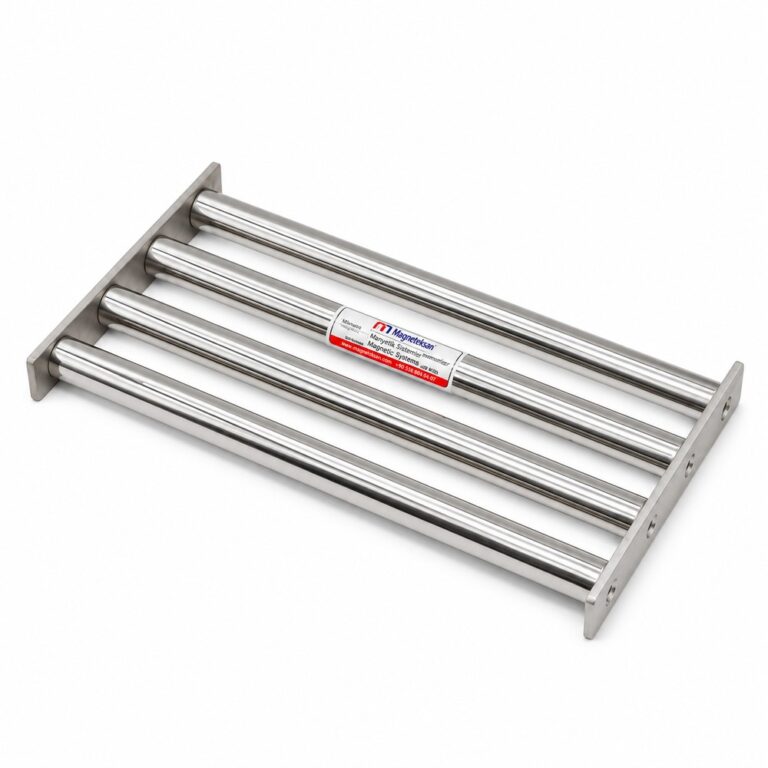
This 200×350 mm neodymium grid magnet helps capture iron particles, wire and steel fragments in dried starch powder before sieving and packing. It has four parallel Ø25 mm neodymium rods with a stated magnetic field of 10,000 Gauss on the rod surface. The rods are screwed between two flat stainless steel side bars. It uses permanent magnets, needs no power supply and can be used up to 80°C.
| Feature | Value |
|---|
| Product type | Neodymium grid magnet |
| Stock code | MGK-EL-390 |
| Outer size | 200×350 mm |
| Magnetic rods | 4 pcs, Ø25 mm |
| Rod layout | Parallel |
| Grid shape | Rectangular |
| Magnet material | Neodymium (NdFeB) |
| Magnetic field | 10,000 Gauss |
| Construction | Stainless steel rods and side bars |
| Rod fixing | Screwed to the side bars |
| Max. working temperature | 80°C |
| Main application | Starch production lines |
Why Use a Grid Magnet in Starch Production?
Starch made from corn, wheat or potatoes goes through steeping, milling, separation, washing and drying before it is sieved and packed as a powder. Worn mill and grinder parts, screw conveyors, dryer components or bolts left after maintenance can end up in the product along the way.
Starch is a raw material for food, paper, textile and pharmaceutical producers, so a metal check before dispatch helps prevent complaints and damage to customers’ equipment. A grid magnet after the sieve holds most ferrous particles back before they reach packing.
Why This Grid?
The 200×350 mm grid suits rectangular sieve outlets, packing hopper inlets and chutes. Four Ø25 mm rods, 350 mm long, are placed side by side between two stainless steel side bars and give a stated field of 10,000 Gauss. The rod spacing lets the fine powder flow without bridging.
How to Use It
- Check that the grid fits the opening and that the starch can flow freely between the rods.
- Place the grid so that all of the product passes through it, with no gaps at the edges.
- Check the rods regularly and set a cleaning interval based on the amount of metal collected.
- Stop the flow, lift out the grid and wipe the particles off the rods with a dry cloth, wearing gloves.
This grid is designed for dry, free-flowing starch powder. Starch can absorb moisture, so keep the rods dry and clean them often if powder builds up. Do not use it above 80°C.
Limitations and Safety Notes
10,000 Gauss is a stated field value, not a guarantee that every particle will be caught; separation depends on particle size, flow rate and how close the particles pass to the rods. Non-magnetic metals such as aluminium, brass or copper are not caught and need a metal detector. The rods are strong: keep fingers, tools and electronic devices away, and keep magnets away from people with pacemakers or medical implants.
Other Models
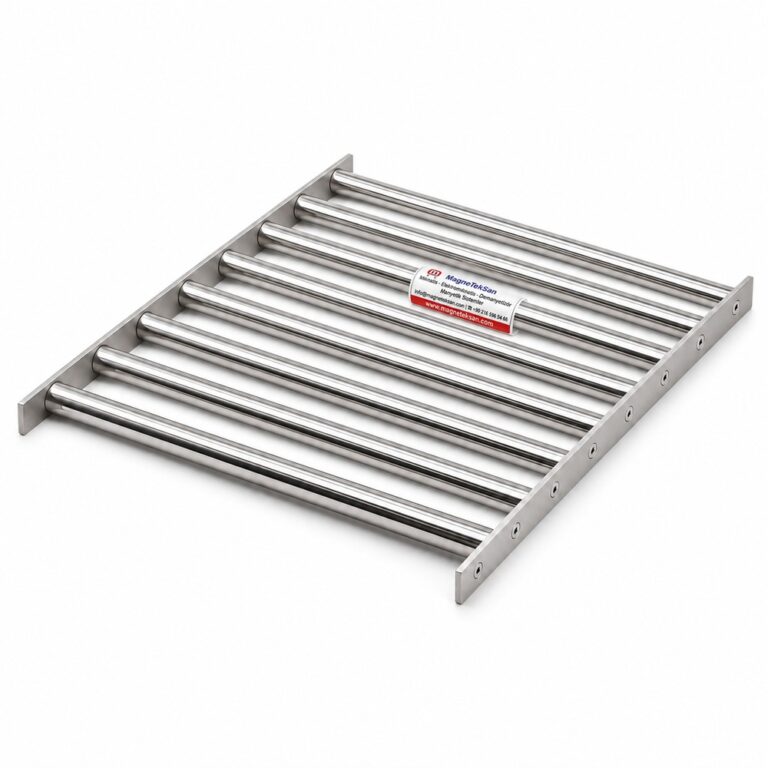
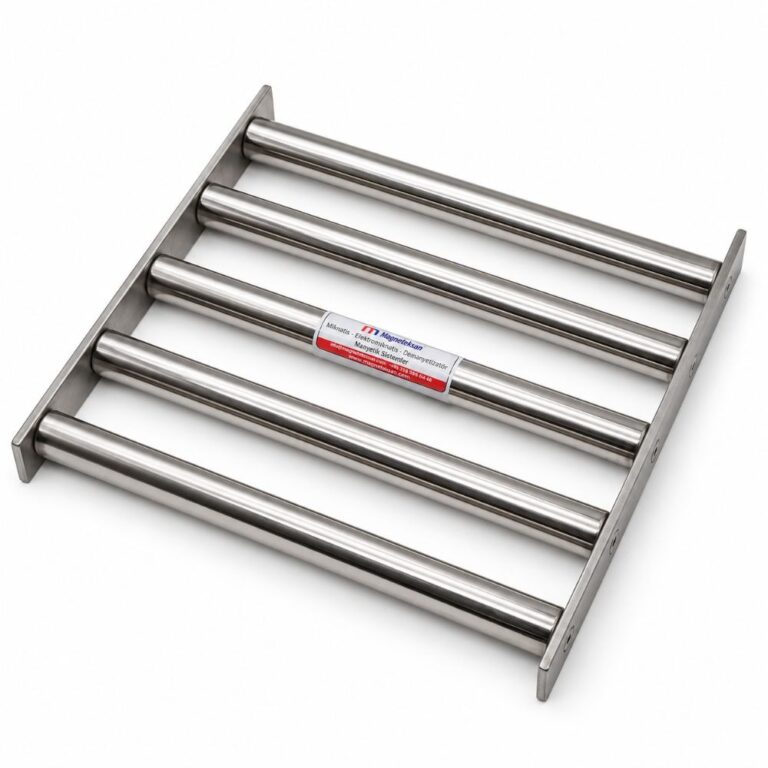
Other sizes are listed under square and rectangular grid magnets. See also our round grid magnets and easy clean grid magnets. For a different size or number of rods, please contact us.
Frequently Asked Questions
Will it fit our outlet?
200×350 mm is a standard size. Send us the inside dimensions of your opening and the flow direction, and we can build the width, length and number of rods to match.
Does it need electricity?
No. It uses permanent neodymium magnets and works without any power supply.
Can it be used in wet starch milk?
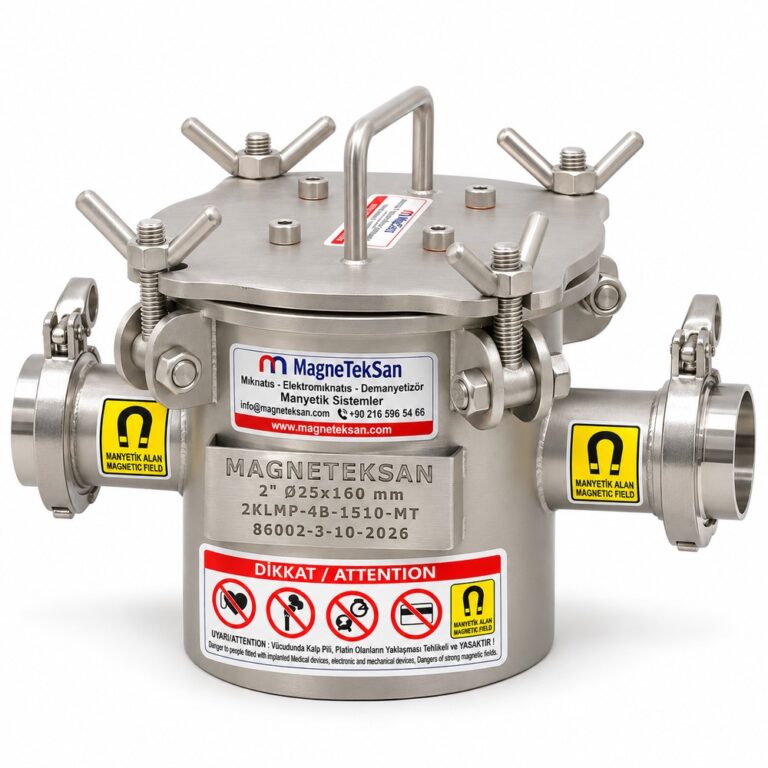
This model is for dry, free-flowing powder. For liquid lines we recommend our magnetic filters.