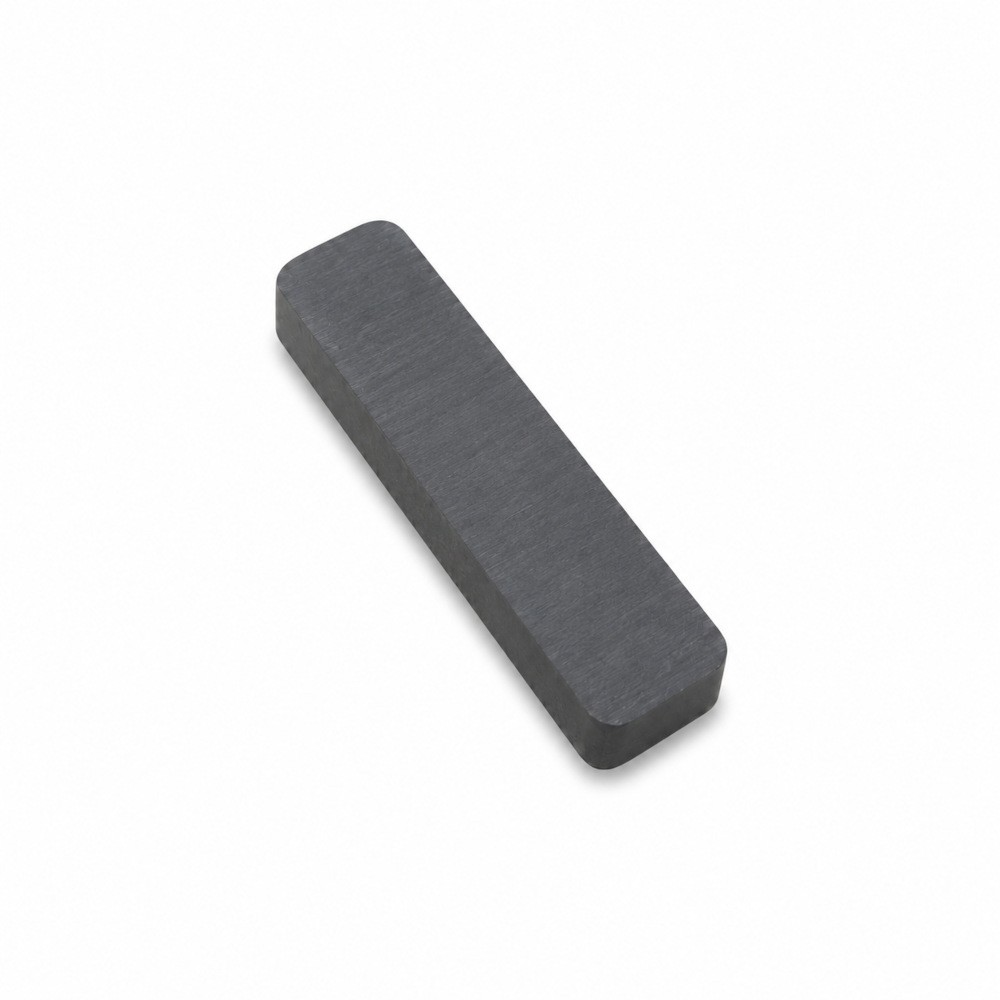
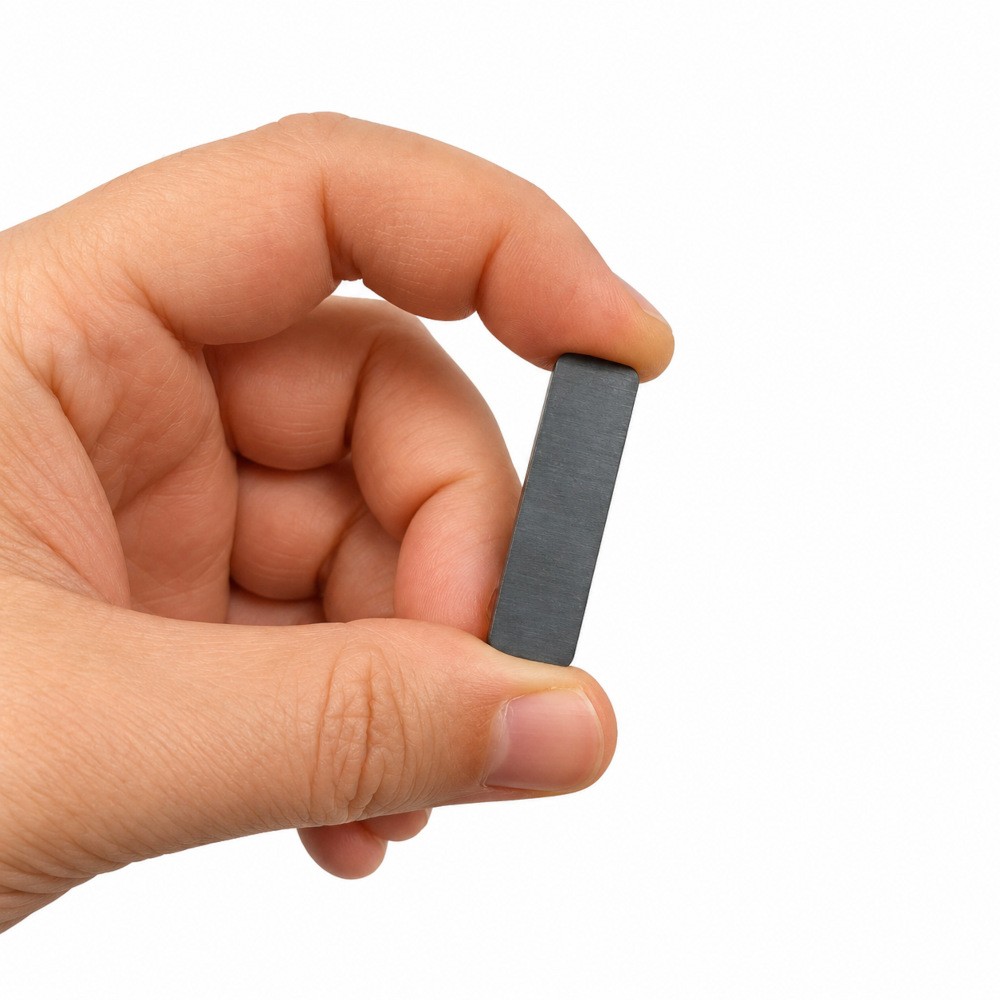
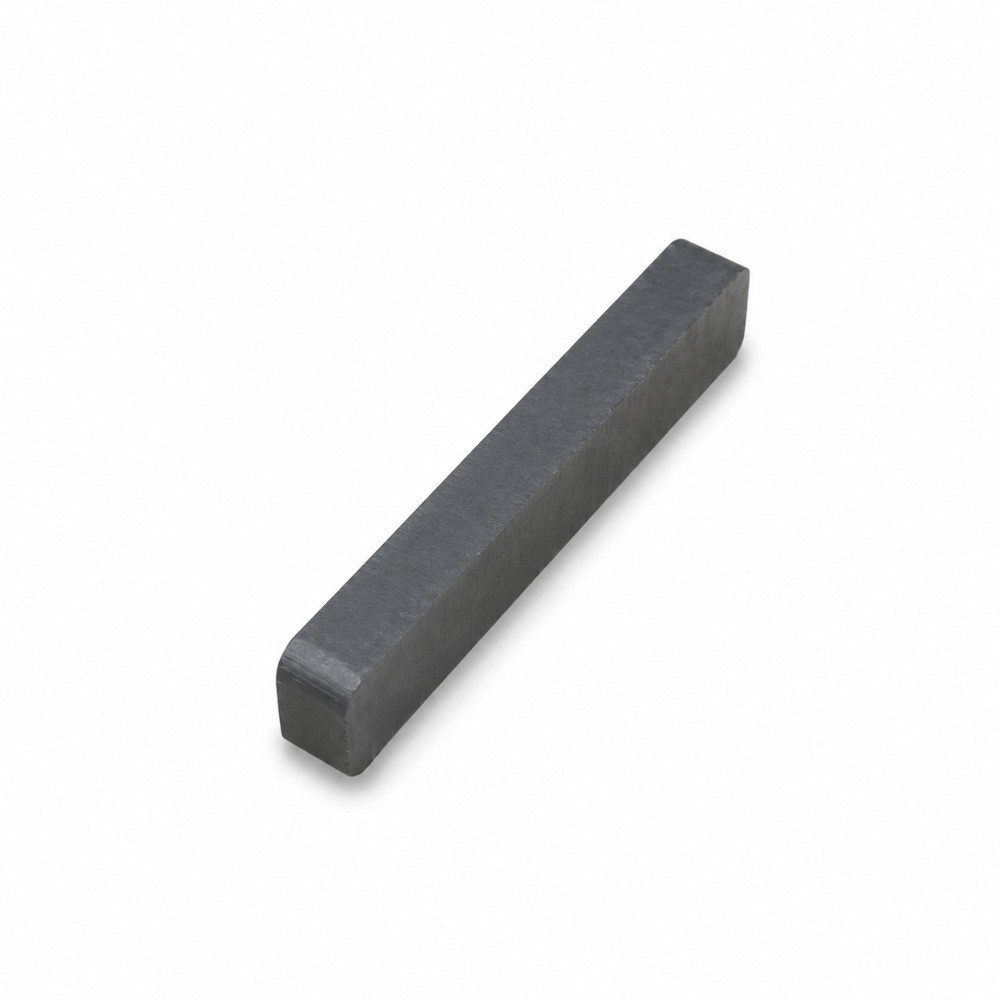
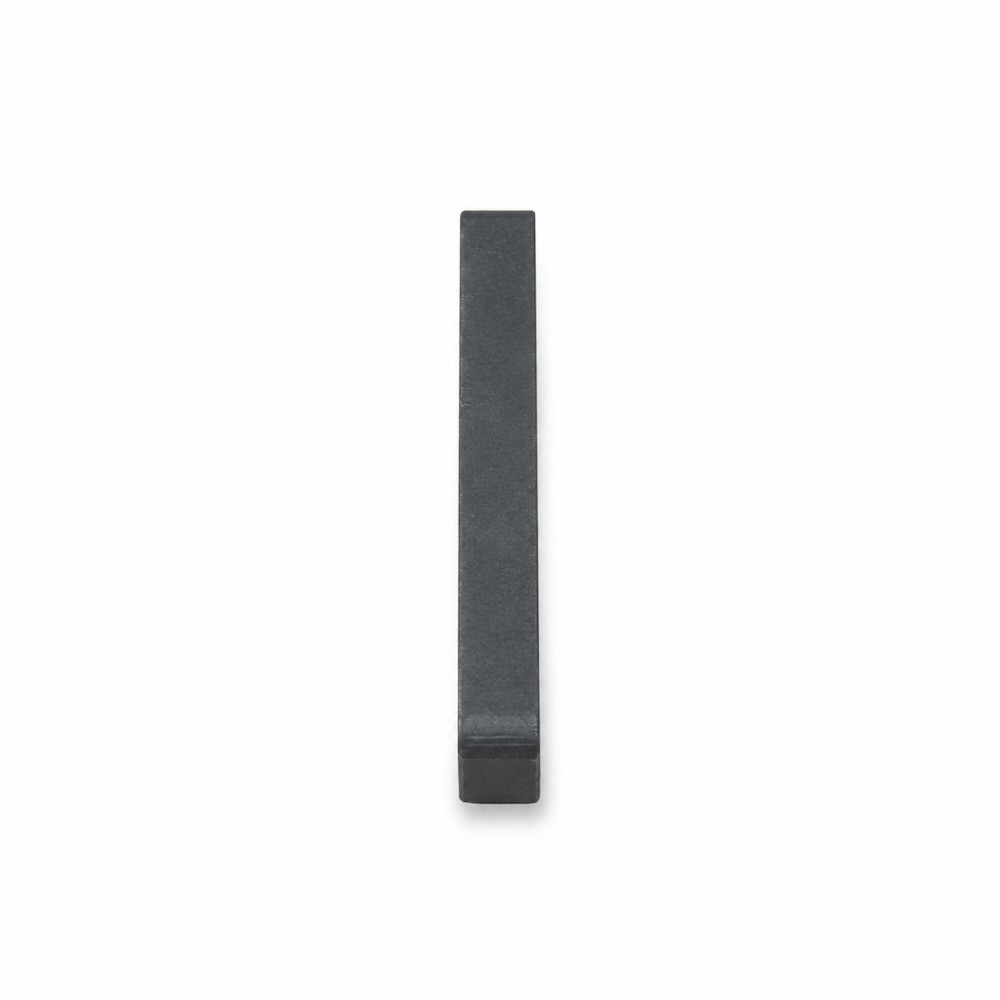
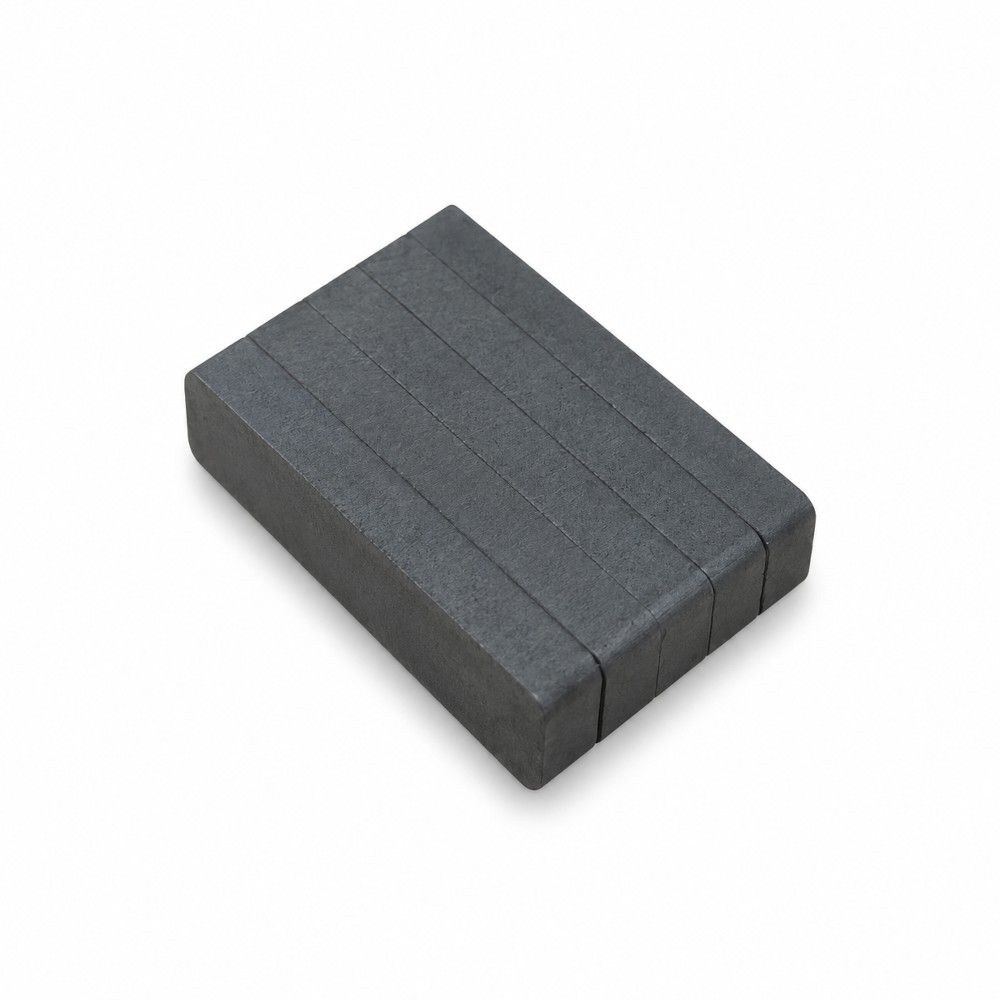
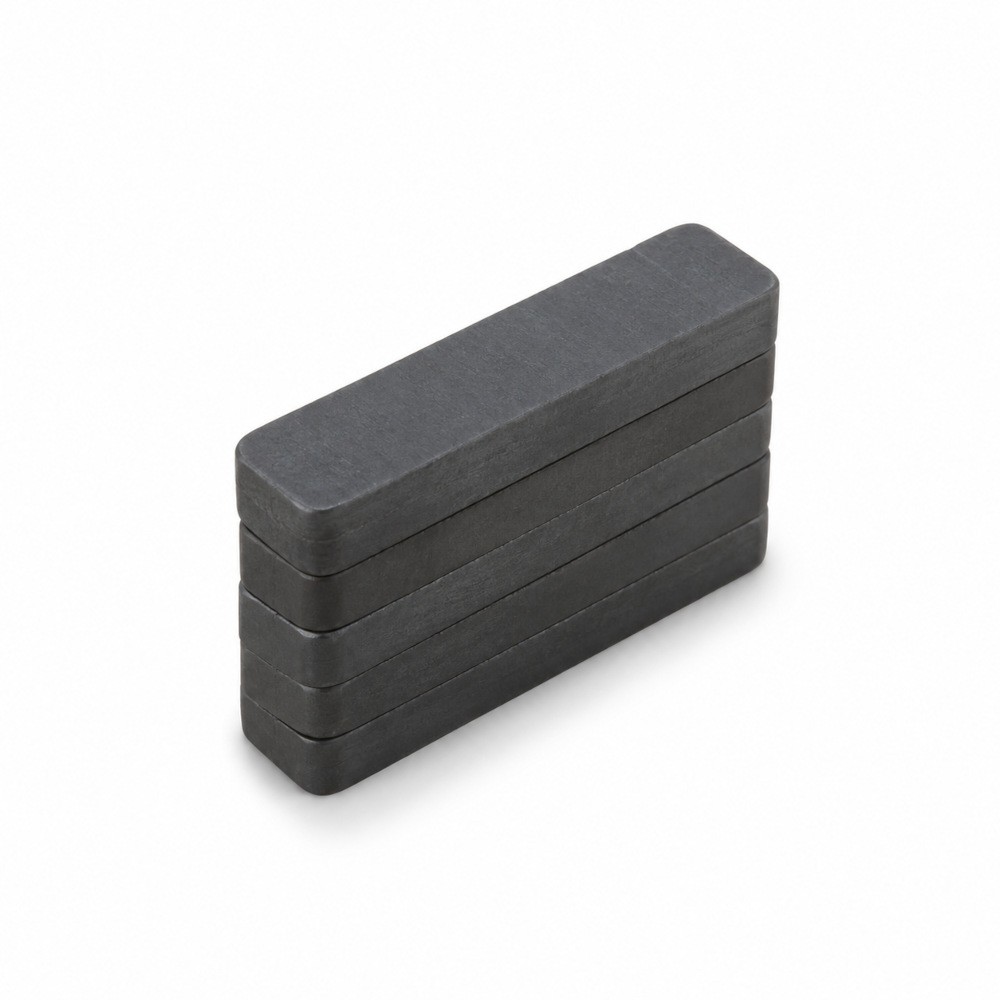
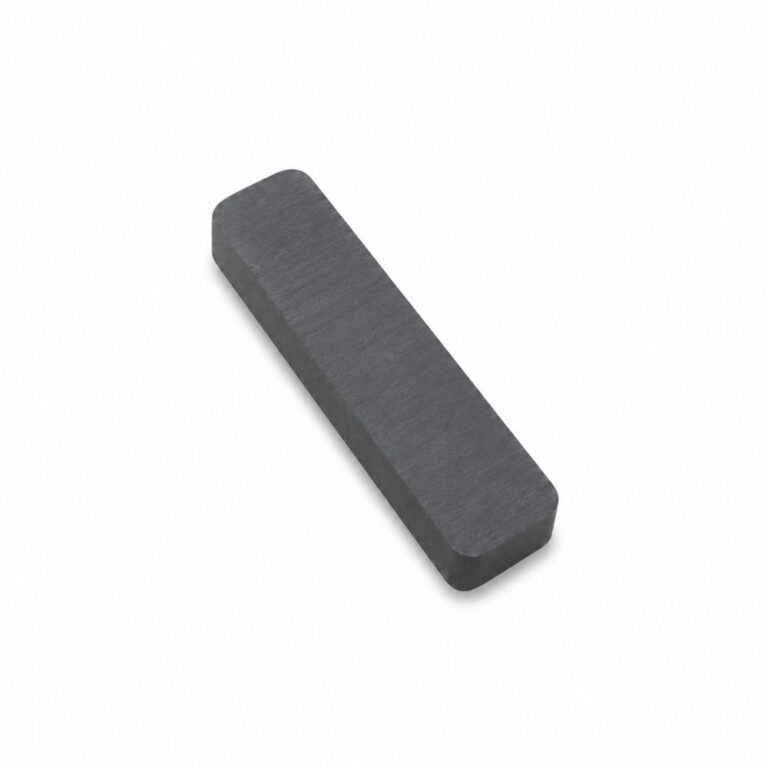
This 40x10x5 mm ferrite magnet is a low-cost rectangular block used in school laboratories and science workshops to show the basics of magnetism. Its long, flat shape makes the magnetic field lines easy to see in the iron filings experiment, and the difference between its two ends helps explain magnetic poles. Ferrite does not rust, needs no coating and stands up well to everyday classroom use.
| Feature | Value |
|---|
| Product type | Rectangular ferrite block magnet |
| Stock code | MGK-FEK-4 |
| Size | 40x10x5 mm |
| Shape | Rectangular block |
| Material | Hard ferrite (ceramic) |
| Surface | Matt dark grey, uncoated |
| Corrosion | Rust-free, no coating needed |
| Main application | School physics and science experiments |
Why a Ferrite Block Magnet in Physics Lessons?
Students often find it hard to imagine a magnetic field they cannot see. When paper is laid over a block magnet and iron filings are sprinkled on top, the filings line up along the field lines leaving the poles. A flat, long magnet that lies steady under the paper gives the clearest picture.
Ferrite magnets are weaker than neodymium magnets. In a classroom this is an advantage: there is less risk of pinched fingers when two magnets snap together, so students can work more safely.
Which Experiments Can You Do?
Typical experiments include showing field lines with iron filings, watching a compass needle turn around the magnet, testing how like poles repel and unlike poles attract, and finding which end holds more paper clips. Several magnets can be placed end to end or stacked to show how the force changes.
How to Use and Store It
- Lay a sheet of paper or card over the magnet before using iron filings.
- Sprinkle the filings lightly and tap the paper to help them line up.
- After the lesson, remove filings from the magnet with tape or paper.
- Store the magnets in pairs with a piece of card between them.
Ferrite is a ceramic material. It can chip if dropped on a hard floor or if two magnets strike each other hard, so handle it with care.
Limitations and Safety Notes
Small magnets can be swallowed by young children, so experiments should be supervised by a teacher or adult. Keep magnets away from people with pacemakers or medical implants, magnetic cards and electronic devices. Ferrite magnets only attract ferrous metals such as iron and steel; aluminium, copper and brass are not attracted.
Other Models
More sizes are listed under ferrite magnets. See also our ferrite pot magnets and ferrite arc magnets. For bulk orders or custom sizes, please contact us.
Frequently Asked Questions
Is this magnet safe for children?
Its pull is much lower than a neodymium magnet, so the pinching risk is low. Because of the swallowing risk, use it under adult supervision.
Does it rust?
No. Ferrite is a ceramic material and does not rust, even without a coating.
Can we order in bulk?
Yes. It is supplied from stock and can be ordered in bulk for class sets and science kits.