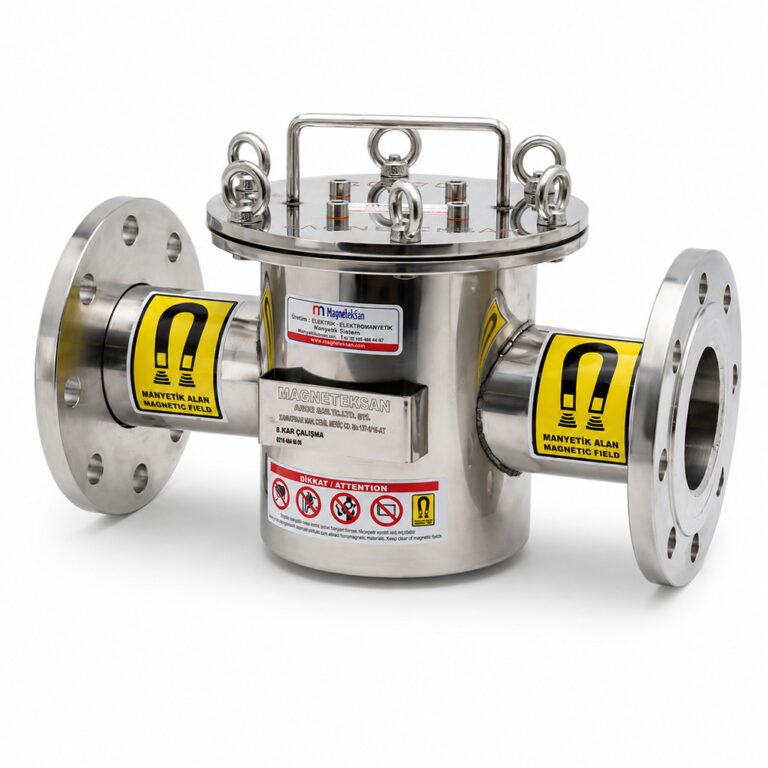
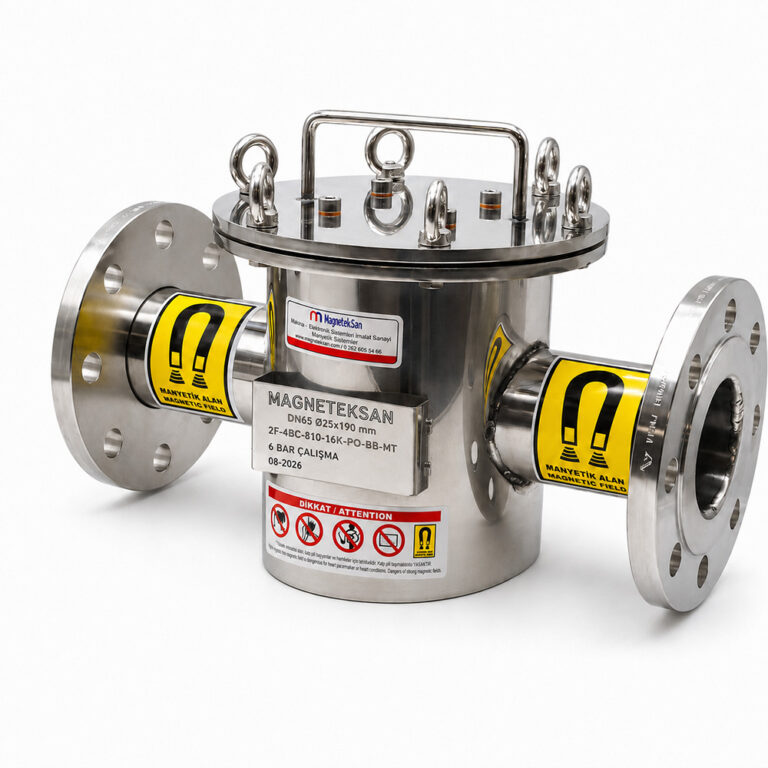
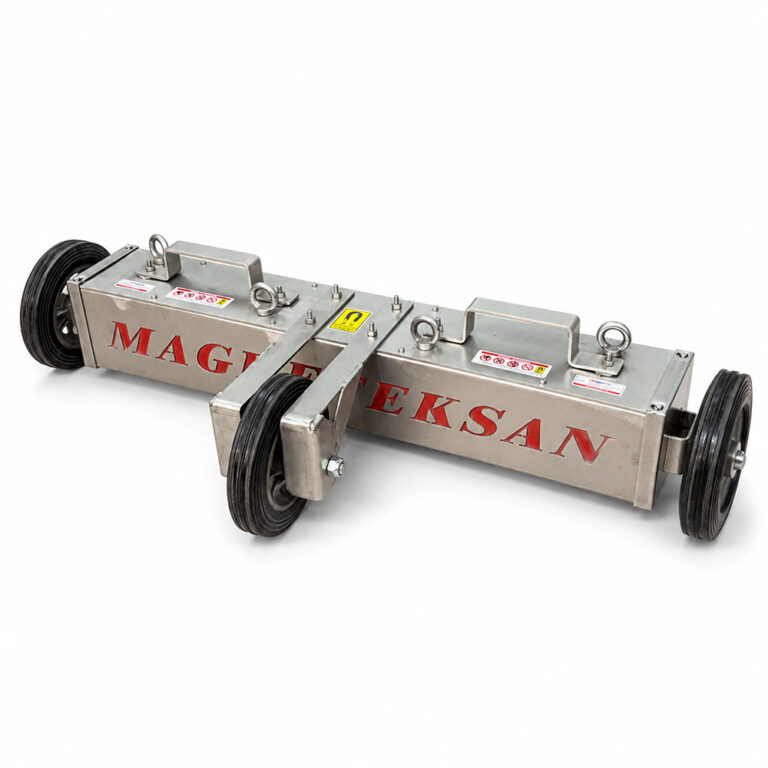
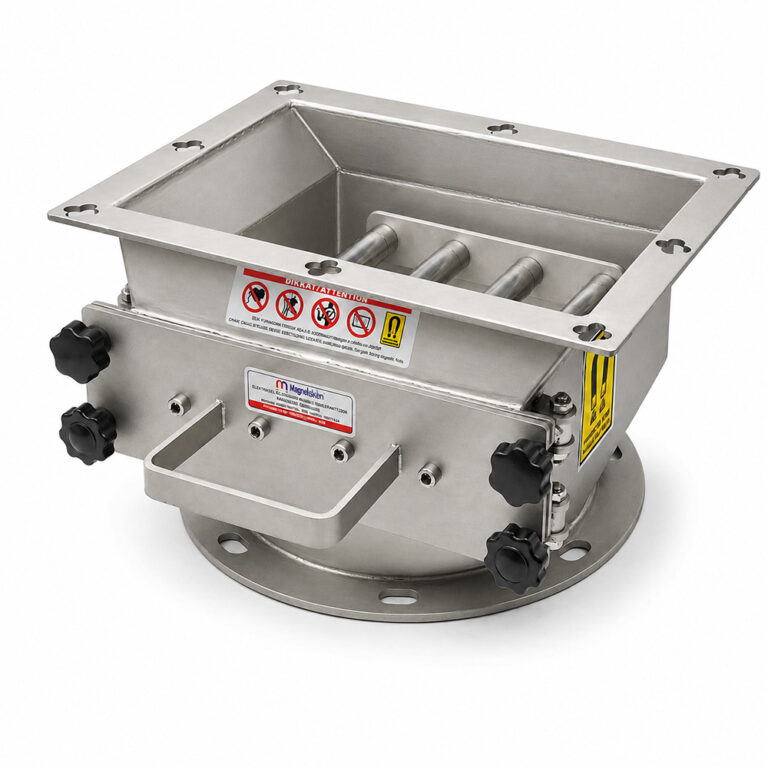
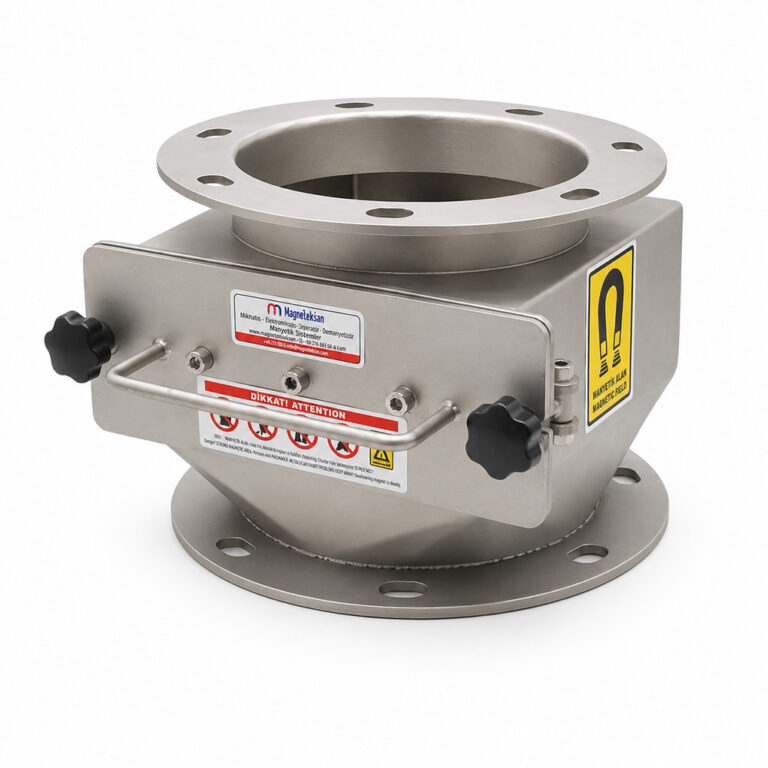
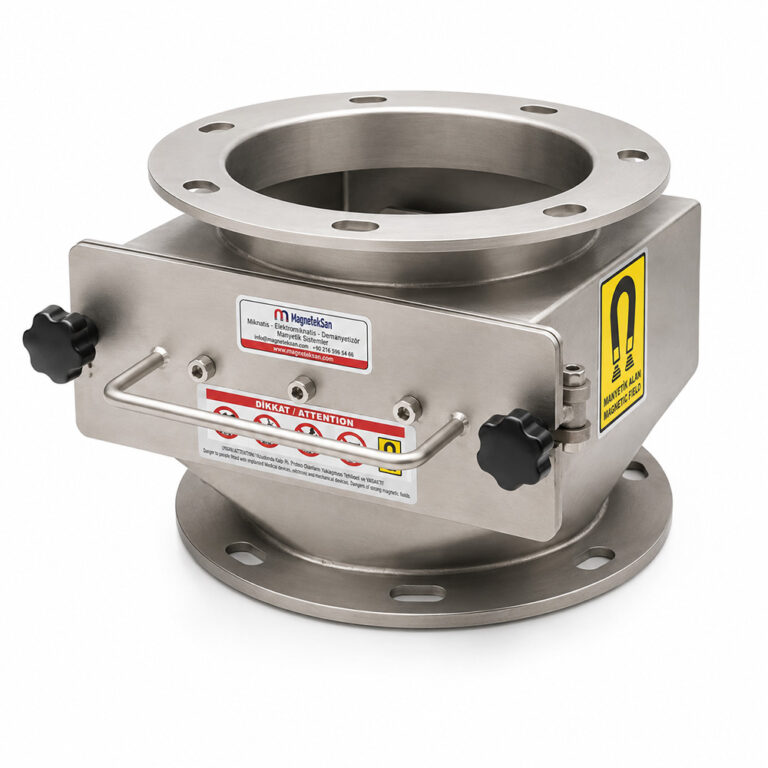
Un sistema di filtrazione professionale progettato per separare particelle metalliche indesiderate da prodotti alimentari fluidi (acqua, latte, cioccolato liquido, ecc.).
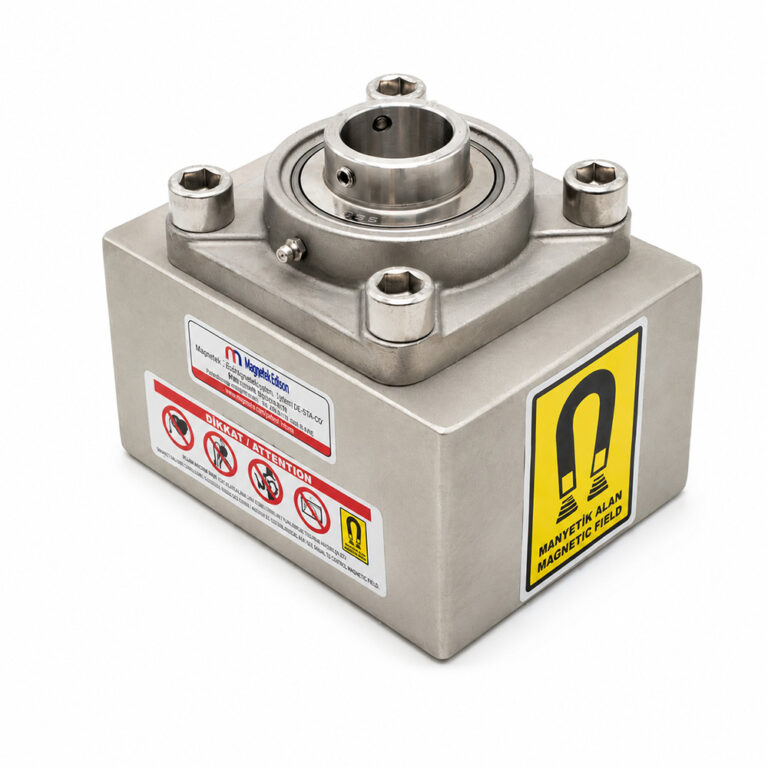
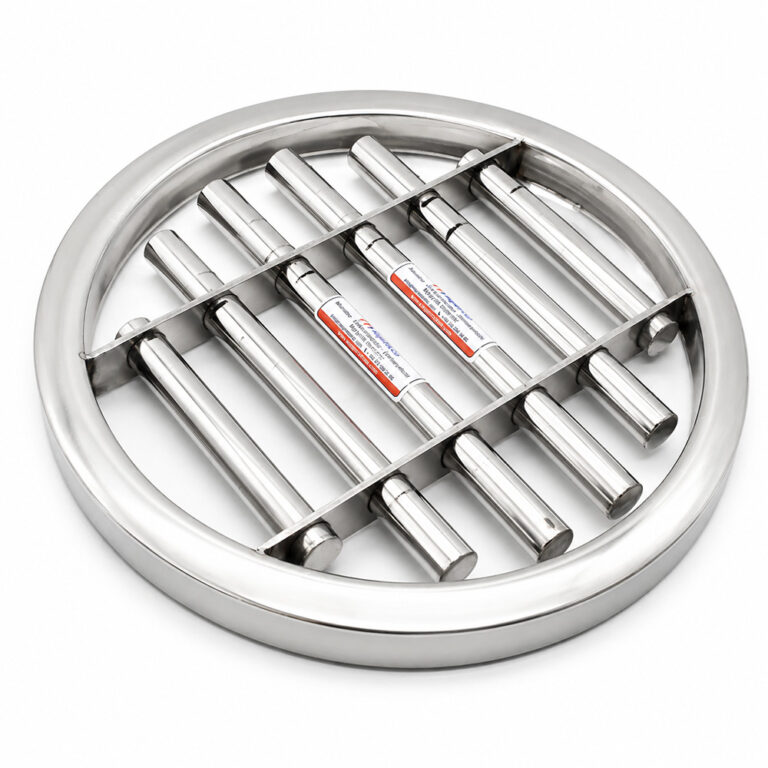
Grazie alla sua flessibilità di installazione, fornisce un’integrazione perfetta con il sistema esistente tramite opzioni di connessione a flangia o raccordo preferite. Progettato pensando alla comodità di manutenzione, il prodotto contiene magneti al neodimio ad alte prestazioni. Grazie alla sua forza magnetica superiore, può catturare efficacemente i residui metallici anche a livelli di micron.
Separatore Magnetico Certificato per la Sicurezza Alimentare
I nostri separatori magnetici, fabbricati secondo gli standard industriali, possiedono una forza magnetica che soddisfa le norme BRC e HACCP. I nostri prodotti, che subiscono processi di certificazione approvati da TÜBİTAK, vengono consegnati con la relativa documentazione.
Tutti i componenti sono realizzati in acciaio inossidabile appositamente selezionato per l’industria alimentare e offrono una garanzia completa a prova di perdite.
Principio di Funzionamento
È possibile esaminare il principio di funzionamento dettagliato del sistema nell’animazione sottostante.
Extra Information
**Certified Magnetic Filter Production**
Magnetic filters are essential in the final products of food manufacturing companies, commonly used at critical control points to protect equipment. Magnets with strengths of 10,000 Gauss, 12,500 Gauss, and 13,500 Gauss play a vital role in ensuring food safety. These magnetic bars are entirely stainless steel, preventing bacterial growth and making them food-safe.
Our magnetic filters are produced according to globally recognized standards such as BRC, HACCP, and TSE.
Our magnetic filters are locally manufactured. We offer custom sizes and strengths for corporate clients. With a specialized 304 and 316 stainless steel base and unique control system, these filters prevent any metal particles from bypassing.
**Technical Specifications of Our Magnetic Filters**
Our magnetic filters are available with the following technical specifications. The casings for magnetic bars in acidic and basic environments can be made from 316L and 304-grade stainless steel.
– Efficiently removes metal dust and impurities from the hydraulic system.
– Stainless steel body with detachable magnetic bars.
– Body diameters of 3″, 4″, 5″, and 6″ are available as per customer requirements.
– Available with or without casings, as requested.
– Neodymium magnets within the casing provide a high magnetic flux density.
– NdFeB neodymium magnets with a flux strength of around 10,000 – 14,000 GAUSS outside the casing.
– Withstands standard temperatures of up to 80°C and a maximum of 200°C.
– Magnetic filters with bars have a maximum pressure resistance of 10 Bar and are made from cast or welded 304 stainless steel bodies.
– The bars in magnetic filters are manufactured with NdFeB neodymium magnets enclosed within 304 stainless steel tubes.
– The bars, housed within 304 stainless steel tubes, are equipped with 304 stainless steel rod covers.
– Magnetic filters may have manual or automatic purge systems.
– Rotted magnetic filters come with a removable stainless steel cap for impurity monitoring.
– They can be manufactured for both horizontal and vertical lines with offset inlet and outlet sizes.
– A 1″ brass drain valve is provided at the bottom for horizontal connections.
– Produced with EPDM O-ring seals for leak-proof performance at high temperatures (max. 100°C).
– The system can be produced as self-cleaning or manually cleaned based on customer preferences.
**Frequently Asked Questions**
FAQs about our products and magnetic filters.
**Can magnetic filters be used for powder or dry products?**
Answer: No, magnetic filters are specifically designed to remove iron particles from liquid products.
**How are captured iron particles cleaned?**
Answer: For manually cleaned filters, the block with magnetic bars is removed and cleaned manually. In self-cleaning filters, metals fall off easily when the block is removed.
**Can the filter casing be made from regular metal instead of stainless steel?**
Answer: No, as regular metal would create a short circuit with the magnetic field, reducing efficiency. We only use stainless steel for production.
**Is the filter housing magnetic?**
Answer: The housing itself is not magnetic. The magnetic bars inside the housing capture iron particles.
**Is electricity required to operate the magnetic filter?**
Answer: Magnetic filters consist of permanent magnets and thus do not require a power source.
**Can magnetic filters be used for highly abrasive/acidic liquids?**
Answer: Yes, we offer special coatings for such applications.
**How long does the magnet last?**
Answer: The magnet’s strength is permanent. It may demagnetize if damaged or exposed to temperatures beyond its rated limits. The magnet may lose 2-3% of its strength over five years.
**Can we recharge the magnet or increase its strength?**
Answer: No, magnets cannot be recharged. Only flexible magnets are strengthened by shock treatment.
**How can we measure the magnet’s strength?**
Answer: Magnetic strength, measured in Gauss, can be verified with a Gauss meter. Magnetic filters come with a Gauss report valid for one year.
**Can the magnetic bar in the filter be replaced?**
Answer: Magnetic bars cannot be removed if welded to the filter’s top cap. However, in some cases, they are bolted, allowing for replacement.